
ALCOHOL USE AMONG BLACK AMERICANS Sarah Pedersen Ph
ALCOHOL USE AMONG BLACK AMERICANS Sarah Pedersen, Ph. D. University of Pittsburgh School of Medicine © AMSP 2015 1
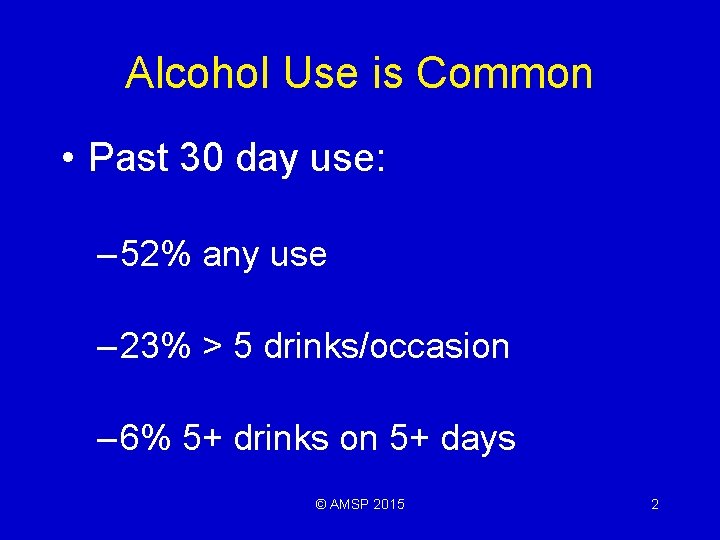
Alcohol Use is Common • Past 30 day use: – 52% any use – 23% > 5 drinks/occasion – 6% 5+ drinks on 5+ days © AMSP 2015 2
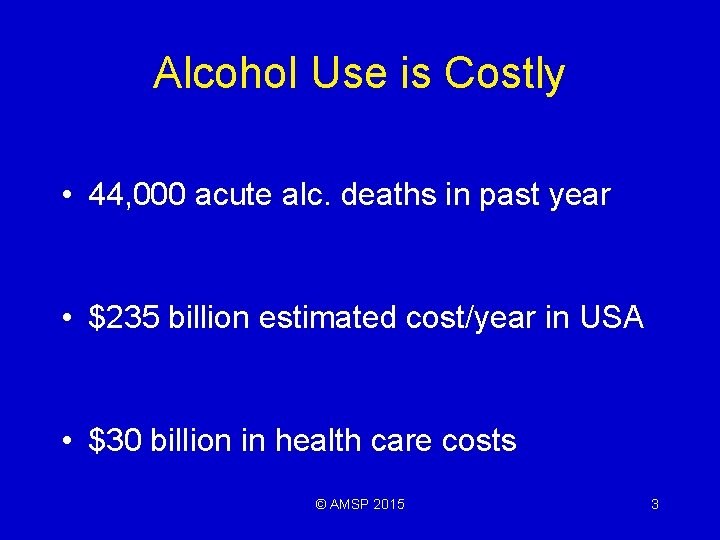
Alcohol Use is Costly • 44, 000 acute alc. deaths in past year • $235 billion estimated cost/year in USA • $30 billion in health care costs © AMSP 2015 3
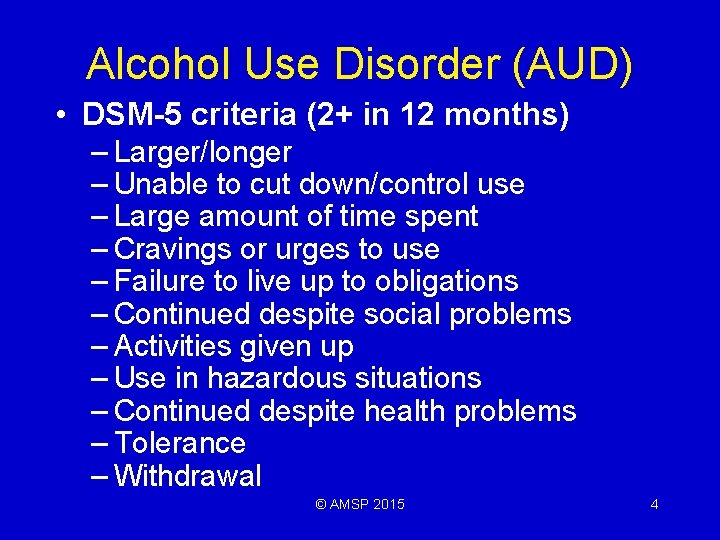
Alcohol Use Disorder (AUD) • DSM-5 criteria (2+ in 12 months) – Larger/longer – Unable to cut down/control use – Large amount of time spent – Cravings or urges to use – Failure to live up to obligations – Continued despite social problems – Activities given up – Use in hazardous situations – Continued despite health problems – Tolerance – Withdrawal © AMSP 2015 4
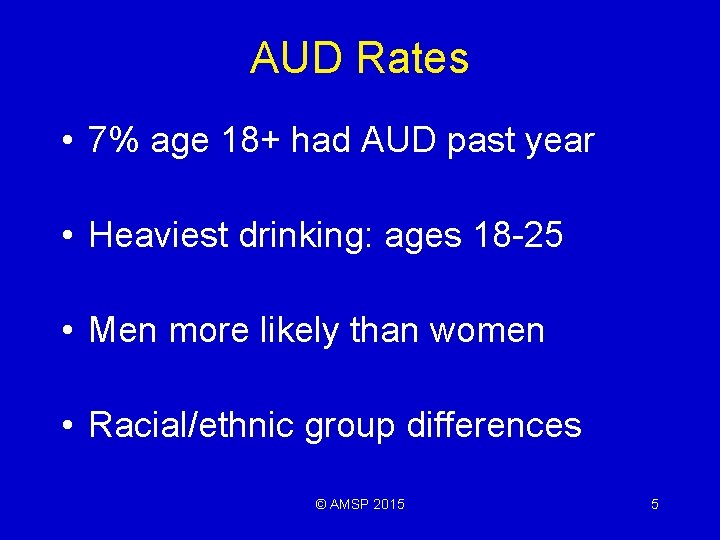
AUD Rates • 7% age 18+ had AUD past year • Heaviest drinking: ages 18 -25 • Men more likely than women • Racial/ethnic group differences © AMSP 2015 5
Lecture: Black American Alcohol Use • Rates of use and disorder • Consequences of use • More problems among drinkers • Historical context • Current reasons for use • Treatment implications © AMSP 2015 6
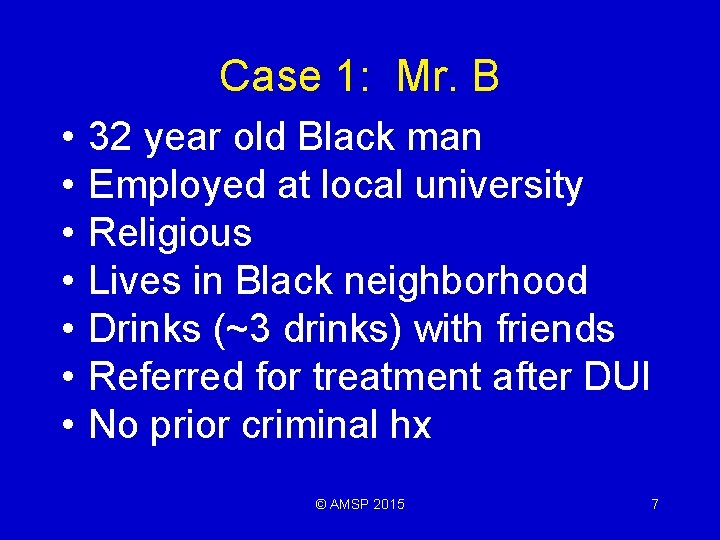
Case 1: Mr. B • • 32 year old Black man Employed at local university Religious Lives in Black neighborhood Drinks (~3 drinks) with friends Referred for treatment after DUI No prior criminal hx © AMSP 2015 7
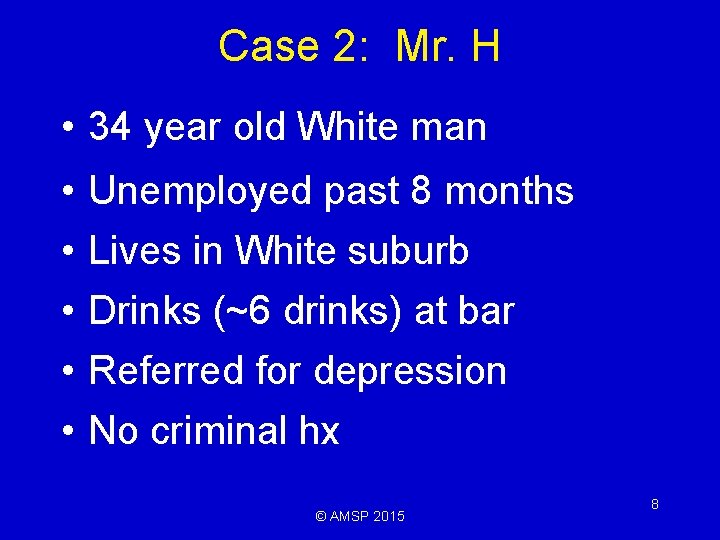
Case 2: Mr. H • 34 year old White man • • • Unemployed past 8 months Lives in White suburb Drinks (~6 drinks) at bar Referred for depression No criminal hx © AMSP 2015 8
Lecture: Black American Alcohol Use • Rates of use and disorder • Consequences of use • More problems among drinkers • Historical context • Current reasons for use • Treatment implications © AMSP 2015 9
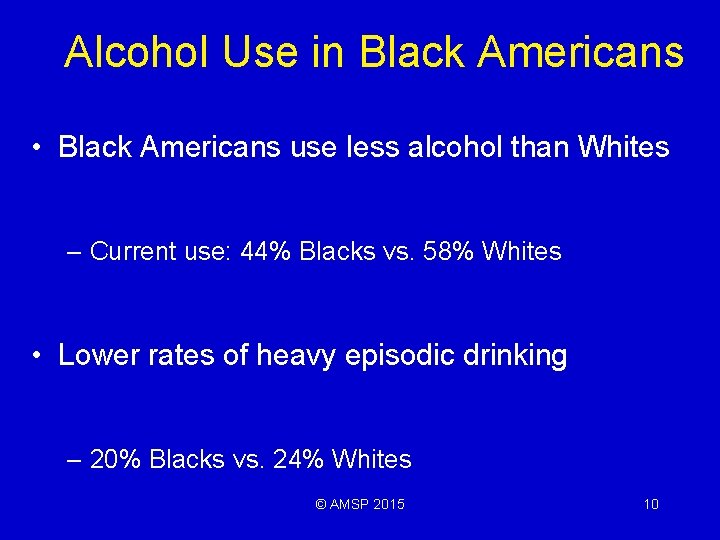
Alcohol Use in Black Americans • Black Americans use less alcohol than Whites – Current use: 44% Blacks vs. 58% Whites • Lower rates of heavy episodic drinking – 20% Blacks vs. 24% Whites © AMSP 2015 10
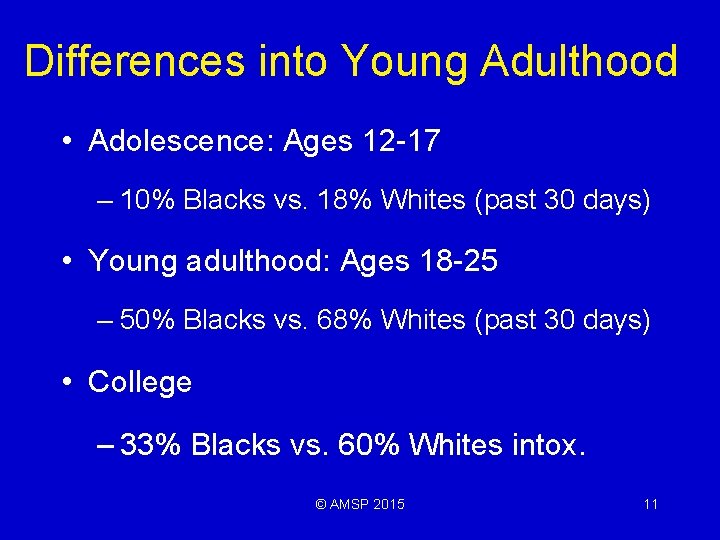
Differences into Young Adulthood • Adolescence: Ages 12 -17 – 10% Blacks vs. 18% Whites (past 30 days) • Young adulthood: Ages 18 -25 – 50% Blacks vs. 68% Whites (past 30 days) • College – 33% Blacks vs. 60% Whites intox. © AMSP 2015 11
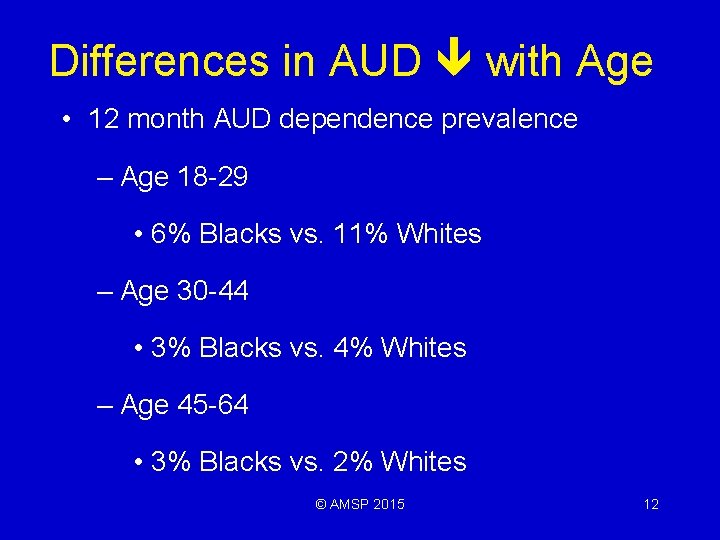
Differences in AUD with Age • 12 month AUD dependence prevalence – Age 18 -29 • 6% Blacks vs. 11% Whites – Age 30 -44 • 3% Blacks vs. 4% Whites – Age 45 -64 • 3% Blacks vs. 2% Whites © AMSP 2015 12
Lecture: Black American Alcohol Use • Rates of use and disorder • Consequences of use • More problems among drinkers • Historical context • Current reasons for use • Treatment implications © AMSP 2015 13
Black Drinkers Alc. Problems • Social consequences – 3 X higher for Blacks vs. Whites • Liver cirrhosis – 1. 3 X higher for Blacks vs. Whites • AUD mortality: 10% higher for Blacks – Alcohol-related cancers – Illness and injury © AMSP 2015 14
Racial Differences Summary • Blacks are less likely to drink – Overall lower levels of use – Varies across age • Among drinkers – Blacks have more problems • Integrating historical context needed © AMSP 2015 15
Lecture: Black American Alcohol Use • Rates of use and disorder • Consequences of use • More problems among drinkers • Historical context • Current reasons for use • Treatment implications © AMSP 2015 16
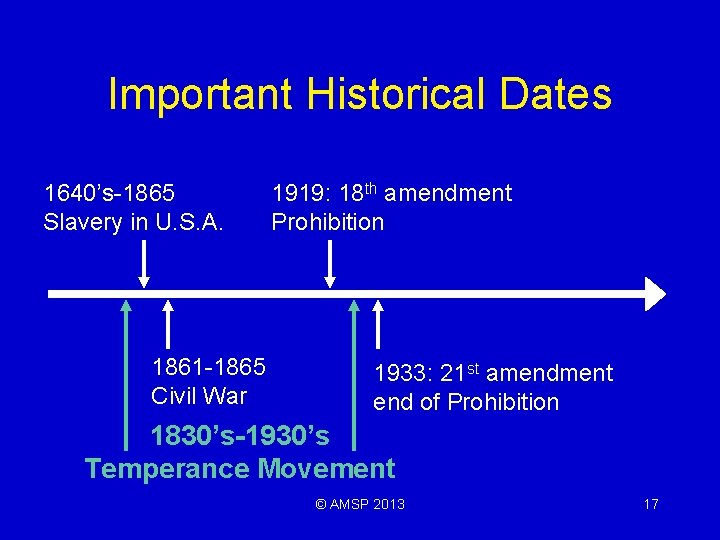
Important Historical Dates 1640’s-1865 Slavery in U. S. A. 1861 -1865 Civil War 1919: 18 th amendment Prohibition 1933: 21 st amendment end of Prohibition 1830’s-1930’s Temperance Movement © AMSP 2013 17
Drinking in Africa (pre-slavery) • Limited alcohol use in Africa – Ceremonial – Small amounts – Intoxication unacceptable – Drunkenness = weakness © AMSP 2015 18
Slavery and Alcohol Use • Slaves limited alcohol use – Owners prohibited use – Slaves stayed sober for protection – Abstinence the norm © AMSP 2015 19
Temperance Movement Era • Abstinence linked with freedom • Leaders against slavery and drinking • Black churches grew – Pushed abstinence © AMSP 2015 20
Post-Prohibition Period • Restricted use continued • Blacks died from alcohol than Whites • Conservative norms © AMSP 2015 21
History Present Day • Sets stage: – Drunkenness in Black communities – Abstinence • May inform clinical practice • Allows perspective on current factors © AMSP 2015 22
Lecture: Black American Alcohol Use • Rates of use and disorder • Consequences of use • More problems among drinkers • Historical context • Current reasons for use • Treatment implications © AMSP 2015 23
Protective Factors © AMSP 2013 24
Black American Drinking Norms • More conservative drinking norms • Alcohol not in social events – 80% Whites vs. 46% Blacks drink at restaurant • Avoid intoxication – criticism for drinking 4+ • disapproval from parents – monitoring – alcohol in Black homes © AMSP 2015 25
Religiosity • religiosity = alcohol use • religiosity Blacks vs. Whites – 92% of Blacks identify as Christian – Denominations with conservative alc. view • Black churches active in community – Preserves historical views – Provides monitoring – One reason for lower use in Black teens © AMSP 2015 26
Genetics • ADH/ALDH genes = alc. metabolism – Variants alter rate of metabolism – Produce stronger response to alcohol • African heritage: 30% have ADH variant – Metabolize alcohol differently – family history – pulse rate after drinking – AUD © AMSP 2015 27
Risk Factors © AMSP 2013 28
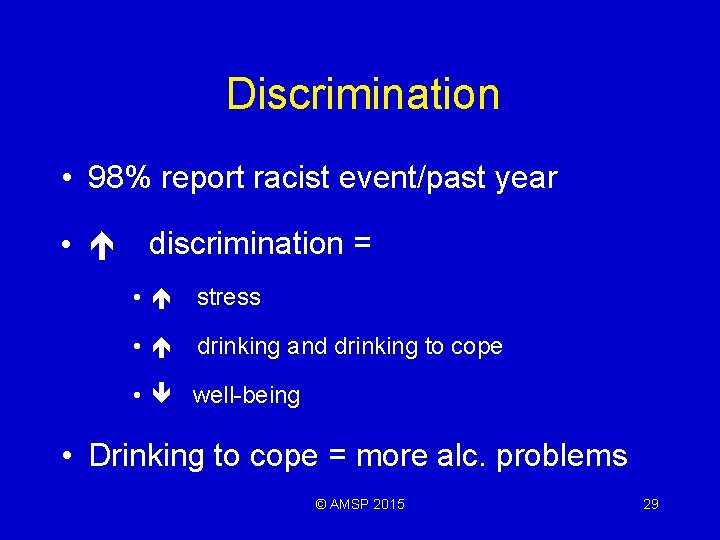
Discrimination • 98% report racist event/past year • discrimination = • stress • drinking and drinking to cope • well-being • Drinking to cope = more alc. problems © AMSP 2015 29
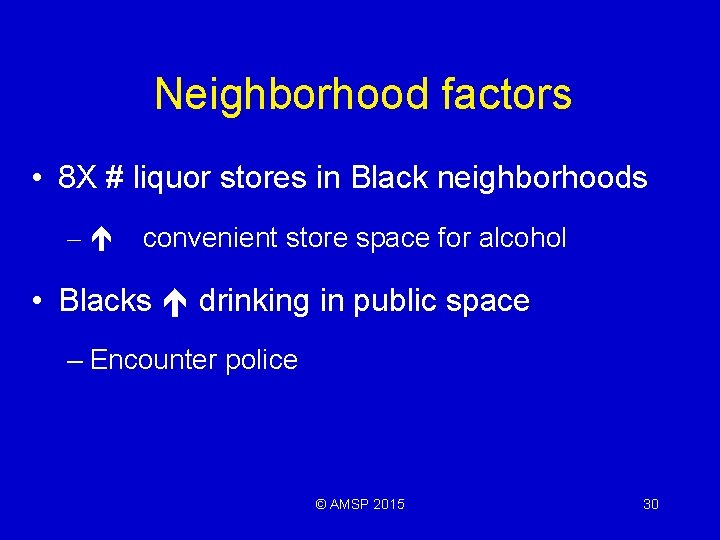
Neighborhood factors • 8 X # liquor stores in Black neighborhoods – convenient store space for alcohol • Blacks drinking in public space – Encounter police © AMSP 2015 30
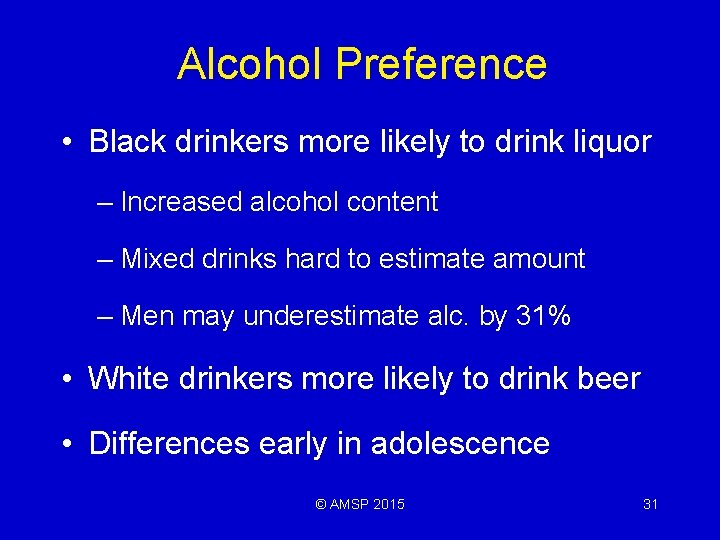
Alcohol Preference • Black drinkers more likely to drink liquor – Increased alcohol content – Mixed drinks hard to estimate amount – Men may underestimate alc. by 31% • White drinkers more likely to drink beer • Differences early in adolescence © AMSP 2015 31
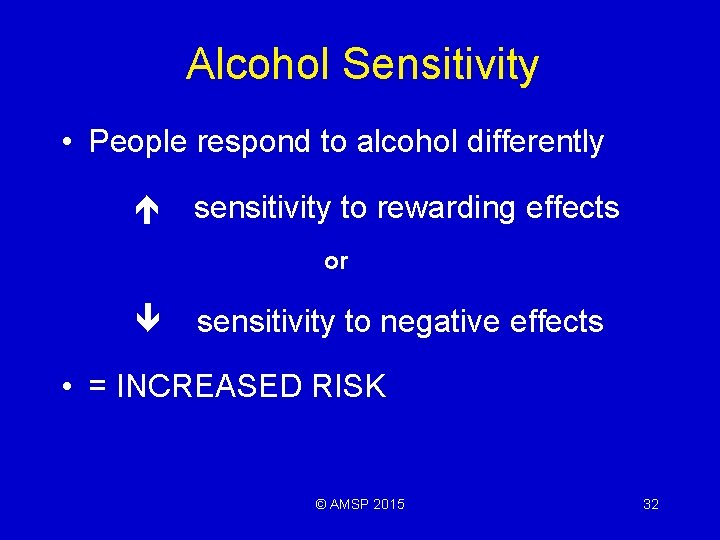
Alcohol Sensitivity • People respond to alcohol differently sensitivity to rewarding effects or sensitivity to negative effects • = INCREASED RISK © AMSP 2015 32
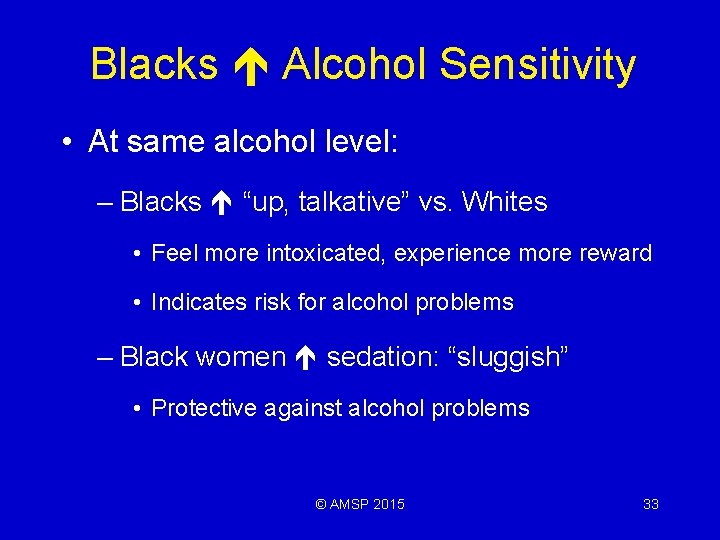
Blacks Alcohol Sensitivity • At same alcohol level: – Blacks “up, talkative” vs. Whites • Feel more intoxicated, experience more reward • Indicates risk for alcohol problems – Black women sedation: “sluggish” • Protective against alcohol problems © AMSP 2015 33
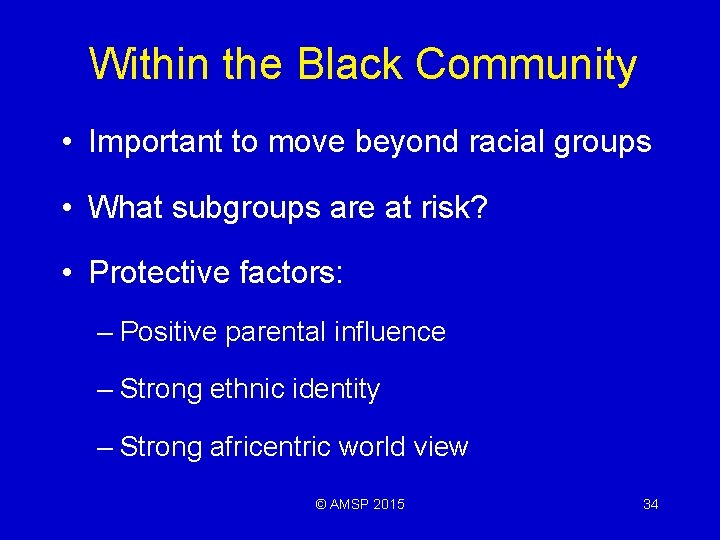
Within the Black Community • Important to move beyond racial groups • What subgroups are at risk? • Protective factors: – Positive parental influence – Strong ethnic identity – Strong africentric world view © AMSP 2015 34
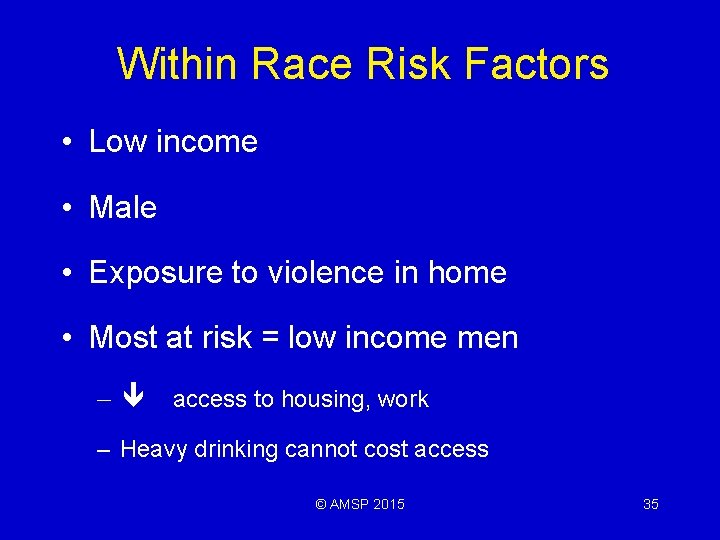
Within Race Risk Factors • Low income • Male • Exposure to violence in home • Most at risk = low income men – access to housing, work – Heavy drinking cannot cost access © AMSP 2015 35
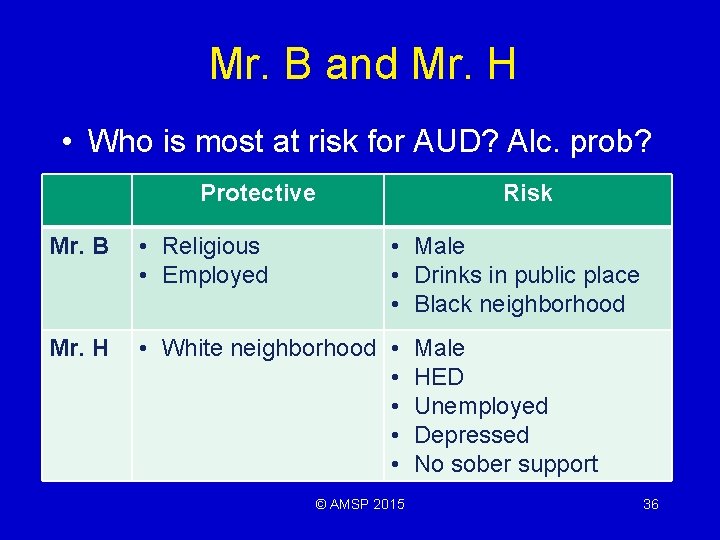
Mr. B and Mr. H • Who is most at risk for AUD? Alc. prob? Protective Risk Mr. B • Religious • Employed • Male • Drinks in public place • Black neighborhood Mr. H • White neighborhood • • • © AMSP 2015 Male HED Unemployed Depressed No sober support 36
Lecture: Black American Alcohol Use • Rates of use and disorder • Consequences of use • More problems among drinkers • Historical context • Current reasons for use • Treatment implications © AMSP 2015 37
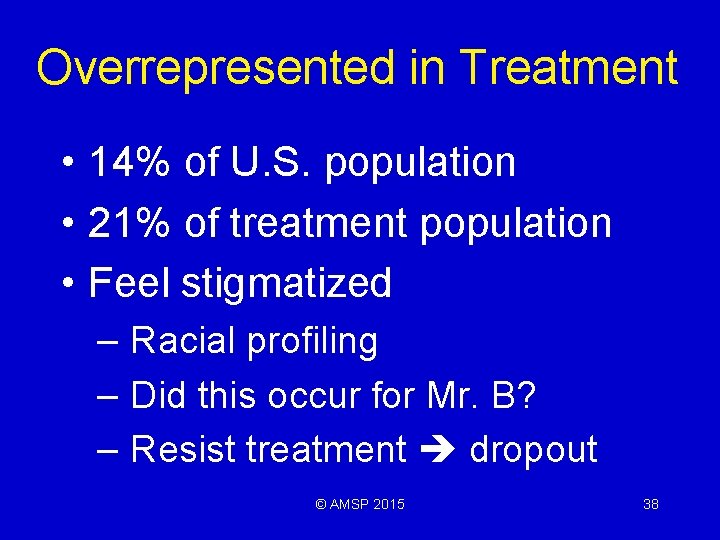
Overrepresented in Treatment • 14% of U. S. population • 21% of treatment population • Feel stigmatized – Racial profiling – Did this occur for Mr. B? – Resist treatment dropout © AMSP 2015 38
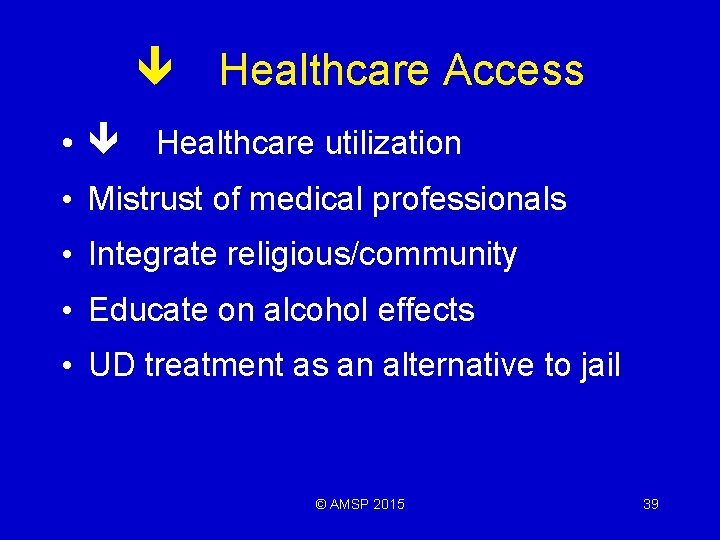
Healthcare Access • Healthcare utilization • Mistrust of medical professionals • Integrate religious/community • Educate on alcohol effects • UD treatment as an alternative to jail © AMSP 2015 39
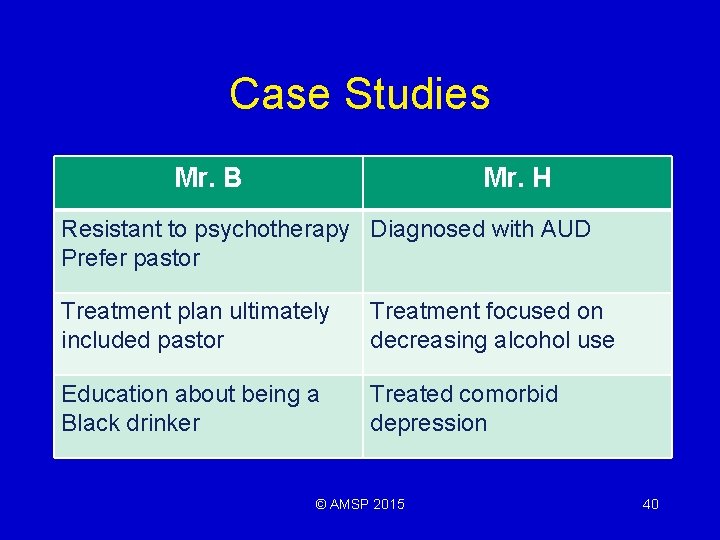
Case Studies Mr. B Mr. H Resistant to psychotherapy Diagnosed with AUD Prefer pastor Treatment plan ultimately included pastor Treatment focused on decreasing alcohol use Education about being a Black drinker Treated comorbid depression © AMSP 2015 40
Conclusions • Complex drinking differences – alcohol use – Among drinkers: problems – Overrepresented in treatment © AMSP 2015 41
Conclusions • Historical factors – A long history shows less drinking – Cultural views on intoxication • Current factors – Risk exists among Black drinkers – Particularly low income men – Sensitivity to alcohol © AMSP 2015 42
Conclusions • Understanding differences informs tx – Integrate with community/church – Understand resistance – Moderate drinking may cause problems – Modify standard psychoeducation © AMSP 2015 43
Conclusions • More work is needed • Treatment access • Screening for alcohol problems • Cultural sensitivity • Integration with community © AMSP 2015 44
Acknowledgements • Marc Schuckit, M. D. • Benjamin Nordstrom, M. D. • Marcy Gregg • Alcohol Medical Scholars Program © AMSP 2015 45
- Slides: 45