
Alcohol Survey Wirral January 2021 A short survey
- Slides: 11
Alcohol Survey Wirral January 2021 A short survey to find out feelings around alcohol, changes in behaviors, local information and services on Wirral Foundations of Quality Improvement should always have what patients tell us about their treatment and care at the heart of everything, as a system, that we plan and do. We must be able to evidence that all actions and decisions made come back to this, making certain that everyone feels respected, involved and valued at each and every part of the journey. We should all feel confident that we are either giving or receiving quality care. ’ Healthwatch Wirral, Age UK Wirral, NHS England ECIST, Wirral System
Foreword Healthwatch Wirral (HWW) is a member of the multi-agency Health Inequalities Committee. A key priority for this committee is Alcohol. HWW proposed to undertake a short snapshot survey to find out, if people’s relationship with alcohol has changed, if the information that is currently available for people is what they really need and. What thoughts people taking part may have on where and/or when they would like to access it information and support. HWW have built a unique model of carrying out short sharp 10 day polls/surveys using existing: • strong relationships and contacts • social media • bulletins • BRIDGE forums • Feedback Centre By publishing and promoting the findings, encourages people to look for something that will interest them eg. alcohol, mental health, A&E etc. We will also target the organisations who support at a very community level all people who live, work and use services on Wirral, its essential that this includes our most vulnerable or pockets community, that are often described as ‘harder to reach’.
Purpose The purpose of this survey is to find out if the communications and services currently provided are what the public need, both to support them and to prevent drinking habits becoming hazardous. We wanted to understand whether we needed to make messages more person centred and to help our system land information in different ways, depending on personal circumstances that are unique to them. 2020/2021 has been unprecedented and ‘unique’ in itself, exposing vulnerabilities in people who would not necessarily felt this before. Drinking alcohol is primarily a social activity, often done in the public, in public venues, festivals, sporting events. It is important to know what has changed in the drinking habits of the Wirral population so we can better respond with information, education, services and other strategies as needed and in a timely manner. Emerging but limited evidence suggests that alcohol consumption has increased during the COVID-19 pandemic The findings of this short survey would be shared with the Alcohol Sub-group and the Health Inequalities Committee, before being published. It is important, with any work that HWW undertakes, that findings are shared widely in an accessible format, so the public feel confident & recognise HWW as an independent body for our residents.
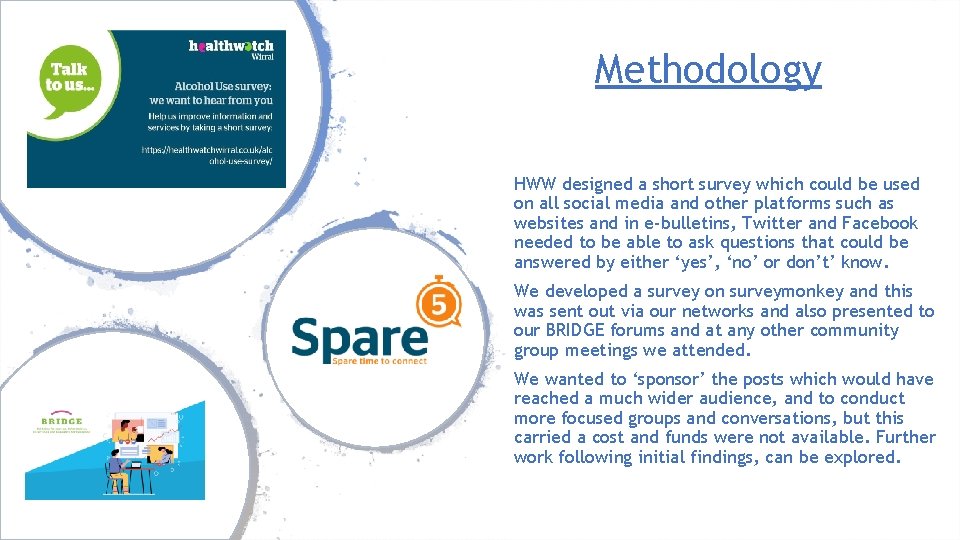
Methodology HWW designed a short survey which could be used on all social media and other platforms such as websites and in e-bulletins, Twitter and Facebook needed to be able to ask questions that could be answered by either ‘yes’, ‘no’ or don’t’ know. We developed a survey on surveymonkey and this was sent out via our networks and also presented to our BRIDGE forums and at any other community group meetings we attended. We wanted to ‘sponsor’ the posts which would have reached a much wider audience, and to conduct more focused groups and conversations, but this carried a cost and funds were not available. Further work following initial findings, can be explored.
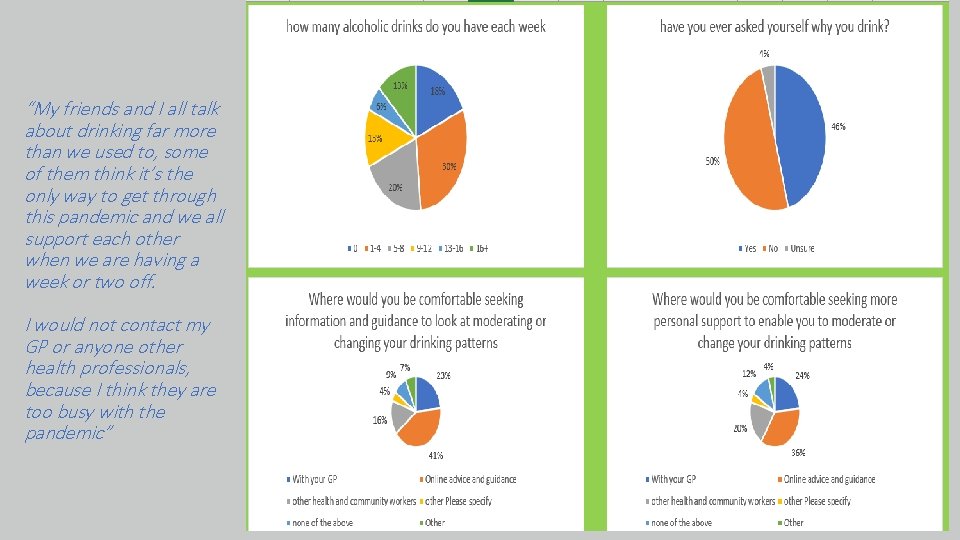
“My friends and I all talk about drinking far more than we used to, some of them think it’s the only way to get through this pandemic and we all support each other when we are having a week or two off. I would not contact my GP or anyone other health professionals, because I think they are too busy with the pandemic”
Understanding the Local Picture It must be noted that: · People tend to underestimate their consumption. · People who have a problem, or think the survey might flag a problem, may decline to participate leaving data sourced from individuals who may be less concerned · The survey was also carried out during ‘Dry January’ this is a factor that must be considered. Alcohol stats known: • https: //www. wirralintelligenceservice. org/jsna/alcohol/ o PHE JSNA Support Packs for Alcohol, Drugs and Young people’s substance misuse (July 2020) are also on this JSNA page • https: //fingertips. phe. org. uk/profile/local-alcohol-profiles • Wirral - https: //fingertips. phe. org. uk/profile/local-alcoholprofiles/data#page/1/gid/1938132984/pat/6/par/E 12000002/ati/102/are/E 080000 15/cid/4/page-options/ovw-do-0 Interestingly the HWW snapshot survey did demonstrate a varied reported spread of weekly consumption and sharing of views.
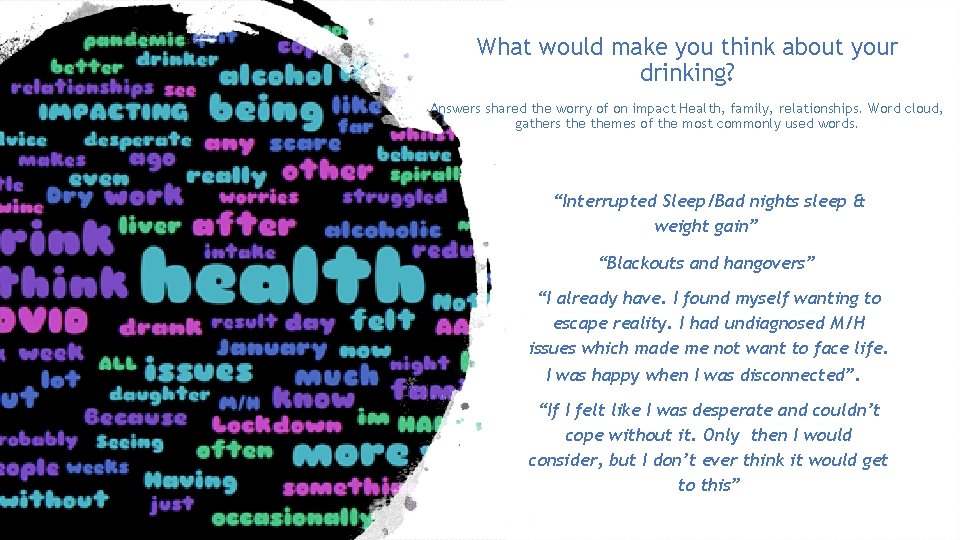
What would make you think about your drinking? Answers shared the worry of on impact Health, family, relationships. Word cloud, gathers themes of the most commonly used words. “Interrupted Sleep/Bad nights sleep & weight gain” “Blackouts and hangovers” “I already have. I found myself wanting to escape reality. I had undiagnosed M/H issues which made me not want to face life. I was happy when I was disconnected”. “If I felt like I was desperate and couldn’t cope without it. Only then I would consider, but I don’t ever think it would get to this”
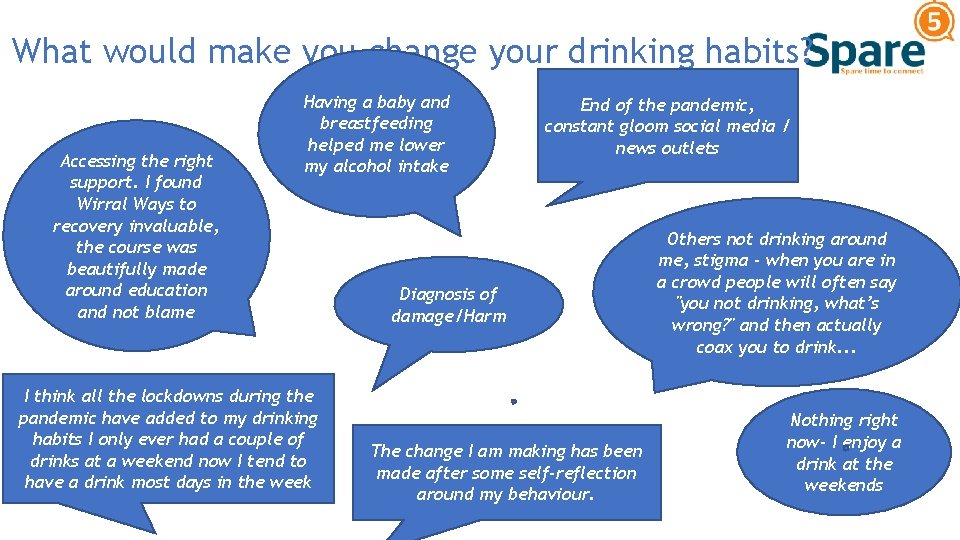
What would make you change your drinking habits? Accessing the right support. I found Wirral Ways to recovery invaluable, the course was beautifully made around education and not blame Having a baby and breastfeeding helped me lower my alcohol intake I think all the lockdowns during the pandemic have added to my drinking habits I only ever had a couple of drinks at a weekend now I tend to have a drink most days in the week End of the pandemic, constant gloom social media / news outlets Diagnosis of damage/Harm The change I am making has been made after some self-reflection around my behaviour. Others not drinking around me, stigma - when you are in a crowd people will often say "you not drinking, what’s wrong? " and then actually coax you to drink. . . Nothing right now- I enjoy a drink at the weekends
Responses are too varied to claim too much. Covid is referenced a lot and does seem to have had a clear impact. 'Is there any information. . . you would like to know. . ? ' A lot of people told us that they: - ❖ Want to talk about their alcohol consumption- its on their mind ❖ Due to media and social norms- even though we are not physically ‘going to the pub’ feel that they would be missing out if they didn’t drink anymore? ❖ Would want to access help using community services and support (only a proportion of which would use their GP because they wouldn’t know where else to go – no-one mentioned the Care Navigators, Social Prescribers, Connectors specifically, which are available in the community) ❖ Would like their families to be able to support them ❖ Would like, or be able to, use digital solution- although this was a digital survey. ❖ Think that they will be okay and it shouldn’t become an issue ‘it wont happen to them’
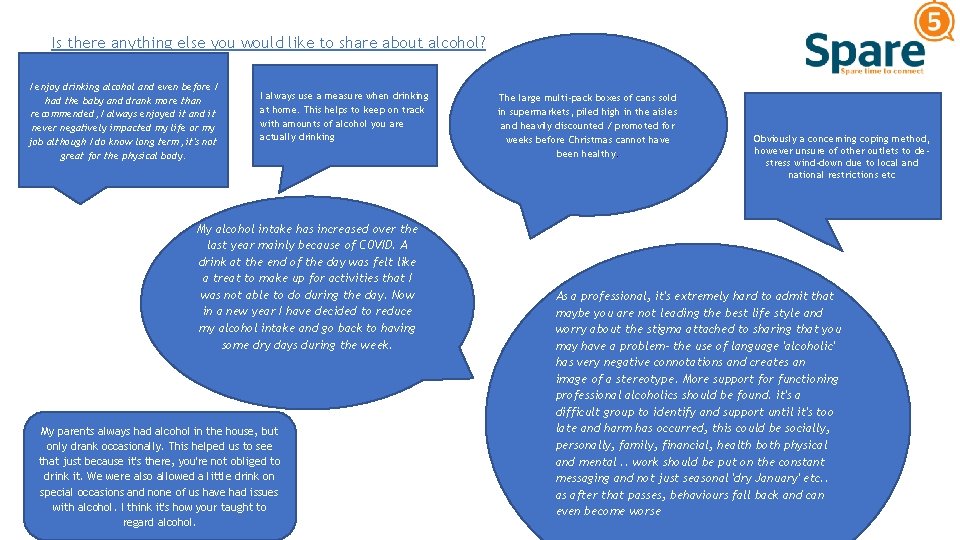
Is there anything else you would like to share about alcohol? I enjoy drinking alcohol and even before I had the baby and drank more than recommended, I always enjoyed it and it never negatively impacted my life or my job although I do know long term, it's not great for the physical body. I always use a measure when drinking at home. This helps to keep on track with amounts of alcohol you are actually drinking My alcohol intake has increased over the last year mainly because of COVID. A drink at the end of the day was felt like a treat to make up for activities that I was not able to do during the day. Now in a new year I have decided to reduce my alcohol intake and go back to having some dry days during the week. My parents always had alcohol in the house, but only drank occasionally. This helped us to see that just because it's there, you're not obliged to drink it. We were also allowed a little drink on special occasions and none of us have had issues with alcohol. I think it's how your taught to regard alcohol. The large multi-pack boxes of cans sold in supermarkets, piled high in the aisles and heavily discounted / promoted for weeks before Christmas cannot have been healthy. Obviously a concerning coping method, however unsure of other outlets to destress wind-down due to local and national restrictions etc As a professional, it's extremely hard to admit that maybe you are not leading the best life style and worry about the stigma attached to sharing that you may have a problem- the use of language 'alcoholic' has very negative connotations and creates an image of a stereotype. More support for functioning professional alcoholics should be found. it's a difficult group to identify and support until it's too late and harm has occurred, this could be socially, personally, family, financial, health both physical and mental. . work should be put on the constant messaging and not just seasonal 'dry January' etc. . as after that passes, behaviours fall back and can even become worse
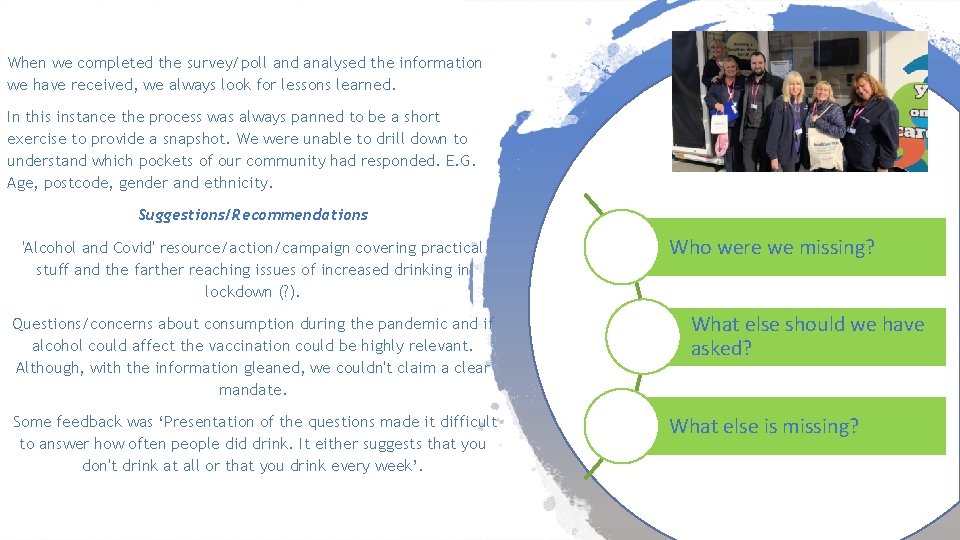
When we completed the survey/poll and analysed the information we have received, we always look for lessons learned. In this instance the process was always panned to be a short exercise to provide a snapshot. We were unable to drill down to understand which pockets of our community had responded. E. G. Age, postcode, gender and ethnicity. Suggestions/Recommendations 'Alcohol and Covid' resource/action/campaign covering practical stuff and the farther reaching issues of increased drinking in lockdown (? ). Questions/concerns about consumption during the pandemic and if alcohol could affect the vaccination could be highly relevant. Although, with the information gleaned, we couldn't claim a clear mandate. Some feedback was ‘Presentation of the questions made it difficult to answer how often people did drink. It either suggests that you don't drink at all or that you drink every week’. Who were we missing? What else should we have asked? What else is missing?