
ALCOHOL PRETEST Please take a few minutes to
- Slides: 26
ALCOHOL PRE-TEST �Please take a few minutes to answer the 9 questions on the Pre-Test to asses your knowledge – It will NOT be graded!
ØUnderage drinking is a factor in nearly half of all teen automobile crashes, the leading cause of death among teenagers. ØAlcohol use contributes to youth suicides, homicides and fatal injuries – the leading cause of death among youth after auto crashes. ØAlcohol abuse is linked to as many as two-thirds of all sexual assaults and date rapes of teens and college students. ØAlcohol is a major factor in unprotected sex among youth, increasing their risk of contracting HIV or other transmitted diseases. ALCOHOL &TEENS: THE FACTS
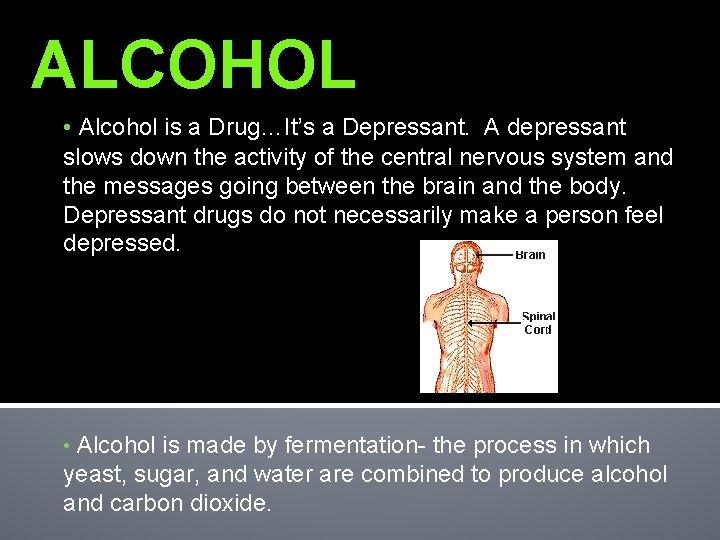
ALCOHOL • Alcohol is a Drug…It’s a Depressant. A depressant slows down the activity of the central nervous system and the messages going between the brain and the body. Depressant drugs do not necessarily make a person feel depressed. Alcohol is made by fermentation- the process in which yeast, sugar, and water are combined to produce alcohol and carbon dioxide. •
Effects of Alcohol: � In low doses: A relaxing effect Reduces tension Lowers inhibitions Impairs concentration Impairs judgment** Slows reflexes Impairs reaction time Reduces coordination � In medium doses: Slur speech Cause drowsiness Alter emotions � In high doses: Vomiting Breathing difficulties Unconsciousness Coma Death
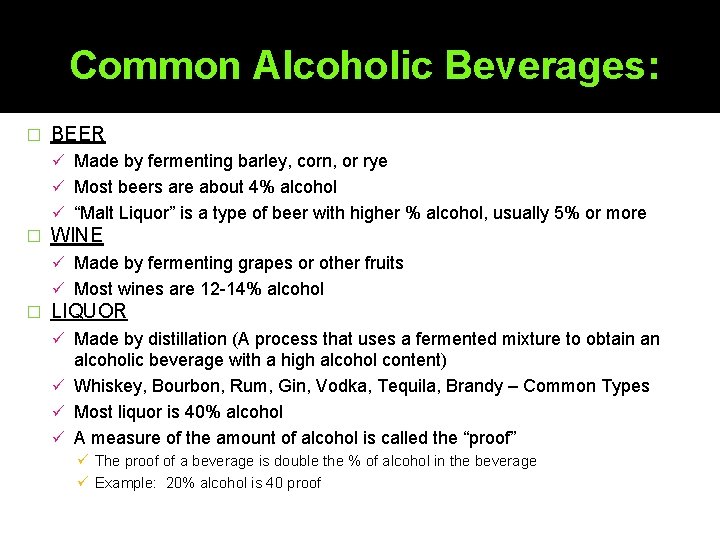
Common Alcoholic Beverages: � BEER ü Made by fermenting barley, corn, or rye ü Most beers are about 4% alcohol ü “Malt Liquor” is a type of beer with higher % alcohol, usually 5% or more � WINE ü Made by fermenting grapes or other fruits ü Most wines are 12 -14% alcohol � LIQUOR ü Made by distillation (A process that uses a fermented mixture to obtain an alcoholic beverage with a high alcohol content) ü Whiskey, Bourbon, Rum, Gin, Vodka, Tequila, Brandy – Common Types ü Most liquor is 40% alcohol ü A measure of the amount of alcohol is called the “proof” ü The proof of a beverage is double the % of alcohol in the beverage ü Example: 20% alcohol is 40 proof
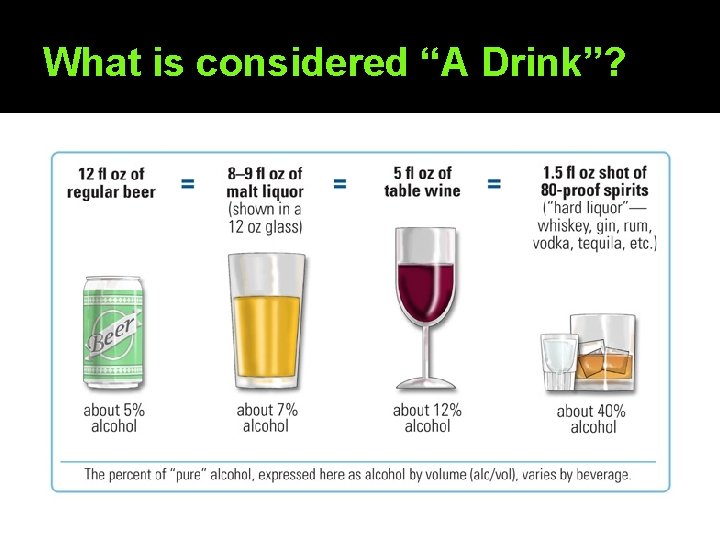
What is considered “A Drink”?
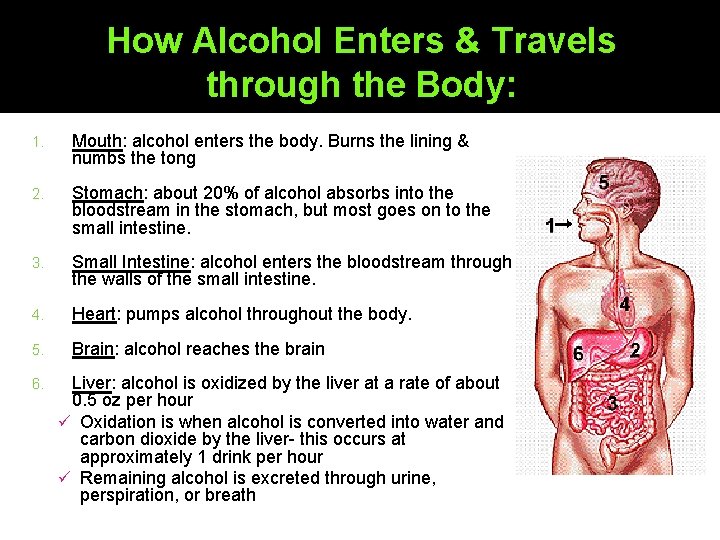
How Alcohol Enters & Travels through the Body: 1. Mouth: alcohol enters the body. Burns the lining & numbs the tong 2. Stomach: about 20% of alcohol absorbs into the bloodstream in the stomach, but most goes on to the small intestine. 3. Small Intestine: alcohol enters the bloodstream through the walls of the small intestine. 4. Heart: pumps alcohol throughout the body. 5. Brain: alcohol reaches the brain 6. Liver: alcohol is oxidized by the liver at a rate of about 0. 5 oz per hour ü Oxidation is when alcohol is converted into water and carbon dioxide by the liver- this occurs at approximately 1 drink per hour ü Remaining alcohol is excreted through urine, perspiration, or breath
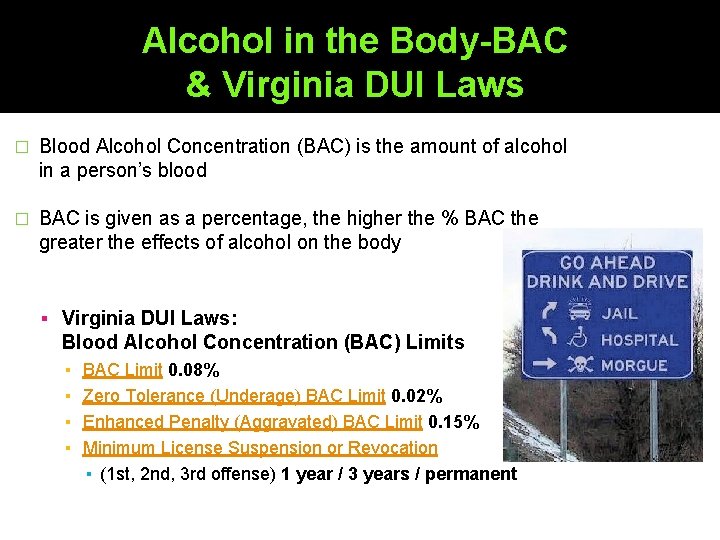
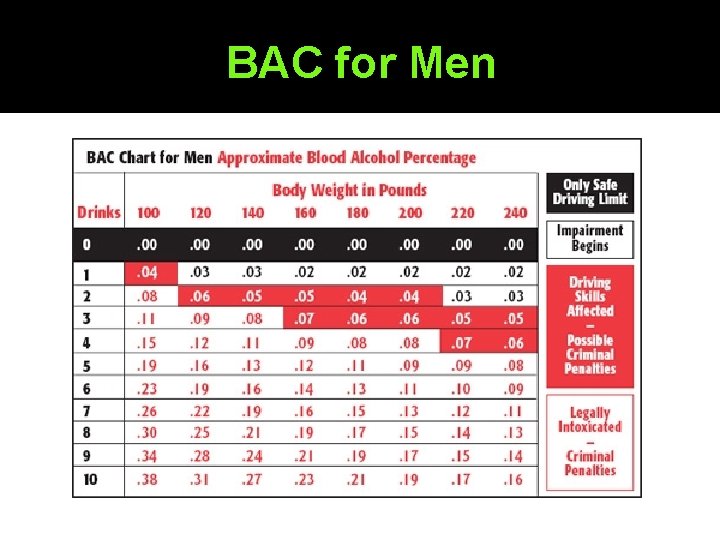
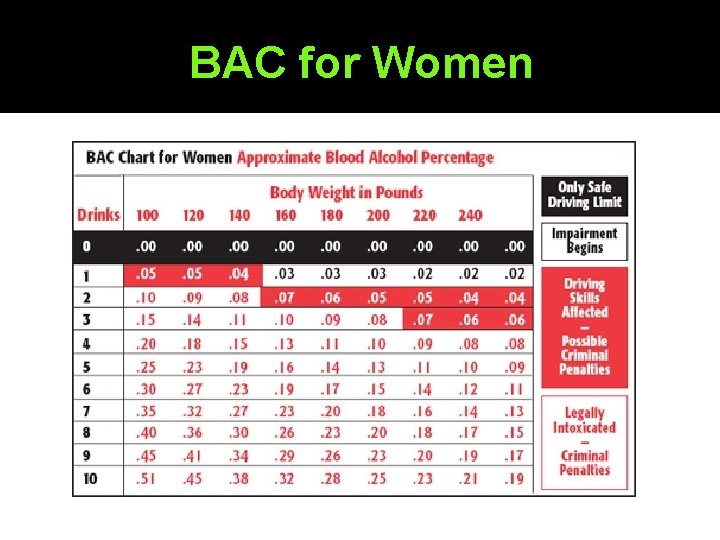
Alcohol in the Body-BAC & Virginia DUI Laws � Blood Alcohol Concentration (BAC) is the amount of alcohol in a person’s blood � BAC is given as a percentage, the higher the % BAC the greater the effects of alcohol on the body Virginia DUI Laws: Blood Alcohol Concentration (BAC) Limits ▪ ▪ BAC Limit 0. 08% Zero Tolerance (Underage) BAC Limit 0. 02% Enhanced Penalty (Aggravated) BAC Limit 0. 15% Minimum License Suspension or Revocation ▪ (1 st, 2 nd, 3 rd offense) 1 year / 3 years / permanent
BAC for Men
BAC for Women
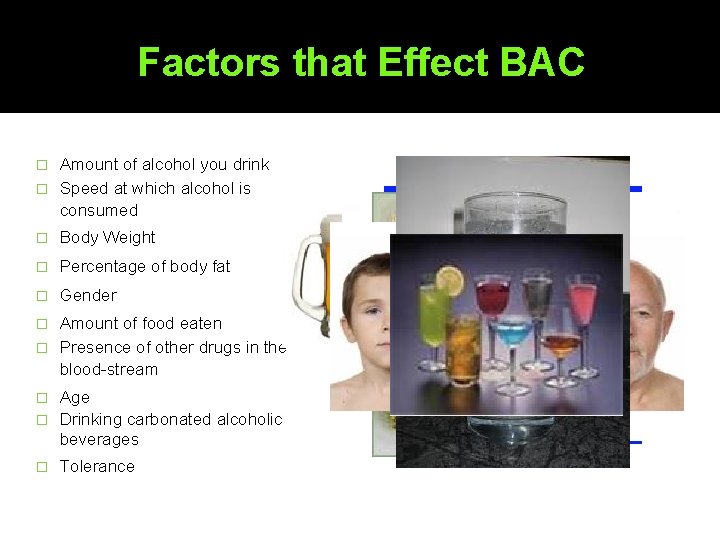
Factors that Effect BAC Amount of alcohol you drink � Speed at which alcohol is consumed � � Body Weight � Percentage of body fat � Gender Amount of food eaten � Presence of other drugs in the blood-stream � Age � Drinking carbonated alcoholic beverages � � Tolerance
How Alcohol Effects the Body: � Brain: Interferes with the brain’s communication pathways, and can affect the way the brain looks and works. These disruptions can change mood and behavior, and make it harder to think clearly and move with coordination. � Heart: Drinking a lot over a long time or too much on a single occasion can damage the heart, causing problems including: Cardiomyopathy – Stretching and drooping of heart muscle Arrhythmias – Irregular heart beat Stroke High blood pressure Research also shows that drinking moderate amounts of alcohol may protect healthy adults from developing coronary heart disease.
How Alcohol Effects the Body: � Liver: Heavy drinking takes a toll on the liver, and can lead to a variety of problems and liver inflammations including: Steatosis, or fatty liver Cirrhosis, scaring of the liver � Pancreas: Causes the pancreas to produce toxic substances that can eventually lead to pancreatitis, a dangerous inflammation and swelling of the blood vessels in the pancreas that prevents proper digestion. � Cancer: Can increase your risk of developing certain cancers, including cancers of the: Mouth, Esophagus, Throat, Liver, Breast � Immune System: Drinking too much can weaken your immune system, making your body a much easier target for disease.
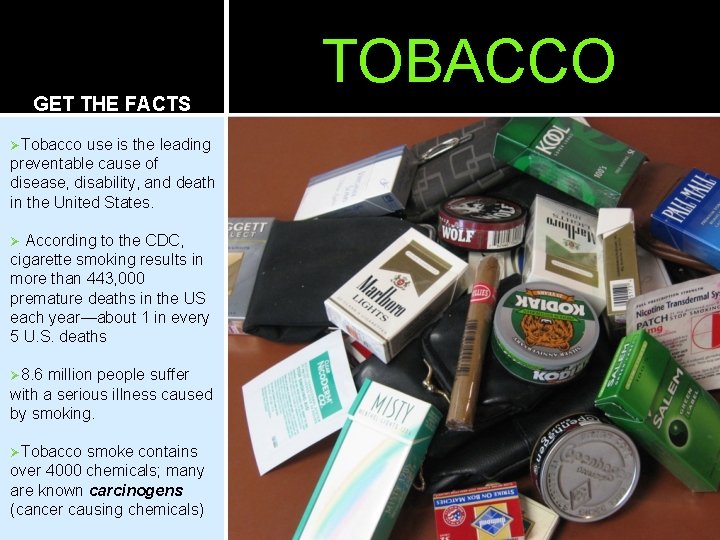
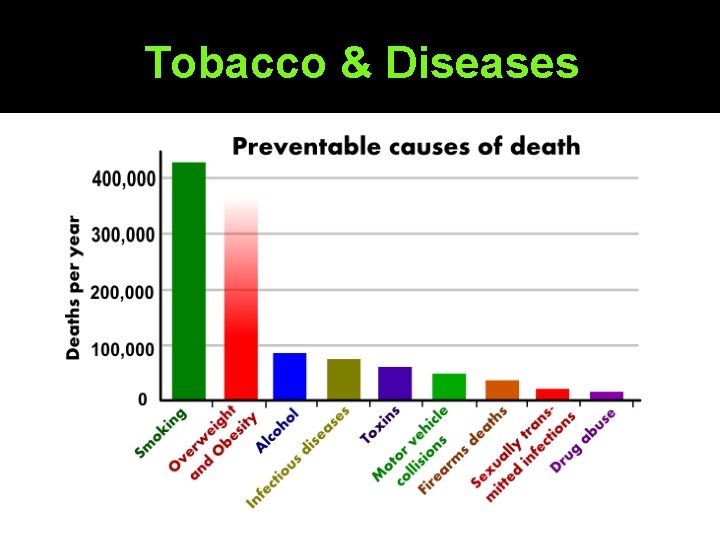
GET THE FACTS ØTobacco use is the leading preventable cause of disease, disability, and death in the United States. According to the CDC, cigarette smoking results in more than 443, 000 premature deaths in the US each year—about 1 in every 5 U. S. deaths Ø Ø 8. 6 million people suffer with a serious illness caused by smoking. ØTobacco smoke contains over 4000 chemicals; many are known carcinogens (cancer causing chemicals) TOBACCO
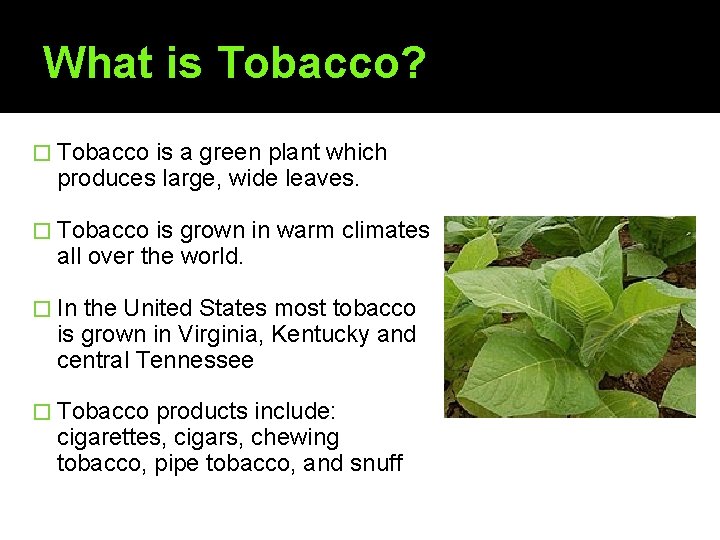
What is Tobacco? � Tobacco is a green plant which produces large, wide leaves. � Tobacco is grown in warm climates all over the world. � In the United States most tobacco is grown in Virginia, Kentucky and central Tennessee � Tobacco products include: cigarettes, cigars, chewing tobacco, pipe tobacco, and snuff
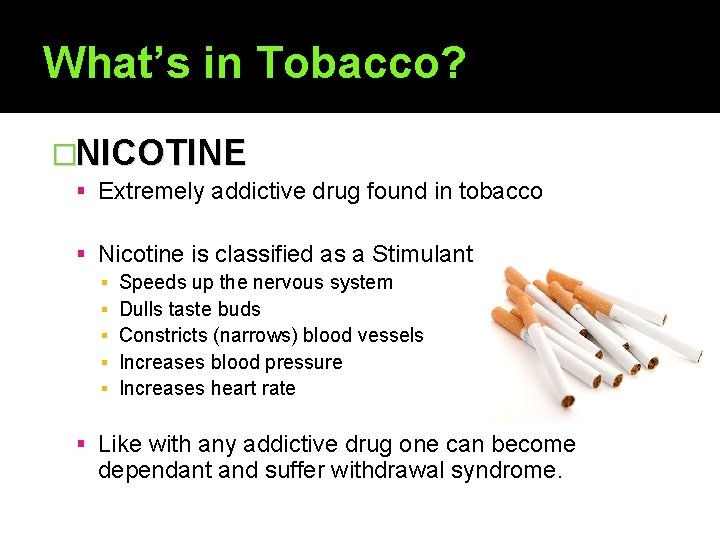
What’s in Tobacco? �NICOTINE Extremely addictive drug found in tobacco Nicotine is classified as a Stimulant ▪ ▪ ▪ Speeds up the nervous system Dulls taste buds Constricts (narrows) blood vessels Increases blood pressure Increases heart rate Like with any addictive drug one can become dependant and suffer withdrawal syndrome.
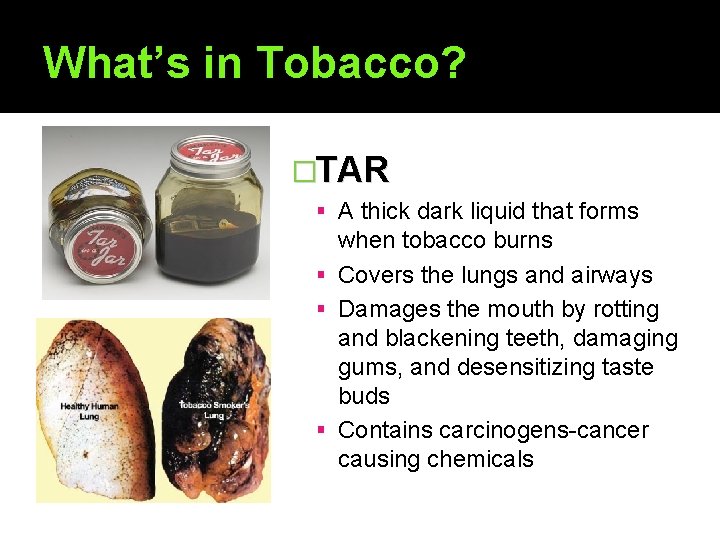
What’s in Tobacco? �TAR A thick dark liquid that forms when tobacco burns Covers the lungs and airways Damages the mouth by rotting and blackening teeth, damaging gums, and desensitizing taste buds Contains carcinogens-cancer causing chemicals
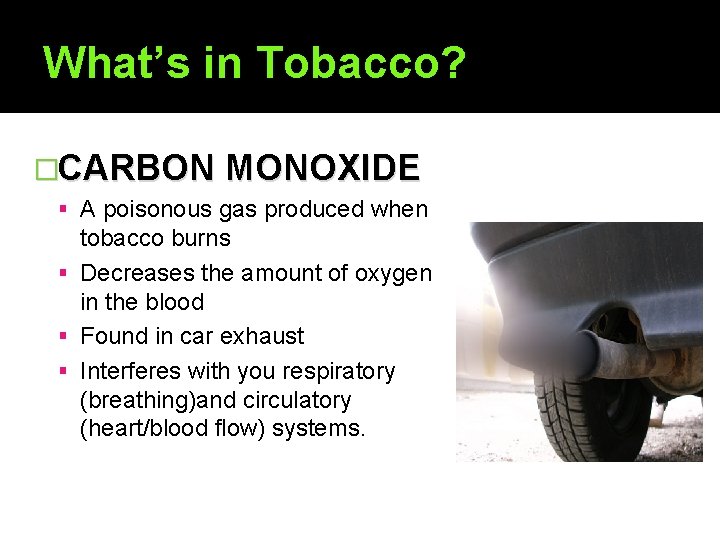
What’s in Tobacco? �CARBON MONOXIDE A poisonous gas produced when tobacco burns Decreases the amount of oxygen in the blood Found in car exhaust Interferes with you respiratory (breathing)and circulatory (heart/blood flow) systems.
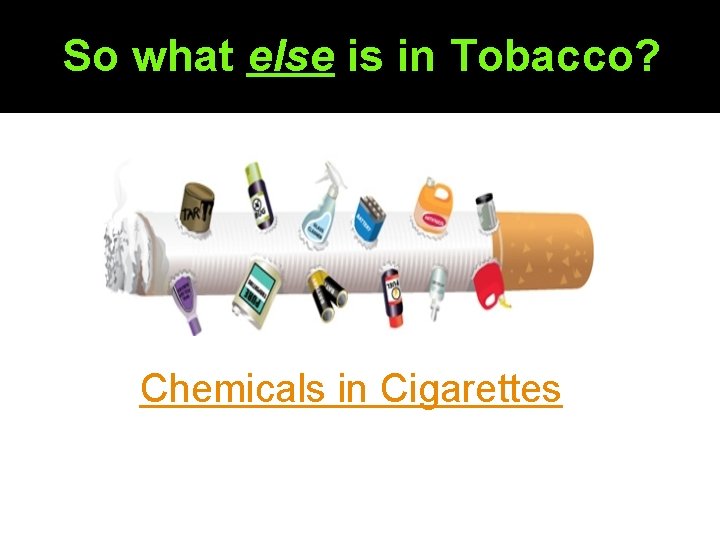
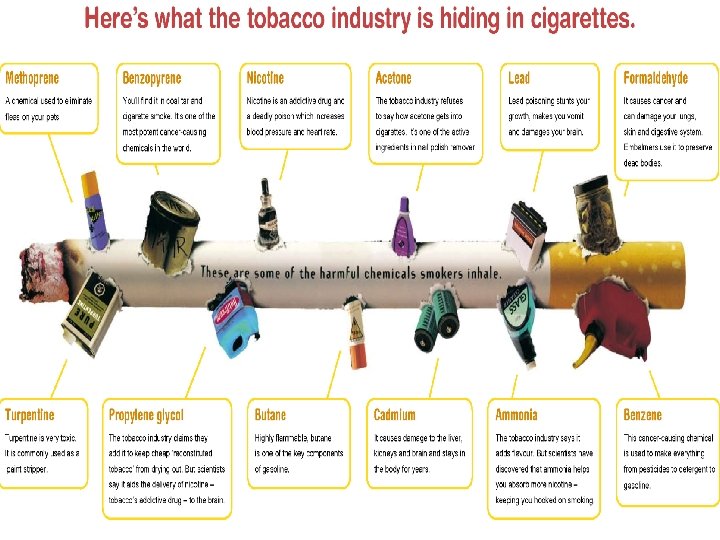
So what else is in Tobacco? Chemicals in Cigarettes
Tobacco & Diseases
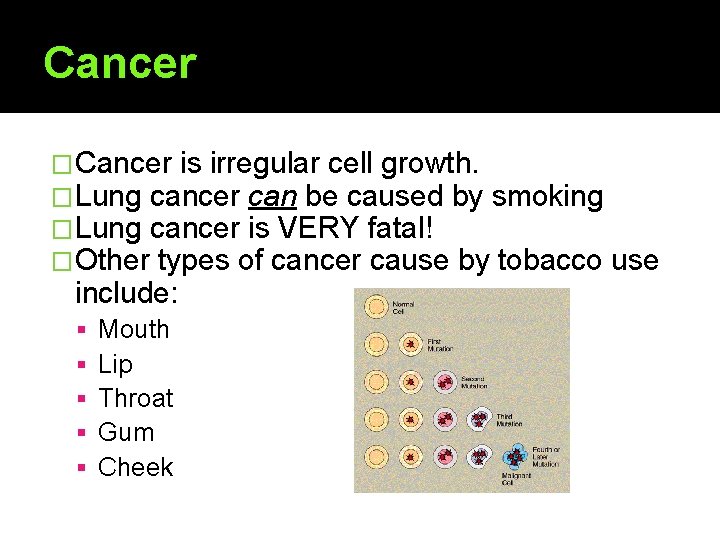
Cancer �Cancer is irregular cell growth. �Lung cancer can be caused by smoking �Lung cancer is VERY fatal! �Other types of cancer cause by tobacco include: Mouth Lip Throat Gum Cheek use
Heart Disease � Cardiovascular disease is a group of diseases that involve the heart or blood vessels (arteries, capillaries and veins). � Heart Disease is the #1 killer in the U. S. � What's the link between smoking and cardiovascular disease? Smoking is a major cause of atherosclerosis — a buildup of fatty substances in the arteries. Atherosclerosis occurs when the normal lining of the arteries deteriorates, the walls of the arteries thicken and deposits of fat and plaque block the flow of blood through the arteries. � What’s the link between smoking and heart attack? A person’s risk of heart attack greatly increases with the number of cigarettes he or she smokes. Smokers continue to increase their risk of heart attack the longer they smoke. People who smoke a pack of cigarettes a day have more than twice the risk of heart attack than nonsmokers.
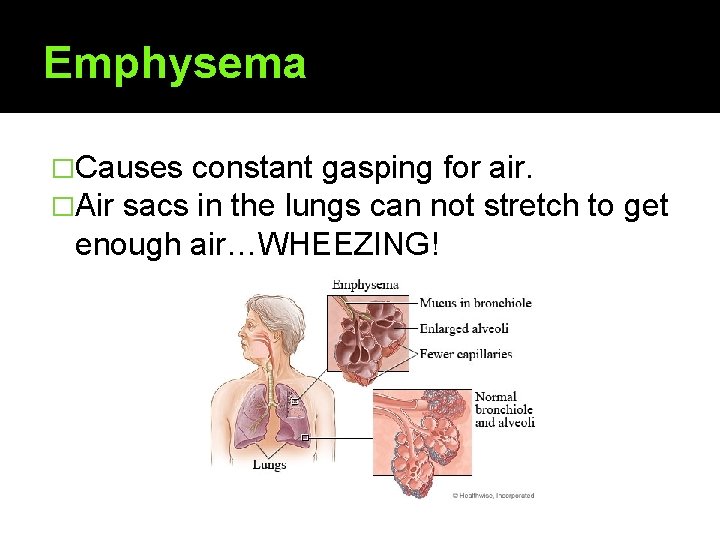
Emphysema �Causes constant gasping for air. �Air sacs in the lungs can not stretch enough air…WHEEZING! to get
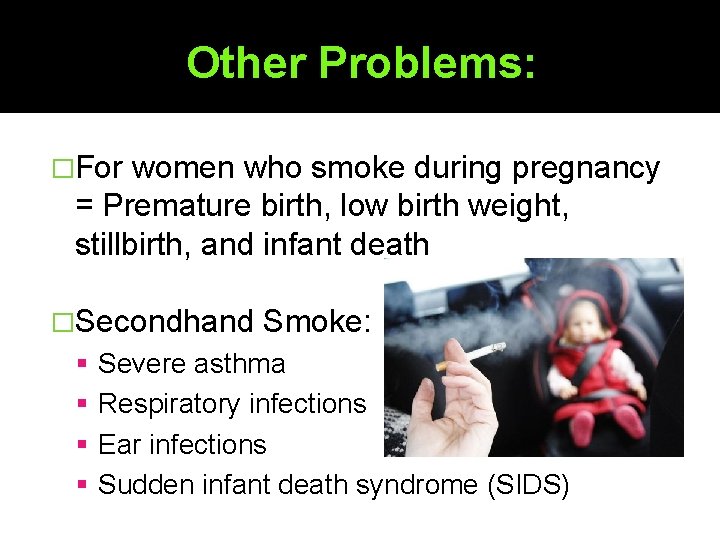
Other Problems: �For women who smoke during pregnancy = Premature birth, low birth weight, stillbirth, and infant death �Secondhand Smoke: Severe asthma Respiratory infections Ear infections Sudden infant death syndrome (SIDS)
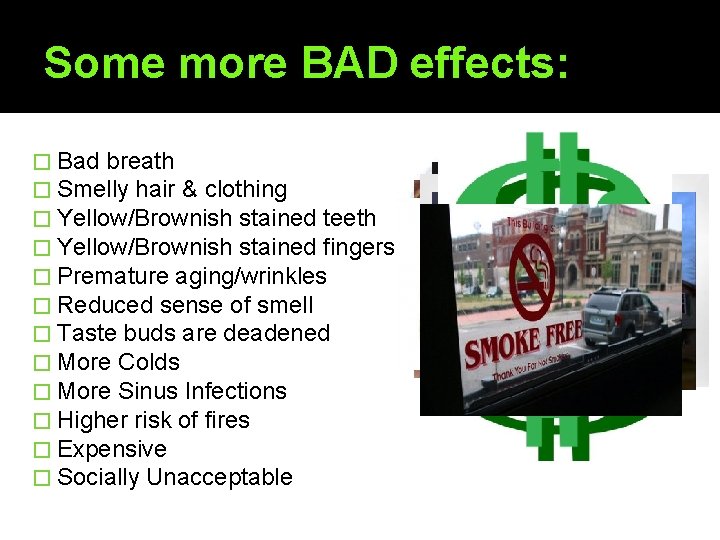
Some more BAD effects: � Bad breath � Smelly hair & clothing � Yellow/Brownish stained teeth � Yellow/Brownish stained fingers � Premature aging/wrinkles � Reduced sense of smell � Taste buds are deadened � More Colds � More Sinus Infections � Higher risk of fires � Expensive � Socially Unacceptable