
Alcohol Notes Ch 15 Lesson 1 2 3
- Slides: 16
Alcohol Notes Ch. 15 Lesson 1 -2 -3
, Depressant- slows down the working of the brain and other parts of the Central nervous system. Intoxication is the effect of the alcohol on the body. Slowed reaction time. Loss of balance, blurred vision and slurred speech are symptoms of intoxication. Alcohol is processed (metabolized) from the body by the liver.
2 Types 1. Methanol- made from wood is poisonous. 2. Ethanol or beverage alcohol is made from plant sugars that have been processed or fermented to produce alcohol. Wine comes from fermented grapes and other fruit. Beer is made from fermented grains including barley and wheat. Fermented plants that are further processed to increase the alcohol content is called distillation. These are spirits and liquors such as whiskey and vodka. Moonshine is home made whiskey
Comparing alcohol in the blood Amount of alcohol in a drink is about ½ ounce of alcohol. 1 drink is = • 1 ½ oz. shot of hard liquor (whiskey) • 12 oz. can of beer • 4 oz. glass of wine
Proof- is percent alcohol take the proof and divide by 2 and that will give you the percent alcohol ( ex. 80 proof whiskey is 40% alcohol)
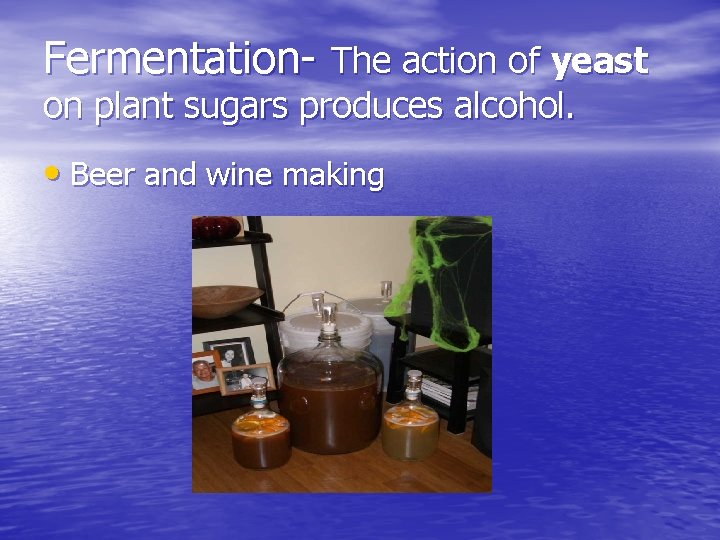
Fermentation- The action of yeast on plant sugars produces alcohol. • Beer and wine making
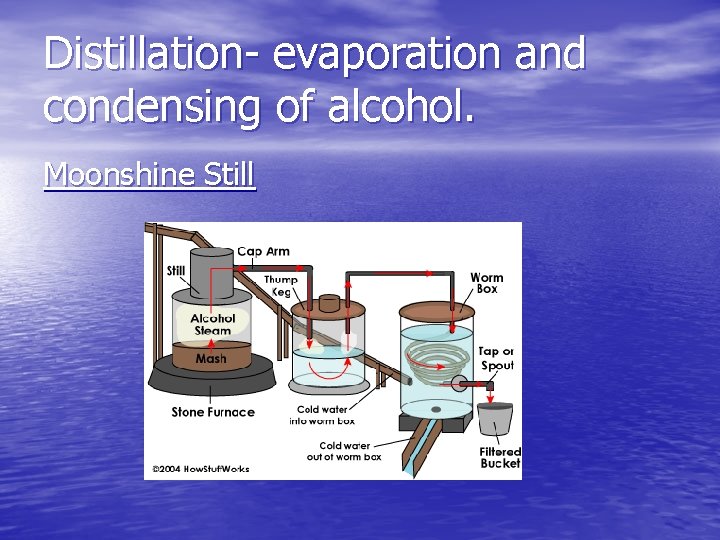
Distillation- evaporation and condensing of alcohol. Moonshine Still
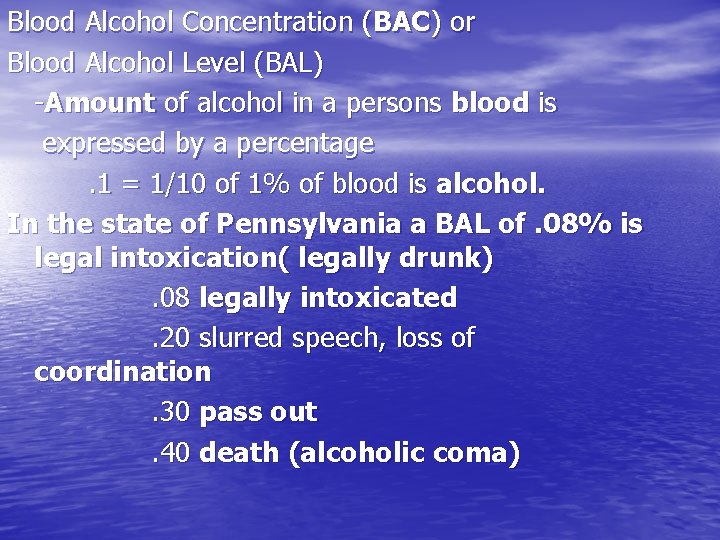
Blood Alcohol Concentration (BAC) or Blood Alcohol Level (BAL) -Amount of alcohol in a persons blood is expressed by a percentage. 1 = 1/10 of 1% of blood is alcohol. In the state of Pennsylvania a BAL of. 08% is legal intoxication( legally drunk). 08 legally intoxicated. 20 slurred speech, loss of coordination. 30 pass out. 40 death (alcoholic coma)
• The body (your liver)can break down (metabolize) ½ ounce of alcohol an hour. That is about one drink per hour.
Factors that determine how alcohol affects someone 1. Body type Gender- male or female Weight and metabolism - muscle vs. fat
2. What you have eaten- food slows the absorption of alcohol. 3. How much you alcohol you have consumed in the past. (your experience with alcohol). 4. Other drugs being used Alcohol is a magnifier. (synergistic effect) 5. Mental State/mood. - How you feel when you are drinking.
External pressures to consume alcohol come from family and friends, movies and TV shows, and books and magazine ads. Alcoholism –when a person is addicted to alcohol. They experience serious withdrawal symptoms if they do not consume alcohol. Psychological dependence is a mental or emotional need for a drug. Physical dependence is when the body needs the drug to physically function.
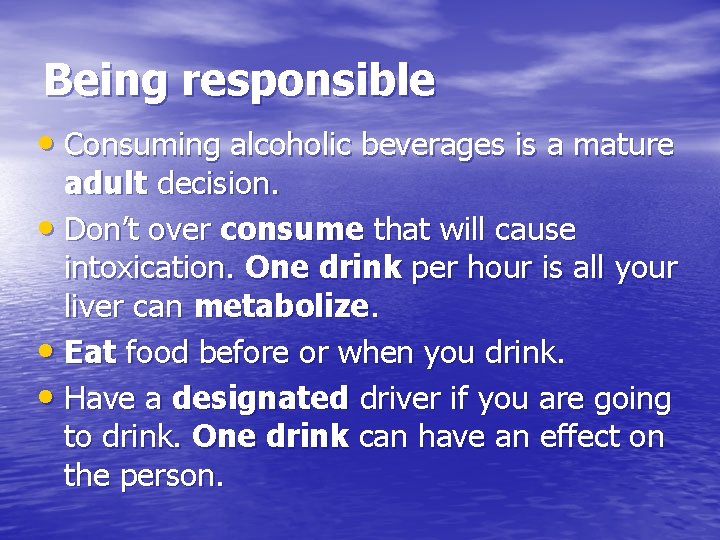
Being responsible • Consuming alcoholic beverages is a mature adult decision. • Don’t over consume that will cause intoxication. One drink per hour is all your liver can metabolize. • Eat food before or when you drink. • Have a designated driver if you are going to drink. One drink can have an effect on the person.
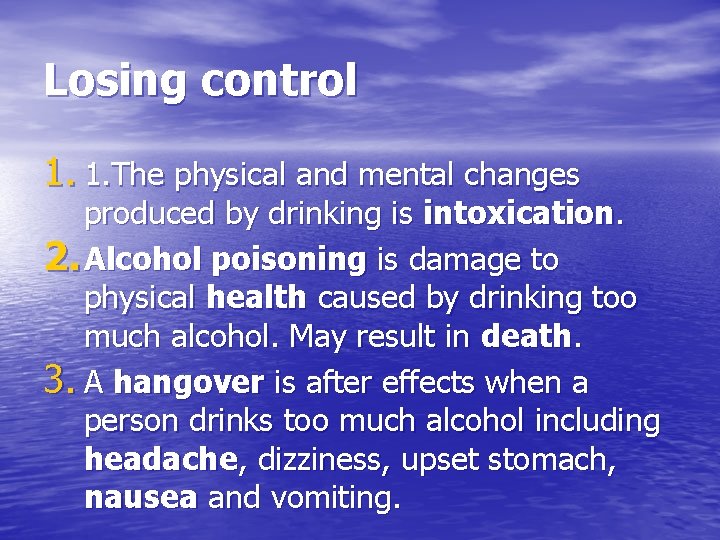
Losing control 1. 1. The physical and mental changes produced by drinking is intoxication. 2. Alcohol poisoning is damage to physical health caused by drinking too much alcohol. May result in death. 3. A hangover is after effects when a person drinks too much alcohol including headache, dizziness, upset stomach, nausea and vomiting.
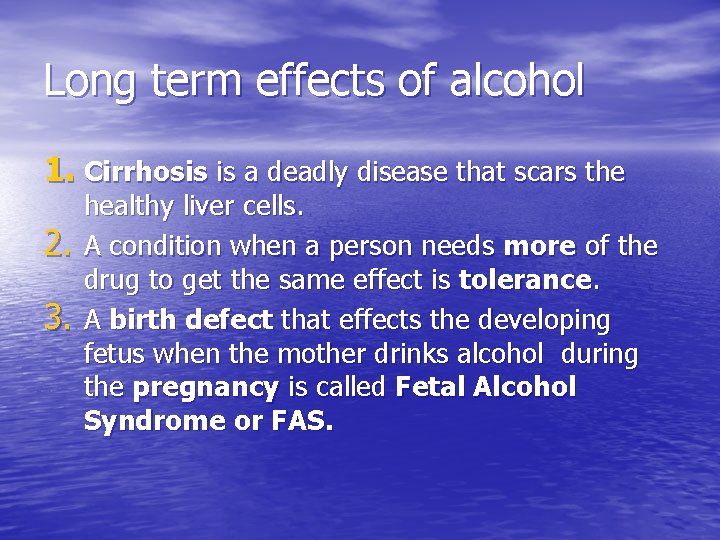
Long term effects of alcohol 1. Cirrhosis is a deadly disease that scars the 2. 3. healthy liver cells. A condition when a person needs more of the drug to get the same effect is tolerance. A birth defect that effects the developing fetus when the mother drinks alcohol during the pregnancy is called Fetal Alcohol Syndrome or FAS.
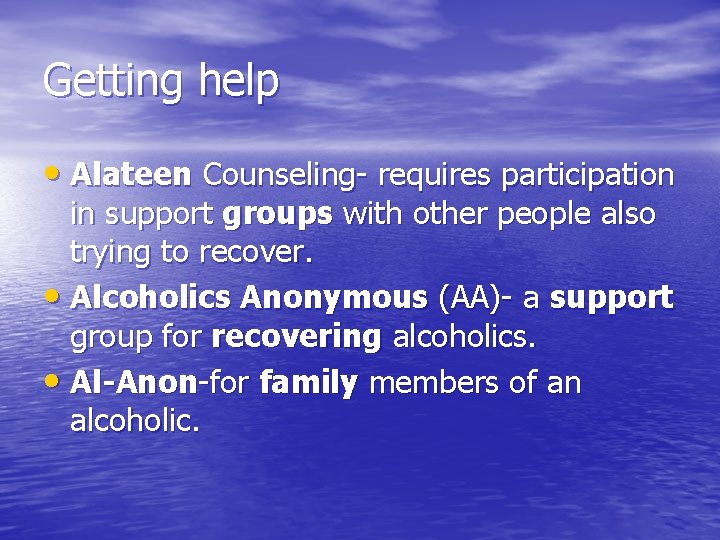
Getting help • Alateen Counseling- requires participation in support groups with other people also trying to recover. • Alcoholics Anonymous (AA)- a support group for recovering alcoholics. • Al-Anon-for family members of an alcoholic.