
Alcohol During COVID19 Presented by Evan Gurney WSU
Alcohol During COVID-19 Presented by Evan Gurney WSU MD/MPH Candidate Supervised and Reviewed by: Karen Huyghe, MA Marketing and Public Relations Manager Erika Blaskay, RN Community Outreach Nurse
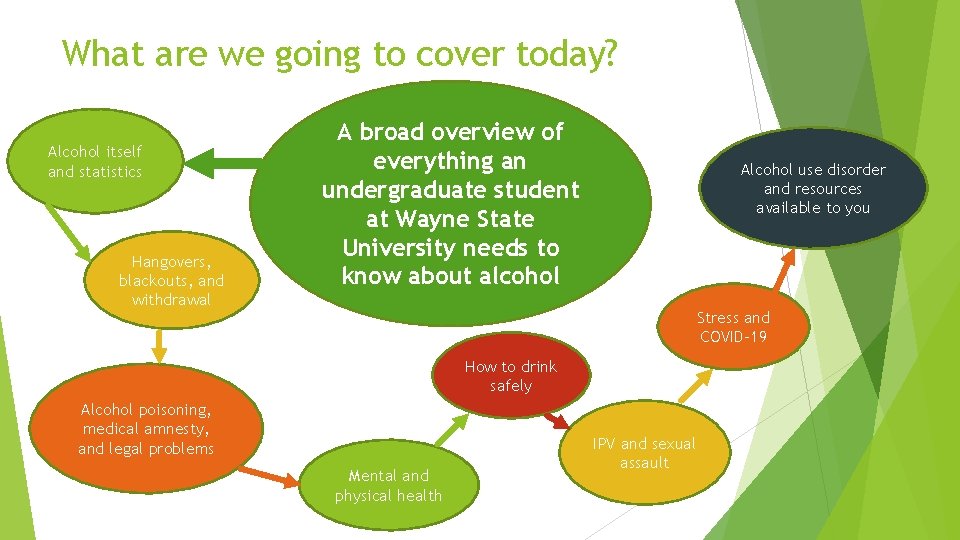
What are we going to cover today? Alcohol itself and statistics Hangovers, blackouts, and withdrawal A broad overview of everything an undergraduate student at Wayne State University needs to know about alcohol Alcohol use disorder and resources available to you Stress and COVID-19 How to drink safely Alcohol poisoning, medical amnesty, and legal problems Mental and physical health IPV and sexual assault
(1) College Students Why it matters? 55% - drank in the past month 35% - binge drank 10% - heavy drinking
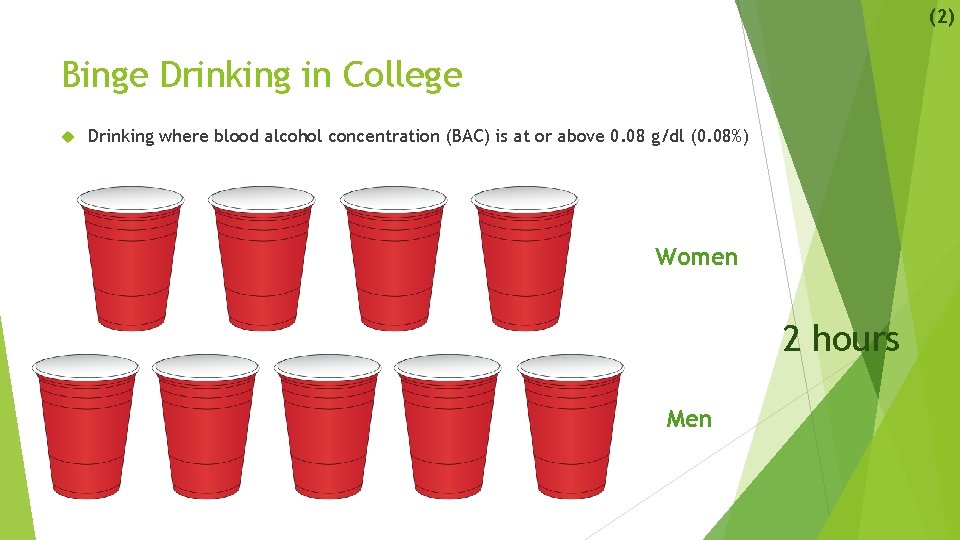
(2) Binge Drinking in College Drinking where blood alcohol concentration (BAC) is at or above 0. 08 g/dl (0. 08%) Women 2 hours Men
(3) Why it matters during COVID-19? Alcohol sales are up People report drinking more Dangerous?
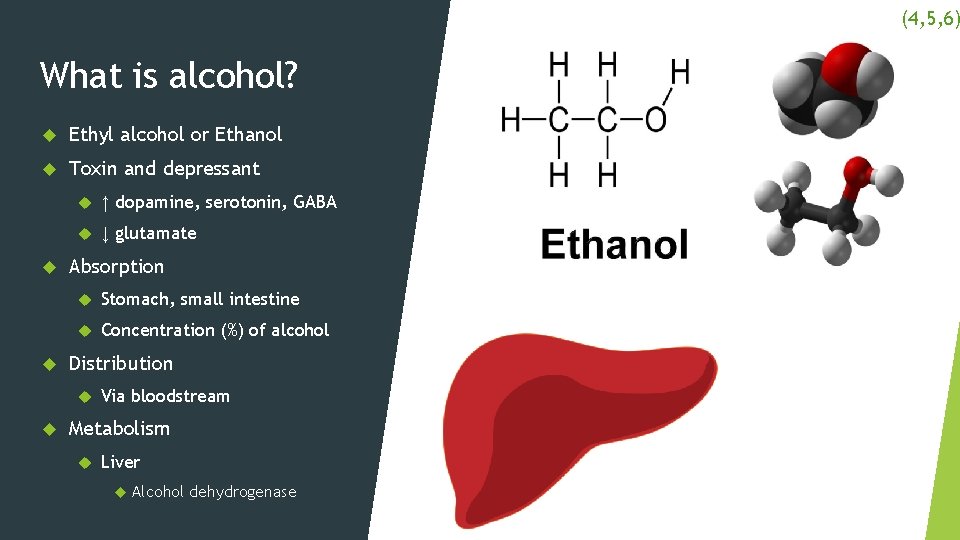
(4, 5, 6) What is alcohol? Ethyl alcohol or Ethanol Toxin and depressant ↑ dopamine, serotonin, GABA ↓ glutamate Absorption Stomach, small intestine Concentration (%) of alcohol Distribution Via bloodstream Metabolism Liver Alcohol dehydrogenase
(7) Hangovers From excessive alcohol use Fatigue, weakness, thirst, headache, nausea, light/sound sensitivity, anxiety, sweating, ↑ BP Cause? Dehydration Disrupted sleep GI irritation Inflammation Mini-withdrawal Symptoms peak when BAC returns to 0 Can last 24 hours or longer
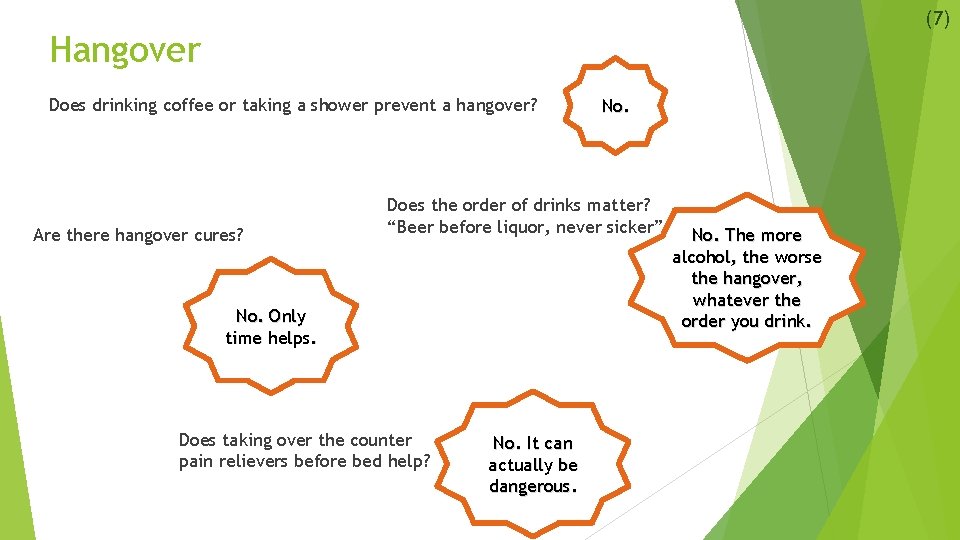
(7) Hangover Does drinking coffee or taking a shower prevent a hangover? Are there hangover cures? No. Does the order of drinks matter? “Beer before liquor, never sicker” No. Only time helps. Does taking over the counter pain relievers before bed help? No. It can actually be dangerous. No. The more alcohol, the worse the hangover, whatever the order you drink.
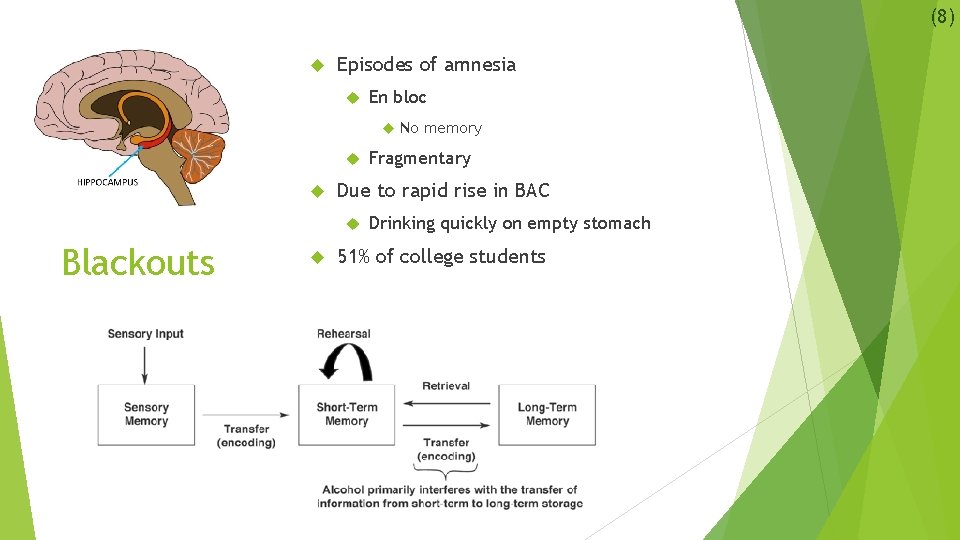
(8) Episodes of amnesia En bloc Fragmentary Due to rapid rise in BAC Blackouts No memory Drinking quickly on empty stomach 51% of college students
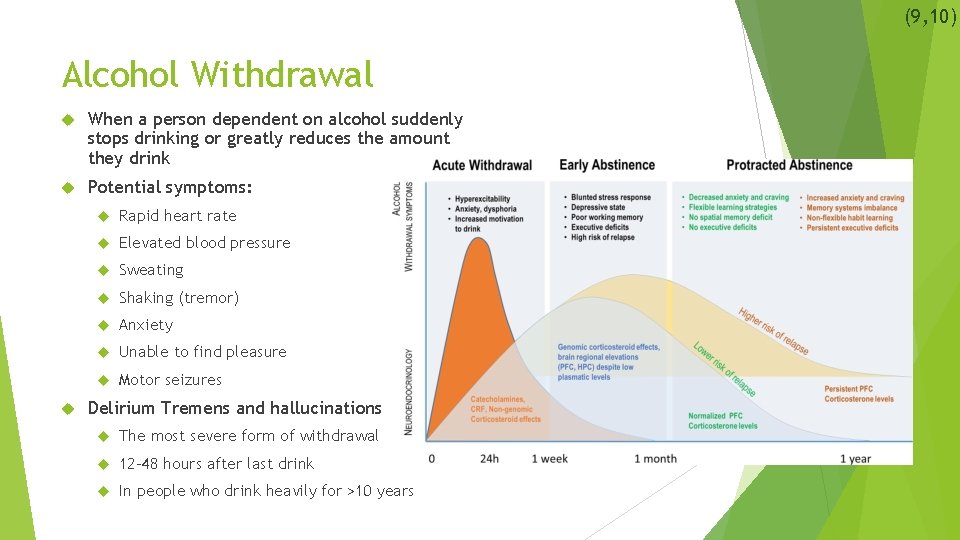
(9, 10) Alcohol Withdrawal When a person dependent on alcohol suddenly stops drinking or greatly reduces the amount they drink Potential symptoms: Rapid heart rate Elevated blood pressure Sweating Shaking (tremor) Anxiety Unable to find pleasure Motor seizures Delirium Tremens and hallucinations The most severe form of withdrawal 12 -48 hours after last drink In people who drink heavily for >10 years
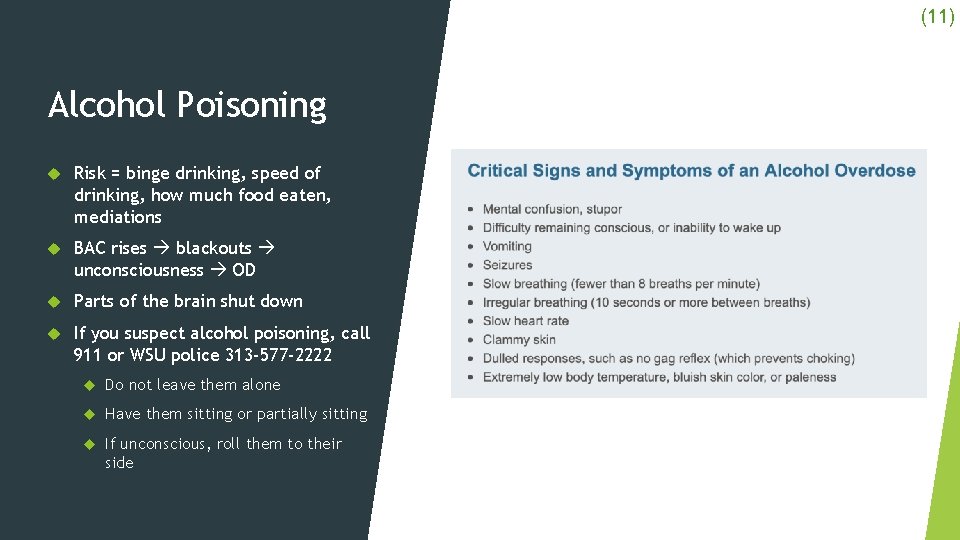
(11) Alcohol Poisoning Risk = binge drinking, speed of drinking, how much food eaten, mediations BAC rises blackouts unconsciousness OD Parts of the brain shut down If you suspect alcohol poisoning, call 911 or WSU police 313 -577 -2222 Do not leave them alone Have them sitting or partially sitting If unconscious, roll them to their side
(12) Medical Amnesty 2012 – State of Michigan passed Exemption of prosecution when drinking if: Under 21 who presents to medial facility for observation or treatment Under 21 presents to medical or treatment facility after sexual assault Under 21 who accompanies the above Under 21 who initiates contact with law enforcement or emergency medical services for the purpose of medical assistance due to a legitimate health concern Overdose of a controlled substance An individual who reports sexual misconduct, as either a complainant or a witness, will not receive disciplinary action by the University for using alcohol or other drugs around or during the incident. Call 313 -577 -2222 (if on campus) or 911 for help if you need it!
Impact of Alcohol
(13) Legal Problems - Under 21? Minor in possession (MIP) First time Civil infraction Fine up to $100 Substance If caught driving with ANY BAC above 0 Four points on driving record Fine up to $250 Driver Responsibility payment for two years Second time Misdemeanor License Fine up to $200 License Jail suspension if probation violation license $500 service Second time First time Restricted abuse screening Community $500 suspension up to $500 Driver Responsibility payment for two years Jail
(14) Other MI laws and WSU policies Michigan laws “Michigan law prohibits public intoxication that causes one to act in a manner that endangers the safety of another person or property or that causes a public disturbance” Cannot carry, possess, or use a firearm if under the influence of alcohol or controlled substance WSU policies “The unlawful possession, use, distribution, dispensation, sale or manufacture of drugs or alcohol is prohibited on university premises, at university activities and at university worksites” “The use or possession of alcoholic beverages is expressly prohibited in classrooms, lecture halls, laboratories, the libraries, the chapel, and within buildings or arenas where athletic events, lectures, and concerts are held” The WSU Community Living Guide restricts the possession, use, and distribution of alcohol in student housing to those over the age of 21 Potential sanctions if violate WSU policies range from a reprimand to expulsion
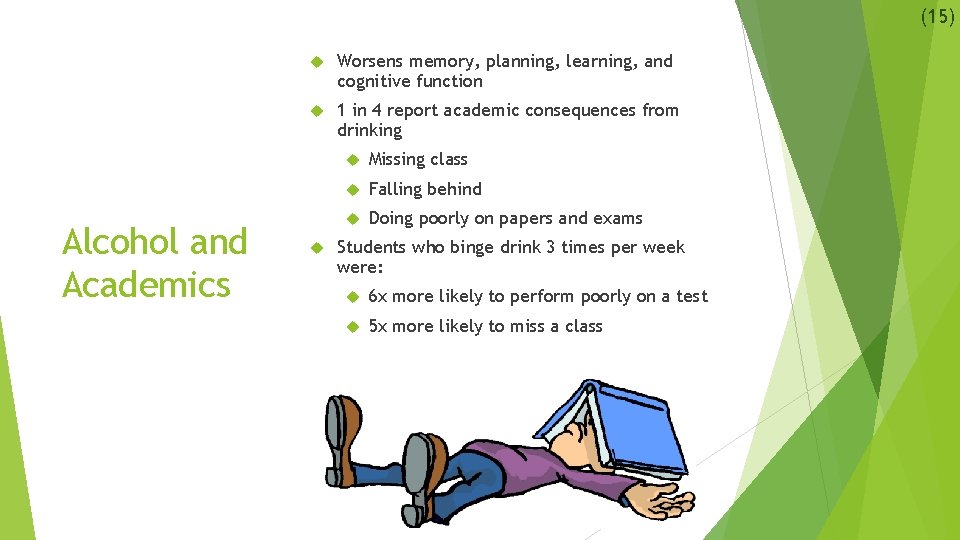
(15) Alcohol and Academics Worsens memory, planning, learning, and cognitive function 1 in 4 report academic consequences from drinking Missing class Falling behind Doing poorly on papers and exams Students who binge drink 3 times per week were: 6 x more likely to perform poorly on a test 5 x more likely to miss a class
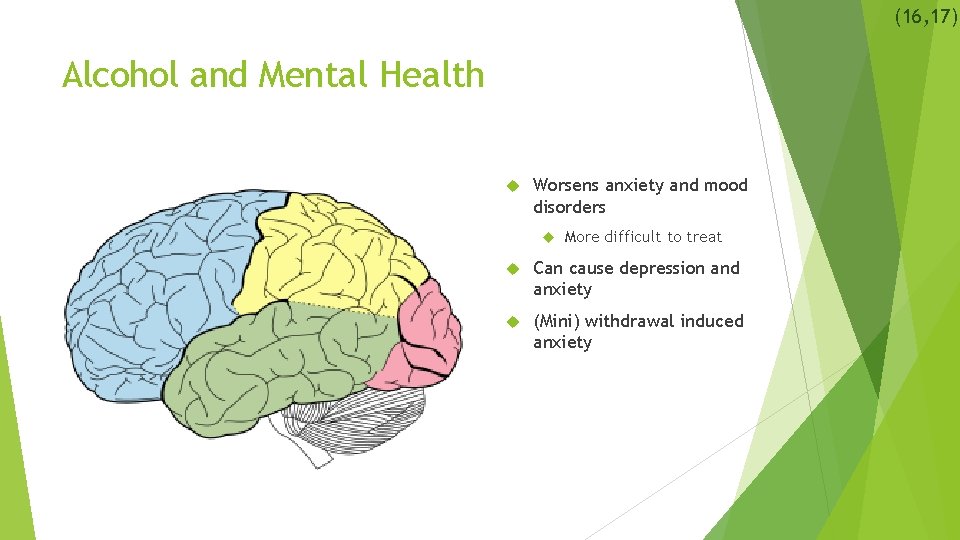
(16, 17) Alcohol and Mental Health Worsens anxiety and mood disorders More difficult to treat Can cause depression and anxiety (Mini) withdrawal induced anxiety
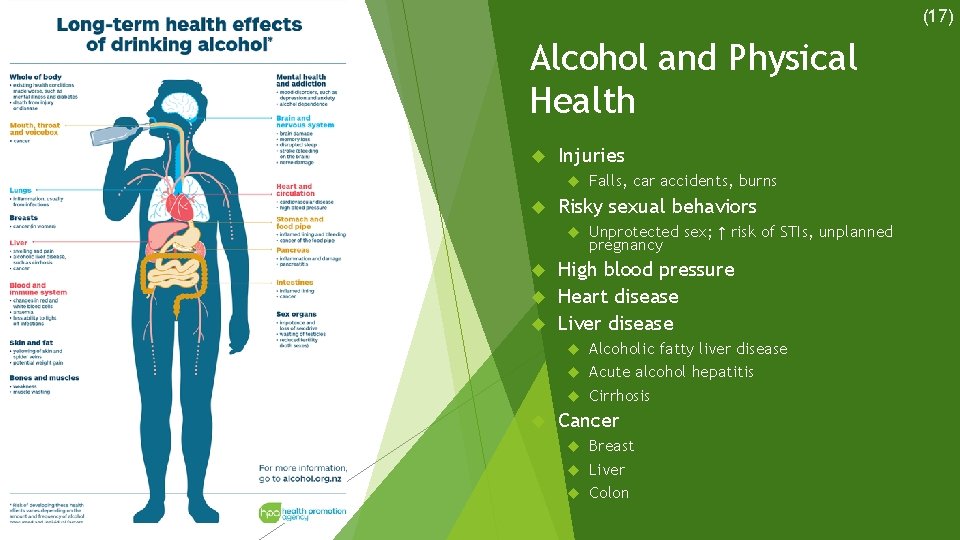
(17) Alcohol and Physical Health Injuries Falls, car accidents, burns Risky sexual behaviors Unprotected sex; ↑ risk of STIs, unplanned pregnancy High blood pressure Heart disease Liver disease Alcoholic fatty liver disease Acute alcohol hepatitis Cirrhosis Cancer Breast Liver Colon
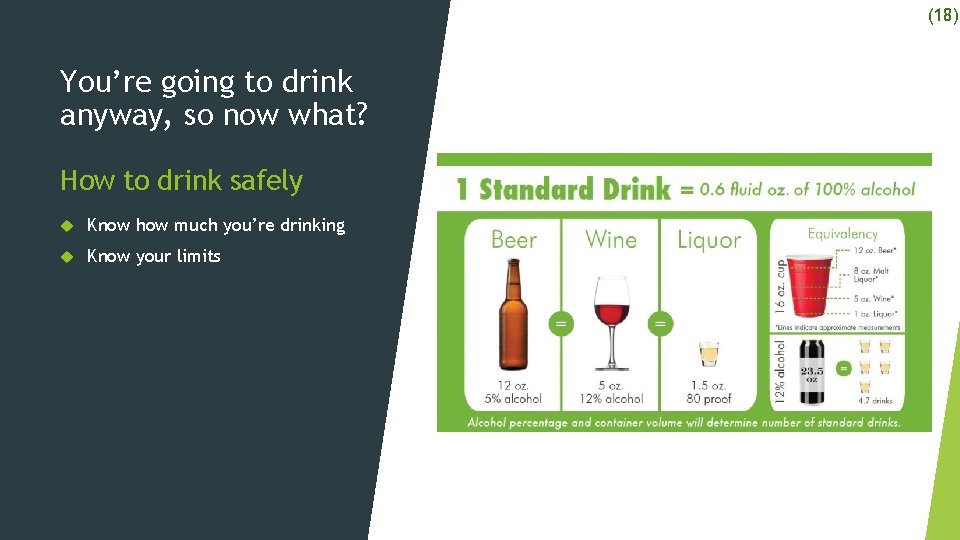
(18) You’re going to drink anyway, so now what? How to drink safely Know how much you’re drinking Know your limits
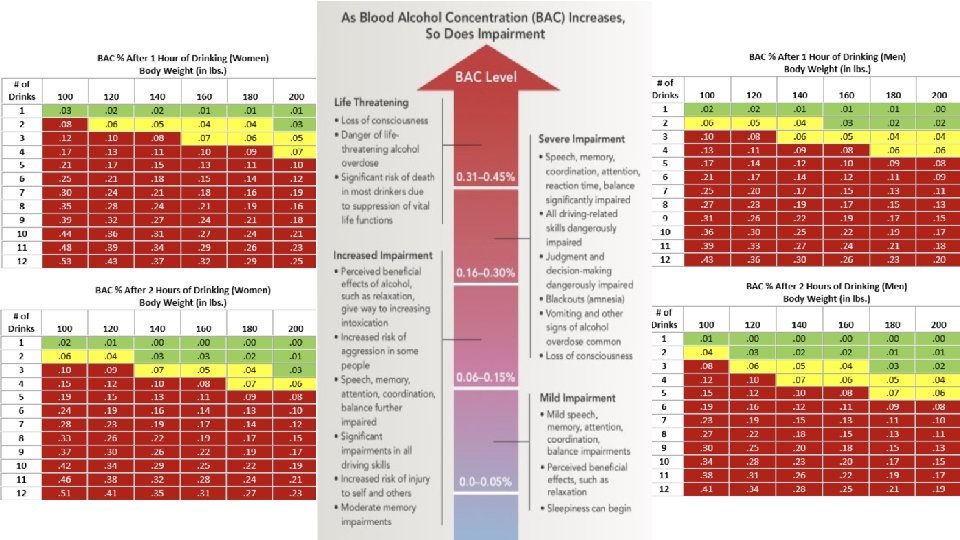
Have a plan Never drive after drinking! Uber/lyft Designated Driver Sleep at friend’s place until sober
(19) Alcohol and Intimate Partner Violence (IPV) IPV = any behavior in an intimate relationship that causes physical, psychological, or sexual harm Victims believed partner had been drinking prior to physical assault in 55% of cases In “perpetrators, heavier, more frequent drinking increases the risk of violence” IPV is more likely to result in injury if the perpetrator had consumed alcohol Mental health, beliefs about gender roles and violence also contribute
(20, 21) Alcohol Facilitated Sexual Assault “Alcohol is the most common substance used to perpetrate drugfacilitated sexual assault” Victim knows perpetrator in about 80% of sexual assaults What does alcohol facilitated sexual assault look like? Being pressured to drink more than comfortable with Request for help after drinking too much being ignored Not being told what’s in your drink after asking Perpetrators use alcohol because: Lowers inhibitions, use it to justify actions Makes it more difficult for the victim to resist Can prevent victims from remembering details, making it more difficult for them to report
(20) Alcohol and Sexual Assault Don’t leave your friends Never leave your drink unattended Watch your drink being made Drugs can be tasteless, colorless, and odorless Know your limits! Are you disproportionately messed up for how much you drank? If you see something that looks suspicious, intervene Remember medical amnesty! Call 911 or 313 -577 -2222 for emergency medical services if you need them! If you were sexually assaulted after drinking, it’s not your fault! It is always the fault of the perpetrator.
(22) Sexual Assault Resources Wayne State University Counseling and Psychological Services (CAPS) 552 Student Center Building, Detroit, MI 48202 | 313 -577 -3398 | Crisis/information line (nights/weekends/university closures): 313 -577 -9982 Title IX Director 313 -577 -9999 | titleix@wayne. edu https: //titleix. wayne. edu Wayne County SAFE 24 -hour crisis pager: 313 -430 -8000 http: //wcsafe. org Services FREE to everyone Forensic medical exam within 120 hours of assault Counseling and advocacy services
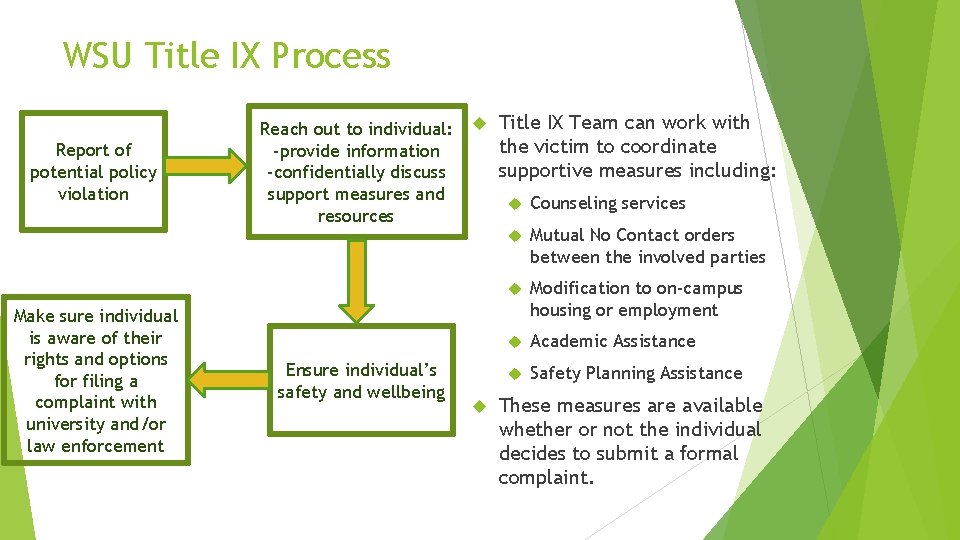
WSU Title IX Process Report of potential policy violation Make sure individual is aware of their rights and options for filing a complaint with university and/or law enforcement Reach out to individual: -provide information -confidentially discuss support measures and resources Ensure individual’s safety and wellbeing Title IX Team can work with the victim to coordinate supportive measures including: Counseling services Mutual No Contact orders between the involved parties Modification to on-campus housing or employment Academic Assistance Safety Planning Assistance These measures are available whether or not the individual decides to submit a formal complaint.
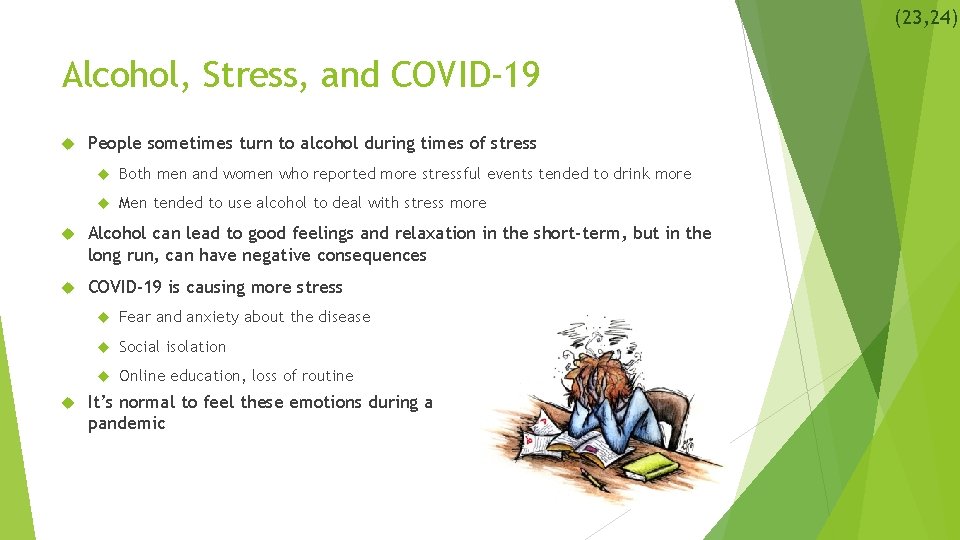
(23, 24) Alcohol, Stress, and COVID-19 People sometimes turn to alcohol during times of stress Both men and women who reported more stressful events tended to drink more Men tended to use alcohol to deal with stress more Alcohol can lead to good feelings and relaxation in the short-term, but in the long run, can have negative consequences COVID-19 is causing more stress Fear and anxiety about the disease Social isolation Online education, loss of routine It’s normal to feel these emotions during a pandemic
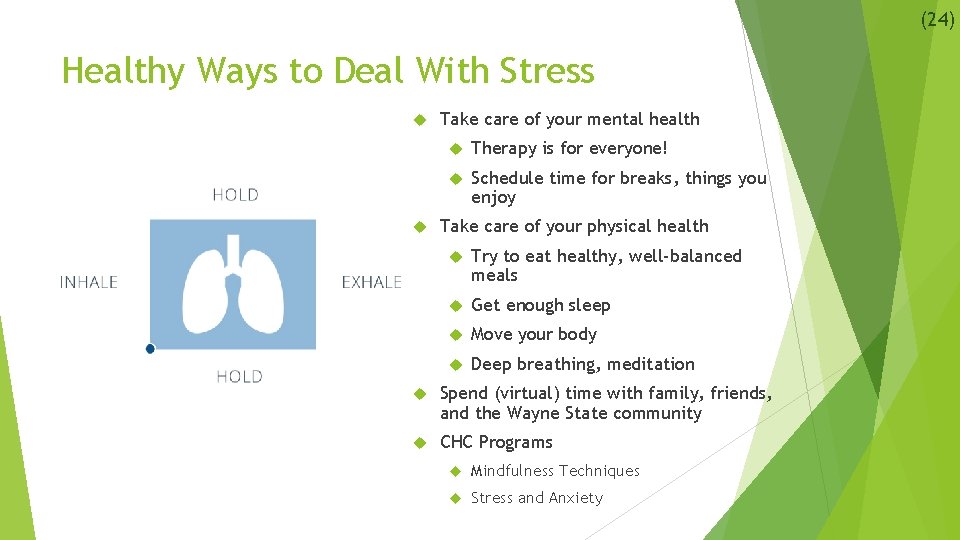
(24) Healthy Ways to Deal With Stress Take care of your mental health Therapy is for everyone! Schedule time for breaks, things you enjoy Take care of your physical health Try to eat healthy, well-balanced meals Get enough sleep Move your body Deep breathing, meditation Spend (virtual) time with family, friends, and the Wayne State community CHC Programs Mindfulness Techniques Stress and Anxiety
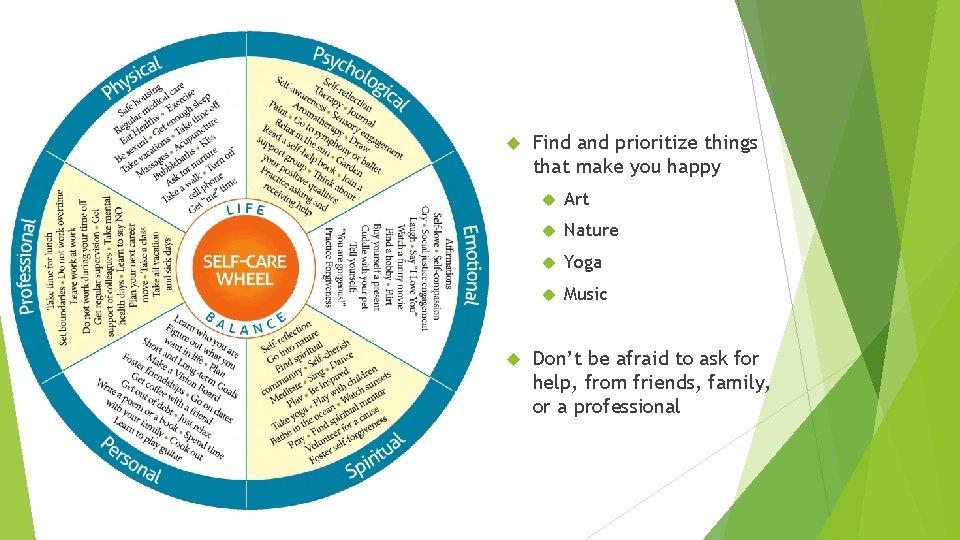
Find and prioritize things that make you happy Art Nature Yoga Music Don’t be afraid to ask for help, from friends, family, or a professional
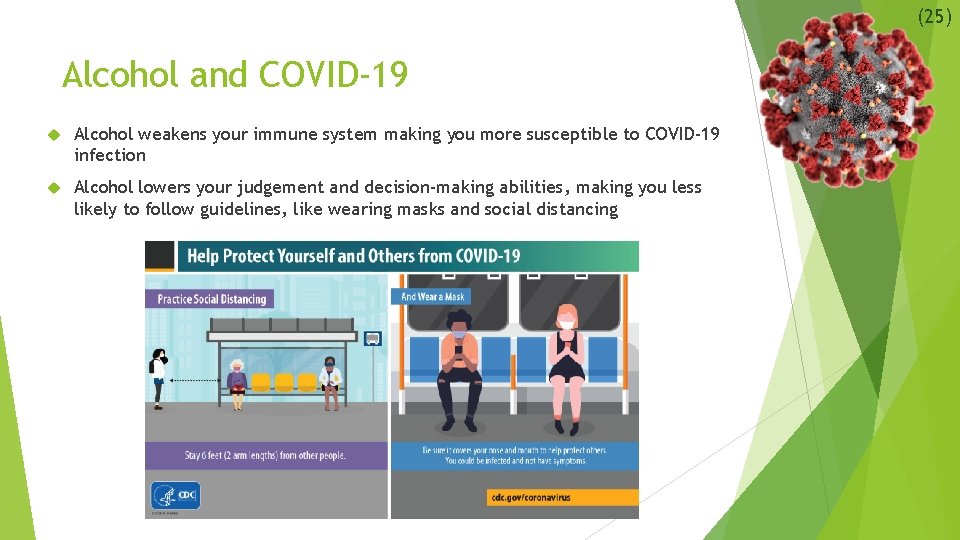
(25) Alcohol and COVID-19 Alcohol weakens your immune system making you more susceptible to COVID-19 infection Alcohol lowers your judgement and decision-making abilities, making you less likely to follow guidelines, like wearing masks and social distancing
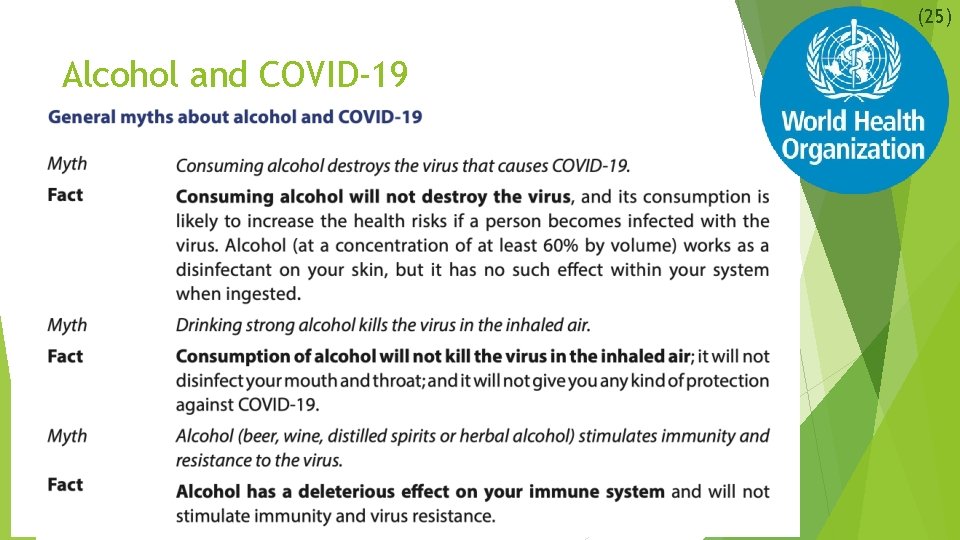
(25) Alcohol and COVID-19
(15, 26, 27) Alcohol Use Disorder DSM-V published by the American Psychiatric Association Mild, moderate, severe Between 9 -20% of college students meet criteria for AUD Control, compulsion, consequences Out-of-control use - are you drinking more than you intended? Are you spending a lot of time, money, or thought to obtain, use, and/or recover from alcohol? Have you had any legal, social, financial, or academic consequences because of your drinking? If yes, your drinking may be a cause for concern AUD is a medical disorder and not a character flaw There is help available
(28, 29, 30) Alcohol Use Disorder Treatment Medical detoxification = help someone get to an alcohol free state and manage symptoms of withdrawal 5 -14 days of treatment Effective medication Psychosocial interventions Medication Individual alcohol counseling and help groups 2 medications, Naltrexone and Acamprosate, are USPSTF grade A A combination of psychosocial interventions, medication, and social services is the most effective
(31) e. CHECKUP To Go Brief, confidential, tool that provides information on: Your individual drinking pattern Your risk patterns Your aspirations and goals Helpful resources at Wayne State University and in your community Can take it an unlimited number of times to track alcohol use
Alcohol Resources Talk to your healthcare provider Your primary care physician can assess your use, answer your questions, and refer Wayne State University Counseling and Psychological Services (CAPS) Free and confidential 552 Student Center Building, Detroit, MI 48202 | 313 -577 -3398 | Crisis/information line (nights/weekends/university closures): 313 -577 -9982 Alcoholics Anonymous (AA) https: //aa-semi. org In person: Several meetings every day all over SE Michigan Variety of groups Zoom meetings SAMHSA’s National Helpline – 1 -800 -662 -HELP (4357) NIAAA Alcohol Treatment Navigator https: //alcoholtreatment. niaaa. nih. gov/how-to-find-alcohol-treatment
Contact Us Campus Health Center 5285 Anthony Wayne Drive Detroit, MI 48202 (313) 577 -5041 Email at Campus. Health@wayne. edu Online at health. wayne. edu Follow us on social media: Twitter - @WSUCampus. Health Facebook - @Campus. Health. Center Instagram - @campushealthcenter Now offering telehealth visits through telephone or webcam!
References (1/3) 1. Prevalence of College Drinking. (2017). National Institute on Alcohol Abuse and Alcoholism. https: //www. collegedrinkingprevention. gov/statistics/prevalence. aspx 2. Binge Drinking is a serious but preventable problem of excessive alcohol use | CDC. (2019, December 30). Centers for Disease Control and Prevention. https: //www. cdc. gov/alcohol/fact-sheets/binge-drinking. htm 3. Christensen, T. (2020, July 1). COVID-19 pandemic brings new concerns about excessive drinking. American Heart Association. https: //www. heart. org/en/news/2020/07/01/covid-19 -pandemic-brings-new-concernsabout-excessive-drinking 4. Facts about moderate drinking | CDC. (2019, December 30). Centers for Disease Control and Prevention. https: //www. cdc. gov/alcohol/fact-sheets/moderate-drinking. htm 5. Paton, A. (2005). Alcohol in the body. BMJ, 330(7482), 85– 87. https: //doi. org/10. 1136/bmj. 330. 7482. 85 6. Godman, H. , & Levine, D. (2019, June 7). Is Alcohol a Depressant? US News. https: //health. usnews. com/conditions/mental-health/depression/articles/is-alcohol-a-depressant 7. Hangovers | National Institute on Alcohol Abuse and Alcoholism (NIAAA). (2019, March). National Institute on Alcohol Abuse and Alcoholism. https: //www. niaaa. nih. gov/publications/brochures-and-factsheets/hangovers 8. White, A. M. (2003). What Happened? Alcohol, Memory Blackouts, and the Brain. National Institute on Alcohol Abuse and Alcoholism. https: //pubs. niaaa. nih. gov/publications/arh 27 -2/186 -196. htm 9. Becker, H. C. (n. d. ). Alcohol Dependence, Withdrawal, and Relapse. National Institute on Alcohol Abuse and Alcoholism. https: //pubs. niaaa. nih. gov/publications/arh 314/348 -361. htm 10. Delirium tremens. (2019, October 1). Medline Plus. https: //medlineplus. gov/ency/article/000766. htm 11. Understanding the Dangers of Alcohol Overdose | National Institute on Alcohol Abuse and Alcoholism (NIAAA). (2020, March). National Institute on Alcohol Abuse and Alcoholism. https: //www. niaaa. nih. gov/publications/brochures-and-fact-sheets/understanding-dangers-of-alcoholoverdose
References (2/3) 12. Medical Amnesty Law | Dean of Students. (n. d. ). Dean of Students University of Michigan. https: //deanofstudents. umich. edu/article/medical-amnesty-law 13. Under 21? If you have alcohol in your possession, you can get in trouble with the law. (n. d. ). Michigan Office of Highway Safety Planning. https: //www. michigan. gov/documents/msp/Under_21_Brochure_update_2018_630380_7. pdf 14. 2019 Annual Security and Fire Safety Report. (2019). Wayne State University. https: //police. wayne. edu/pdf/security-report-2019. pdf 15. College Drinking | National Institute on Alcohol Abuse and Alcoholism (NIAAA). (2020, October). National Institute on Alcohol Abuse and Alcoholism. https: //www. niaaa. nih. gov/publications/brochures-and-factsheets/college-drinking 16. Castaneda, R. , Sussman, N. , Westreich, L. , Levy, R. , & O’Malley, M. (1996). A review of the effects of moderate alcohol intake on the treatment of anxiety and mood disorders. J Clin Psychiatry, 57(5), 207– 212. https: //pubmed. ncbi. nlm. nih. gov/8626352/ 17. Drinking too much alcohol can harm your health. Learn the facts | CDC. (2020, October 1). Https: //Www. Cdc. Gov/Alcohol/Fact-Sheets/Alcohol-Use. Htm. https: //www. cdc. gov/alcohol/factsheets/alcohol-use. htm 18. Alcohol Use and Your Health. (n. d. ). Centers for Disease Control and Prevention. https: //www. cdc. gov/alcohol/pdfs/alcoholyourhealth. pdf 19. Intimate partner violence and alcohol. (2006). World Health Organization. https: //www. who. int/violence_injury_prevention/violence/world_report/factsheets/fs_intimate. pdf 20. Drug-Facilitated Sexual Assault | RAINN. (n. d. ). RAINN. https: //www. rainn. org/articles/drug-facilitatedsexual-assault 21. Abbey, A. , Zawacki, T. , Buck, P. O. , Clinton, A. M. , & Mc. Auslan, P. (2001). Alcohol and Sexual Assault. National Institute on Alcohol Abuse and Alcoholism. https: //pubs. niaaa. nih. gov/publications/arh 25 -1/4351. htm
References (3/3) 22. Sexual misconduct resources. (2020). Warrior Life and Wellness. https: //warriorlife. wayne. edu/sexualhealth/misconduct-resources 23. Alcohol Alert Number 85. (2012). National Institute on Alcohol Abuse and Alcoholism. https: //pubs. niaaa. nih. gov/publications/AA 85. htm 24. Coping With Stress. (2020, February 11). Centers for Disease Control and Prevention. https: //www. cdc. gov/coronavirus/2019 -ncov/daily-life-coping/managing-stress-anxiety. html 25. Alcohol and COVID-19: what you need to know. (2020). World Health Organization. https: //www. euro. who. int/__data/assets/pdf_file/0010/437608/Alcohol-and-COVID-19 -what-youneed-to-know. pdf 26. College Drinking Facts for Parents. (n. d. ). College Drinking Change the Culture. https: //www. collegedrinkingprevention. gov/parentsandstudents/parents/Fact. Sheets/Parent. Fact. Sh eet. aspx 27. Lembke, A. (2016). Drug Dealer, MD: How Doctors Were Duped, Patients Got Hooked, and Why It’s So Hard to Stop(1 st ed. ). Johns Hopkins University Press. 28. Hayashida, M. (1998). An Overview of Outpatient and Inpatient Detoxification. National Institute on Alcohol Abuse and Alcoholism. https: //pubs. niaaa. nih. gov/publications/arh 22 -1/44 -46. pdf 29. Hebert, O. W. B. T. (2016, March 15). Medications for Alcohol Use Disorder. American Family Physician. https: //www. aafp. org/afp/2016/0315/p 457. html 30. Saitz, R. (2018). Approach to treating alcohol use disorder. Up. To. Date. https: //www. uptodate. com/contents/approach-to-treating-alcohol-use-disorder 31. Physical wellness. (2020). Warrior Life and Wellness. https: //warriorlife. wayne. edu/physical
- Slides: 39