
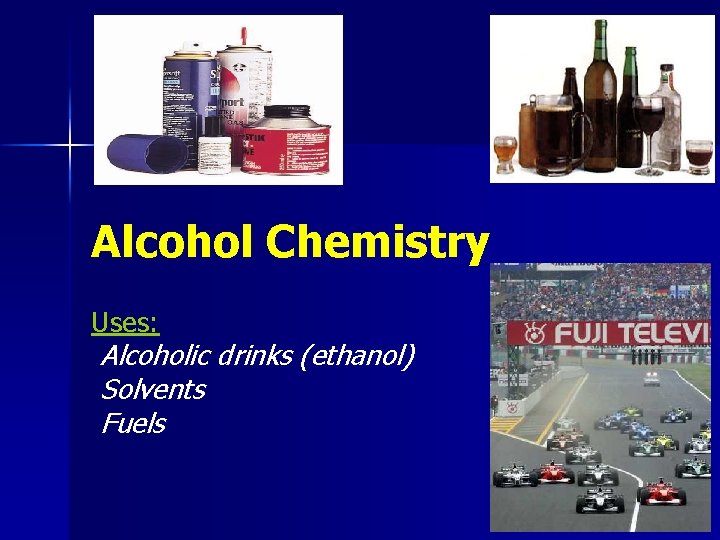
Alcohol Chemistry Uses Alcoholic drinks ethanol Solvents Fuels

- Slides: 17
Alcohol Chemistry Uses: Alcoholic drinks (ethanol) Solvents Fuels
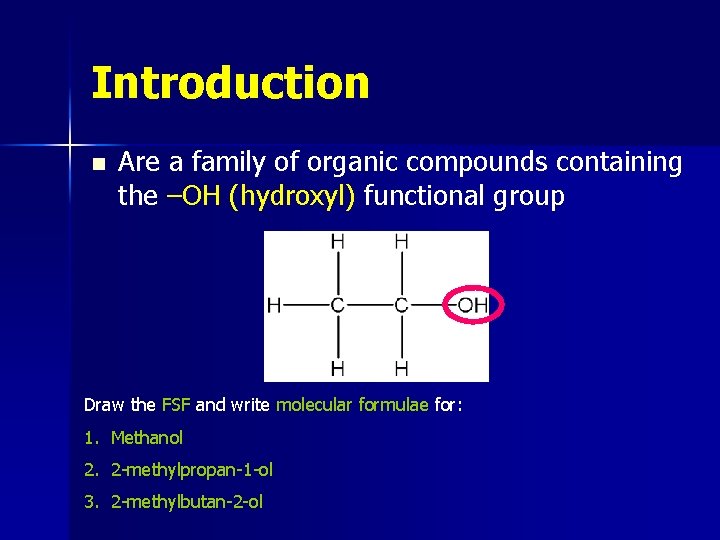
Introduction n Are a family of organic compounds containing the –OH (hydroxyl) functional group Draw the FSF and write molecular formulae for: 1. Methanol 2. 2 -methylpropan-1 -ol 3. 2 -methylbutan-2 -ol
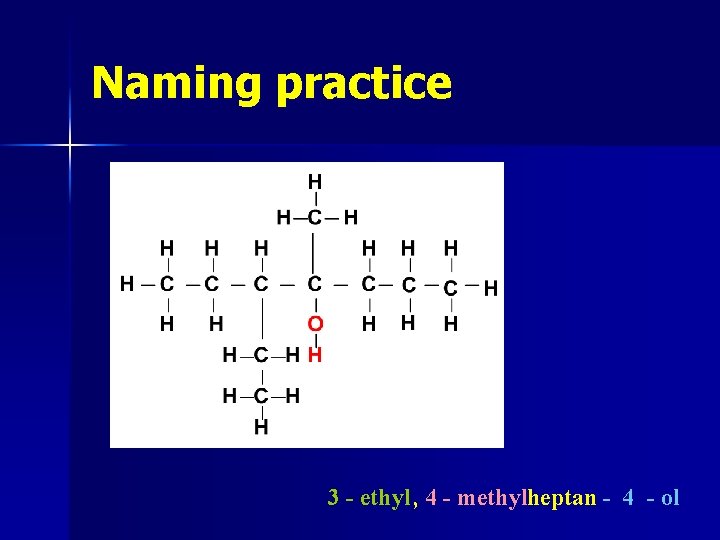
Naming practice 3 - ethyl, 4 - methylheptan - 4 - ol
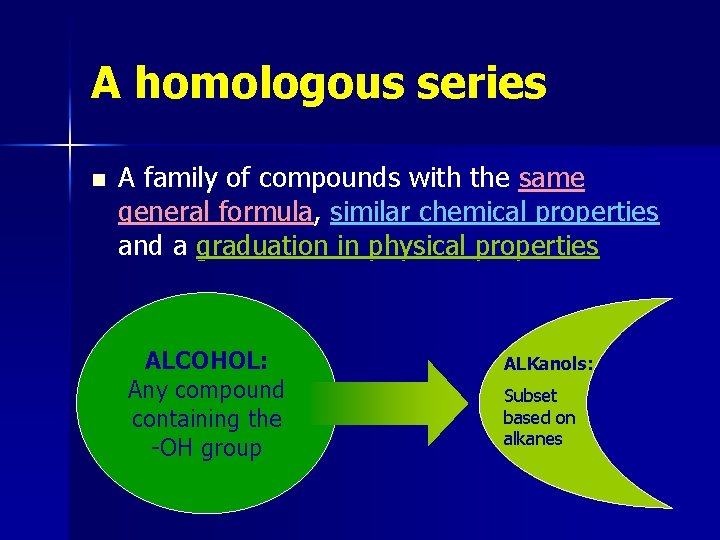
A homologous series n A family of compounds with the same general formula, similar chemical properties and a graduation in physical properties ALCOHOL: Any compound containing the -OH group ALKanols: Subset based on alkanes
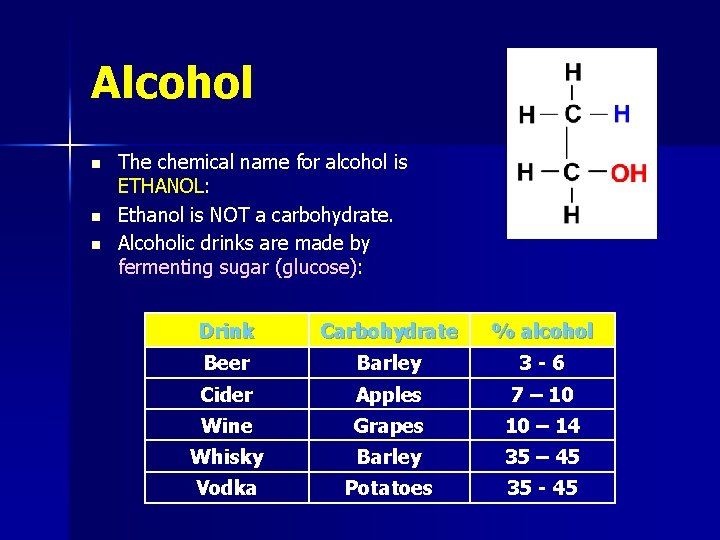
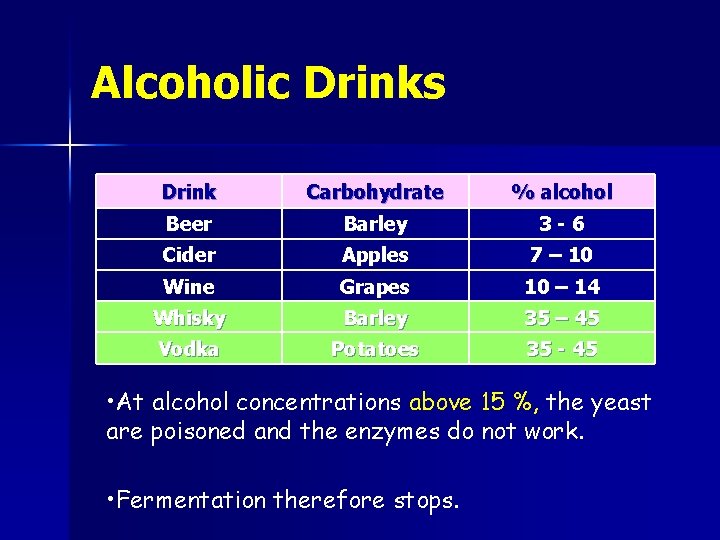
Alcohol n n n The chemical name for alcohol is ETHANOL: Ethanol is NOT a carbohydrate. Alcoholic drinks are made by fermenting sugar (glucose): Drink Carbohydrate % alcohol Beer Barley 3 -6 Cider Apples 7 – 10 Wine Grapes 10 – 14 Whisky Barley 35 – 45 Vodka Potatoes 35 - 45
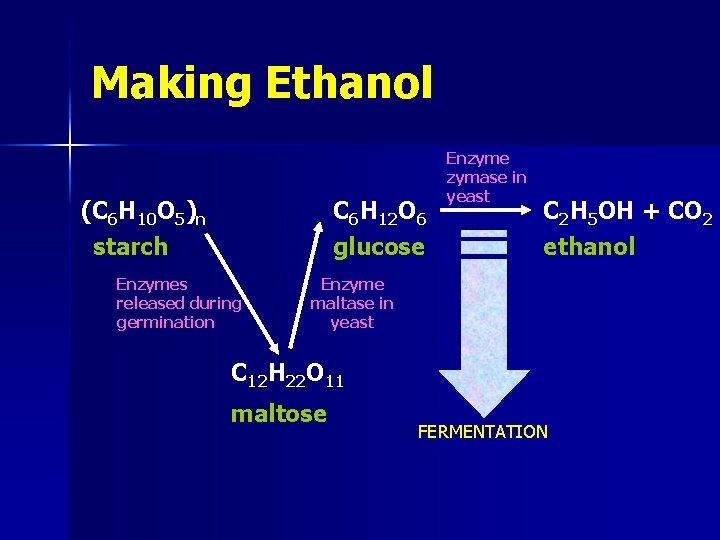
Fermentation n n Alcohol is made from sugar The process is called FERMENTATION: Glucose n n Alcohol + Carbon dioxide An ENZYME is needed to make this reaction happen - Zymase YEAST (a living organism) contains the enzyme which is needed
Making Ethanol (C 6 H 10 O 5)n starch C 6 H 12 O 6 glucose Enzymes released during germination Enzyme zymase in yeast C 2 H 5 OH + CO 2 ethanol Enzyme maltase in yeast C 12 H 22 O 11 maltose FERMENTATION
Practical n Burning £ 5 note
Practical demo n Alcohol Rocket Collect a copy of “That’s the Limit” booklet
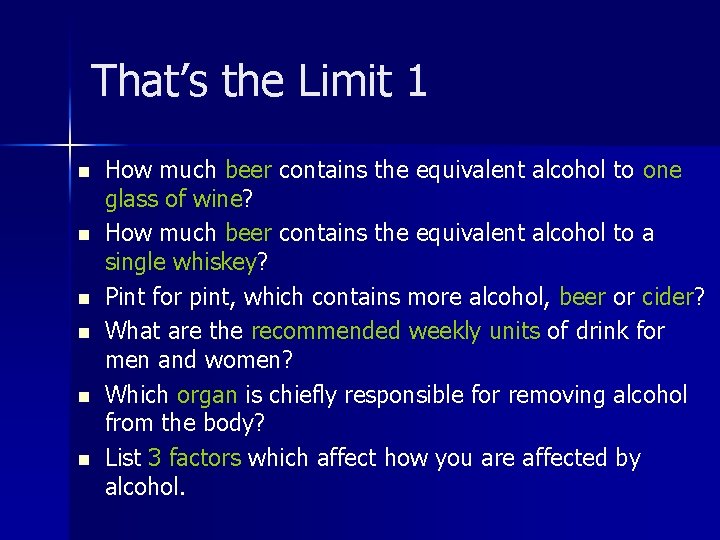
That’s the Limit 1 n n n How much beer contains the equivalent alcohol to one glass of wine? How much beer contains the equivalent alcohol to a single whiskey? Pint for pint, which contains more alcohol, beer or cider? What are the recommended weekly units of drink for men and women? Which organ is chiefly responsible for removing alcohol from the body? List 3 factors which affect how you are affected by alcohol.
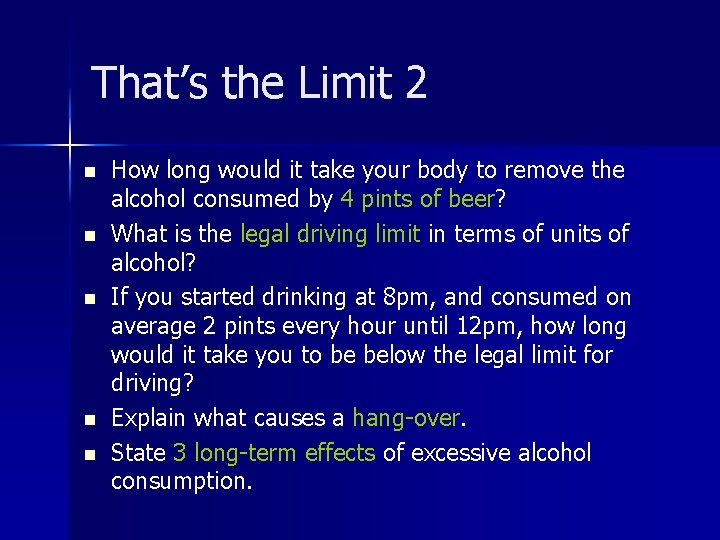
That’s the Limit 2 n n n How long would it take your body to remove the alcohol consumed by 4 pints of beer? What is the legal driving limit in terms of units of alcohol? If you started drinking at 8 pm, and consumed on average 2 pints every hour until 12 pm, how long would it take you to be below the legal limit for driving? Explain what causes a hang-over. State 3 long-term effects of excessive alcohol consumption.
Alcoholic Drinks Drink Carbohydrate % alcohol Beer Barley 3 -6 Cider Apples 7 – 10 Wine Grapes 10 – 14 Whisky Barley 35 – 45 Vodka Potatoes 35 - 45 • At alcohol concentrations above 15 %, the yeast are poisoned and the enzymes do not work. • Fermentation therefore stops.
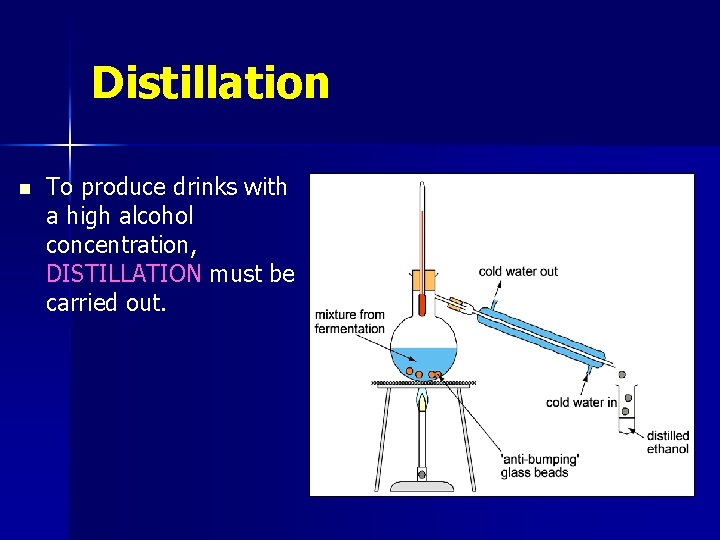
Distillation n To produce drinks with a high alcohol concentration, DISTILLATION must be carried out.
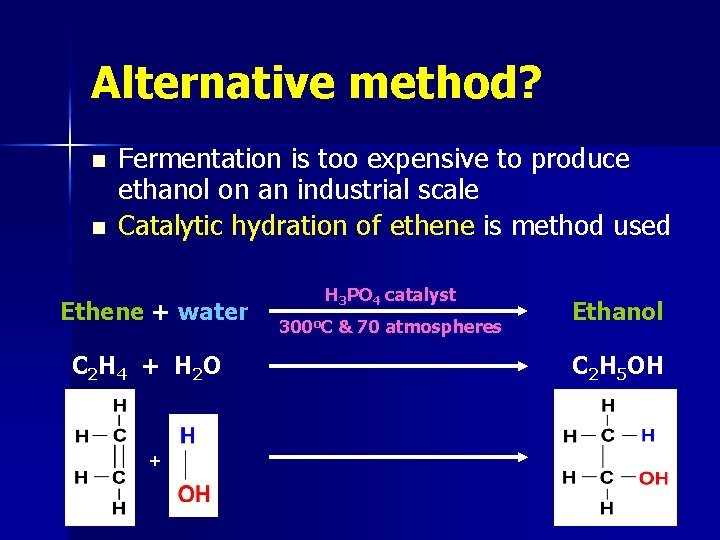
Alternative method? n n Fermentation is too expensive to produce ethanol on an industrial scale Catalytic hydration of ethene is method used Ethene + water C 2 H 4 + H 2 O + H 3 PO 4 catalyst 300 o. C & 70 atmospheres Ethanol C 2 H 5 OH
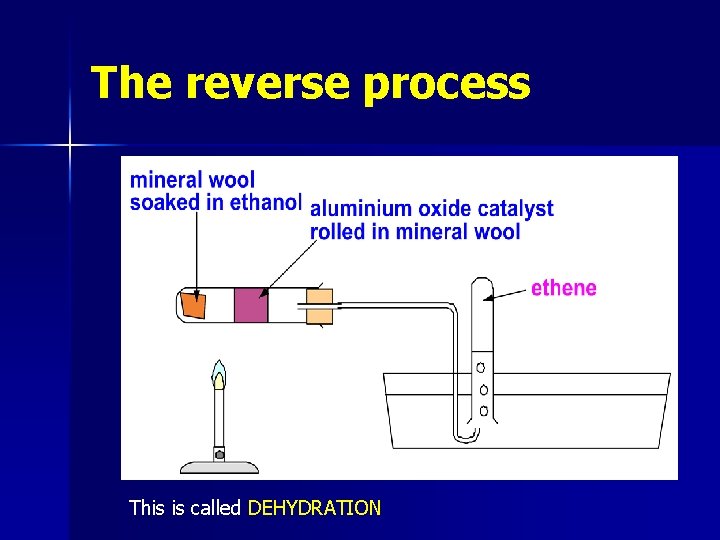
The reverse process This is called DEHYDRATION
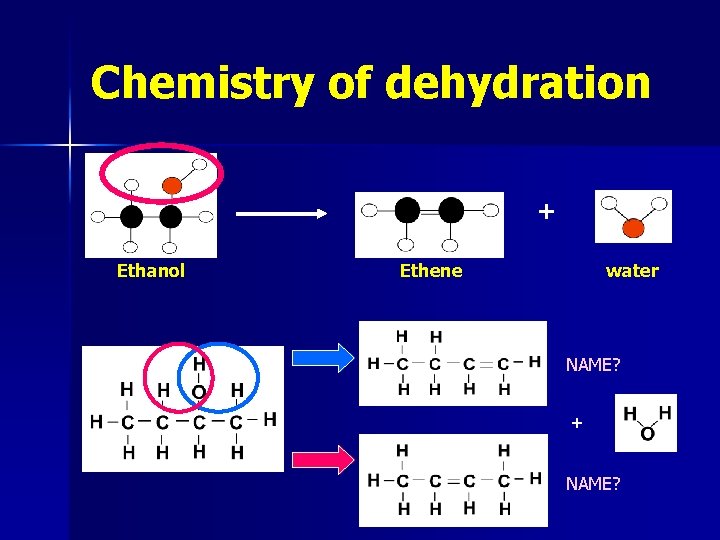
Chemistry of dehydration + Ethanol water Ethene NAME? + NAME?
Practice n Draw the FSF for the product(s) of hydration of the following alkenes: 3 -methylpent-1 -ene 2 -methylbut-2 -ene n Which of the following compounds will produce isomers on dehydration? Hexan-3 -ol Heptan-3 -ol 2 -methylbutan-1 -ol