
Alcohol and Your Body Types of Alcoholic Beverages
Alcohol and Your Body

Types of Alcoholic Beverages �Most alcohol comes from fermented plants. �Beverage Alcohol is Ethanol �Wine = grapes and other fruits �Beer = grains like barley and wheat �Spirits and liquors (whiskey, vodka, etc)= plants that are fermented then processed even more. �Methanol- non consumable by humans �Will cause blindness and even death in even small amounts. �Used for various other purposes �Fuel, chemical additives.
Alcohol in Your Body �Alcohol is taken orally, and then goes to the stomach and small intestine where it is then absorbed into the bloodstream. �Alcohol has little nutritional value and acts as a poison and drug to the body. �The main drug effect is on the central nervous system.
Alcohol in Your Body �CENTRAL NERVOUS SYSTEM(CNS)- consists of the brain, and spinal cord. �Controls: speech, thinking, judgement, memory, and learning. �Controls: Emotions, breathing, senses, and movement. �Alcohol is a depressant of the CNS. �DEPRESSANT- a drug that slows body functioning. �Alcohol also affects your kidneys, liver and digestion.

Alcohol in Your Body �At low levels (one drink) alcohol effects mood. �Some feel more relaxed, friendly, active and less shy. �One of the reasons some choose to drink. �Some have the attitude that if a little is good, more will be better. � Often has negative consequences
Alcohol and Your Brain �Alcohol affects the parts of the brain that control behavior. �The more alcohol in the body the more thinking, memory and judgement are impaired. � Reduced ability to determine safe vs unsafe. �With even more alcohol you lose control of speech, movement and coordination. �The CNS may become so depressed that is causes sleep/passing out, and in extreme cases coma and death by alcohol poisoning.
Alcohol in the Blood �BLOOD ALCOHOL CONCENTRATION (BAC)- is the amount of alcohol in the bloodstream. �Often called blood alcohol level (BAL) �Measured in percentages. �Is the result of how much and how fast you drink alcohol.
Alcohol in the Blood �The liver changes alcohol in the blood stream into waste products (water and carbon dioxide). �The body gets rid of the waste products through breathing and urination. �The liver can only process alcohol so fast. �Usually at the rate of one drink per hour. �If alcohol is taken in faster than that it stays in the blood raising the BAC. �Food in the stomach may slow the absorption of alcohol in the blood but will not speed up the processing of alcohol by the liver. �Only time can lower your BAC
Individual Reactions to Alcohol �Each person will react differently to alcohol. �Factors affecting reactions to alcohol �How much and how fast a person drinks �Body weight �Food in the stomach �Genetic vulnerability �Alcohol tolerance �Gender �Physical health/condition �Medications �Mental attitude
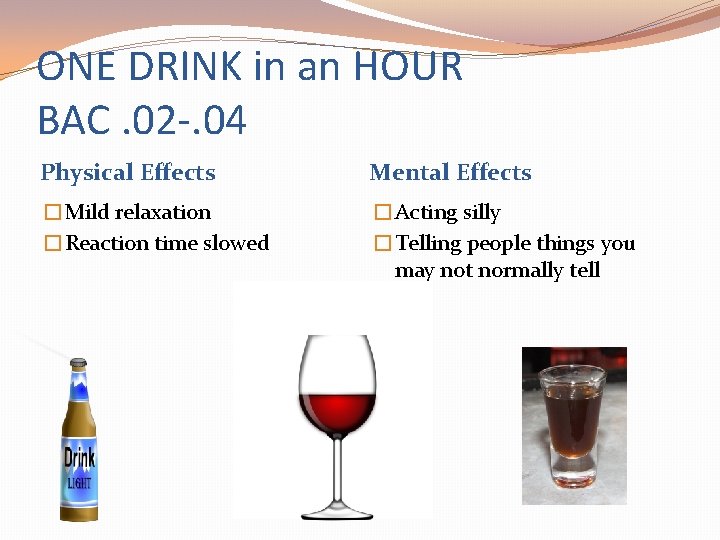
ONE DRINK in an HOUR BAC. 02 -. 04 Physical Effects Mental Effects �Mild relaxation �Reaction time slowed �Acting silly �Telling people things you may not normally tell
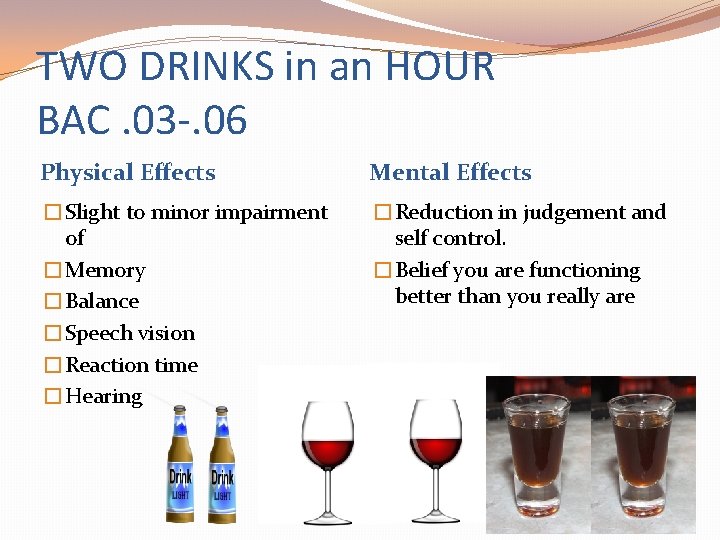
TWO DRINKS in an HOUR BAC. 03 -. 06 Physical Effects Mental Effects �Slight to minor impairment of �Memory �Balance �Speech vision �Reaction time �Hearing �Reduction in judgement and self control. �Belief you are functioning better than you really are
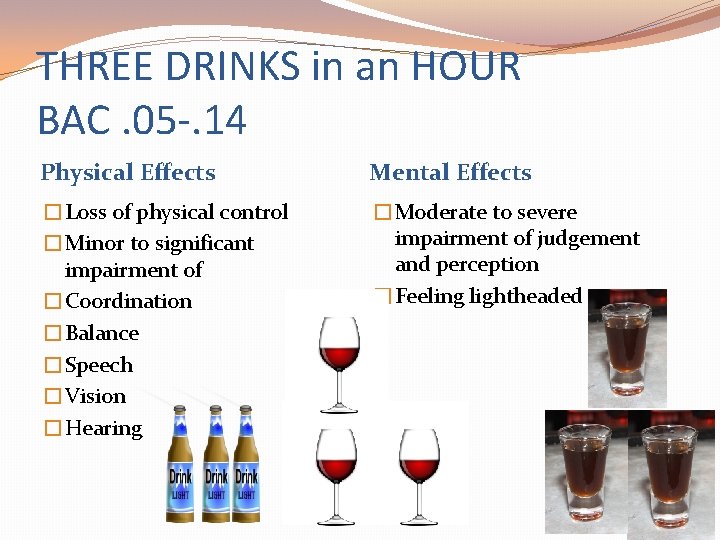
THREE DRINKS in an HOUR BAC. 05 -. 14 Physical Effects Mental Effects �Loss of physical control �Minor to significant impairment of �Coordination �Balance �Speech �Vision �Hearing �Moderate to severe impairment of judgement and perception �Feeling lightheaded
- Slides: 12