
Alcohol and Substance Misuse in IDD an overview
Alcohol and Substance Misuse in IDD - an overview Vicki Malcolm
Overview • • • Myth busting Risk factors and consequences Alcohol Smoking Guidance for improving care
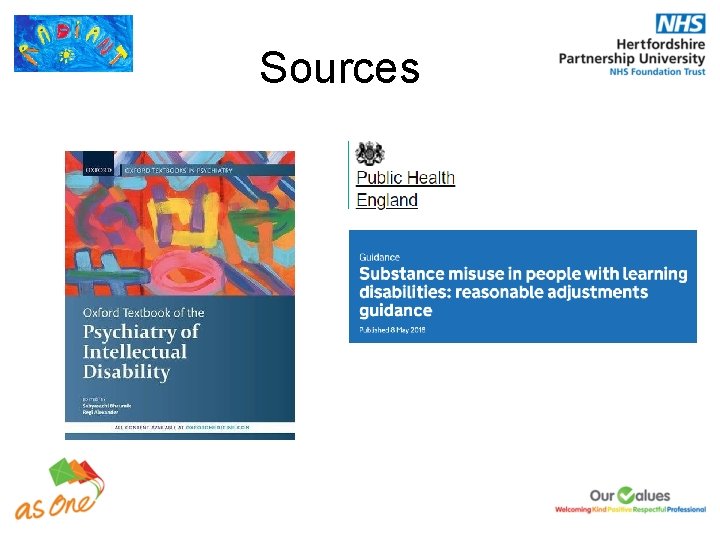
Sources
True or False? People with ID use drugs and alcohol less than the general population People with ID have different risk factors for alcohol and substance addiction compared with the general population
People with ID use drugs and alcohol less than the average population – false People with ID have different risk factors for alcohol and substance addiction compared with the general population - true
Prevalence • Similar to general pop. Alcohol most commonly misused, at rates matching those of general population, followed by cannabis • Supported by large scale studies using linked data (e. g. Ontario cohort study) • Salavert and colleagues – 36. 4% of a sample of 88 people with ID met criteria for Substance use disorder
Risk factors
Risk Factors – similar… • Very similar to general pop – Younger age – Lower socioeconomic – Gender (male) – Comorbid MH (cause/effect? ) – Mild LD rather than moderate / profound
But different…
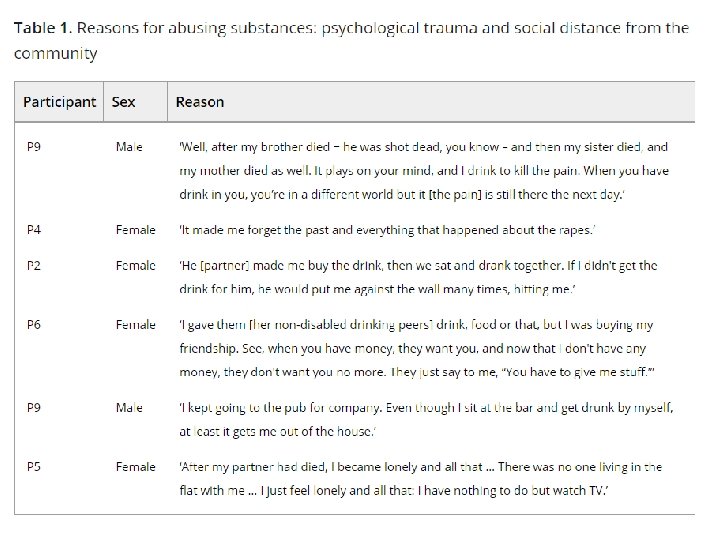
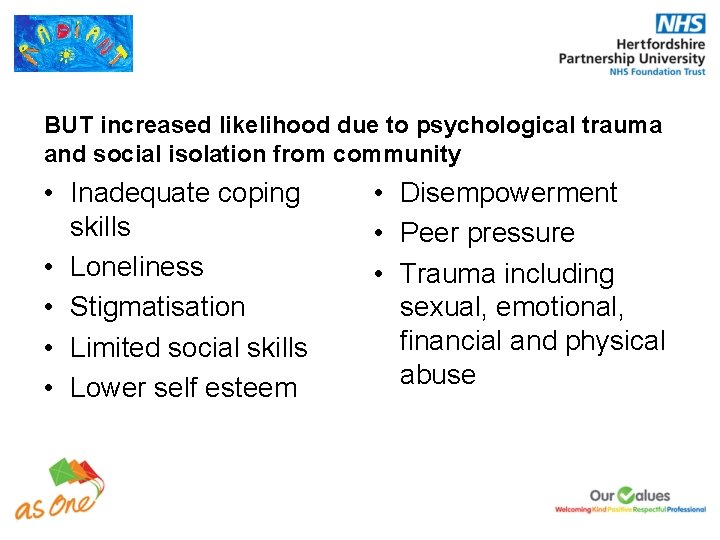
BUT increased likelihood due to psychological trauma and social isolation from community • Inadequate coping skills • Loneliness • Stigmatisation • Limited social skills • Lower self esteem • Disempowerment • Peer pressure • Trauma including sexual, emotional, financial and physical abuse
Consequences
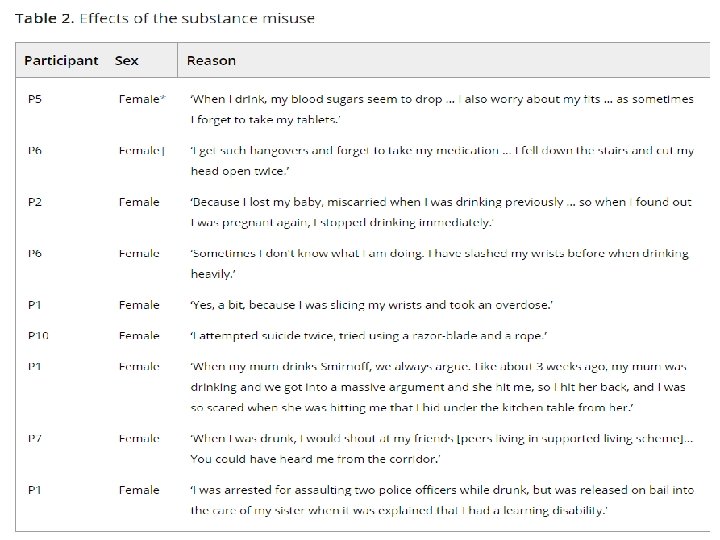
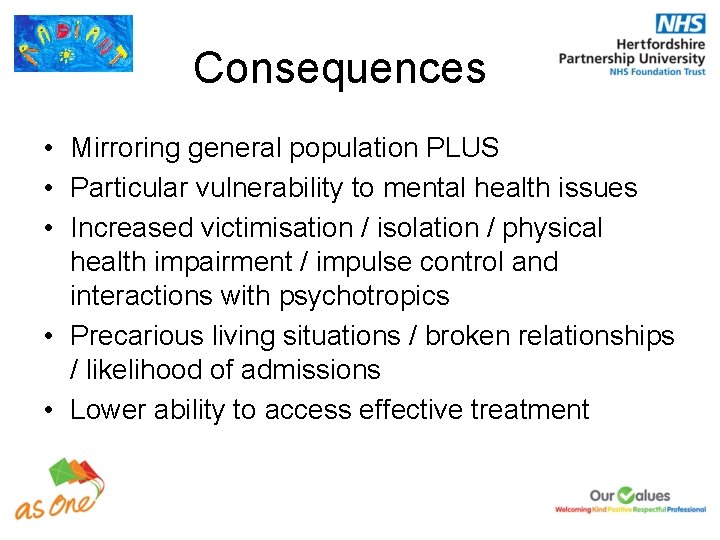
Consequences • Mirroring general population PLUS • Particular vulnerability to mental health issues • Increased victimisation / isolation / physical health impairment / impulse control and interactions with psychotropics • Precarious living situations / broken relationships / likelihood of admissions • Lower ability to access effective treatment
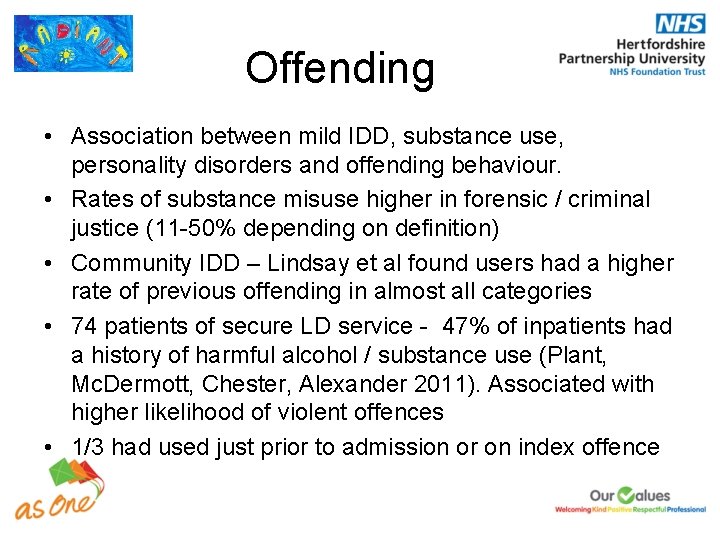
Offending • Association between mild IDD, substance use, personality disorders and offending behaviour. • Rates of substance misuse higher in forensic / criminal justice (11 -50% depending on definition) • Community IDD – Lindsay et al found users had a higher rate of previous offending in almost all categories • 74 patients of secure LD service - 47% of inpatients had a history of harmful alcohol / substance use (Plant, Mc. Dermott, Chester, Alexander 2011). Associated with higher likelihood of violent offences • 1/3 had used just prior to admission or on index offence
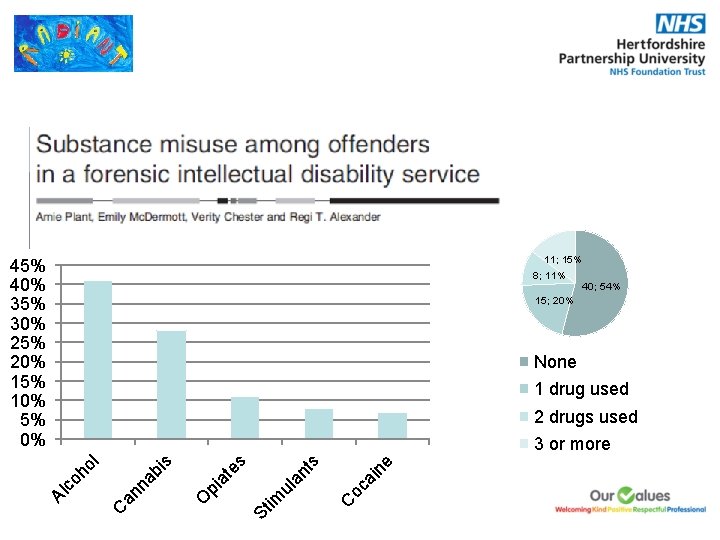
11; 15% 40% 35% 30% 25% 20% 15% 10% 5% 0% 8; 11% 40; 54% 15; 20% None 1 drug used 2 drugs used ul im St e ai n C oc an t s es at O pi an C Al c oh o l na bi s 3 or more
Alcohol • Children with IDD are a high risk group (self report data) trying high levels of alcohol • Difficulties understanding quantity, strength, units of alcohol • Increased risks to personal safety via accidental injury, impaired judgement, risk taking, along with common physical consequences • Assessing whether they meet the criteria for alcoholism has challenges
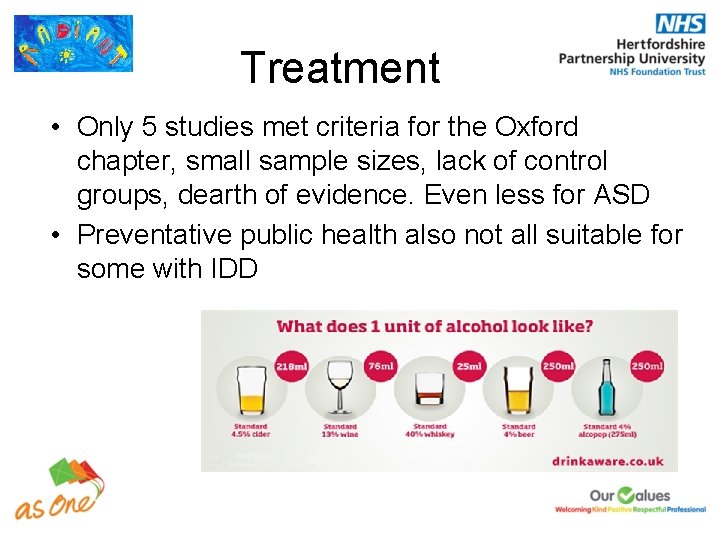
Treatment • Only 5 studies met criteria for the Oxford chapter, small sample sizes, lack of control groups, dearth of evidence. Even less for ASD • Preventative public health also not all suitable for some with IDD
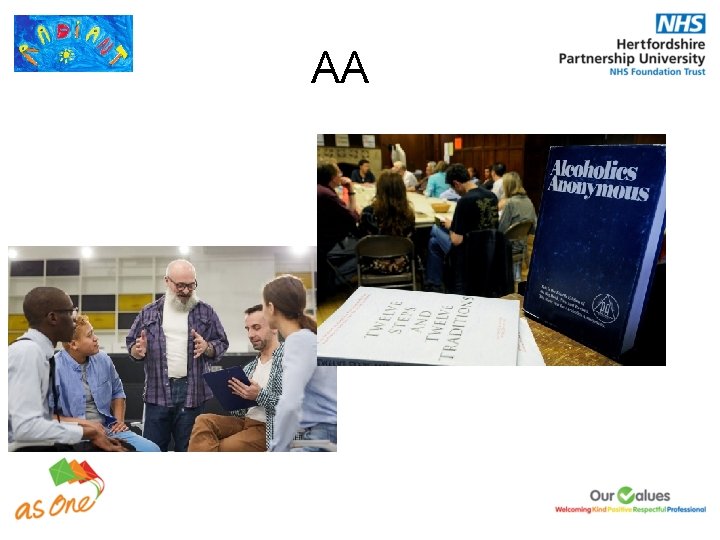
AA
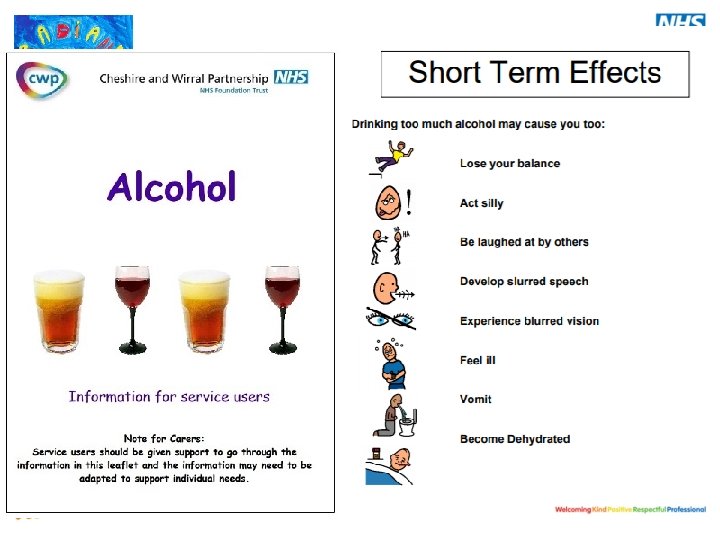
Adapted alternatives • Include educational info / awareness on drugs and alcohol (more necessary) and effects of these (Lindsay et al 2013) • Multi modal. Visual aids and vignettes (Brown, Coldwell 2006) • Dialectic approach (themes acted out by facilitators) • Motivational interviewing - has comparable outcomes in non IDD but needs research
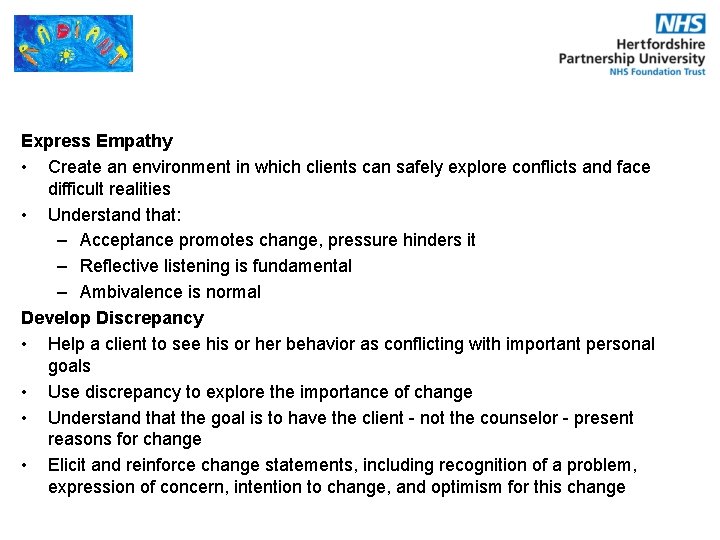
Express Empathy • Create an environment in which clients can safely explore conflicts and face difficult realities • Understand that: – Acceptance promotes change, pressure hinders it – Reflective listening is fundamental – Ambivalence is normal Develop Discrepancy • Help a client to see his or her behavior as conflicting with important personal goals • Use discrepancy to explore the importance of change • Understand that the goal is to have the client - not the counselor - present reasons for change • Elicit and reinforce change statements, including recognition of a problem, expression of concern, intention to change, and optimism for this change
Roll with Resistance • Avoid arguing for change • Do not directly oppose resistance • Understand that resistance is a signal to respond differently • Offer new perspectives without imposing them • Accept that the client is the primary resource in finding answers and solutions • Recognize that client resistance is significantly influenced by the counselor’s behavior Support Self-Efficacy • Enhance a client’s confidence in his or her ability to succeed • Understand that the client is responsible for choosing and carrying out change – not the counselor • Help clients to develop self-efficacy as a key element for motivating change • Accept that the counselor’s own belief in a client’s ability to change can have a powerful effect
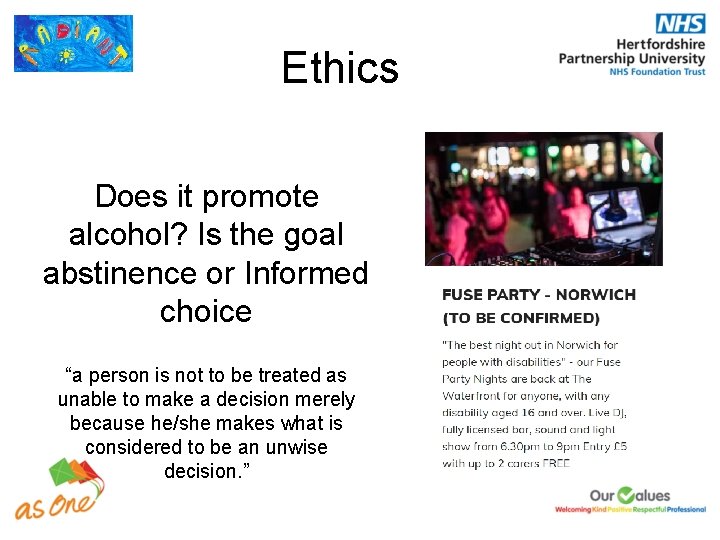
Ethics Does it promote alcohol? Is the goal abstinence or Informed choice “a person is not to be treated as unable to make a decision merely because he/she makes what is considered to be an unwise decision. ”
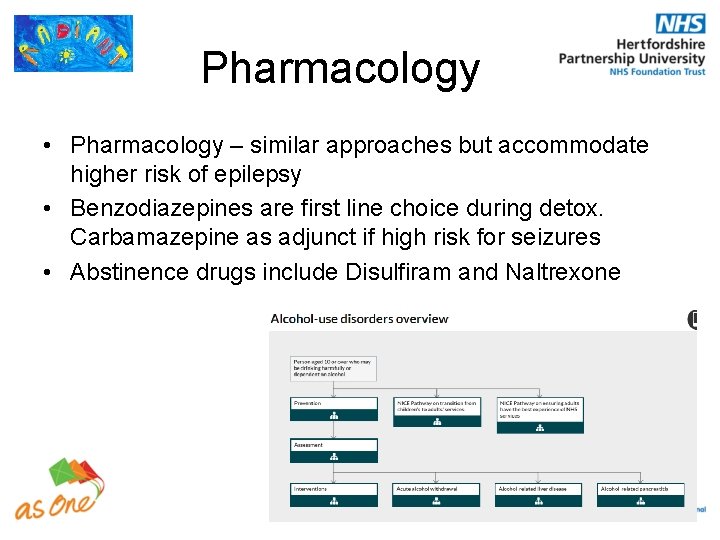
Pharmacology • Pharmacology – similar approaches but accommodate higher risk of epilepsy • Benzodiazepines are first line choice during detox. Carbamazepine as adjunct if high risk for seizures • Abstinence drugs include Disulfiram and Naltrexone
Smoking • Equally prevalent especially in mild LD • Influenced by restrictions of setting and availability of role models • 49% of people with IDD are on psychotropics – smoking alters their efficacy and contributes to resistance
• IDD less likely to be screened, asked about smoking or offered advice • Less likely to understand complications and implications • More susceptible to the health risks, financial implications and stigma
Treatment • Small scale study suggested group discussions, short info segments, videos, role playing and a board game, 55% quit (Tracy and Hosken 1997) • Chester et al – accessible health provision, one to ones, groups, primary care, smoking timetable to reduce smoking. 1/3 gave up
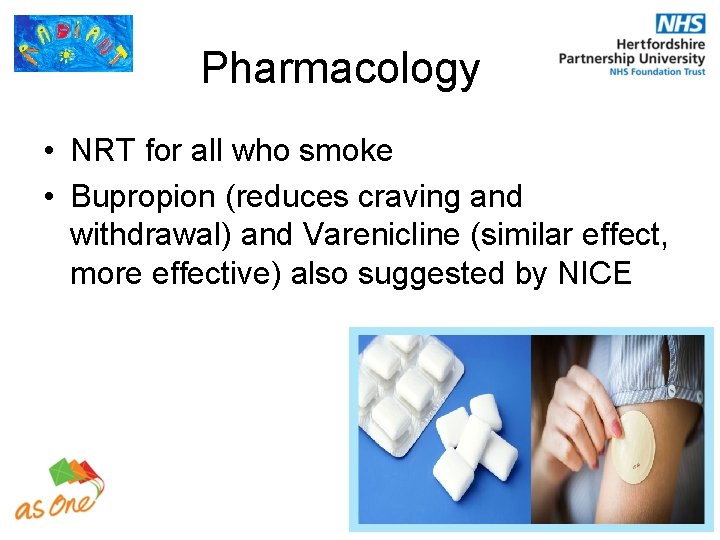
Pharmacology • NRT for all who smoke • Bupropion (reduces craving and withdrawal) and Varenicline (similar effect, more effective) also suggested by NICE
Where do people get help • Learning disability services – these provided a positive educational role and acted as a liaison with other services • Mainstream addiction services – the people that were positive about these services had received support on a one-to-one basis, rather than attending group sessions • Primary care services – GPs tended to give basic advice and information leaflets and antidepressants were often prescribed to address mental health issues
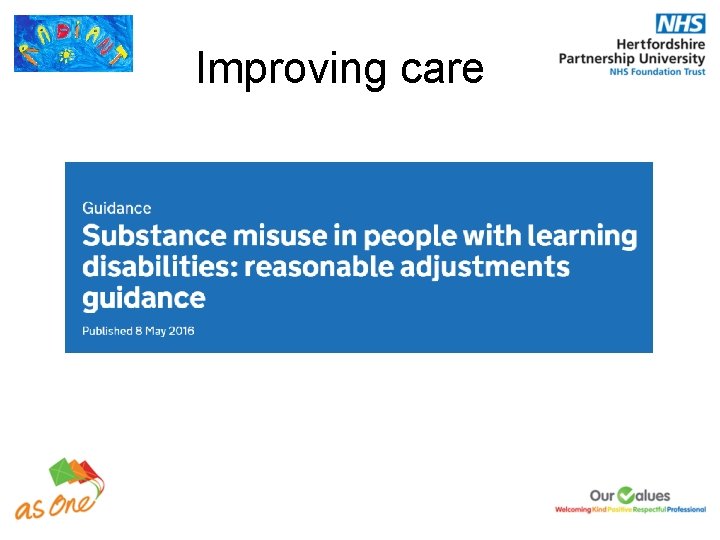
Improving care
Barriers • Triple diagnosis of IDD MH and Substances – and services not meeting their needs • Underrepresented in specialist misuse services, just seen by single IDD team and not referred on. Poor pathways / lack of joined up working IDD teams may see misuse as a behavioural rather than chronic brain disease?
More barriers • Substance misuse teams lack ID awareness e. g. not screening for ID, not set up for ID, sometimes ID an exclusion criteria for service! • Treatments e. g. groups not suitable • Harder for IDD to assert health needs • Health promotion often not targeted at IDD, too complex
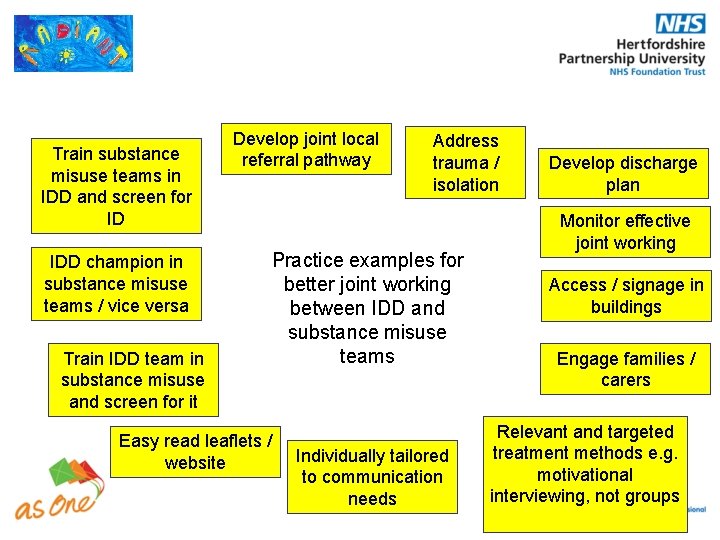
Train substance misuse teams in IDD and screen for ID IDD champion in substance misuse teams / vice versa Train IDD team in substance misuse and screen for it Develop joint local referral pathway Address trauma / isolation Practice examples for better joint working between IDD and substance misuse teams Easy read leaflets / website Individually tailored to communication needs Develop discharge plan Monitor effective joint working Access / signage in buildings Engage families / carers Relevant and targeted treatment methods e. g. motivational interviewing, not groups
Key learning • Underestimated - Similar prevalence to general population • Different risk factors and more severe consequences • Both prevention and treatment must be adapted • Informed choice and capacity key considerations • More equity of access, joint working needed between ID teams and substance misuse teams
Refs • • Brown, Gill and B. Coldwell. “Developing a controlled drinking programme for people with learning disabilities living in conditions of medium security. ” Addiction Research & Theory 14 (2006): 87 - 95. Chester, V. , F. Green and R. Alexander. “An audit of a smoking cessation programme for people with an intellectual disability resident in a forensic unit. ” Advances in Mental Health and Intellectual Disabilities 5 (2011): 33 -41. Lin, E. , R. Balogh, C. Mcgarry, A. Selick, K. Dobranowski, A. Wilton and Y. Lunsky. “Substance-related and addictive disorders among adults with intellectual and developmental disabilities (IDD): an Ontario population cohort study. ” BMJ Open 6 (2016): n. pag. Lindsay, W. , L. Steptoe, L. Wallace, F. Haut and E. Brewster. “An evaluation and 20 -year follow-up of a community forensic intellectual disability service. ” Criminal behaviour and mental health : CBMH 23 2 (2013): 138 -49. (Tracy and Holsken) Plant, A. , E. Mcdermott, V. Chester and R. Alexander. “Substance misuse among offenders in a forensic intellectual disability service. ” Journal of Learning Disabilities and Offending Behaviour 2 (2011): 127 -135 Salavert, J. , A. Clarabuch, M. Fernandez-Gomez, V. Barrau, M. Giráldez and J. Borrás. “Substance use disorders in patients with intellectual disability admitted to psychiatric hospitalisation. ” Journal of Intellectual Disability Research 62 (2018): 923– 930. Taggart, L. , D. Mc. Laughlin, B. Quinn and C. Mc. Farlane. “Listening to people with intellectual disabilities who misuse alcohol and drugs. ” Health & social care in the community 15 4 (2007): 360 -8. Tracy, J. and R. Hosken. “The importance of smoking education and preventative health strategies for people with intellectual disability. ” Journal of intellectual disability research : JIDR 41 ( Pt 5) (1997): 416 -21.
- Slides: 36