
Alcohol Abuse Education Prevention and Intervention Presented to
Alcohol Abuse Education, Prevention and Intervention Presented to Faculty Senate February 9, 2015 By Nancy Chase, Director, Student Wellness and Health Promotion
Goals • Provide a framework for best practice in alcohol and other drug abuse prevention on the college campus • Review current data and key University alcohol and other drug education, prevention, and intervention initiatives 1

Public Health Approach: Social Ecological Model AOD use is influenced by multiple factors: • Individual factors (students) • Peer factors (other students) What many campuses focus on • • Institutional factors • • Community factors • Public policy Environmental Management 2
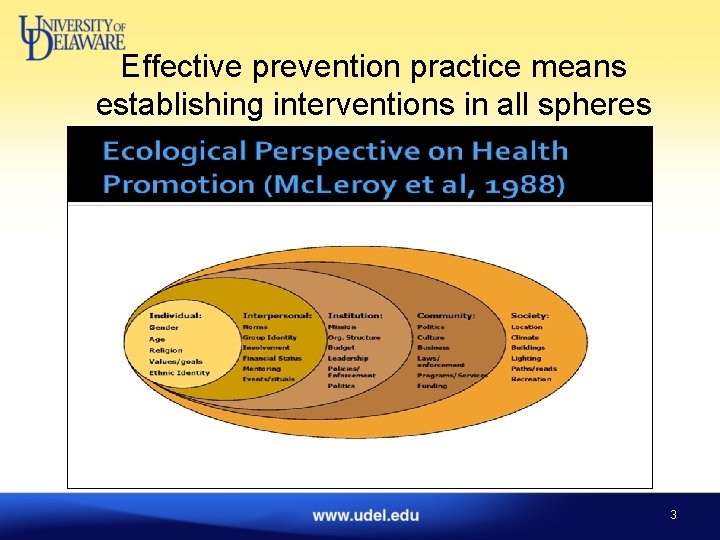
Effective prevention practice means establishing interventions in all spheres 3
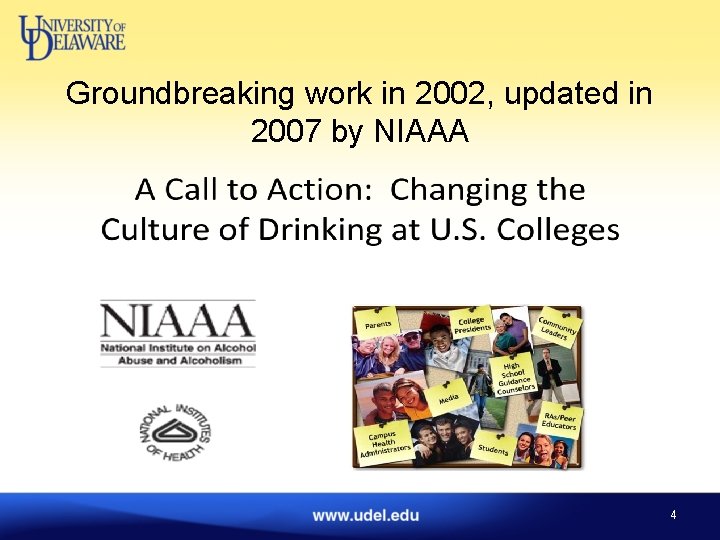
Groundbreaking work in 2002, updated in 2007 by NIAAA 4
The 3 -in-1 Framework This adapts the social ecological model to be effective in a campus environment. Simultaneously target: • Individuals, including at-risk or alcohol-dependent drinkers • The student body as a whole • College campus and the surrounding community 5
BASICS at UD • Skill training program administered by Student Wellness and Health Promotion Ø 1) reduces alcohol and other drug consumption and its adverse consequences Ø 2) promotes healthier choices regarding substance use Ø 3) provides information, personalized feedback, and coping skills for risk reduction • Evidence-based practices of both personalized feedback and motivational interviewing • Required for students who violate the University’s alcohol and drug policies 6
Campus Coalition on Alcohol and Other Drug Abuse Prevention • Engages faculty, staff and students from entire University community in the development of practices aimed at reducing risks associated with alcohol and other drug abuse • Provides oversight to ensure that institutional concerns about substance abuse are comprehensively addressed and that University efforts are evidence-based practices within the discipline of college health promotion 7
Increased Enforcement and Joint Agency Policing • University and Newark police patrol together at high risk and high volume times. Ø Allows University police to assist at locales outside their jurisdictional lines (i. e. , student and fraternity houses) Ø Results in faster University responses to developing situations • Extra joint agency teams in addition to University police patrol at high risk and high volume times. • Publicity of efforts and outcomes serves as a deterrent. 8
Data Sharing 9
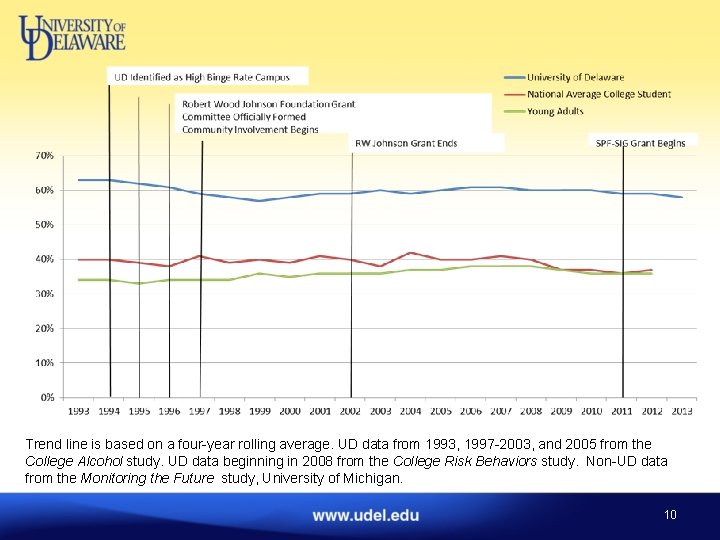
Trend line is based on a four-year rolling average. UD data from 1993, 1997 -2003, and 2005 from the College Alcohol study. UD data beginning in 2008 from the College Risk Behaviors study. Non-UD data from the Monitoring the Future study, University of Michigan. 10
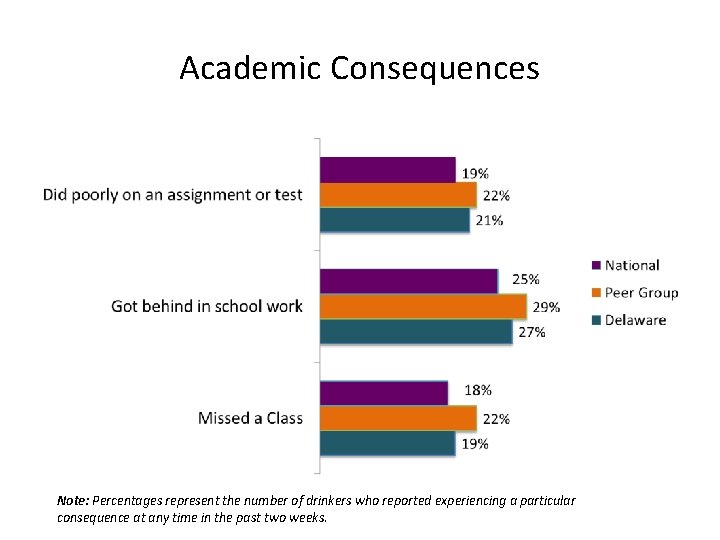
Academic Consequences Note: Percentages represent the number of drinkers who reported experiencing a particular consequence at any time in the past two weeks.
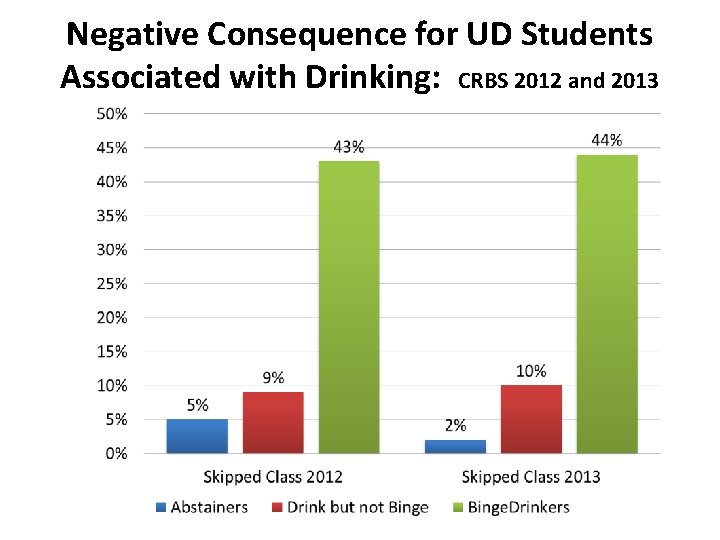
Negative Consequence for UD Students Associated with Drinking: CRBS 2012 and 2013
Opportunities for faculty engagement Tier 1: • Challenging alcohol expectancies – Avoid glamorizing or normalizing alcohol or drug use – Avoid reinforcing the UD party school image – Avoid the use of alcohol around students – Hold students accountable – Reinforce the academic consequences of excessive alcohol or drug use – Add the factor of alcohol or drug use to discussions of professional ethics • Offering brief motivational enhancement interventions – Invite a guest lecturer for group motivational enhancement or other resiliency/skill-building programming – Give extra credit to students who volunteer to do BASICS or attend an awareness program 13
Opportunities for faculty engagement continued Tier 1 continued: • Developing campus-community partnerships – Take a turn serving on the Campus Coalition or other related advisory board Tier 2: • Increased publicity of and enforcement of laws and other policies adopted to reduce alcohol impairment – Know the Code of Conduct; take action when appropriate – Educate students about relevant aspects of the Code and about the Amnesty Protocol; reinforce UD expectations and standards – Class discussions about recent events (I’m Schmacked) – Curriculum infusion opportunities? – Research potential? 14
Opportunities for faculty engagement continued • Other ideas? ? 15

Thank you! 16
- Slides: 17