
Alcia Joyce Maria Luiza Eduarda Janykeli Jayonara SIMPLE
- Slides: 12
Alícia Joyce Maria Luiza Eduarda Janykeli Jayonara SIMPLE PAST VERBOS REGULARES
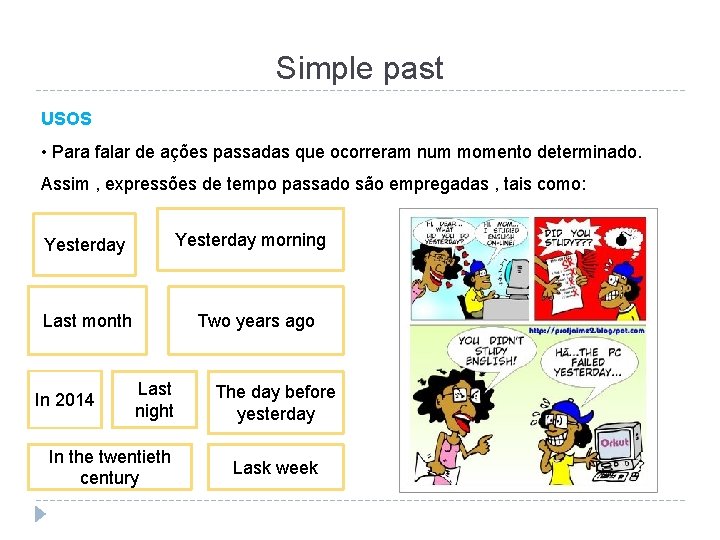
Simple past USOS • Para falar de ações passadas que ocorreram num momento determinado. Assim , expressões de tempo passado são empregadas , tais como: Yesterday morning Last month In 2014 Two years ago Last night In the twentieth century The day before yesterday Lask week
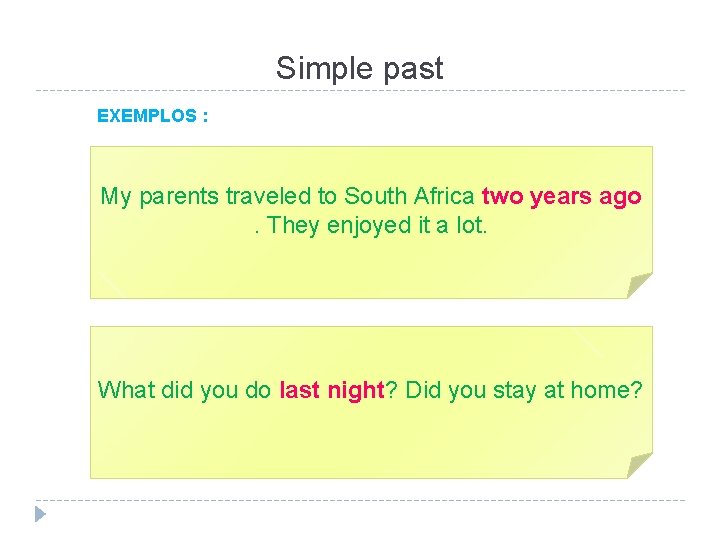
Simple past EXEMPLOS : My parents traveled to South Africa two years ago. They enjoyed it a lot. What did you do last night? Did you stay at home?
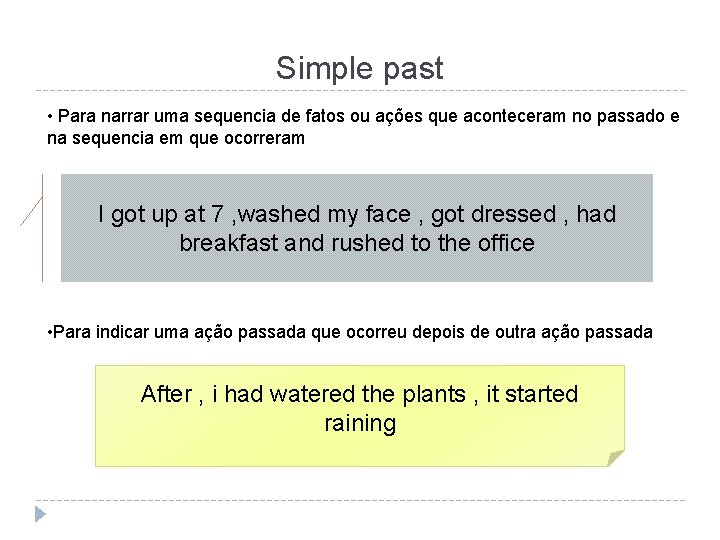
Simple past • Para narrar uma sequencia de fatos ou ações que aconteceram no passado e na sequencia em que ocorreram I got up at 7 , washed my face , got dressed , had breakfast and rushed to the office • Para indicar uma ação passada que ocorreu depois de outra ação passada After , i had watered the plants , it started raining
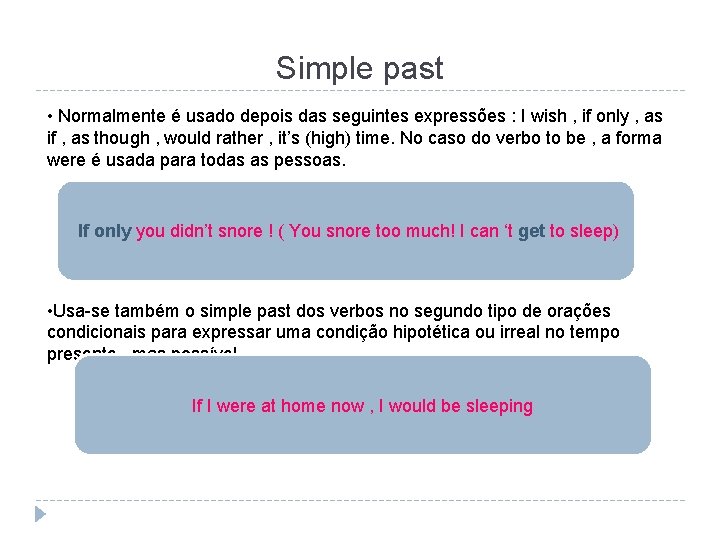
Simple past • Normalmente é usado depois das seguintes expressões : I wish , if only , as if , as though , would rather , it’s (high) time. No caso do verbo to be , a forma were é usada para todas as pessoas. If only you didn’t snore ! ( You snore too much! I can ‘t get to sleep) • Usa-se também o simple past dos verbos no segundo tipo de orações condicionais para expressar uma condição hipotética ou irreal no tempo presente , mas possível. If I were at home now , I would be sleeping
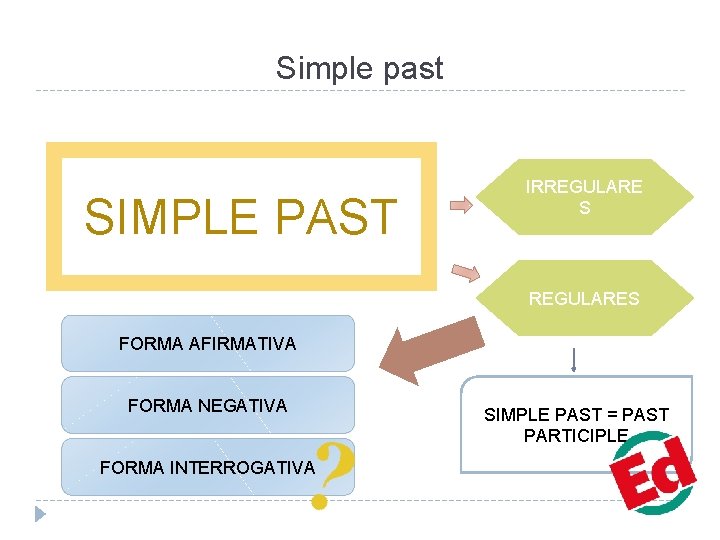
Simple past SIMPLE PAST IRREGULARE S REGULARES FORMA AFIRMATIVA FORMA NEGATIVA FORMA INTERROGATIVA SIMPLE PAST = PAST PARTICIPLE
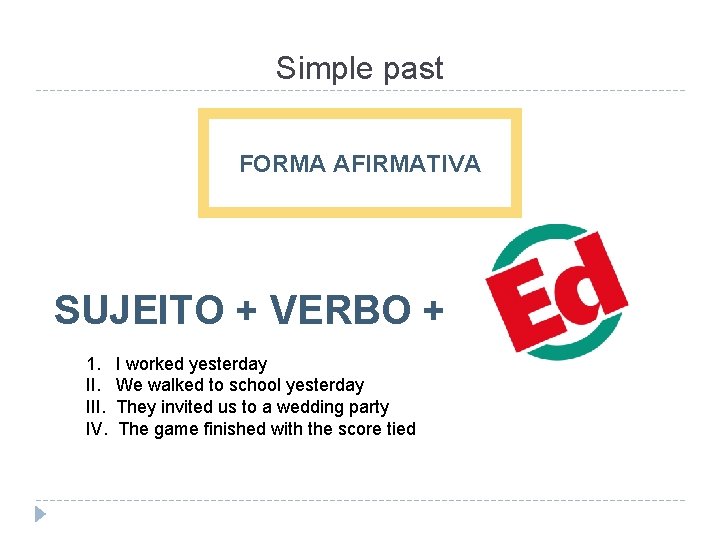
Simple past FORMA AFIRMATIVA SUJEITO + VERBO + 1. I worked yesterday II. We walked to school yesterday III. They invited us to a wedding party IV. The game finished with the score tied
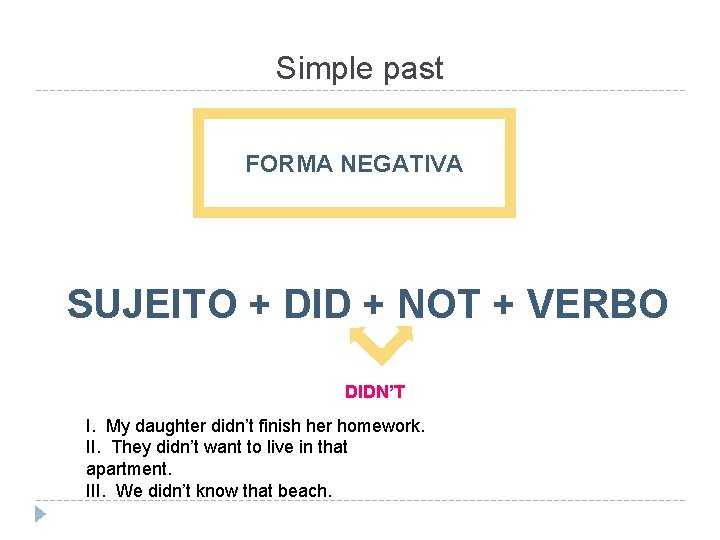
Simple past FORMA NEGATIVA SUJEITO + DID + NOT + VERBO DIDN’T I. My daughter didn’t finish her homework. II. They didn’t want to live in that apartment. III. We didn’t know that beach.
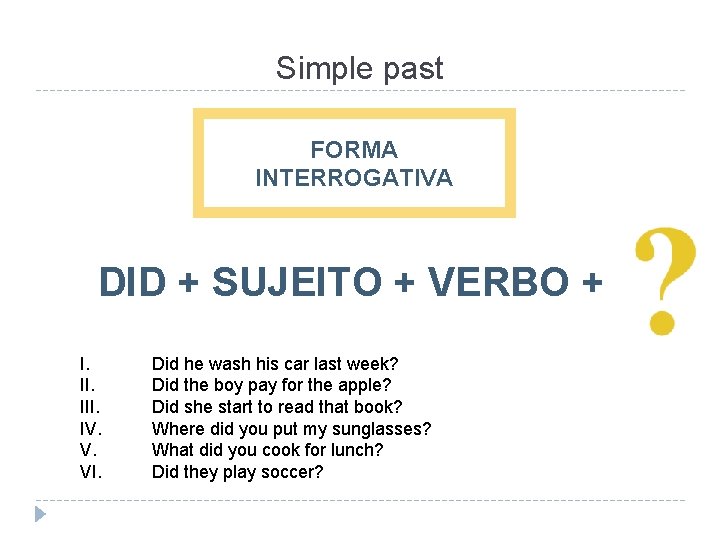
Simple past FORMA INTERROGATIVA DID + SUJEITO + VERBO + I. III. IV. VI. Did he wash his car last week? Did the boy pay for the apple? Did she start to read that book? Where did you put my sunglasses? What did you cook for lunch? Did they play soccer?
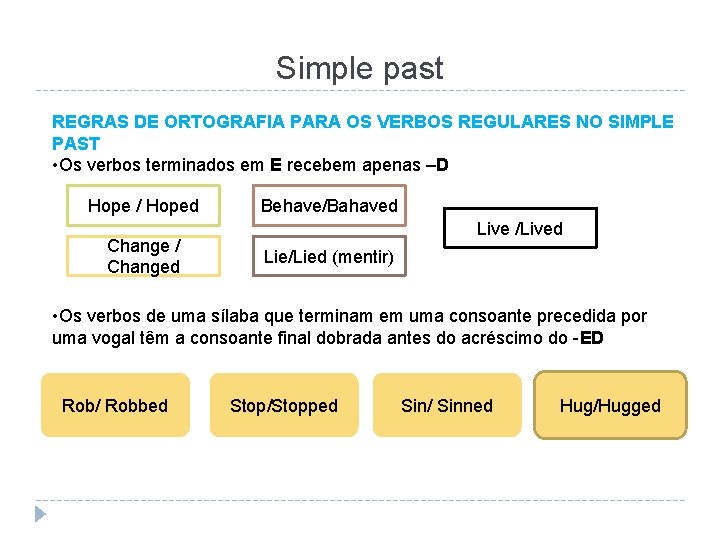
Simple past REGRAS DE ORTOGRAFIA PARA OS VERBOS REGULARES NO SIMPLE PAST • Os verbos terminados em E recebem apenas –D Hope / Hoped Change / Changed Behave/Bahaved Live /Lived Lie/Lied (mentir) • Os verbos de uma sílaba que terminam em uma consoante precedida por uma vogal têm a consoante final dobrada antes do acréscimo do -ED Rob/ Robbed Stop/Stopped Sin/ Sinned Hug/Hugged
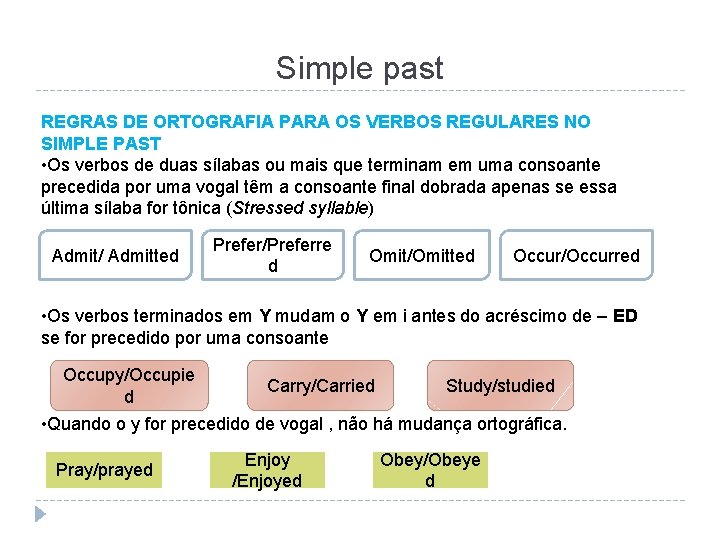
Simple past REGRAS DE ORTOGRAFIA PARA OS VERBOS REGULARES NO SIMPLE PAST • Os verbos de duas sílabas ou mais que terminam em uma consoante precedida por uma vogal têm a consoante final dobrada apenas se essa última sílaba for tônica (Stressed syllable) Admit/ Admitted Prefer/Preferre d Omit/Omitted Occur/Occurred • Os verbos terminados em Y mudam o Y em i antes do acréscimo de – ED se for precedido por uma consoante Occupy/Occupie d Carry/Carried Study/studied • Quando o y for precedido de vogal , não há mudança ortográfica. Pray/prayed Enjoy /Enjoyed Obey/Obeye d
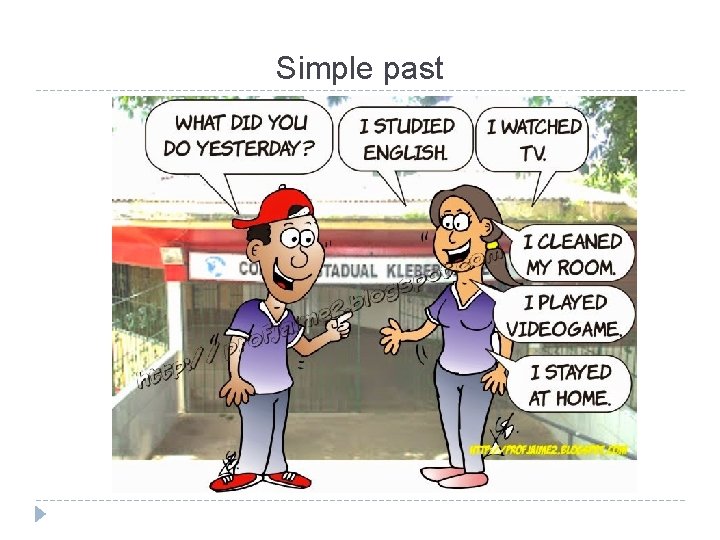
Simple past