
Alcatraz Writing to report The Big Picture We
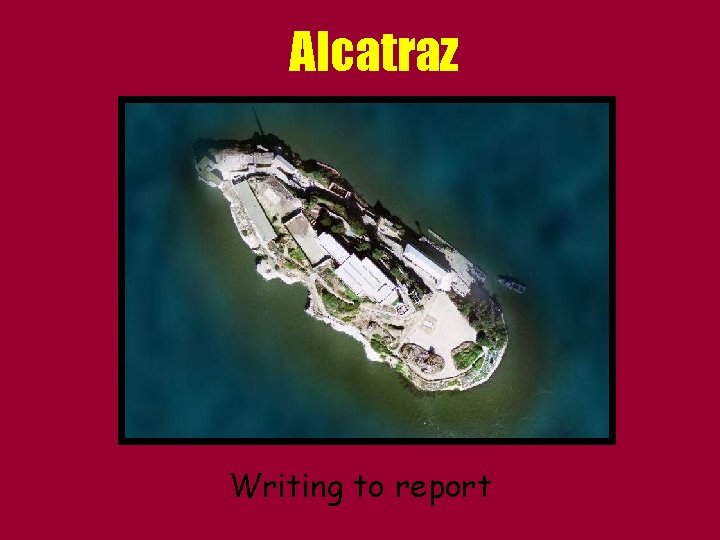
Alcatraz Writing to report
The Big Picture • We are doing this Unit to allow pupils to demonstrate their language skills by investigating a topic using literature, language and media. In this unit of work you will: • • • Learn how to pick out relevant information from a passage: Read information about what Alcatraz was used for in the past Learn about the kinds of people who were imprisoned there Learn about living conditions on Alcatraz Learn about what the daily routine for prisoners was like Learn about escape attempts Learn about what it is used for now Be able to use topic sentences Gather information on a topic. Evaluate the sources we use as part of our research Write a report of the research process and include information on the topic researched and why.

Success Criteria • I can select information from at least two straightforward texts. • I can write using straightforward language and make an oral presentation. • I can listen and respond appropriately to questions.

Virtual Tour • http: //www. digitalproperties. ca/alcatraz/
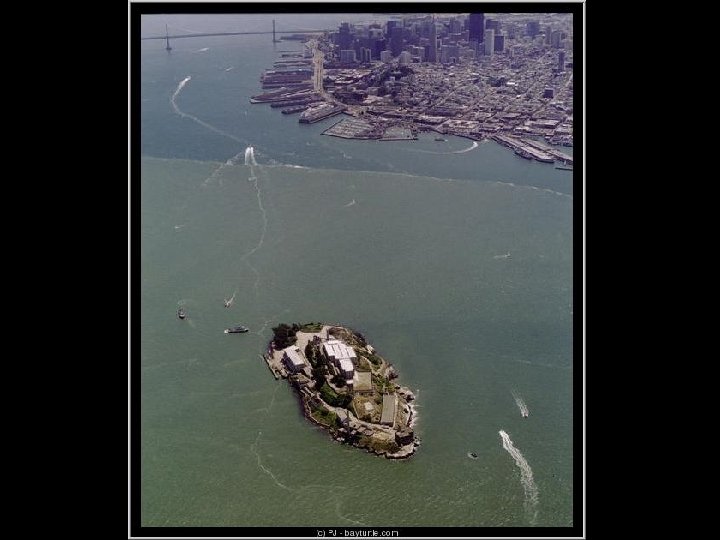
The History of Alcatraz • Isolated in the San Francisco Bay, this little island has earned its nickname “The Rock”. • The name Alcatraz is the English version of the Spanish word ‘Alcatraces’, meaning “pelican”. • The explorer Juan Manuel de Ayala gave the island its name because of all the pelicans he saw roosting there. • The United States military was the island’s first long-term resident, setting up a fortress in the 1850’s during the California Gold Rush to protect the area’s riches from foreign invasion. • The fortress also housed military prisoners.
• In 1909 the Army built a new military prison that was in use for 24 years. • After this Alcatraz was given to the Department of Justice. • It opened as a civilian prison in 1934 and was used to hold the country’s most hardened criminals. • One of the most famous inmates was the “Birdman of Alcatraz”, a multiple-murderer who wrote books about birds.
The Inmates • Inmates who arrived at Alcatraz were driven in a small van to the top of the hill. They were processed in the basement area and given all their basic amenities and a brief shower. • When Al Capone arrived on the island, he made some attempts to disobey the rules. He had previously been held in a prison in Atlanta and had enjoyed the power that he had there. He had prison guards working for him and had a lot of influence over other prisoners.
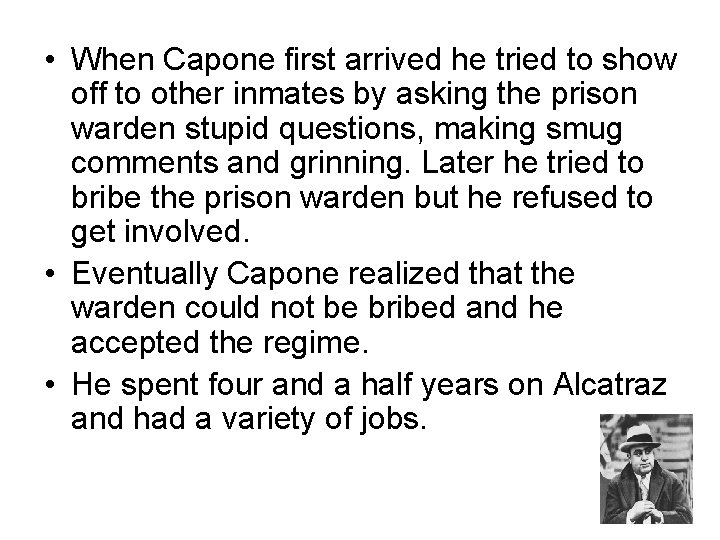
• When Capone first arrived he tried to show off to other inmates by asking the prison warden stupid questions, making smug comments and grinning. Later he tried to bribe the prison warden but he refused to get involved. • Eventually Capone realized that the warden could not be bribed and he accepted the regime. • He spent four and a half years on Alcatraz and had a variety of jobs.
The Inmates • • • Al Capone was one of the most famous inmates who spent 4 years on the island While Capone was working in the prison basement, an inmate who was standing in line waiting for a hair cut, exchanged words with him and then stabbed him with a pair of shears. Capone was admitted to the prison hospital and released a few days later. Another gangster who spent a long time on Alcatraz was George “Machine Gun” Kelly. He arrived on Alcatraz in 1934. He quietly served 17 years on Alcatraz before being transferred to another prison. He was imprisoned for conspiracy to kidnap and for robbing a bank
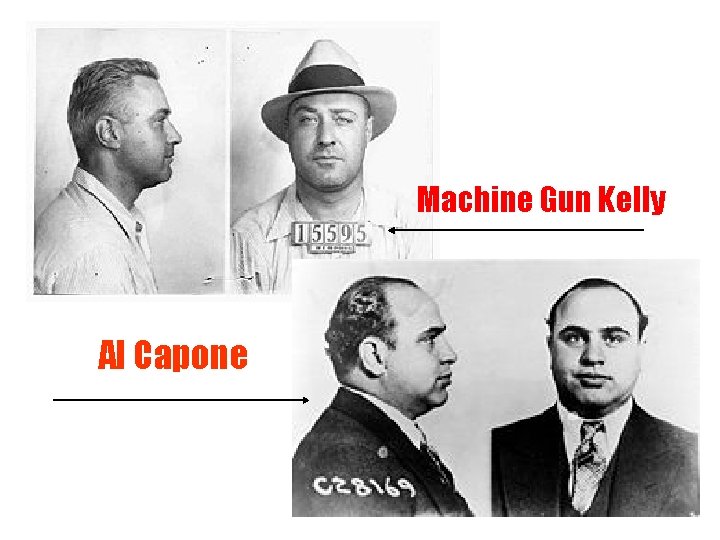
Machine Gun Kelly Al Capone
The Birdman of Alcatraz • Robert Franklin Stroud (died 1963), known as the "Birdman of Alcatraz", was an American prisoner who reared and sold birds and became an ornithologist. • He was sentenced for murder and assault – he spent six years in segregation in D Block, and eleven years in the prison hospital • He was one of the most violent criminals at Alcatraz • He did not in fact keep birds while in Alcatraz but in a previous prison. • In 1943, he was assessed by a psychiatrist who diagnosed him as a psychopath, with an I. Q. of 134.

Robert Franklin Stroud
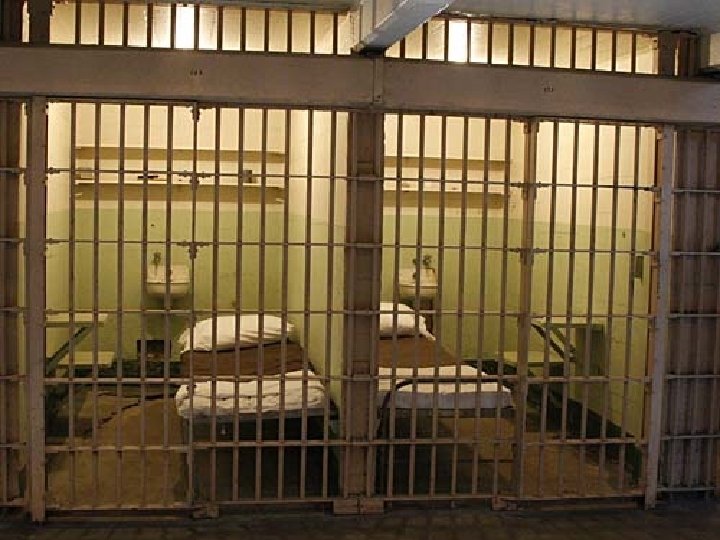
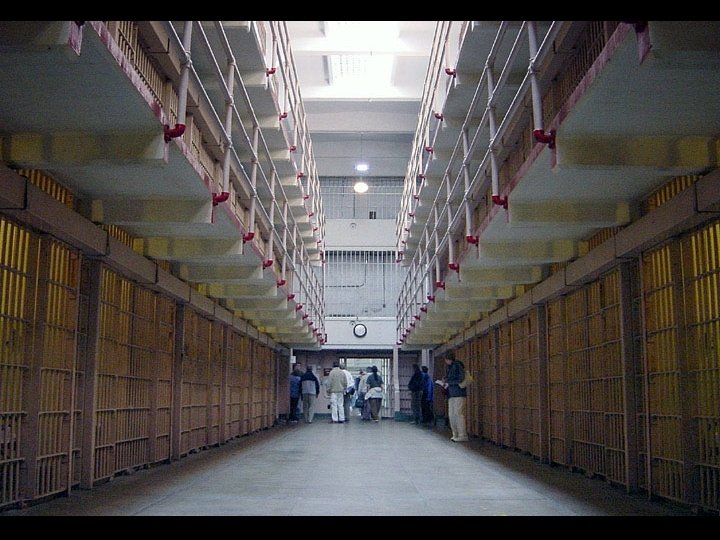
The Cells • Each cell in B & C block was 5 feet by 9 feet. • Cells at Alcatraz had a small sink with cold running water, small sleeping cot, and a toilet. • Most men could extend their arms and touch each wall within their cell. • The cells in D Block (segregation) were more spacious, but still the least popular. • In D-Block, inmates were confined to their cells 24 -hours per day, with the exception of one visit per week to the recreation yard, and these visits were alone.
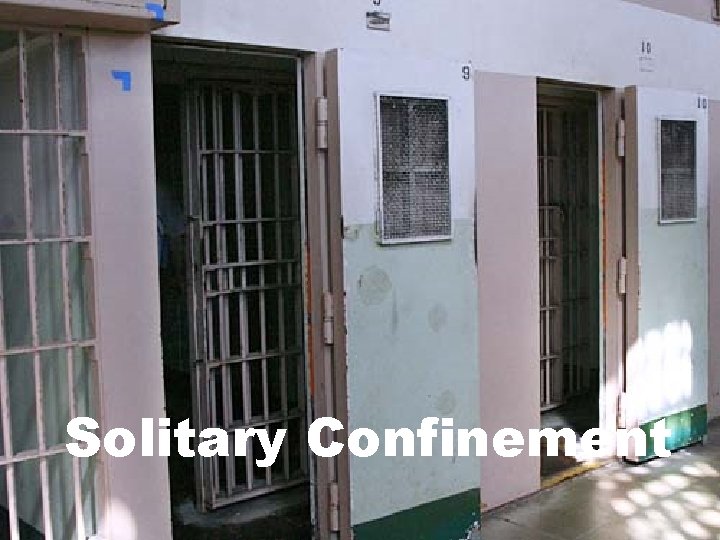
Solitary Confinement
• These cells, known as "the hole" were used to discipline inmates who broke the rules. • Each cell had two parts: a solid front door and a second door with bars that you can see inside. • When the solid door was closed the cell became completely dark. • Bank robber Henri Young spent many months in these cells. • He killed fellow inmate Rufus Mc. Cain in 1940 and claimed his time in solitary made him do it.
• Inmates were granted one visit per month and each visitation had to be approved directly by the Warden. • No physical contact was allowed and rules stated that inmates were not allowed to discuss current events, or any matters concerning prison life. • Inmates talked with visitors via intercom and a correctional officer monitored the conversations during each the majority of the time
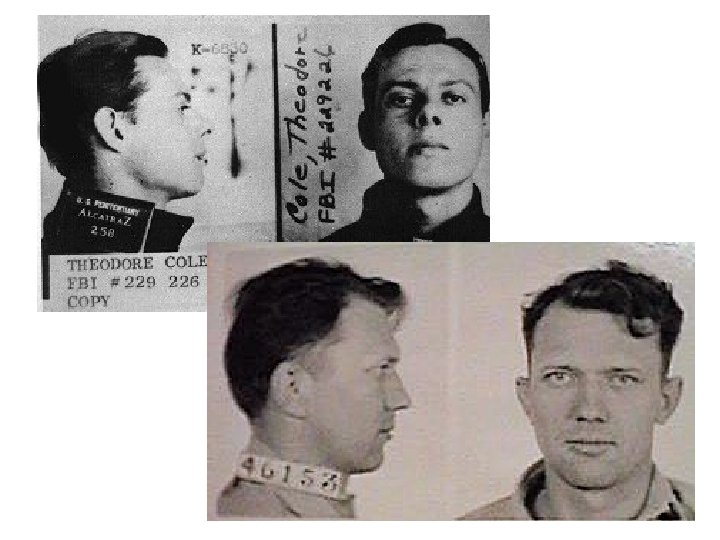
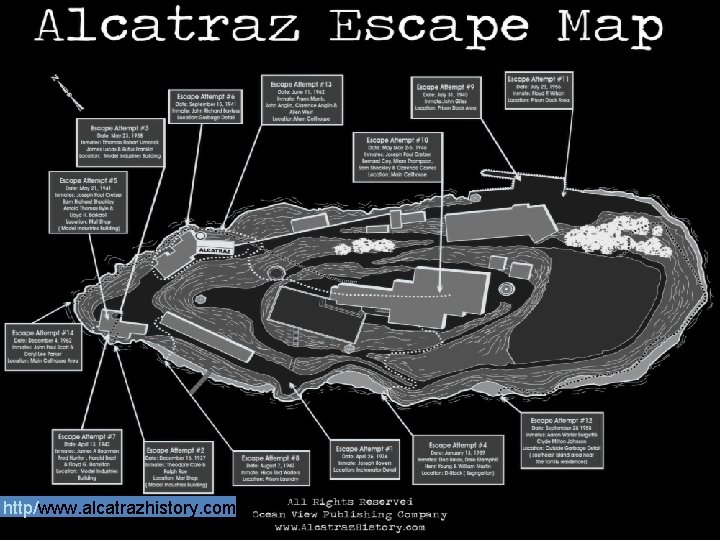
Escape Attempts • There had been 14 separate previous escape attempts by 36 different inmates • Officially, every escape attempt failed, and most participants were either killed or quickly recaptured • Theodore Cole and Ralph Roe had gradually filed through iron bars in the prison's mat shop in the industries building and escaped on a very foggy day, preventing them from being spotted by guards in the watch towers.
• The two were never seen again, but the severe weather conditions at the time have led to a agreement that they were swept out to sea by the strong current in San Francisco Bay. • However, they were listed as #1 and #2 on the FBI Most Wanted List, and there were several unconfirmed sightings of the pair. • They were among the world's most dangerous gang members
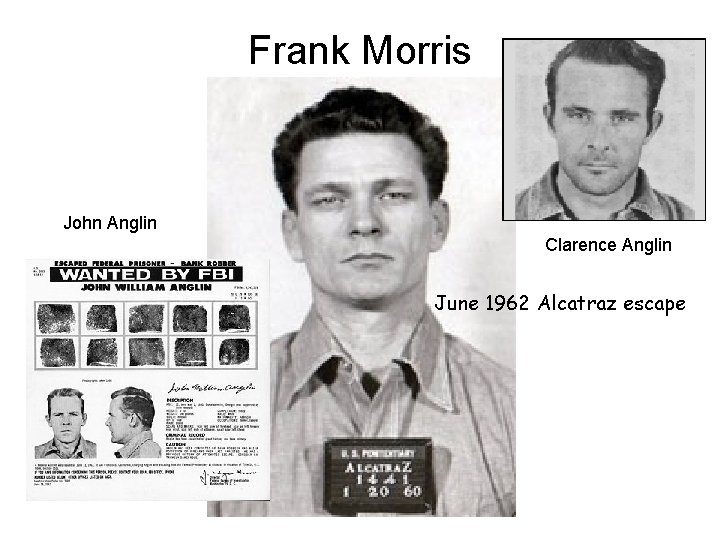
Frank Morris John Anglin Clarence Anglin June 1962 Alcatraz escape
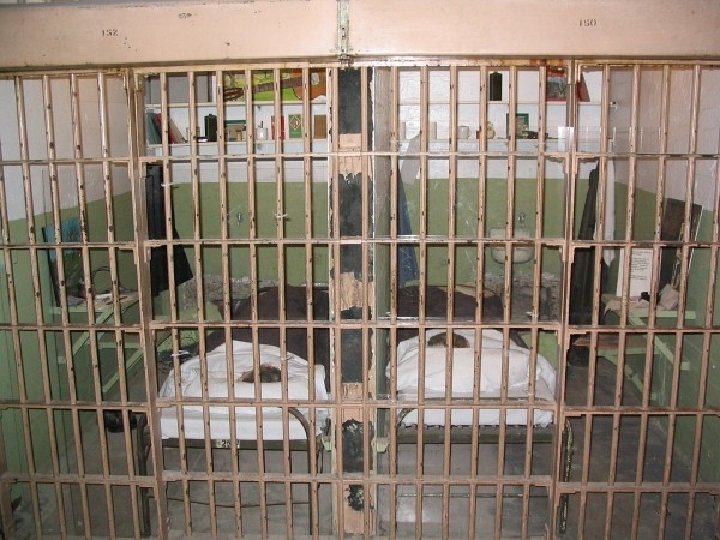
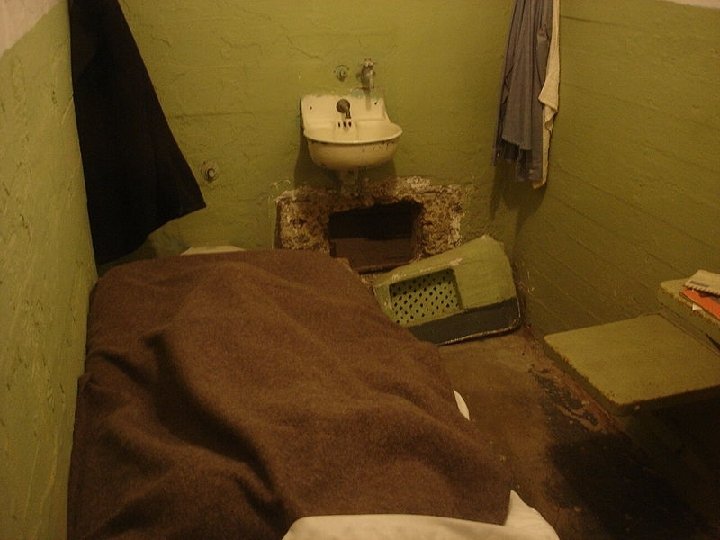
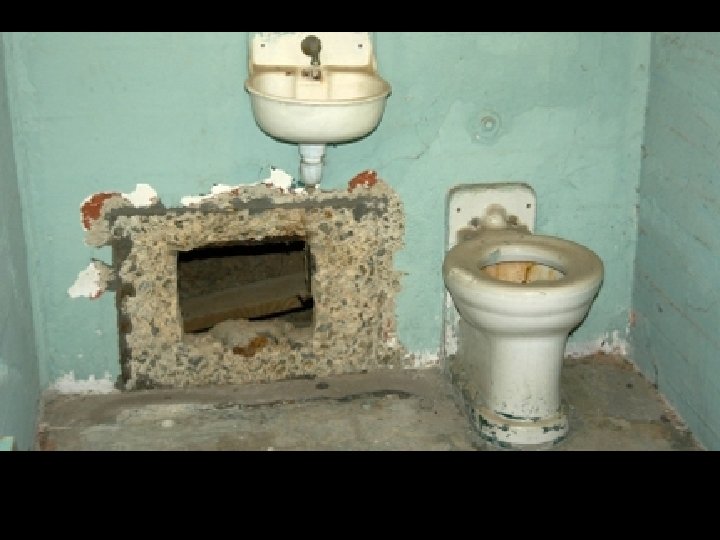
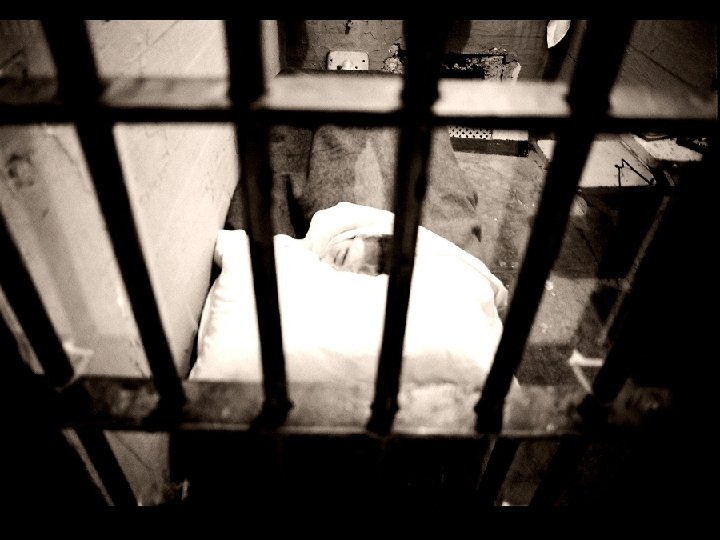
Frank Morris • Shipped to Alcatraz in 1960 • He was guilty of bank robbery and being in possession of drugs • Morris was said to have an IQ of 133, which is in the top 3%. • Morris began devising his escape within a year of his arrival at Alcatraz. • There were three others involved: John Anglin, his brother Clarence Anglin, and Allen West (who was unable to join the escape when it was eventually carried out). • The escape was long and complicated. Over a period of two years, Morris and the Anglins created a raft and lifelike dummies, and stole a number of tools to dig with. • He escaped in 1962 and was never seen again • The FBI officially closed the case on December 31, 1979
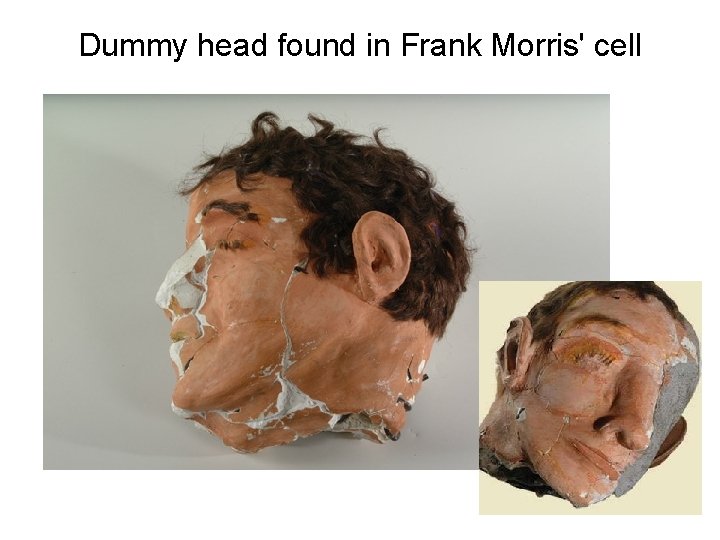
Dummy head found in Frank Morris' cell
The last escape attempt • December 16, 1962 • John Paul Scott along with Darl Lee Parker pried apart bars in a kitchen window in the cell house and reached the shore. • Parker was found 100 yards from the main island on some rocks • Scott reached Fort Point on the mainland where he was found by teenagers, suffering from hypothermia. • He had swam 3 miles to the shore • After recovering in the hospital, he was returned to Alcatraz. • It is the only proven case of an inmate of Alcatraz reaching the shore by swimming.
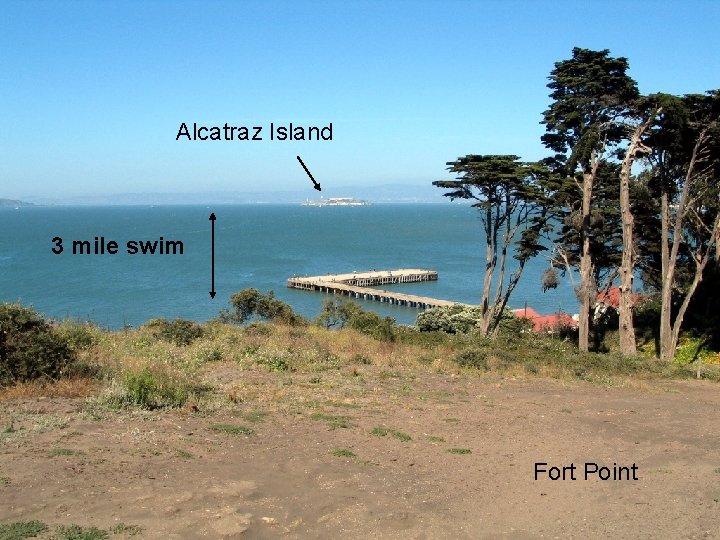
Alcatraz Island 3 mile swim Fort Point
http/www. alcatrazhistory. com
Why Alcatraz closed • On March 21 1963 Alcatraz closed after 29 years in operation. After the escape of Morris and the Anglins, the prison fell under intense scrutiny. • The prison was inspected and was found to be in very bad condition, this was because of budget cuts that meant that the prison had not been maintained properly. • The saltwater was causing the structure of the building to corrode. • Moreover the cost of running the prison was nearly three times the cost of running a prison on the mainland. • It was estimated that Alcatraz needed about 5 million pounds spent on it to bring it up to a reasonable standard. • This was considered to be too expensive and it was decided it would be closed.
Tourist Attraction • After Alcatraz closed there were several suggestions as to what it could be used for. It was suggested that a shopping centre or hotel could be built there. • It was also proposed as a site for a West Coast version of the Statue of Liberty. The island remained essentially abandoned until 1969 when a large group of American Indians descended on it and claimed the island as Indian property. • The Indians stayed on Alcatraz but in 1970 an accidental fire raged throughout the compound damaging many buildings and badly burning the historic lighthouse built in 1854.
• On June 11 1971 20 federal marshals along with the Coast Guard descended on the island removed any remaining Indians. • In 1973 the island was opened to the public and it is now one of the most popular tourist attractions in America with more than one million visitors a year. • Over the years, many of the former inmates have returned to the island with the tourists to try to come to terms with why so many people want to visit a place that holds such terrible memories for them.
Areas to include • Cover all of the areas that we have looked at – 1. Location 2. Inmates 3. Cells 4. Escape attempts 5. Tourist attraction
Points to remember • Do not allow the reader to ‘drown’ in information • Select what you think is relevant and interesting and put that into your essay and oral presentation. • This is not a copy and paste activity – put all research and notes into your own words • If you do not do this, you will be guilty of plagiarism. • Make sure you also add more of your own facts and figures. • Remember which option you are writing.
Example of paragraph for report I am writing my report on Alcatraz, the prison. Alcatraz is a prison that is no longer in use but has an interesting history. History of Alcatraz is isolated in the San Francisco Bay, this little island has earned its nickname “The Rock”. The name Alcatraz is the English version of the Spanish word ‘Alcatraces’, meaning “pelican”. The explorer Juan Manuel de Ayala gave the island its name because of all the pelicans he saw roosting there. The United States military was the island’s first long-term resident, setting up a fortress in the 1850’s during the California Gold Rush to protect the area’s riches from foreign invasion. The fortress also housed military prisoners.

Additional Information
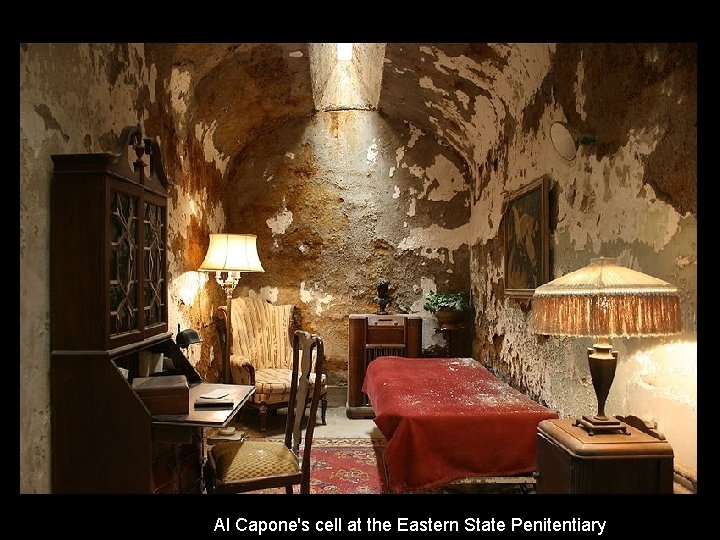
Al Capone's cell at the Eastern State Penitentiary
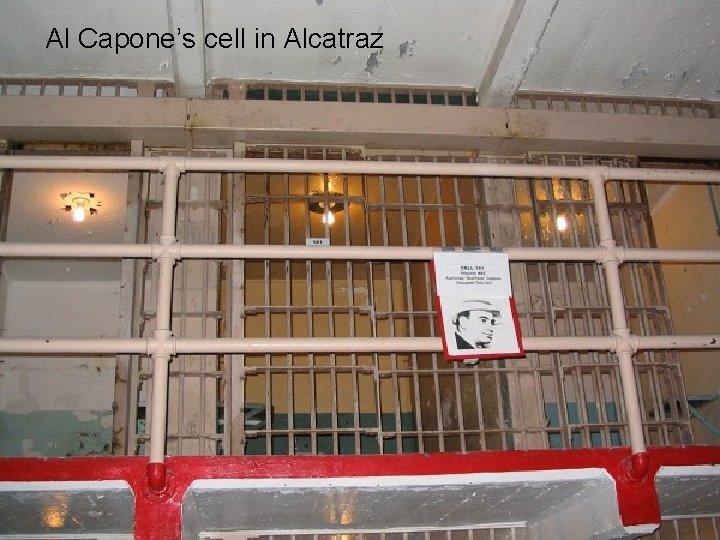
Al Capone’s cell in Alcatraz
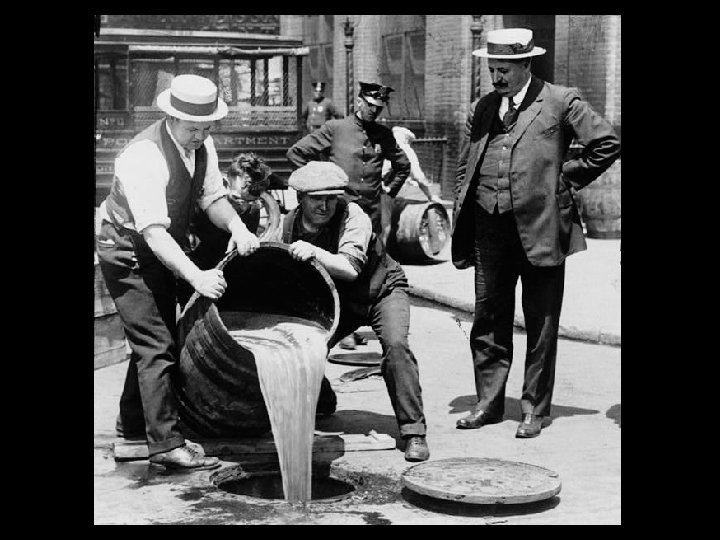
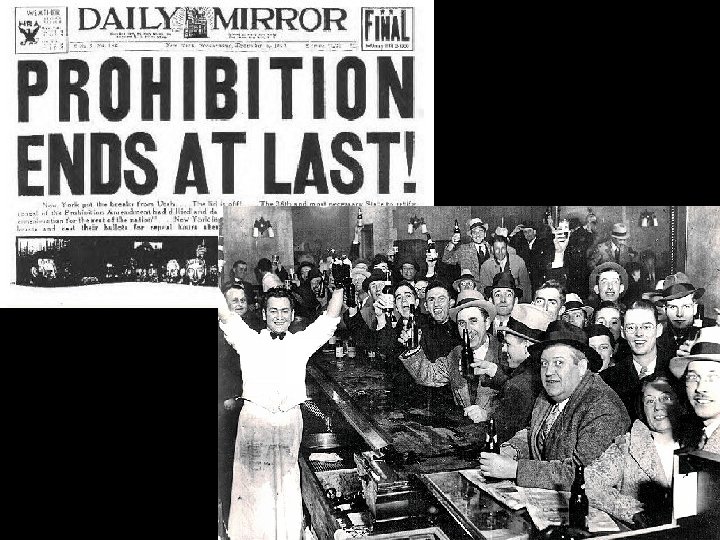
Prohibition in the United States • In 1920, the 18 th Amendment was passed making the manufacture and sale of alcohol illegal. • But many people in this time of 'Prohibition' continued to drink and gangsters made enormous amounts of money from supplying illegal liquor.
Prohibition • Here are four reasons why Prohibition was introduced: • National mood - when America entered the war in 1917 the national mood also turned against drinking alcohol. The Anti-Saloon League argued that drinking alcohol was damaging American society. • Practical - a ban on alcohol would boost supplies of important grains such as barley. • Religious - the consumption of alcohol went against God's will. • Moral - many agreed that it was wrong for some Americans to enjoy alcohol while the country's young men were at war.
How did Prohibition lead to crime? • Prohibition created an enormous public demand for illegal alcohol. • Gang leaders such as Al Capone and Bugs Moran battled for control of Chicago's illegal drinking dens known as speakeasies. • Capone claimed that he was only a businessman, but between 1927 and 1930 more than 500 gangland murders took place.
• The most infamous incident was the St Valentine's Day massacre in 1929 • Capone's men killed seven members of his rival Moran's gang while Capone lay innocently on a beach in Florida. • Capone was imprisoned for income-tax evasion and died in 1947. • It has been estimated that during Prohibition, $200 million worth of business was transferred from the brewing industry and bars to bootleggers and gangsters.
• Alcatraz had no facilities for Capital Punishment and this process was usually left to State institutions. • For Alcatraz, inmates who had been served a death sentence were transferred to San Quentin State Penitentiary for execution in the Gas Chamber. • There were eight people murdered by inmates on Alcatraz. • Five men committed suicide, and fifteen died from natural illnesses. • The Island also boasted it's own morgue but no autopsies were performed there. • All deceased inmates were brought back to the mainland released to the San Francisco County Coroner.
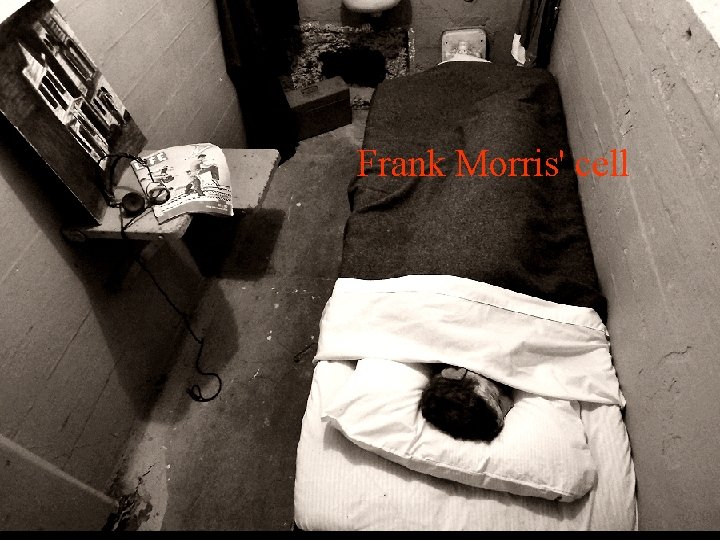
Frank Morris' cell
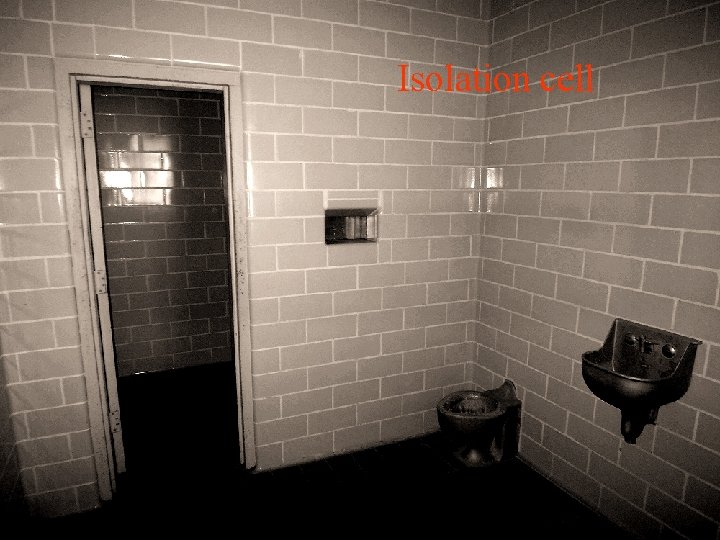
Isolation cell
- Slides: 50