
Alberto Giacometti nasceuem Borgonovo di Stampa Sua em
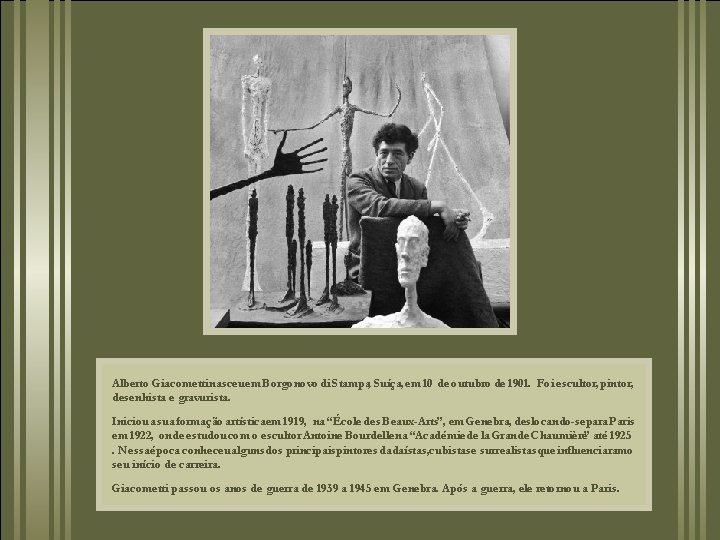
Alberto Giacometti nasceuem Borgonovo di Stampa, Suíça, em 10 de outubro de 1901. Foi escultor, pintor, desenhista e gravurista. Iniciou a sua formação artísticaem 1919, na “École des Beaux-Arts”, em Genebra, deslocando-separa Paris em 1922, onde estudou com o escultor Antoine Bourdelle na “Académie de la Grande Chaumière” até 1925. Nessa época conheceu alguns dos principaispintores dadaístas, cubistase surrealistasque influenciaramo seu início de carreira. Giacometti passou os anos de guerra de 1939 a 1945 em Genebra. Após a guerra, ele retornou a Paris.
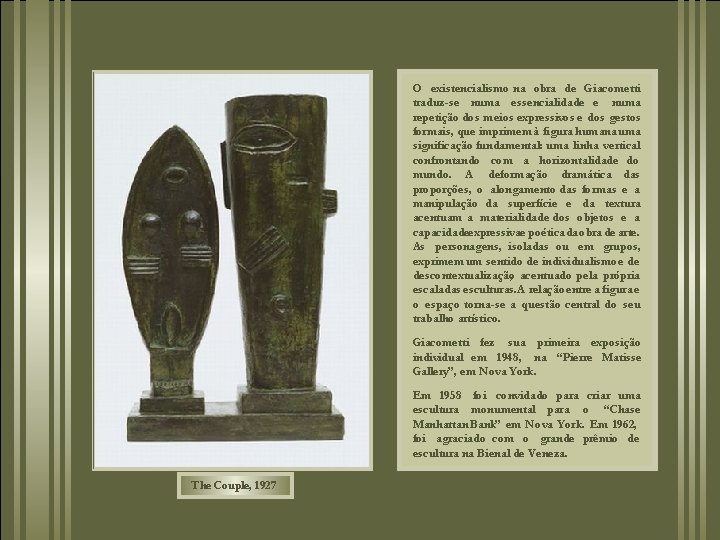
O existencialismo na obra de Giacometti traduz-se numa essencialidade e numa repetição dos meios expressivos e dos gestos formais, que imprimem à figura humana uma significação fundamental: uma linha vertical confrontando com a horizontalidade do mundo. A deformação dramática das proporções, o alongamento das formas e a manipulação da superfície e da textura acentuam a materialidade dos objetos e a capacidadeexpressivae poética da obra de arte. As personagens, isoladas ou em grupos, exprimem um sentido de individualismoe de descontextualização, acentuado pela própria escala das esculturas. A relação entre a figura e o espaço torna-se a questão central do seu trabalho artístico. Giacometti fez sua primeira exposição individual em 1948, na “Pierre Matisse Gallery”, em Nova York. Em 1958 foi convidado para criar uma escultura monumental para o “Chase Manhattan Bank” em Nova York. Em 1962, foi agraciado com o grande prêmio de escultura na Bienal de Veneza. The Couple, 1927
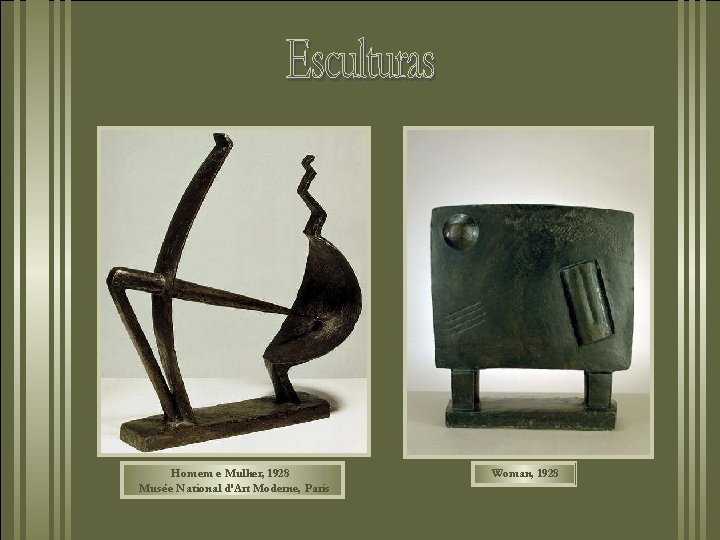
Homem e Mulher, 1928 Musée National d'Art Moderne, Paris Woman, 1928
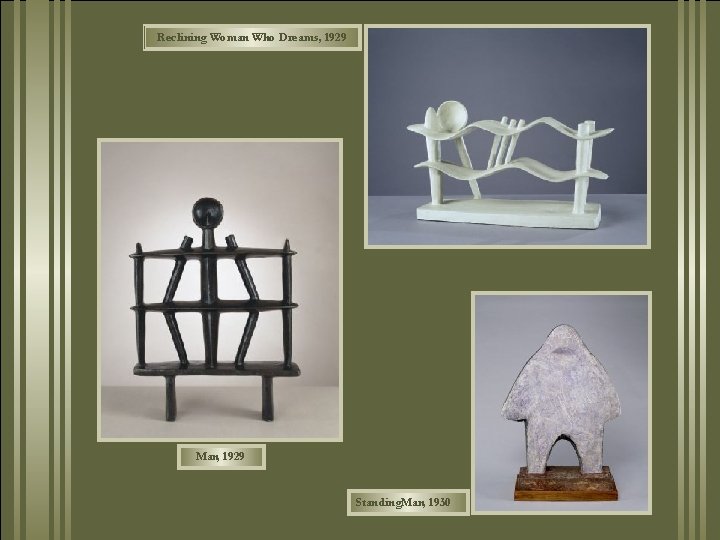
Reclining Woman Who Dreams, 1929 Man, 1929 Standing. Man, 1930
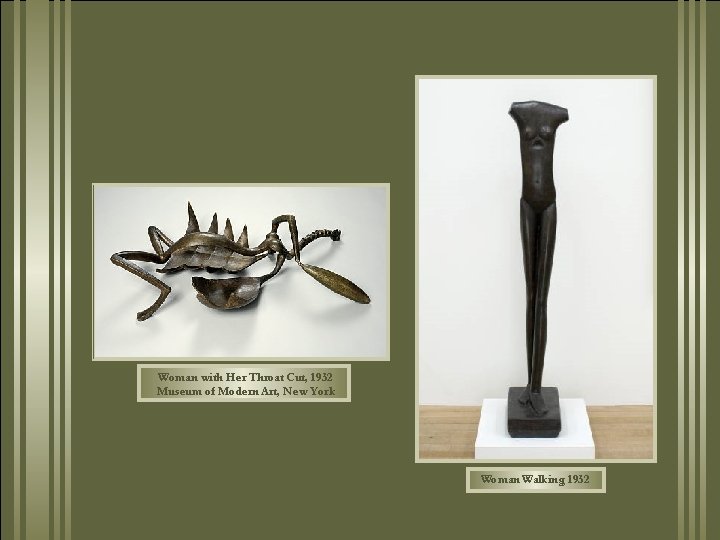
Woman with Her Throat Cut, 1932 Museum of Modern Art, New York Woman Walking, 1932
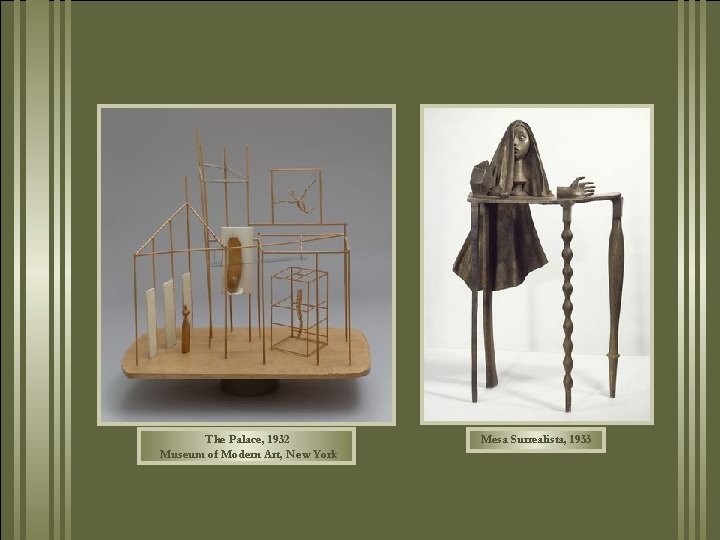
The Palace, 1932 Museum of Modern Art, New York Mesa Surrealista, 1933
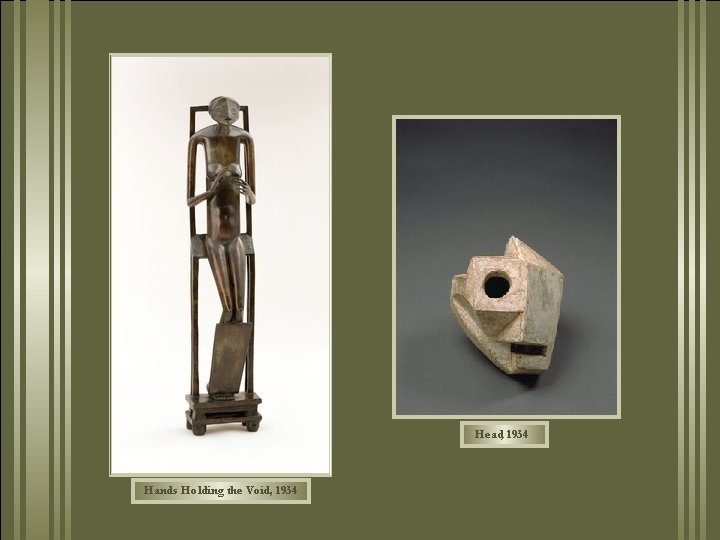
Head, 1934 Hands Holding the Void, 1934
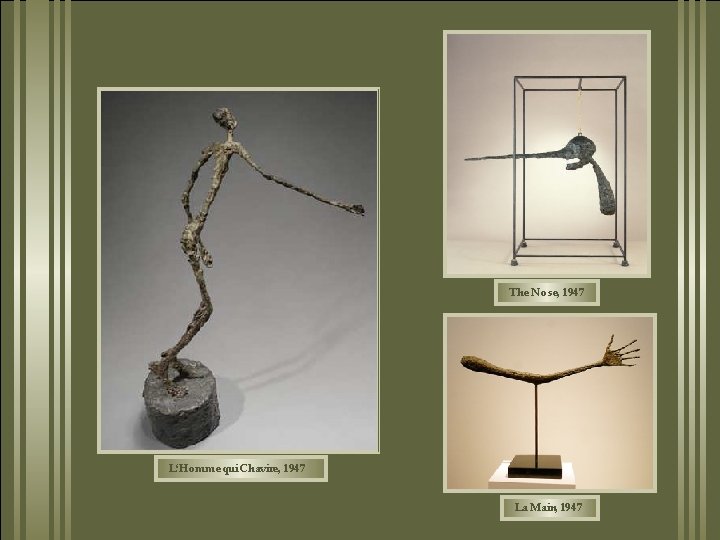
The Nose, 1947 L‘Homme qui Chavire, 1947 La Main, 1947
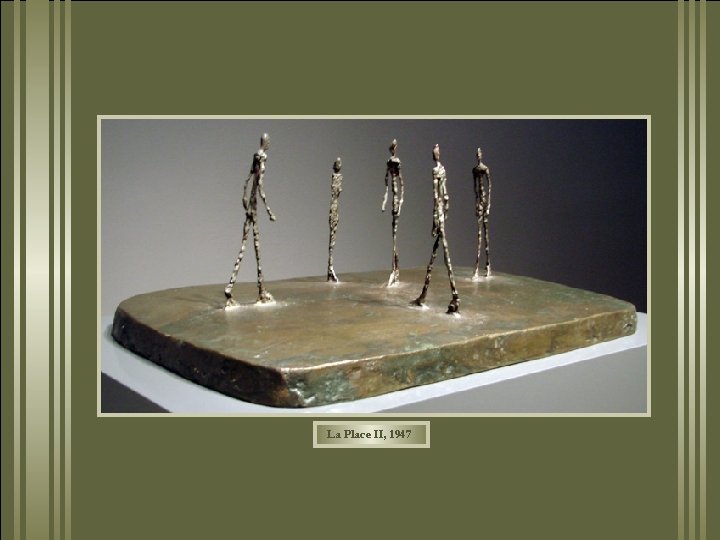
La Place II, 1947
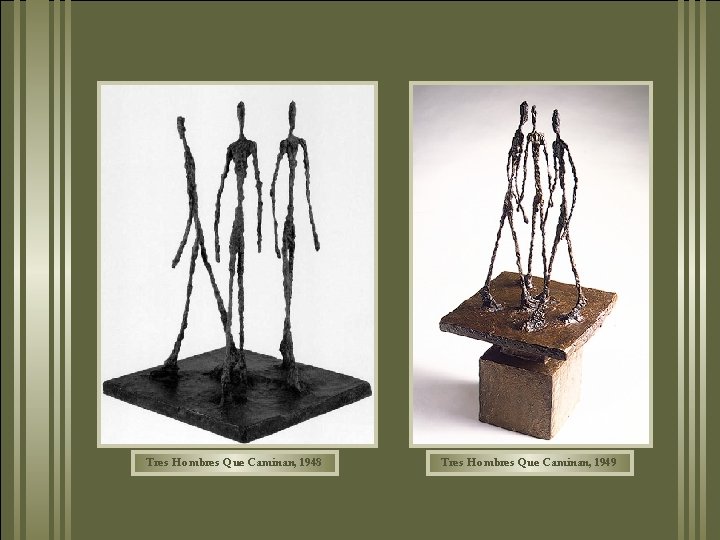
Tres Hombres Que Caminan, 1948 Tres Hombres Que Caminan, 1949
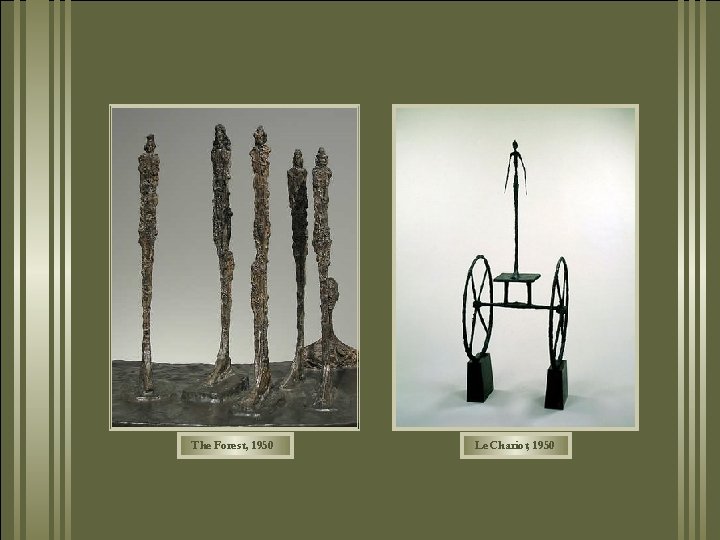
The Forest, 1950 Le Chariot, 1950
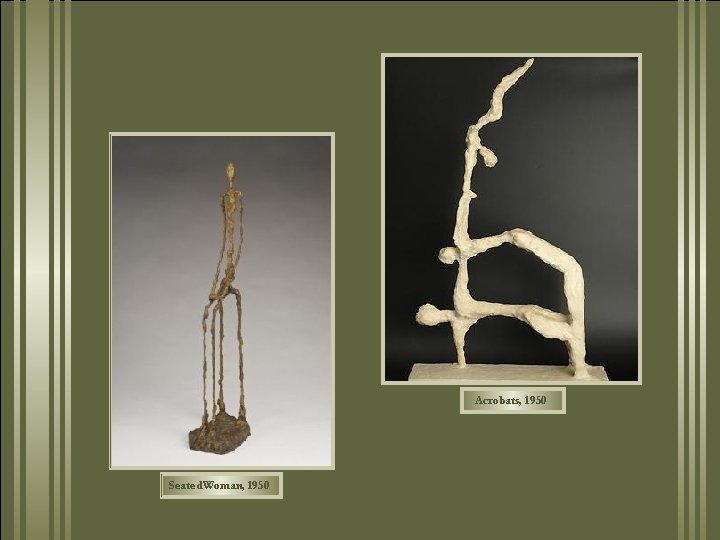
Acrobats, 1950 Seated Woman, 1950
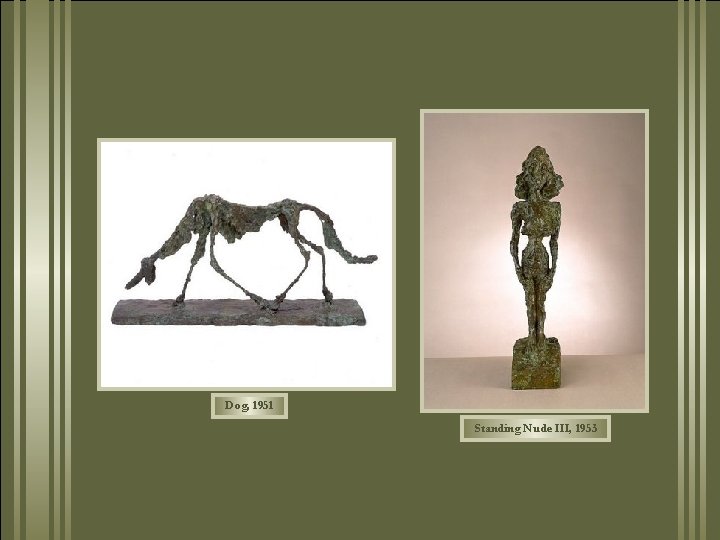
Dog, 1951 Standing Nude III, 1953
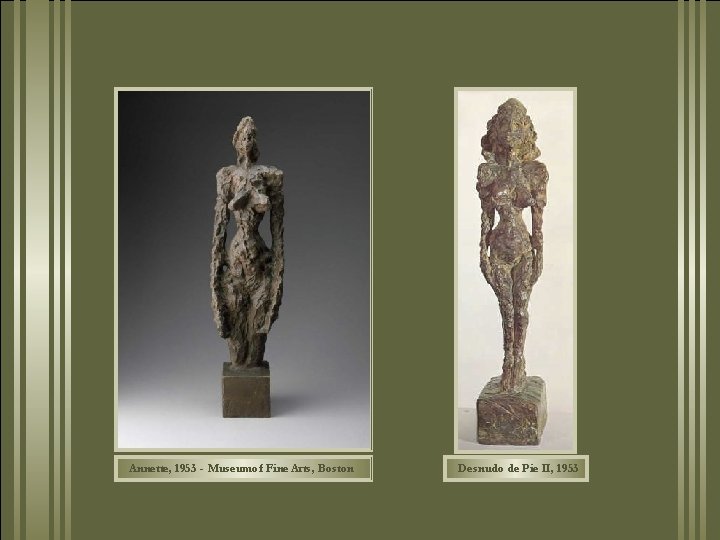
Annette, 1953 - Museumof Fine Arts, Boston Desnudo de Pie II, 1953
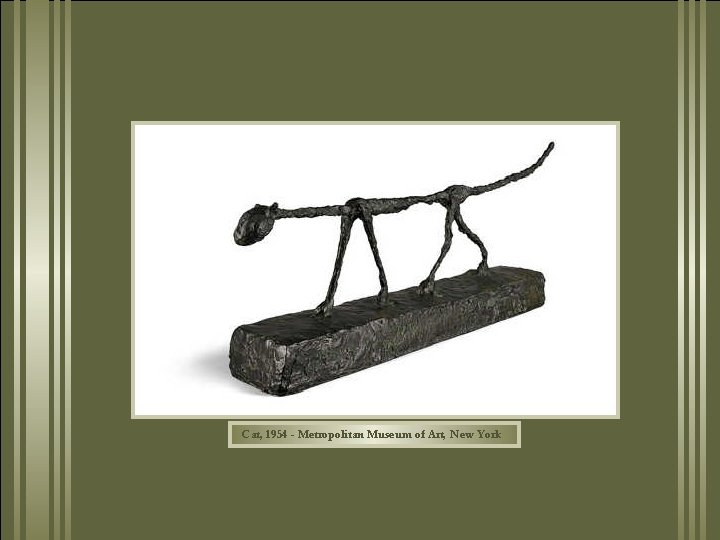
Cat, 1954 - Metropolitan Museum of Art, New York
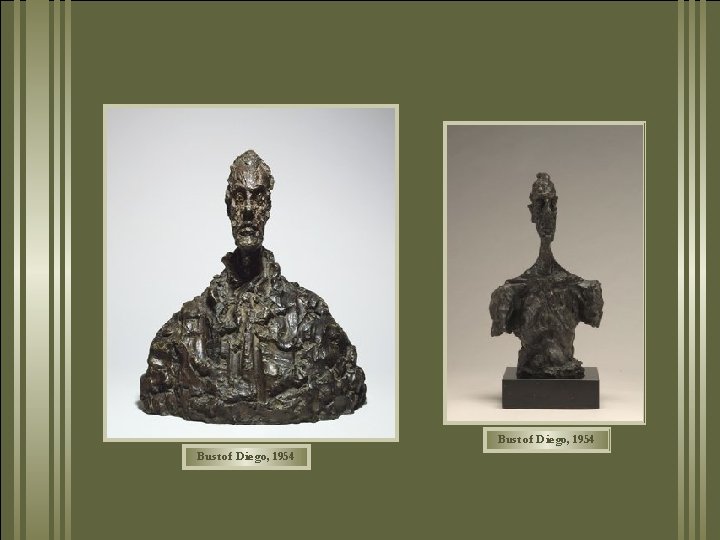
Bust of Diego, 1954
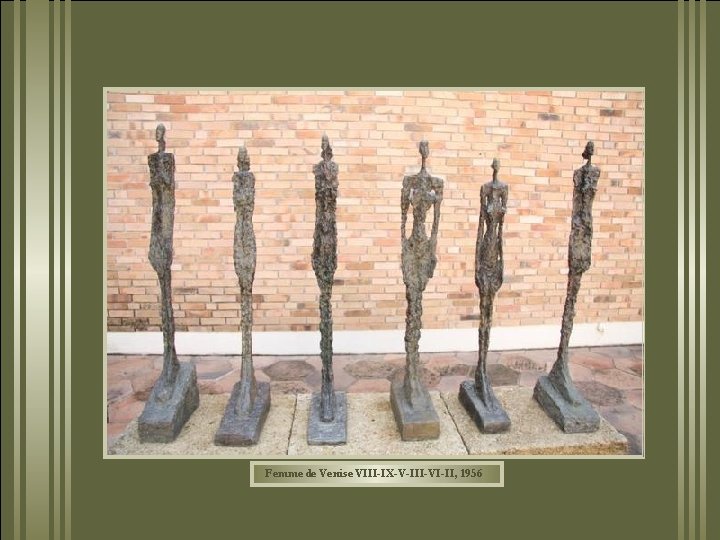
Femme de Venise VIII-IX-V-III-VI-II, 1956
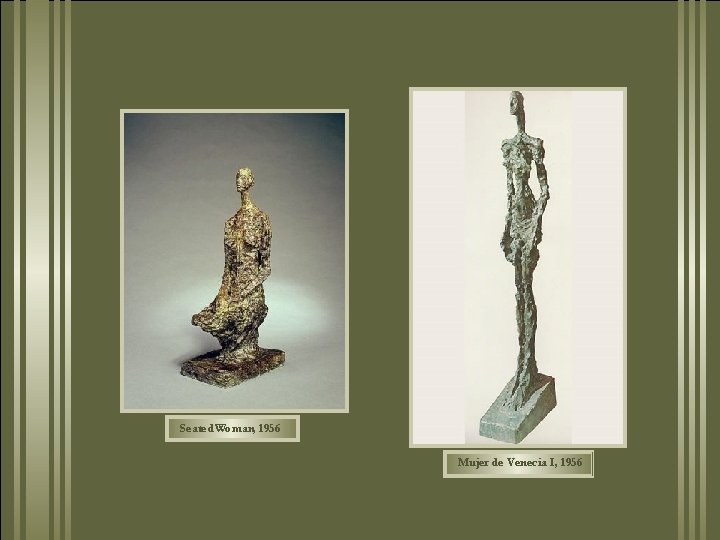
Seated Woman, 1956 Mujer de Venecia I, 1956
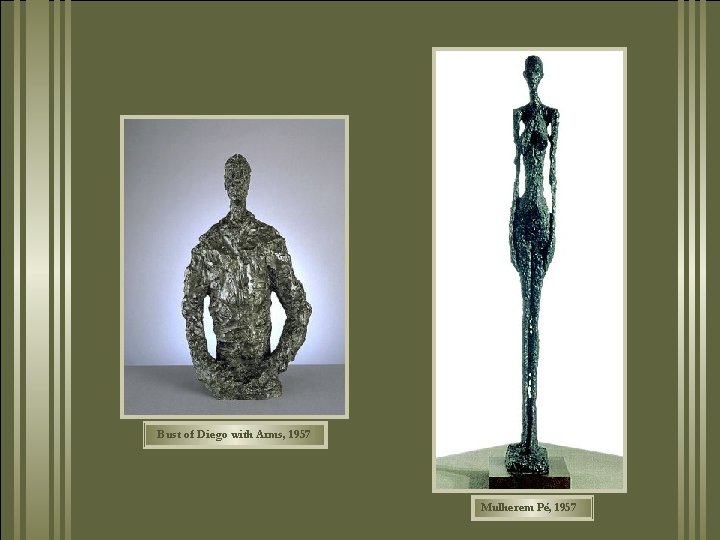
Bust of Diego with Arms, 1957 Mulher em Pé, 1957
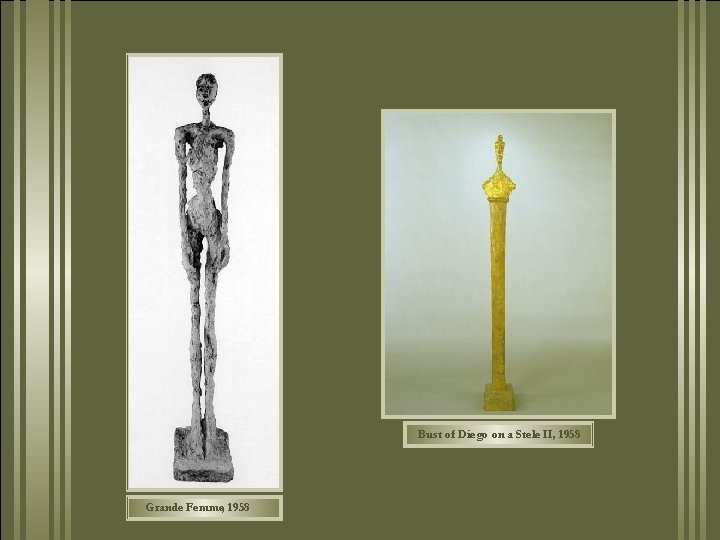
Bust of Diego on a Stele II, 1958 Grande Femme, 1958
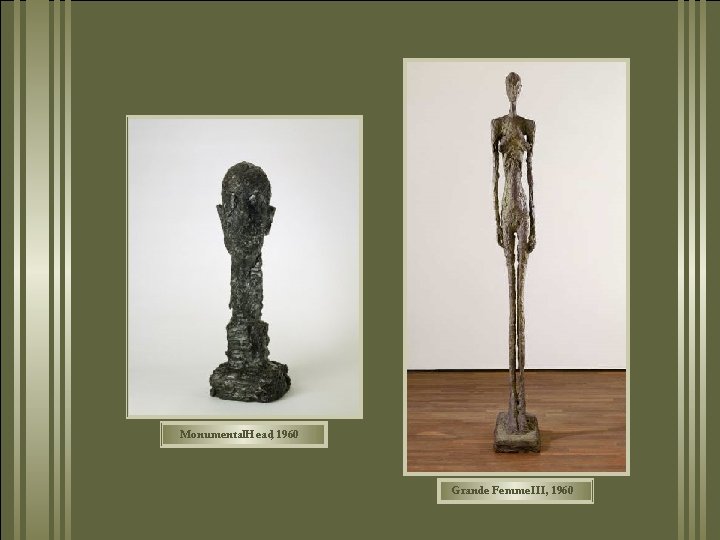
Monumental. Head, 1960 Grande Femme III, 1960
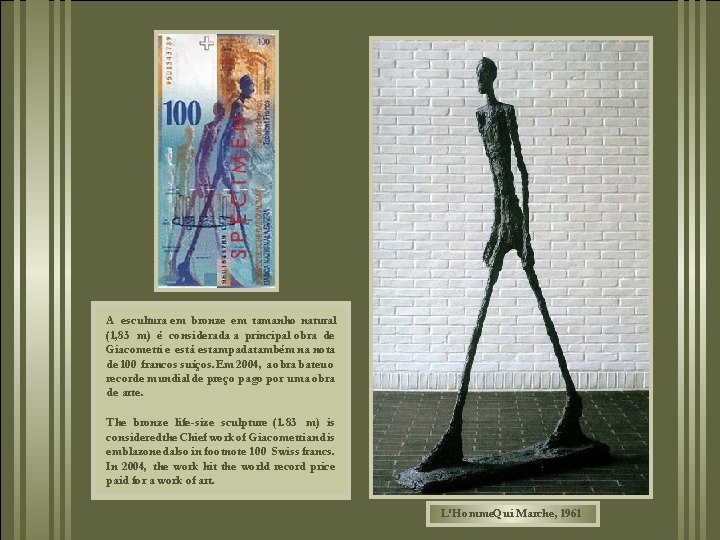
A escultura em bronze em tamanho natural (1, 83 m) é considerada a principal obra de Giacometti e está estampada também na nota de 100 francos suíços. Em 2004, a obra bateu o recorde mundial de preço pago por uma obra de arte. The bronze life-size sculpture (1. 83 m) is consideredthe Chief work of Giacometti and is emblazoned also in footnote 100 Swiss francs. In 2004, the work hit the world record price paid for a work of art. L'Homme. Qui Marche, 1961
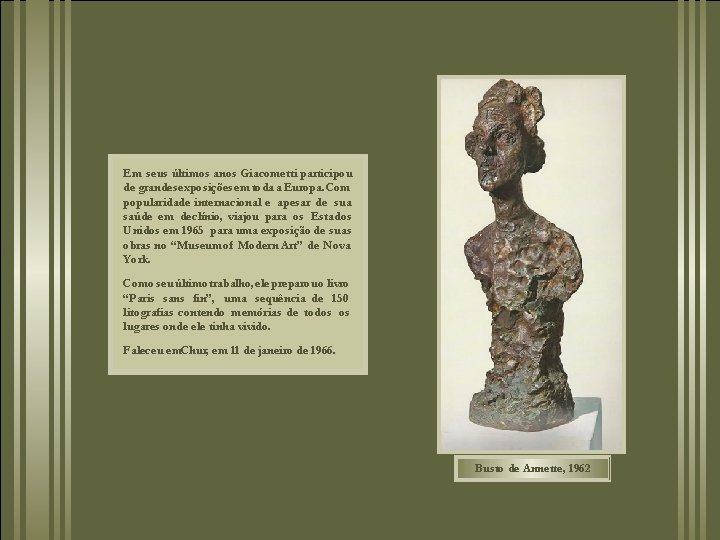
Em seus últimos anos Giacometti participou de grandesexposições em toda a Europa. Com popularidade internacional e apesar de sua saúde em declínio, viajou para os Estados Unidos em 1965 para uma exposição de suas obras no “Museum of Modern Art” de Nova York. Como seu último trabalho, ele preparou o livro “Paris sans fin”, uma sequência de 150 litografias contendo memórias de todos os lugares onde ele tinha vivido. Faleceu em. Chur, em 11 de janeiro de 1966. Busto de Annette, 1962
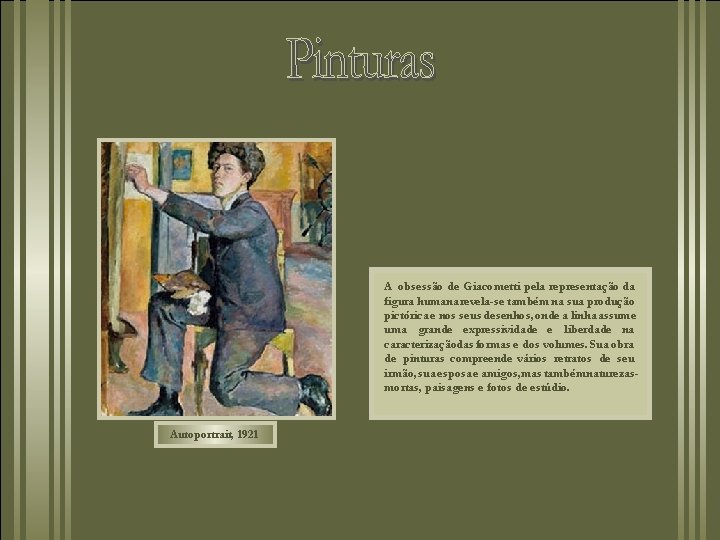
A obsessão de Giacometti pela representação da figura humana revela-se também na sua produção pictórica e nos seus desenhos, onde a linha assume uma grande expressividade e liberdade na caracterizaçãodas formas e dos volumes. Sua obra de pinturas compreende vários retratos de seu irmão, sua esposa e amigos, mas também naturezasmortas, paisagens e fotos de estúdio. Autoportrait, 1921
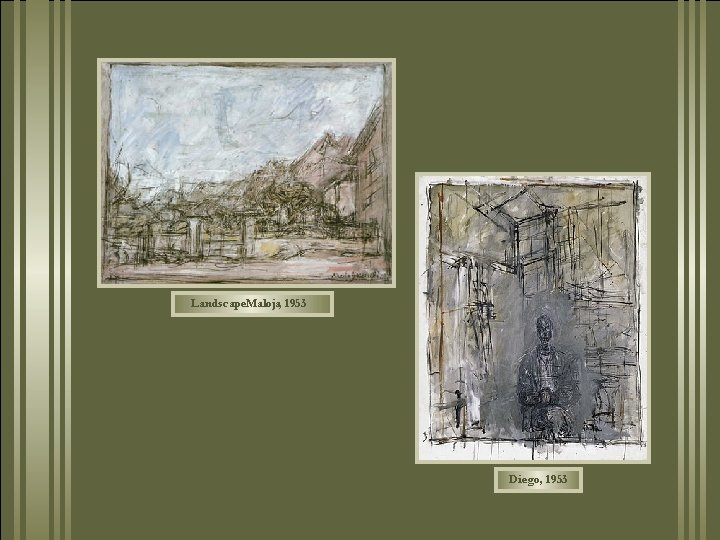
Landscape. Maloja, 1953 Diego, 1953
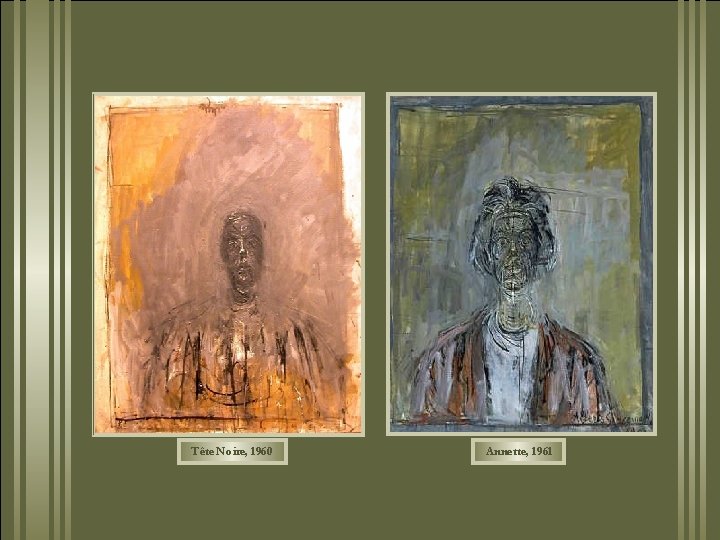
Tête Noire, 1960 Annette, 1961
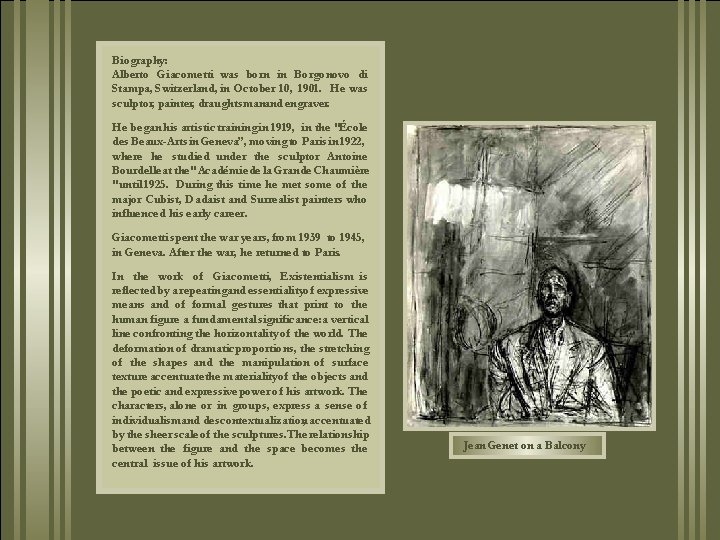
Biography: Alberto Giacometti was born in Borgonovo di Stampa, Switzerland, in October 10, 1901. He was sculptor, painter, draughtsmanand engraver. He began his artistic training in 1919, in the "École des Beaux-Arts in Geneva”, moving to Paris in 1922, where he studied under the sculptor Antoine Bourdelle at the" Académie de la Grande Chaumière "until 1925. During this time he met some of the major Cubist, Dadaist and Surrealist painters who influenced his early career. Giacometti spent the war years, from 1939 to 1945, in Geneva. After the war, he returned to Paris. In the work of Giacometti, Existentialism is reflected by a repeatingand essentialityof expressive means and of formal gestures that print to the human figure a fundamental significance: a vertical line confronting the horizontality of the world. The deformation of dramatic proportions, the stretching of the shapes and the manipulation of surface texture accentuatethe materialityof the objects and the poetic and expressive power of his artwork. The characters, alone or in groups, express a sense of individualismand descontextualization, accentuated by the sheer scale of the sculptures. The relationship between the figure and the space becomes the central issue of his artwork. Jean Genet on a Balcony
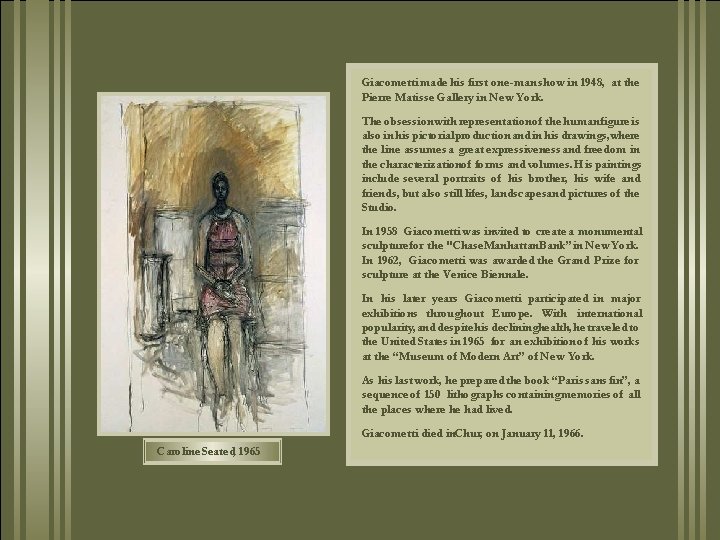
Giacometti made his first one-man show in 1948, at the Pierre Matisse Gallery in New York. The obsession with representationof the human figure is also in his pictorial production and in his drawings, where the line assumes a great expressiveness and freedom in the characterizationof forms and volumes. His paintings include several portraits of his brother, his wife and friends, but also still lifes, landscapesand pictures of the Studio. In 1958 Giacometti was invited to create a monumental sculpture for the "Chase. Manhattan. Bank” in New York. In 1962, Giacometti was awarded the Grand Prize for sculpture at the Venice Biennale. In his later years Giacometti participated in major exhibitions throughout Europe. With international popularity, and despite his declininghealth, he traveled to the United States in 1965 for an exhibition of his works at the “Museum of Modern Art” of New York. As his last work, he prepared the book “Paris sans fin”, a sequence of 150 lithographs containing memories of all the places where he had lived. Giacometti died in. Chur, on January 11, 1966. Caroline Seated, 1965
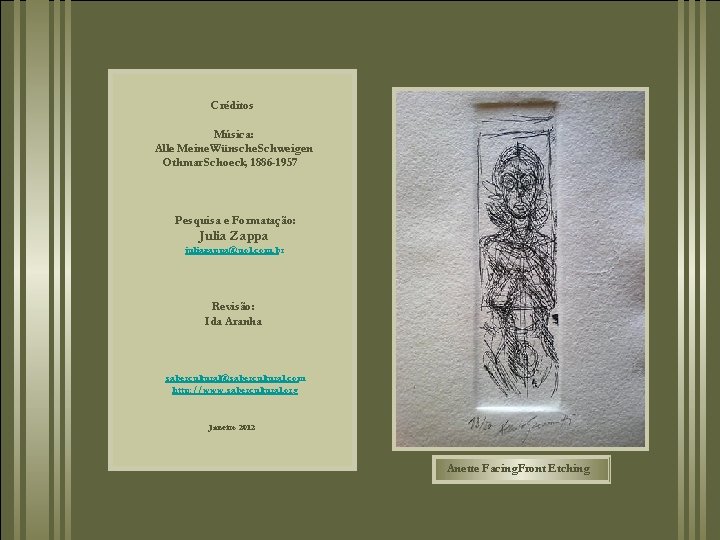
Créditos Música: Alle Meine Wünsche Schweigen Othmar Schoeck, 1886 -1957 Pesquisa e Formatação: Julia Zappa juliazappa@uol. com. br Revisão: Ida Aranha sabercultural@sabercultural. com http: //www. sabercultural. org Janeiro 2012 Anette Facing. Front Etching
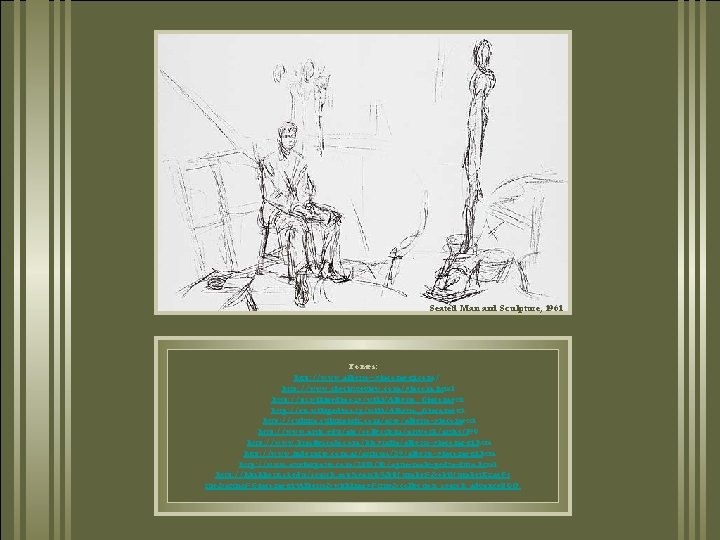
Seated Man and Sculpture, 1961 Fontes: http: //www. alberto--giacometti. com/ http: //www. thecityreview. com/giacom. html http: //pt. wikipedia. org/wiki/Alberto_Giacometti http: //en. wikipedia. org/wiki/Alberto_Giacometti http: //culturamix. com/arte/alberto-giacometti http: //www. artic. edu/aic/collections/artwork/artist/190 http: //www. brasilescola. com/biografia/alberto-giacometti. htm http: //www. indexarte. com. ar/artistas/29/alberto-giacometti. htm http: //www. artefazparte. com/2011/10/agua-mole-pedra-dura. html http: //hirshhorn. si. edu/search. asp? search=& obj. Number=&obj. Number. Exact=t rue&artists=Giacometti+Alberto&with. Image=true&collection_search_advanced =GO
- Slides: 32