
ALBA RF system why how and other questions
ALBA RF system why, how and other questions Francis Perez RF 1/33
Contents • • WHY? HOW? WHICH? Other questions RF 2/33
WHY? • we need a RF System to: – accelerate the electron beam to high speeds (~c) / high energy – restore the energy loss via synchrotron radiation of the stored e- beam – provide a stable energy bucket to ensure a long lifetime RF 3/33
WHY? • To accelerate the electron beam to high speeds (~c) / high energy – 1 st in the LINAC: • 90 ke. V to 100 Me. V – 2 nd in the BOOSTER: • 100 Me. V to 3 Ge. V RF 4/33
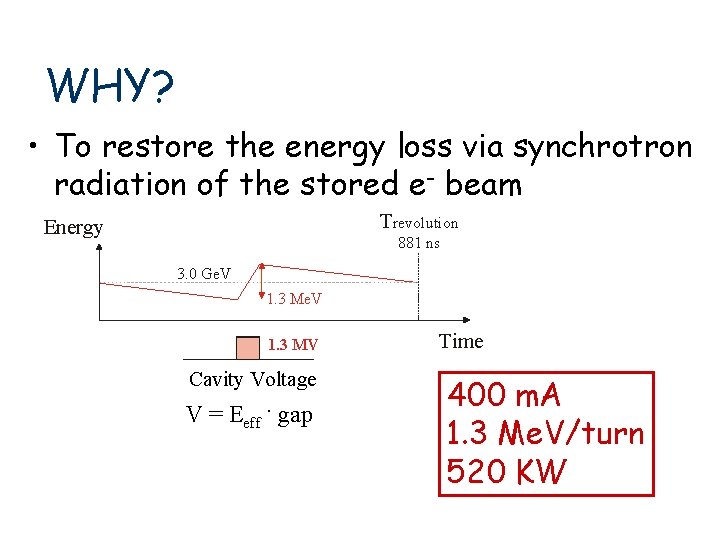
WHY? • To restore the energy loss via synchrotron radiation of the stored e- beam Trevolution Energy 881 ns 3. 0 Ge. V 1. 3 MV Cavity Voltage V = E. gap eff Time 400 m. A 1. 3 Me. V/turn 520 KW RF 5/33
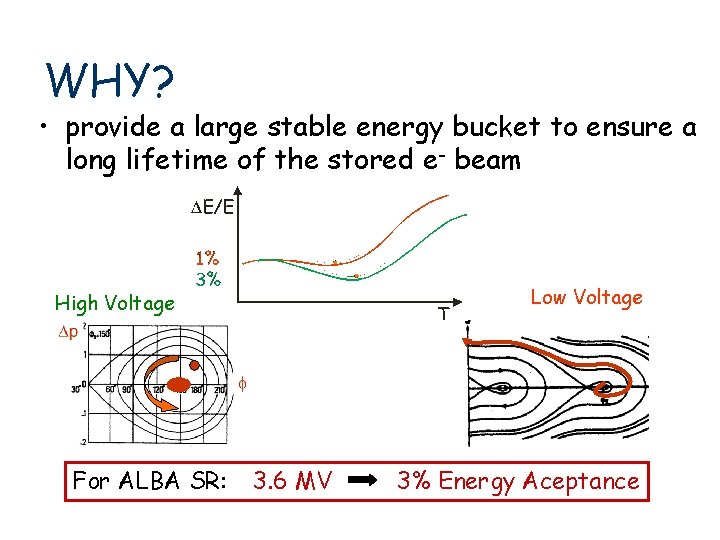
WHY? • provide a large stable energy bucket to ensure a long lifetime of the stored e- beam Low Voltage High Voltage For ALBA SR: 3. 6 MV 3% Energy Aceptance RF 6/33
HOW? • inside the RF cavities an electromagnetic field is stored – and we will make use of: F=q. E – to create a force that will • accelerate the electrons • create a st able well potential RF 7/33
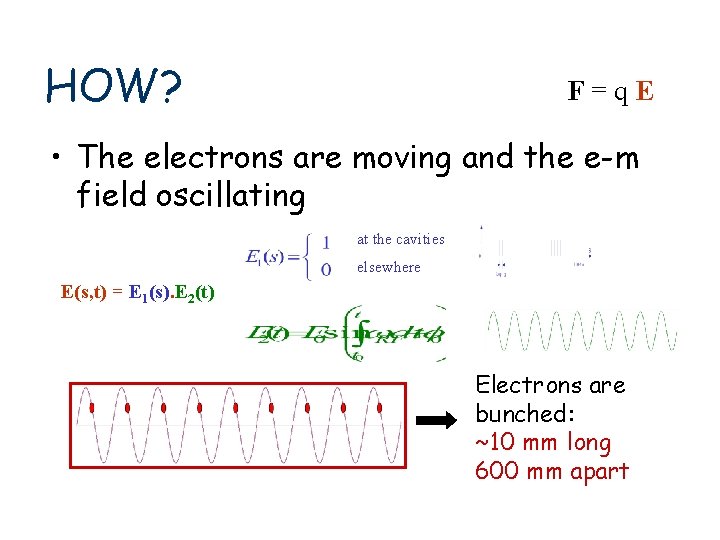
HOW? F=q. E • The electrons are moving and the e-m field oscillating at the cavities elsewhere E(s, t) = E 1(s). E 2(t) Electrons are bunched: ~10 mm long 600 mm apart RF 8/33
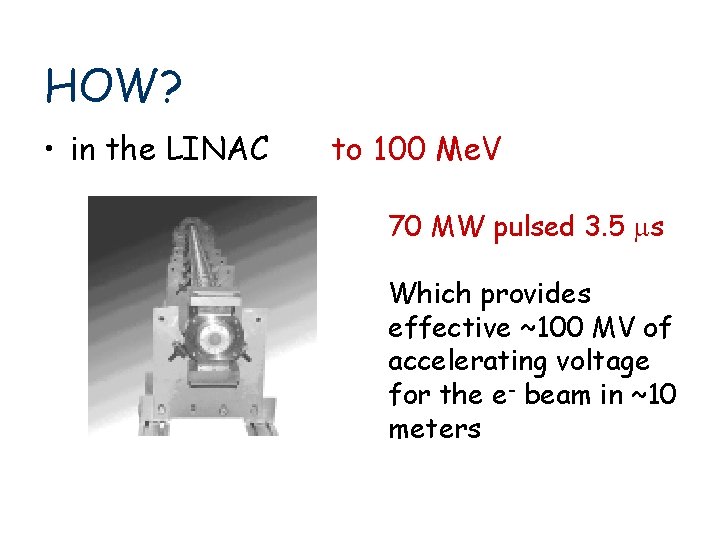
HOW? • in the LINAC to 100 Me. V 70 MW pulsed 3. 5 ms Which provides effective ~100 MV of accelerating voltage for the e- beam in ~10 meters RF 9/33
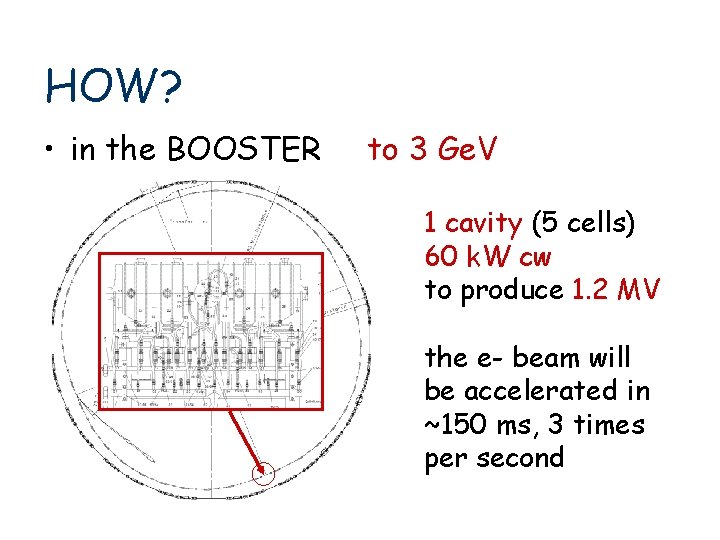
HOW? • in the BOOSTER to 3 Ge. V 1 cavity (5 cells) 60 k. W cw to produce 1. 2 MV the e- beam will be accelerated in ~150 ms, 3 times per second RF 10/33
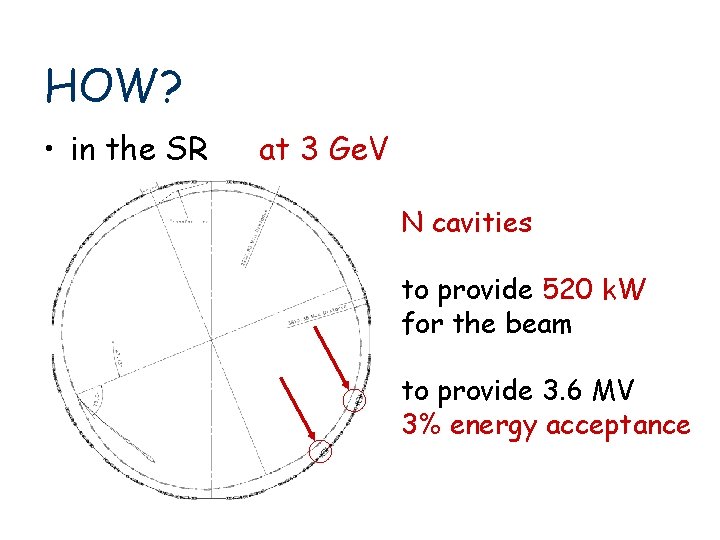
HOW? • in the SR at 3 Ge. V N cavities to provide 520 k. W for the beam to provide 3. 6 MV 3% energy acceptance RF 11/33
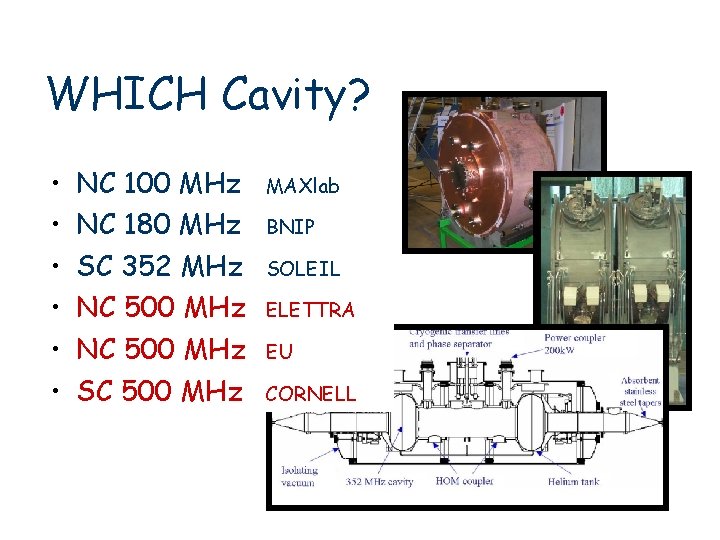
WHICH Cavity? • • • NC 100 MHz NC 180 MHz SC 352 MHz NC 500 MHz SC 500 MHz MAXlab BNIP SOLEIL ELETTRA EU CORNELL RF 12/33
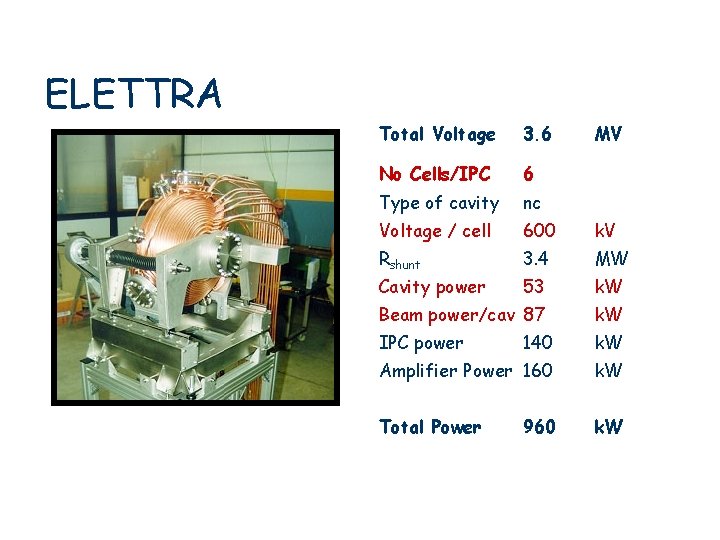
ELETTRA Total Voltage 3. 6 No Cells/IPC 6 Type of cavity nc Voltage / cell 600 k. V Rshunt 3. 4 MW Cavity power 53 k. W Beam power/cav 87 k. W IPC power 140 k. W Amplifier Power 160 k. W Total Power k. W 960 MV RF 13/33
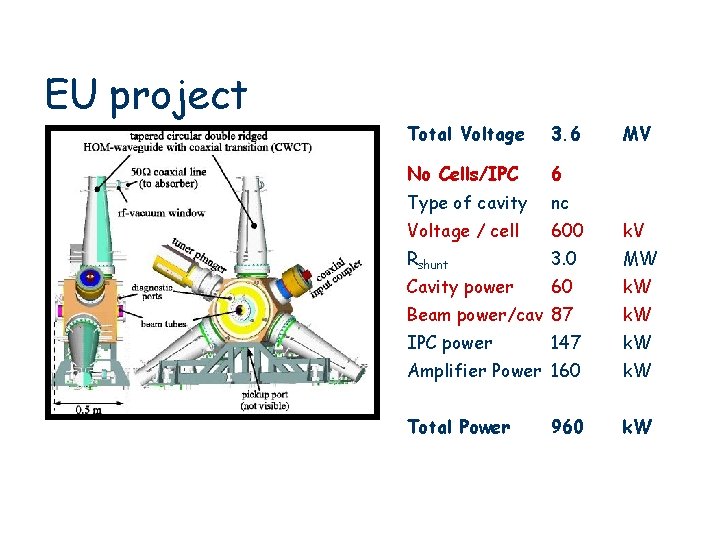
EU project Total Voltage 3. 6 No Cells/IPC 6 Type of cavity nc Voltage / cell 600 k. V Rshunt 3. 0 MW Cavity power 60 k. W Beam power/cav 87 k. W IPC power 147 k. W Amplifier Power 160 k. W Total Power k. W 960 MV RF 14/33
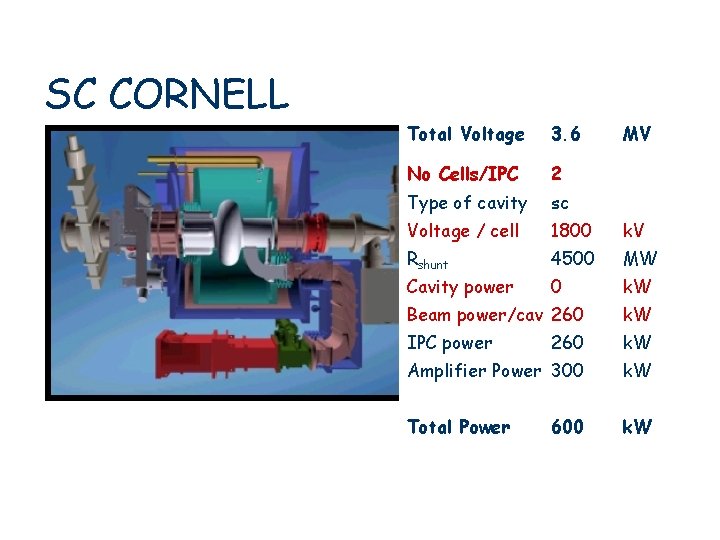
SC CORNELL Total Voltage 3. 6 MV No Cells/IPC 2 Type of cavity sc Voltage / cell 1800 k. V Rshunt 4500 MW Cavity power 0 k. W Beam power/cav 260 k. W IPC power 260 k. W Amplifier Power 300 k. W Total Power k. W 600 RF 15/33
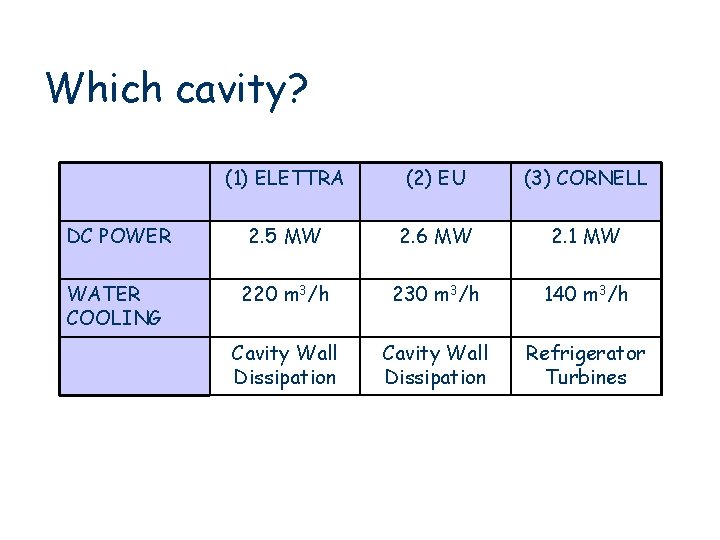
Which cavity? (1) ELETTRA (2) EU (3) CORNELL DC POWER 2. 5 MW 2. 6 MW 2. 1 MW WATER COOLING 220 m 3/h 230 m 3/h 140 m 3/h Cavity Wall Dissipation Refrigerator Turbines RF 16/33
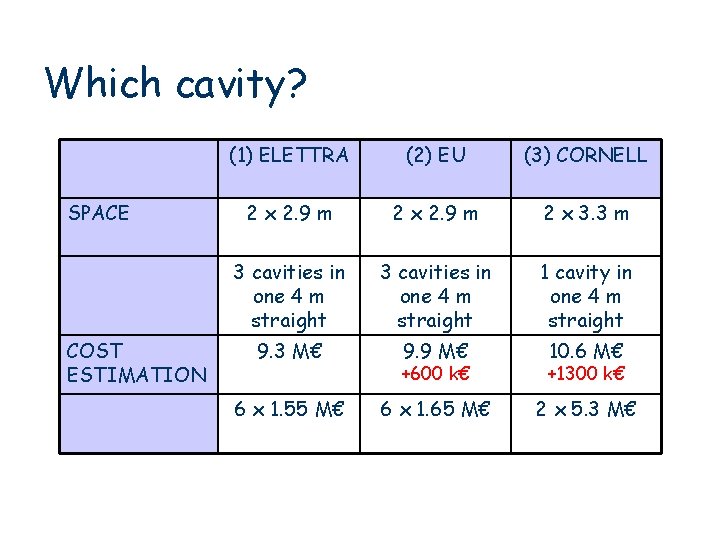
Which cavity? SPACE COST ESTIMATION (1) ELETTRA (2) EU (3) CORNELL 2 x 2. 9 m 2 x 3. 3 m 3 cavities in one 4 m straight 1 cavity in one 4 m straight 9. 3 M€ 9. 9 M€ 10. 6 M€ 6 x 1. 55 M€ +600 k€ +1300 k€ 6 x 1. 65 M€ 2 x 5. 3 M€ RF 17/33
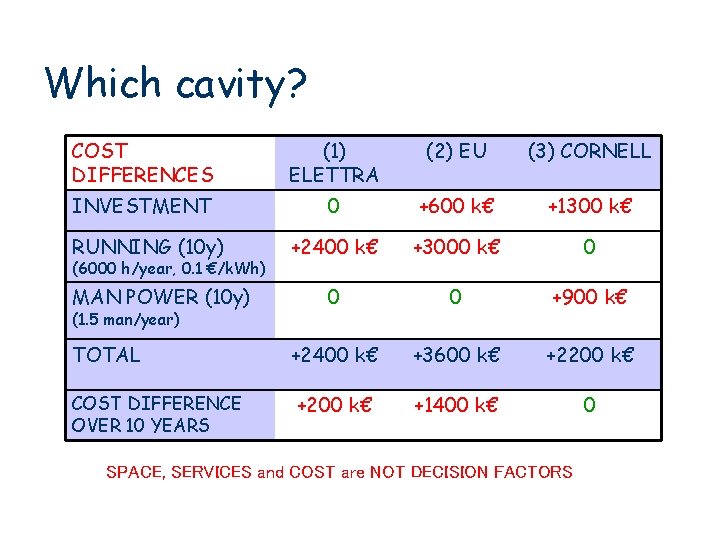
Which cavity? COST DIFFERENCES (1) ELETTRA (2) EU (3) CORNELL INVESTMENT 0 +600 k€ +1300 k€ +2400 k€ +3000 k€ 0 0 0 +900 k€ +2400 k€ +3600 k€ +2200 k€ +1400 k€ 0 RUNNING (10 y) (6000 h/year, 0. 1 €/k. Wh) MAN POWER (10 y) (1. 5 man/year) TOTAL COST DIFFERENCE OVER 10 YEARS SPACE, SERVICES and COST are NOT DECISION FACTORS RF 18/33
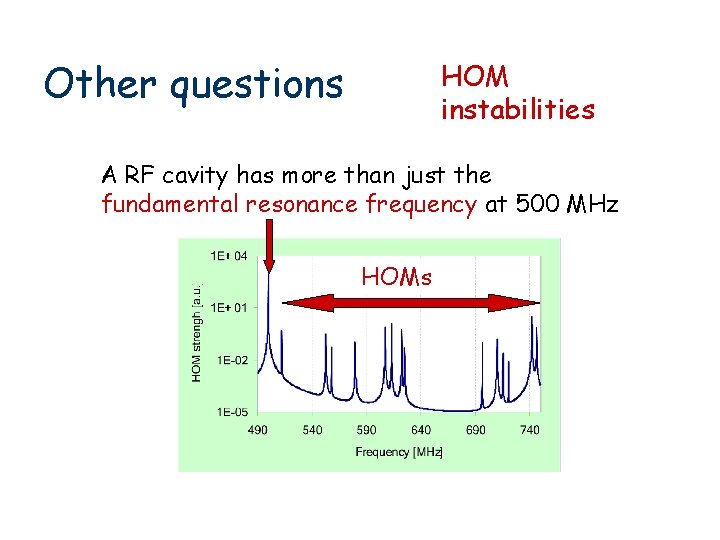
Other questions HOM instabilities A RF cavity has more than just the fundamental resonance frequency at 500 MHz HOMs RF 19/33
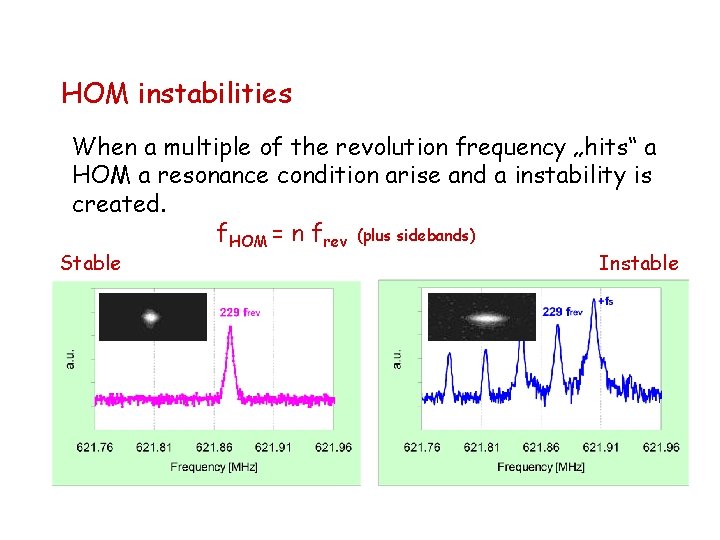
HOM instabilities When a multiple of the revolution frequency „hits“ a HOM a resonance condition arise and a instability is created. f. HOM = n frev (plus sidebands) Stable Instable RF 20/33
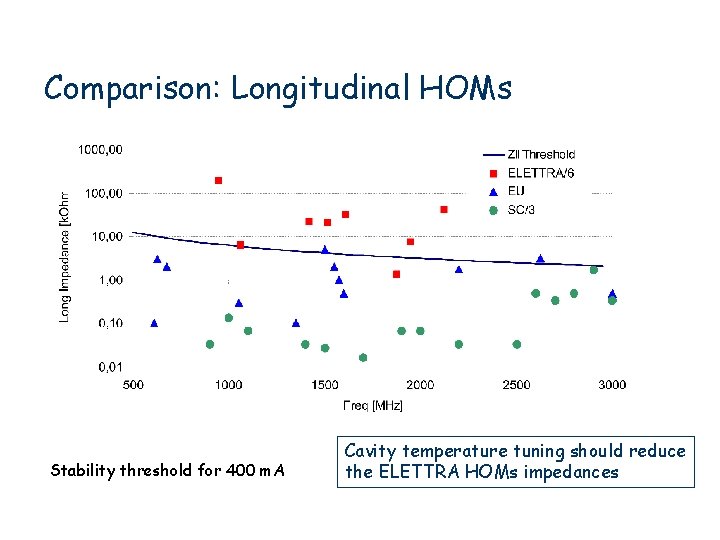
Comparison: Longitudinal HOMs Stability threshold for 400 m. A Cavity temperature tuning should reduce the ELETTRA HOMs impedances RF 21/33
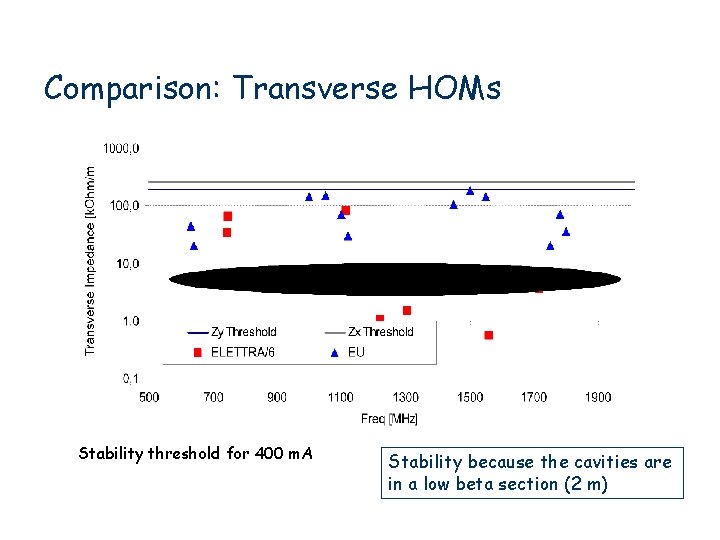
Comparison: Transverse HOMs Stability threshold for 400 m. A Stability because the cavities are in a low beta section (2 m) RF 22/33
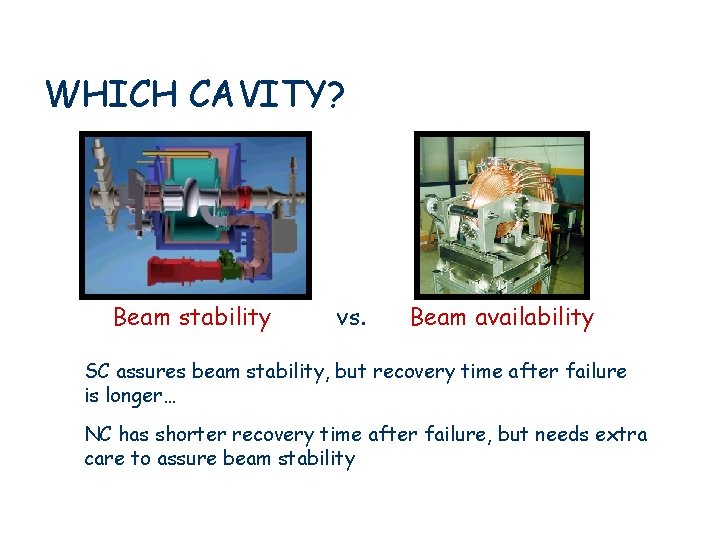
WHICH CAVITY? Beam stability vs. Beam availability SC assures beam stability, but recovery time after failure is longer… NC has shorter recovery time after failure, but needs extra care to assure beam stability RF 23/33
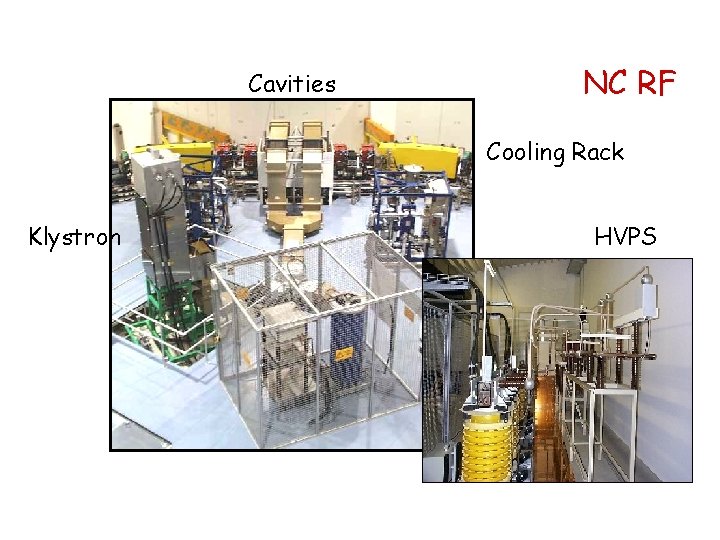
Cavities NC RF Cooling Rack Klystron HVPS RF 24/33
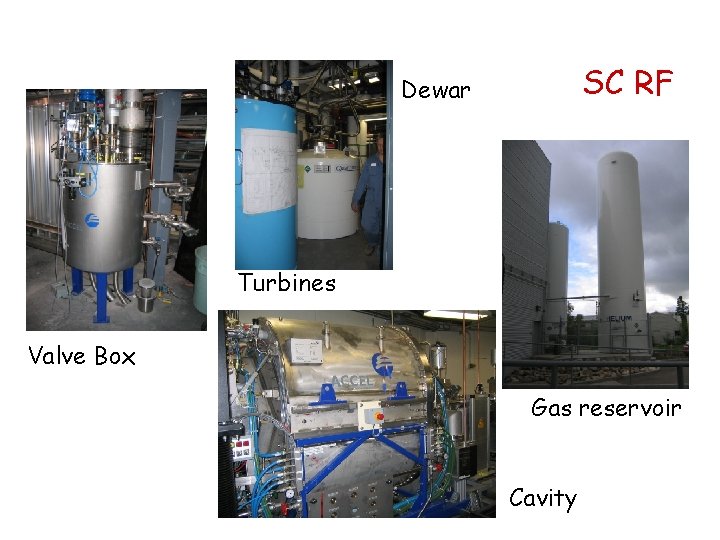
SC RF Dewar Turbines Valve Box Gas reservoir Cavity RF 25/33
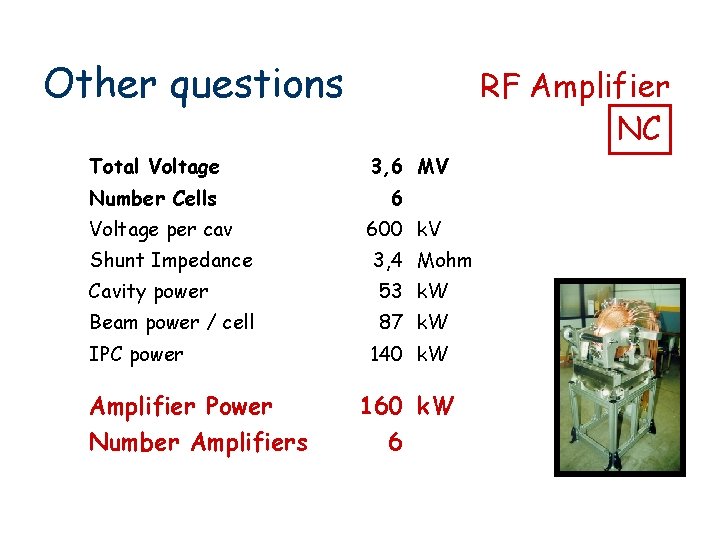
Other questions Total Voltage Number Cells Voltage per cav RF Amplifier NC 3, 6 MV 6 600 k. V Shunt Impedance 3, 4 Mohm Cavity power 53 k. W Beam power / cell 87 k. W IPC power Amplifier Power Number Amplifiers 140 k. W 160 k. W 6 RF 26/33
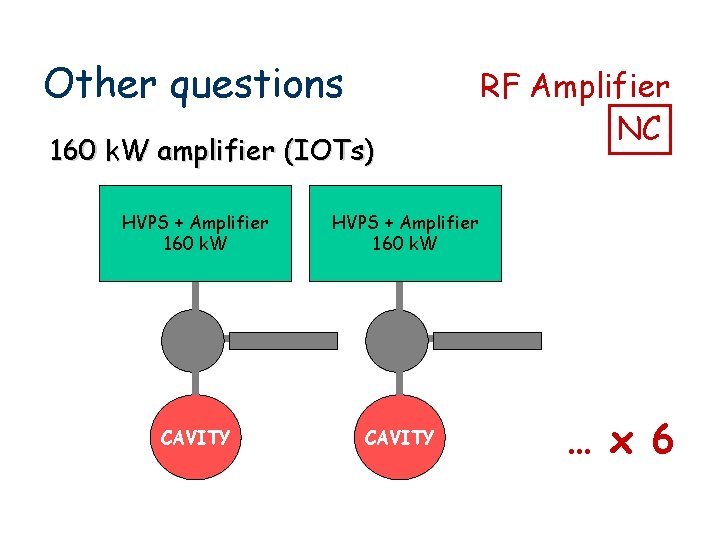
Other questions 160 k. W amplifier (IOTs) HVPS + Amplifier 160 k. W CAVITY RF Amplifier NC HVPS + Amplifier 160 k. W CAVITY … x 6 RF 27/33
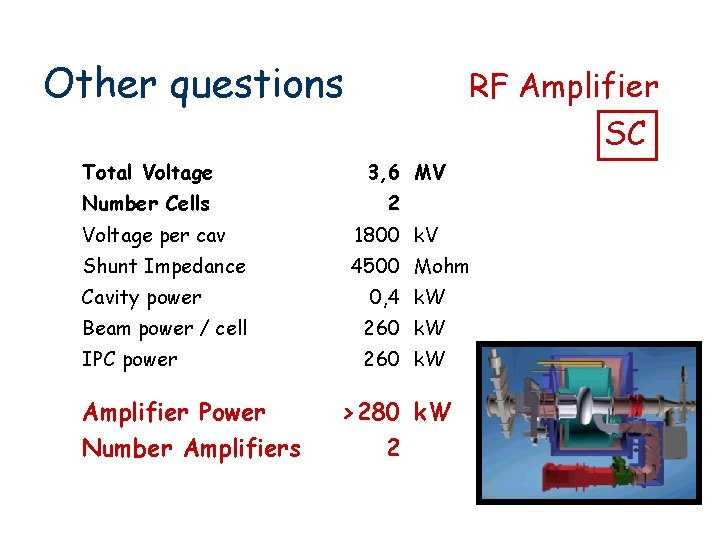
Other questions RF Amplifier SC Total Voltage Number Cells 3, 6 MV 2 Voltage per cav 1800 k. V Shunt Impedance 4500 Mohm Cavity power 0, 4 k. W Beam power / cell 260 k. W IPC power 260 k. W Amplifier Power Number Amplifiers >280 k. W 2 RF 28/33
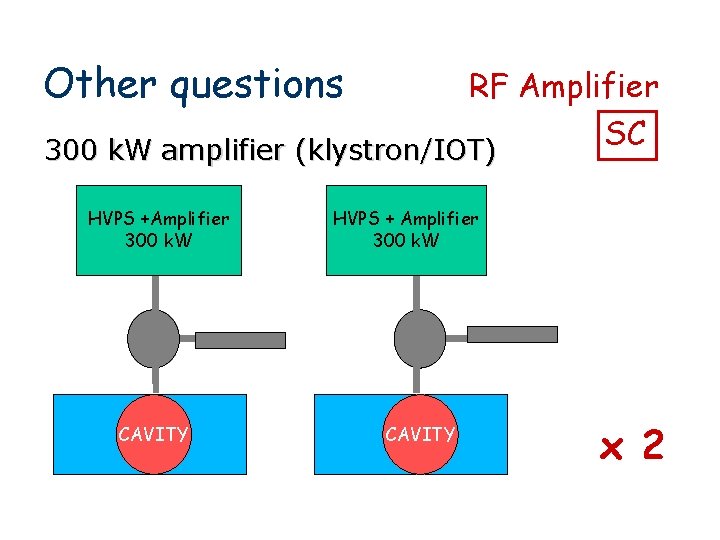
Other questions RF Amplifier 300 k. W amplifier (klystron/IOT) HVPS +Amplifier 300 k. W CAVITY SC HVPS + Amplifier 300 k. W CAVITY x 2 RF 29/33
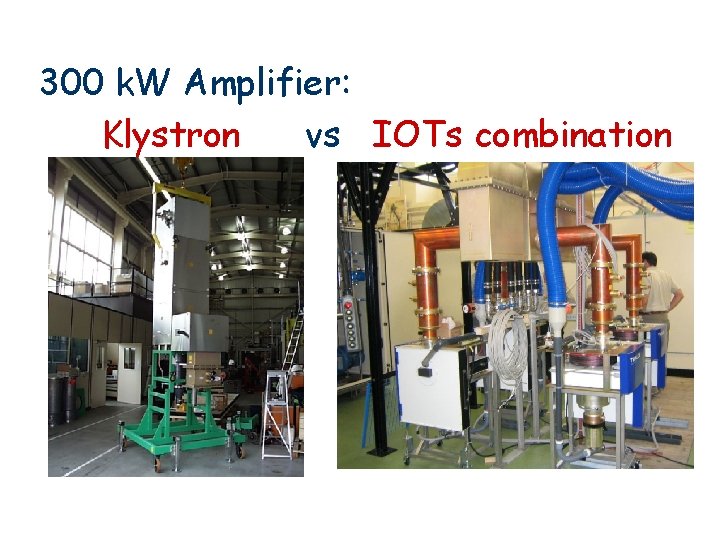
300 k. W Amplifier: Klystron vs IOTs combination RF 30/33
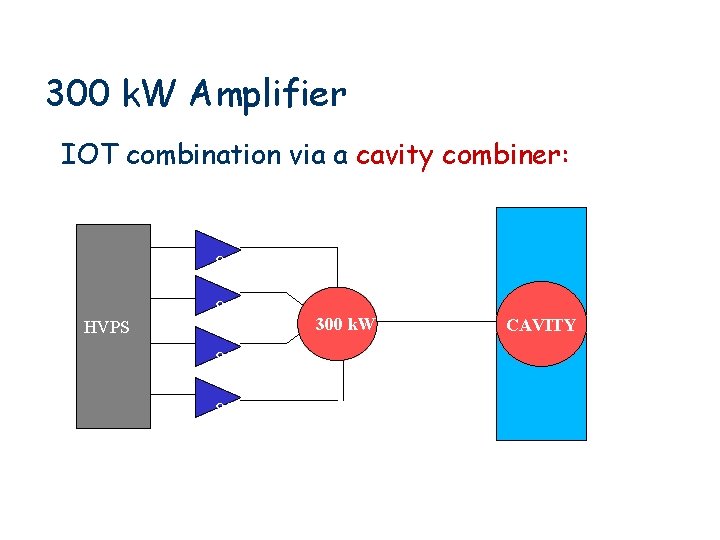
300 k. W Amplifier IOT combination via a cavity combiner: 80 HVPS 80 300 k. W CAVITY 80 80 RF 31/33
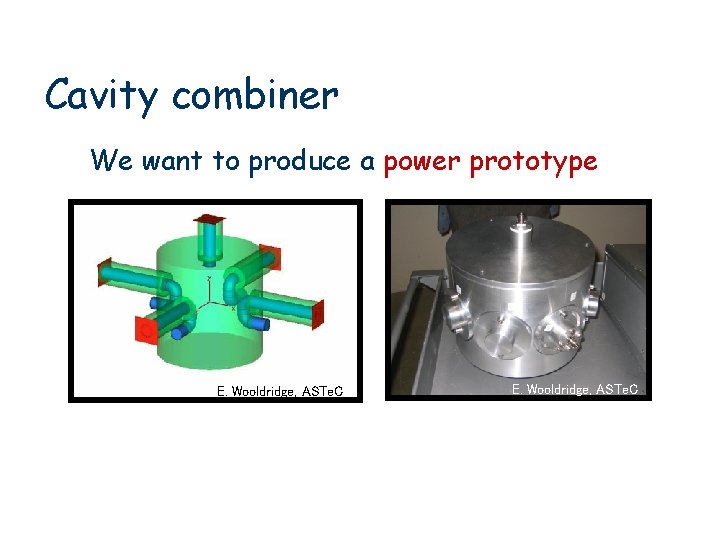
Cavity combiner We want to produce a power prototype E. Wooldridge, ASTe. C RF 32/33
SUMARY • RF is needed at: – LINAC • turn key system – BOOSTER • 5 cell cavity, 60 k. W – Storage Ring • NC vs SC under discussion • Klystron vs IOTs • Cavity combiner prototype RF 33/33
- Slides: 33