
Alaska Rural Utility Collaborative Francine Moreno Sr Program
Alaska Rural Utility Collaborative Francine Moreno Sr. Program Manager
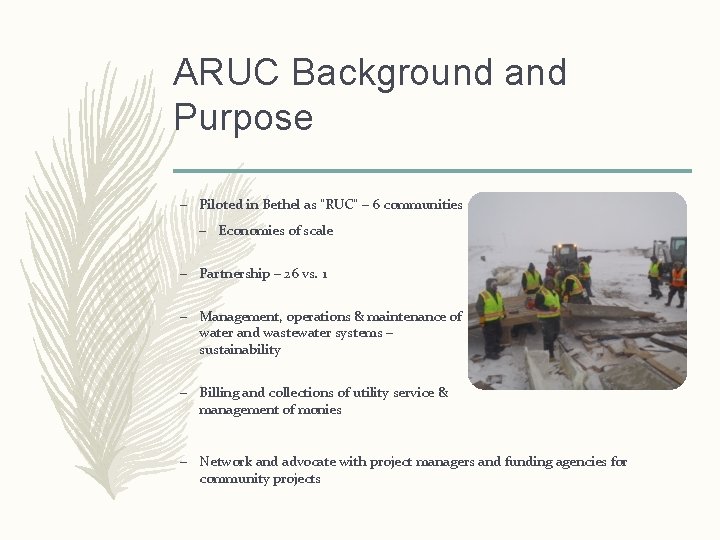
ARUC Background and Purpose – Piloted in Bethel as “RUC” – 6 communities – Economies of scale – Partnership – 26 vs. 1 – Management, operations & maintenance of water and wastewater systems – sustainability – Billing and collections of utility service & management of monies – Network and advocate with project managers and funding agencies for community projects
Why? – Extend system’s useful life – Build capacity within rural communities – Protect the health of those we serve
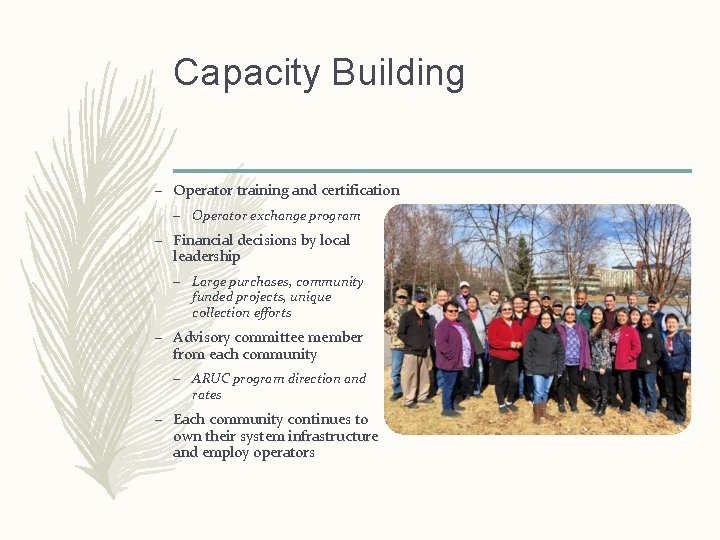
Capacity Building – Operator training and certification – Operator exchange program – Financial decisions by local leadership – Large purchases, community funded projects, unique collection efforts – Advisory committee member from each community – ARUC program direction and rates – Each community continues to own their system infrastructure and employ operators

ARUC Structure – 17 ARUC staff – Free to communities – funded by grants, projects, ANTHC $ – Regional managers – Bethel – Kotzebue – Anchorage
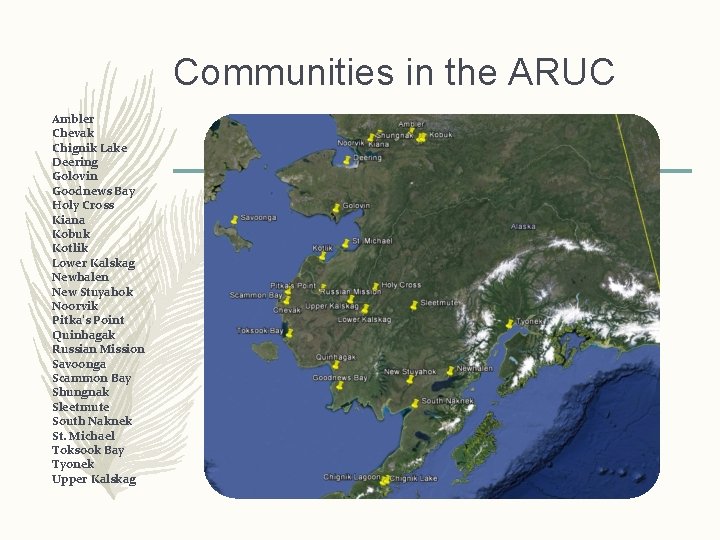
Communities in the ARUC Ambler Chevak Chignik Lake Deering Golovin Goodnews Bay Holy Cross Kiana Kobuk Kotlik Lower Kalskag Newhalen New Stuyahok Noorvik Pitka's Point Quinhagak Russian Mission Savoonga Scammon Bay Shungnak Sleetmute South Naknek St. Michael Toksook Bay Tyonek Upper Kalskag
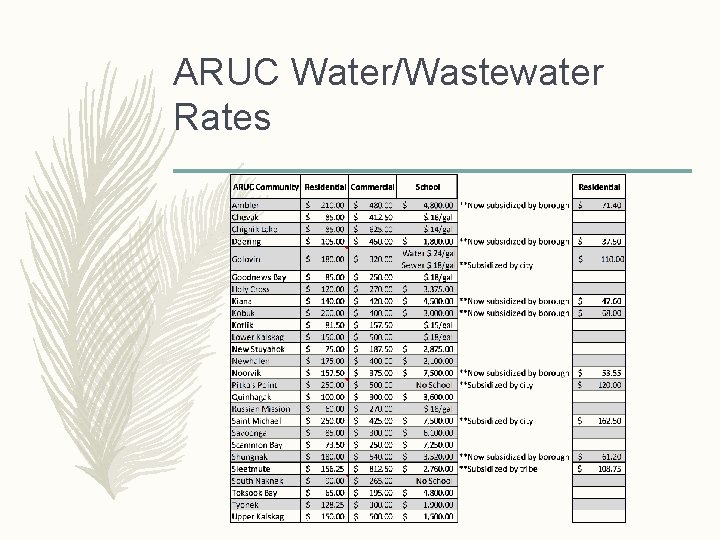
ARUC Water/Wastewater Rates
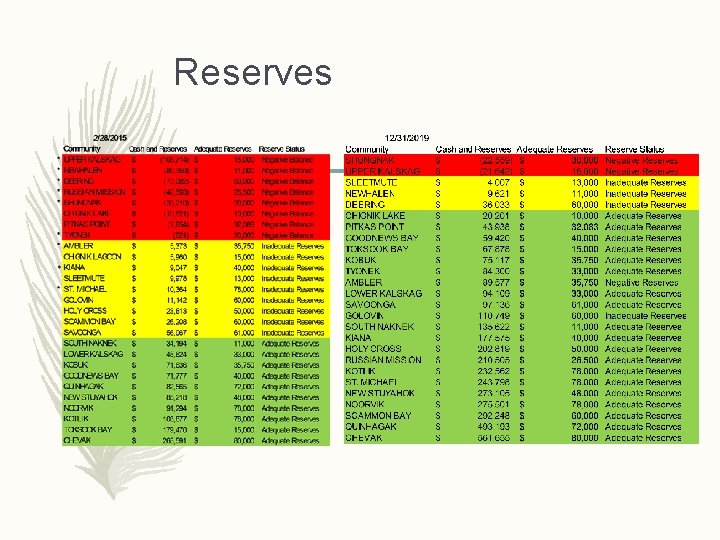
Reserves
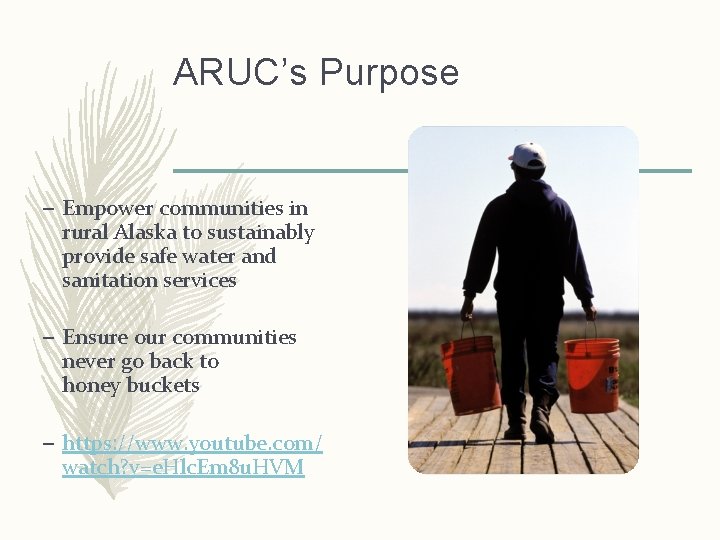
ARUC’s Purpose – Empower communities in rural Alaska to sustainably provide safe water and sanitation services – Ensure our communities never go back to honey buckets – https: //www. youtube. com/ watch? v=e. Hlc. Em 8 u. HVM
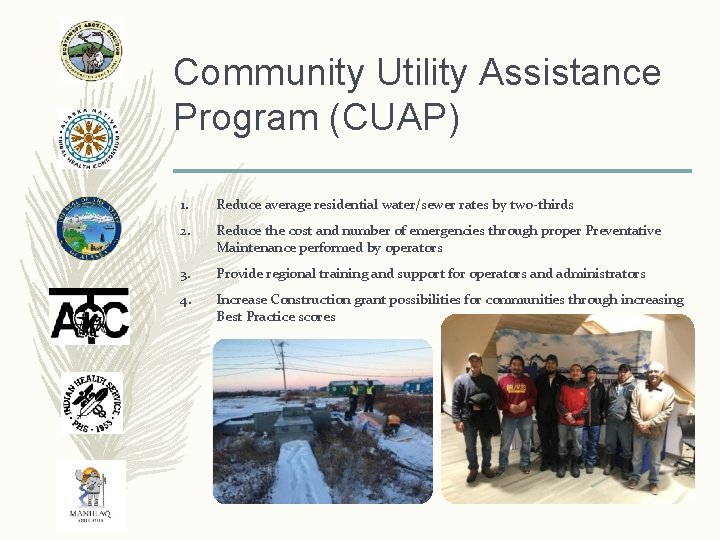
Community Utility Assistance Program (CUAP) 1. Reduce average residential water/sewer rates by two-thirds 2. Reduce the cost and number of emergencies through proper Preventative Maintenance performed by operators 3. Provide regional training and support for operators and administrators 4. Increase Construction grant possibilities for communities through increasing Best Practice scores
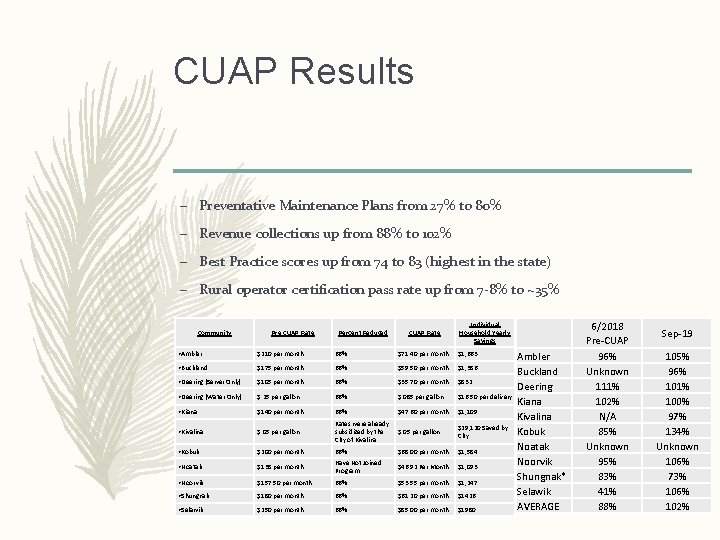
CUAP Results – Preventative Maintenance Plans from 27% to 80% – Revenue collections up from 88% to 102% – Best Practice scores up from 74 to 83 (highest in the state) – Rural operator certification pass rate up from 7 -8% to ~35% Community Pre CUAP Rate Percent Reduced CUAP Rate Individual Household Yearly Savings • Ambler $210 per month 66% $71. 40 per month $1, 663 • Buckland $175 per month 66% $59. 50 per month $1, 386 • Deering (Sewer Only) $105 per month 66% $35. 70 per month $832 • Deering (Water Only) $. 25 per gallon 66% $. 085 per gallon $16. 50 per delivery • Kiana $140 per month 66% $47. 60 per month $1, 109 • Kivalina $. 05 per gallon Rates were already subsidized by the City of Kivalina $. 05 per gallon $29, 120 Saved by City • Kobuk $200 per month 66% $68. 00 per month $1, 584 • Noatak $138 per month Have Not Joined Program $46. 92 Per Month $1, 093 • Noorvik $157. 50 per month 66% $53. 55 per month $1, 247 • Shungnak $180 per month 66% $61. 20 per month $1426 • Selawik $250 per month 66% $85. 00 per month $1980 Ambler Buckland Deering Kiana Kivalina Kobuk Noatak Noorvik Shungnak* Selawik AVERAGE 6/2018 Pre-CUAP 96% Unknown 111% 102% N/A 85% Unknown 95% 83% 41% 88% Sep-19 105% 96% 101% 100% 97% 134% Unknown 106% 73% 106% 102%
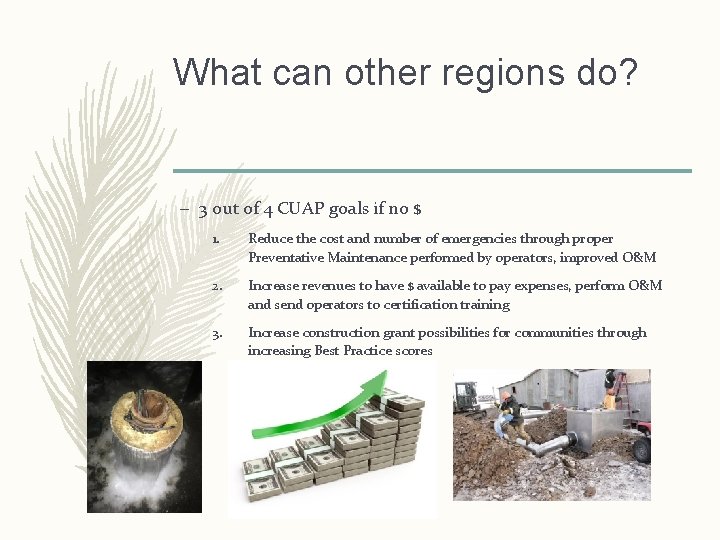
What can other regions do? – 3 out of 4 CUAP goals if no $ 1. Reduce the cost and number of emergencies through proper Preventative Maintenance performed by operators, improved O&M 2. Increase revenues to have $ available to pay expenses, perform O&M and send operators to certification training 3. Increase construction grant possibilities for communities through increasing Best Practice scores
Questions?
- Slides: 15