
Alaska Native Cultures Part 2 Yupik and Cupik
- Slides: 16
Alaska Native Cultures Part 2 Yup’ik and Cup’ik People
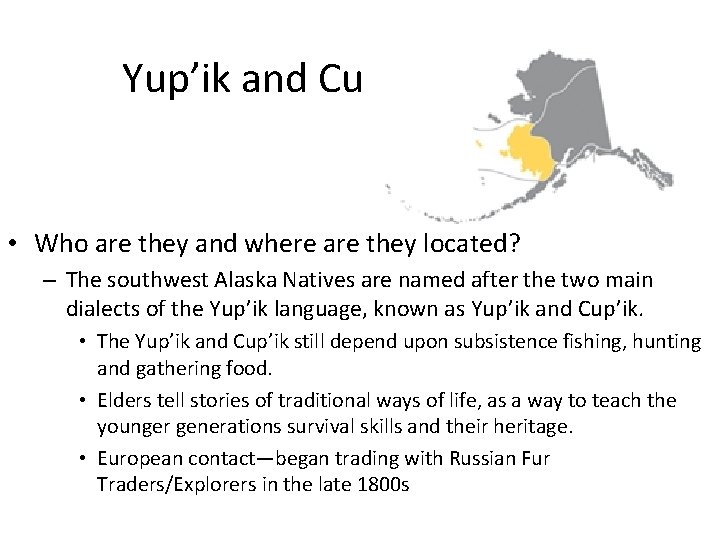
Yup’ik and Cup’ik People • Who are they and where are they located? – The southwest Alaska Natives are named after the two main dialects of the Yup’ik language, known as Yup’ik and Cup’ik. • The Yup’ik and Cup’ik still depend upon subsistence fishing, hunting and gathering food. • Elders tell stories of traditional ways of life, as a way to teach the younger generations survival skills and their heritage. • European contact—began trading with Russian Fur Traders/Explorers in the late 1800 s
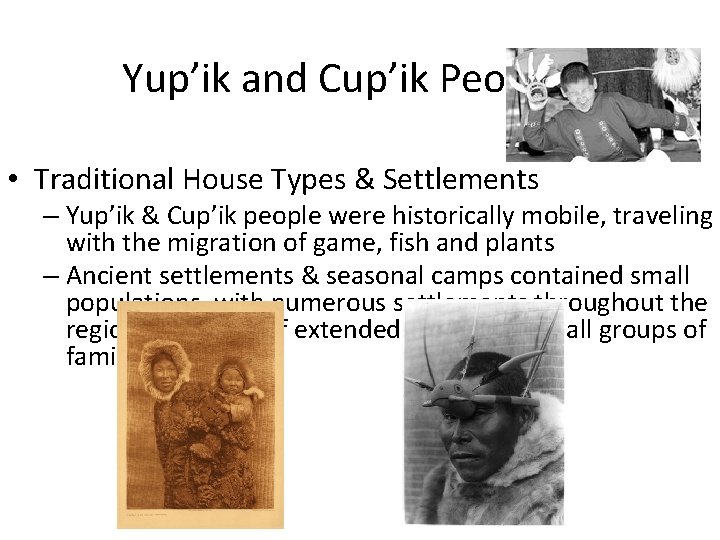
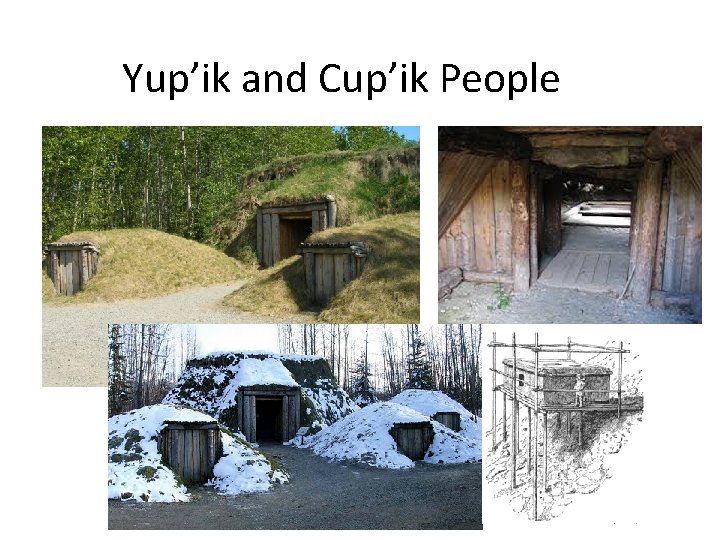
Yup’ik and Cup’ik People • Traditional House Types & Settlements – Yup’ik & Cup’ik people were historically mobile, traveling with the migration of game, fish and plants – Ancient settlements & seasonal camps contained small populations, with numerous settlements throughout the region consisting of extended families or small groups of families
Yup’ik Cupi’ik Housing • Males lived in a qasgiq, or men’s house/community center – Boys old enough to leave their mothers joined male relatives in the qasgiq, where they lived, worked, ate, bathed, slept and learned how to be men. – Women prepared and brought food to the qasgiq. Ceremonies, singing, dancing and events usually occurred in the qasgiq, thus making it a community center. • Women and children lived in an ena – Architectural features similar to the qasgiq, although the qasgiq was twice as large. • Bearded seal or walrus intestine provided a removable “skylight” window • Like most other winter dwellings, the qasgiq and the ena shared the distinctive, partially semi-subterranean winter entrance passageway – which in the ena also provided space for cooking
Yup’ik and Cup’ik People
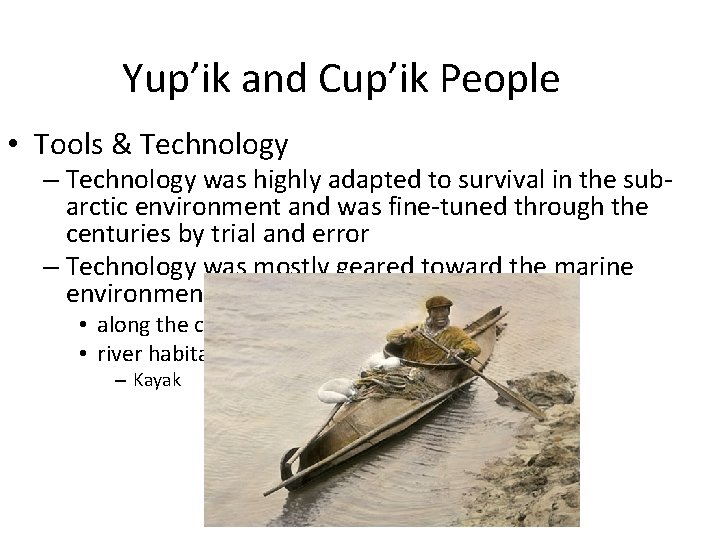
Yup’ik and Cup’ik People • Tools & Technology – Technology was highly adapted to survival in the subarctic environment and was fine-tuned through the centuries by trial and error – Technology was mostly geared toward the marine environment • along the coastline • river habitats in the delta regions – Kayak
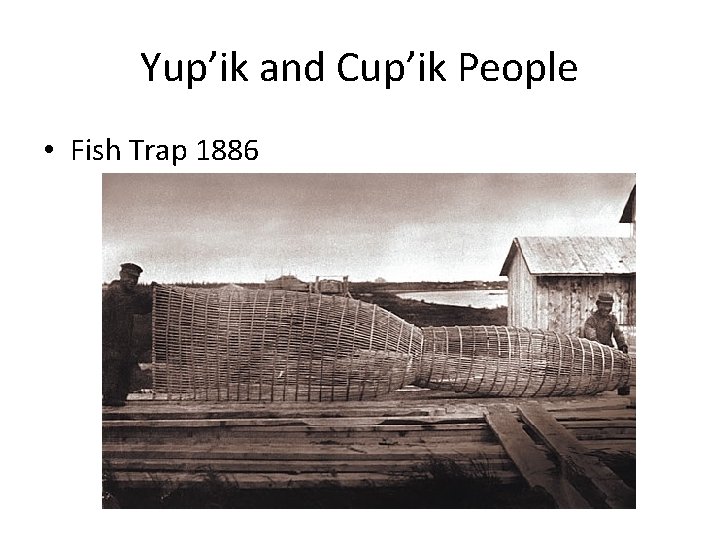
Yup’ik and Cup’ik People • Fish Trap 1886
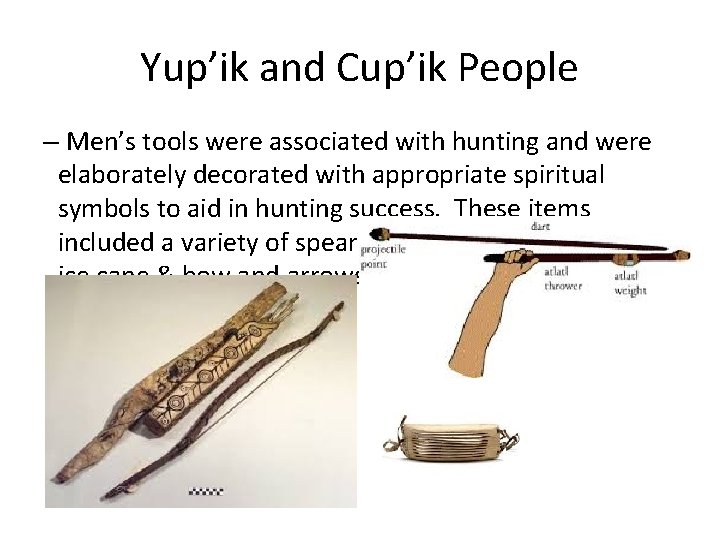
Yup’ik and Cup’ik People – Men’s tools were associated with hunting and were elaborately decorated with appropriate spiritual symbols to aid in hunting success. These items included a variety of spears, harpoons, snow goggles, ice cane & bow and arrows for hunting and warfare
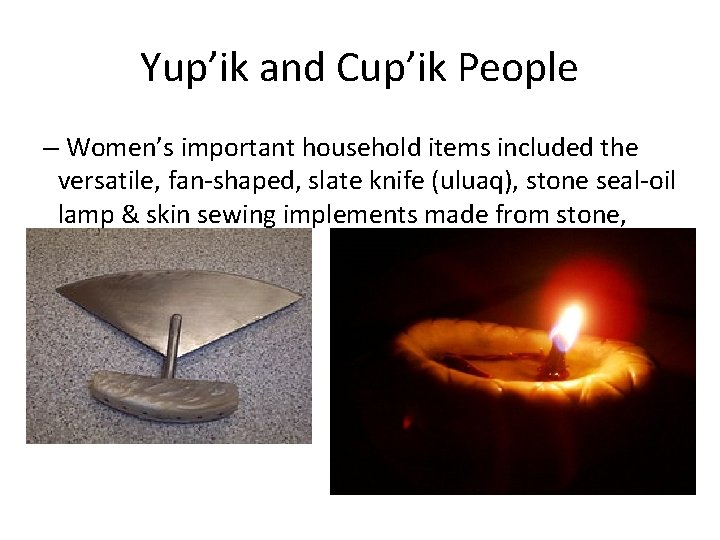
Yup’ik and Cup’ik People – Women’s important household items included the versatile, fan-shaped, slate knife (uluaq), stone seal-oil lamp & skin sewing implements made from stone, bone & walrus ivory.
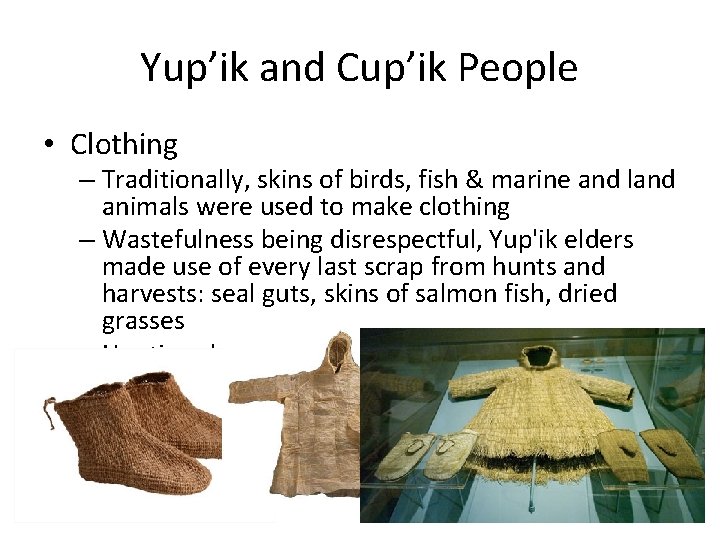
Yup’ik and Cup’ik People • Clothing – Traditionally, skins of birds, fish & marine and land animals were used to make clothing – Wastefulness being disrespectful, Yup'ik elders made use of every last scrap from hunts and harvests: seal guts, skins of salmon fish, dried grasses – Hunting clothes were designed to be insulated and waterproof. • Fish skin & marine mammal intestines were used for waterproof shells and boots. Grass was used to make insulating socks & as waterproof thread.
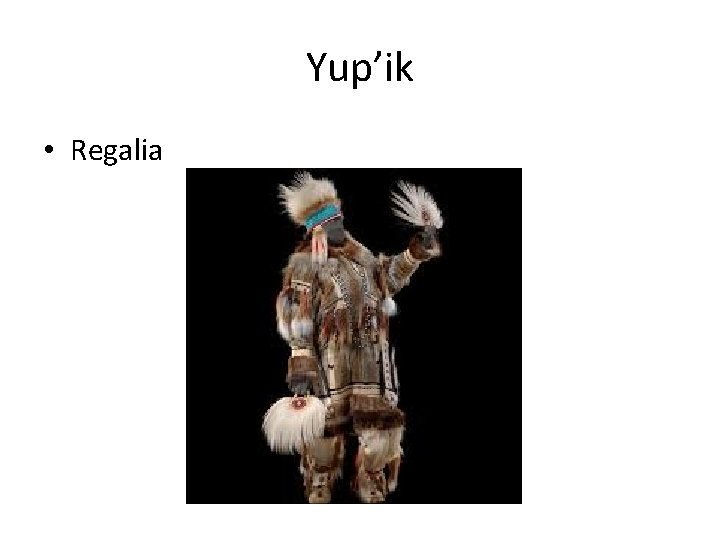
Yup’ik • Regalia
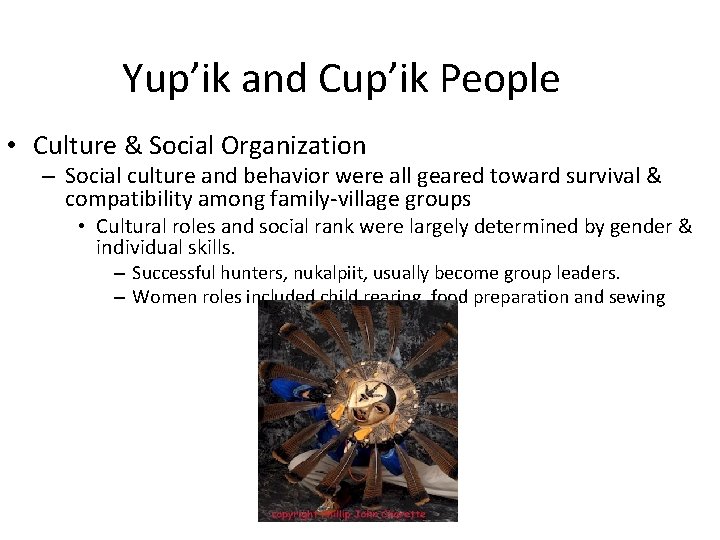
Yup’ik and Cup’ik People • Culture & Social Organization – Social culture and behavior were all geared toward survival & compatibility among family-village groups • Cultural roles and social rank were largely determined by gender & individual skills. – Successful hunters, nukalpiit, usually become group leaders. – Women roles included child rearing, food preparation and sewing
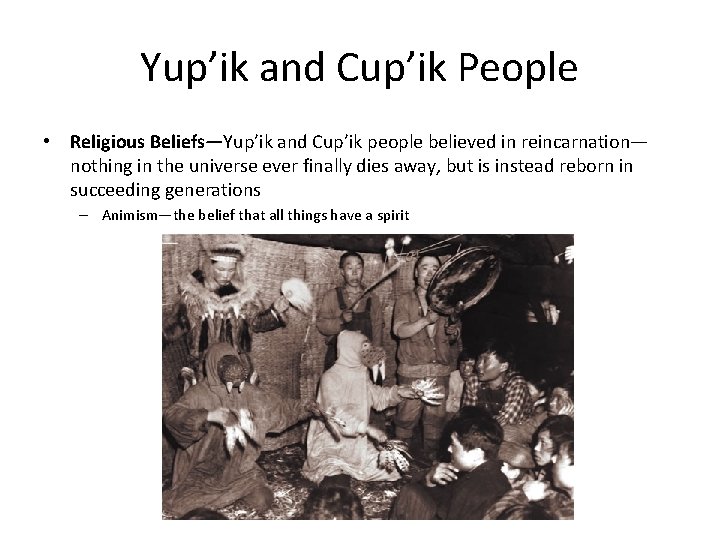
Yup’ik and Cup’ik People • Religious Beliefs—Yup’ik and Cup’ik people believed in reincarnation— nothing in the universe ever finally dies away, but is instead reborn in succeeding generations – Animism—the belief that all things have a spirit
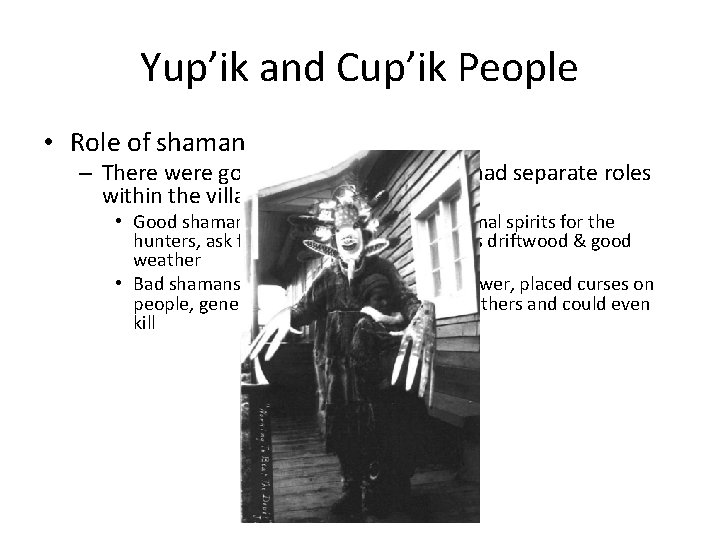
Yup’ik and Cup’ik People • Role of shaman – There were good & evil shamans that had separate roles within the village • Good shamans would heal, search out animal spirits for the hunters, ask for survival necessities such as driftwood & good weather • Bad shamans battled good shamans for power, placed curses on people, generally made life miserable for others and could even kill
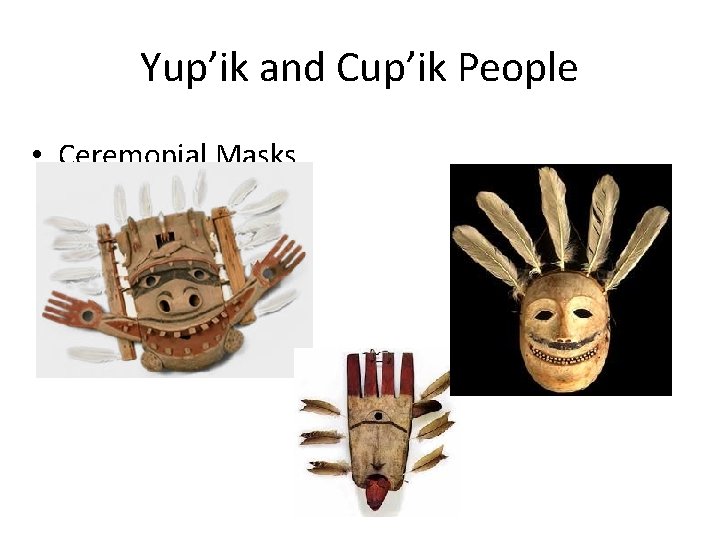
Yup’ik and Cup’ik People • Ceremonial Masks
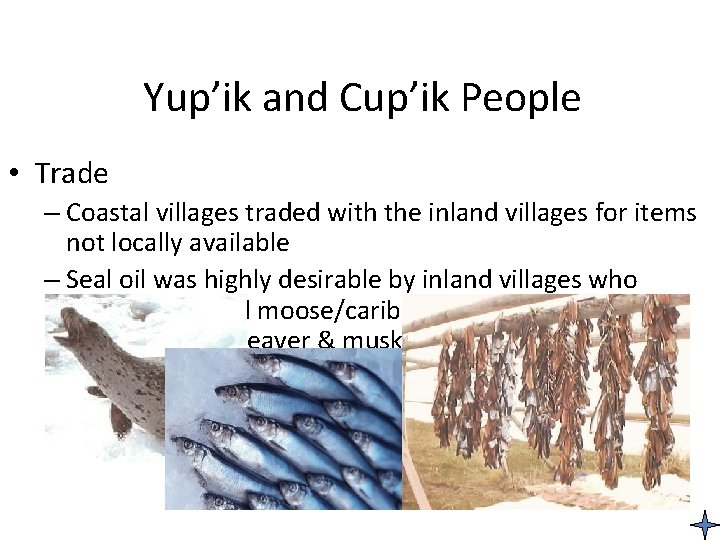
Yup’ik and Cup’ik People • Trade – Coastal villages traded with the inland villages for items not locally available – Seal oil was highly desirable by inland villages who usually bartered moose/caribou meat & furs such as mink, marten, beaver & muskrat for seal oil & other coastal delicacies such as herring and herring eggs