
Alabama Irrigation Initiative Environmental Meeting 10312008 Ecological Approach
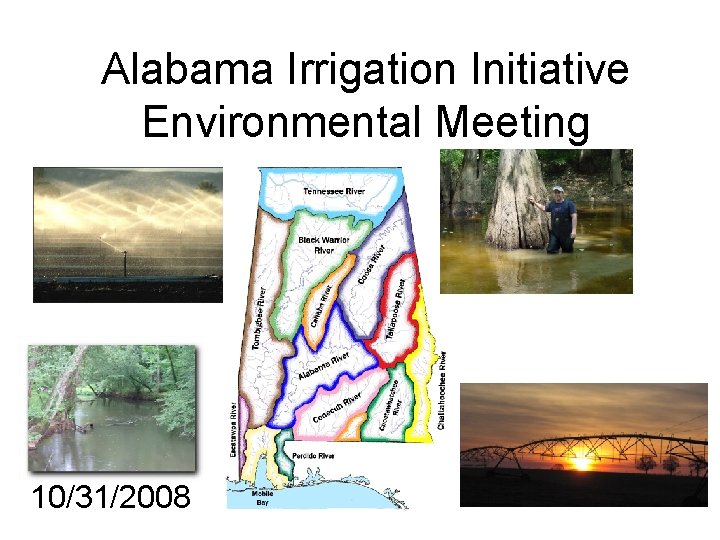
Alabama Irrigation Initiative Environmental Meeting 10/31/2008
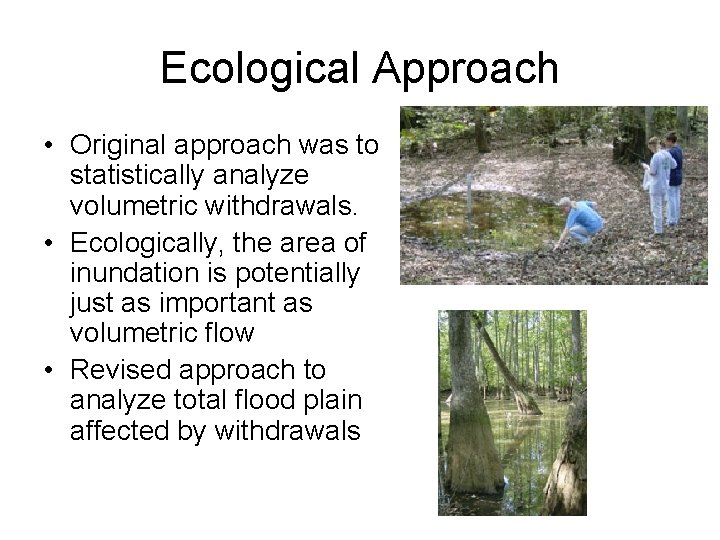
Ecological Approach • Original approach was to statistically analyze volumetric withdrawals. • Ecologically, the area of inundation is potentially just as important as volumetric flow • Revised approach to analyze total flood plain affected by withdrawals
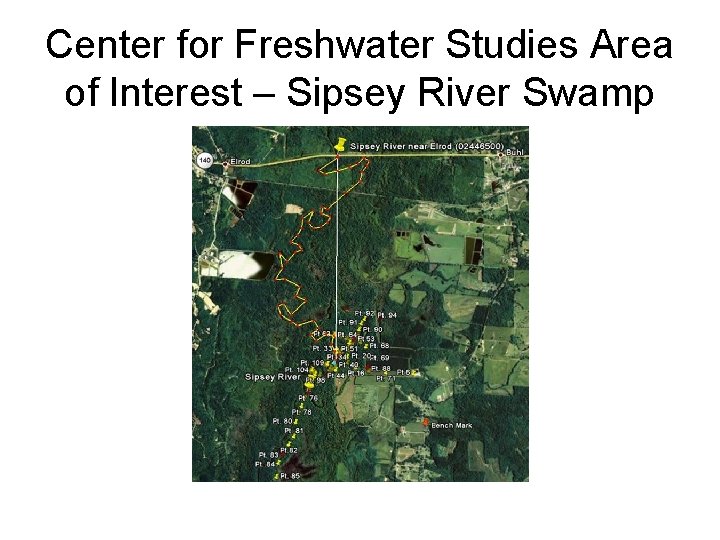
Center for Freshwater Studies Area of Interest – Sipsey River Swamp
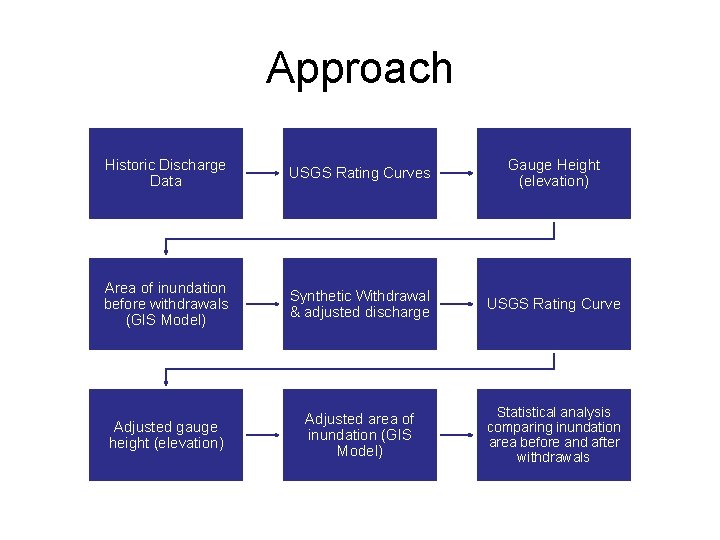
Approach Historic Discharge Data USGS Rating Curves Gauge Height (elevation) Area of inundation before withdrawals (GIS Model) Synthetic Withdrawal & adjusted discharge USGS Rating Curve Adjusted gauge height (elevation) Adjusted area of inundation (GIS Model) Statistical analysis comparing inundation area before and after withdrawals
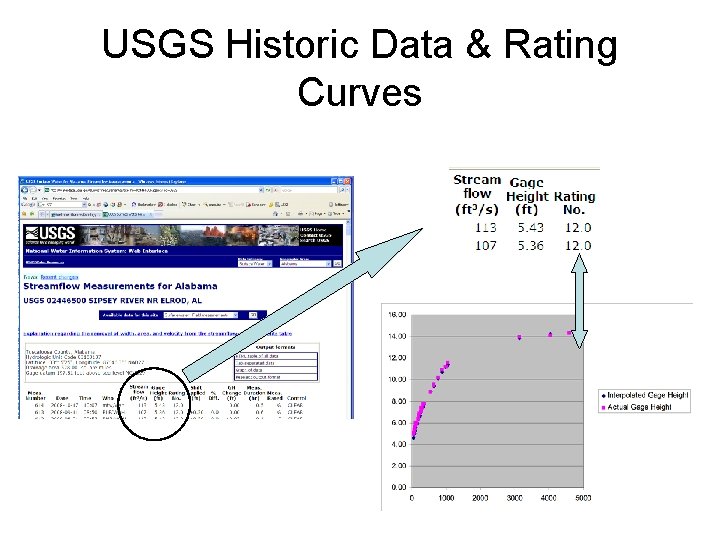
USGS Historic Data & Rating Curves
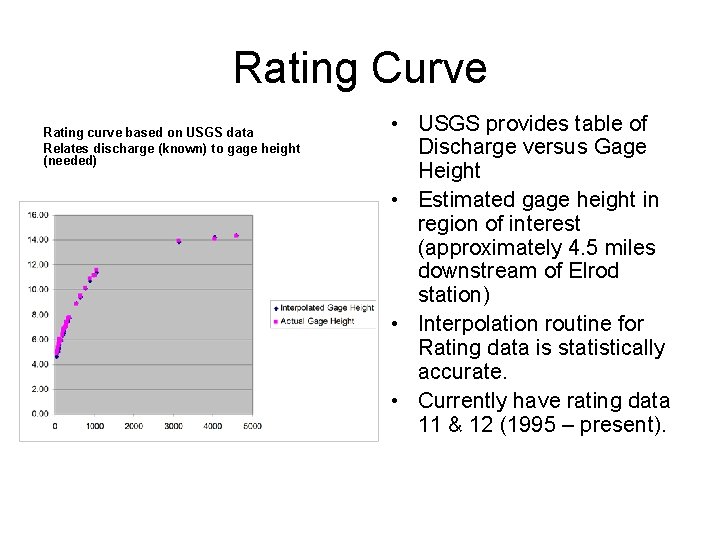
Rating Curve Rating curve based on USGS data Relates discharge (known) to gage height (needed) • USGS provides table of Discharge versus Gage Height • Estimated gage height in region of interest (approximately 4. 5 miles downstream of Elrod station) • Interpolation routine for Rating data is statistically accurate. • Currently have rating data 11 & 12 (1995 – present).
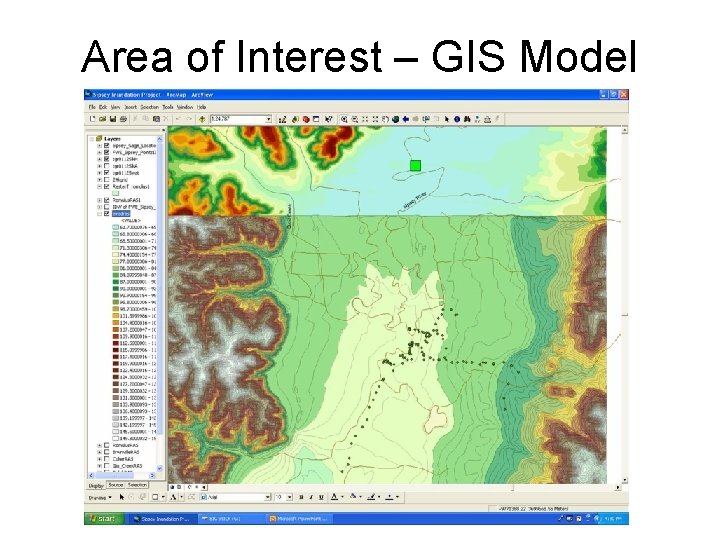
Area of Interest – GIS Model

GIS Area Model
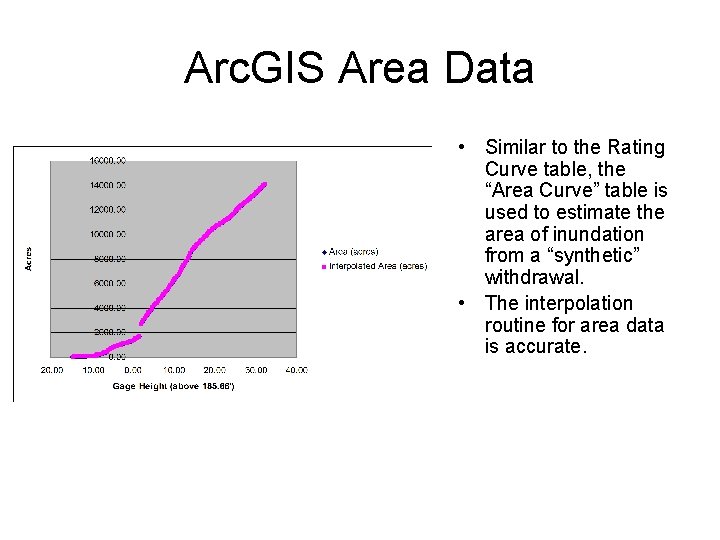
Arc. GIS Area Data • Similar to the Rating Curve table, the “Area Curve” table is used to estimate the area of inundation from a “synthetic” withdrawal. • The interpolation routine for area data is accurate.
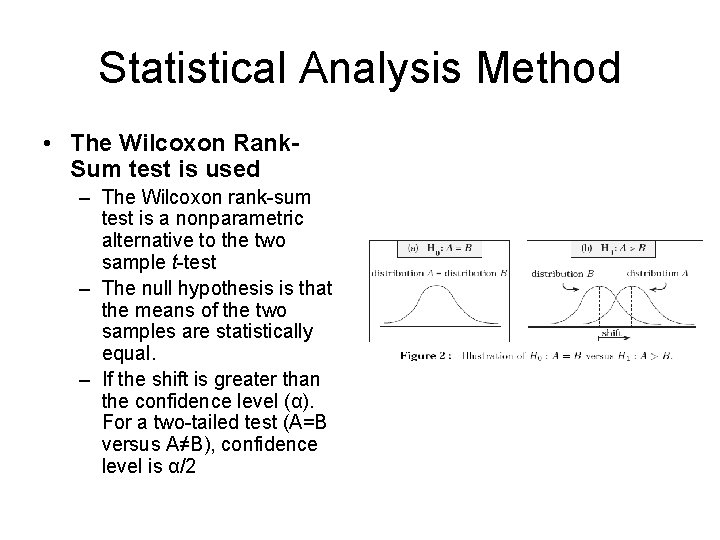
Statistical Analysis Method • The Wilcoxon Rank. Sum test is used – The Wilcoxon rank-sum test is a nonparametric alternative to the two sample t-test – The null hypothesis is that the means of the two samples are statistically equal. – If the shift is greater than the confidence level (α). For a two-tailed test (A=B versus A≠B), confidence level is α/2
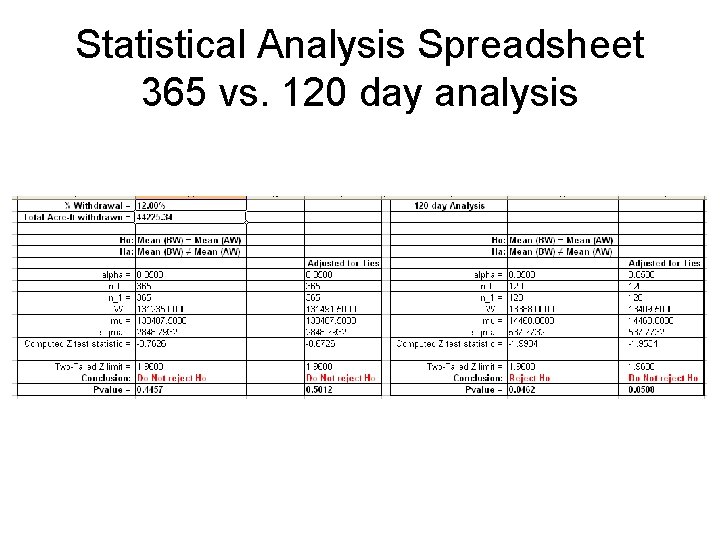
Statistical Analysis Spreadsheet 365 vs. 120 day analysis
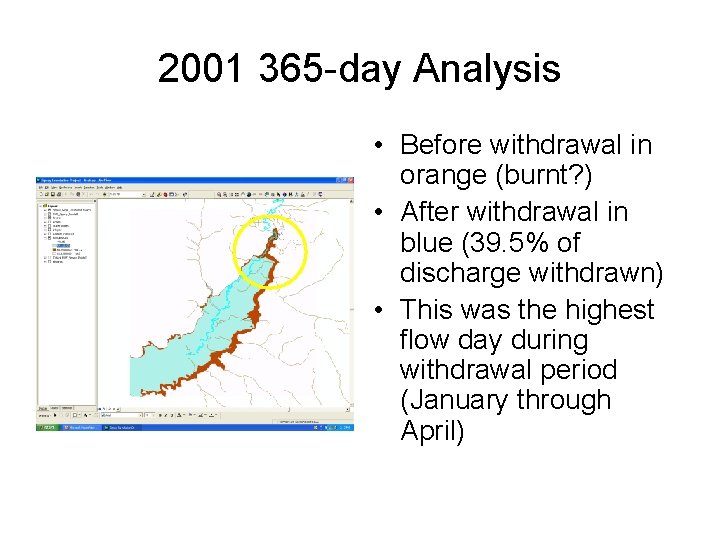
2001 365 -day Analysis • Before withdrawal in orange (burnt? ) • After withdrawal in blue (39. 5% of discharge withdrawn) • This was the highest flow day during withdrawal period (January through April)
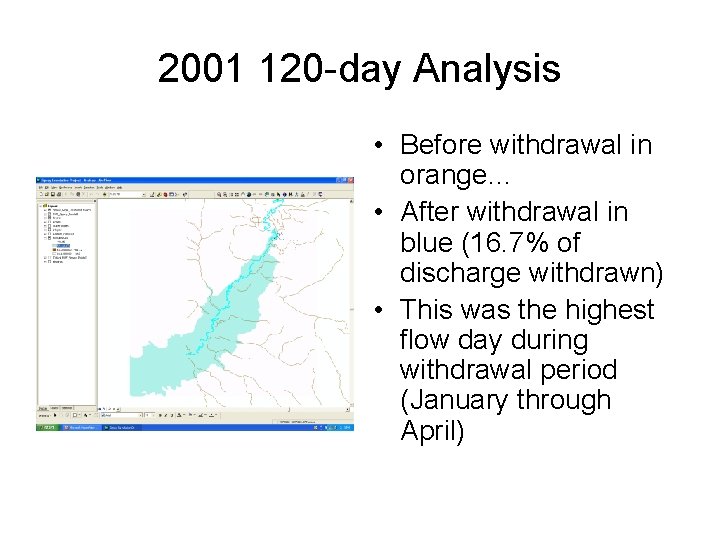
2001 120 -day Analysis • Before withdrawal in orange… • After withdrawal in blue (16. 7% of discharge withdrawn) • This was the highest flow day during withdrawal period (January through April)
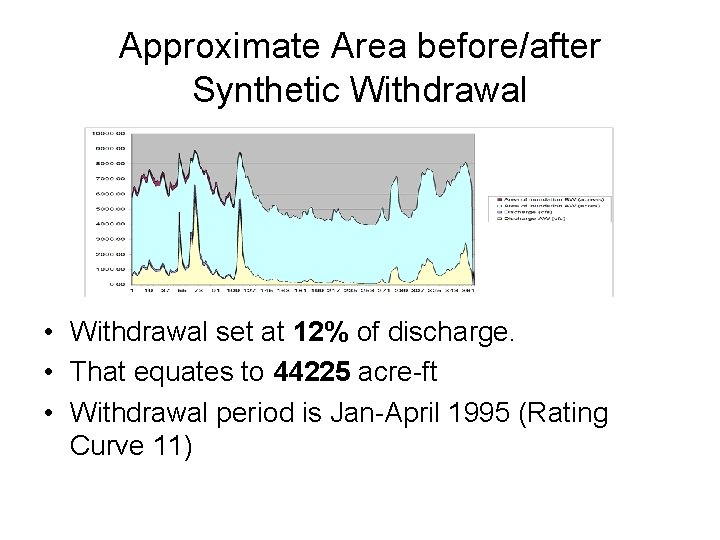
Approximate Area before/after Synthetic Withdrawal • Withdrawal set at 12% of discharge. • That equates to 44225 acre-ft • Withdrawal period is Jan-April 1995 (Rating Curve 11)
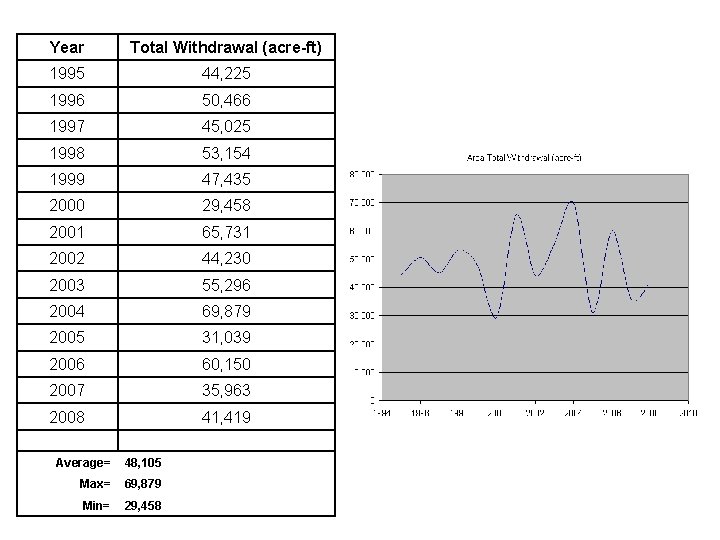
Year Total Withdrawal (acre-ft) 1995 44, 225 1996 50, 466 1997 45, 025 1998 53, 154 1999 47, 435 2000 29, 458 2001 65, 731 2002 44, 230 2003 55, 296 2004 69, 879 2005 31, 039 2006 60, 150 2007 35, 963 2008 41, 419 Average= 48, 105 Max= 69, 879 Min= 29, 458
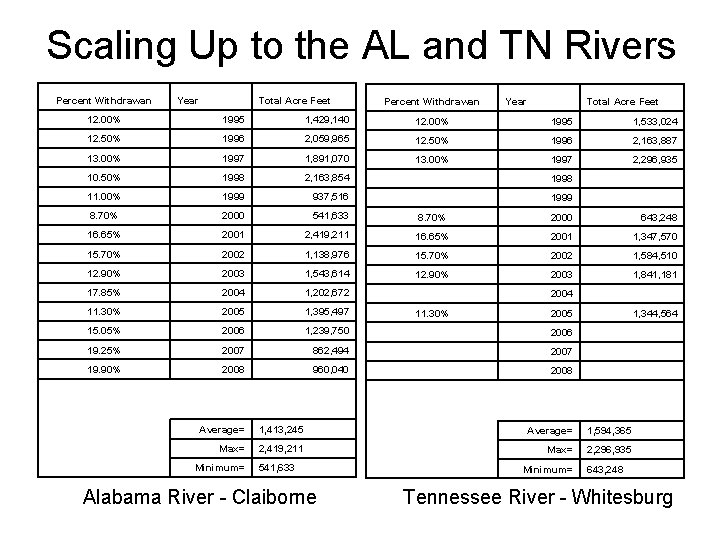
Scaling Up to the AL and TN Rivers Percent Withdrawan Year Total Acre Feet 12. 00% 1995 1, 429, 140 12. 00% 1995 1, 533, 024 12. 50% 1996 2, 059, 965 12. 50% 1996 2, 163, 887 13. 00% 1997 1, 891, 070 13. 00% 1997 2, 296, 935 10. 50% 1998 2, 163, 854 1998 11. 00% 1999 937, 516 1999 8. 70% 2000 541, 633 8. 70% 2000 643, 248 16. 65% 2001 2, 419, 211 16. 65% 2001 1, 347, 570 15. 70% 2002 1, 138, 976 15. 70% 2002 1, 584, 510 12. 90% 2003 1, 543, 614 12. 90% 2003 1, 841, 181 17. 85% 2004 1, 202, 672 11. 30% 2005 1, 395, 497 15. 05% 2006 1, 239, 750 2006 19. 25% 2007 862, 494 2007 19. 90% 2008 960, 040 2008 2004 11. 30% 2005 1, 344, 564 Average= 1, 413, 245 Average= 1, 594, 365 Max= 2, 419, 211 Max= 2, 296, 935 Minimum= 541, 633 Alabama River - Claiborne Minimum= 643, 248 Tennessee River - Whitesburg
Perspective • The minimum available water from the AL and TN rivers could irrigate ~1, 000 acres. • That is approximately ~3% of the total area of Alabama
Conclusions/Issues • Basing withdrawals on the cyclic inundation of a floodplain attempts to take the river ecology into account • The method shows that statistically insignificant fractions are available that are within the total, annual variability of the river • Each river is unique and analysis may have to be modified to account for different channel/floodplain characteristics
- Slides: 18