
AL Physics Circular Motion Circular motion Revision Circular
- Slides: 29
AL Physics Circular Motion
Circular motion • Revision • Circular motion in horizontal • Vertical circular motion • Loop-the-loop
Revision • • Newton’s Laws Circular motion in horizontal circles Centripetal force and acceleration Angular velocity, frequency & linear velocity
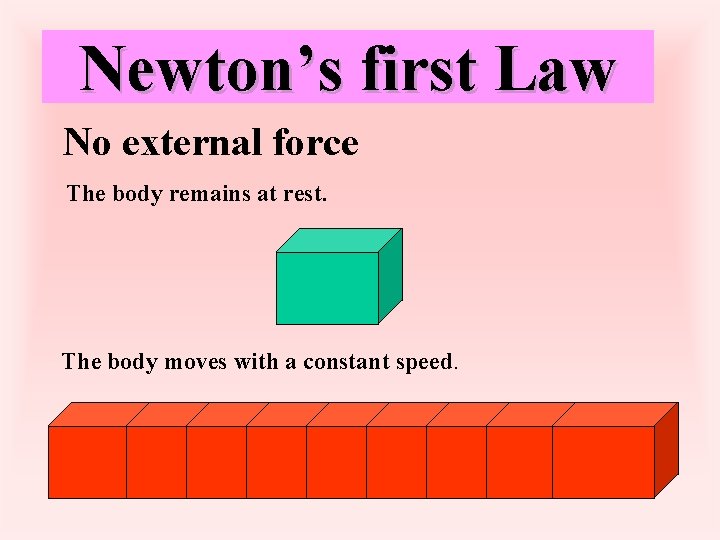
Newton’s first Law A body continues in a state of rest or uniform motion in a straight line unless it is acted upon by external forces.
Newton’s first Law No external force The body remains at rest. The body moves with a constant speed.
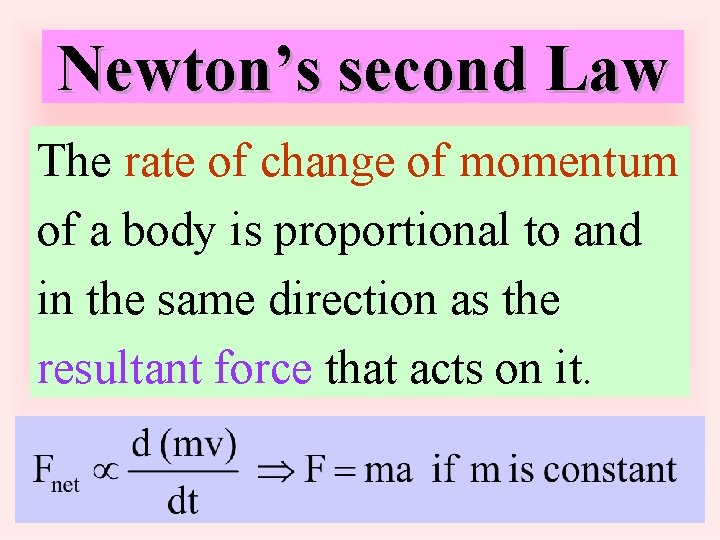
Newton’s second Law The rate of change of momentum of a body is proportional to and in the same direction as the resultant force that acts on it.
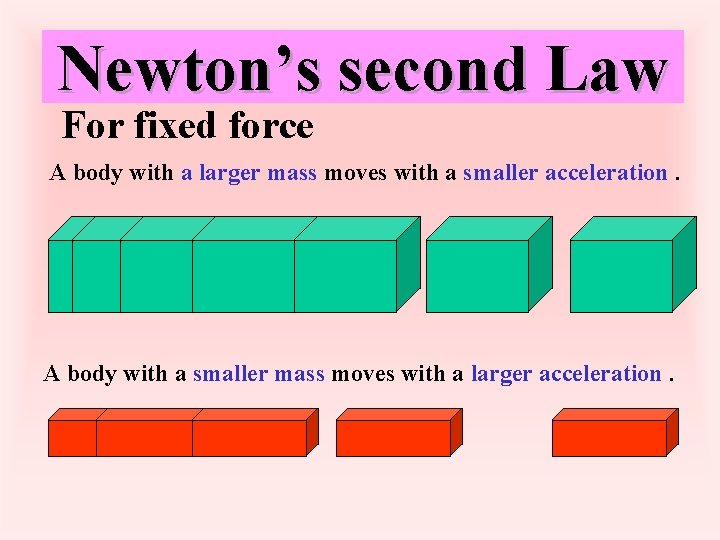
Newton’s second Law For fixed force A body with a larger mass moves with a smaller acceleration. A body with a smaller mass moves with a larger acceleration.
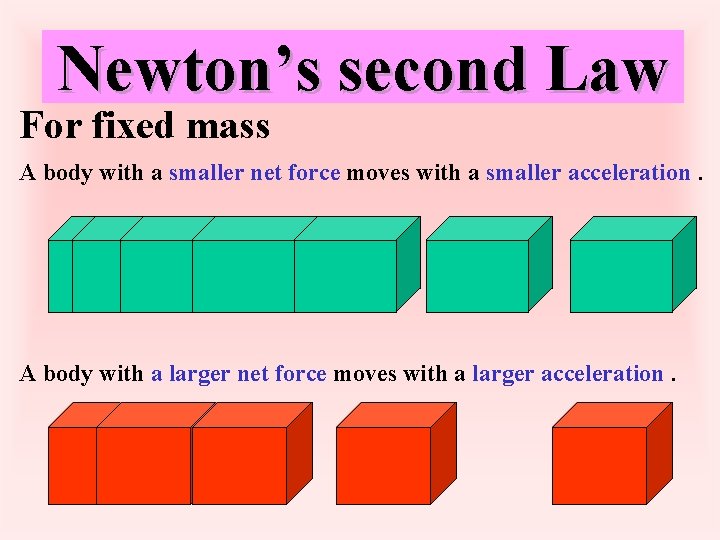
Newton’s second Law For fixed mass A body with a smaller net force moves with a smaller acceleration. A body with a larger net force moves with a larger acceleration.
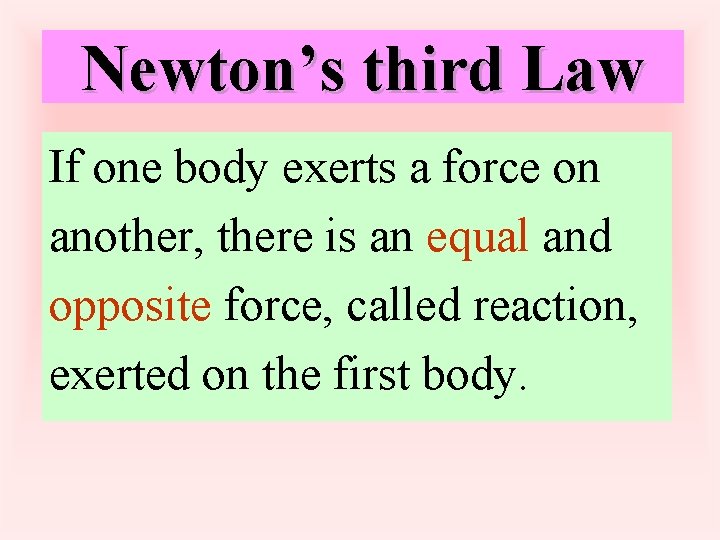
Newton’s third Law If one body exerts a force on another, there is an equal and opposite force, called reaction, exerted on the first body.
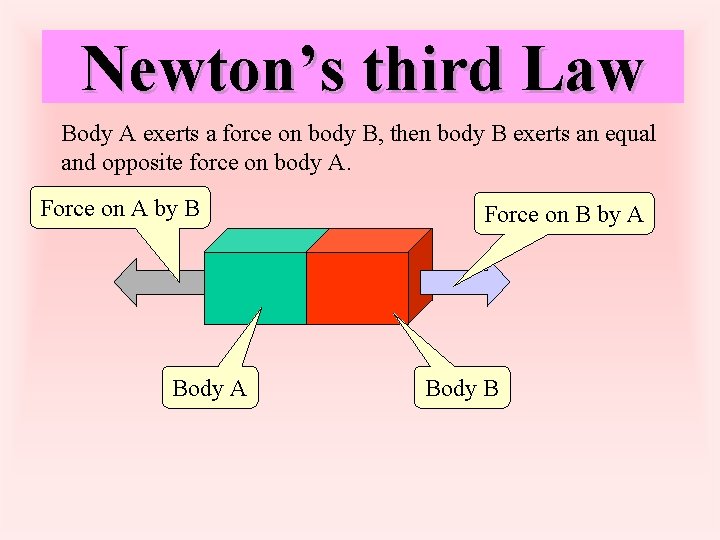
Newton’s third Law Body A exerts a force on body B, then body B exerts an equal and opposite force on body A. Force on A by B Body A Force on B by A Body B
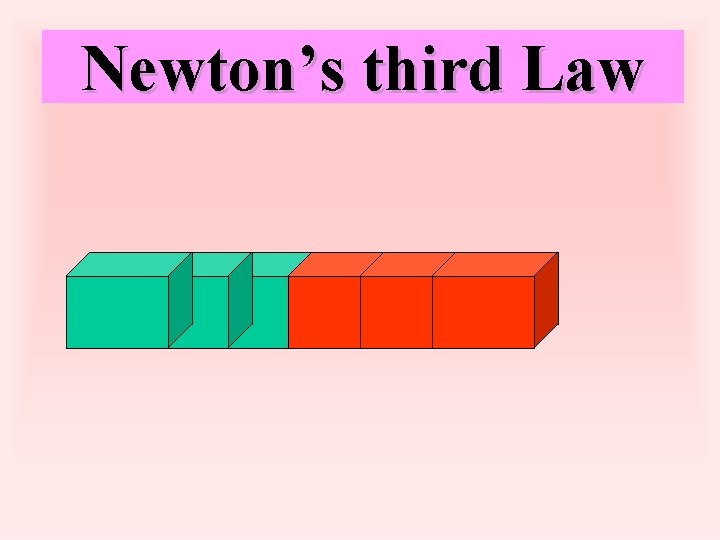
Newton’s third Law
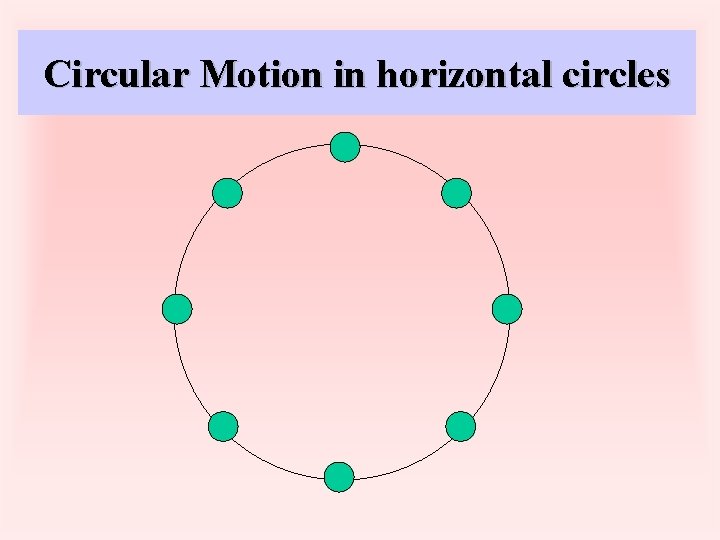
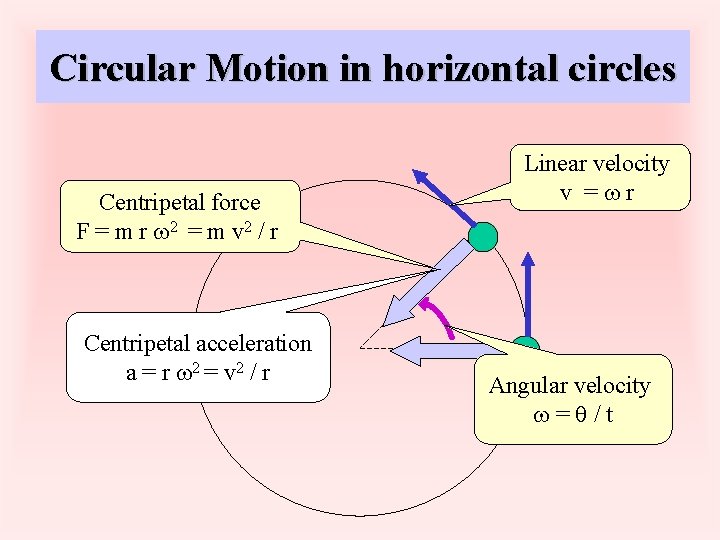
Circular Motion in horizontal circles
Circular Motion in horizontal circles Centripetal force F = m r 2 = m v 2 / r Centripetal acceleration a = r 2 = v 2 / r Linear velocity v = r Angular velocity = /t
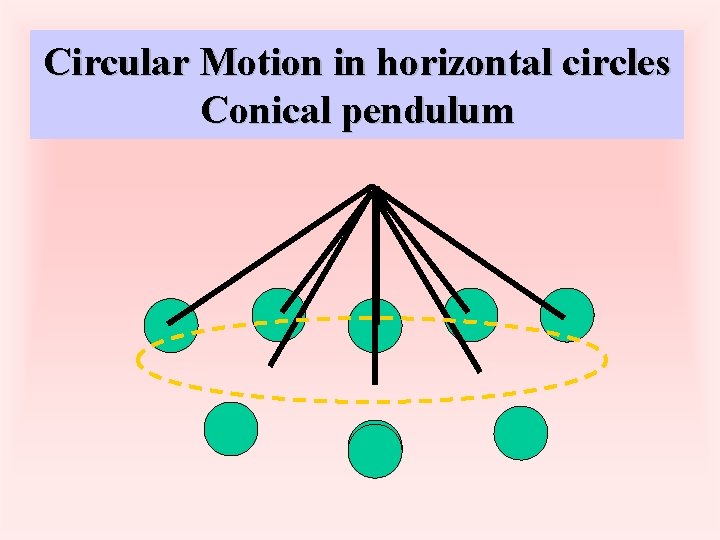
Circular Motion in horizontal circles Conical pendulum
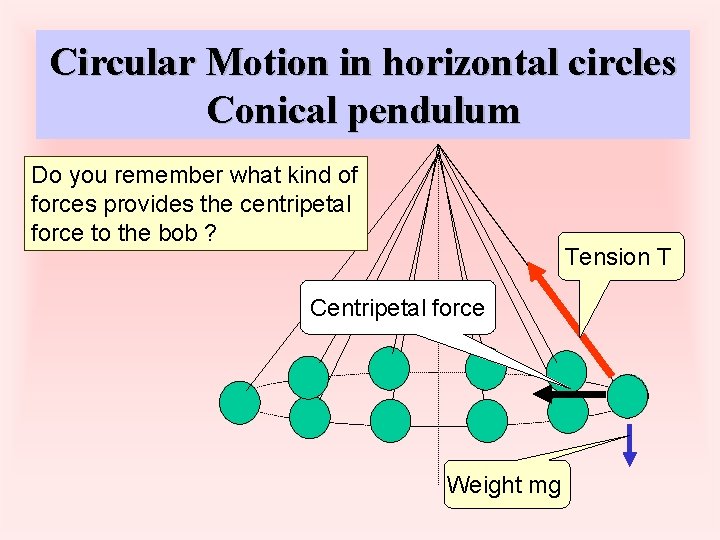
Circular Motion in horizontal circles Conical pendulum Do you remember what kind of forces provides the centripetal force to the bob ? Tension T Centripetal force Weight mg
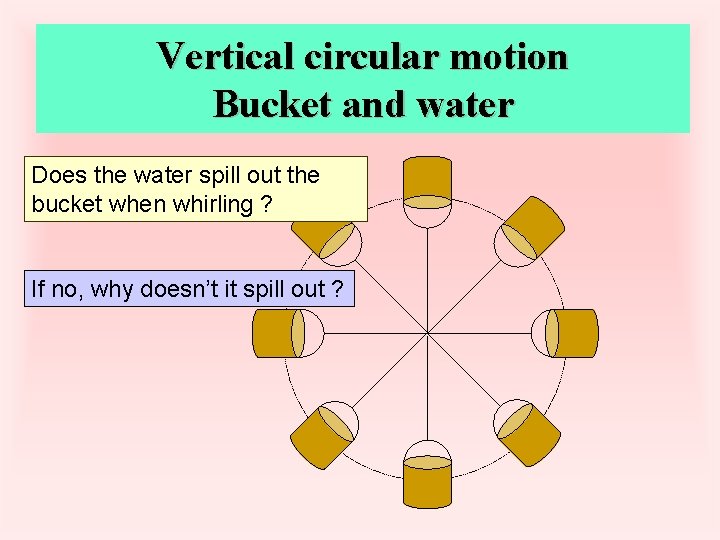
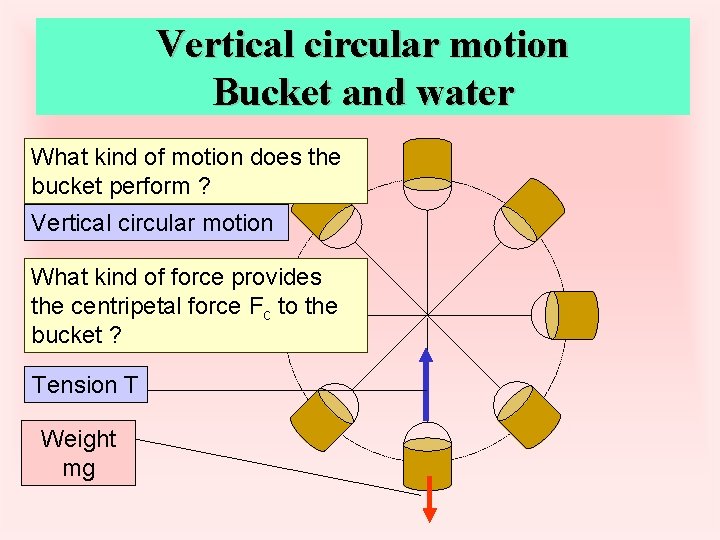
Vertical circular motion Bucket and water Does the water spill out the bucket when whirling ? If no, why doesn’t it spill out ?
Vertical circular motion Bucket and water What kind of motion does the bucket perform ? Vertical circular motion What kind of force provides the centripetal force Fc to the bucket ? Tension T Weight mg
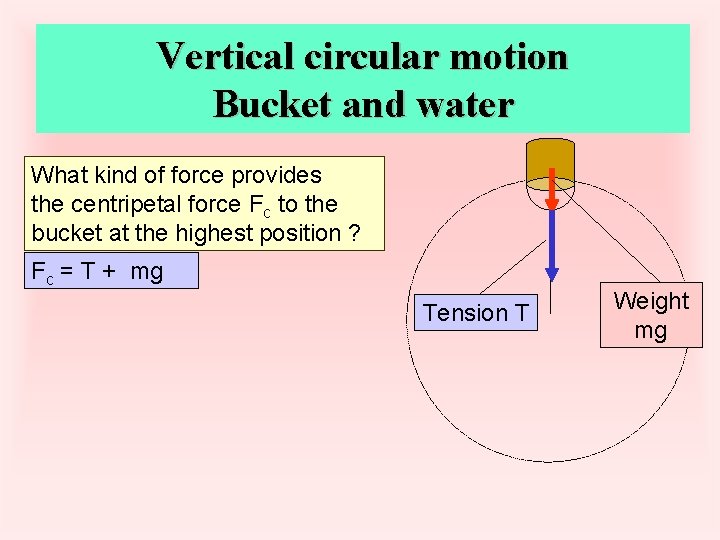
Vertical circular motion Bucket and water What kind of force provides the centripetal force Fc to the bucket at the highest position ? Fc = T + mg Tension T Weight mg
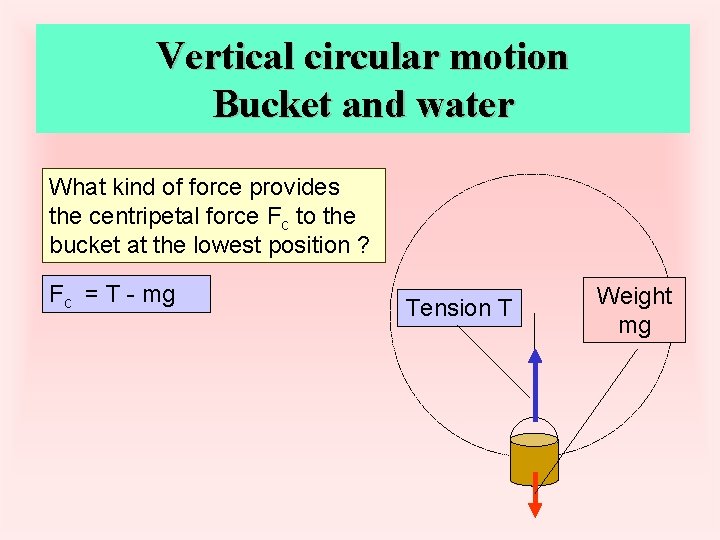
Vertical circular motion Bucket and water What kind of force provides the centripetal force Fc to the bucket at the lowest position ? Fc = T - mg Tension T Weight mg
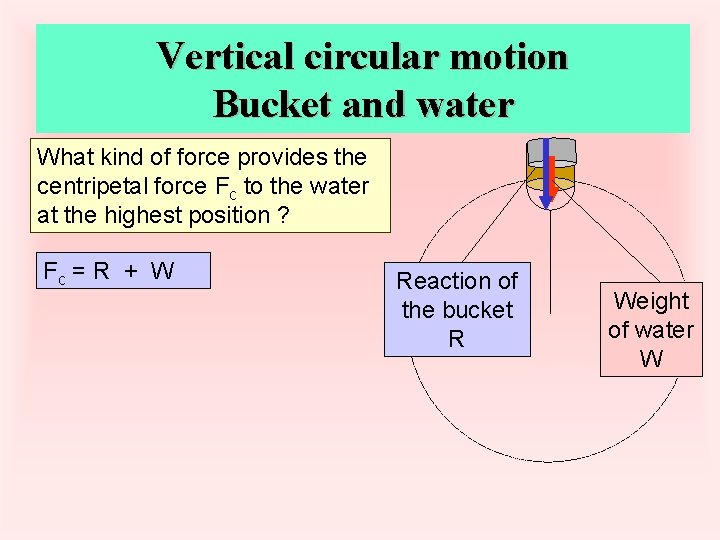
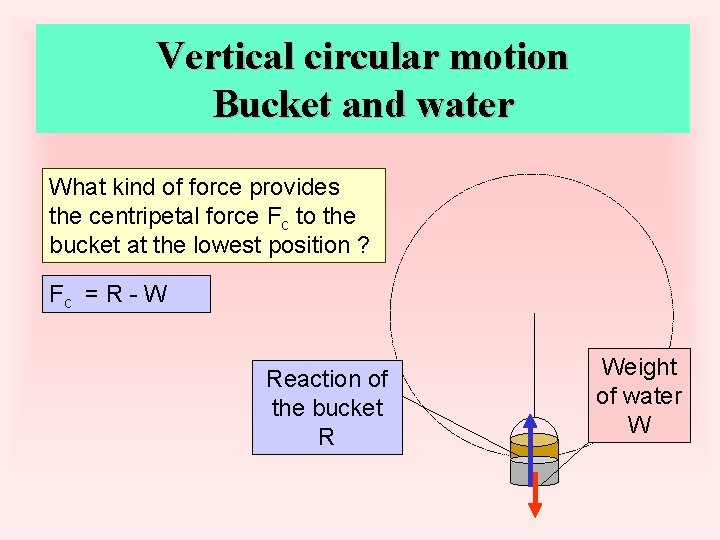
Vertical circular motion Bucket and water What kind of force provides the centripetal force Fc to the water at the highest position ? Fc = R + W Reaction of the bucket R Weight of water W
Vertical circular motion Bucket and water What kind of force provides the centripetal force Fc to the bucket at the lowest position ? Fc = R - W Reaction of the bucket R Weight of water W
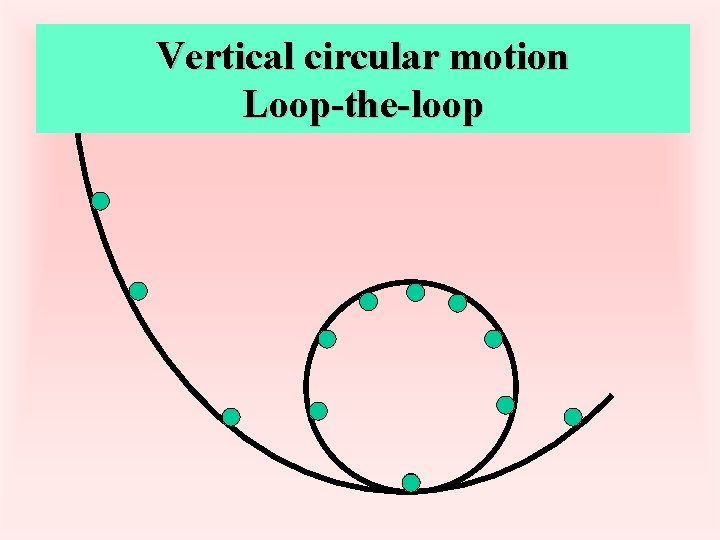
Vertical circular motion Loop-the-loop
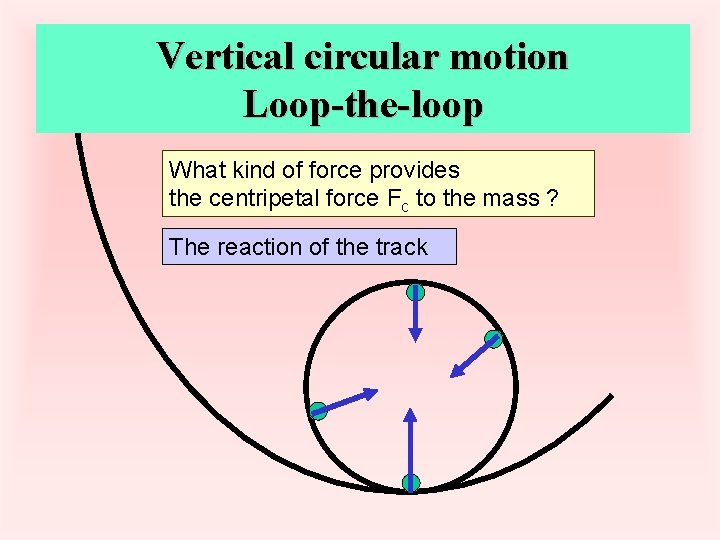
Vertical circular motion Loop-the-loop What kind of force provides the centripetal force Fc to the mass ? The reaction of the track
Class exercises M. C. Exercise True or False Main menu
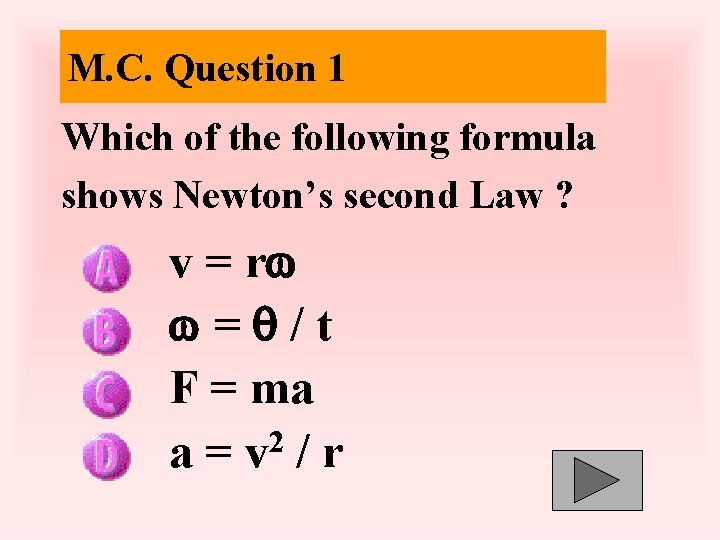
M. C. Question 1 Which of the following formula shows Newton’s second Law ? v = r = /t F = ma a = v 2 / r
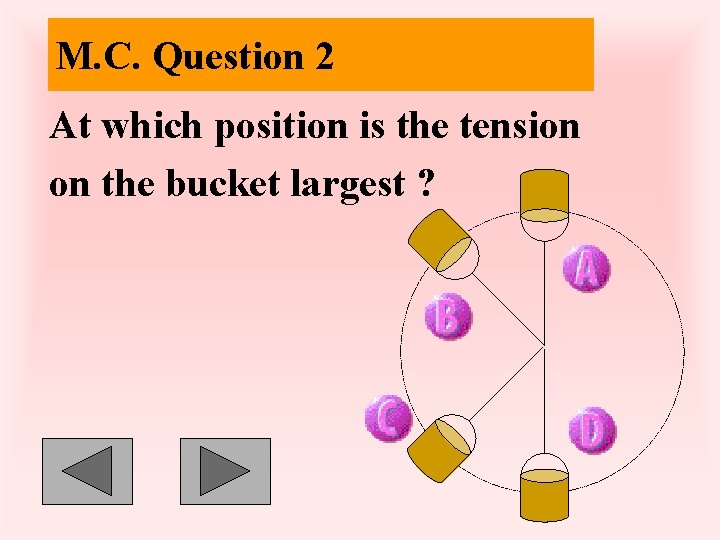
M. C. Question 2 At which position is the tension on the bucket largest ?
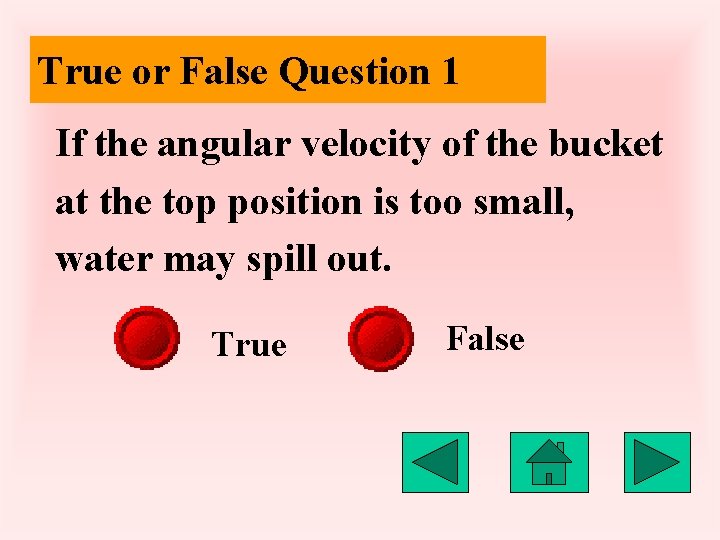
True or False Question 1 If the angular velocity of the bucket at the top position is too small, water may spill out. True False
True or False Question 2 In the Ocean Park , cart coast rider can loop the loop by tension. True False
Designed by :