
Akshay Kumar ENVIRONMENT Environment consists of the atmosphere

- Slides: 53
Akshay Kumar
ENVIRONMENT • Environment consists of the atmosphere, the hydrosphere, and the lithosphere in which the life-sustaining resources of the earth are contained. • The atmosphere, a mixture of gases extending outward from the surface of the earth. • The hydrosphere consists of the oceans, the lakes and streams. and the shallow ground water bodies that interflow with the surface water. • The lithosphere is the soil mantle that wraps the core of the earth.
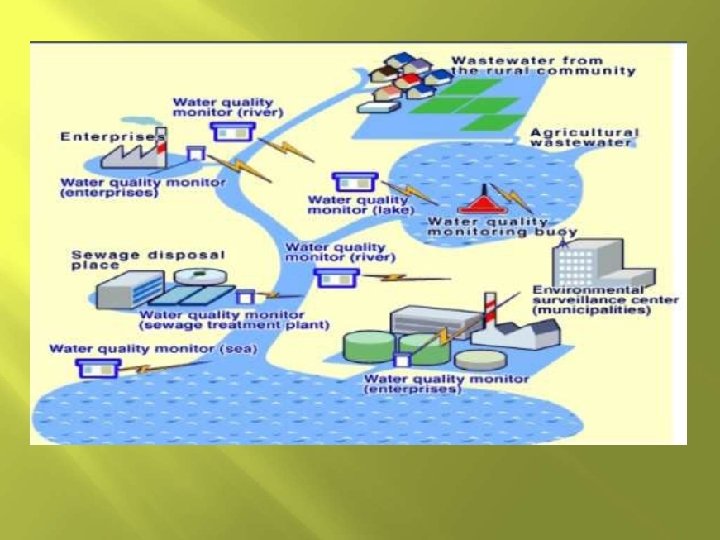
ENVIRONMENT MONITORING Environmental monitoring can be defined as the systematic sampling of air, water, soil, and biota in order to observe and study the environment, as well as to derive knowledge from this process.
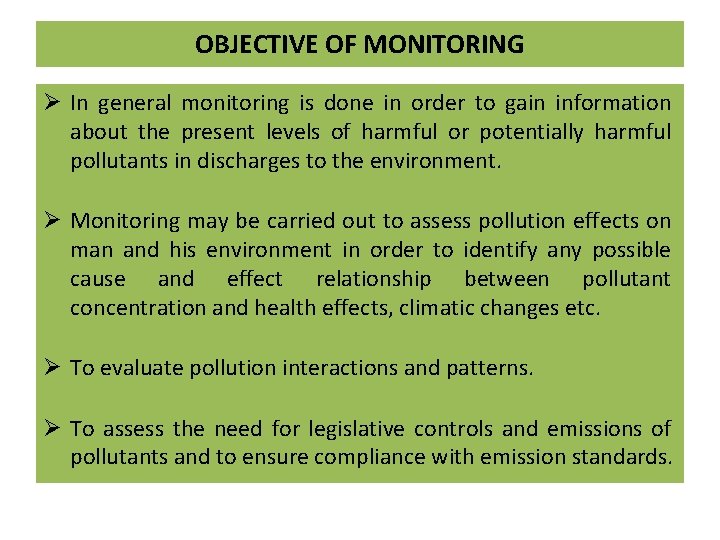
OBJECTIVE OF MONITORING Ø In general monitoring is done in order to gain information about the present levels of harmful or potentially harmful pollutants in discharges to the environment. Ø Monitoring may be carried out to assess pollution effects on man and his environment in order to identify any possible cause and effect relationship between pollutant concentration and health effects, climatic changes etc. Ø To evaluate pollution interactions and patterns. Ø To assess the need for legislative controls and emissions of pollutants and to ensure compliance with emission standards.
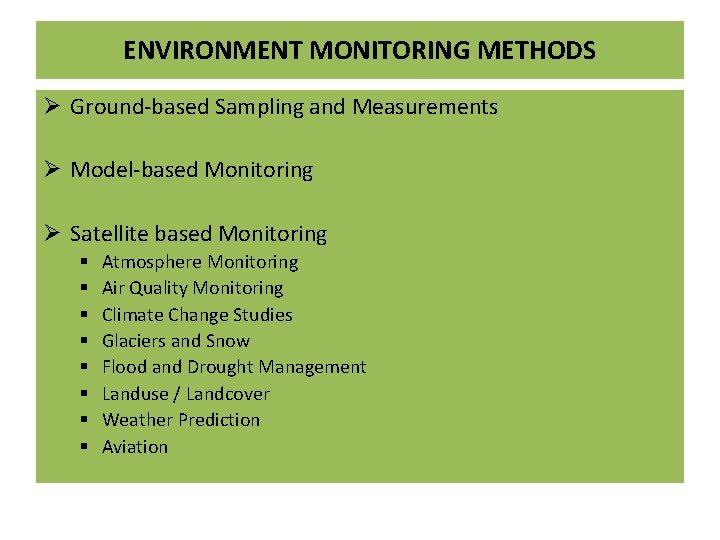
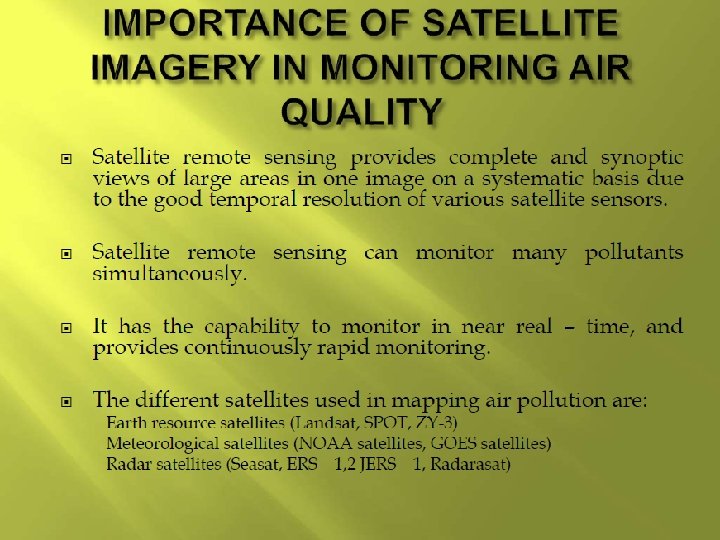
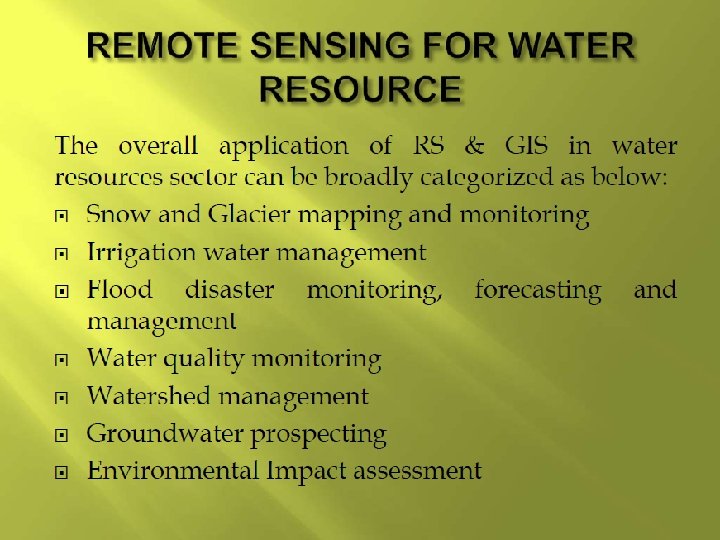
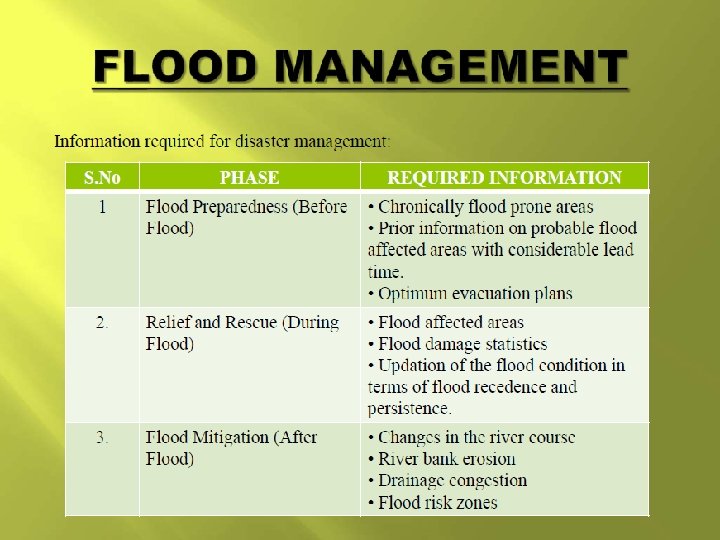
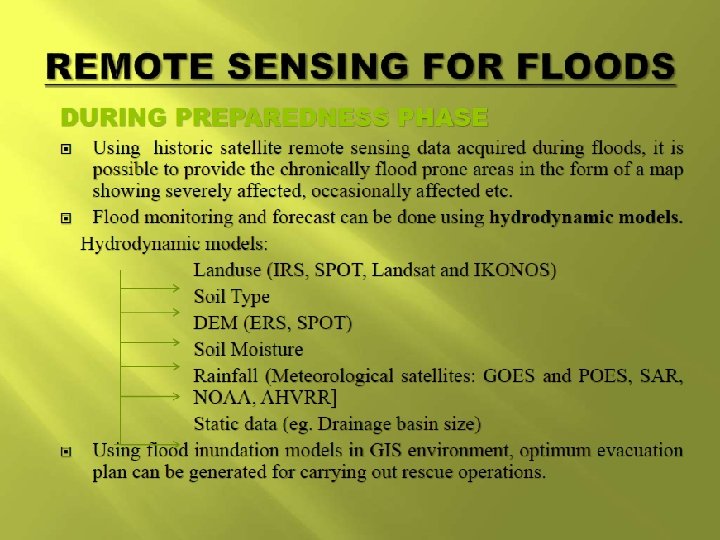
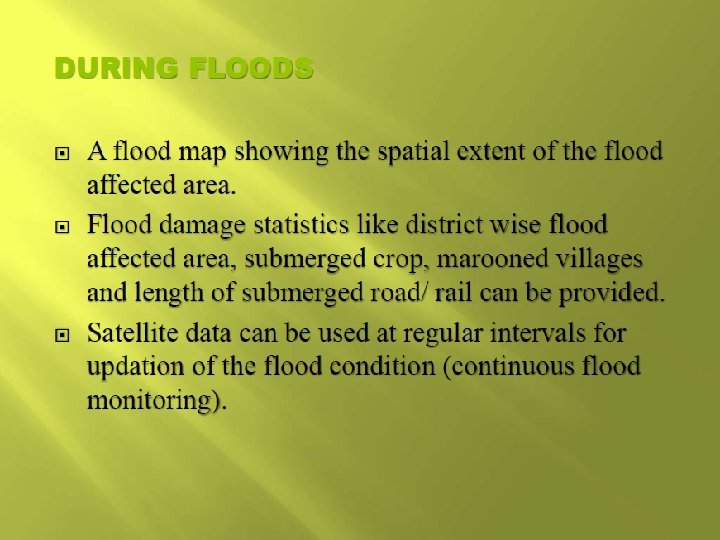
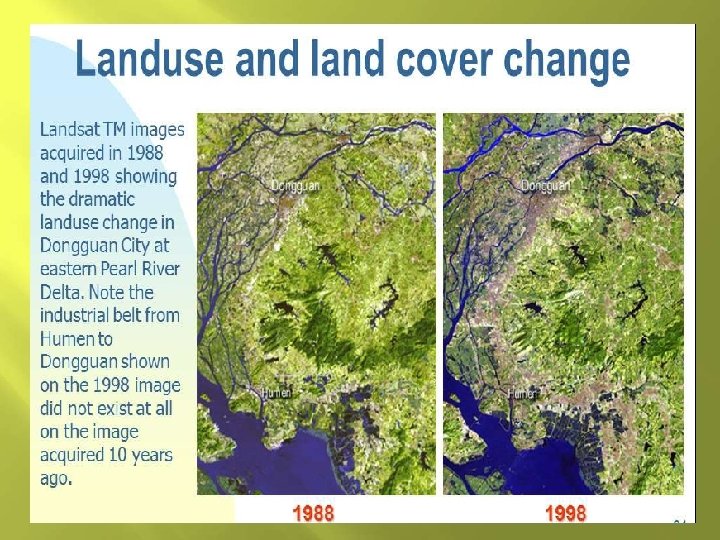
ENVIRONMENT MONITORING METHODS Ø Ground-based Sampling and Measurements Ø Model-based Monitoring Ø Satellite based Monitoring § § § § Atmosphere Monitoring Air Quality Monitoring Climate Change Studies Glaciers and Snow Flood and Drought Management Landuse / Landcover Weather Prediction Aviation
TYPES OF MONITORING Ø Source Monitoring Ø Ambient Environment Monitoring
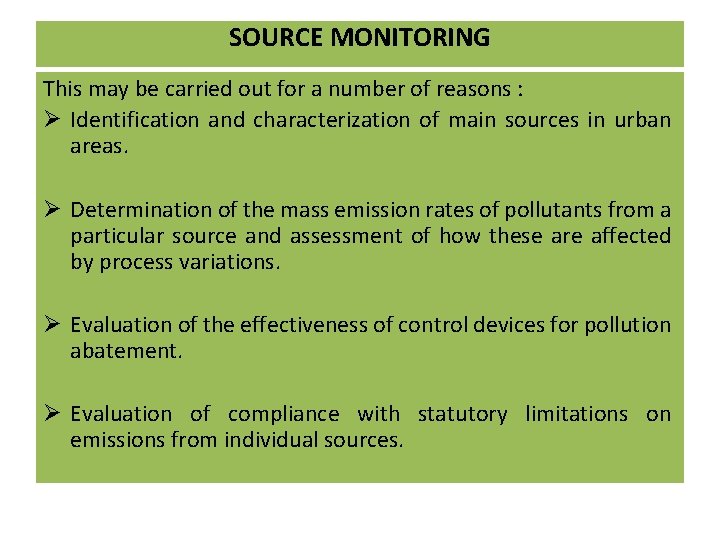
SOURCE MONITORING This may be carried out for a number of reasons : Ø Identification and characterization of main sources in urban areas. Ø Determination of the mass emission rates of pollutants from a particular source and assessment of how these are affected by process variations. Ø Evaluation of the effectiveness of control devices for pollution abatement. Ø Evaluation of compliance with statutory limitations on emissions from individual sources.
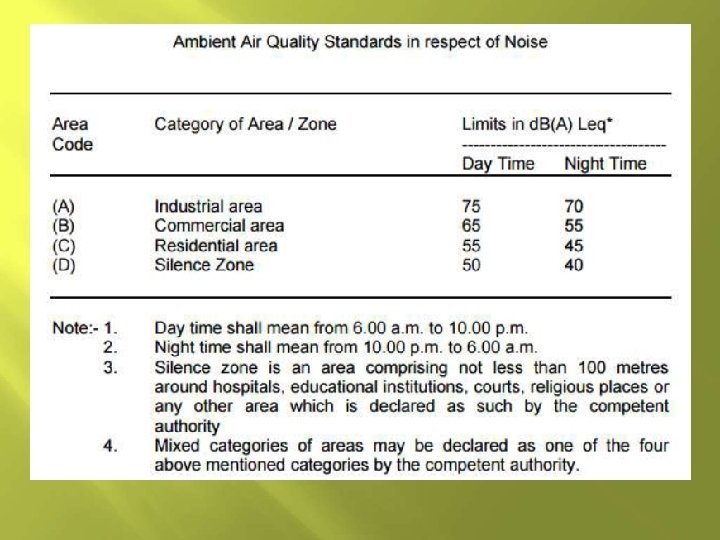
AMBIENT ENVIRONMENT MONITORING Ø Monitoring the environment may be carried out for a number of reasons: Ø Mapping the concentration of pollutants in the environment. Identification of pollution sensitive zones. Ø Tracking progress towards National Quality Standards attainment and emission reductions. Ø Serve as the basis for modeling of predicted pollutant concentrations in ambient air. Ø Ambient environment monitoring includes: § § Air Pollution Monitoring Water Pollution Monitoring Sediment, Soil and Biological Monitoring Noise Level Monitoring
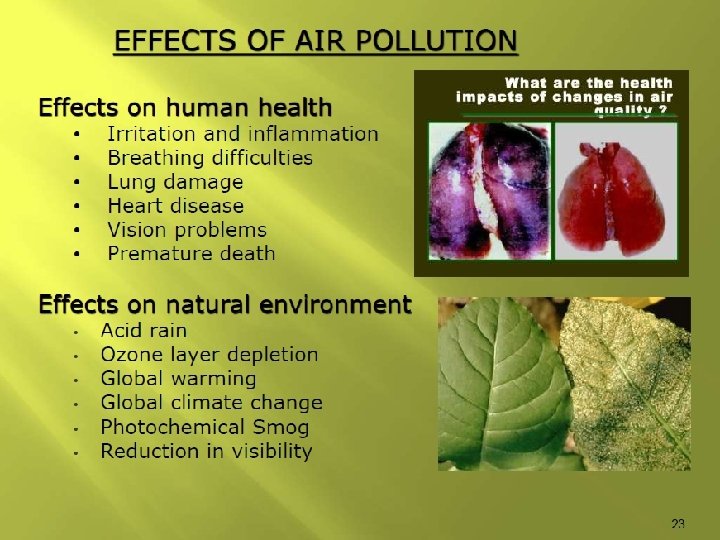
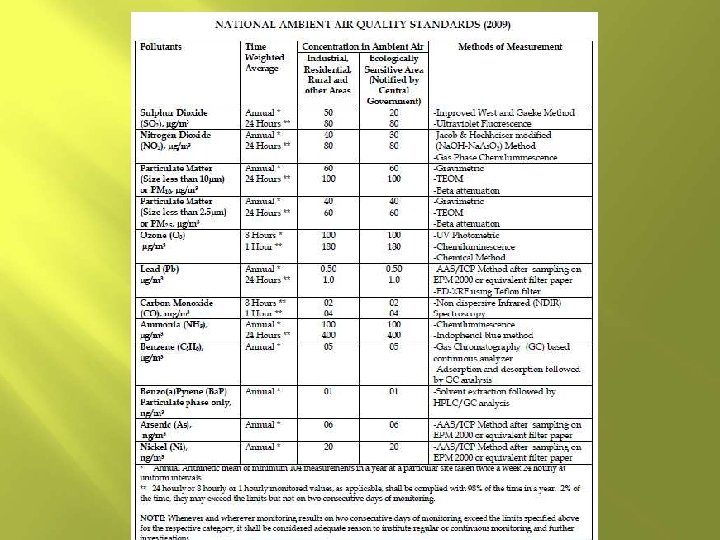
AIR POLLUTION Air pollution is the introduction of chemicals, particulate matter, or biological materials that cause harm or discomfort to humans or other living organisms, or damages the natural environment into the atmosphere.
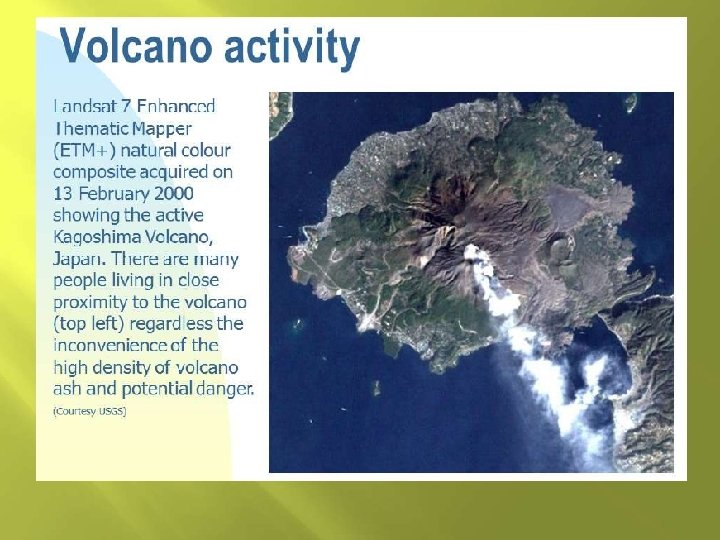
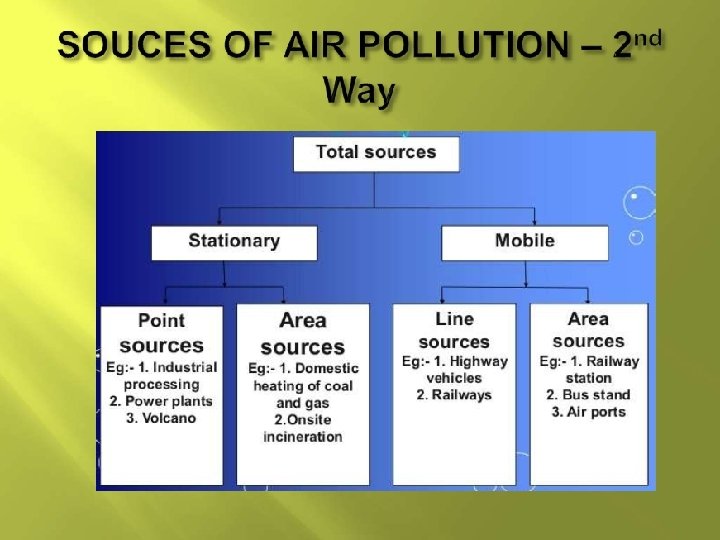
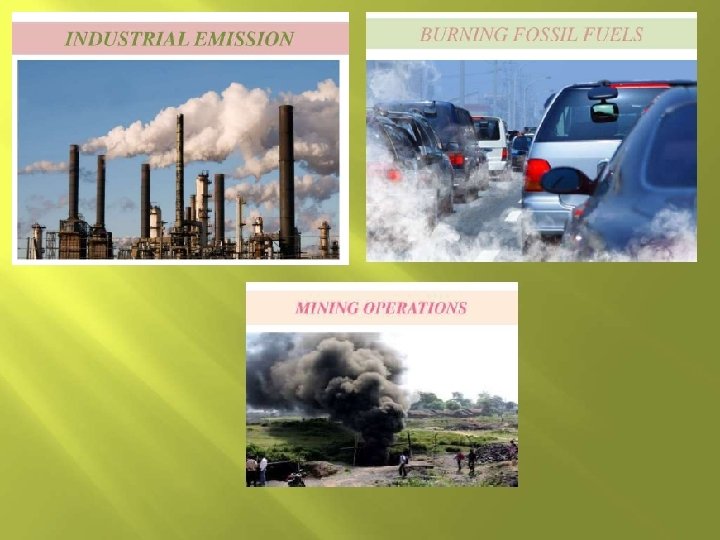
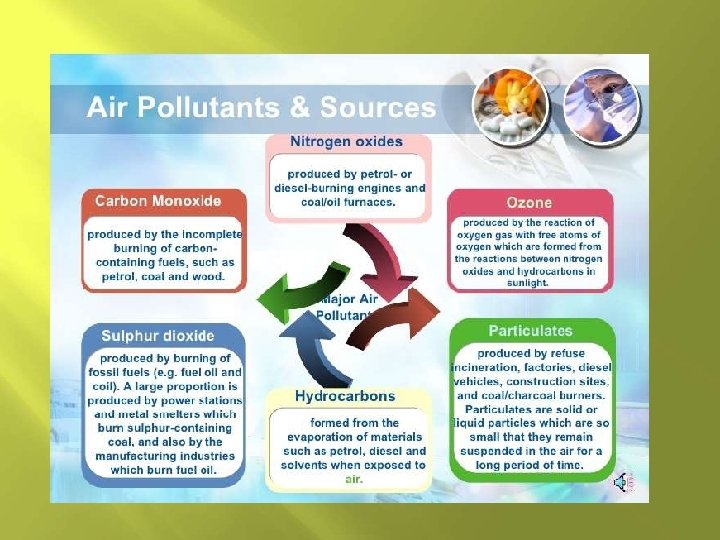
SOURCES OF AIR POLLUTION- 1 ST WAY Ø NATURAL SOURCES: The natural sources of air pollution are also known as Biogenic sources. The natural pollution includes sources such as oceanic aerosol, volcanic emissions, forest fires, biological decay, windblown terrestrial dust and lightening. Ø ANTHROPOGENIC SOURCES: The artificial pollution generates from human activities and includes sources such as fuel burning, refuge burning, transportation, construction of buildings, chemical factories, metallurgical factories and, vehicles.
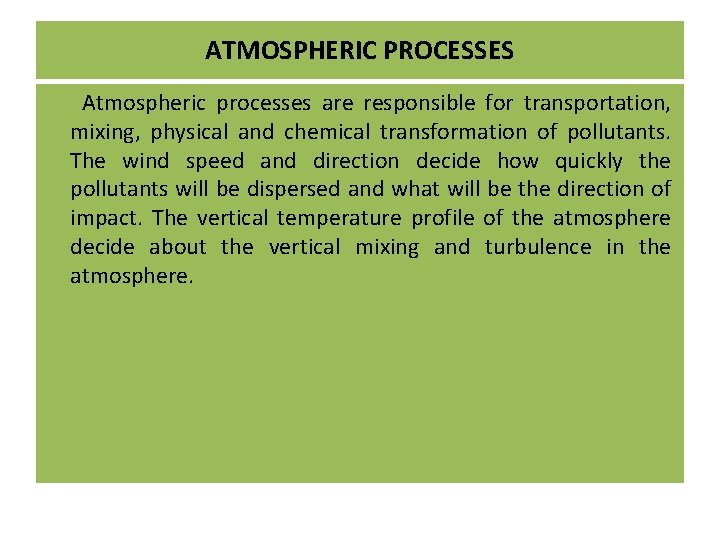
ATMOSPHERIC PROCESSES Atmospheric processes are responsible for transportation, mixing, physical and chemical transformation of pollutants. The wind speed and direction decide how quickly the pollutants will be dispersed and what will be the direction of impact. The vertical temperature profile of the atmosphere decide about the vertical mixing and turbulence in the atmosphere.
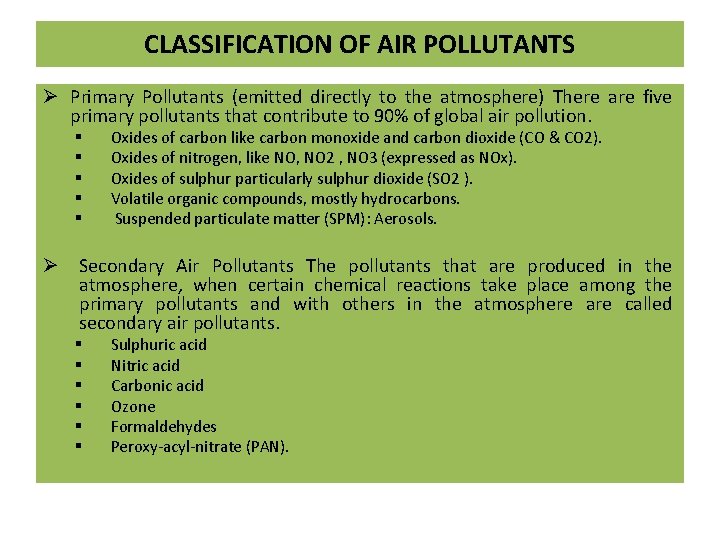
CLASSIFICATION OF AIR POLLUTANTS Ø Primary Pollutants (emitted directly to the atmosphere) There are five primary pollutants that contribute to 90% of global air pollution. § § § Oxides of carbon like carbon monoxide and carbon dioxide (CO & CO 2). Oxides of nitrogen, like NO, NO 2 , NO 3 (expressed as NOx). Oxides of sulphur particularly sulphur dioxide (SO 2 ). Volatile organic compounds, mostly hydrocarbons. Suspended particulate matter (SPM): Aerosols. Ø Secondary Air Pollutants The pollutants that are produced in the atmosphere, when certain chemical reactions take place among the primary pollutants and with others in the atmosphere are called secondary air pollutants. § § § Sulphuric acid Nitric acid Carbonic acid Ozone Formaldehydes Peroxy-acyl-nitrate (PAN).