
Aka Cardiovascular System Circulatory System circulates blood and
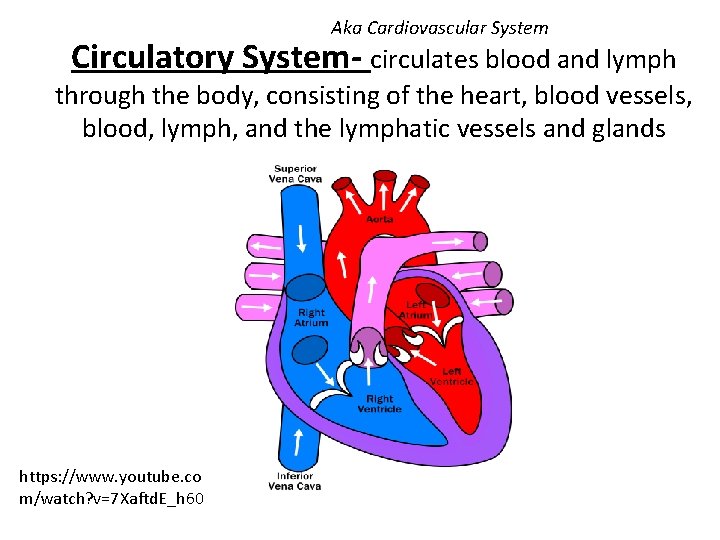
Aka Cardiovascular System Circulatory System- circulates blood and lymph through the body, consisting of the heart, blood vessels, blood, lymph, and the lymphatic vessels and glands https: //www. youtube. co m/watch? v=7 Xaftd. E_h 60
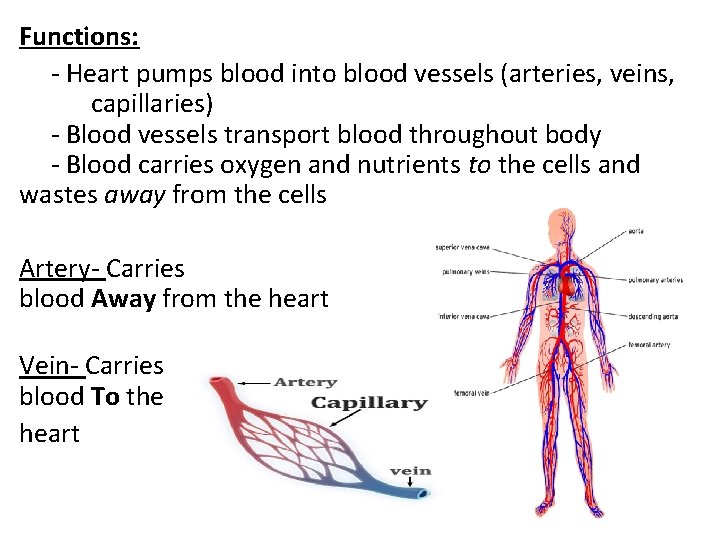
Functions: - Heart pumps blood into blood vessels (arteries, veins, capillaries) - Blood vessels transport blood throughout body - Blood carries oxygen and nutrients to the cells and wastes away from the cells Artery- Carries blood Away from the heart Vein- Carries blood To the heart
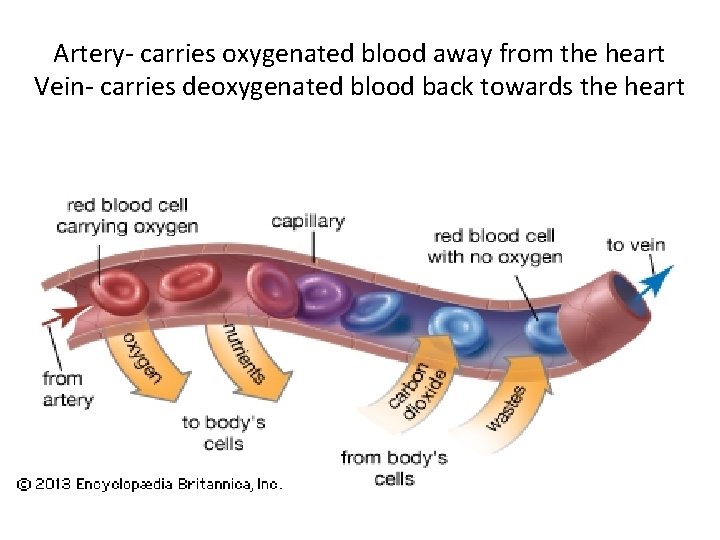
Artery- carries oxygenated blood away from the heart Vein- carries deoxygenated blood back towards the heart
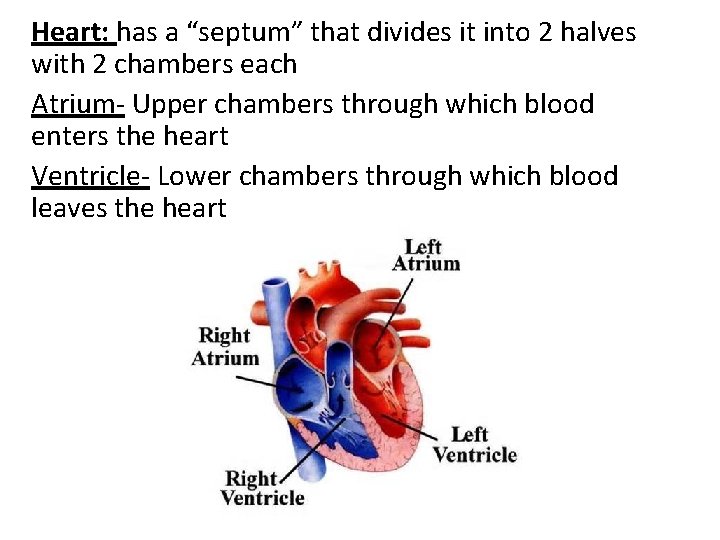
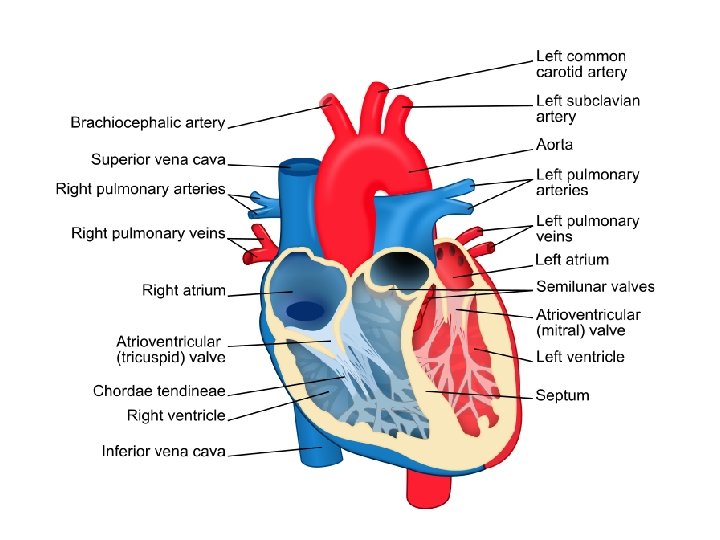
Heart: has a “septum” that divides it into 2 halves with 2 chambers each Atrium- Upper chambers through which blood enters the heart Ventricle- Lower chambers through which blood leaves the heart
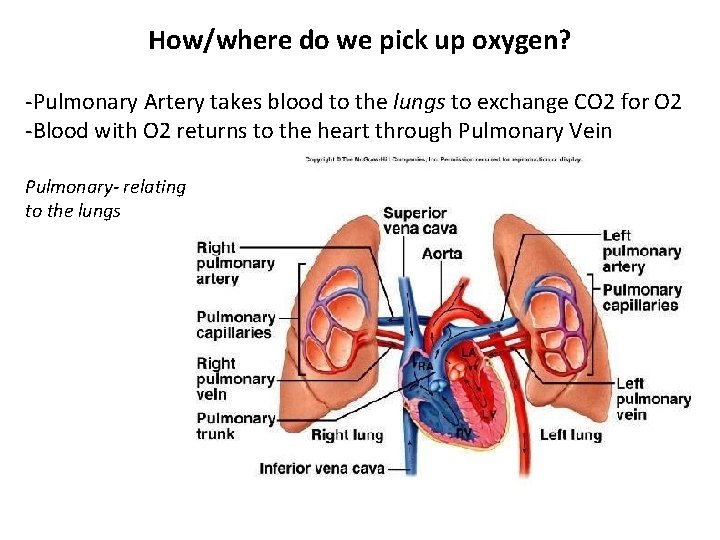
How/where do we pick up oxygen? -Pulmonary Artery takes blood to the lungs to exchange CO 2 for O 2 -Blood with O 2 returns to the heart through Pulmonary Vein Pulmonary- relating to the lungs
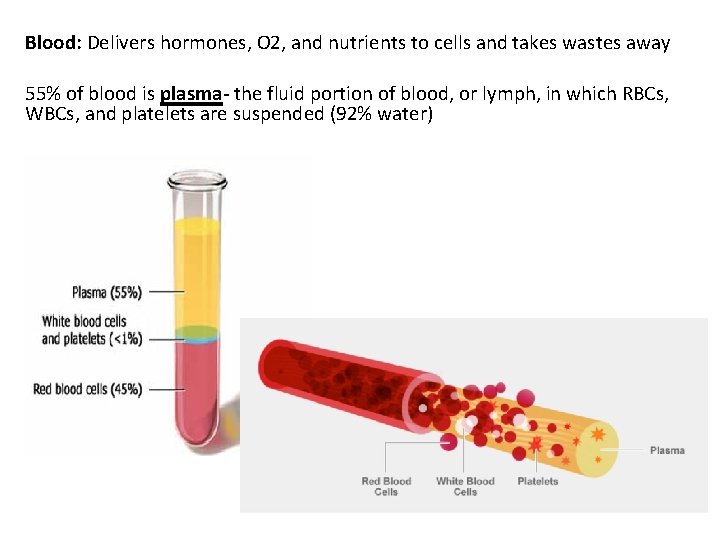
Blood: Delivers hormones, O 2, and nutrients to cells and takes wastes away 55% of blood is plasma- the fluid portion of blood, or lymph, in which RBCs, WBCs, and platelets are suspended (92% water)
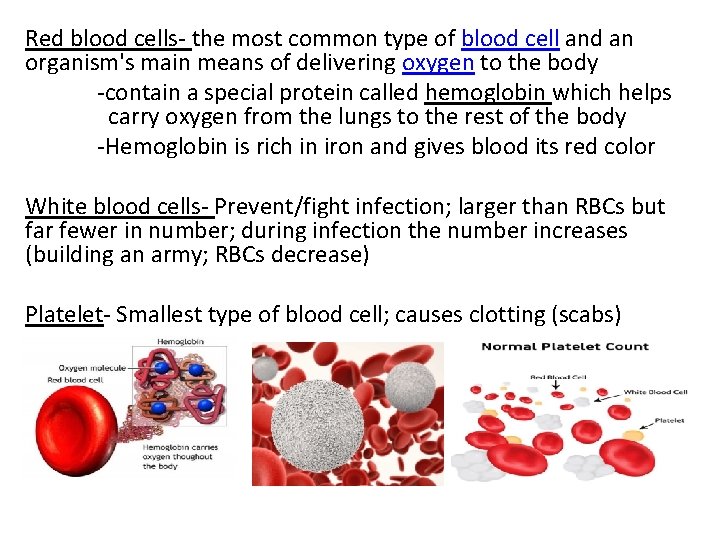
Red blood cells- the most common type of blood cell and an organism's main means of delivering oxygen to the body -contain a special protein called hemoglobin which helps carry oxygen from the lungs to the rest of the body -Hemoglobin is rich in iron and gives blood its red color White blood cells- Prevent/fight infection; larger than RBCs but far fewer in number; during infection the number increases (building an army; RBCs decrease) Platelet- Smallest type of blood cell; causes clotting (scabs)
Problems: Most problems of the heart are under our control (smoking, weight management, diet) 1. Blood pressure- pressure on the inner walls of the arteries; exerted by the blood 2. Hypertension- high blood pressure- smoking, obesity, poor diet 3. Congenital- anything that occurs at birth; innate (ex. congenital heart defect) 4. Anemia- low levels of hemoglobin; cells don’t get enough O 2 (Low # of RBCs); pale skin, weakness, breathlessness 5. Leukemia- a cancer of blood-forming tissues, hindering the body's ability to fight infection 6. Hemophilia- a genetic disorder, more common in males, in which the ability of the blood to clot is severely reduced, causing the sufferer to bleed severely from even a slight injury
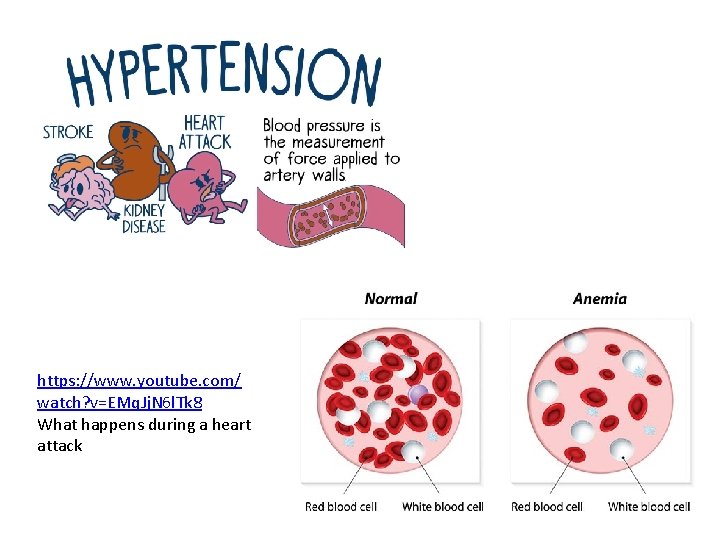
https: //www. youtube. com/ watch? v=EMq. Jj. N 6 l. Tk 8 What happens during a heart attack
- Slides: 10