
AJCC Staging Moments AJCC TNM Staging 7 th
- Slides: 16
AJCC Staging Moments AJCC TNM Staging 7 th Edition Supraglottic Larynx Case #2 Contributors: Jatin P. Shah, MD Memorial Sloan-Kettering Cancer Center, New York Carol R. Bradford, MD University of Michigan Medical Center, Ann Arbor, Michigan James Brierley, MB Princess Margaret Hospital/University Health Network, Toronto, Ontario
Larynx Case # 2 Presentation of New Case • Newly diagnosed larynx cancer patient • Presentation at Cancer Conference for treatment recommendations and clinical staging
Larynx Case # 2 History & Physical • 73 yr old male who presented with chronic hoarseness, SOB, dysphagia • No smoking hx • No family history of ca
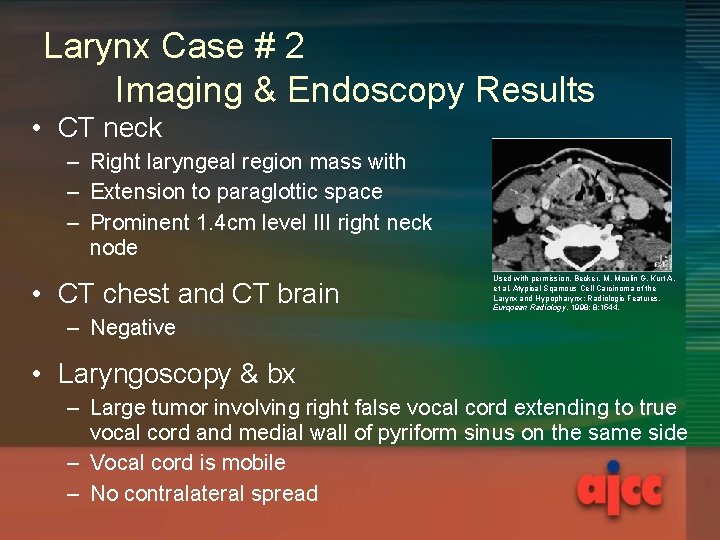
Larynx Case # 2 Imaging & Endoscopy Results • CT neck – Right laryngeal region mass with – Extension to paraglottic space – Prominent 1. 4 cm level III right neck node • CT chest and CT brain Used with permission. Becker, M, Moulin G, Kurt A, et al. Atypical Sqamous Cell Carcinoma of the Larynx and Hypopharynx: Radiologic Features. European Radiology. 1998; 8: 1544. – Negative • Laryngoscopy & bx – Large tumor involving right false vocal cord extending to true vocal cord and medial wall of pyriform sinus on the same side – Vocal cord is mobile – No contralateral spread
Larynx Case # 2 Diagnostic Procedure • Procedure – Biopsy right false vocal cord during laryngoscopy • Pathology Report – Squamous cell ca – Poorly differentiated, Grade 3 • Human papillomavirus (HPV) - neg
Larynx Case # 2 Clinical Staging • Clinical staging – Uses information from the physical exam, imaging, and diagnostic laryngoscopy • Purpose – Select appropriate treatment – Estimate prognosis
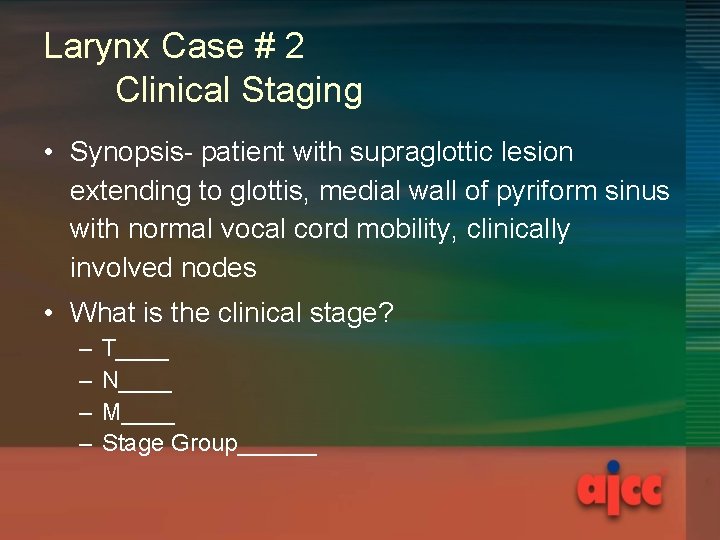
Larynx Case # 2 Clinical Staging • Synopsis- patient with supraglottic lesion extending to glottis, medial wall of pyriform sinus with normal vocal cord mobility, clinically involved nodes • What is the clinical stage? – – T____ N____ M____ Stage Group______
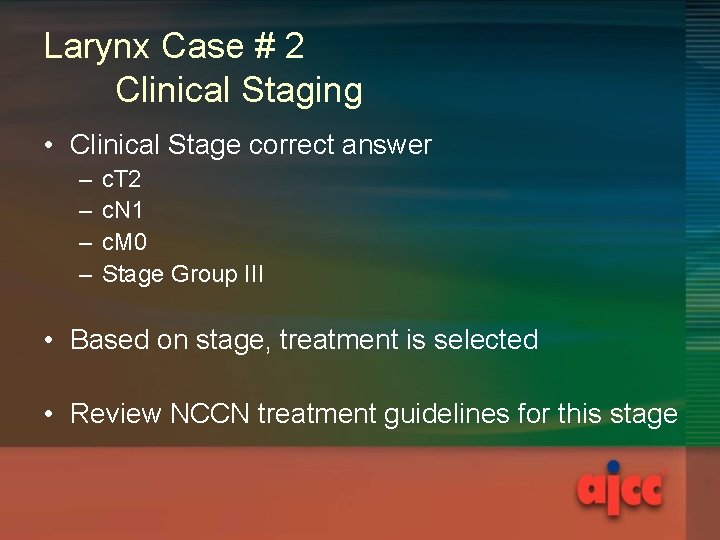
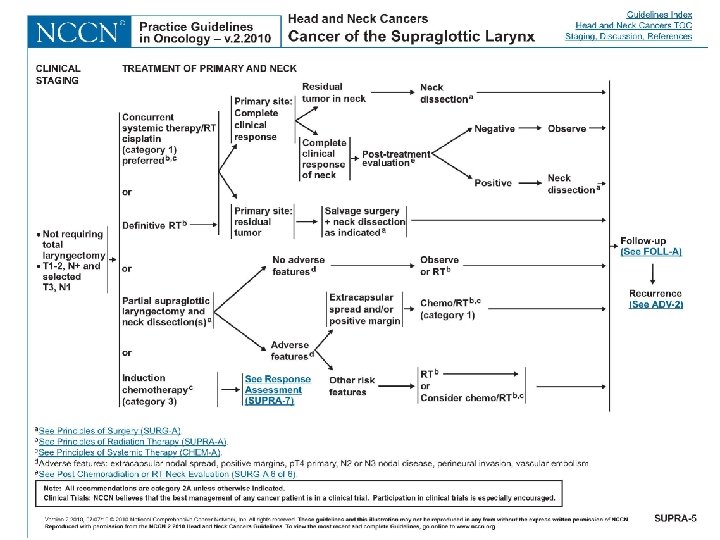
Larynx Case # 2 Clinical Staging • Clinical Stage correct answer – – c. T 2 c. N 1 c. M 0 Stage Group III • Based on stage, treatment is selected • Review NCCN treatment guidelines for this stage
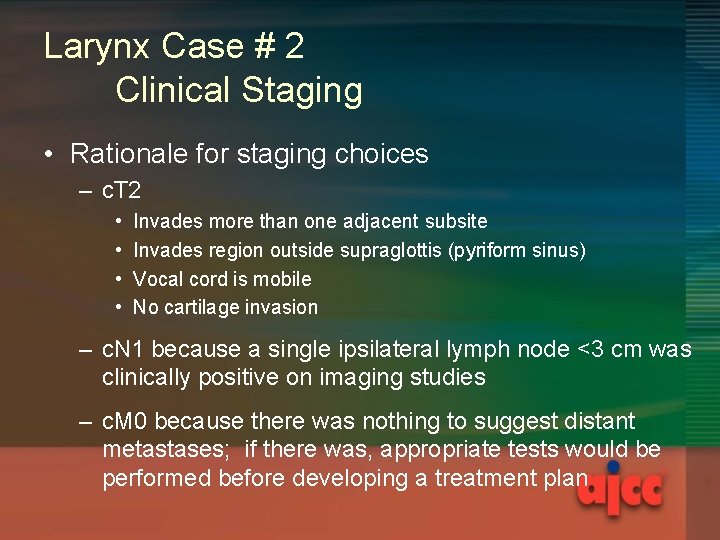
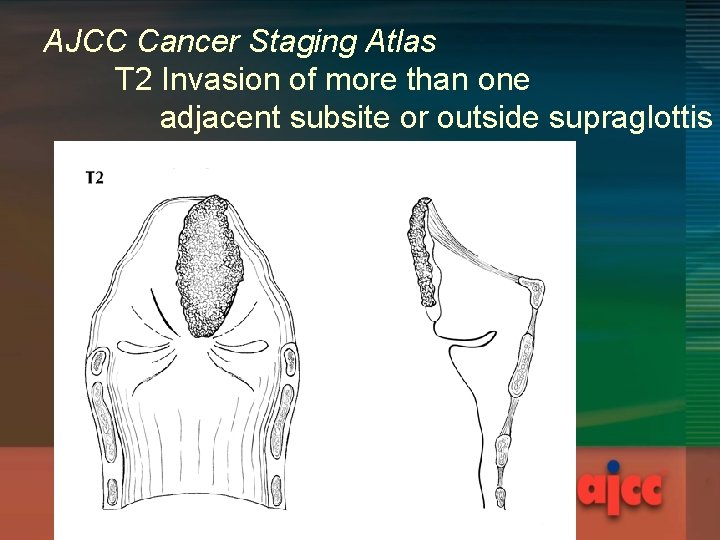
Larynx Case # 2 Clinical Staging • Rationale for staging choices – c. T 2 • • Invades more than one adjacent subsite Invades region outside supraglottis (pyriform sinus) Vocal cord is mobile No cartilage invasion – c. N 1 because a single ipsilateral lymph node <3 cm was clinically positive on imaging studies – c. M 0 because there was nothing to suggest distant metastases; if there was, appropriate tests would be performed before developing a treatment plan
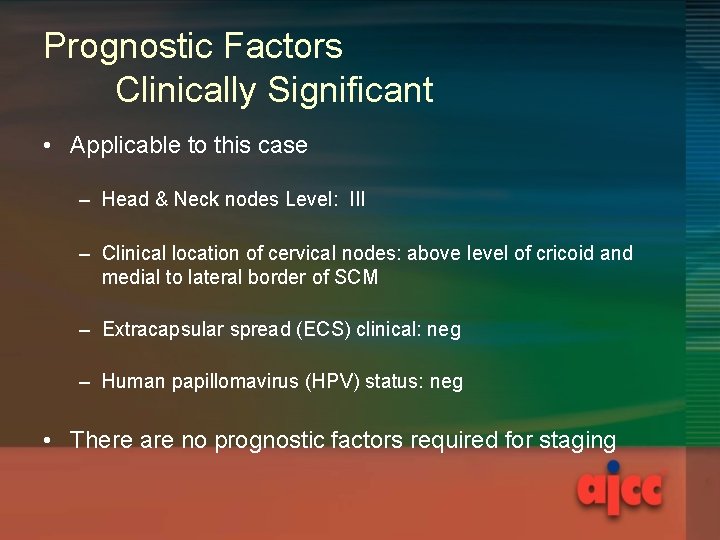
Prognostic Factors Clinically Significant • Applicable to this case – Head & Neck nodes Level: III – Clinical location of cervical nodes: above level of cricoid and medial to lateral border of SCM – Extracapsular spread (ECS) clinical: neg – Human papillomavirus (HPV) status: neg • There are no prognostic factors required for staging
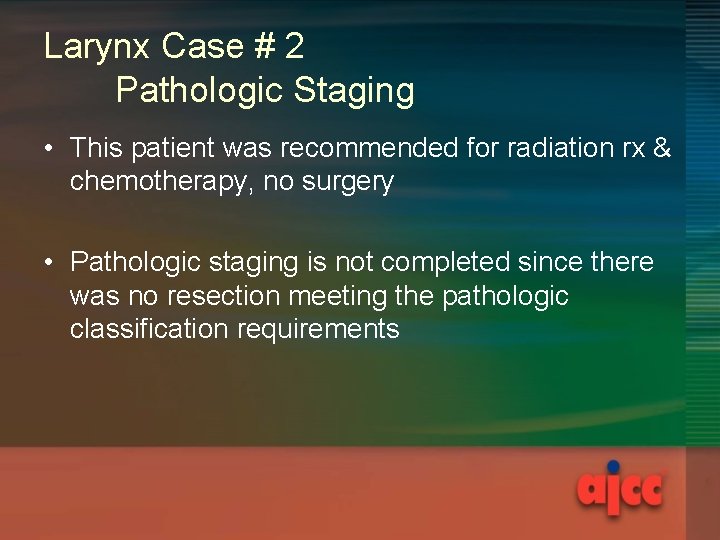
Larynx Case # 2 Pathologic Staging • This patient was recommended for radiation rx & chemotherapy, no surgery • Pathologic staging is not completed since there was no resection meeting the pathologic classification requirements
Prognostic Factors Clinically Significant • Applicable to this case – Size of lymph nodes: <3 cm clinically – Extracapsular extension from lymph nodes: none seen clinically or radiologically – Lymph node levels involved: III – Extracapsular spread (ECS) pathologic: n/a – Human papillomavirus (HPV) status: neg • There are no prognostic factors required for staging
AJCC Cancer Staging Atlas T 2 Invasion of more than one adjacent subsite or outside supraglottis
Larynx Case # 2 Recap of Staging • Summary of correct answers – Clinical stage c. T 2 N 1 M 0 Stage Group III – Pathologic stage unknown • The staging classifications have a different purpose and therefore can be different. Do not go back and change the clinical staging based on pathologic staging information.
Staging Moments Summary • Review site-specific information if needed • Clinical Staging – Based on information before treatment – Used to select treatment options • Pathologic Staging – Based on clinical data PLUS surgery and pathology report information – Used for selection of adjuvant treatment and prognosis – Used to evaluate end-results (survival)