
AIXM 5 UML Modelling Conventions AIXM is GML

- Slides: 15
AIXM 5 UML Modelling Conventions
AIXM is GML • AIXM is an XML exchange standard based on a subset of GML. Essentially: – AIXM Features are GML features – AIXM Objects are GML objects – AIXM follows the GML object-property concept
Diagrams • Model uses: – Class diagrams • features, properties, relationships and inheritance between features – Package diagrams • split the model into modules and identify dependencies among sets of classes.
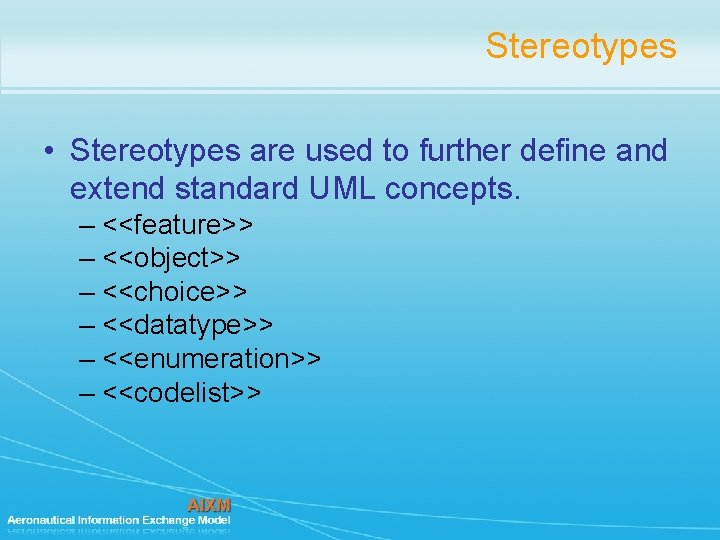
Stereotypes • Stereotypes are used to further define and extend standard UML concepts. – <<feature>> – <<object>> – <<choice>> – <<datatype>> – <<enumeration>> – <<codelist>>
Abstract Classes • Abstract classes are designated by putting the class name in italics. • An abstract class cannot be realised in an implementation such as an XML document • Abstract classes are used as base classes in an inheritance hierarchy.
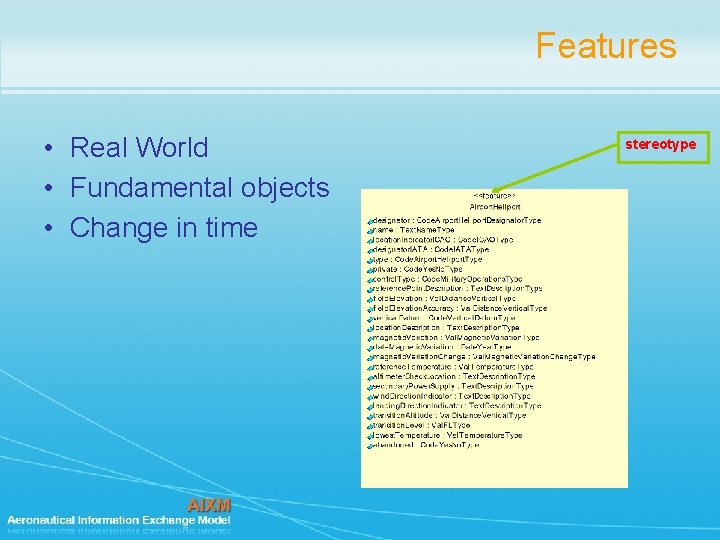
Features • Real World • Fundamental objects • Change in time stereotype
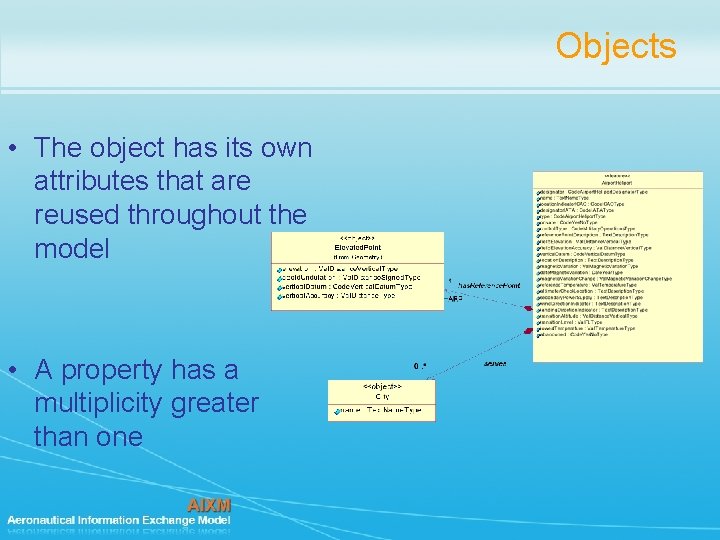
Objects • The object has its own attributes that are reused throughout the model • A property has a multiplicity greater than one
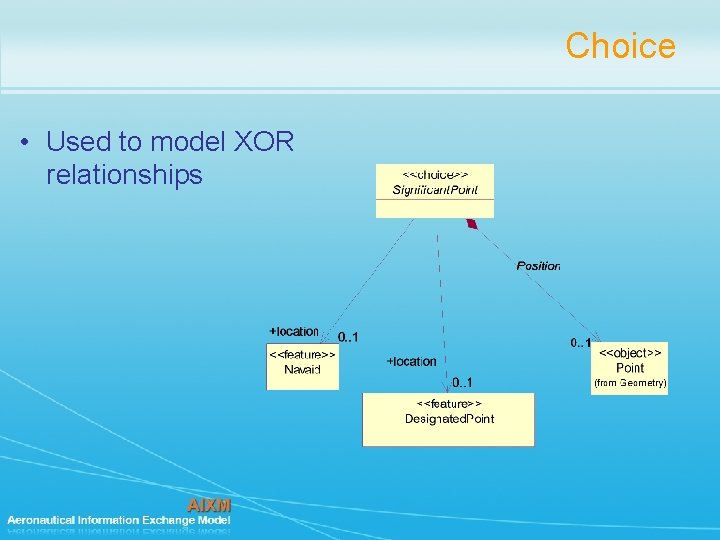
Choice • Used to model XOR relationships
Data. Types • Datatypes are used throughout the model – <<datatype>> – basic data type that specifies a pattern to use – <<enumeration>> – a fixed list of values – <<codelist>> – similar to an enumeration but the list can be expanded
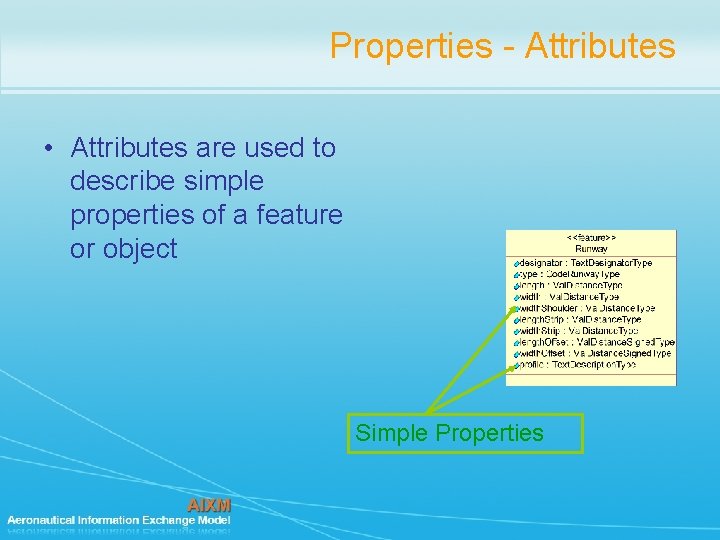
Properties - Attributes • Attributes are used to describe simple properties of a feature or object Simple Properties
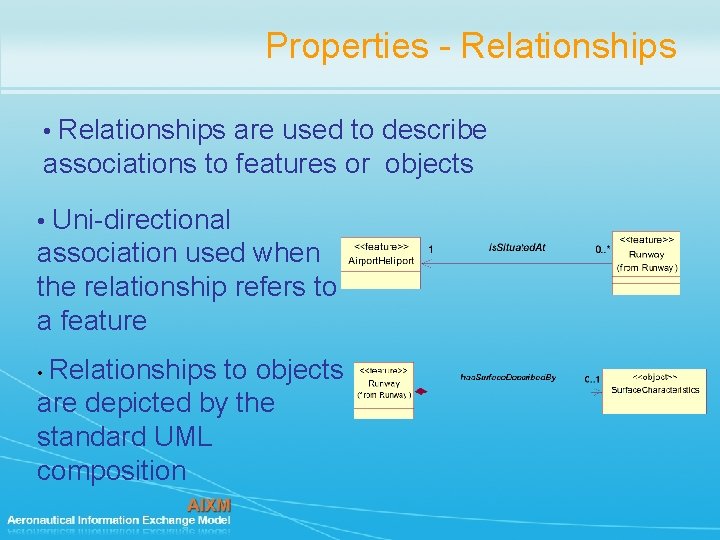
Properties - Relationships • Relationships are used to describe associations to features or objects • Uni-directional association used when the relationship refers to a feature • Relationships to objects are depicted by the standard UML composition
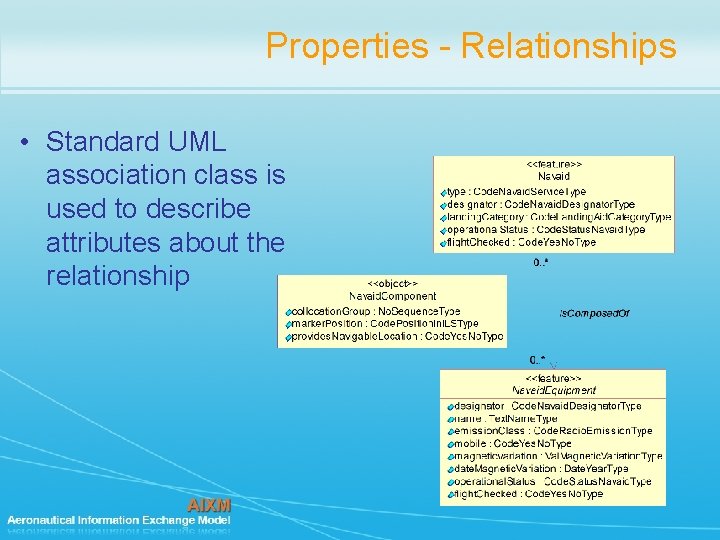
Properties - Relationships • Standard UML association class is used to describe attributes about the relationship
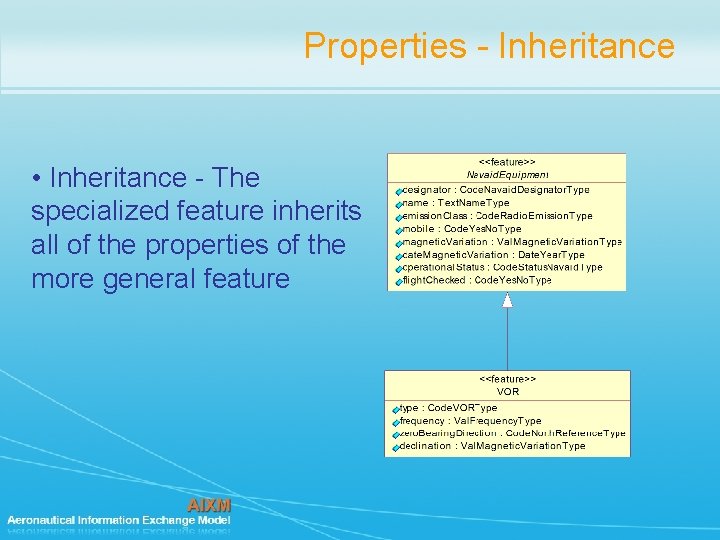
Properties - Inheritance • Inheritance - The specialized feature inherits all of the properties of the more general feature
Naming Conventions • Feature, Object and Choice names are written in Upper. Camel. Case e. g. Navaid. Equipment • Simple property names (i. e. attributes) are written in lower. Camel. Case e. g. width. Shoulder • Relationship names are written in lower. Camel. Case but as present tense verbs e. g. is. Situated. At • Datatype names are written in Upper. Camel. Case and end with ‘Type’ e. g. Code. Aircraft. Type
Thank you