
Airway management IF YOU DO NOT MANAGE THE
- Slides: 18
Airway management IF YOU DO NOT MANAGE THE PATIENT’S AIRWAY – THEY WILL DIE SIMPLE MANOEUVRES SAVE LIVES © BASICS Education March 2019
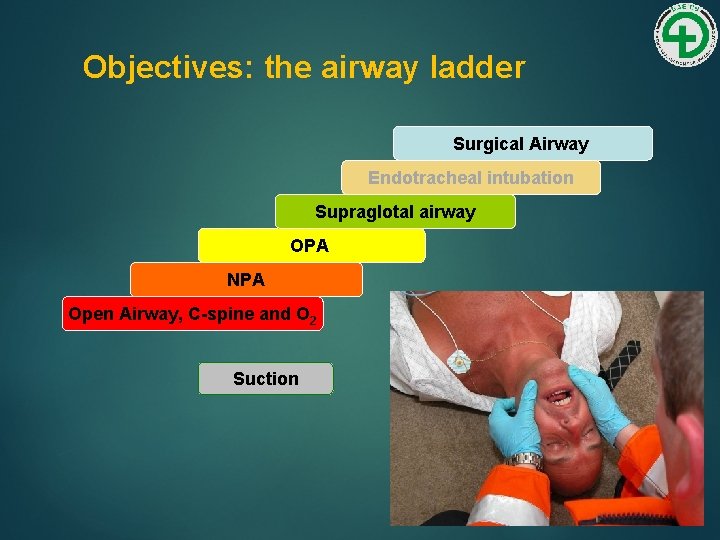
Objectives: the airway ladder Surgical Airway Endotracheal intubation Supraglotal airway OPA NPA Open Airway, C-spine and O 2 Suction MASTER
Airway care • Airway obstruction kills • Hypoxia kills • Be aware of cervical spine injury potential
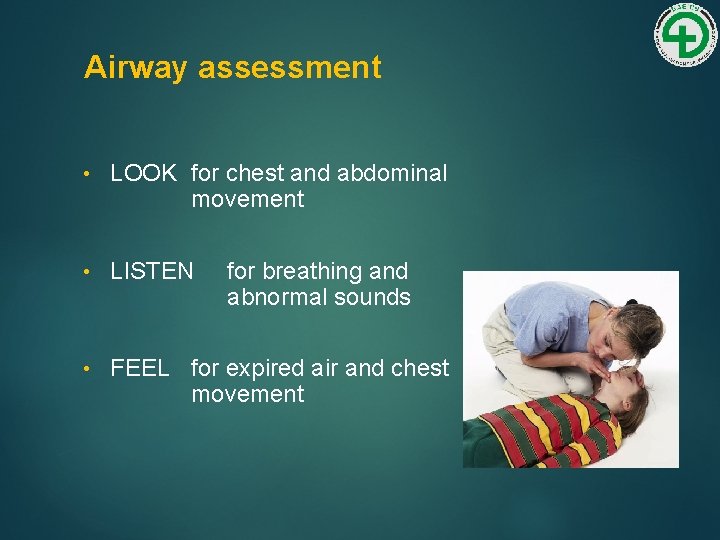
Airway assessment • LOOK for chest and abdominal movement • LISTEN • FEEL for expired air and chest movement for breathing and abnormal sounds
Noisy breathing • Crowing - laryngeal spasm • Gurgling - liquids in airway • Snoring - partial obstruction • A completely obstructed airways makes no noise
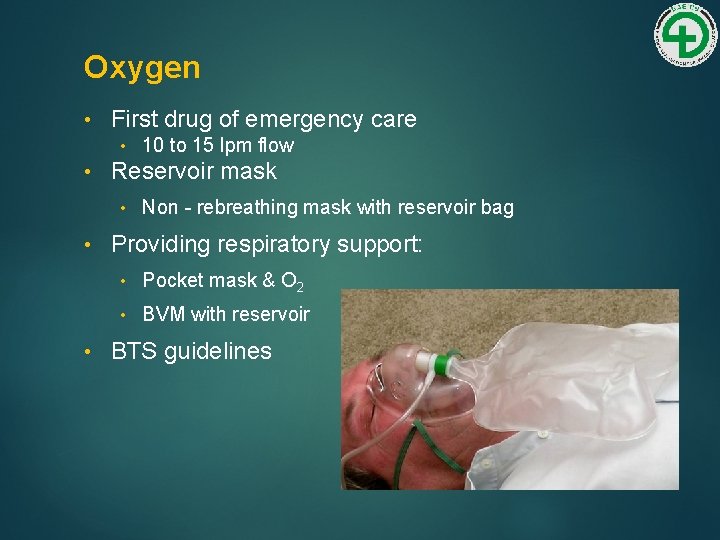
Oxygen • First drug of emergency care • • Reservoir mask • • • 10 to 15 lpm flow Non - rebreathing mask with reservoir bag Providing respiratory support: • Pocket mask & O 2 • BVM with reservoir BTS guidelines
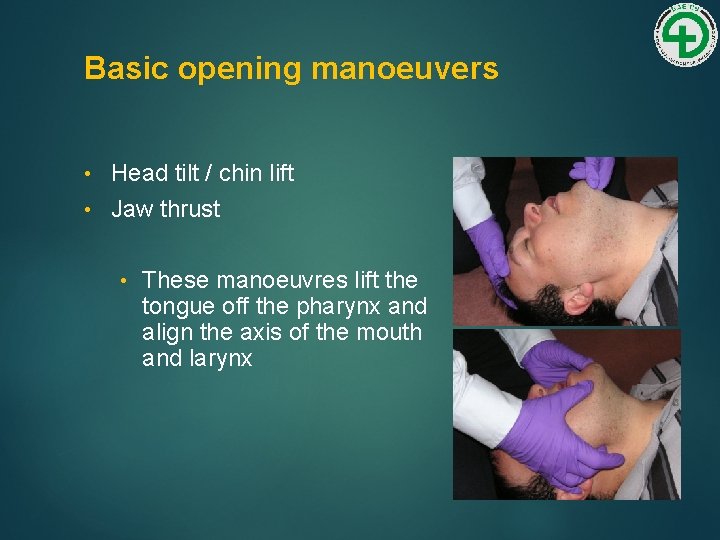
Basic opening manoeuvers Head tilt / chin lift • Jaw thrust • • These manoeuvres lift the tongue off the pharynx and align the axis of the mouth and larynx
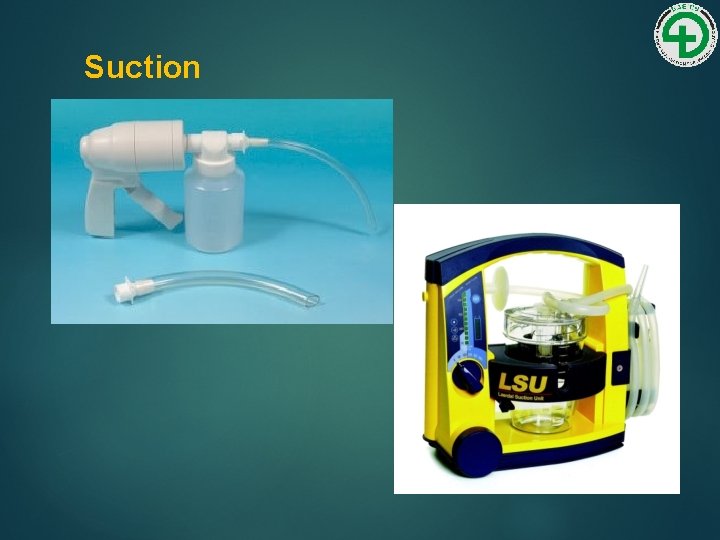
Suction
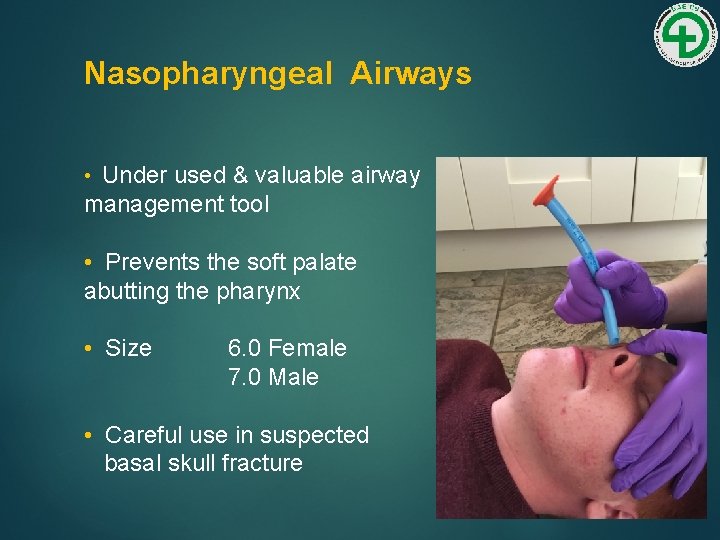
Nasopharyngeal Airways • Under used & valuable airway management tool • Prevents the soft palate abutting the pharynx • Size 6. 0 Female 7. 0 Male • Careful use in suspected basal skull fracture
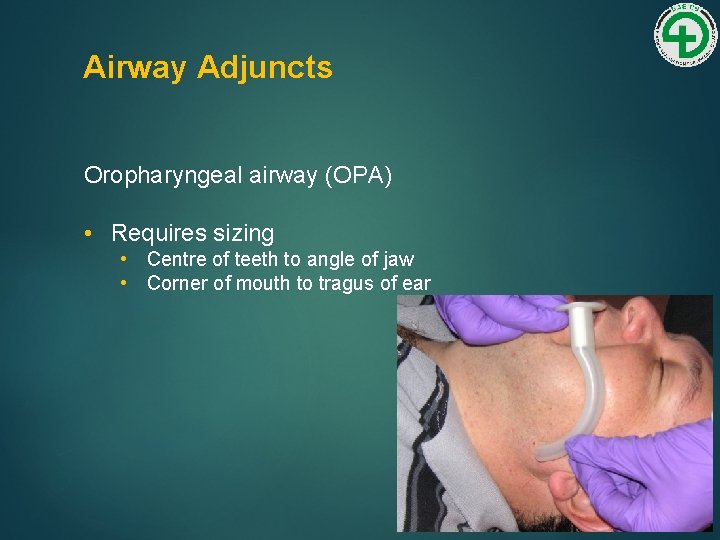
Airway Adjuncts Oropharyngeal airway (OPA) • Requires sizing • Centre of teeth to angle of jaw • Corner of mouth to tragus of ear
Problems of airway adjuncts • Laryngeal spasm • Local trauma • Raised intracranial pressure • Vomiting
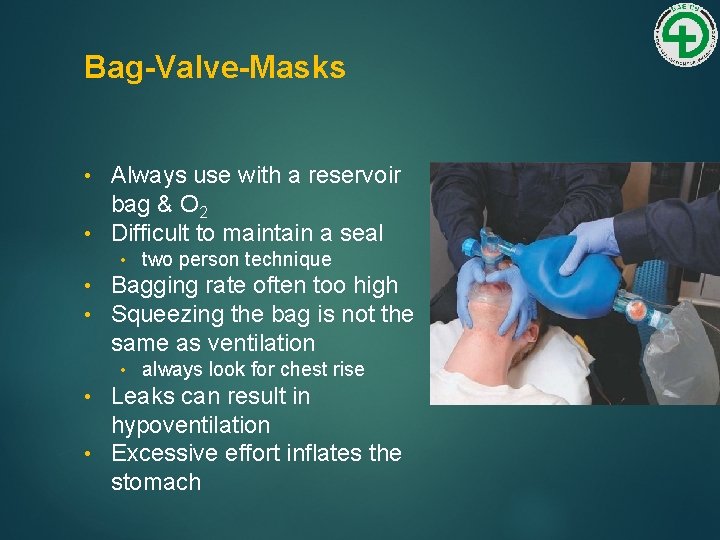
Bag-Valve-Masks Always use with a reservoir bag & O 2 • Difficult to maintain a seal • • two person technique Bagging rate often too high Squeezing the bag is not the same as ventilation • always look for chest rise Leaks can result in hypoventilation • Excessive effort inflates the stomach •
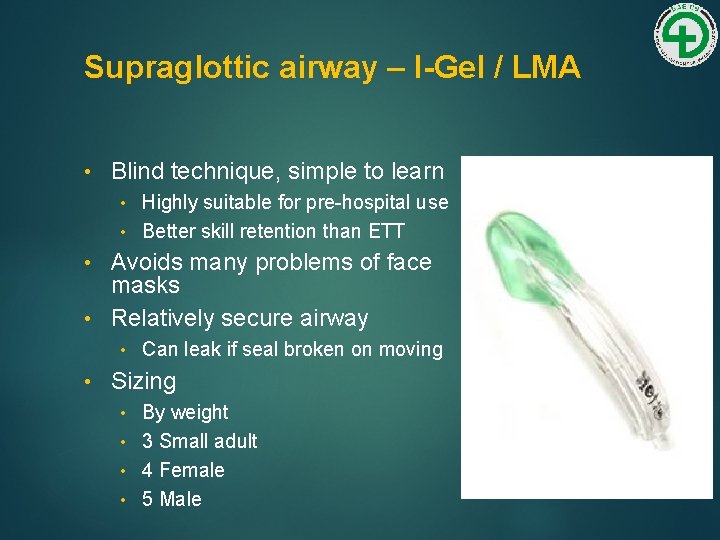
Supraglottic airway – I-Gel / LMA • Blind technique, simple to learn Highly suitable for pre-hospital use • Better skill retention than ETT • Avoids many problems of face masks • Relatively secure airway • • • Can leak if seal broken on moving Sizing By weight • 3 Small adult • 4 Female • 5 Male •
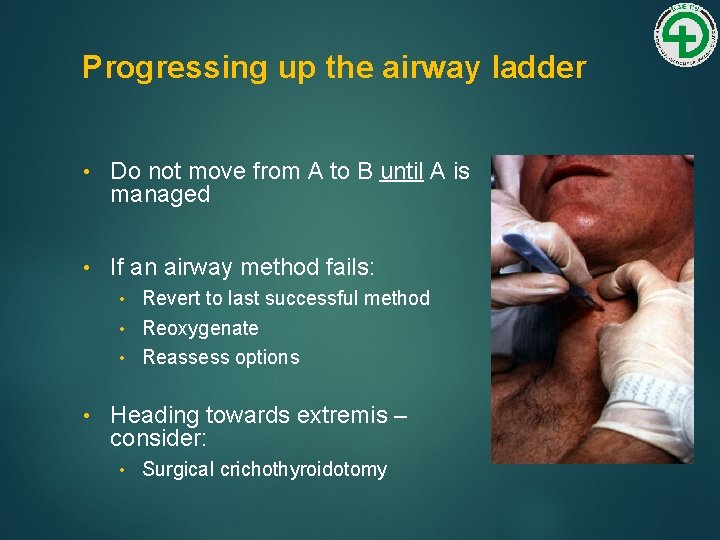
Progressing up the airway ladder • Do not move from A to B until A is managed • If an airway method fails: Revert to last successful method • Reoxygenate • Reassess options • • Heading towards extremis – consider: • Surgical crichothyroidotomy
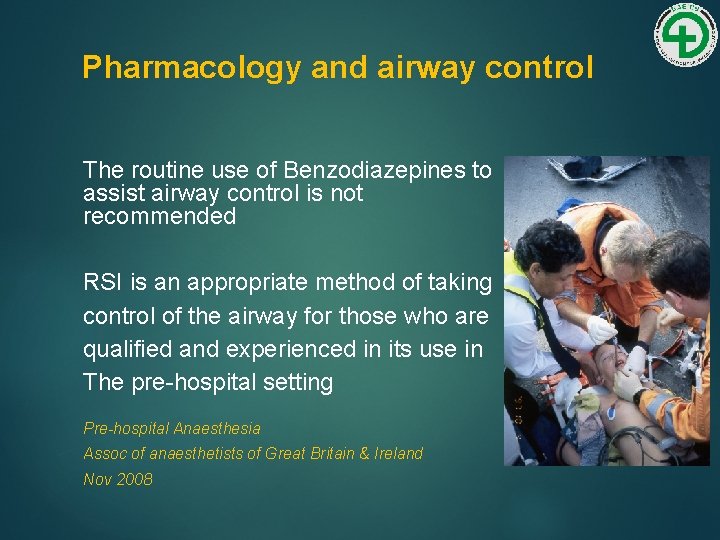
Pharmacology and airway control The routine use of Benzodiazepines to assist airway control is not recommended RSI is an appropriate method of taking control of the airway for those who are qualified and experienced in its use in The pre-hospital setting Pre-hospital Anaesthesia Assoc of anaesthetists of Great Britain & Ireland Nov 2008
Airway management Questions?
SUMMARY • Hypoxia kills • A always comes before B • Intervene with appropriate adjuncts • Use an airway ladder approach • Stay within your competence & experience
Carnival UK Immediate Care Course