
Airfoil Design Bill Levine Define the Problem Brainstorm
Airfoil Design Bill Levine
Define the Problem
Brainstorm
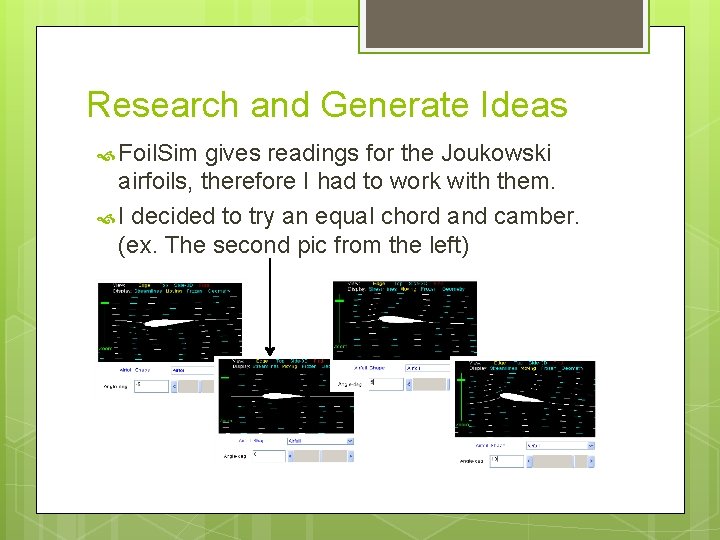
Research and Generate Ideas Foil. Sim gives readings for the Joukowski airfoils, therefore I had to work with them. I decided to try an equal chord and camber. (ex. The second pic from the left)
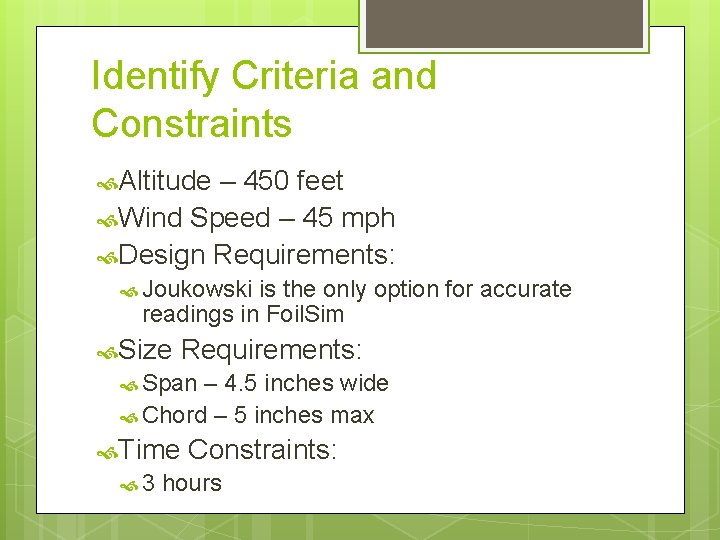
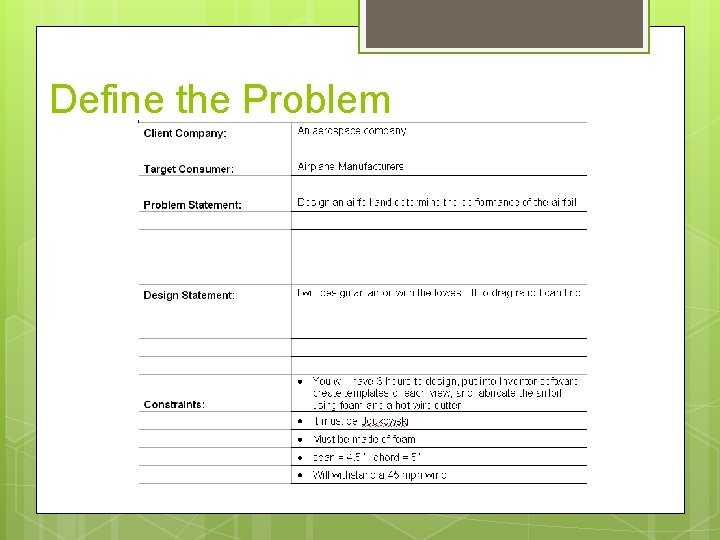
Identify Criteria and Constraints Altitude – 450 feet Wind Speed – 45 mph Design Requirements: Joukowski is the only option for accurate readings in Foil. Sim Size Requirements: Span – 4. 5 inches wide Chord – 5 inches max Time 3 Constraints: hours
Explore Possibilities After applying Constraints and Criteria to our brainstorming sketches, we decided that there are 3 different possibilities all of which meet the constraints and criteria.

Select an Approach
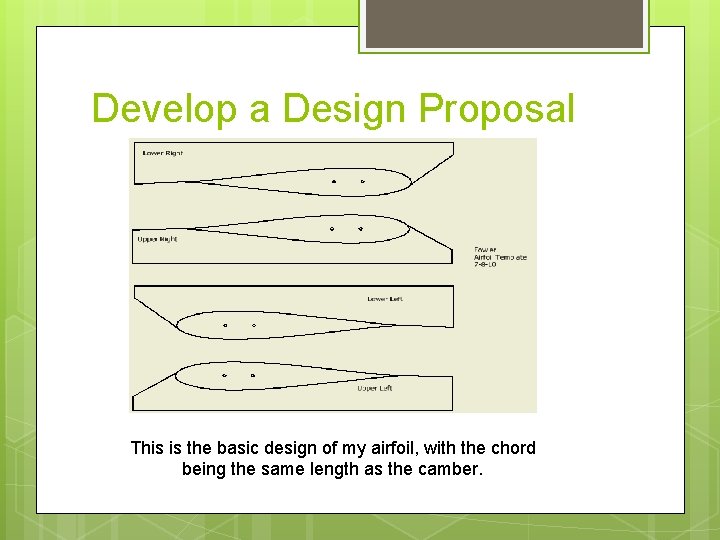
Develop a Design Proposal This is the basic design of my airfoil, with the chord being the same length as the camber.
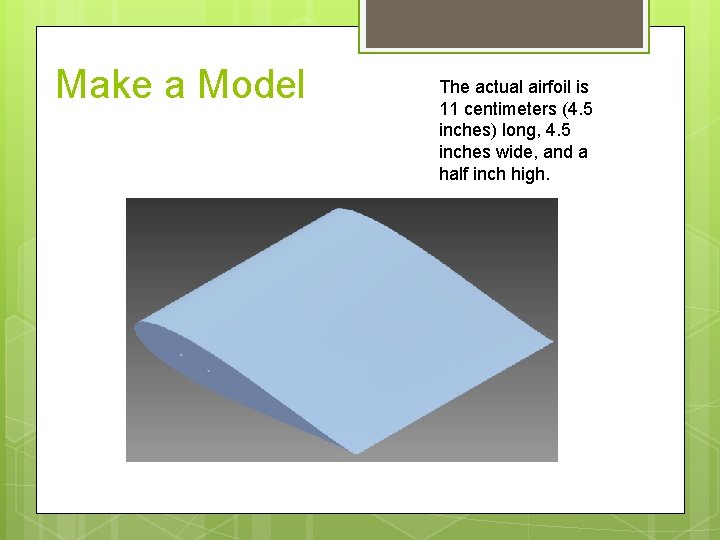
Make a Model The actual airfoil is 11 centimeters (4. 5 inches) long, 4. 5 inches wide, and a half inch high.
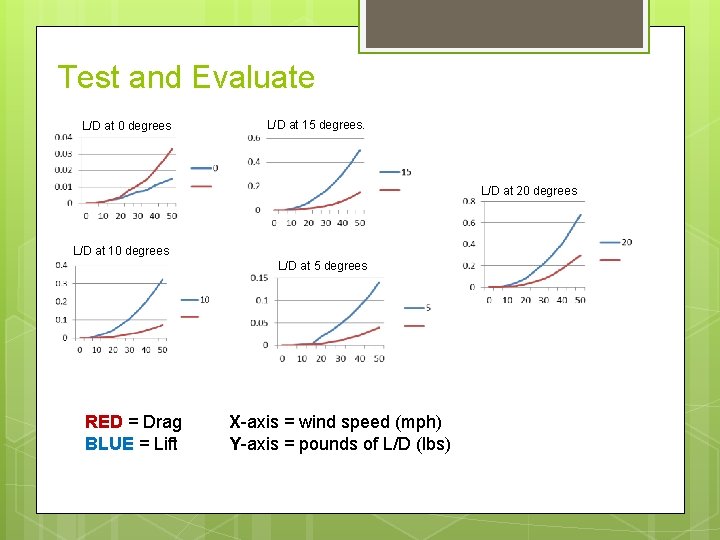
Test and Evaluate L/D at 0 degrees L/D at 15 degrees. L/D at 20 degrees L/D at 10 degrees L/D at 5 degrees RED = Drag BLUE = Lift X-axis = wind speed (mph) Y-axis = pounds of L/D (lbs)
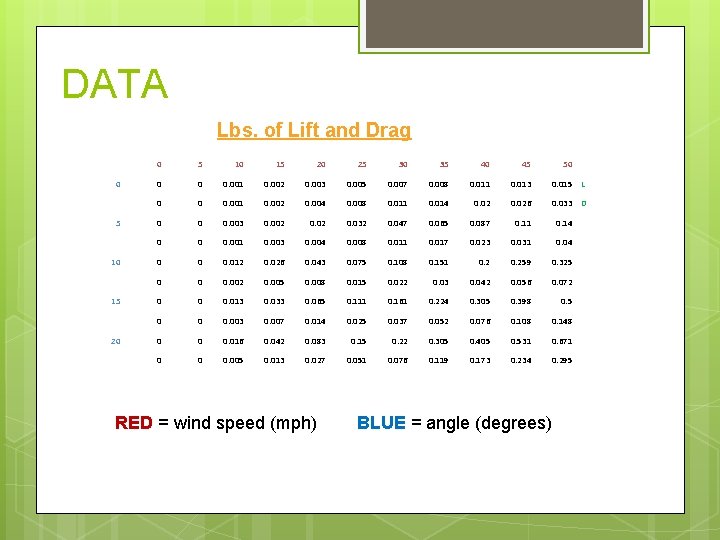
DATA Lbs. of Lift and Drag 0 5 10 15 20 25 30 35 40 45 50 0 0 0. 001 0. 002 0. 003 0. 005 0. 007 0. 008 0. 011 0. 013 0. 015 L 0 0 0. 001 0. 002 0. 004 0. 008 0. 011 0. 014 0. 026 0. 033 D 0 0 0. 003 0. 002 0. 032 0. 047 0. 065 0. 087 0. 11 0. 14 0 0 0. 001 0. 003 0. 004 0. 008 0. 011 0. 017 0. 023 0. 031 0. 04 0 0 0. 012 0. 026 0. 043 0. 075 0. 108 0. 151 0. 259 0. 325 0 0 0. 002 0. 005 0. 008 0. 015 0. 022 0. 03 0. 042 0. 056 0. 072 0 0 0. 013 0. 033 0. 065 0. 111 0. 161 0. 224 0. 305 0. 398 0. 5 0 0 0. 003 0. 007 0. 014 0. 025 0. 037 0. 052 0. 076 0. 108 0. 148 0 0 0. 016 0. 042 0. 083 0. 15 0. 22 0. 305 0. 405 0. 531 0. 671 0 0 0. 005 0. 013 0. 027 0. 051 0. 076 0. 119 0. 173 0. 234 0. 295 RED = wind speed (mph) BLUE = angle (degrees)
Conclusion At almost every angle (except for 0 degrees), lift was better than drag, and steadily increased with the angle. This corresponded with the Foil. Sim test results. I forgot about -5 degrees, therefore I didn’t record it. Considering the thickness was only a half inch, this was the deciding factor in the airfoil’s flight, and it worked. So, success! If I could, I would add a slight downward hook at the end, so it could have more lift at lower angles.
- Slides: 12