
Aircrew Systems PMA 202 Overview 24 July 2019
- Slides: 26
Aircrew Systems PMA 202 Overview 24 July 2019 Presented to: Aircrew Systems Industry Partners Presented by: Warfighter focused & Cost Conscious CAPT Tom Heck, PMA 202 NAVAIR Public Release 2016 -820 Distribution Statement A – “Approved for public release; distribution is unlimited”
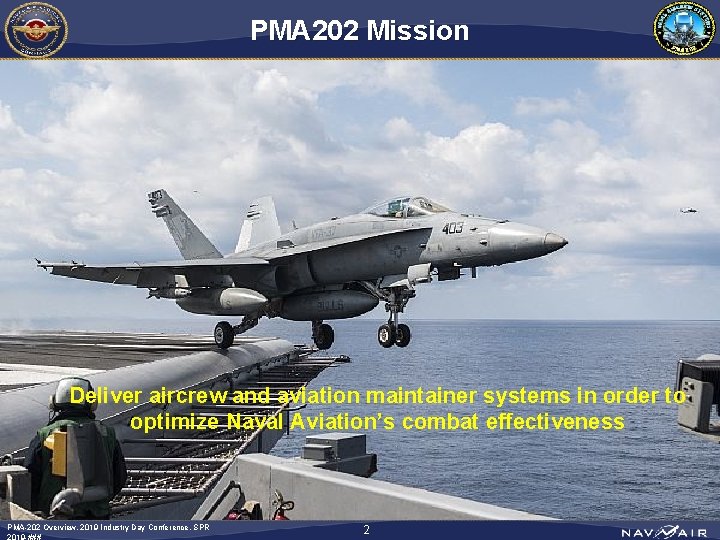
PMA 202 Mission Deliver aircrew and aviation maintainer systems in order to optimize Naval Aviation’s combat effectiveness PMA-202 Overview, 2019 Industry Day Conference, SPR 2019 -### 2
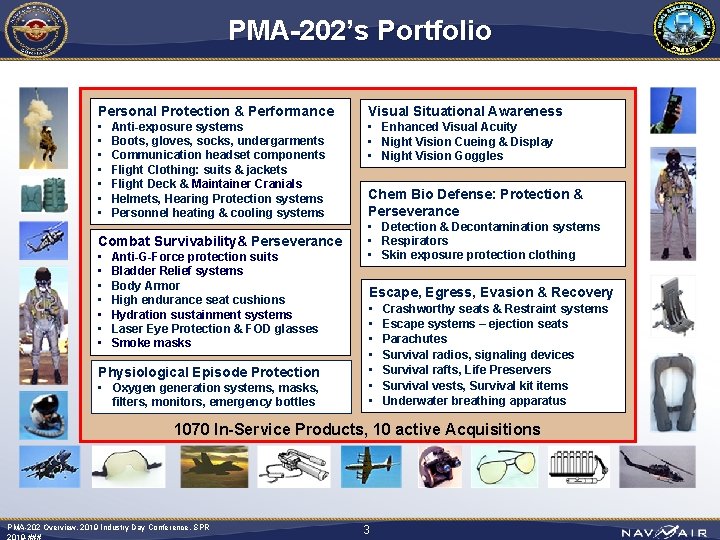
PMA-202’s Portfolio Personal Protection & Performance • • Anti-exposure systems Boots, gloves, socks, undergarments Communication headset components Flight Clothing: suits & jackets Flight Deck & Maintainer Cranials Helmets, Hearing Protection systems Personnel heating & cooling systems Combat Survivability& Perseverance • • Anti-G-Force protection suits Bladder Relief systems Body Armor High endurance seat cushions Hydration sustainment systems Laser Eye Protection & FOD glasses Smoke masks Physiological Episode Protection • Oxygen generation systems, masks, filters, monitors, emergency bottles Visual Situational Awareness • Enhanced Visual Acuity • Night Vision Cueing & Display • Night Vision Goggles Chem Bio Defense: Protection & Perseverance • Detection & Decontamination systems • Respirators • Skin exposure protection clothing Escape, Egress, Evasion & Recovery • • Crashworthy seats & Restraint systems Escape systems – ejection seats Parachutes Survival radios, signaling devices Survival rafts, Life Preservers Survival vests, Survival kit items Underwater breathing apparatus 1070 In-Service Products, 10 active Acquisitions PMA-202 Overview, 2019 Industry Day Conference, SPR 2019 -### 3
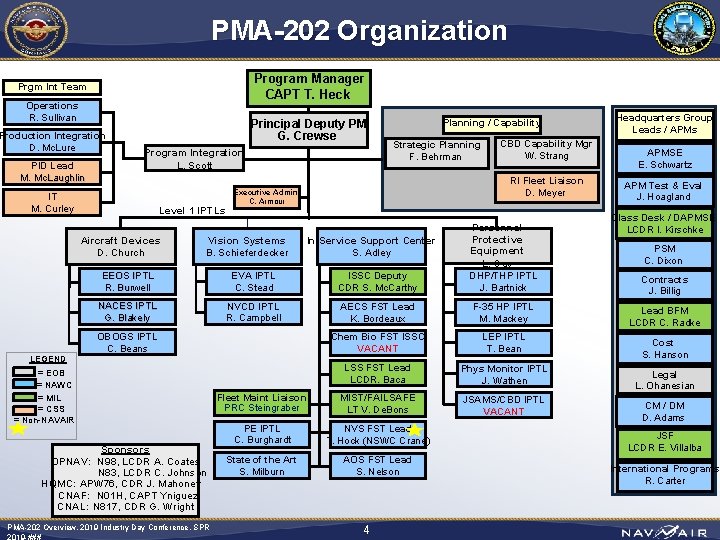
PMA-202 Organization Program Manager CAPT T. Heck Prgm Int Team Operations R. Sullivan Production Integration D. Mc. Lure PID Lead M. Mc. Laughlin Principal Deputy PM G. Crewse Program Integration L. Scott IT M. Curley Level 1 IPTLs Planning / Capability Strategic Planning F. Behrman CBD Capability Mgr W. Strang RI Fleet Liaison D. Meyer Executive Admin C. Armour EEOS IPTL R. Burwell EVA IPTL C. Stead ISSC Deputy CDR S. Mc. Carthy Personnel Protective Equipment L. Guy DHP/THP IPTL J. Bartnick NACES IPTL G. Blakely NVCD IPTL R. Campbell AECS FST Lead K. Bordeaux F-35 HP IPTL M. Mackey Chem Bio FST ISSC VACANT LEP IPTL T. Bean LSS FST Lead LCDR. Baca Phys Monitor IPTL J. Wathen Fleet Maint Liaison PRC Steingraber MIST/FAILSAFE LT V. De. Bons JSAMS/CBD IPTL VACANT PE IPTL C. Burghardt NVS FST Lead T. Hock (NSWC Crane) State of the Art S. Milburn AOS FST Lead S. Nelson Aircraft Devices D. Church Vision Systems B. Schieferdecker In-Service Support Center S. Adley OBOGS IPTL C. Beans LEGEND = EOB = NAWC = MIL = CSS = Non-NAVAIR Sponsors OPNAV: N 98, LCDR A. Coates N 83, LCDR C. Johnson HQMC: APW 76, CDR J. Mahoney CNAF: N 01 H, CAPT Yniguez CNAL: N 817, CDR G. Wright PMA-202 Overview, 2019 Industry Day Conference, SPR 2019 -### 4 Headquarters Group Leads / APMs APMSE E. Schwartz APM Test & Eval J. Hoagland Class Desk / DAPMSE LCDR I. Kirschke PSM C. Dixon Contracts J. Billig Lead BFM LCDR C. Radke Cost S. Hanson Legal L. Ohanesian CM / DM D. Adams JSF LCDR E. Villalba International Programs R. Carter
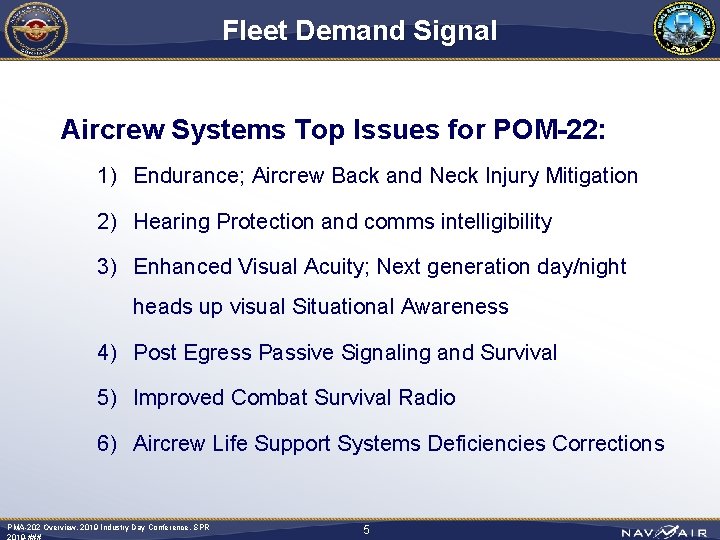
Fleet Demand Signal Aircrew Systems Top Issues for POM-22: 1) Endurance; Aircrew Back and Neck Injury Mitigation 2) Hearing Protection and comms intelligibility 3) Enhanced Visual Acuity; Next generation day/night heads up visual Situational Awareness 4) Post Egress Passive Signaling and Survival 5) Improved Combat Survival Radio 6) Aircrew Life Support Systems Deficiencies Corrections PMA-202 Overview, 2019 Industry Day Conference, SPR 2019 -### 5
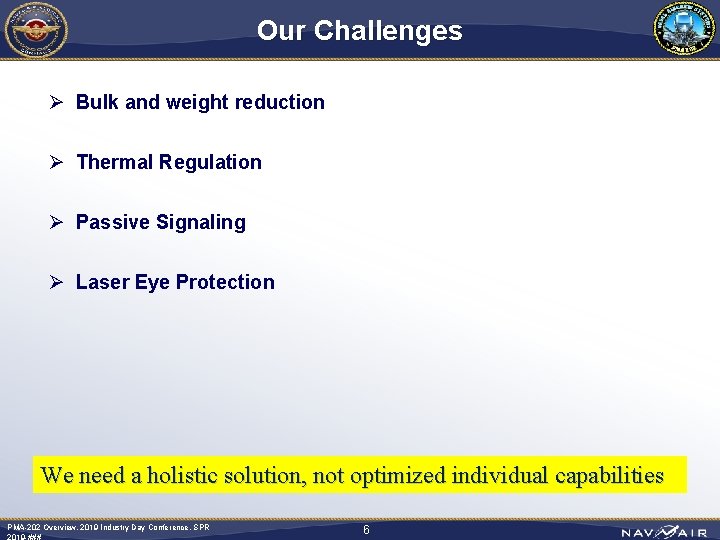
Our Challenges Ø Bulk and weight reduction Ø Thermal Regulation Ø Passive Signaling Ø Laser Eye Protection We need a holistic solution, not optimized individual capabilities PMA-202 Overview, 2019 Industry Day Conference, SPR 2019 -### 6
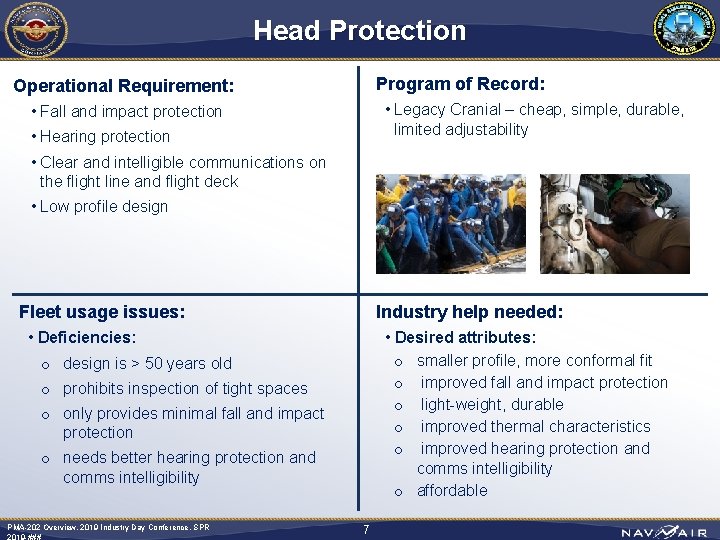
Head Protection Program of Record: Operational Requirement: • Legacy Cranial – cheap, simple, durable, limited adjustability • Fall and impact protection • Hearing protection • Clear and intelligible communications on the flight line and flight deck • Low profile design Industry help needed: Fleet usage issues: • Desired attributes: o smaller profile, more conformal fit o improved fall and impact protection o light-weight, durable o improved thermal characteristics o improved hearing protection and comms intelligibility o affordable • Deficiencies: o design is > 50 years old o prohibits inspection of tight spaces o only provides minimal fall and impact protection o needs better hearing protection and comms intelligibility PMA-202 Overview, 2019 Industry Day Conference, SPR 2019 -### 7
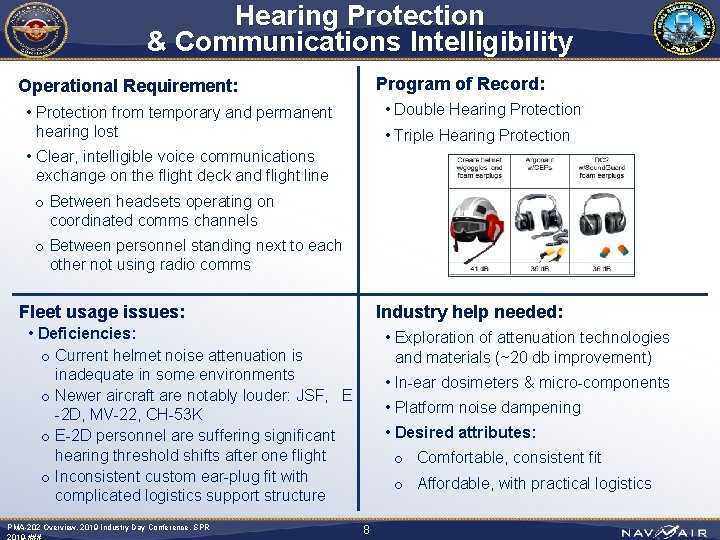
Hearing Protection & Communications Intelligibility Program of Record: Operational Requirement: • Double Hearing Protection • Protection from temporary and permanent hearing lost • Triple Hearing Protection • Clear, intelligible voice communications exchange on the flight deck and flight line o Between headsets operating on coordinated comms channels o Between personnel standing next to each other not using radio comms Fleet usage issues: Industry help needed: • Deficiencies: o Current helmet noise attenuation is inadequate in some environments o Newer aircraft are notably louder: JSF, E -2 D, MV-22, CH-53 K o E-2 D personnel are suffering significant hearing threshold shifts after one flight o Inconsistent custom ear-plug fit with complicated logistics support structure PMA-202 Overview, 2019 Industry Day Conference, SPR 2019 -### • Exploration of attenuation technologies and materials (~20 db improvement) • In-ear dosimeters & micro-components • Platform noise dampening • Desired attributes: o Comfortable, consistent fit o Affordable, with practical logistics 8
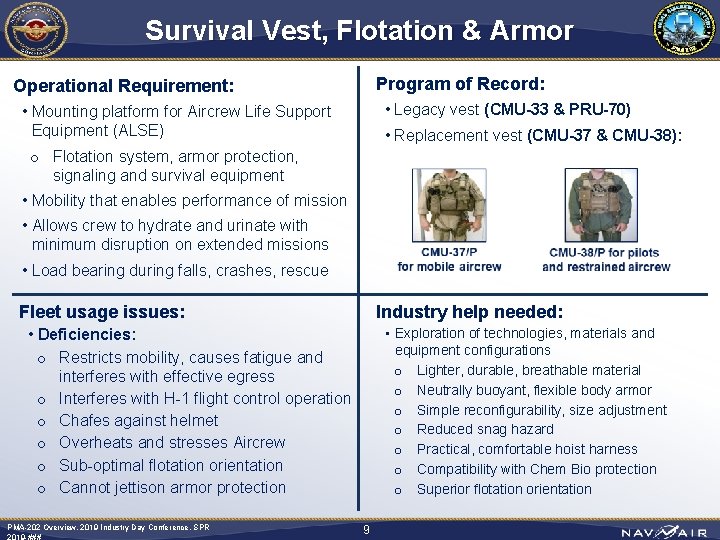
Survival Vest, Flotation & Armor Program of Record: Operational Requirement: • Legacy vest (CMU-33 & PRU-70) • Mounting platform for Aircrew Life Support Equipment (ALSE) • Replacement vest (CMU-37 & CMU-38): o Flotation system, armor protection, signaling and survival equipment • Mobility that enables performance of mission • Allows crew to hydrate and urinate with minimum disruption on extended missions • Load bearing during falls, crashes, rescue Fleet usage issues: Industry help needed: • Exploration of technologies, materials and equipment configurations o Lighter, durable, breathable material o Neutrally buoyant, flexible body armor o Simple reconfigurability, size adjustment o Reduced snag hazard o Practical, comfortable hoist harness o Compatibility with Chem Bio protection o Superior flotation orientation • Deficiencies: o Restricts mobility, causes fatigue and interferes with effective egress o Interferes with H-1 flight control operation o Chafes against helmet o Overheats and stresses Aircrew o Sub-optimal flotation orientation o Cannot jettison armor protection PMA-202 Overview, 2019 Industry Day Conference, SPR 2019 -### 9
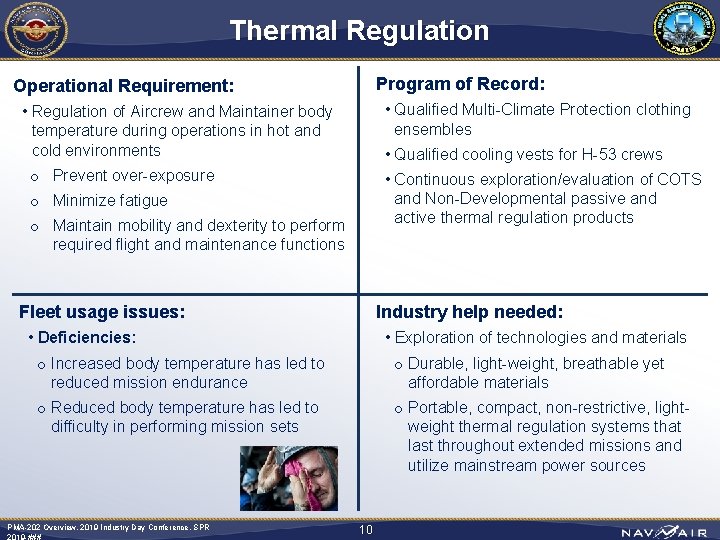
Thermal Regulation Program of Record: Operational Requirement: • Qualified Multi-Climate Protection clothing ensembles • Regulation of Aircrew and Maintainer body temperature during operations in hot and cold environments • Qualified cooling vests for H-53 crews o Prevent over-exposure • Continuous exploration/evaluation of COTS and Non-Developmental passive and active thermal regulation products o Minimize fatigue o Maintain mobility and dexterity to perform required flight and maintenance functions Fleet usage issues: Industry help needed: • Deficiencies: • Exploration of technologies and materials o Increased body temperature has led to reduced mission endurance o Durable, light-weight, breathable yet affordable materials o Reduced body temperature has led to difficulty in performing mission sets o Portable, compact, non-restrictive, lightweight thermal regulation systems that last throughout extended missions and utilize mainstream power sources PMA-202 Overview, 2019 Industry Day Conference, SPR 2019 -### 10
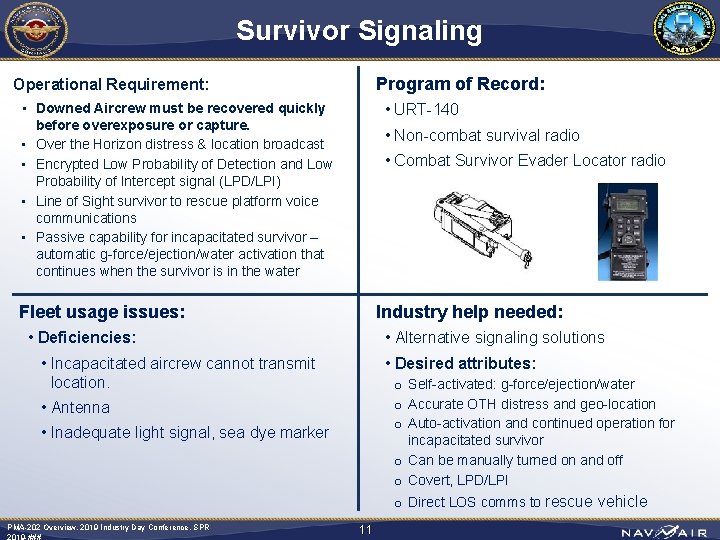
Survivor Signaling Program of Record: Operational Requirement: • Downed Aircrew must be recovered quickly before overexposure or capture. • Over the Horizon distress & location broadcast • Encrypted Low Probability of Detection and Low Probability of Intercept signal (LPD/LPI) • Line of Sight survivor to rescue platform voice communications • Passive capability for incapacitated survivor – automatic g-force/ejection/water activation that continues when the survivor is in the water • URT-140 • Non-combat survival radio • Combat Survivor Evader Locator radio Fleet usage issues: Industry help needed: • Deficiencies: • Alternative signaling solutions • Incapacitated aircrew cannot transmit location. • Desired attributes: o Self-activated: g-force/ejection/water o Accurate OTH distress and geo-location o Auto-activation and continued operation for incapacitated survivor o Can be manually turned on and off o Covert, LPD/LPI o Direct LOS comms to rescue vehicle • Antenna • Inadequate light signal, sea dye marker PMA-202 Overview, 2019 Industry Day Conference, SPR 2019 -### 11
Laser Eye Protection Operational Requirement: Program of Record: • Naval Aviation Aircrew must be able to continue operations in environments where both visible and invisible friendly and hostile lasers are employed • Started vendor competition. Currently in source selection. • Friendly sources include range-finders, targeting sensors, night vision environment illuminators • Inventory objective = 3500 units. • Solution expected to include goggles and step-in visors Fleet usage issues: Industry help needed: • Deficiencies: • Exploration of technologies and materials o Aircrew are at risk of eye damage from both friendly and enemy lasers operating in unprotected frequencies o Laser usage detection, characterization and event recording o Develop a system solution that can detect and instantly tune, filter or block damaging laser energy o Current systems have fit & transmittance issues that drive aircrew to decide not to wear them PMA-202 Overview, 2019 Industry Day Conference, SPR 2019 -### o System should integrate effectively with helmet and other Life Supt Equipment 12
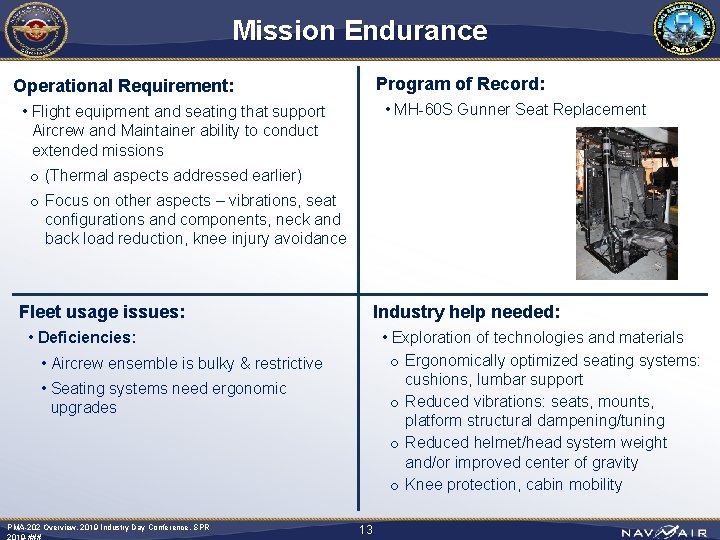
Mission Endurance Program of Record: Operational Requirement: • MH-60 S Gunner Seat Replacement • Flight equipment and seating that support Aircrew and Maintainer ability to conduct extended missions o (Thermal aspects addressed earlier) o Focus on other aspects – vibrations, seat configurations and components, neck and back load reduction, knee injury avoidance Fleet usage issues: Industry help needed: • Deficiencies: • Exploration of technologies and materials o Ergonomically optimized seating systems: cushions, lumbar support o Reduced vibrations: seats, mounts, platform structural dampening/tuning o Reduced helmet/head system weight and/or improved center of gravity o Knee protection, cabin mobility • Aircrew ensemble is bulky & restrictive • Seating systems need ergonomic upgrades PMA-202 Overview, 2019 Industry Day Conference, SPR 2019 -### 13
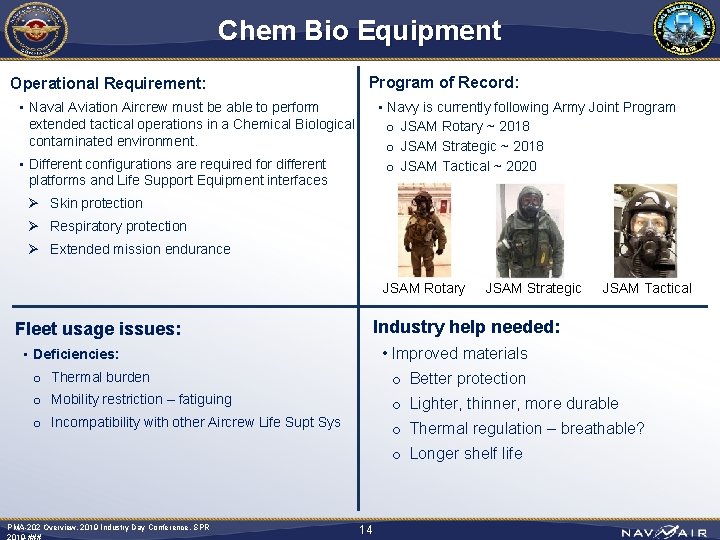
Chem Bio Equipment Operational Requirement: Program of Record: • Navy is currently following Army Joint Program o JSAM Rotary ~ 2018 o JSAM Strategic ~ 2018 o JSAM Tactical ~ 2020 • Naval Aviation Aircrew must be able to perform extended tactical operations in a Chemical Biological contaminated environment. • Different configurations are required for different platforms and Life Support Equipment interfaces Ø Skin protection Ø Respiratory protection Ø Extended mission endurance JSAM Rotary Fleet usage issues: JSAM Strategic JSAM Tactical Industry help needed: • Improved materials • Deficiencies: o Thermal burden o Better protection o Mobility restriction – fatiguing o Lighter, thinner, more durable o Incompatibility with other Aircrew Life Supt Sys o Thermal regulation – breathable? o Longer shelf life PMA-202 Overview, 2019 Industry Day Conference, SPR 2019 -### 14
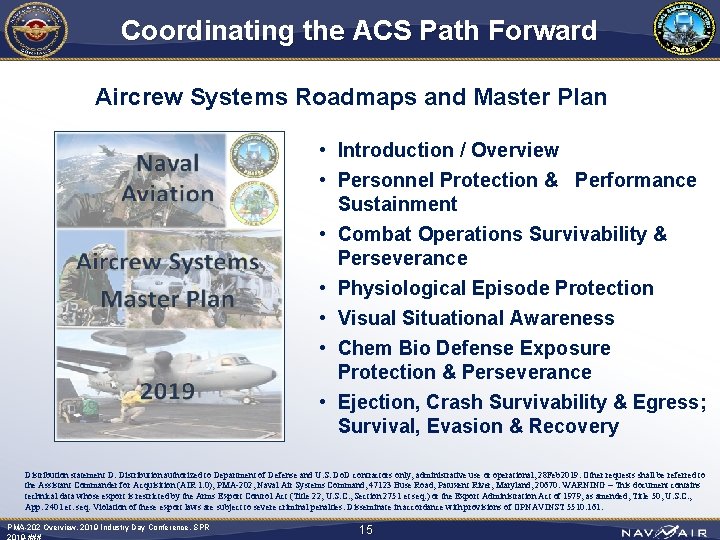
Coordinating the ACS Path Forward Aircrew Systems Roadmaps and Master Plan • Introduction / Overview • Personnel Protection & Performance Sustainment • Combat Operations Survivability & Perseverance • Physiological Episode Protection • Visual Situational Awareness • Chem Bio Defense Exposure Protection & Perseverance • Ejection, Crash Survivability & Egress; Survival, Evasion & Recovery Distribution statement D. Distribution authorized to Department of Defense and U. S. Do. D contractors only, administrative use or operational, 28 Feb 2019. Other requests shall be referred to the Assistant Commander for Acquisition (AIR 1. 0), PMA-202, Naval Air Systems Command, 47123 Buse Road, Patuxent River, Maryland, 20670. WARNING – This document contains technical data whose export is restricted by the Arms Export Control Act (Title 22, U. S. C. , Section 2751 et seq. ) or the Export Administration Act of 1979, as amended, Title 50, U. S. C. , App. 2401 et. seq. Violation of these export laws are subject to severe criminal penalties. Disseminate in accordance with provisions of OPNAVINST 5510. 161. PMA-202 Overview, 2019 Industry Day Conference, SPR 2019 -### 15
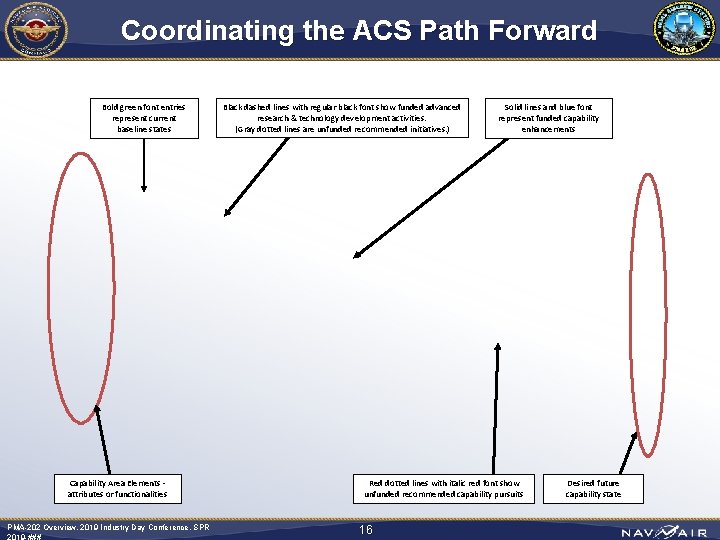
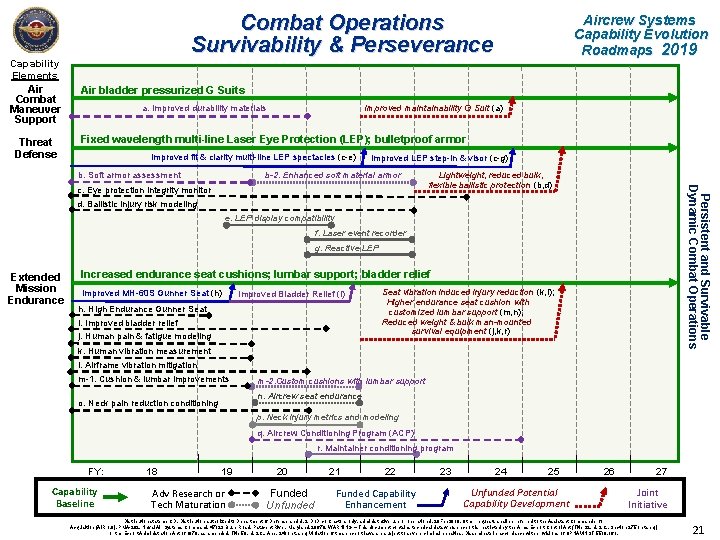
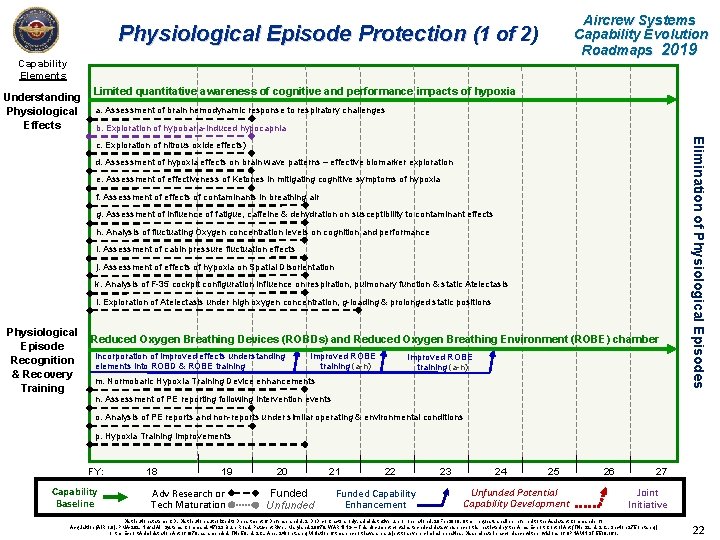
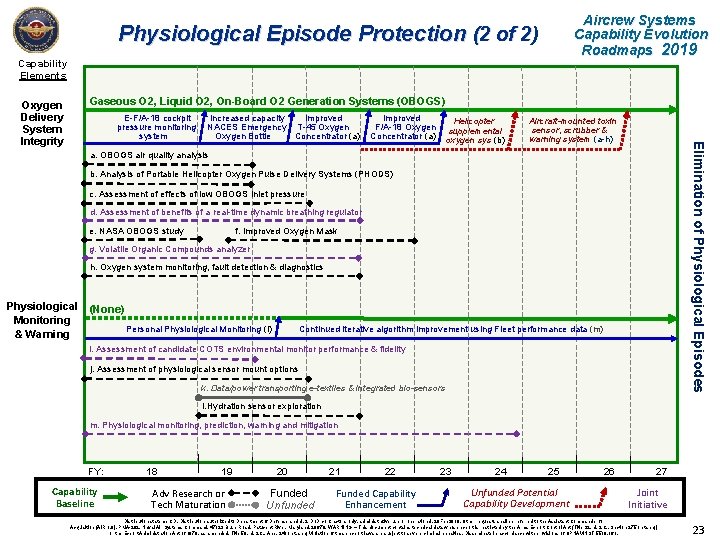
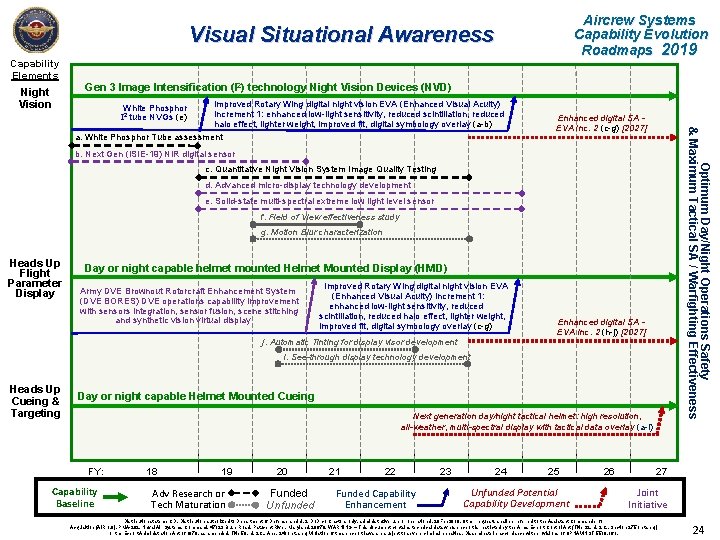
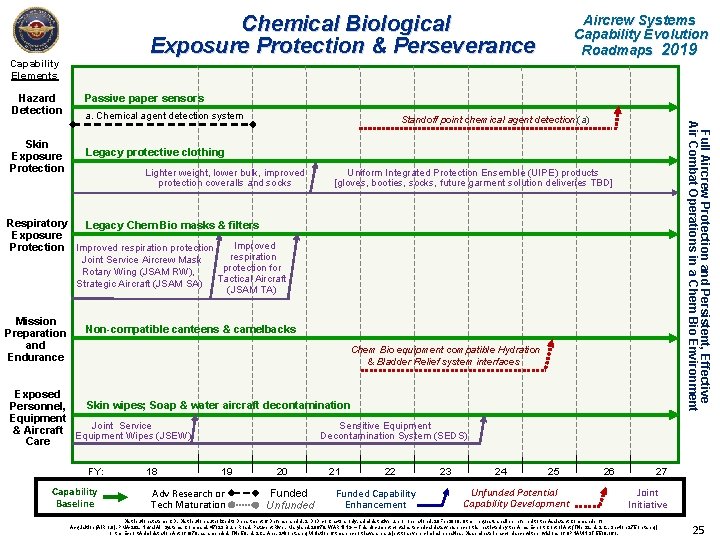
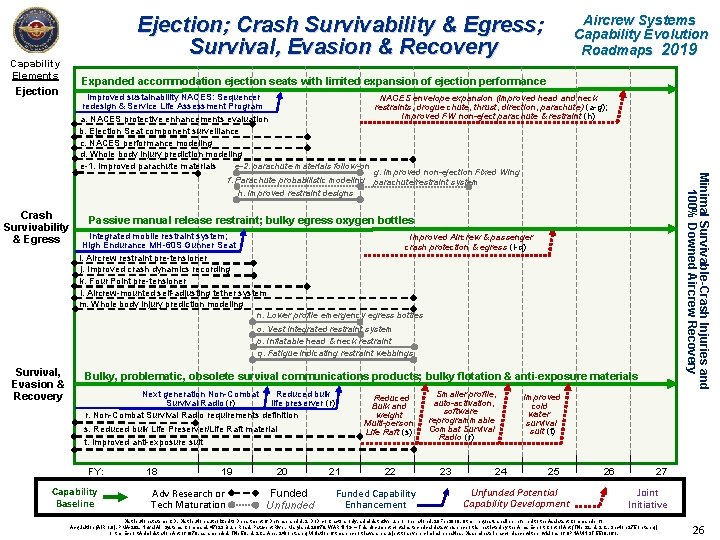
Coordinating the ACS Path Forward Bold green font entries represent current baseline states Capability Area Elements attributes or functionalities PMA-202 Overview, 2019 Industry Day Conference, SPR 2019 -### Black dashed lines with regular black font show funded advanced research & technology development activities. (Gray dotted lines are unfunded recommended initiatives. ) Solid lines and blue font represent funded capability enhancements Red dotted lines with italic red font show unfunded recommended capability pursuits 16 Desired future capability state
Industry Partner Take-aways Ø What challenges does PMA 202 face? Ø What solutions could I and my company offer to help and how do they fit into the “system”? Ø What issues have the best chance of being put forth to the resource sponsor? Ø Which of those issues have the best chance of getting funded? Ø Where do I focus my efforts to improve the mission effectiveness of Naval Aviators / Aviation Maintainers and help my company grow? Ø Side bars are encouraged – now is the time to get input and feedback PMA-202 Overview, 2019 Industry Day Conference, SPR 2019 -### 17
PMA 202 POCs • Program Manager – (301) 866 -5420 • Principal Deputy Program Manager – (301) 866 -2437 • Aircraft Devices – (301) 866 -4434 • Vision Systems – (301) 866 -5424 • In-Service Support Center – (301) 866 -2424 • Personnel Protective Equipment – (301) 866 -2443 • Strategic Planning – (301) 866 -4409 • Military Class Desk/Fleet Liaison – (301) 866 -4423 PMA-202 Overview, 2019 Industry Day Conference, SPR 2019 -### 18
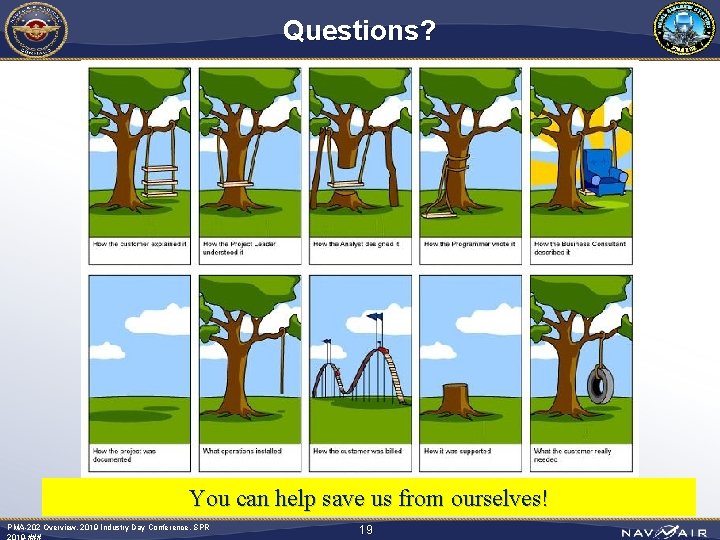
Questions? You can help save us from ourselves! PMA-202 Overview, 2019 Industry Day Conference, SPR 2019 -### 19
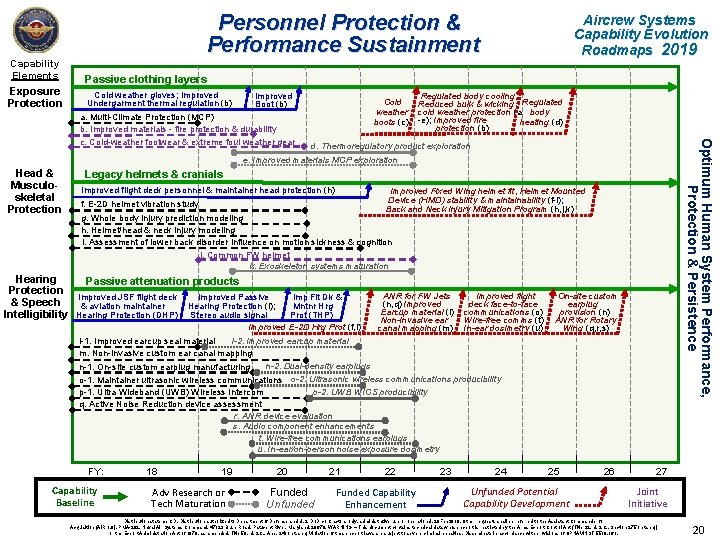
Personnel Protection & Performance Sustainment Capability Elements Passive clothing layers Exposure Protection Cold weather gloves; Improved Undergarment thermal regulation (b) Improved Boot (b) Regulated body cooling; Reduced bulk & wicking Regulated cold weather protection (a body -e); Improved fire heating (d) protection (b) Optimum Human System Performance, Protection & Persistence a. Multi-Climate Protection (MCP) b. Improved materials - fire protection & durability c. Cold-weather footwear & extreme foul weather gear Cold weather boots (c) Aircrew Systems Capability Evolution Roadmaps 2019 d. Thermoregulatory product exploration e. Improved materials MCP exploration Head & Musculoskeletal Protection Legacy helmets & cranials Improved flight deck personnel & maintainer head protection (h) Improved Fixed Wing helmet fit, Helmet Mounted Device (HMD) stability & maintainability (f-i); Back and Neck Injury Mitigation Program (h, j, k) f. E-2 D helmet vibration study g. Whole body injury prediction modeling h. Helmet/head & neck injury modeling i. Assessment of lower back disorder influence on motion sickness & cognition j. Common FW helmet k. Exoskeleton systems maturation Hearing Passive attenuation products Protection Improved Passive Improved JSF flight deck & Speech Hearing Protection (i); & aviation maintainer Intelligibility Hearing Protection (DHP) Stereo audio signal ANR for FW Jets Improved flight Imp Flt Dk & (n, q) Improved deck face-to-face Mntnr Hrg Earcup material (l) communications (o) Prot (THP) Non-invasive ear Wire-free comms (t) Improved E-2 D Hrg Prot (f, l) canal mapping (m) In-ear dosimetry (u) l-2. Improved earcup material l-1. Improved earcup seal material m. Non-invasive custom ear canal mapping n-2. Dual-density earplugs n-1. On-site custom earplug manufacturing o-1. Maintainer ultrasonic wireless communications o-2. Ultrasonic wireless communications producibility p-1. Ultra Wideband (UWB) Wireless Intercom p-2. UWB WICS producibility q. Active Noise Reduction device assessment r. ANR device evaluation s. Audio component enhancements t. Wire-free communications earplugs u. In-ear/on-person noise exposure dosimetry FY: Capability Baseline 18 19 Adv Research or Tech Maturation 20 Funded Unfunded 21 22 Funded Capability Enhancement 23 24 On-site custom earplug provision (n) ANR for Rotary Wing (q, r, s) 25 Unfunded Potential Capability Development 26 27 Joint Initiative Distribution statement D. Distribution authorized to Department of Defense and U. S. Do. D contractors only, administrative use or operational, 28 Feb 2019. Other requests shall be referred to the Assistant Commander for Acquisition (AIR 1. 0), PMA-202, Naval Air Systems Command, 47123 Buse Road, Patuxent River, Maryland, 20670. WARNING – This document contains technical data whose export is restricted by the Arms Export Control Act (Title 22, U. S. C. , Section 2751 et seq. ) or the Export Administration Act of 1979, as amended, Title 50, U. S. C. , App. 2401 et. seq. Violation of these export laws are subject to severe criminal penalties. Disseminate in accordance with provisions of OPNAVINST 5510. 161. 20
Capability Elements Air Combat Maneuver Support Threat Defense Combat Operations Survivability & Perseverance Aircrew Systems Capability Evolution Roadmaps 2019 Air bladder pressurized G Suits a. Improved durability materials Improved maintainability G Suit (a) Fixed wavelength multi-line Laser Eye Protection (LEP); bulletproof armor Improved fit & clarity multi-line LEP spectacles (c-e) b. Soft armor assessment Improved LEP step-in & visor (c-g) b-2. Enhanced soft material armor Persistent and Survivable Dynamic Combat Operations c. Eye protection integrity monitor Lightweight, reduced bulk, flexible ballistic protection (b, d) d. Ballistic injury risk modeling e. LEP display compatibility f. Laser event recorder g. Reactive LEP Extended Mission Endurance Increased endurance seat cushions; lumbar support; bladder relief Improved MH-60 S Gunner Seat (h) Improved Bladder Relief (i) h. High Endurance Gunner Seat i. Improved bladder relief j. Human pain & fatigue modeling Seat vibration induced injury reduction (k, l); Higher endurance seat cushion with customized lumbar support (m, n); Reduced weight & bulk man-mounted survival equipment (j, k, r) k. Human vibration measurement l. Airframe vibration mitigation m-1. Cushion & lumbar improvements m-2. Custom cushions with lumbar support n. Aircrew seat endurance o. Neck pain reduction conditioning p. Neck injury metrics and modeling q. Aircrew Conditioning Program (ACP) r. Maintainer conditioning program FY: Capability Baseline 18 19 Adv Research or Tech Maturation 20 Funded Unfunded 21 22 Funded Capability Enhancement 23 24 25 Unfunded Potential Capability Development 26 27 Joint Initiative Distribution statement D. Distribution authorized to Department of Defense and U. S. Do. D contractors only, administrative use or operational, 28 Feb 2019. Other requests shall be referred to the Assistant Commander for Acquisition (AIR 1. 0), PMA-202, Naval Air Systems Command, 47123 Buse Road, Patuxent River, Maryland, 20670. WARNING – This document contains technical data whose export is restricted by the Arms Export Control Act (Title 22, U. S. C. , Section 2751 et seq. ) or the Export Administration Act of 1979, as amended, Title 50, U. S. C. , App. 2401 et. seq. Violation of these export laws are subject to severe criminal penalties. Disseminate in accordance with provisions of OPNAVINST 5510. 161. 21
Aircrew Systems Capability Evolution Roadmaps 2019 Physiological Episode Protection (1 of 2) Capability Elements Understanding Physiological Effects Limited quantitative awareness of cognitive and performance impacts of hypoxia a. Assessment of brain hemodynamic response to respiratory challenges b. Exploration of hypobaria-induced hypocapnia d. Assessment of hypoxia effects on brain wave patterns – effective biomarker exploration e. Assessment of effectiveness of Ketones in mitigating cognitive symptoms of hypoxia f. Assessment of effects of contaminants in breathing air g. Assessment of influence of fatigue, caffeine & dehydration on susceptibility to contaminant effects h. Analysis of fluctuating Oxygen concentration levels on cognition and performance i. Assessment of cabin pressure fluctuation effects j. Assessment of effects of hypoxia on Spatial Disorientation k. Analysis of F-35 cockpit configuration influence on respiration, pulmonary function & static Atelectasis l. Exploration of Atelectasis under high oxygen concentration, g-loading & prolonged static positions Physiological Episode Recognition & Recovery Training Reduced Oxygen Breathing Devices (ROBDs) and Reduced Oxygen Breathing Environment (ROBE) chamber Incorporation of improved effects understanding elements into ROBD & ROBE training Improved ROBE training (a-n) m. Normobaric Hypoxia Training Device enhancements Elimination of Physiological Episodes c. Exploration of nitrous oxide effects) n. Assessment of PE reporting following intervention events o. Analysis of PE reports and non-reports under similar operating & environmental conditions p. Hypoxia Training improvements FY: Capability Baseline 18 19 Adv Research or Tech Maturation 20 Funded Unfunded 21 22 Funded Capability Enhancement 23 24 25 Unfunded Potential Capability Development 26 27 Joint Initiative Distribution statement D. Distribution authorized to Department of Defense and U. S. Do. D contractors only, administrative use or operational, 28 Feb 2019. Other requests shall be referred to the Assistant Commander for Acquisition (AIR 1. 0), PMA-202, Naval Air Systems Command, 47123 Buse Road, Patuxent River, Maryland, 20670. WARNING – This document contains technical data whose export is restricted by the Arms Export Control Act (Title 22, U. S. C. , Section 2751 et seq. ) or the Export Administration Act of 1979, as amended, Title 50, U. S. C. , App. 2401 et. seq. Violation of these export laws are subject to severe criminal penalties. Disseminate in accordance with provisions of OPNAVINST 5510. 161. 22
Aircrew Systems Capability Evolution Roadmaps 2019 Physiological Episode Protection (2 of 2) Capability Elements Gaseous O 2, Liquid O 2, On-Board O 2 Generation Systems (OBOGS) E-F/A-18 cockpit pressure monitoring system Improved Increased capacity NACES Emergency T-45 Oxygen Concentrator (a) Oxygen Bottle Improved F/A-18 Oxygen Concentrator (a) Helicopter supplemental oxygen sys (b) Aircraft-mounted toxin sensor, scrubber & warning system (a-h) Elimination of Physiological Episodes Oxygen Delivery System Integrity a. OBOGS air quality analysis b. Analysis of Portable Helicopter Oxygen Pulse Delivery Systems (PHODS) c. Assessment of effects of low OBOGS inlet pressure d. Assessment of benefits of a real-time dynamic breathing regulator e. NASA OBOGS study f. Improved Oxygen Mask g. Volatile Organic Compounds analyzer h. Oxygen system monitoring, fault detection & diagnostics Physiological Monitoring & Warning (None) Personal Physiological Monitoring (i) Continued iterative algorithm improvement using Fleet performance data (m) i. Assessment of candidate COTS environmental monitor performance & fidelity j. Assessment of physiological sensor mount options k. Data/power transporting e-textiles & integrated bio-sensors l. Hydration sensor exploration m. Physiological monitoring, prediction, warning and mitigation FY: Capability Baseline 18 19 Adv Research or Tech Maturation 20 Funded Unfunded 21 22 Funded Capability Enhancement 23 24 25 Unfunded Potential Capability Development 26 27 Joint Initiative Distribution statement D. Distribution authorized to Department of Defense and U. S. Do. D contractors only, administrative use or operational, 28 Feb 2019. Other requests shall be referred to the Assistant Commander for Acquisition (AIR 1. 0), PMA-202, Naval Air Systems Command, 47123 Buse Road, Patuxent River, Maryland, 20670. WARNING – This document contains technical data whose export is restricted by the Arms Export Control Act (Title 22, U. S. C. , Section 2751 et seq. ) or the Export Administration Act of 1979, as amended, Title 50, U. S. C. , App. 2401 et. seq. Violation of these export laws are subject to severe criminal penalties. Disseminate in accordance with provisions of OPNAVINST 5510. 161. 23
Aircrew Systems Capability Evolution Roadmaps 2019 Visual Situational Awareness Capability Elements Night Vision Gen 3 Image Intensification (I 2) technology Night Vision Devices (NVD) Enhanced digital SA EVA Inc. 2 (c-g) [2027] Optimum Day/Night Operations Safety & Maximum Tactical SA / Warfighting Effectiveness Improved Rotary Wing digital night vision EVA (Enhanced Visual Acuity) Increment 1: enhanced low-light sensitivity, reduced scintillation, reduced halo effect, lighter weight, improved fit, digital symbology overlay (a-b) a. White Phosphor Tube assessment White Phosphor I 2 tube NVGs (e) b. Next Gen (ISIE-19) NIR digital sensor c. Quantitative Night Vision System Image Quality Testing d. Advanced micro-display technology development e. Solid-state multi-spectral extreme low light level sensor f. Field of View effectiveness study g. Motion Blur characterization Heads Up Flight Parameter Display Day or night capable helmet mounted Helmet Mounted Display (HMD) Army DVE Brownout Rotorcraft Enhancement System (DVE BORES) DVE operations capability improvement with sensors integration, sensor fusion, scene stitching and synthetic vision virtual display Improved Rotary Wing digital night vision EVA (Enhanced Visual Acuity) Increment 1: enhanced low-light sensitivity, reduced scintillation, reduced halo effect, lighter weight, improved fit, digital symbology overlay (c-g) Enhanced digital SA EVA Inc. 2 (h-j) [2027] j. Automatic Tinting for display visor development i. See-through display technology development Heads Up Cueing & Targeting Day or night capable Helmet Mounted Cueing Next generation day/night tactical helmet: high resolution, all-weather, multi-spectral display with tactical data overlay (a-l) FY: Capability Baseline 18 19 Adv Research or Tech Maturation 20 Funded Unfunded 21 22 Funded Capability Enhancement 23 24 25 Unfunded Potential Capability Development 26 27 Joint Initiative Distribution statement D. Distribution authorized to Department of Defense and U. S. Do. D contractors only, administrative use or operational, 28 Feb 2019. Other requests shall be referred to the Assistant Commander for Acquisition (AIR 1. 0), PMA-202, Naval Air Systems Command, 47123 Buse Road, Patuxent River, Maryland, 20670. WARNING – This document contains technical data whose export is restricted by the Arms Export Control Act (Title 22, U. S. C. , Section 2751 et seq. ) or the Export Administration Act of 1979, as amended, Title 50, U. S. C. , App. 2401 et. seq. Violation of these export laws are subject to severe criminal penalties. Disseminate in accordance with provisions of OPNAVINST 5510. 161. 24
Chemical Biological Exposure Protection & Perseverance Capability Elements Hazard Detection Passive paper sensors a. Chemical agent detection system Standoff point chemical agent detection (a) Full Aircrew Protection and Persistent, Effective Air Combat Operations in a Chem Bio Environment Skin Exposure Protection Aircrew Systems Capability Evolution Roadmaps 2019 Legacy protective clothing Lighter weight, lower bulk, improved protection coveralls and socks Uniform Integrated Protection Ensemble (UIPE) products [gloves, booties, socks, future garment solution deliveries TBD] Respiratory Legacy Chem Bio masks & filters Exposure Improved Protection Improved respiration protection Joint Service Aircrew Mask Rotary Wing (JSAM RW), Strategic Aircraft (JSAM SA) Mission Preparation and Endurance respiration protection for Tactical Aircraft (JSAM TA) Non-compatible canteens & camelbacks Chem Bio equipment compatible Hydration & Bladder Relief system interfaces Exposed Skin wipes; Soap & water aircraft decontamination Personnel, Equipment Joint Service Sensitive Equipment & Aircraft Equipment Wipes (JSEW) Decontamination System (SEDS) Care FY: Capability Baseline 18 19 Adv Research or Tech Maturation 20 Funded Unfunded 21 22 Funded Capability Enhancement 23 24 25 Unfunded Potential Capability Development 26 27 Joint Initiative Distribution statement D. Distribution authorized to Department of Defense and U. S. Do. D contractors only, administrative use or operational, 28 Feb 2019. Other requests shall be referred to the Assistant Commander for Acquisition (AIR 1. 0), PMA-202, Naval Air Systems Command, 47123 Buse Road, Patuxent River, Maryland, 20670. WARNING – This document contains technical data whose export is restricted by the Arms Export Control Act (Title 22, U. S. C. , Section 2751 et seq. ) or the Export Administration Act of 1979, as amended, Title 50, U. S. C. , App. 2401 et. seq. Violation of these export laws are subject to severe criminal penalties. Disseminate in accordance with provisions of OPNAVINST 5510. 161. 25
Capability Elements Ejection Aircrew Systems Capability Evolution Roadmaps 2019 Expanded accommodation ejection seats with limited expansion of ejection performance Improved sustainability NACES: Sequencer NACES envelope expansion (improved head and neck redesign & Service Life Assessment Program restraints, drogue chute, thrust, direction, parachute) (a-g); Improved FW non-eject parachute & restraint (h) a. NACES protective enhancements evaluation b. Ejection Seat component surveillance c. NACES performance modeling d. Whole body injury prediction modeling e-2. parachute materials follow-on e-1. Improved parachute materials g. Improved non-ejection Fixed Wing f. Parachute probabilistic modeling parachute/restraint system h. Improved restraint designs Minimal Survivable-Crash Injuries and 100% Downed Aircrew Recovery Crash Survivability & Egress Ejection; Crash Survivability & Egress; Survival, Evasion & Recovery Passive manual release restraint; bulky egress oxygen bottles Integrated mobile restraint system; Improved Aircrew & passenger High Endurance MH-60 S Gunner Seat crash protection & egress (i-q) i. Aircrew restraint pre-tensioner j. Improved crash dynamics recording k. Four Point pre-tensioner l. Aircrew-mounted self-adjusting tether system m. Whole body injury prediction modeling n. Lower profile emergency egress bottles o. Vest integrated restraint system p. Inflatable head & neck restraint q. Fatigue indicating restraint webbings Survival, Evasion & Recovery Bulky, problematic, obsolete survival communications products; bulky flotation & anti-exposure materials Next generation Non-Combat Reduced bulk Survival Radio (r) life preserver (r) r. Non-Combat Survival Radio requirements definition Reduced Bulk and weight Multi-person Life Raft (s) s. Reduced bulk Life Preserver/Life Raft material t. Improved anti-exposure suit FY: Capability Baseline 18 19 Adv Research or Tech Maturation 20 Funded Unfunded 21 22 Funded Capability Enhancement Smaller profile, auto-activation, software reprogrammable Combat Survival Radio (r) 23 24 Improved cold water survival suit (t) 25 Unfunded Potential Capability Development 26 27 Joint Initiative Distribution statement D. Distribution authorized to Department of Defense and U. S. Do. D contractors only, administrative use or operational, 28 Feb 2019. Other requests shall be referred to the Assistant Commander for Acquisition (AIR 1. 0), PMA-202, Naval Air Systems Command, 47123 Buse Road, Patuxent River, Maryland, 20670. WARNING – This document contains technical data whose export is restricted by the Arms Export Control Act (Title 22, U. S. C. , Section 2751 et seq. ) or the Export Administration Act of 1979, as amended, Title 50, U. S. C. , App. 2401 et. seq. Violation of these export laws are subject to severe criminal penalties. Disseminate in accordance with provisions of OPNAVINST 5510. 161. 26