
Aircraft Recognition Introduction Lecture 1 Objectives By the
Aircraft Recognition Introduction Lecture 1
Objectives By the end of this session, you will be able to: • Describe the WETFUS identification system • Name the various common parts of different aircraft
The Systematic Approach to Aircraft Identification • When examining an aircraft for the purposes of determining its make, model and role, it is necessary to look at the various aspects of the aircraft’s size, shape and features • This is done using the WETFUS system
WETFUS • Wings • Engine • Tailplane • Fuselage • Undercarriage • Special Features
Features that need to be examined so as to determine the type of aircraft: • Shape and size of the WINGS • Position and number of ENGINES • Shape and size of the TAILPLANE and RUDDER • Shape and size of the FUSELAGE • Type and Style of the UNDERCARRIAGE eg fixed, retractable, tricycle or taildragger • Shape and size of the FIN and TAILPLANE • Position of WINGS and TAILPLANE in relation to the FUSELAGE • Type of ENGINE(S) eg jet, turbo prop • Position, size and shape of such additional parts such as DORSAL and VENTRAL FINS, WING FENCES etc • Position, size and shape of such additional parts as BULGERS, PODS, BOOMS, ANTENNAE, and PROBES
• If all the factors in the previous list are taken into account then a positive identification of the aircraft is capable of being made • Concentrate on the Airframe, Wings and Engine areas of the aircraft • Some aircraft which have the same profile layout from underneath have different styles of cockpit layouts and different roles and uses
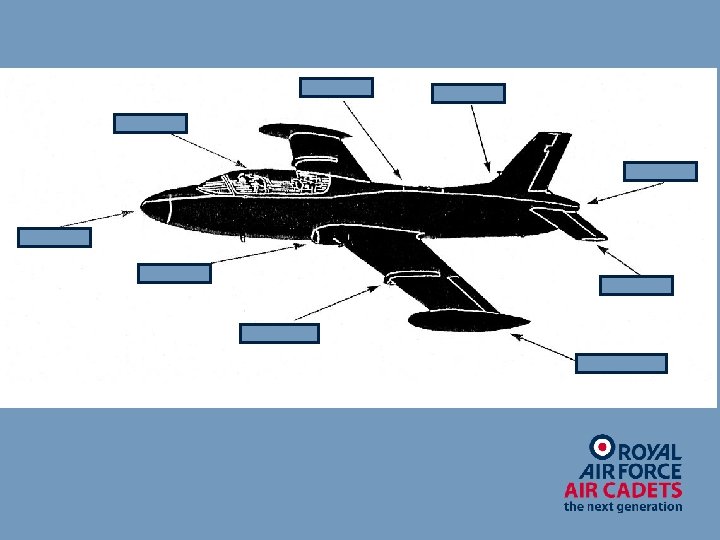
Recognition Features • Aircraft come in many types and sizes, from small single engine propeller driven light aircraft to large multi-engine transports and bombers • The following diagrams for propeller types and gas turbine types show the common names given to various parts, not just for those types but common to all aircraft

Propeller Driven Types
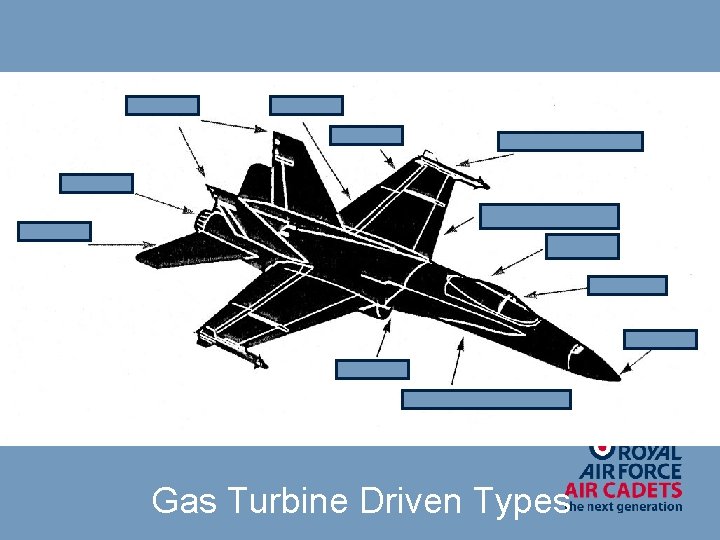
Gas Turbine Driven Types
Summary • In order to correctly identify an aircraft, it is necessary to look at the various aspects of the aircraft’s size, shape and features • This is done using the WETFUS system.
Looking Forward……. Next …. Wing Shapes

- Slides: 13