
Aircraft Engines Types and Placement Aerospace Engineering 2011
- Slides: 30
Aircraft Engines Types and Placement Aerospace Engineering © 2011 Project Lead The Way, Inc.
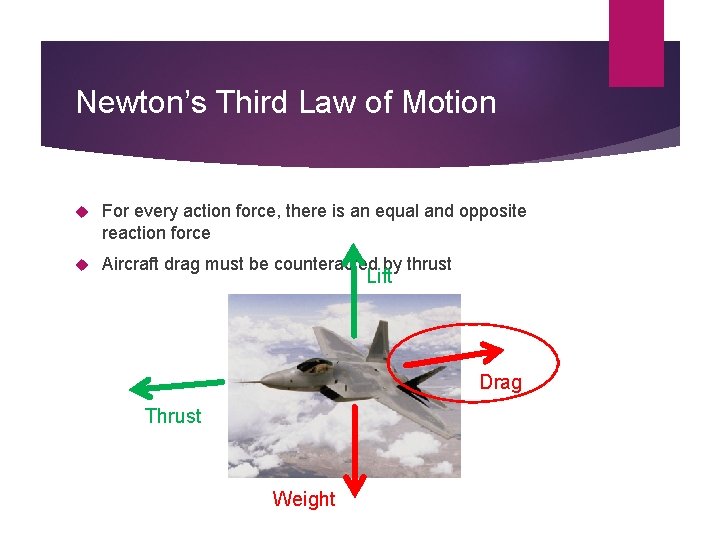
Newton’s Third Law of Motion For every action force, there is an equal and opposite reaction force Aircraft drag must be counteracted by thrust Lift Drag Thrust Weight
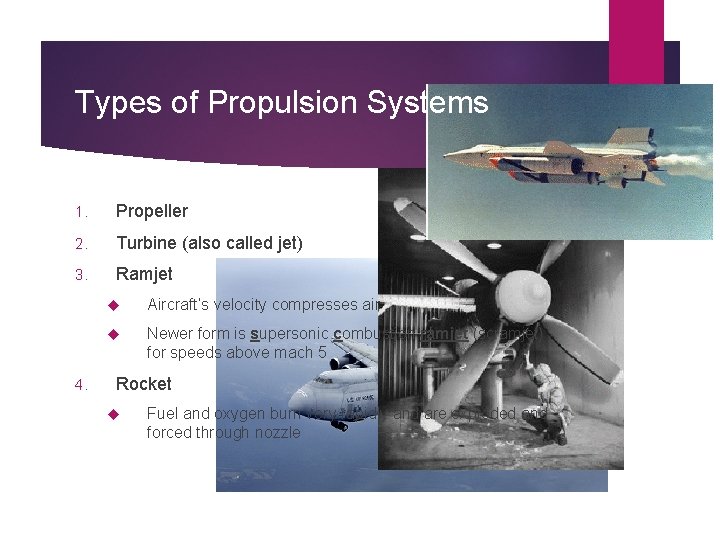
Types of Propulsion Systems 1. Propeller 2. Turbine (also called jet) 3. Ramjet 4. Aircraft’s velocity compresses air Newer form is supersonic combustion ramjet (scramjet) for speeds above mach 5 Rocket Fuel and oxygen burn very rapidly and are exploded and forced through nozzle
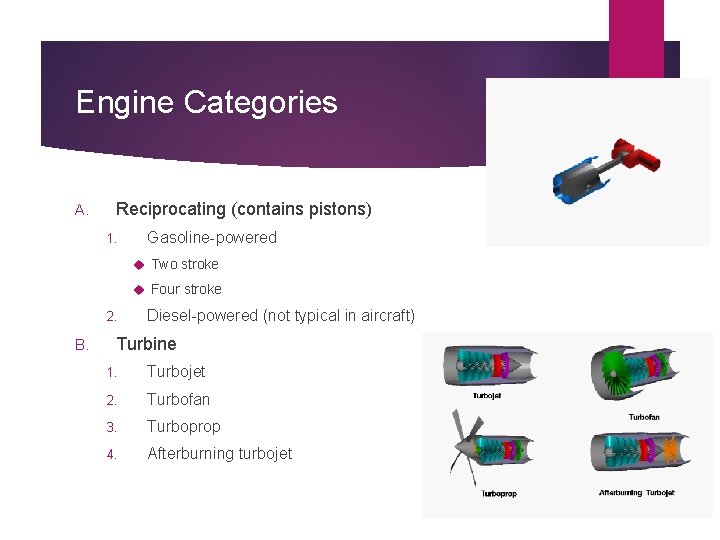
Engine Categories A. Reciprocating (contains pistons) 1. Gasoline-powered Two stroke Four stroke 2. B. Diesel-powered (not typical in aircraft) Turbine 1. Turbojet 2. Turbofan 3. Turboprop 4. Afterburning turbojet
Engine Operations All engines must perform four basic operations. Intake: Fuel and air must be brought into the engine Compression: Fuel-air mixture must be compressed Power: Fuel-air mixture must be ignited for the gases to provide engine power Exhaust: Gases must be cleared for the next cycle
Two Stroke Engine Four operations occur in one revolution Typically powers smaller engines Examples include ultralight aircraft, dirt bikes, lawn mowers, and generators Compared to four stroke engines Typically more powerful Higher fuel consumption More noise
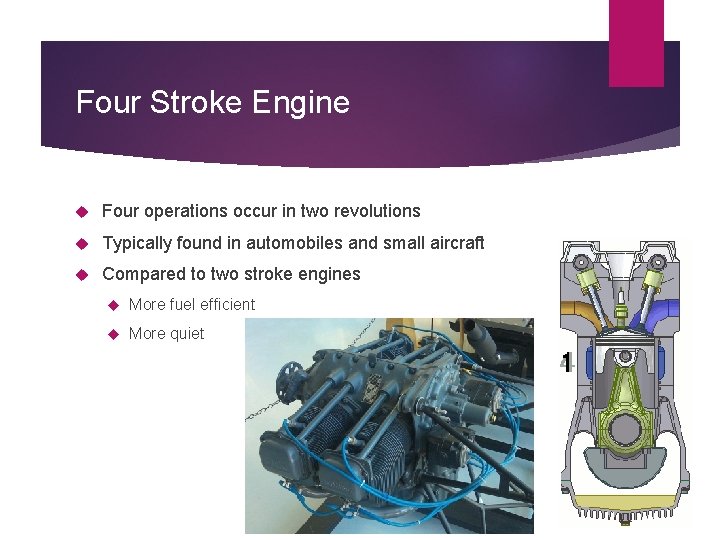
Four Stroke Engine Four operations occur in two revolutions Typically found in automobiles and small aircraft Compared to two stroke engines More fuel efficient More quiet
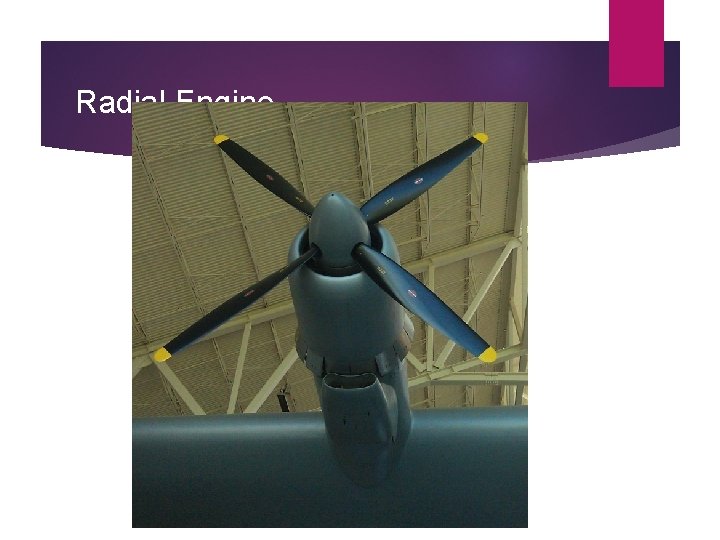
Radial Engine
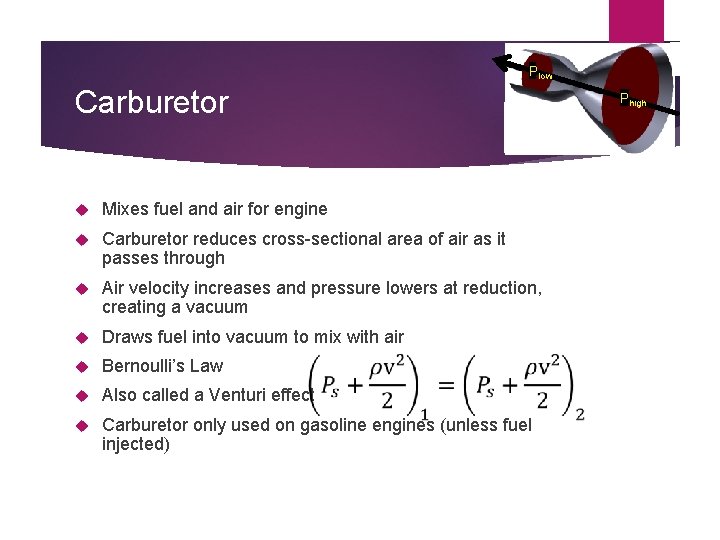
Plow Carburetor Mixes fuel and air for engine Carburetor reduces cross-sectional area of air as it passes through Air velocity increases and pressure lowers at reduction, creating a vacuum Draws fuel into vacuum to mix with air Bernoulli’s Law Also called a Venturi effect Carburetor only used on gasoline engines (unless fuel injected) Phigh
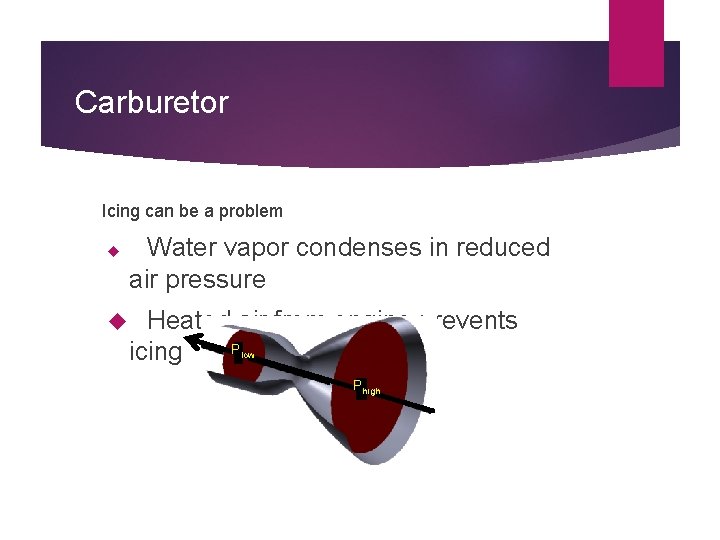
Carburetor Icing can be a problem Water vapor condenses in reduced air pressure Heated air from engine prevents P icing low Phigh
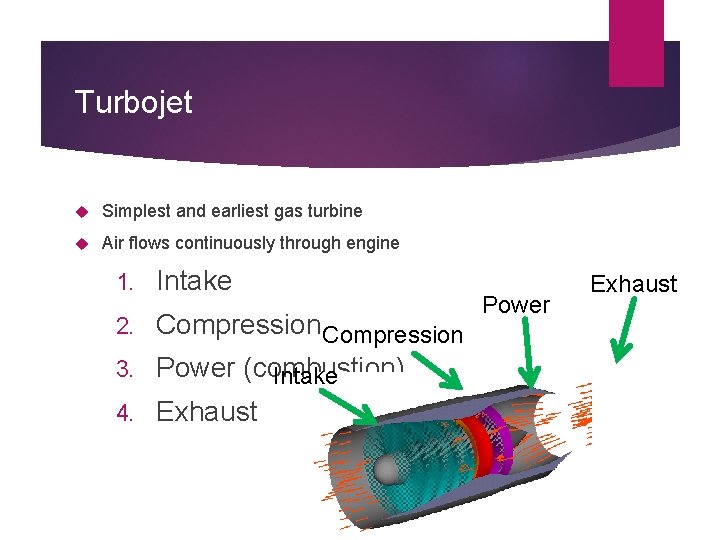
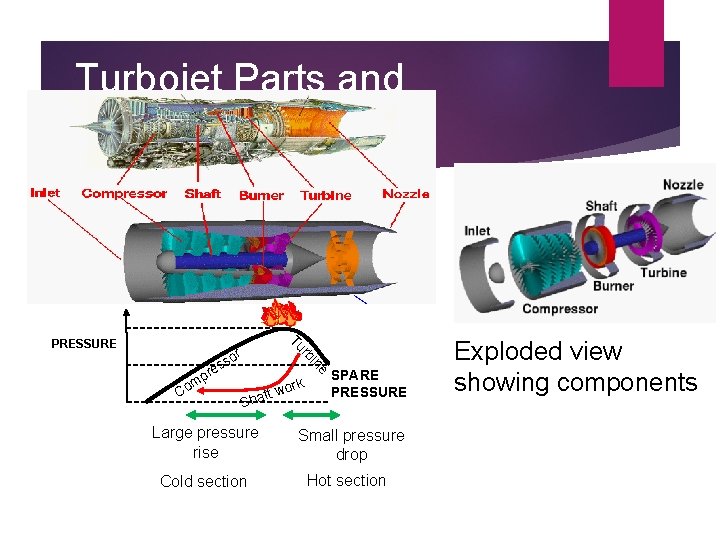
Turbojet Simplest and earliest gas turbine Air flows continuously through engine 1. Intake 2. Compression 3. Power (combustion) Intake 4. Exhaust Power Exhaust
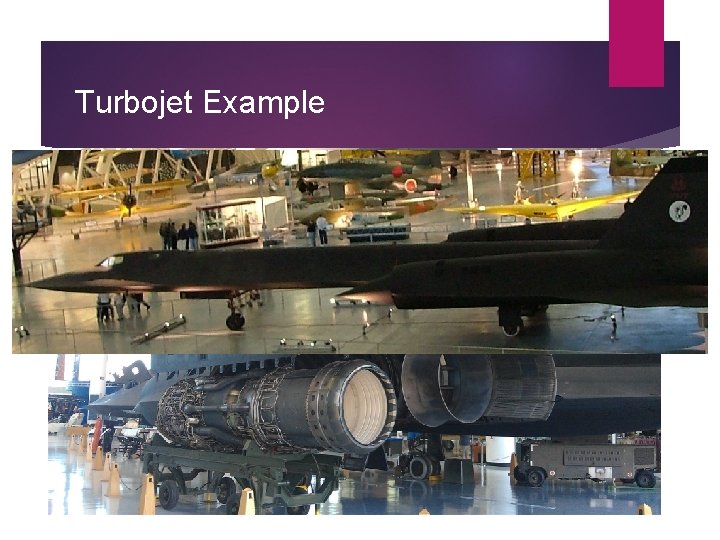
Turbojet Example SR-71 Engine
Turbojet Parts and Operation e in mp o C or rb s res Tu PRESSURE Sha f rk t wo SPARE PRESSURE Large pressure rise Small pressure drop Cold section Hot section Exploded view showing components
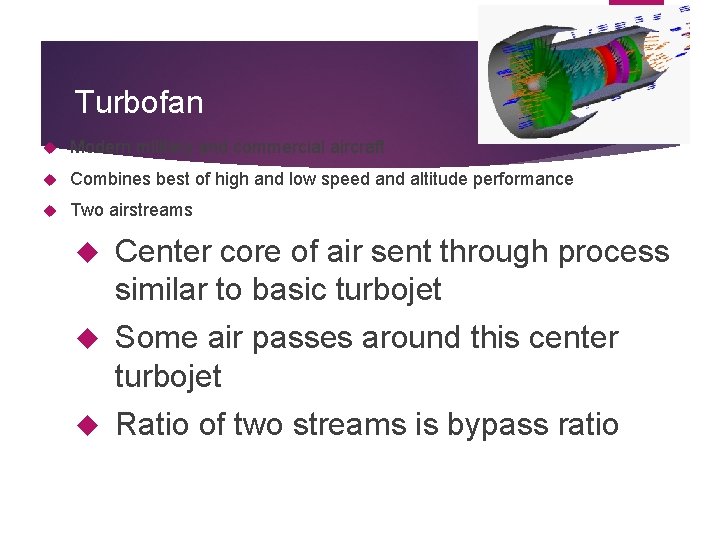
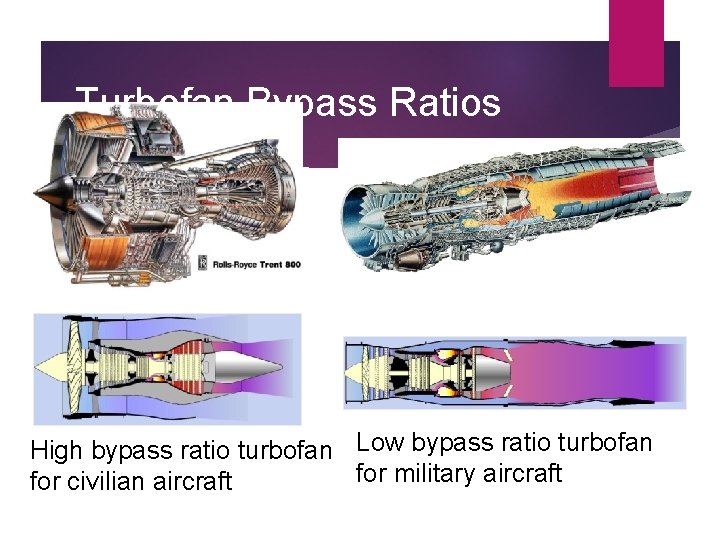
Turbofan Modern military and commercial aircraft Combines best of high and low speed and altitude performance Two airstreams Center core of air sent through process similar to basic turbojet Some air passes around this center turbojet Ratio of two streams is bypass ratio
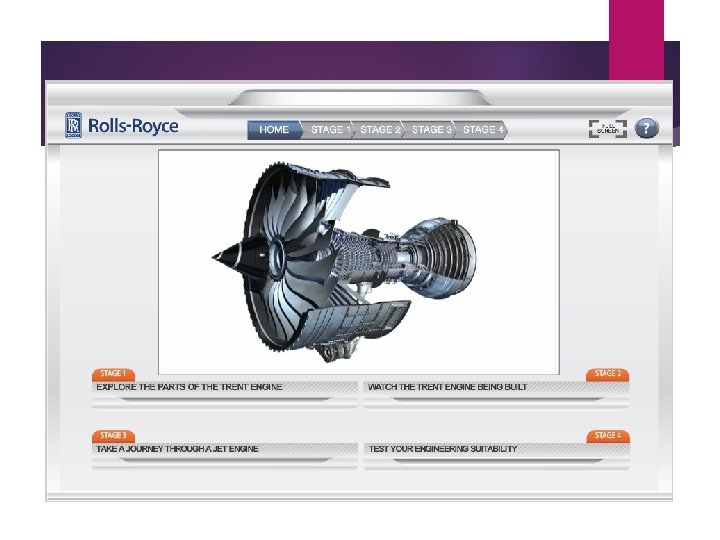
Turbofan
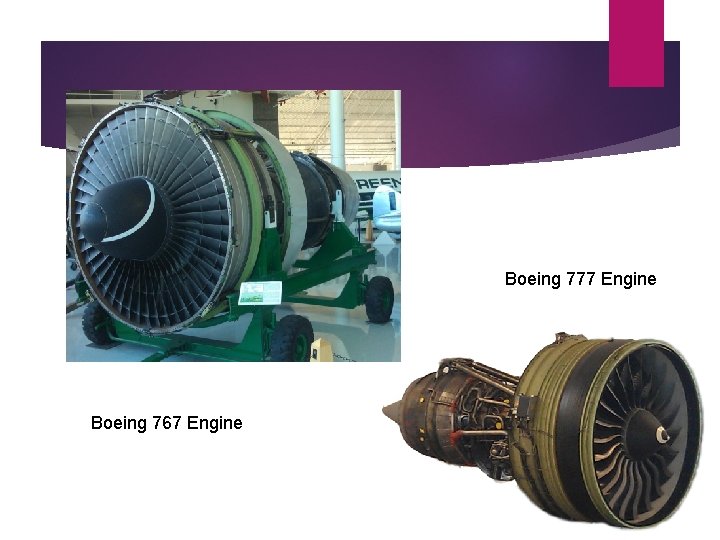
Turbofan Boeing 777 Engine Boeing 767 Engine
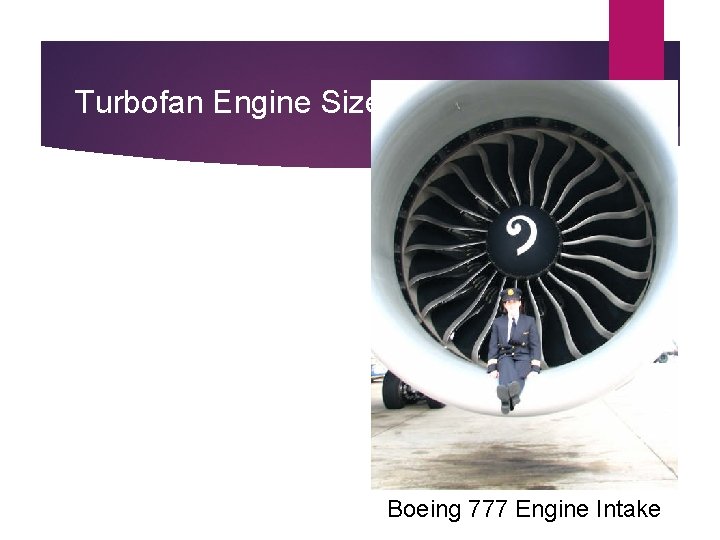
Turbofan Engine Size Boeing 777 Engine Intake
Turbofan Bypass Ratios High bypass ratio turbofan Low bypass ratio turbofan for military aircraft for civilian aircraft
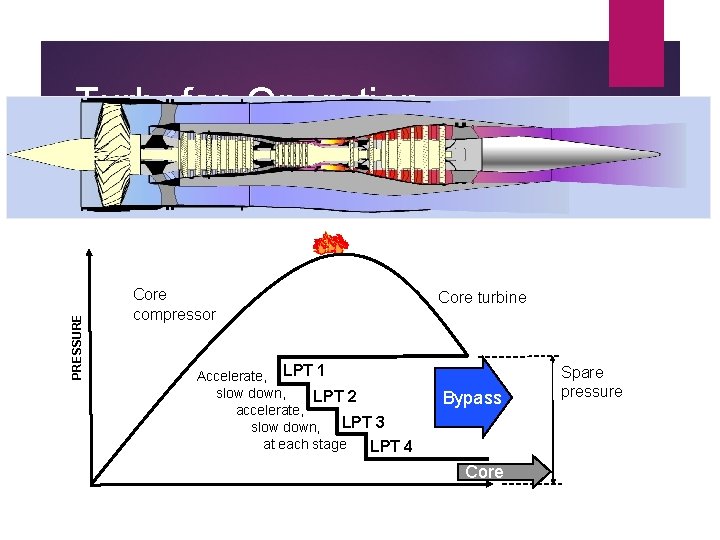
PRESSURE Turbofan Operation Core compressor Accelerate, LPT 1 slow down, LPT 2 accelerate, LPT 3 slow down, at each stage LPT 4 Core turbine Bypass Very fast core jet Core Spare pressure
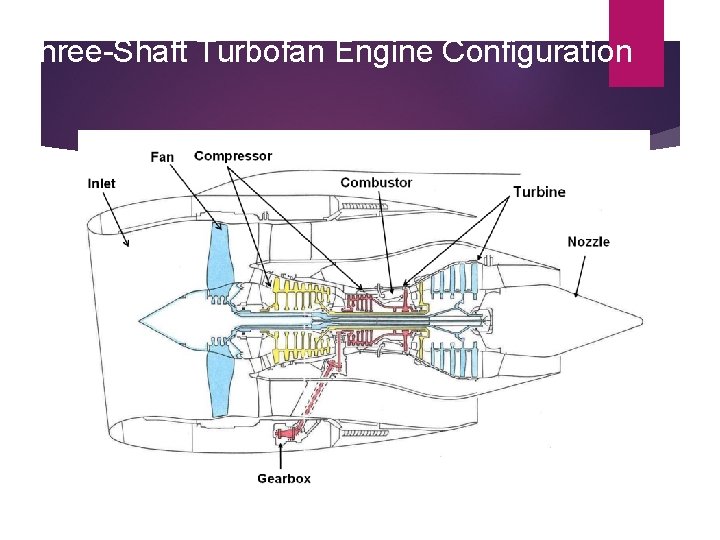
Three-Shaft Turbofan Engine Configuration
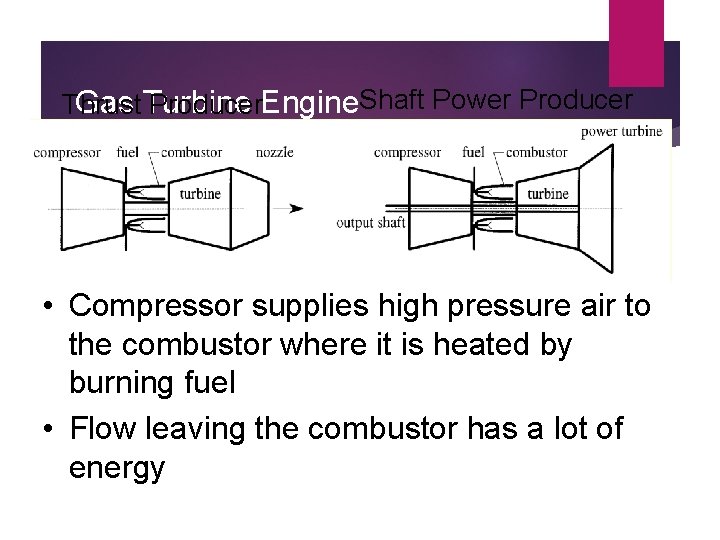
Gas Turbine Thrust Producer. Engine. Shaft Power Producer • Compressor supplies high pressure air to the combustor where it is heated by burning fuel • Flow leaving the combustor has a lot of energy
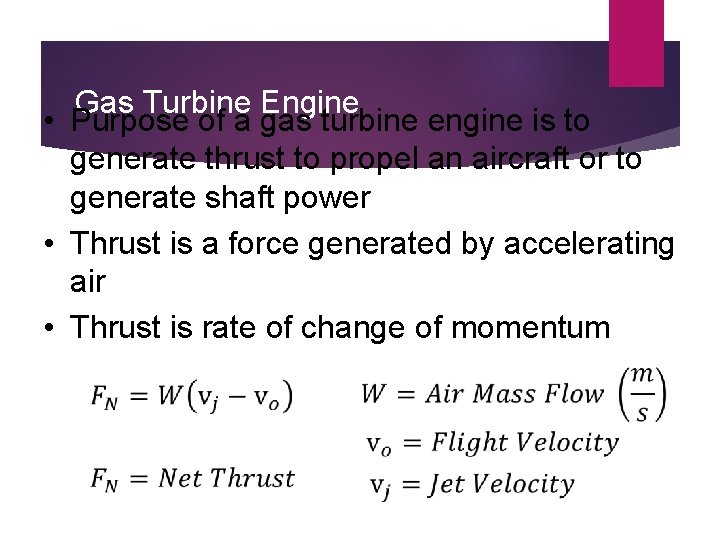
Gas Turbine Engine • Purpose of a gas turbine engine is to generate thrust to propel an aircraft or to generate shaft power • Thrust is a force generated by accelerating air • Thrust is rate of change of momentum
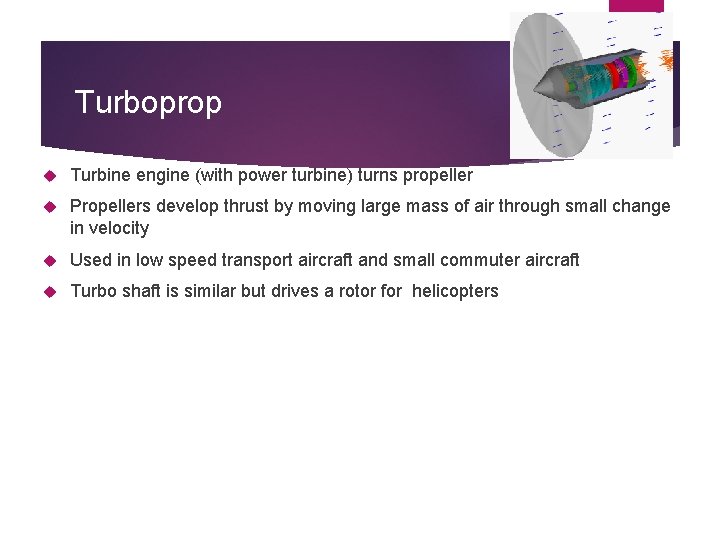
Turboprop Turbine engine (with power turbine) turns propeller Propellers develop thrust by moving large mass of air through small change in velocity Used in low speed transport aircraft and small commuter aircraft Turbo shaft is similar but drives a rotor for helicopters
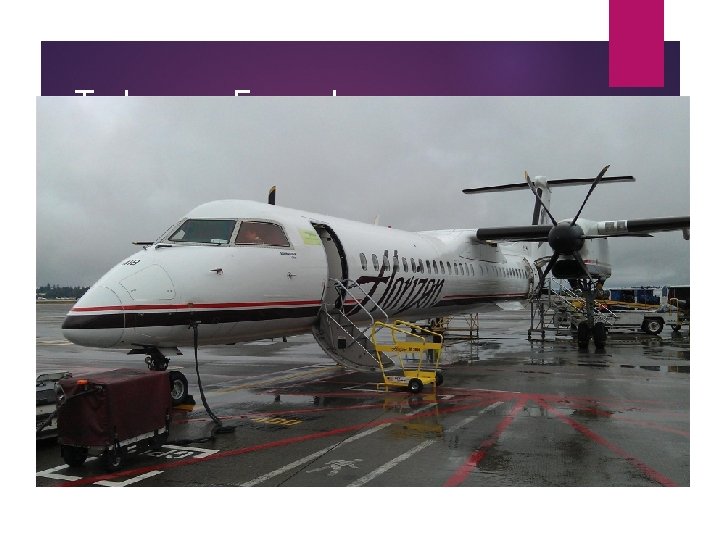
Turboprop Example
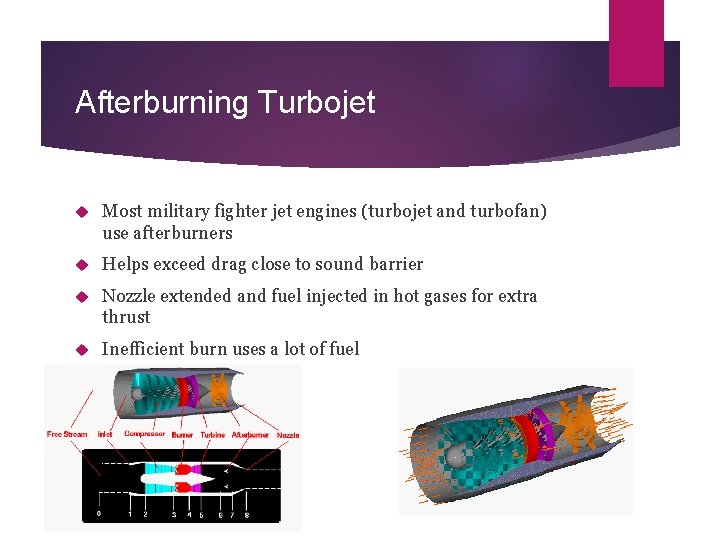
Afterburning Turbojet Most military fighter jet engines (turbojet and turbofan) use afterburners Helps exceed drag close to sound barrier Nozzle extended and fuel injected in hot gases for extra thrust Inefficient burn uses a lot of fuel
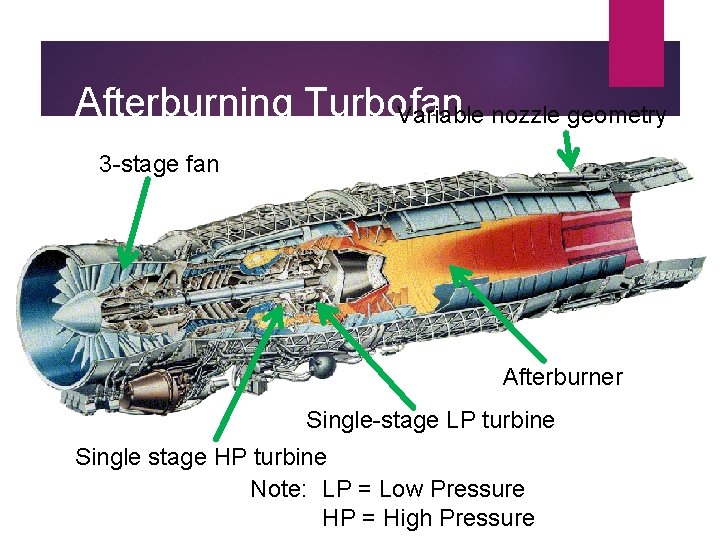
Afterburning Turbofan Variable nozzle geometry 3 -stage fan Afterburner Single-stage LP turbine Single stage HP turbine Note: LP = Low Pressure HP = High Pressure
Gas Turbine Alternate Uses Also used to power Racing cars Ships Electrical power generators Natural gas pumping stations
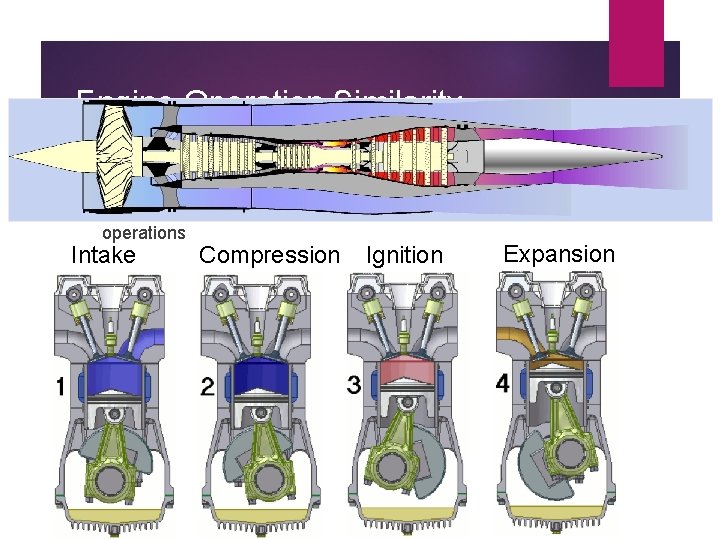
Engine Operation Similarity Reciprocating and turbine engines have same four operations Intake Compression Ignition Expansion
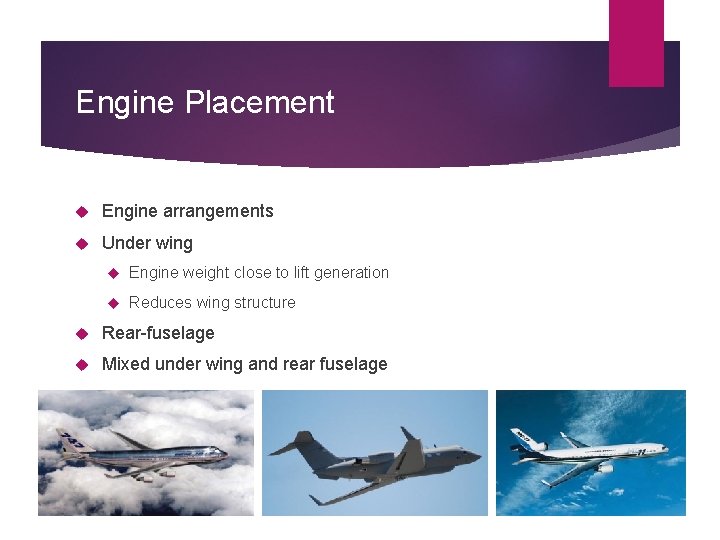
Engine Placement Engine arrangements Under wing Engine weight close to lift generation Reduces wing structure Rear-fuselage Mixed under wing and rear fuselage
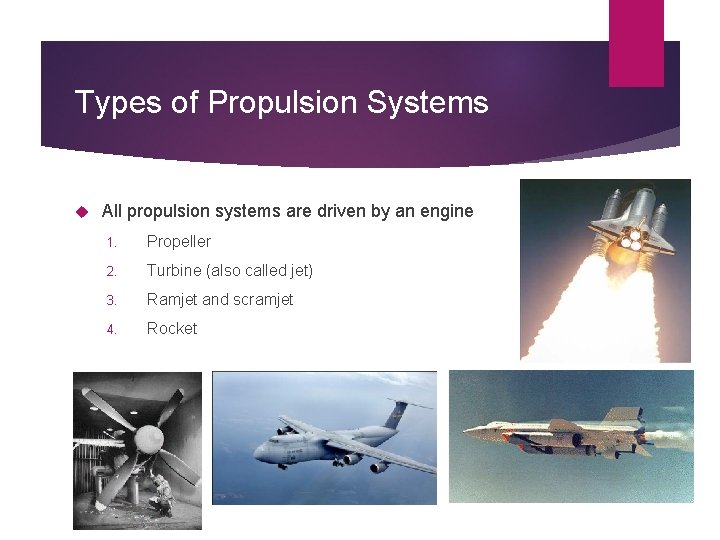
Types of Propulsion Systems All propulsion systems are driven by an engine 1. Propeller 2. Turbine (also called jet) 3. Ramjet and scramjet 4. Rocket