
Air Temperature Temperature a measure of the average
- Slides: 28
Air Temperature
►Temperature : § a measure of the average speed at which molecules are moving or vibrating.
►Air temperature § the rate of motion of gas molecules in the atmosphere as a result of the absorption of energy § measured by a thermometer
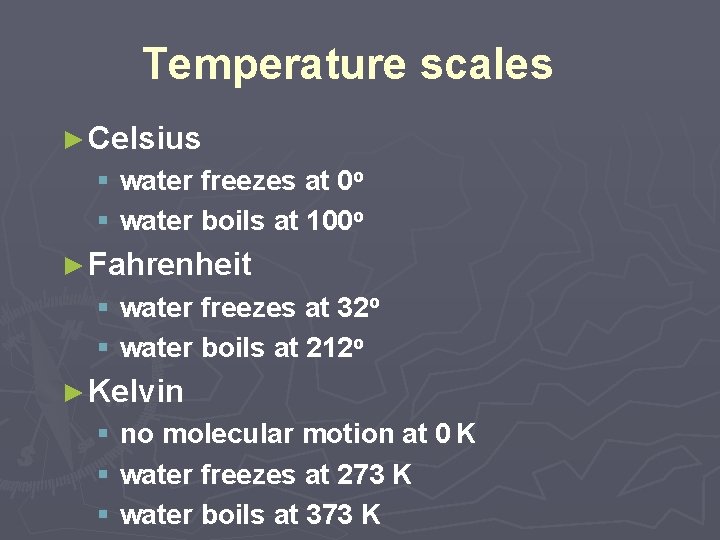
Temperature scales ► Celsius § water freezes at 0 o § water boils at 100 o ► Fahrenheit § water freezes at 32 o § water boils at 212 o ► Kelvin § no molecular motion at 0 K § water freezes at 273 K § water boils at 373 K
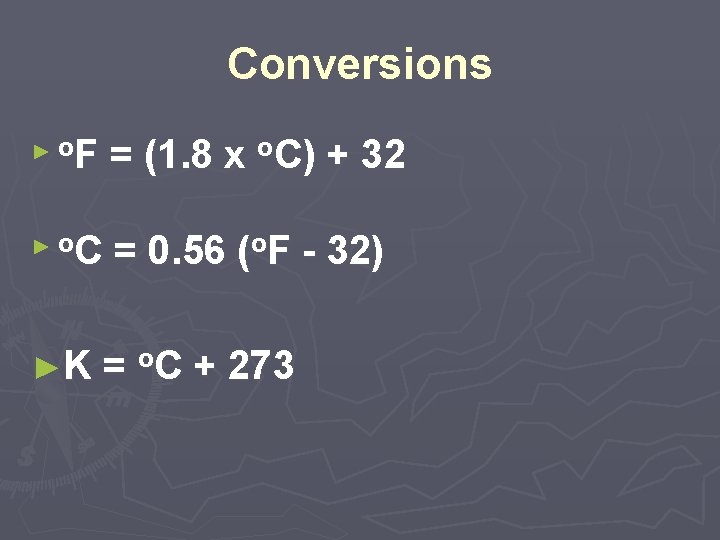
Conversions F = (1. 8 x o. C) + 32 ►o C = 0. 56 (o. F - 32) ►o ►K = o. C + 273
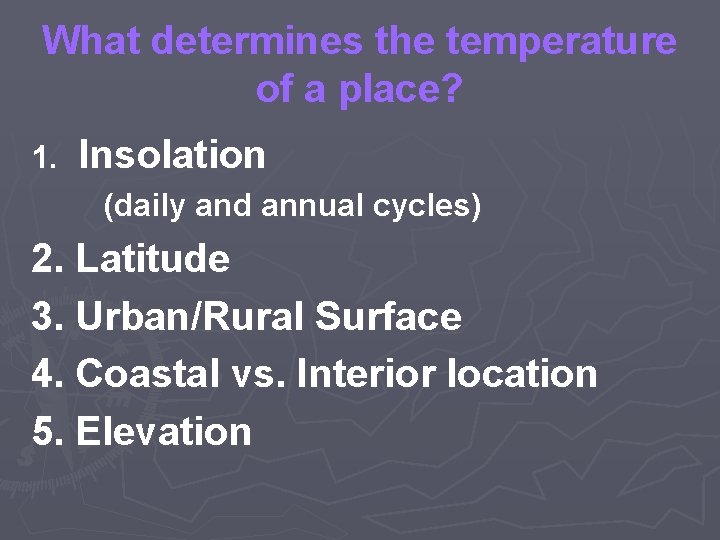
What determines the temperature of a place? 1. Insolation (daily and annual cycles) 2. Latitude 3. Urban/Rural Surface 4. Coastal vs. Interior location 5. Elevation
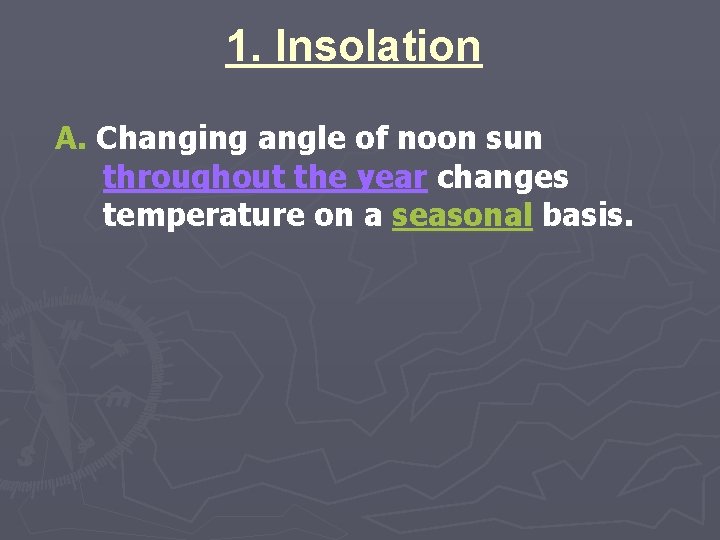
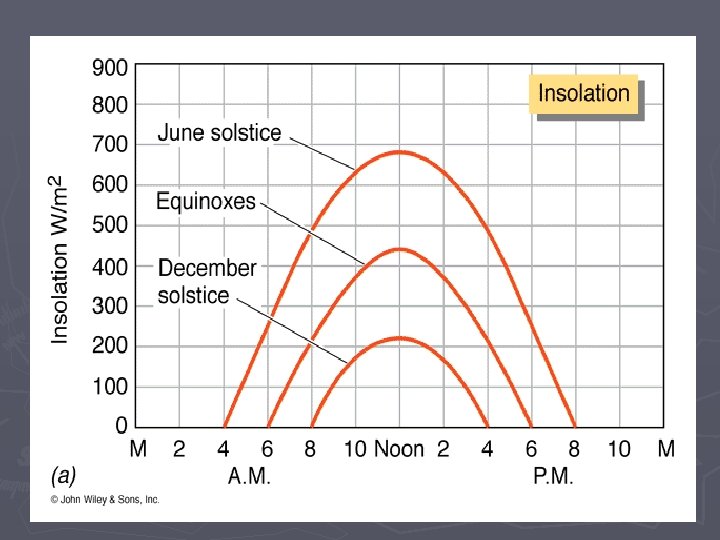
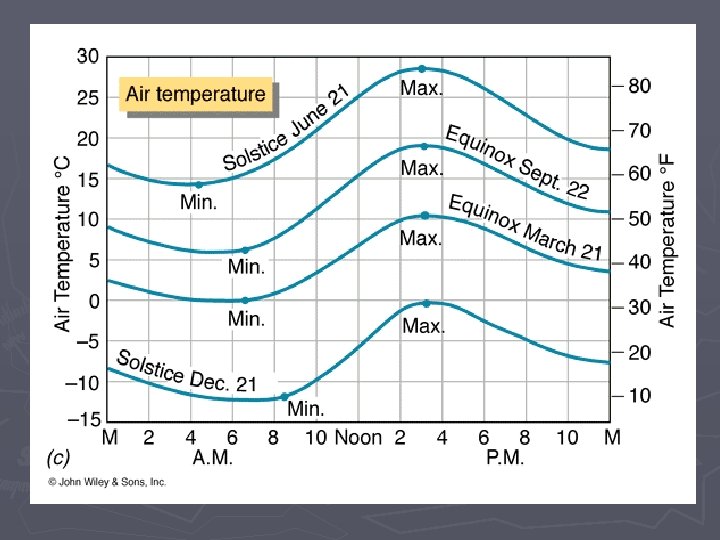
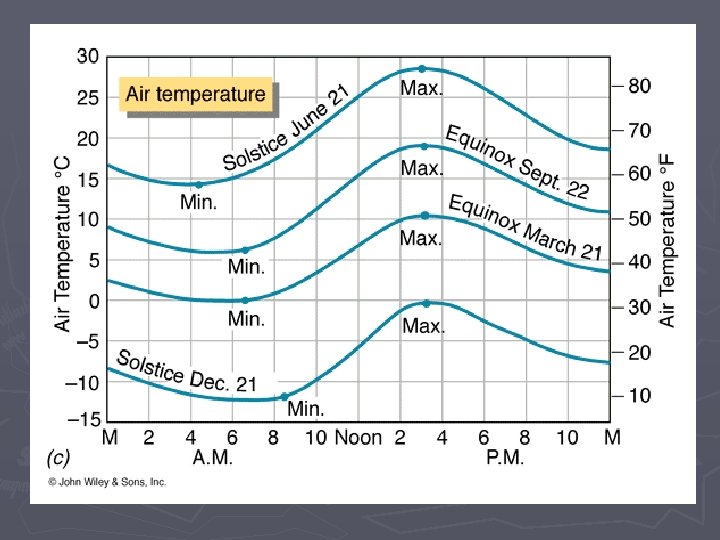
1. Insolation A. Changing angle of noon sun throughout the year changes temperature on a seasonal basis.
►Why temperature difference between equinoxes?
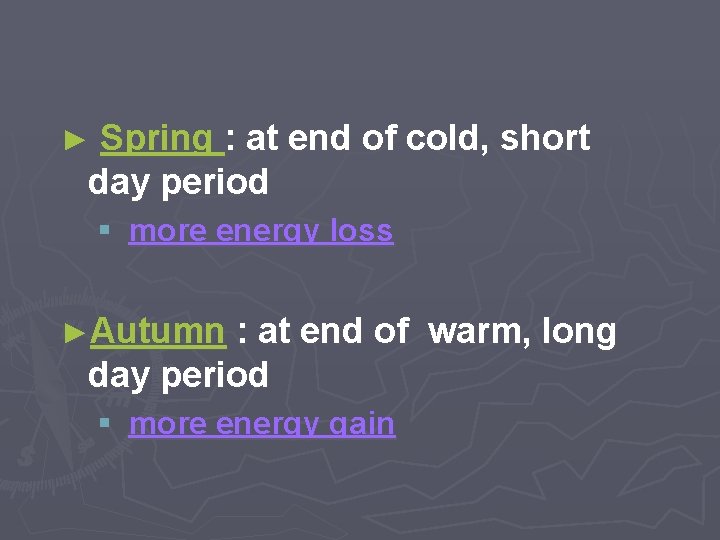
Spring : at end of cold, short day period ► § more energy loss ►Autumn : at end of day period § more energy gain warm, long
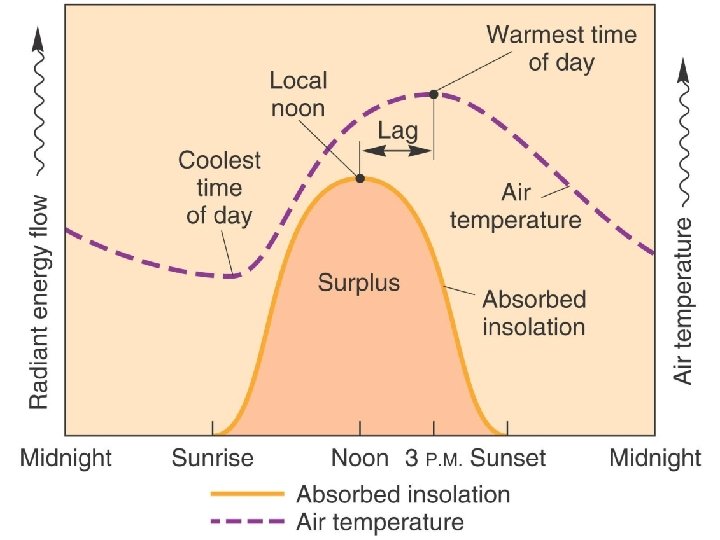
1. Insolation B. Changing angle of sun throughout the day changes temperature on a daily basis.
►lag between max insolation and max temperature § because highest temp at time of max ABSORBED insolation
2. Latitude ► Higher latitudes receive less insolation than lower latitudes § sun’s rays are more oblique § daylength is variable § Net energy surplus in tropics; net energy deficit in polar regions
3. Urban/rural Surface ► Evapotranspiration differences ► Urban impervious surfaces ► Urban highly absorbent (low albedo) surfaces ► Urban fuel consumption and excess heat ► “Urban heat island”
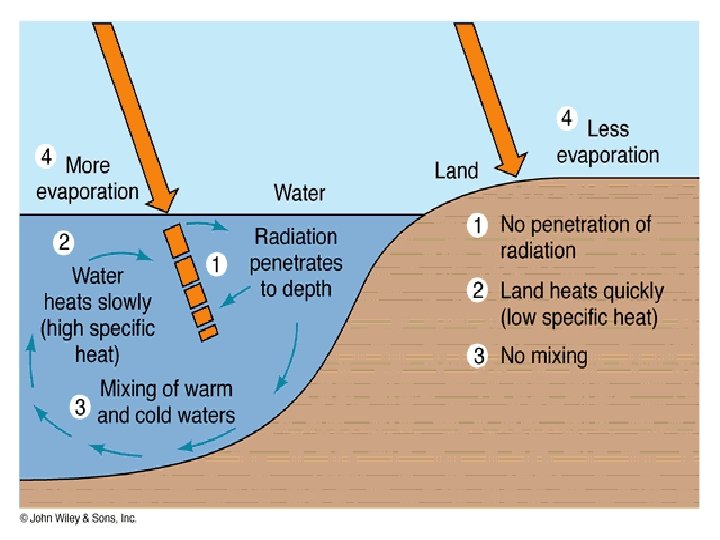
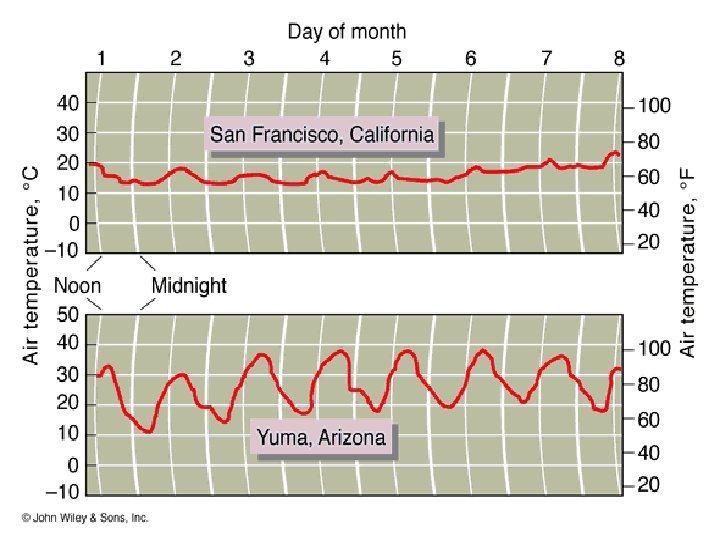
4. Coastal vs. interior locations ►Water bodies have a moderating effect on temperature.
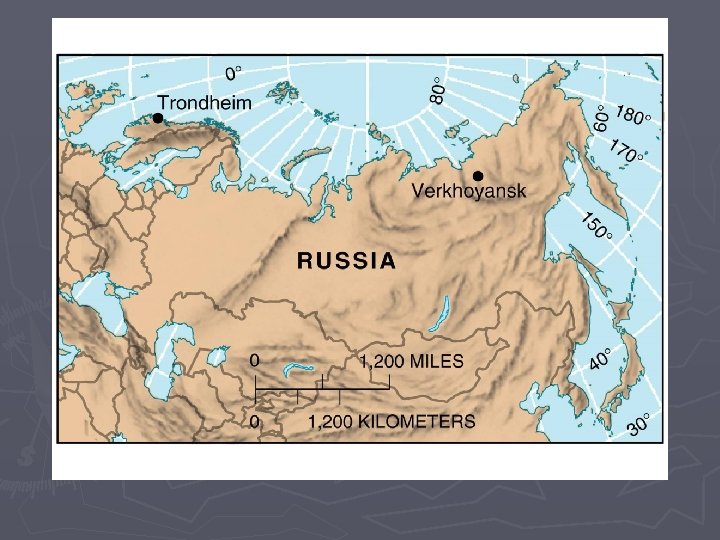
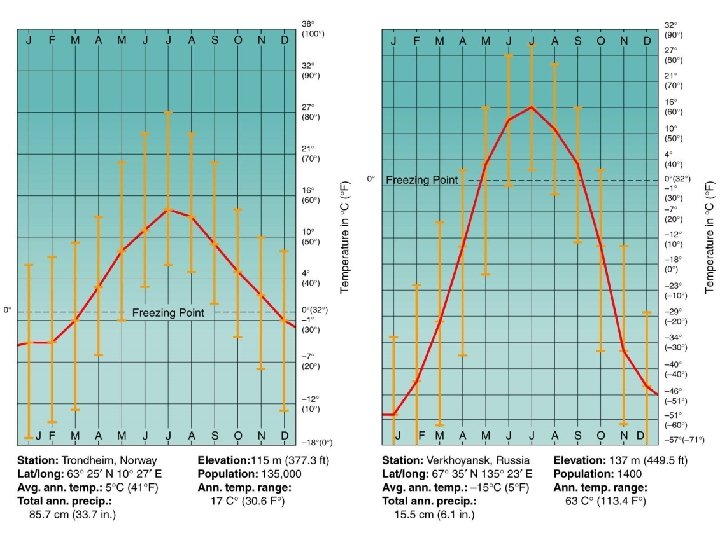
► “Land heats up and cools down more rapidly than water. ” § Therefore: ►Coastal: smaller temperature ranges than continental locations. ►Coastal locations have their maximum temperatures well after maximum insolation.
►Lake effect in Duluth is an example of changes in temperature due to being close to a large body of water.
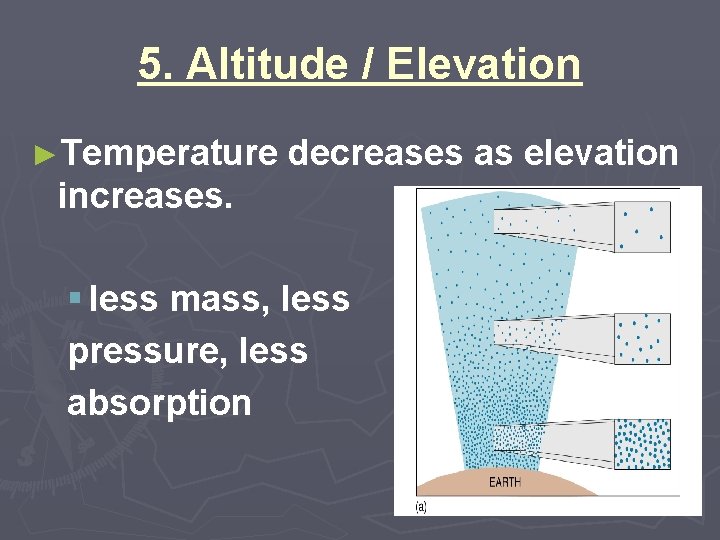
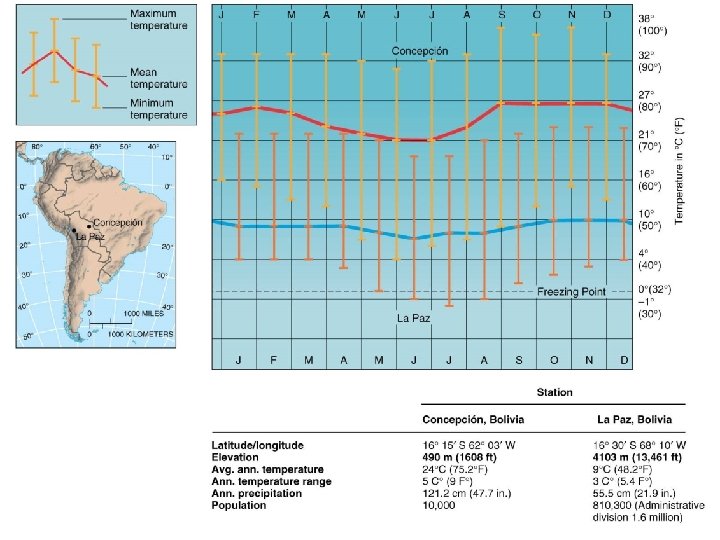
5. Altitude / Elevation ►Temperature decreases as elevation increases. § less mass, less pressure, less absorption
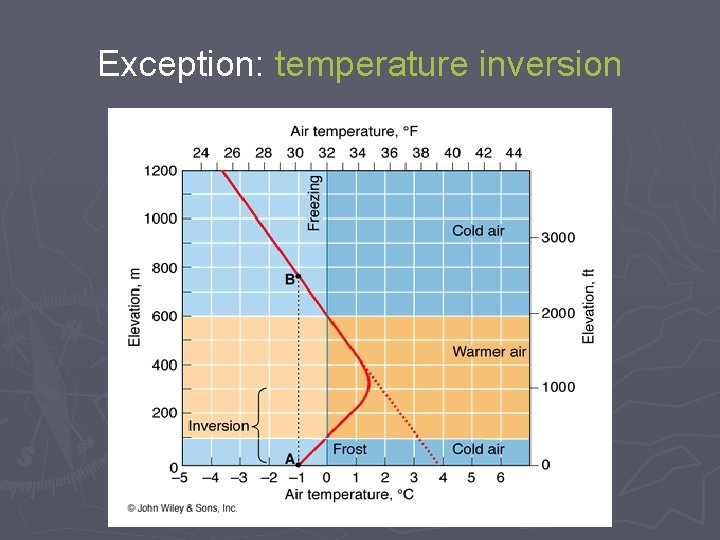
Exception: temperature inversion
►Conditions favorable for a temperature inversion: § cool, clear, calm night