
Air Pressure Explained t Wha n o t
- Slides: 14
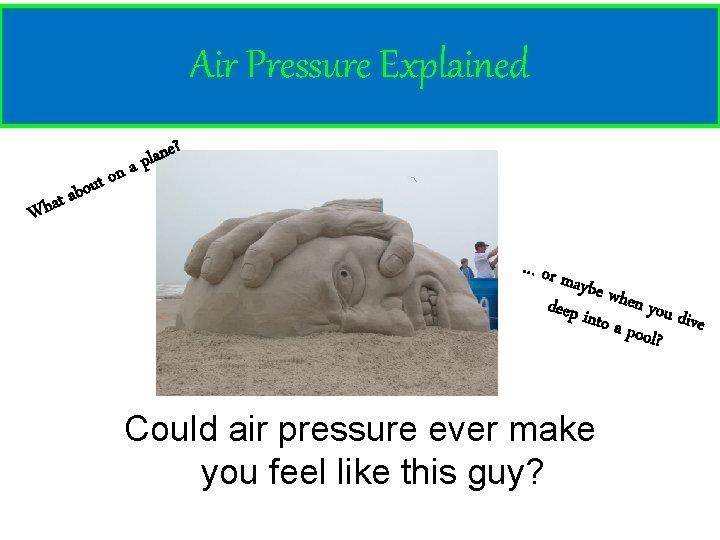
Air Pressure Explained t Wha n o t u abo e? n a l ap … or maybe deep i when you d nto a pool? ive Could air pressure ever make you feel like this guy?
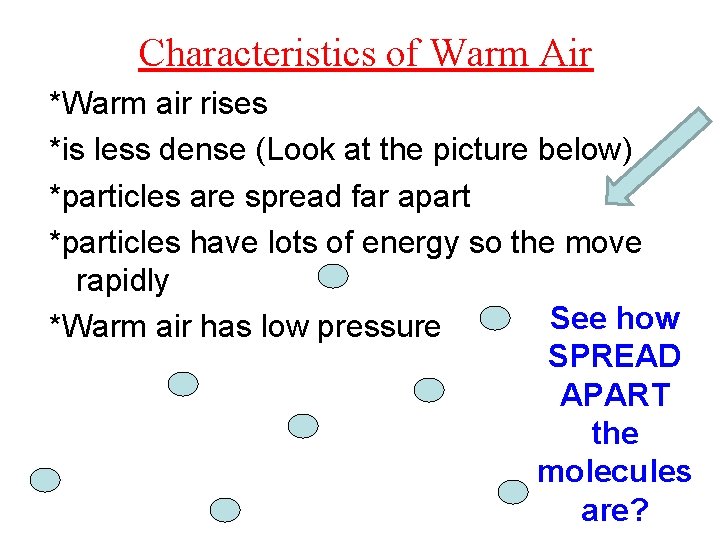
Characteristics of Warm Air *Warm air rises *is less dense (Look at the picture below) *particles are spread far apart *particles have lots of energy so the move rapidly See how *Warm air has low pressure SPREAD APART the molecules are?
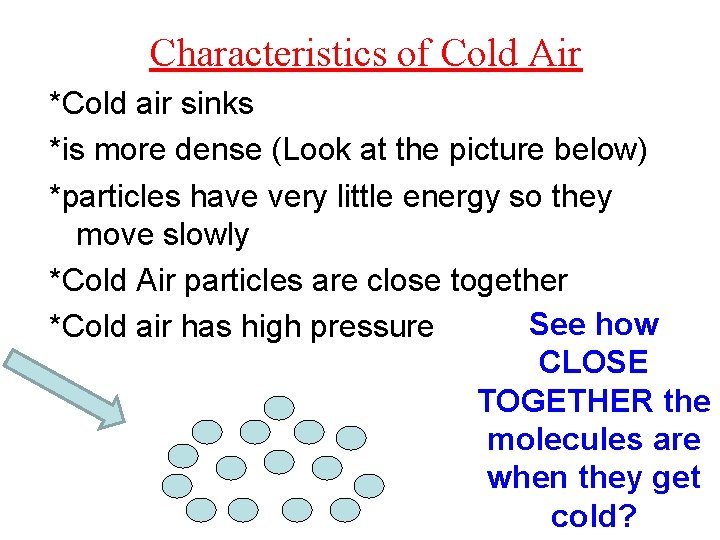
Characteristics of Cold Air *Cold air sinks *is more dense (Look at the picture below) *particles have very little energy so they move slowly *Cold Air particles are close together See how *Cold air has high pressure CLOSE TOGETHER the molecules are when they get cold?
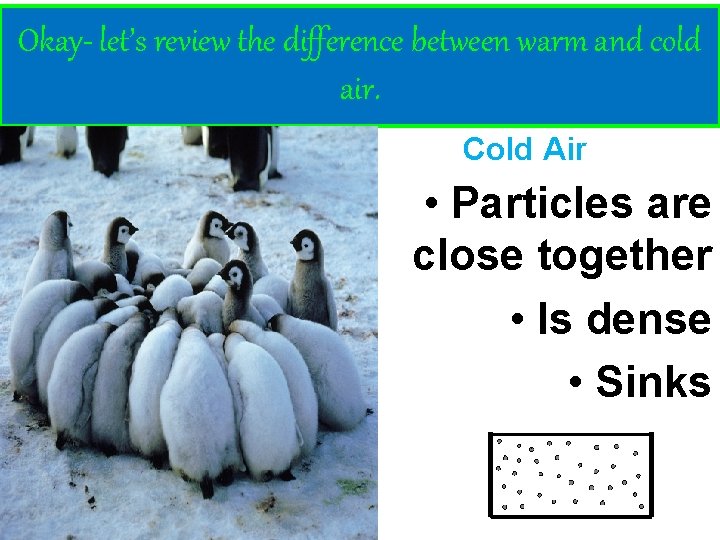
Okay- let’s review the difference between warm and cold air. Warm Air • Particles are spread far apart • Is less dense • Rises Cold Air • Particles are close together • Is dense • Sinks
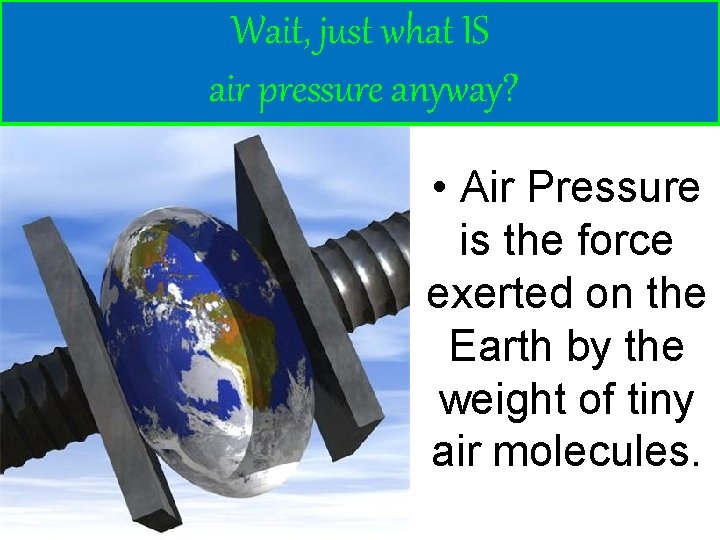
Wait, just what IS air pressure anyway? • Air Pressure is the force exerted on the Earth by the weight of tiny air molecules.
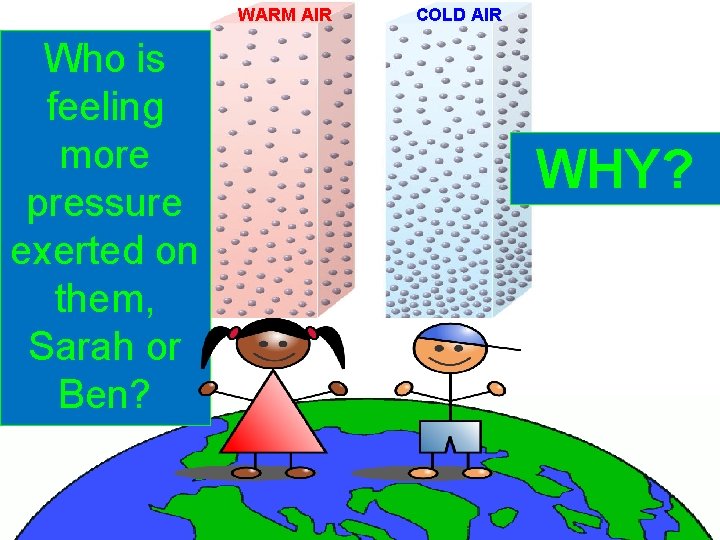
WARM AIR Who is feeling more pressure exerted on them, Sarah or Ben? COLD AIR WHY?
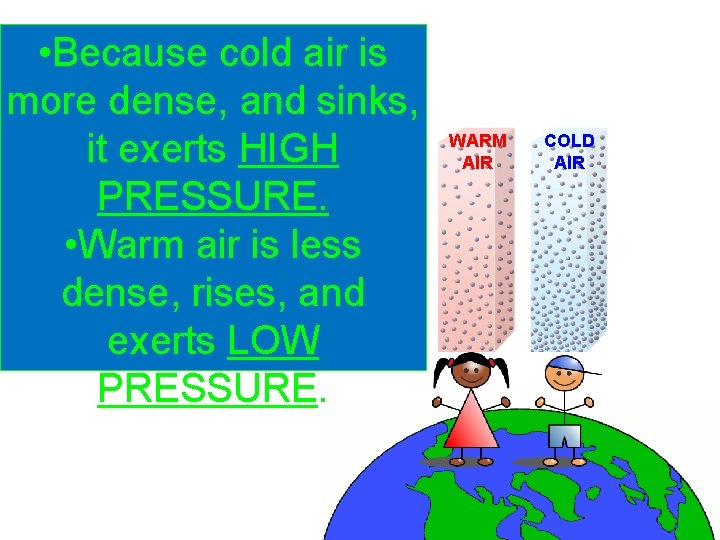
• Because cold air is more dense, and sinks, it exerts HIGH PRESSURE. • Warm air is less dense, rises, and exerts LOW PRESSURE. WARM AIR COLD AIR
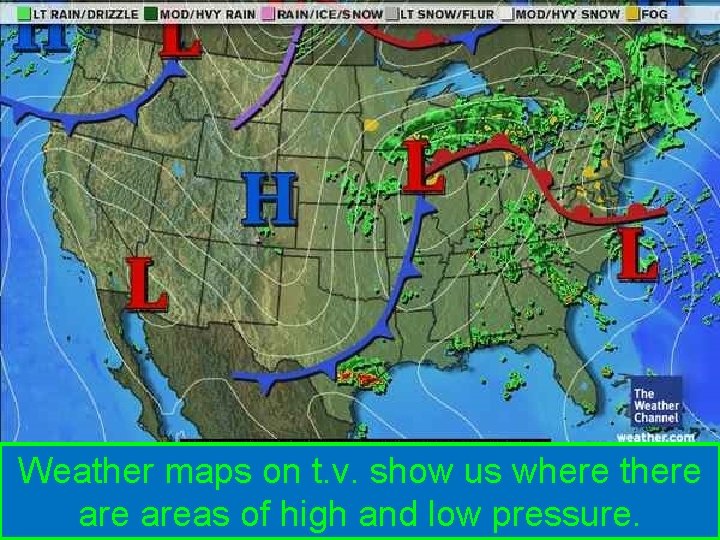
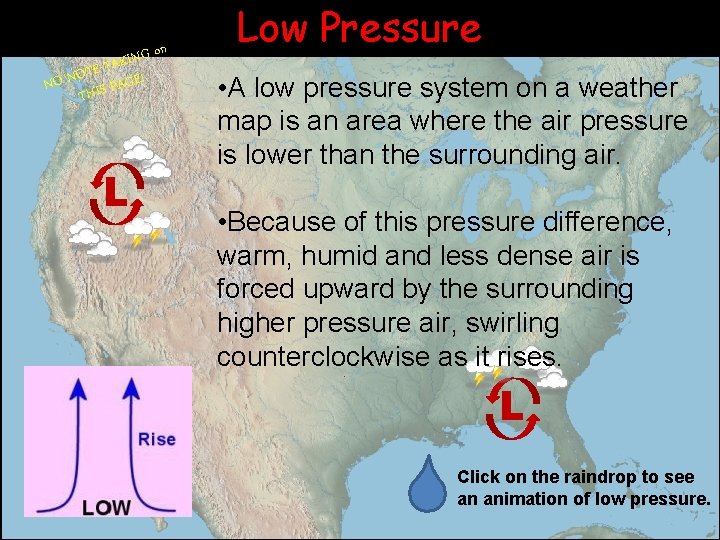
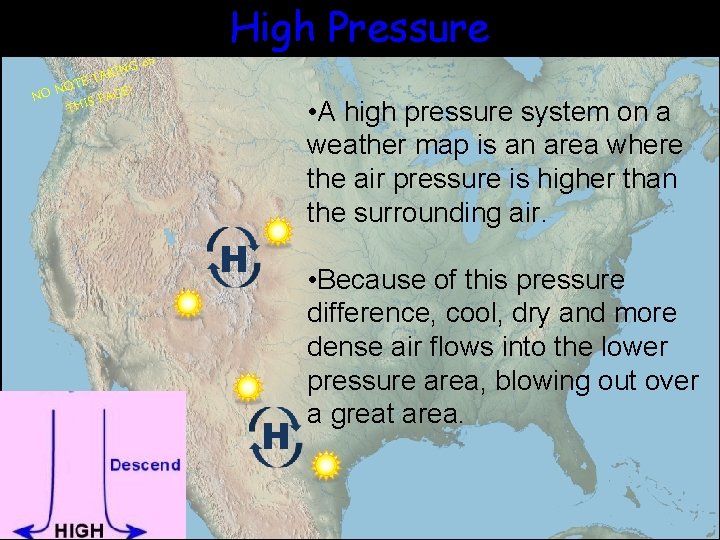
Weather maps on t. v. show us where there areas of high and low pressure.
G on N I K TE-TA E! O N NO PAG S I H T L Low Pressure • A low pressure system on a weather map is an area where the air pressure is lower than the surrounding air. • Because of this pressure difference, warm, humid and less dense air is forced upward by the surrounding higher pressure air, swirling counterclockwise as it rises. L Click on the raindrop to see an animation of low pressure.
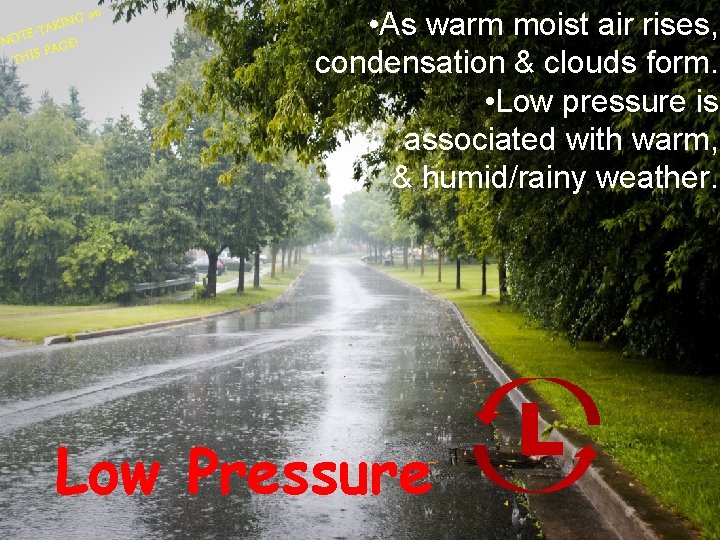
G on N I K -TA NOTE AGE! P THIS • As warm moist air rises, condensation & clouds form. • Low pressure is associated with warm, & humid/rainy weather. Low Pressure L
High Pressure G on N I K TE-TA E! O N NO PAG S I H T • A high pressure system on a weather map is an area where the air pressure is higher than the surrounding air. H H • Because of this pressure difference, cool, dry and more dense air flows into the lower pressure area, blowing out over a great area.
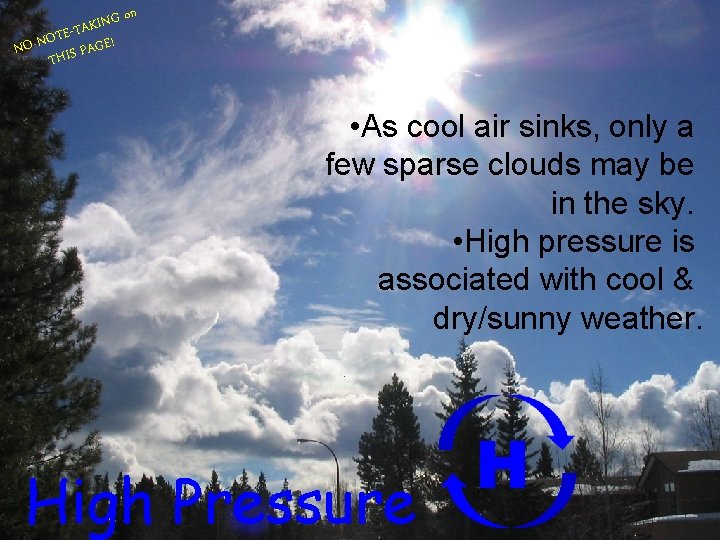
G on N I K TE-TA E! O N NO PAG S I H T • As cool air sinks, only a few sparse clouds may be in the sky. • High pressure is associated with cool & dry/sunny weather. High Pressure H
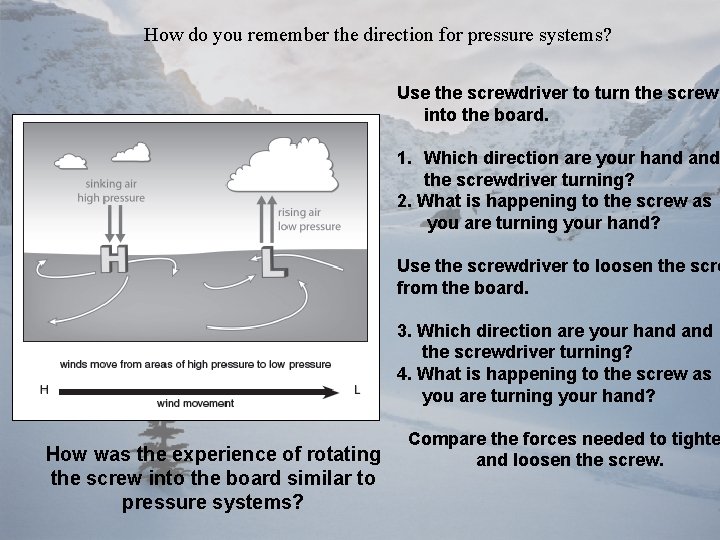
How do you remember the direction for pressure systems? Use the screwdriver to turn the screw into the board. 1. Which direction are your hand the screwdriver turning? 2. What is happening to the screw as you are turning your hand? Use the screwdriver to loosen the scre from the board. 3. Which direction are your hand the screwdriver turning? 4. What is happening to the screw as you are turning your hand? How was the experience of rotating the screw into the board similar to pressure systems? Compare the forces needed to tighte and loosen the screw.
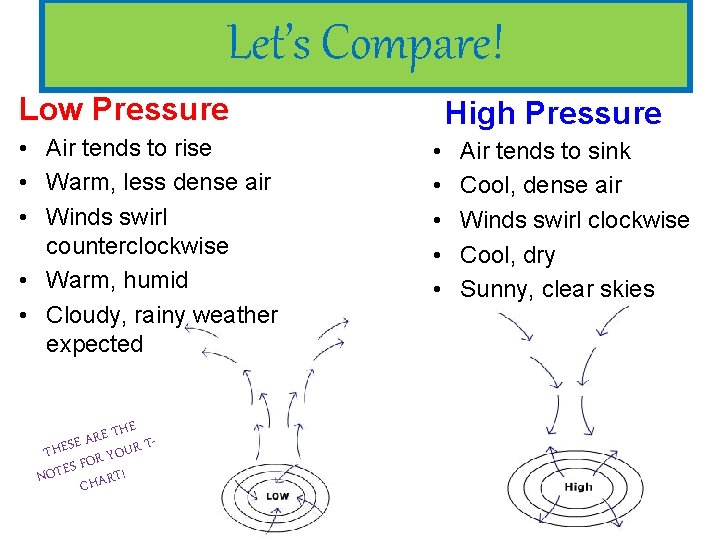
Let’s Compare! Low Pressure • Air tends to rise • Warm, less dense air • Winds swirl counterclockwise • Warm, humid • Cloudy, rainy weather expected HE T E R EA THES R YOUR T S FO T! E T O N CHAR High Pressure • • • Air tends to sink Cool, dense air Winds swirl clockwise Cool, dry Sunny, clear skies