
Air Pollution Ms Henriksen Ecology Types of Air
- Slides: 12
Air Pollution Ms. Henriksen Ecology
Types of Air Pollution • Outdoor Pollution – Particulates – CFC – Oxides • Acid rain • Smog and ozone • Global warming – Methane – Noise Pollution • Indoor Pollution – Carbon Monoxide • Cigarette smoke • Heaters, stoves – – – Bacteria and fungi Asbestos ammonia, formaldehyde particulates • Sick Building Syndrome
Pollution and particulates • Sources include sand dust storms, volcanic eruptions, forest fires, ocean spray, decaying organisms, and human activity! • Particulate– tiny solids suspended in the atmosphere – Trace metals, pesticides and fertilizers, plant pollen – Dangerous because of their size! – Can be come trapped in the lungs or cause allergic reactions!
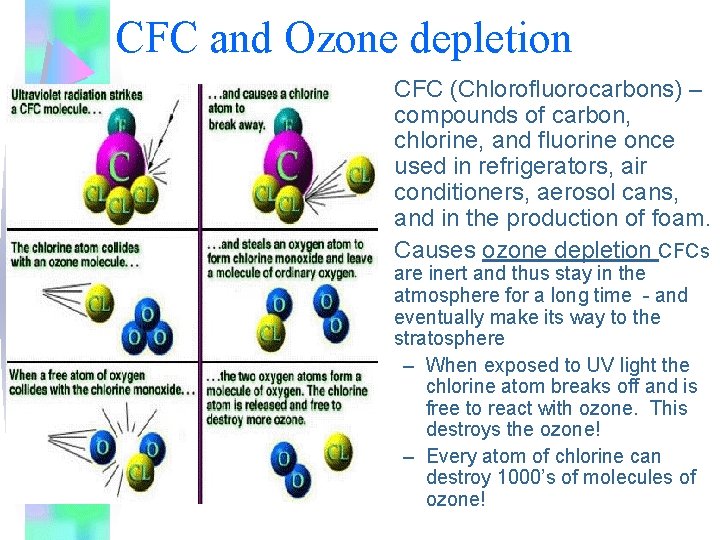
CFC and Ozone depletion • CFC (Chlorofluorocarbons) – compounds of carbon, chlorine, and fluorine once used in refrigerators, air conditioners, aerosol cans, and in the production of foam. • Causes ozone depletion CFCs are inert and thus stay in the atmosphere for a long time - and eventually make its way to the stratosphere – When exposed to UV light the chlorine atom breaks off and is free to react with ozone. This destroys the ozone! – Every atom of chlorine can destroy 1000’s of molecules of ozone!
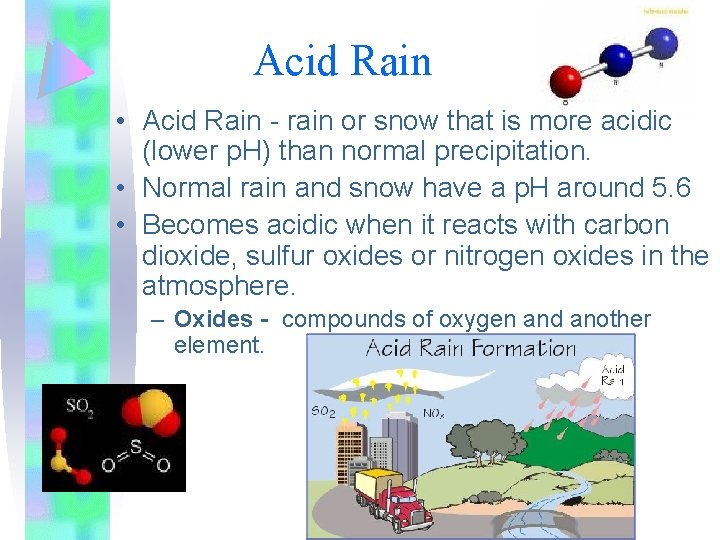
Acid Rain • Acid Rain - rain or snow that is more acidic (lower p. H) than normal precipitation. • Normal rain and snow have a p. H around 5. 6 • Becomes acidic when it reacts with carbon dioxide, sulfur oxides or nitrogen oxides in the atmosphere. – Oxides - compounds of oxygen and another element.
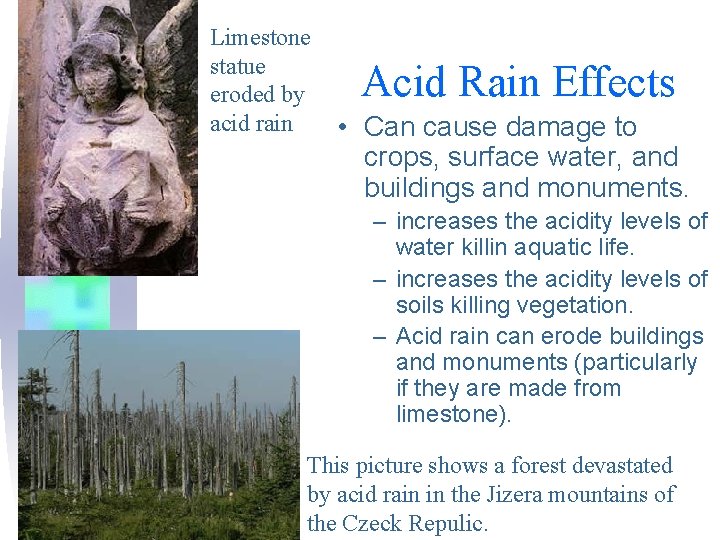
Limestone statue eroded by acid rain Acid Rain Effects • Can cause damage to crops, surface water, and buildings and monuments. – increases the acidity levels of water killin aquatic life. – increases the acidity levels of soils killing vegetation. – Acid rain can erode buildings and monuments (particularly if they are made from limestone). This picture shows a forest devastated by acid rain in the Jizera mountains of the Czeck Repulic.
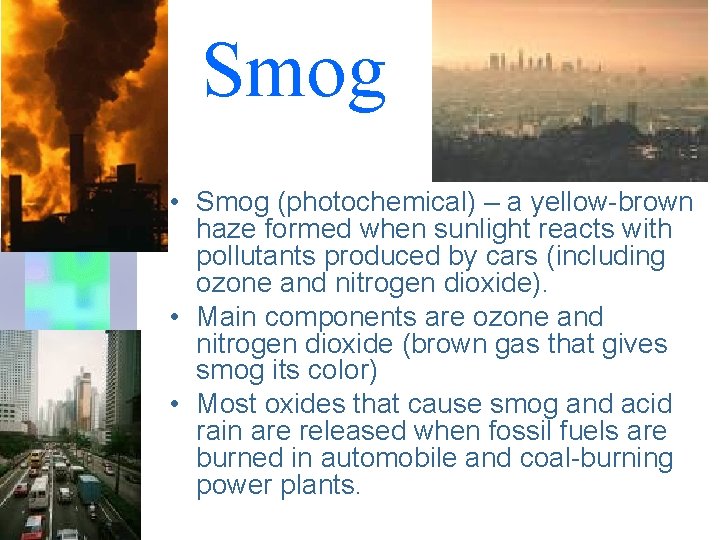
Smog • Smog (photochemical) – a yellow-brown haze formed when sunlight reacts with pollutants produced by cars (including ozone and nitrogen dioxide). • Main components are ozone and nitrogen dioxide (brown gas that gives smog its color) • Most oxides that cause smog and acid rain are released when fossil fuels are burned in automobile and coal-burning power plants.
Global warming and Methane • The Greenhouse gases trap heat in the Earth’s atmosphere – Gases include carbon dioxide (most abundant), methane, oxides of sulfur and nitrogen, ozone, CFC’s and water vapor. • The effects of Global warming are hard to predict and scientist do not agree on the exact results. Anticipated results include changes in rainfall, temperature, and water levels due to ice melting. This will have widespread effects on housing, agriculture, transportation and food production.
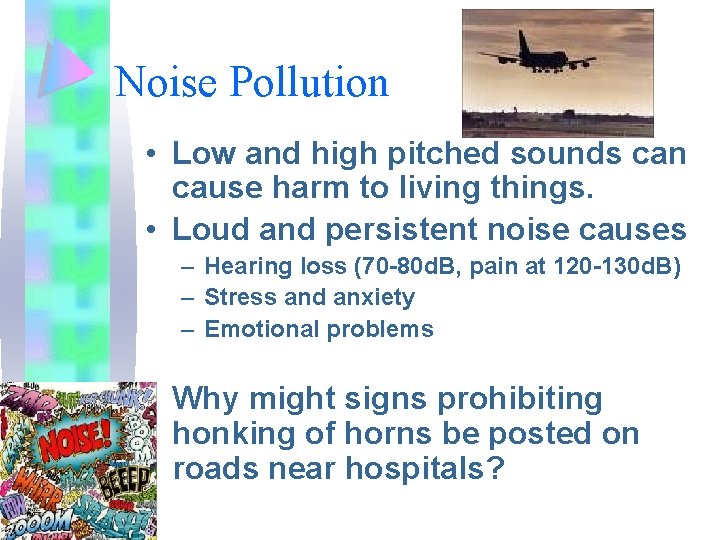
Noise Pollution • Low and high pitched sounds can cause harm to living things. • Loud and persistent noise causes – Hearing loss (70 -80 d. B, pain at 120 -130 d. B) – Stress and anxiety – Emotional problems • Why might signs prohibiting honking of horns be posted on roads near hospitals?
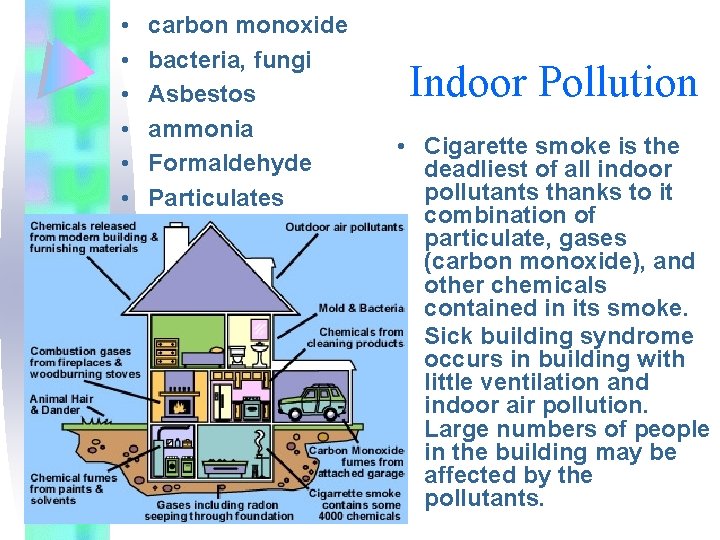
• • • carbon monoxide bacteria, fungi Asbestos ammonia Formaldehyde Particulates Indoor Pollution • Cigarette smoke is the deadliest of all indoor pollutants thanks to it combination of particulate, gases (carbon monoxide), and other chemicals contained in its smoke. • Sick building syndrome occurs in building with little ventilation and indoor air pollution. Large numbers of people in the building may be affected by the pollutants.
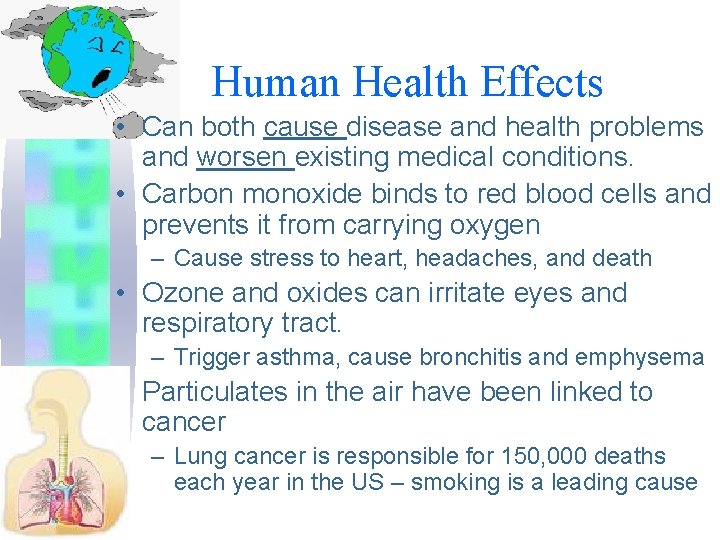
Human Health Effects • Can both cause disease and health problems and worsen existing medical conditions. • Carbon monoxide binds to red blood cells and prevents it from carrying oxygen – Cause stress to heart, headaches, and death • Ozone and oxides can irritate eyes and respiratory tract. – Trigger asthma, cause bronchitis and emphysema • Particulates in the air have been linked to cancer – Lung cancer is responsible for 150, 000 deaths each year in the US – smoking is a leading cause
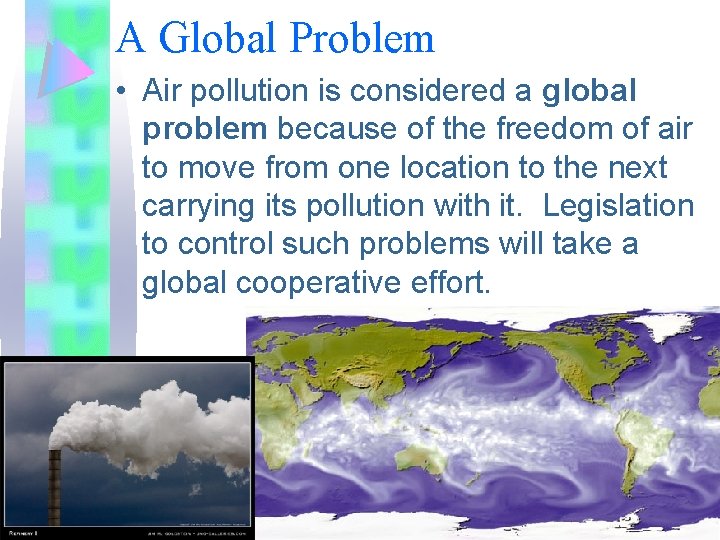
A Global Problem • Air pollution is considered a global problem because of the freedom of air to move from one location to the next carrying its pollution with it. Legislation to control such problems will take a global cooperative effort.