
Air Pollution Major Air Pollutants Nitrogen Oxides Carbon
Air Pollution
Major Air Pollutants • • Nitrogen Oxides Carbon Oxides Sulfur Oxides Particulates Ozone PANS Volatile Organic Compounds (VOCs) Radon (Indoor air pollutant)

Law – Clean Air Act 1963 - first passage 1970, 1977 and 1990 - amended Involves EPA Sets standards for acceptable levels of sulfur oxides, nitrogen oxides, ozone, carbon monoxide, hydrocarbons, lead, & more • Provides pollution credits for industries that utilize pollution-control devices • It established NAAQS and AQI • Clean Air Act: EPA • •

National Ambient Air Quality Standards (NAAQS) • Sets acceptable concentrations for 6 “criteria” pollutants that: – Threaten public health/the environment over broad areas (non-point) – Are emitted in large quantities – CO, Pb, Nitrogen Oxides, Ozone, Particulate Matter and Sulfur Dioxides
Air Quality Index (AQI) • Measures levels of 5 criteria pollutants • Forecast of daily air pollution levels • Purpose to educate and protect publicfocuses on health effects • www. airnow. gov • China's air quality
Primary Pollutants • Pollutants that retain the same chemical formula from the source to the atmosphere • methane, SO 2, CO 2, NO, dust particles, microorganisms, and chlorofluorocarbons (CFC’s) • Causes of Primary Pollutants – factories, cars, wind and soil, volcanoes, forest fires, pollen, decaying plants, salt particles from the sea, and refrigerants.
Carbon Oxides • Carbon Dioxide – By-product of respiration, burning fossil fuels and forest fires – No human health effects – Environmental effects • Adds to the Greenhouse Layer • Increased oceanic carbon dioxide absorption leads to ocean acidification
Carbon Monoxide – By-product of burning fossil fuels – In your home, gas furnaces are the most direct source of CO – No negative environmental effects – Human Health Effects: Dizziness Headaches Fatigue Death by suffocation. CO bonds to the red blood cells so they can no longer carry oxygen to the body • Camping • •
Prevent Carbon Monoxide Poisoning • Get your furnace checked annually • Have working CO alarms in every level of your home • Never use propane heater in an unvented tent • Follow these tips from the CDC: Carbon Monoxide Poisoning Prevention - CDC
Nitrogen Oxides • Source: Burning fossil fuels • Human Health Effects – Respiratory aggravation • Environmental Effects – Acid rain formation – Adds nitrogen to coastal waters - eutrophication
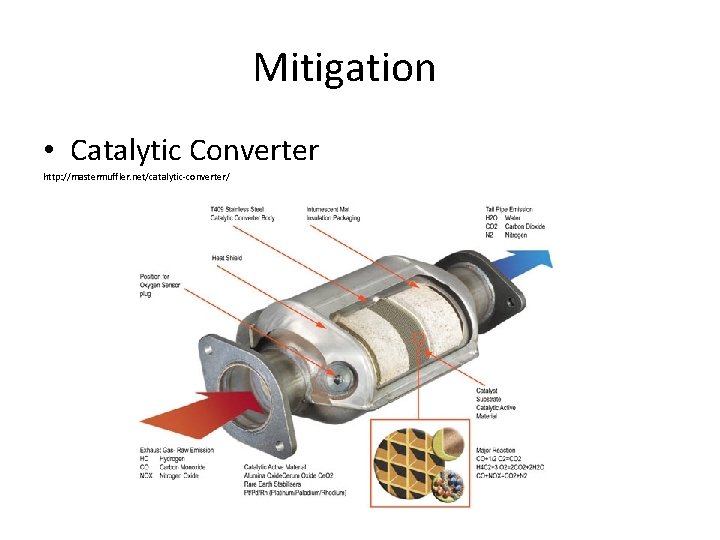
Mitigation • Catalytic Converter http: //mastermuffler. net/catalytic-converter/
Volatile Organic Compounds • Sources: – – – Paint Pesticides Dry cleaning solutions Household cleaners aerosols • Human Health Effects: – – Eye, nose and throat irritation headaches, loss of coordination and nausea damage to liver, kidney and central nervous system May be carcinogenic
Reducing VOC exposure • Environmental Effects: – VOCs can form tropospheric ozone • How to reduce your exposure: • Use VOC free paints, cleaning solutions and dry cleaners • Follow these guidelines set by the EPA: Reducing VOC exposure

Particulates • Small particles in the air • The smaller the particulate, the more harmful it can be because they can get through our body’s natural defenses • Symptoms: – Eye, ear and throat irritation – Coughing, shortness of breath – Aggravation of heart and respiratory conditions – Some particulates are carcinogenic
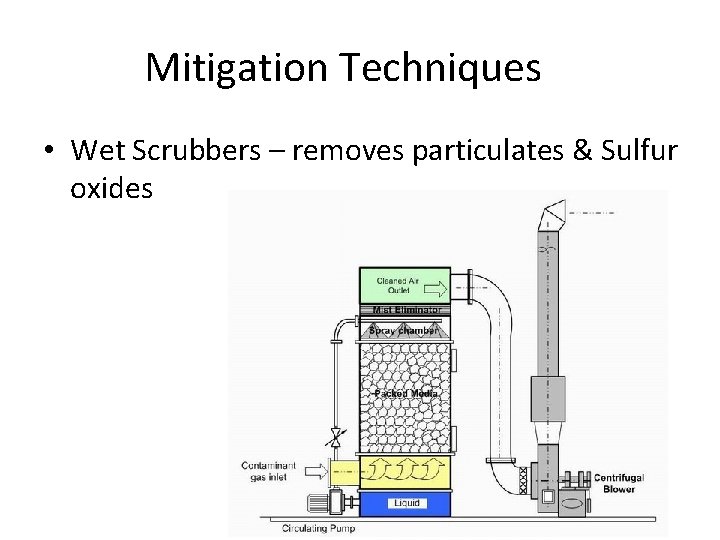
Mitigation Techniques • Wet Scrubbers – removes particulates & Sulfur oxides
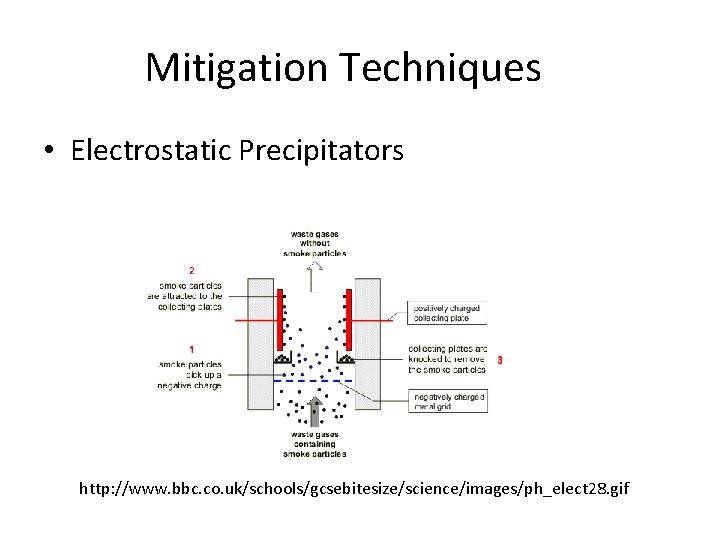
Mitigation Techniques • Electrostatic Precipitators http: //www. bbc. co. uk/schools/gcsebitesize/science/images/ph_elect 28. gif
Mitigation Techniques • Mechanical Filters • Air filters like your furnace filter, car filter • Remove particulates from the air. Particulates removes depends on the quality of the filter.
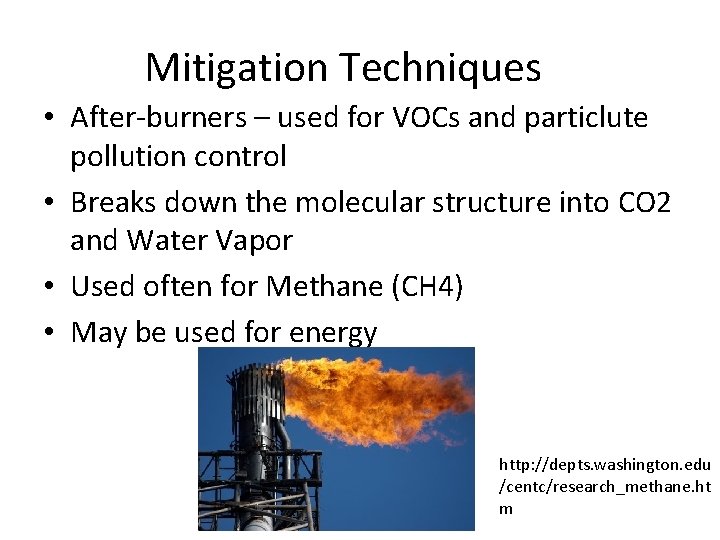
Mitigation Techniques • After-burners – used for VOCs and particlute pollution control • Breaks down the molecular structure into CO 2 and Water Vapor • Used often for Methane (CH 4) • May be used for energy http: //depts. washington. edu /centc/research_methane. ht m
Secondary Pollutants • Formed when primary pollutants undergo a chemical change • Examples: ozone, sulfuric acid, aldehydes, PANS
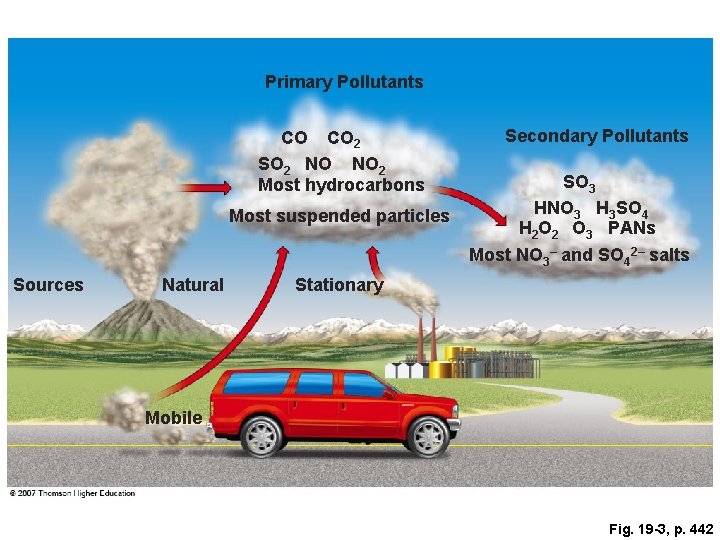
Primary Pollutants CO CO 2 SO 2 NO NO 2 Most hydrocarbons Most suspended particles Sources Natural Secondary Pollutants SO 3 HNO 3 H 3 SO 4 H 2 O 2 O 3 PANs Most NO 3– and SO 42– salts Stationary Mobile Fig. 19 -3, p. 442
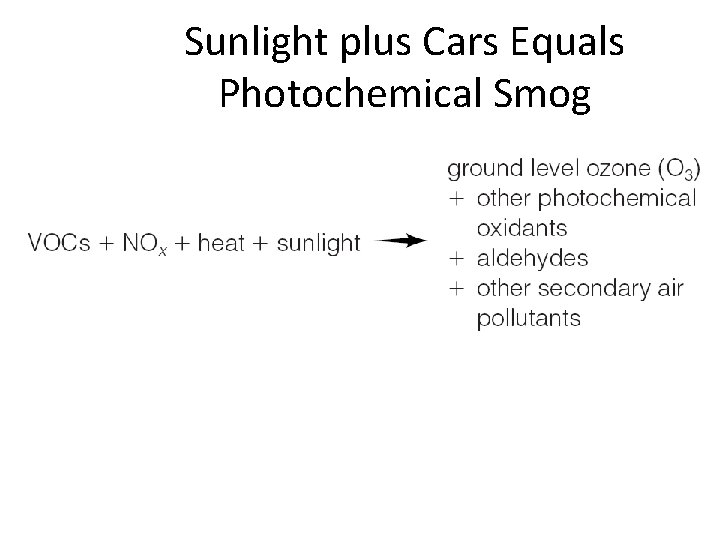
Sunlight plus Cars Equals Photochemical Smog
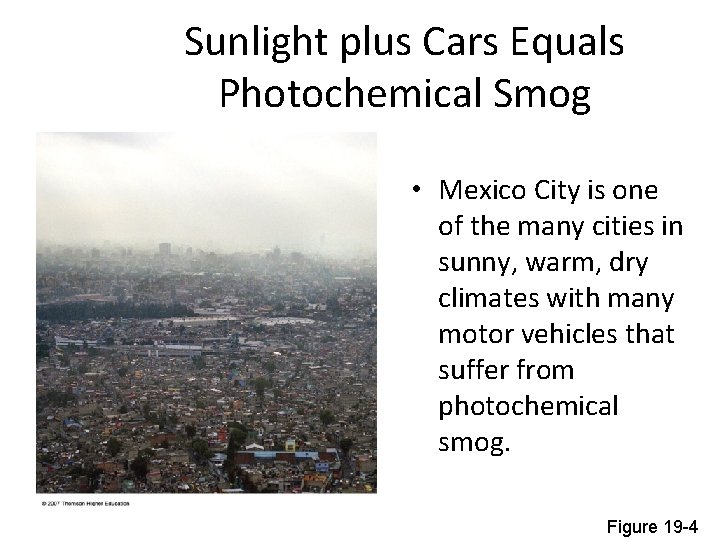
Sunlight plus Cars Equals Photochemical Smog • Mexico City is one of the many cities in sunny, warm, dry climates with many motor vehicles that suffer from photochemical smog. Figure 19 -4
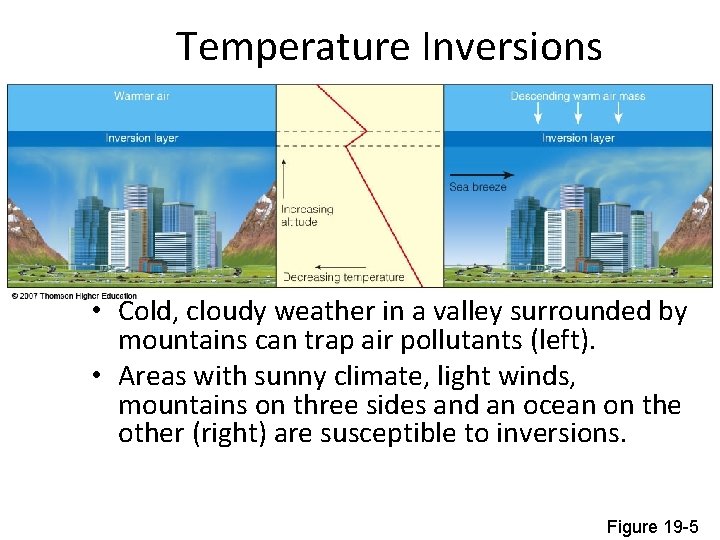
Temperature Inversions • Cold, cloudy weather in a valley surrounded by mountains can trap air pollutants (left). • Areas with sunny climate, light winds, mountains on three sides and an ocean on the other (right) are susceptible to inversions. Figure 19 -5
INDOOR AIR POLLUTION • Indoor air pollution usually is a greater threat to human health than outdoor air pollution. • According to the EPA, the four most dangerous indoor air pollutants in developed countries are: – Tobacco smoke. – Formaldehyde. – Radioactive radon-222 gas. – Very small fine and ultrafine particles.
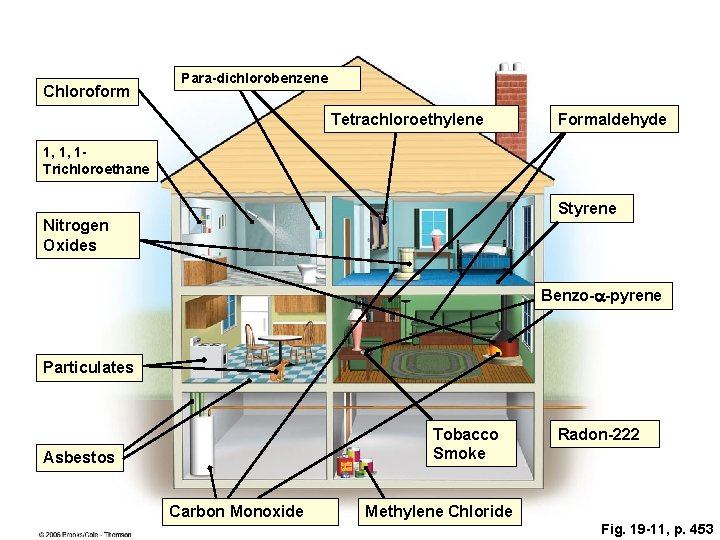
Chloroform Para-dichlorobenzene Tetrachloroethylene Formaldehyde 1, 1, 1 Trichloroethane Styrene Nitrogen Oxides Benzo-a-pyrene Particulates Tobacco Smoke Asbestos Carbon Monoxide Radon-222 Methylene Chloride Fig. 19 -11, p. 453
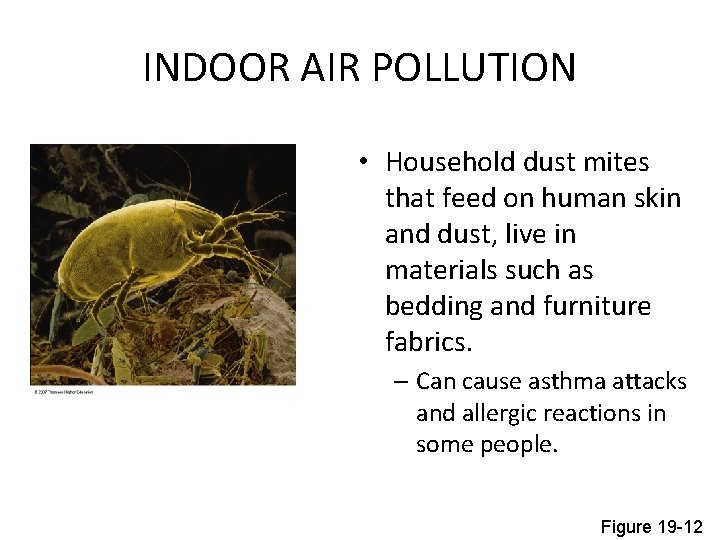
INDOOR AIR POLLUTION • Household dust mites that feed on human skin and dust, live in materials such as bedding and furniture fabrics. – Can cause asthma attacks and allergic reactions in some people. Figure 19 -12
• Radon (Rn): – Is a naturally occurring radioactive gas found in some types of soil and rock. – It can seep into homes and buildings sitting above such deposits. – Long-term exposure can lead to radiation induced cancer
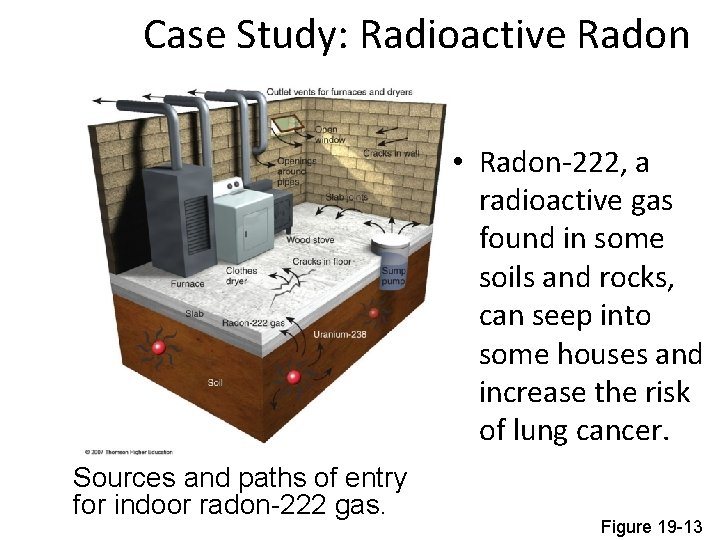
Case Study: Radioactive Radon • Radon-222, a radioactive gas found in some soils and rocks, can seep into some houses and increase the risk of lung cancer. Sources and paths of entry for indoor radon-222 gas Figure 19 -13
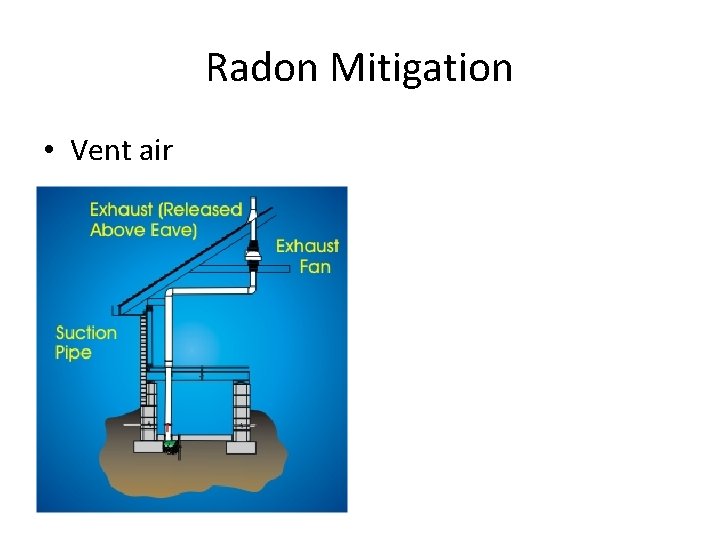
Radon Mitigation • Vent air
OZONE DEPLETION IN THE STRATOSPHERE • Ozone thinning: caused by CFCs and other ozone depleting chemicals (ODCs). – Increased UV radiation reaching the earth’s surface from ozone depletion in the stratosphere – UV radiation DOES NOT increase temperatures, Infrared radiation increases temperatures. Ozone thinning does not directly contribute to global warming.
Sources of ozone depleting chemicals • CFCs = Chloroflorocarbons – aerosols, coolants • Halons - Fire retardants • Hydrogen chloride – rocket launches
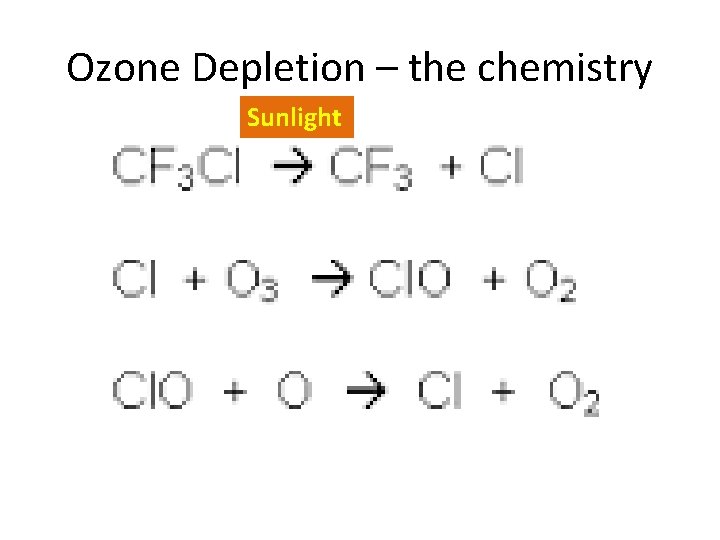
Ozone Depletion – the chemistry Sunlight
Ozone Depletion • ozone destruction animation Effects of Ozone Depletion • Increased skin cancer • Increased cataracts • Increased sunburn • Decreased phytoplankton populations!!! • Decreased plant photosynthesis
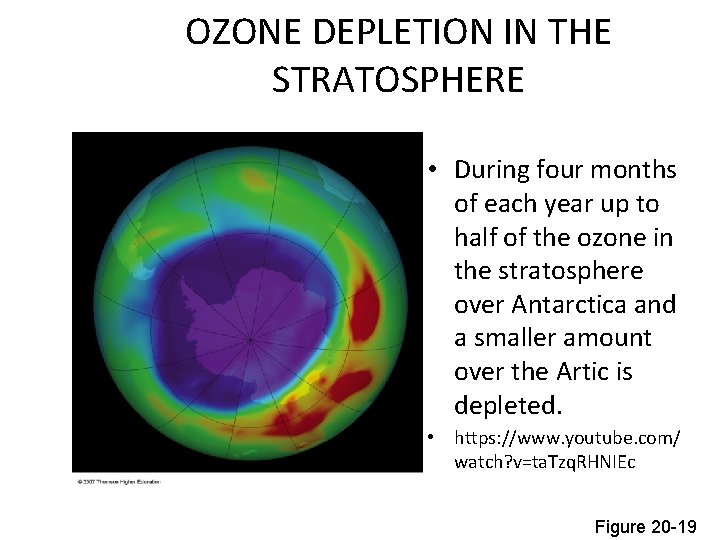
OZONE DEPLETION IN THE STRATOSPHERE • During four months of each year up to half of the ozone in the stratosphere over Antarctica and a smaller amount over the Artic is depleted. • https: //www. youtube. com/ watch? v=ta. Tzq. RHNIEc Figure 20 -19
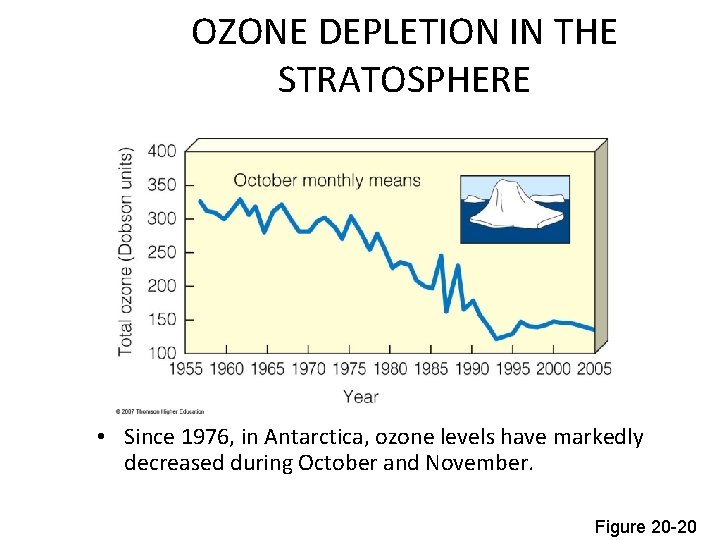
OZONE DEPLETION IN THE STRATOSPHERE • Since 1976, in Antarctica, ozone levels have markedly decreased during October and November. Figure 20 -20
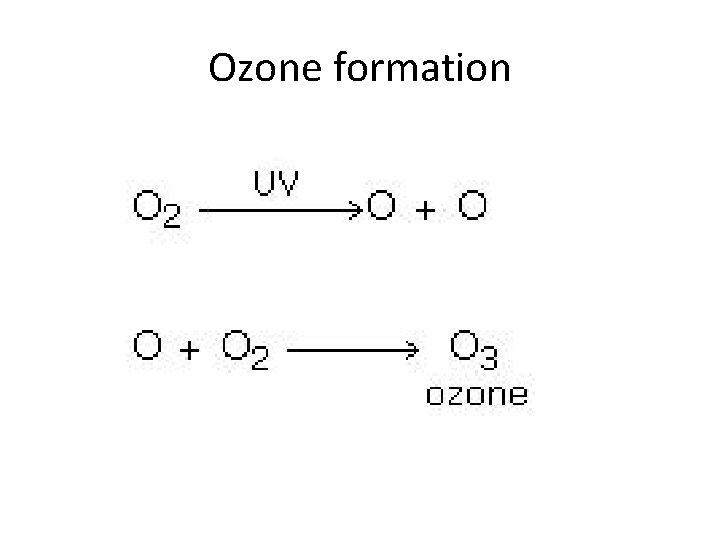
Ozone formation
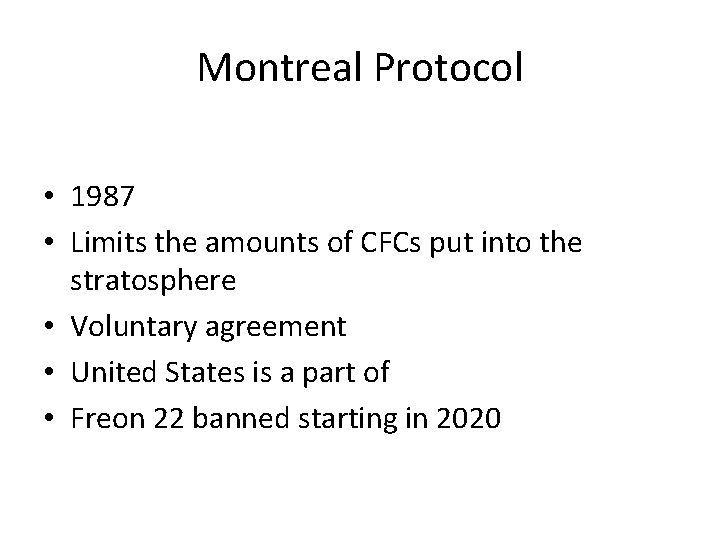
Montreal Protocol • 1987 • Limits the amounts of CFCs put into the stratosphere • Voluntary agreement • United States is a part of • Freon 22 banned starting in 2020
- Slides: 37