
Air pollution in Mexico City the destruction of
- Slides: 35
Air pollution in Mexico City, the destruction of the rain forest in Brazil, & oil-related pollution in Venezuela
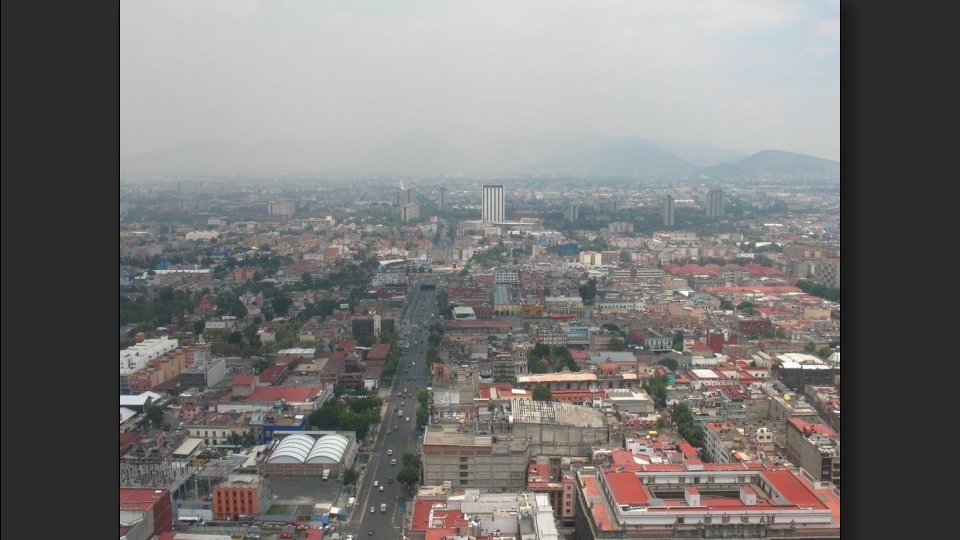
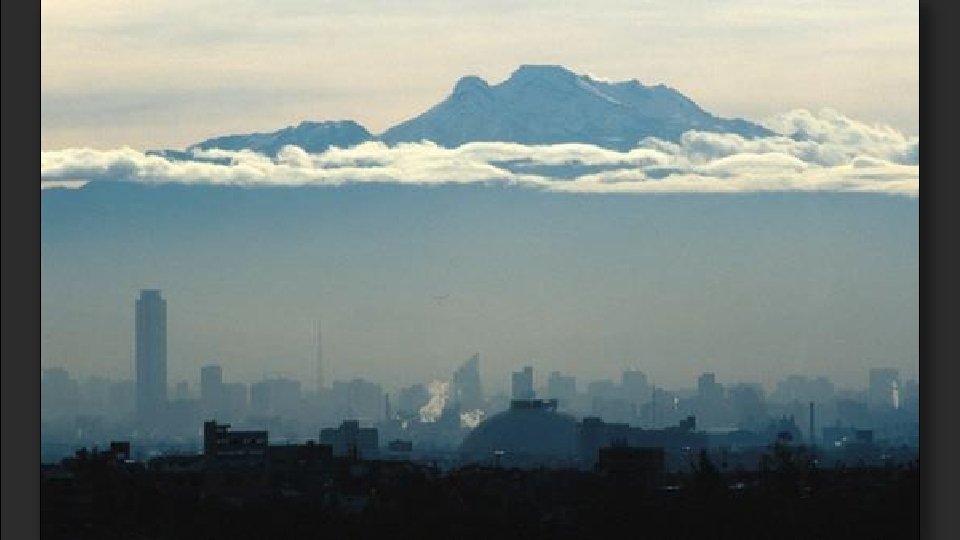
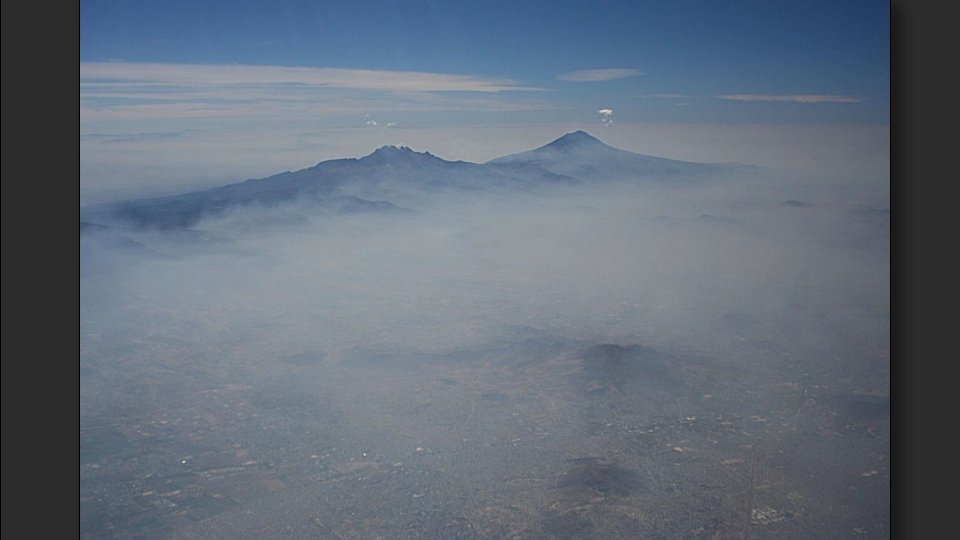
• Nearly 20 million people live in Mexico City. • It’s th e second most populated city in the world --Tokyo is first. • The city’s population & location contribute to its bad air pollution problem. • It’s considered to be the most polluted city in the world!
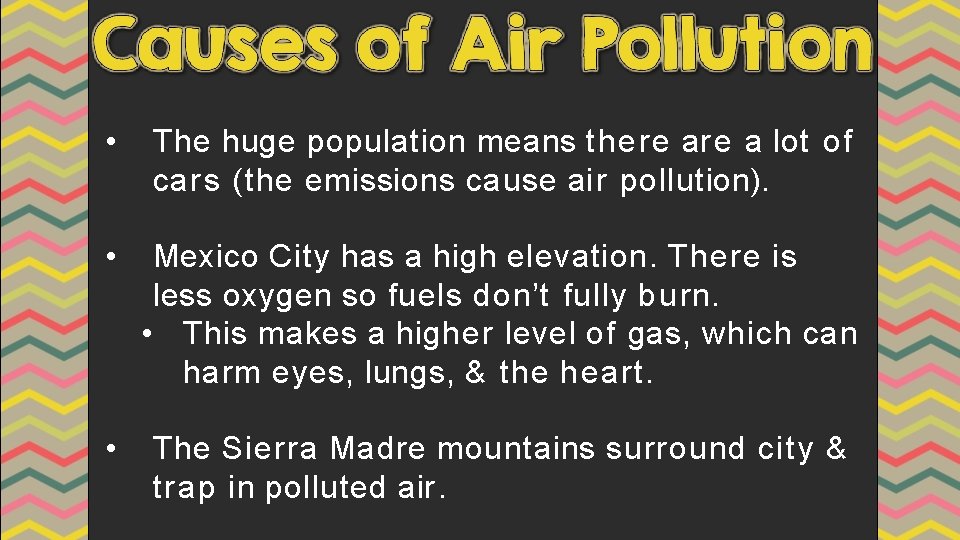
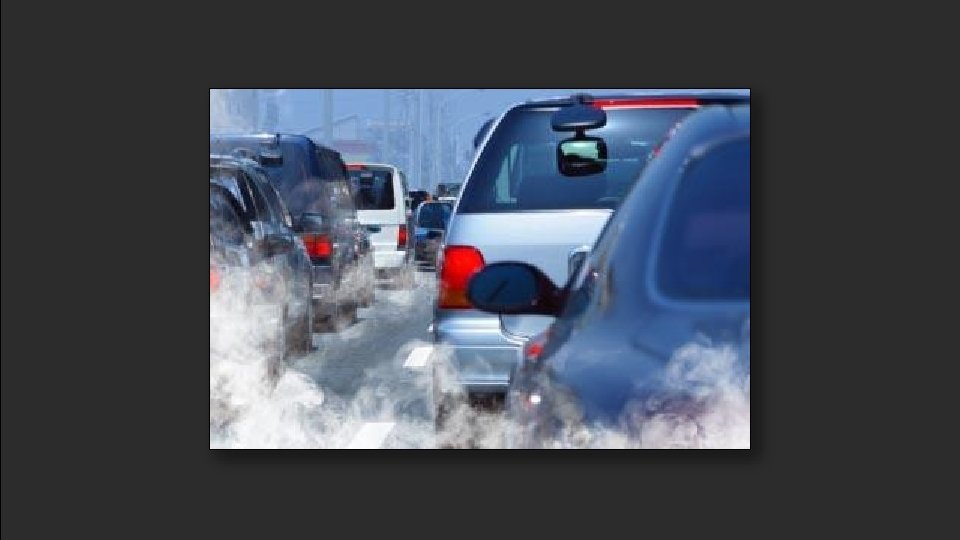
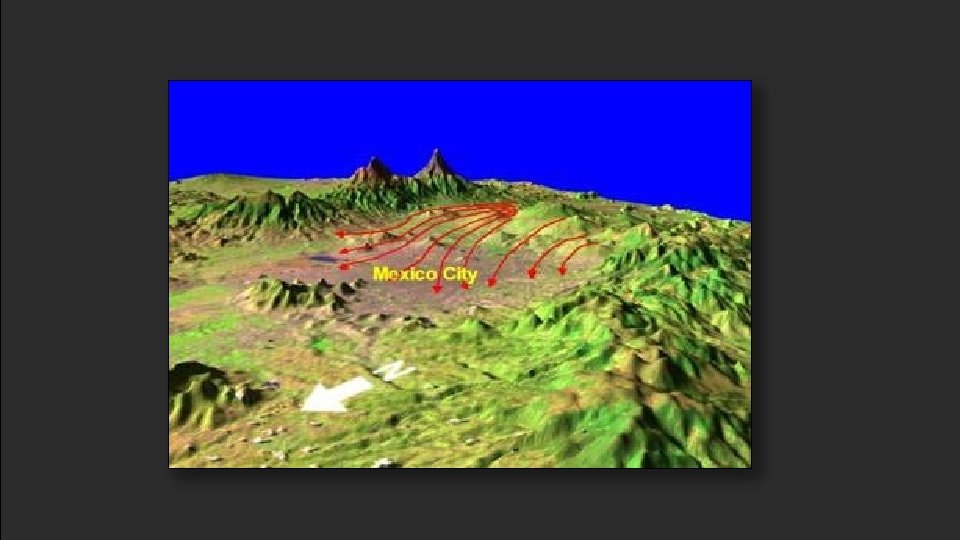
• The huge population means there ar e a lot of cars (the emissions cause ai r pollution). • Mexico City has a high elevation. There is less oxygen so fuels don’t fully burn. • This makes a higher level of gas, which can harm eyes, lungs, & the heart. • The Sierra Madre mountains surround city & trap in polluted air.
• To reduce air pollution, th e city promotes public transportation (buses, subway, bikes, etc. ). • The city is also te sting buses that run on cleaner burning fuels. • There are new r e s tr i c tions on car use. • The government also holds workshops to teach people about the environment.
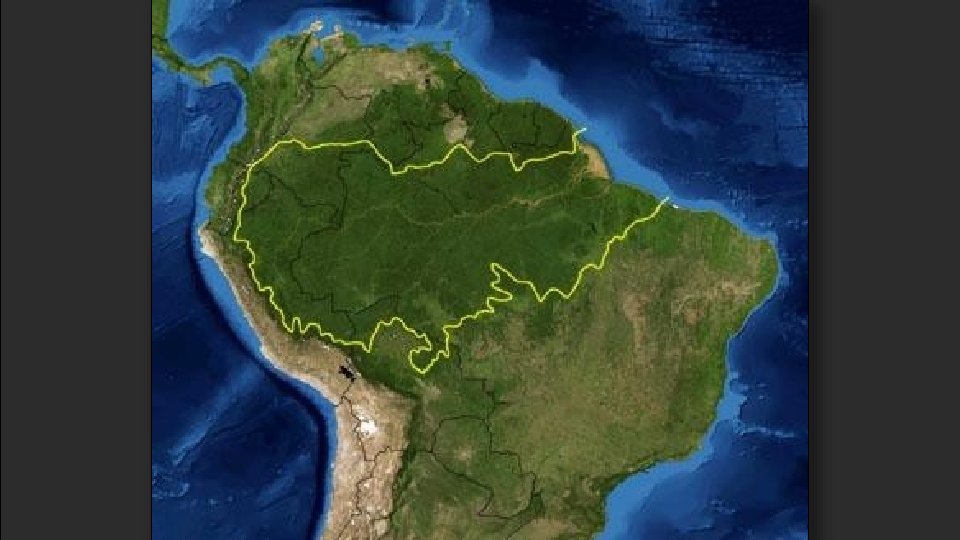
• It’s the largest rain forest left in the world. • Most of t he rain forest is in Brazil. • It experiences a hot, humid, & rainy tropical climate. • It’s home to a huge variety of plants, tre es, insects, birds, & animals. • It produces 1/3 of t he earth’s oxygen!
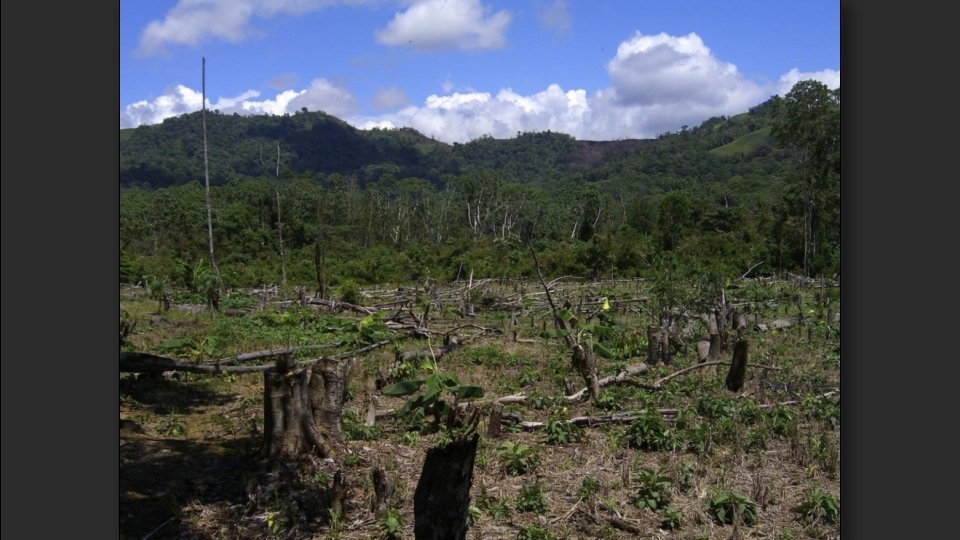
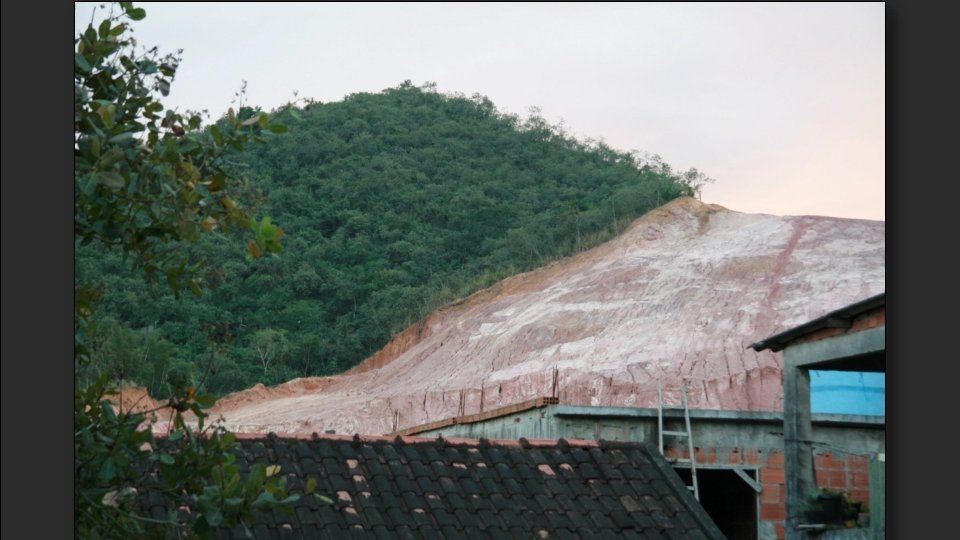
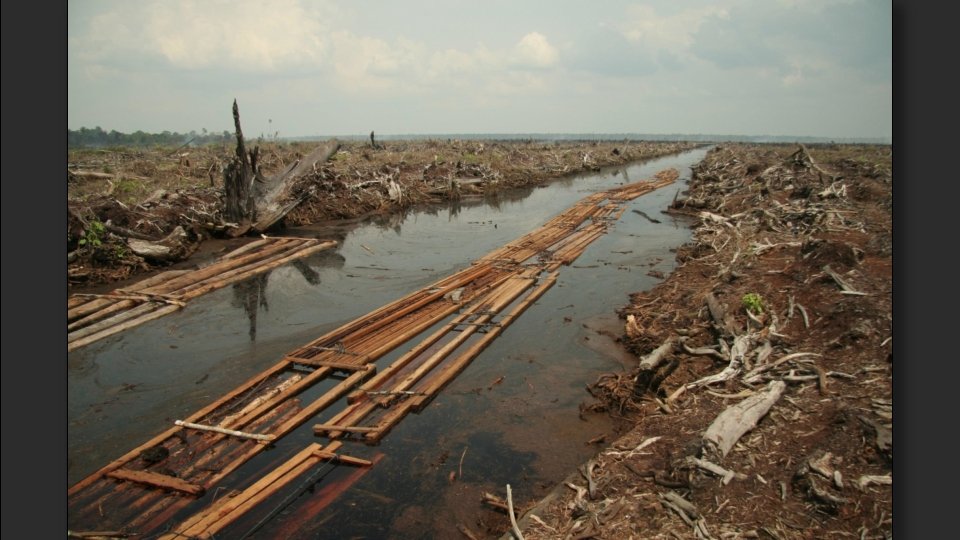
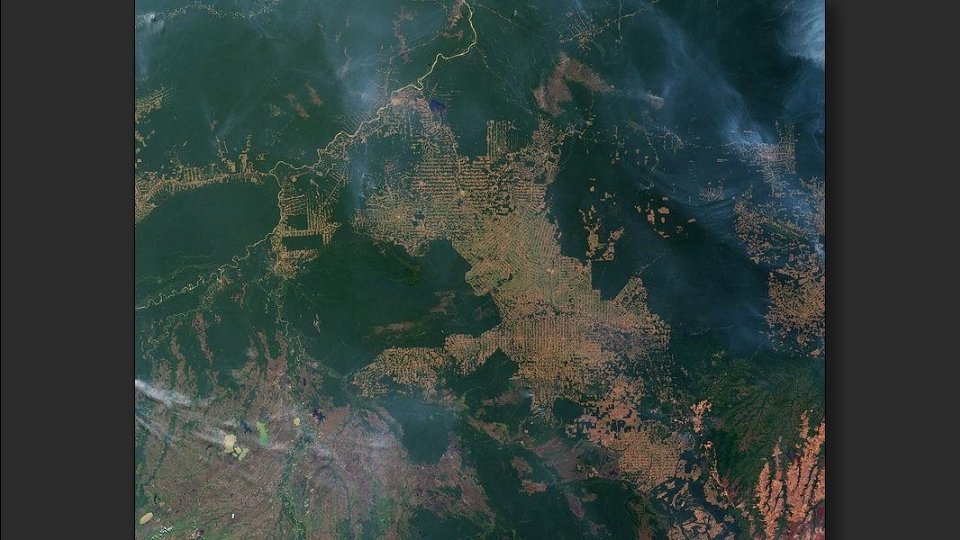
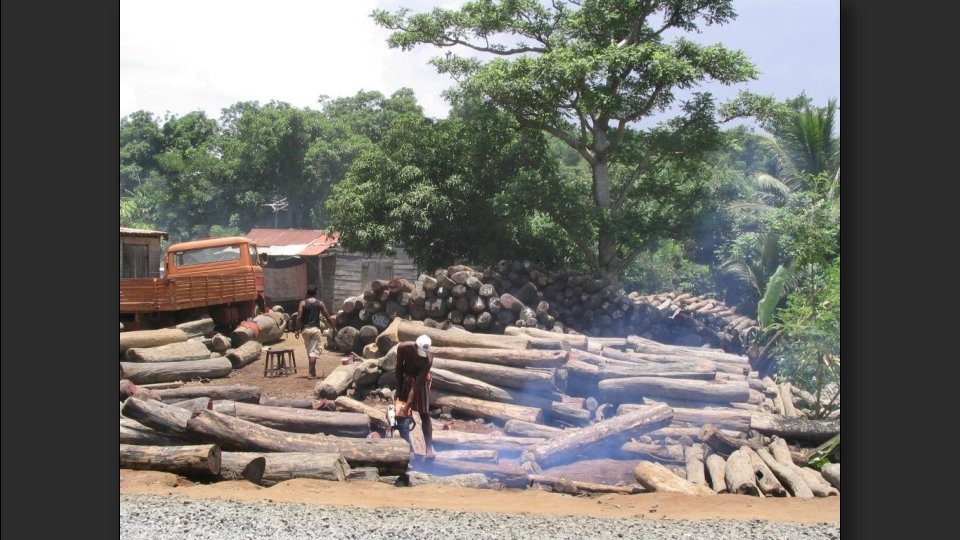
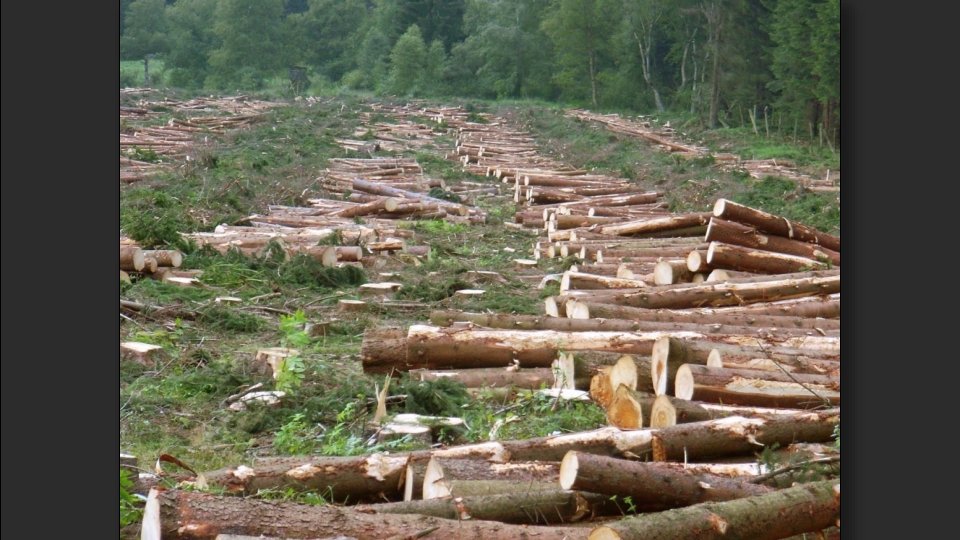
• In the 1950 s, t he Brazilian government began building a major highway system. • This opened th e rain forest to loggers. • Also, Brazil’s population has increased, and huge parts of th e rain forest are being cut down to create farms.
• Plants & animals are losing their homes; many are endangered, and some are becoming extinct. • The loss of t r ees increases carbon dioxide, a gas that contributes to global warming.
• The government is working to f ix the deforestation problem by passing laws on cutting down too many tree s. • What else do you think can be done?
• It’s one of the world’s leading producers of oil. • It has been producing oil f o r about 100 years. • Oil production has boosted the economy. • It’s the main source of income f o r many people. • Oil production results in toxic wastes, air pollution, & oil spills.
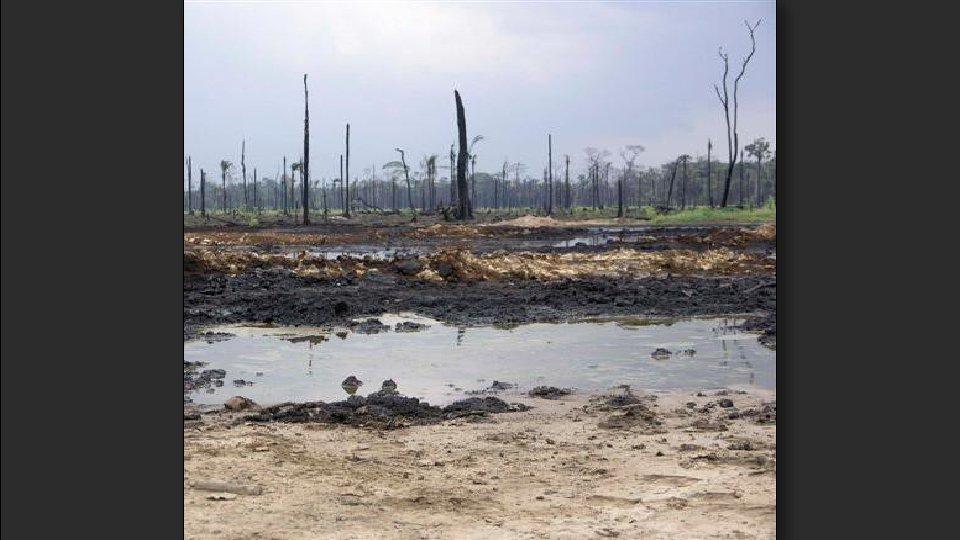
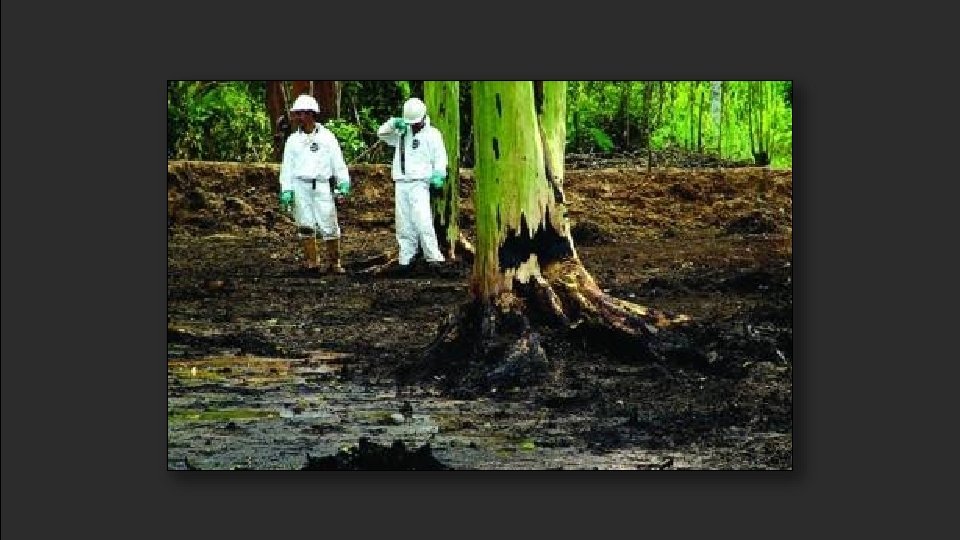
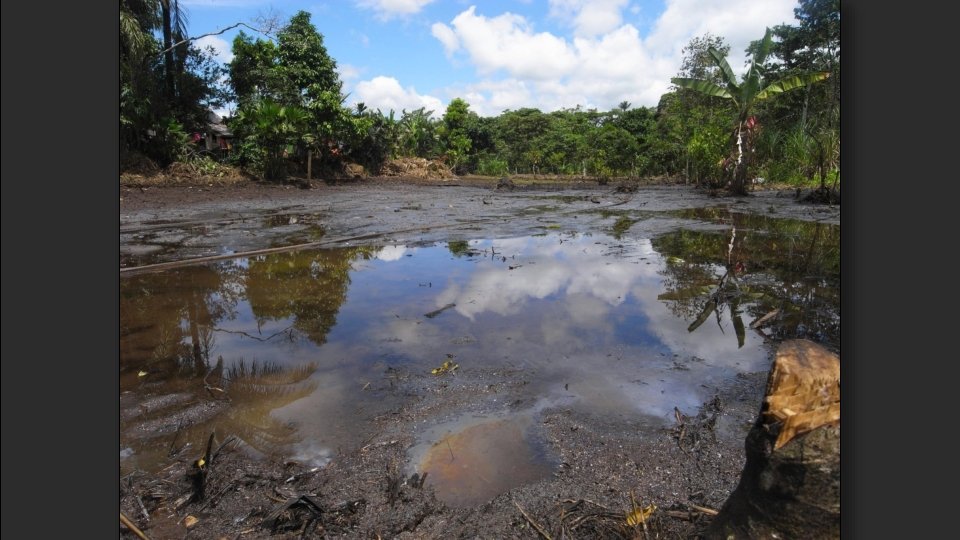
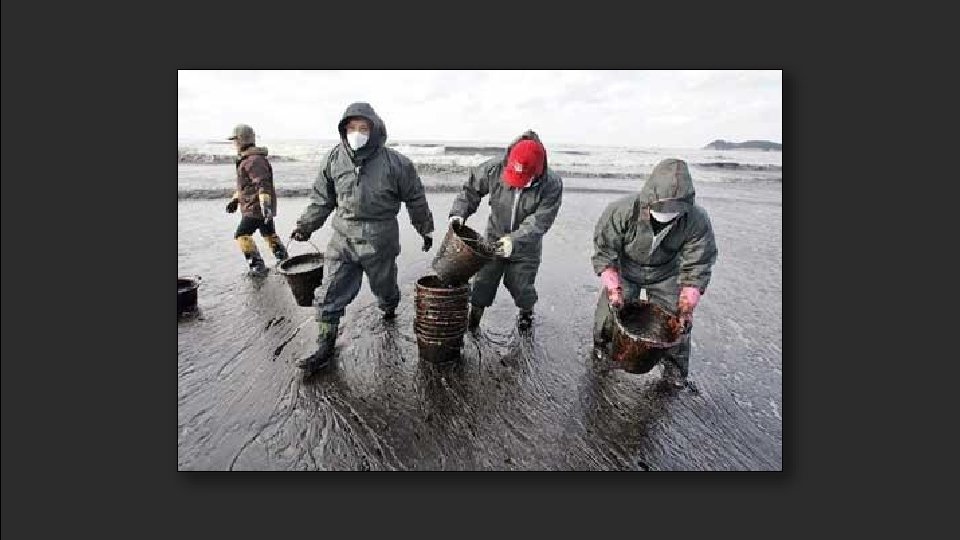
• Venezuela’s coast has become polluted with oil. • Oil spills have damaged the environment. • It also hurts the ability of fishermen to earn a living.
• Venezuela leads South America in the production of carbon dioxide, which is a by-product of burning fossil fu els like nat u ral gas & oil. • This can cause breathing problems f o r children & elderly. • It also cont r ibutes to global warming.
• Oil businesses have damaged Lake Maracaibo (largest lake in South America). • Large amounts of oil have been removed from the area so the land is changing. • The eastern shore of th e lake is dropping about three inches a year. • The government is having to take precautions to keep wat e r from flooding into nearby towns.
• Money from selling oil is th e country’s main source of income. • Venezuelans are motivated to keep producing, selling, and bu rning oil--and polluting—because it boosts th eir economy.
• People are becoming aware that the cost in the long term may be too great. • Groups are calling f o r renewable energy sources and the clean-up and prevention of pollution. • What else do you think can be done?
Your Task: Create a bumper sticker with a shor t statement or message convincing others who read it to solve one of t hese environmental issues. It MUST have: 1. Thoughtful message or statement describing your choice of which environmental issue in Latin America to solve. 2. Colorful visual 3. Underneath your creation, in a w ell-developed paragraph, describe the environmental issue and your ideas fo r how it can be solved.
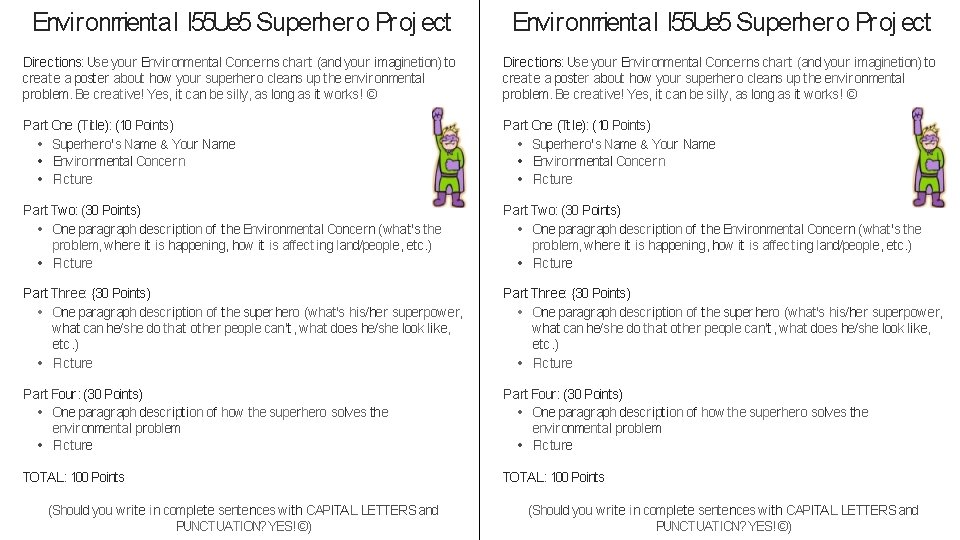
Environrriental l 55 Ue 5 Superher o Proj ect Directions: Use your Environmental Concerns chart (and your imaginetion) to create a poster about how your superhero cleans up the envir onmental problem. Be creative! Yes, it can be silly, as long as it works! © Part One (Tit le): (10 Points) • Superhero's Name & Your Name • Environmental Concer n • Picture Part Two: (30 Points) • One paragr aph description of the Environmental Concer n (what's the problem, where it is happening, how it is affecting land/people, etc. ) • Picture Part Three: {30 Points) • One paragr aph description of the superhero (what's his/her superpower, what can he/she do that ot her people can't, what does he/she look like, etc. ) • Picture Part Four: (30 Points) • One paragr aph description of how the superhero solves the environmental problem • Picture TOTAL: 100 Points (Should you write in complete sentences with CAPITAL LETTERSand PUNCTUATION? YES! ©) (Should you write in complete sentences with CAPITAL LETTERSand PUNCTUATICN? YES! ©)