
Air Pollution Greenhouse Gases What Local Governments Institutions

- Slides: 36
Air Pollution & Greenhouse Gases What Local Governments & Institutions Can Do Cindy Kemper, Director Johnson County Environmental Department Kansas Air Quality Conference March 2008
What We Will Cover n n Why should we care? Why are local governments & institutions key players? What organizational approaches & strategies work? What actions can make a difference? n n Short-term Long-term What challenges must we overcome? Are we making a difference?
Why should we care?
Why should we care? n Air pollution & GHG emissions affect human health and quality of life n n n In neighborhoods In cities & regions Across multiple states Globally Air pollution & GHG emissions affect economic development We are collectively responsible to future generations – Sustainability
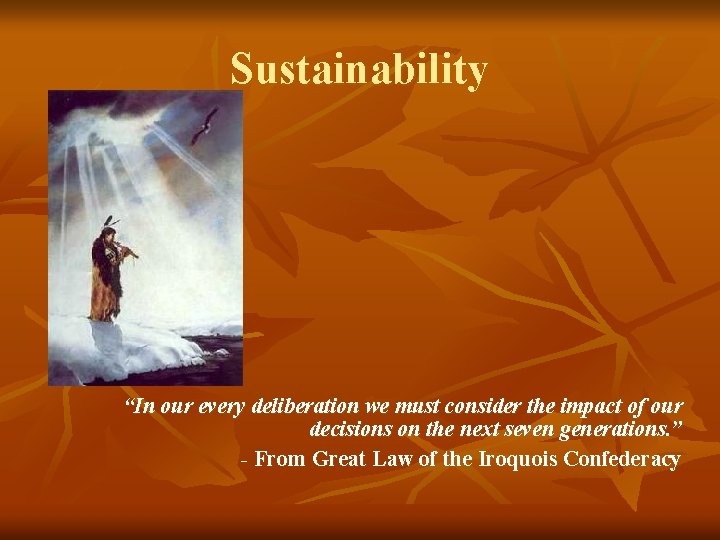
Sustainability “In our every deliberation we must consider the impact of our decisions on the next seven generations. ” - From Great Law of the Iroquois Confederacy
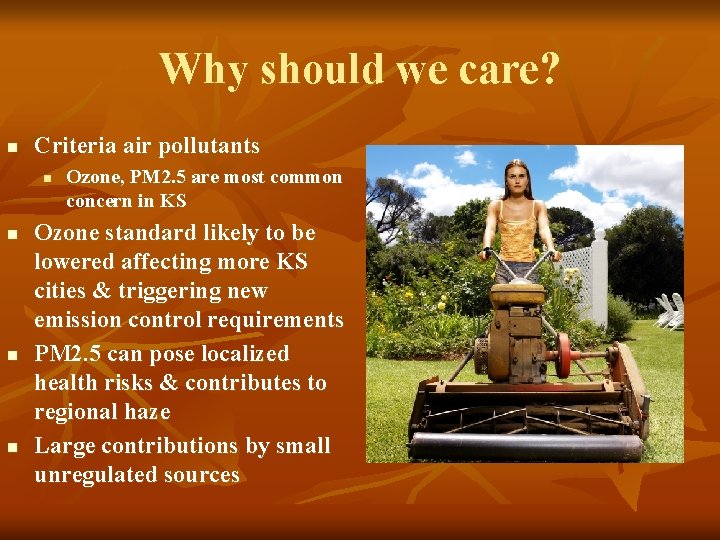
Why should we care? n Criteria air pollutants n n Ozone, PM 2. 5 are most common concern in KS Ozone standard likely to be lowered affecting more KS cities & triggering new emission control requirements PM 2. 5 can pose localized health risks & contributes to regional haze Large contributions by small unregulated sources
Why should we care? n n GHG emissions from man-made sources are affecting climate & are largely unregulated Climate affects all living systems Rapid & significant mitigation actions are needed Reducing GHG emissions is not about saving the earth. It’s about saving the human race.
Why should we care? n Public demands it n We are part of a “perfect storm” n If we fail to act, we have not done our jobs
We are in good company… Kansas City, Missouri Prairie Village More than 700 mayors from the 50 states, the District of Columbia and Puerto Rico, representing a total population of over 75, 000 citizens have signed the U. S. Conference of Mayors Agreement.
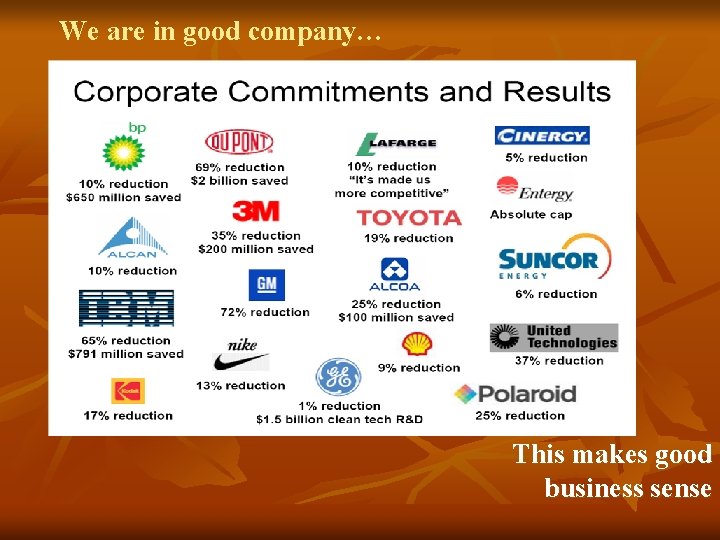
We are in good company… This makes good business sense
Why are local governments & institutions key players?
Why are local governments & institutions key players? n n n We are large employers with significant environmental footprints We can lead communities by example We are accountable to the public (citizens, businesses), so the public expects us to act responsibly We touch everyone in the community (sphere of influence) We exercise considerable influence & authority over the public (regulations, taxes, services) Our employees are regular citizens after hours – actions at work translate to changes at home
What organizational approaches & strategies work?
What organizational approaches & strategies work? n Get your own house in order first n Secure “buy-in” from the top n n n Identify your champions & build a team. If possible, hire a Sustainability Coordinator Identify your major air pollution & GHG emission sources (buildings, vehicles, equipment, etc. ) Identify your major processes that affect emissions elsewhere (procurement, communications, energy use, etc. ) Develop emissions inventory baselines (Climate Registry; ICLEI) Establish emission reduction plans with goals and timeframes, then track & report back n Goals can be “big, hairy & audacious, ” but actions to get there must be targeted & manageable (US Conference of Mayors; Cool Cities; Cool Counties)
What organizational approaches & strategies work? (cont) n Inventory & publicize your current successes (everyone is doing something, maybe for other reasons) n Emphasize actions that provide multi-pollutant and multi-media benefits n Consider life-cycle costs & benefits of actions & make the business case n n n Promote actions that fit with your organization’s commitment to environmental sustainability Emphasize the benefits that resonate with your customers & audience (environmental, social or economic) Consider your institutional & political environment in deciding how best to promote actions (incentives vs. disincentives; voluntary vs. mandatory) Reward & recognize staff participation & positive changes Don’t forget staff education, training & outreach. People are much more likely to act if they understand why.
What actions can make a difference?
What actions can make a difference? n Short-term Actions n n Long-term Actions n n “Low-hanging fruit” Quick wins Build & maintain momentum Harder & take longer to accomplish Typically more stakeholders involved Tend to represent the root of air pollution & GHG emission problems Don’t neglect long-term actions to focus solely on short-term gains – you’ll never solve the root problems
What actions can make a difference? n n n Many actions that reduce ozone & PM 2. 5 also reduce GHG emissions & visa-versa Many actions that reduce emissions also conserve energy & save money Many actions that protect water quality or reduce solid waste also reduce emissions Choose actions that have multiple benefits; avoid actions that shift the problem elsewhere Implement actions in a way that minimizes impacts to human and financial capital as well as natural capital – triple bottom line decision-making
What actions can make a difference? n Short-term actions for local governments & other institutions (internal) n n Buy fuel efficient vehicles (hybrids) & “right-size” your fleet Maintain and operate vehicles properly n n n n n Tires Gas caps Tune-ups Retrofit diesel engines (equipment, trucks, buses) Institute anti-idling & re-fueling policies Expand alternative fuels use (E-85, propane, biodiesel) Incentivize alternative commuting methods Install vapor recovery equipment at re-fueling stations Encourage employees to take actions on high ozone days (brown bag lunches, ride the bus, telecommute, teleconferences)
What actions can make a difference? (cont. ) n Short-term actions for local governments & other institutions (internal) n n n n n Implement “low impact” landscaping practices Purchase & use “no-leak” gas cans Market charcoal chimneys to employees Convert to “green” cleaning products Replace inefficient lighting fixtures Turn off lights, computers, monitors & other office equipment when not in use Purchase copiers & printers that duplex and institute duplexing policies Reuse “good on one side” paper before recycling Provide paper recycling bins at every desk & down-size trash containers Find & use recycling outlets for electronic waste
What actions can make a difference? (cont. ) n Longer-term actions for local governments & other institutions (internal) n n n Develop & implement sustainability criteria for new & renovated buildings (e. g. , carbon neutral buildings) Develop & implement plans to achieve “zero” waste in government or institutional operations Develop & implement Green Procurement policies & practices Integrate sustainability into all internal systems including budgeting, strategic planning, employee performance, etc. Consider investing any cost savings from successful actions in new actions – revolving fund Urge state & federal governments to adopt policies & provide resources that support local air pollution & GHG emission reduction efforts
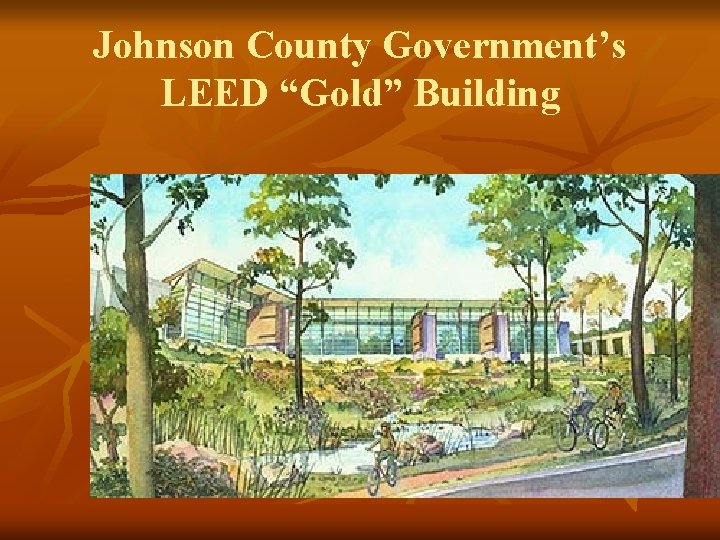
Johnson County Government’s LEED “Gold” Building
Actions that expand your sphere of influence
What actions can make a difference? (cont. ) n Actions for local governments & other institutions (external) n n n Provide opportunities & support for community discussions about air pollution & climate change (libraries, schools, neighborhood groups, regional associations, etc) Share internal successes & failures with community partners (public, private, non-profit, neighborhood) & urge them to take similar actions within their own organizations Collaborate with your local businesses & business associations; they can be your biggest ally
What actions can make a difference? (cont. ) n Actions for local governments & other institutions (external) n n n Initiate “hard conversations” about whether land use, economic development & transportation policies should be re-visited to promote a more sustainable community (e. g. , urban core redevelopment, preservation of green space) Consider whether building and site development codes should be revised to encourage things like energy efficient building design, heat island mitigation, mixed use development patterns, walkable communities, etc. Incorporate sustainability expectations & criteria into contracts for materials or service
What challenges must we overcome?
What challenges must we overcome? n n Making the problem real & personal Competing priorities & limited resources Developing tools to make the job easier Avoiding duplication of efforts
Making the problem real & personal
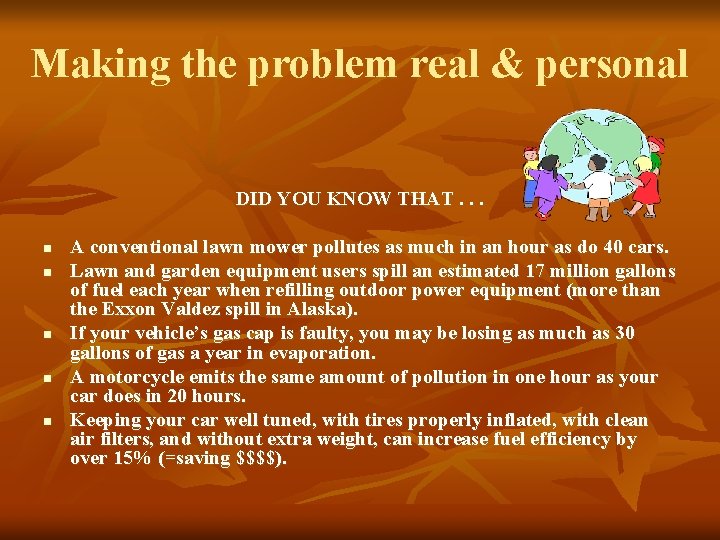
Making the problem real & personal DID YOU KNOW THAT. . . n n n A conventional lawn mower pollutes as much in an hour as do 40 cars. Lawn and garden equipment users spill an estimated 17 million gallons of fuel each year when refilling outdoor power equipment (more than the Exxon Valdez spill in Alaska). If your vehicle’s gas cap is faulty, you may be losing as much as 30 gallons of gas a year in evaporation. A motorcycle emits the same amount of pollution in one hour as your car does in 20 hours. Keeping your car well tuned, with tires properly inflated, with clean air filters, and without extra weight, can increase fuel efficiency by over 15% (=saving $$$$).
What challenges must we overcome? n n n Overcoming inertia & resistance to change Managing & harnessing growing desire to “do something” Making a real difference
Are we making a difference?
Johnson County Government Accomplishments n n n n Since 2004, almost 400 tons of air pollution has been eliminated due to county employees’ actions Vehicle miles traveled by county employees were reduced by about 800, 000 since 2004 The County owns 38 hybrid vehicles, saving at least $37, 350 in reduced gas consumption Vapor recovery equipment installed at County-owned refueling stations, reducing VOC emissions by 2/3 tons per year Idle-free zones established at area schools Sponsored change-a-light campaign for employees, saving $41, 700 in electricity costs & reducing 278 tons of GHGs Built LEED-Gold office building, reducing energy use by more than 43% in the first year
Johnson County Government Accomplishments (cont) n n n Resolution to reduce community-wide GHG emissions by 80% by 2050; and carbon-neutral county buildings by 2030 Commitment to “zero” waste in county government operations by 2020 New county-wide Solid Waste Plan that promotes aggressive waste reduction Founding member of EPA’s Sustainable Skylines, Cen. SARA’s Blue Skyways, America’s Green Region Strategy, and the Chamber’s Climate Change Partnership Other local government & institutional partners have implemented their own actions Much, much more
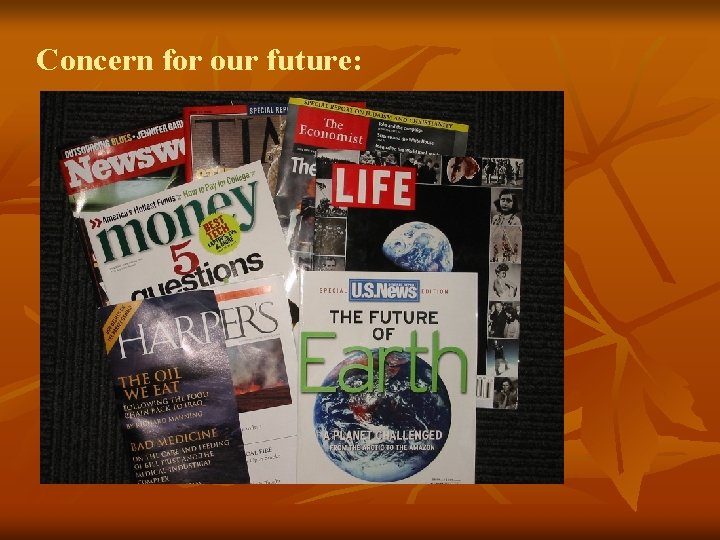
Concern for our future:
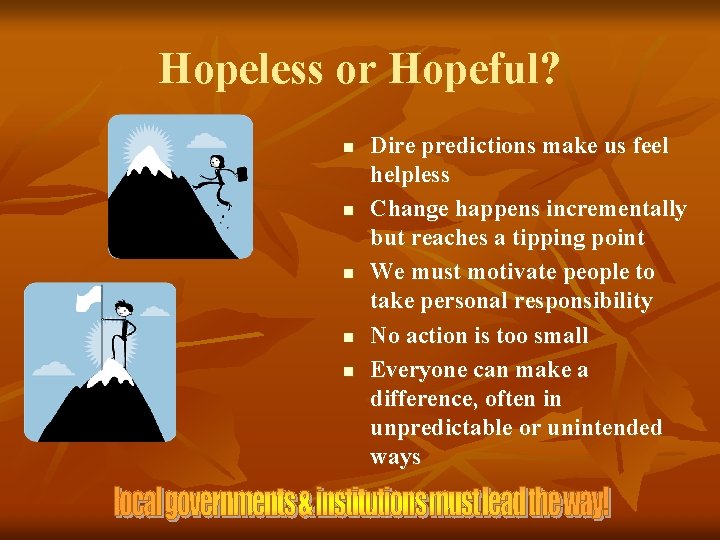
Hopeless or Hopeful? n n n Dire predictions make us feel helpless Change happens incrementally but reaches a tipping point We must motivate people to take personal responsibility No action is too small Everyone can make a difference, often in unpredictable or unintended ways
Sharetheair. com Cindy. Kemper@jocogov. org (913) 715 -6900