
Air Pollution Forecasting with Machine Learning by Using
Air Pollution Forecasting with Machine Learning by Using WRF-Chem Model Output Umur Dinç¹, Zeynep Feriha Ünal¹, Hüseyin Toros¹ ¹Meteorological Engineering Department, Istanbul Technical University, Istanbul
Content • What is Machine Learning? • General Information about H 20 Model *Usage areas, main principles • Model Configurations *WRF-Chem Model *H 20 Model • Results *WRF-Chem/Observed Data & H 20 Model/Observed Data • Conclusion and Future Work

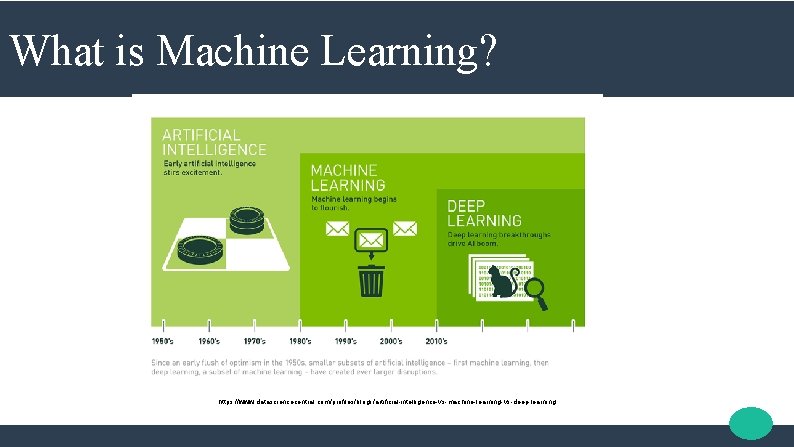
What is Machine Learning? • Machine learning is an popular method for prediction nowadays. • Machine learning is an application of artificial intelligence (AI) that provides systems the ability to automatically learn and improve from experience without being explicitly programmed. (Varone et al. , n. d) https: //www. psychologytoday. com/us/blog/the-future-brain/201801/the-unbearable-conundrum-aiconsciousness
What is Machine Learning? https: //www. datasciencecentral. com/profiles/blogs/artificial-intelligence-vs-machine-learning-vs-deep-learning
General Information about H 20 Model • There are many machining learning approaches which are widely used by big communities such as Tensor. Flow, Pytorch. We choose H 2 O for our study The reason why we selected as our study model, H 2 O has an easy user interface to perform great predictional applications. H 2 O is an open-source machine learning platform which is one of the most common used machine learning platforms. • Model is trained with relative datasets which we want to predict. We need to put all variables with our target data to teach our model.

General Information about H 20 Model is that we used a package located in R software. There are packages in other software as well. H 20 Architecture (Candel, A. 2014)
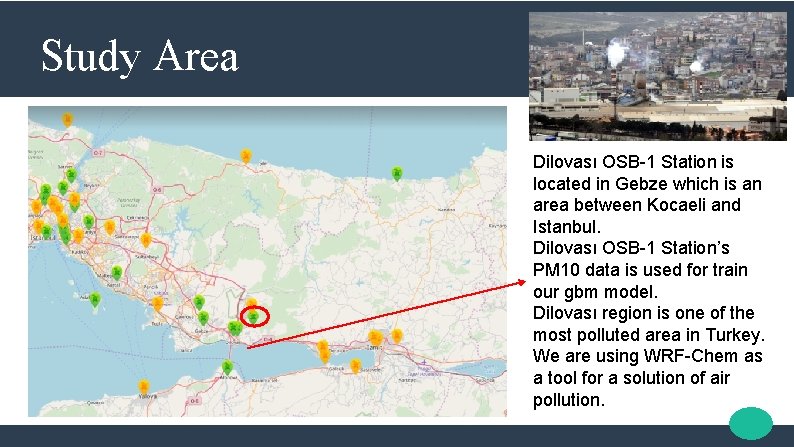
Study Area Dilovası OSB-1 Station is located in Gebze which is an area between Kocaeli and Istanbul. Dilovası OSB-1 Station’s PM 10 data is used for train our gbm model. Dilovası region is one of the most polluted area in Turkey. We are using WRF-Chem as a tool for a solution of air pollution.
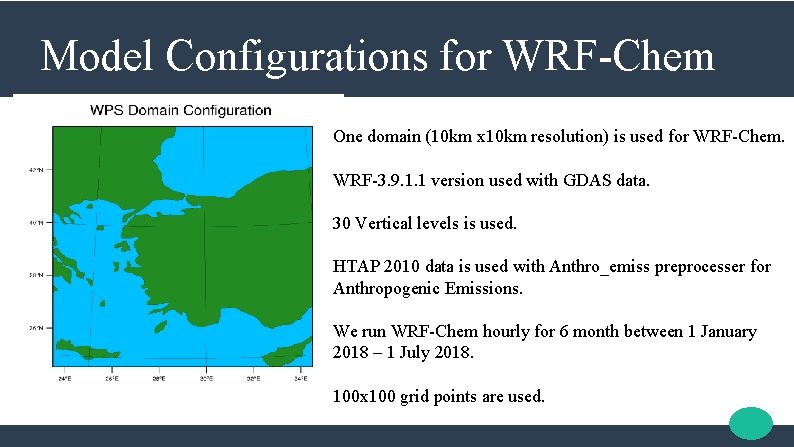
Model Configurations for WRF-Chem One domain (10 km x 10 km resolution) is used for WRF-Chem. WRF-3. 9. 1. 1 version used with GDAS data. 30 Vertical levels is used. HTAP 2010 data is used with Anthro_emiss preprocesser for Anthropogenic Emissions. We run WRF-Chem hourly for 6 month between 1 January 2018 – 1 July 2018. 100 x 100 grid points are used.
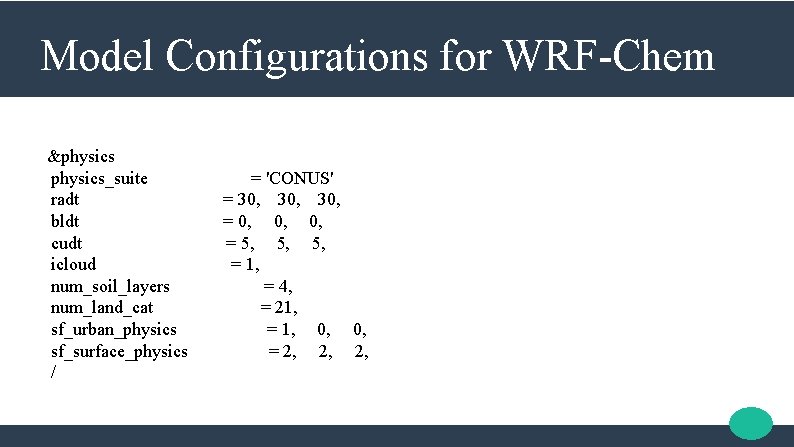
Model Configurations for WRF-Chem &physics_suite radt bldt cudt icloud num_soil_layers num_land_cat sf_urban_physics sf_surface_physics / = 'CONUS' = 30, 30, = 0, 0, 0, = 5, 5, 5, = 1, = 4, = 21, = 1, 0, 0, = 2, 2, 2,
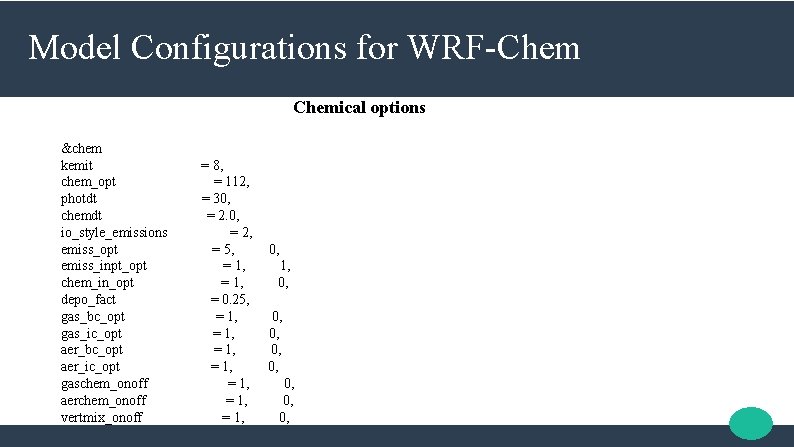
Model Configurations for WRF-Chemical options &chem kemit chem_opt photdt chemdt io_style_emissions emiss_opt emiss_inpt_opt chem_in_opt depo_fact gas_bc_opt gas_ic_opt aer_bc_opt aer_ic_opt gaschem_onoff aerchem_onoff vertmix_onoff = 8, = 112, = 30, = 2, = 5, = 1, = 0. 25, = 1, = 1, 0, 1, 0, 0,
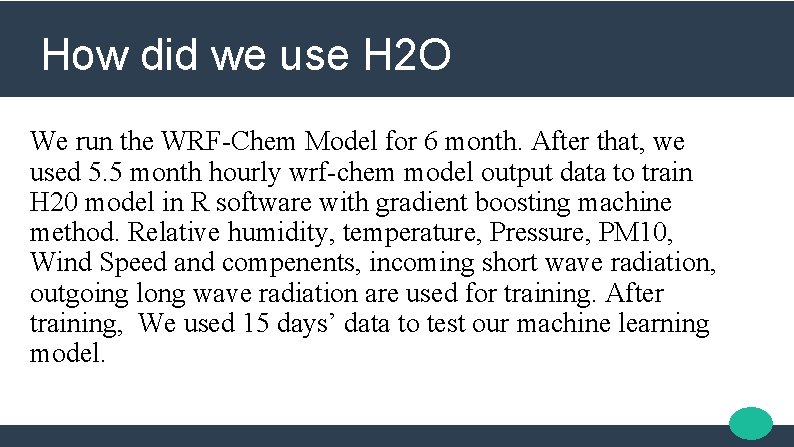
How did we use H 2 O We run the WRF-Chem Model for 6 month. After that, we used 5. 5 month hourly wrf-chem model output data to train H 20 model in R software with gradient boosting machine method. Relative humidity, temperature, Pressure, PM 10, Wind Speed and compenents, incoming short wave radiation, outgoing long wave radiation are used for training. After training, We used 15 days’ data to test our machine learning model.

Results
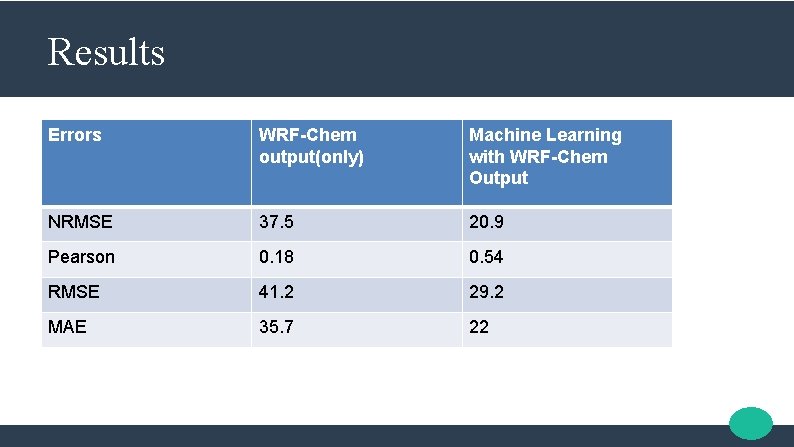
Results Errors WRF-Chem output(only) Machine Learning with WRF-Chem Output NRMSE 37. 5 20. 9 Pearson 0. 18 0. 54 RMSE 41. 2 29. 2 MAE 35. 7 22
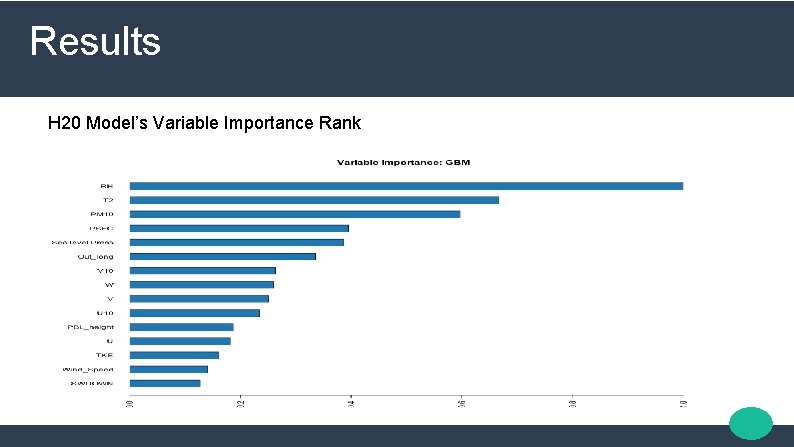
Results H 20 Model’s Variable Importance Rank
Conclusion and Future Work We can see that Machine learning model increased accuracy significantly. For the better results, we need better emission inventory for WRF-Chem model. We want to use machine learning to improve our model results.

Thank you for listening. .
- Slides: 16