
Air Pollutants and Their Sources Six Common Air
- Slides: 18
Air Pollutants and Their Sources
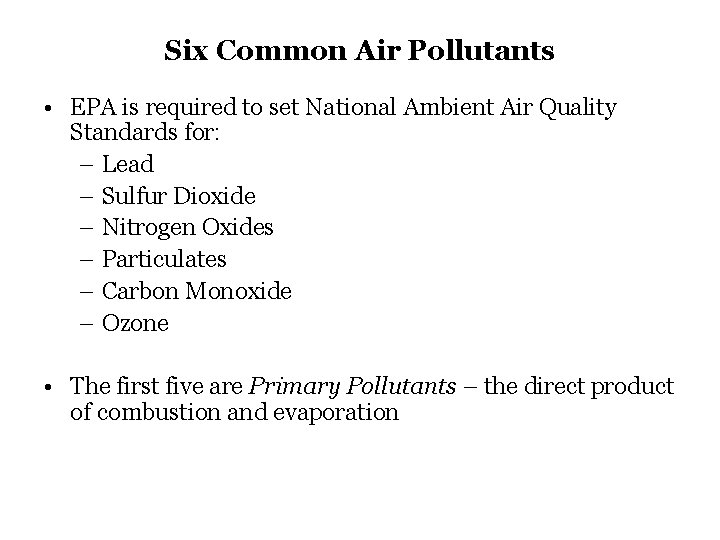
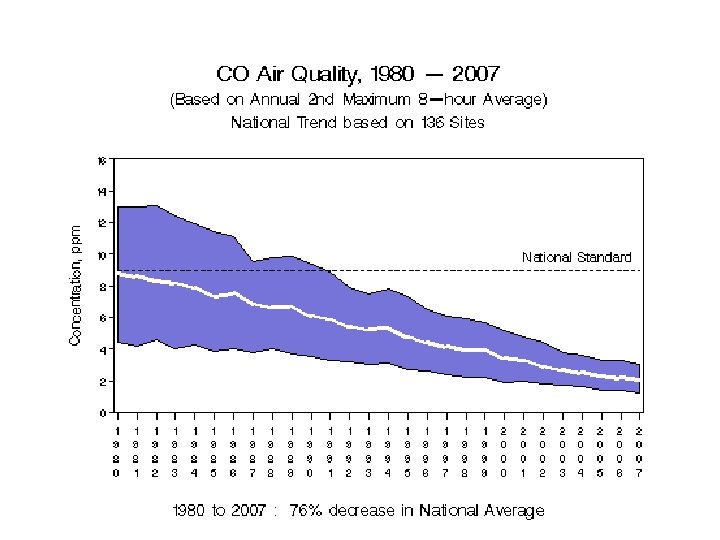
Six Common Air Pollutants • EPA is required to set National Ambient Air Quality Standards for: – Lead – Sulfur Dioxide – Nitrogen Oxides – Particulates – Carbon Monoxide – Ozone • The first five are Primary Pollutants – the direct product of combustion and evaporation
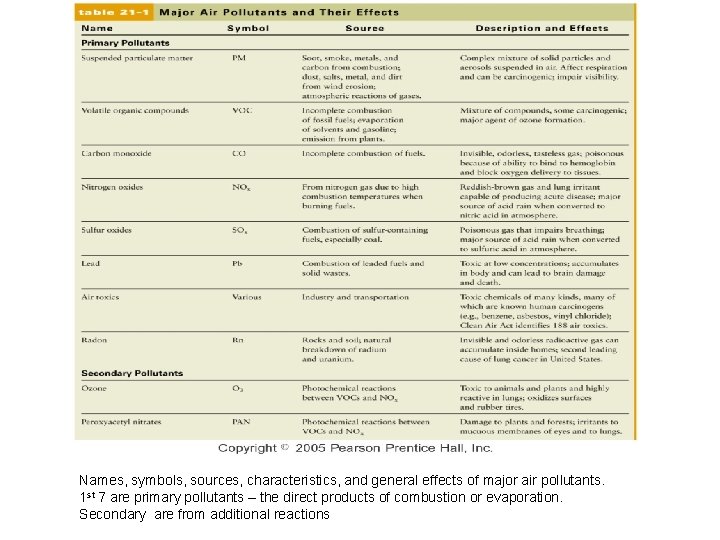
Names, symbols, sources, characteristics, and general effects of major air pollutants. 1 st 7 are primary pollutants – the direct products of combustion or evaporation. Secondary are from additional reactions
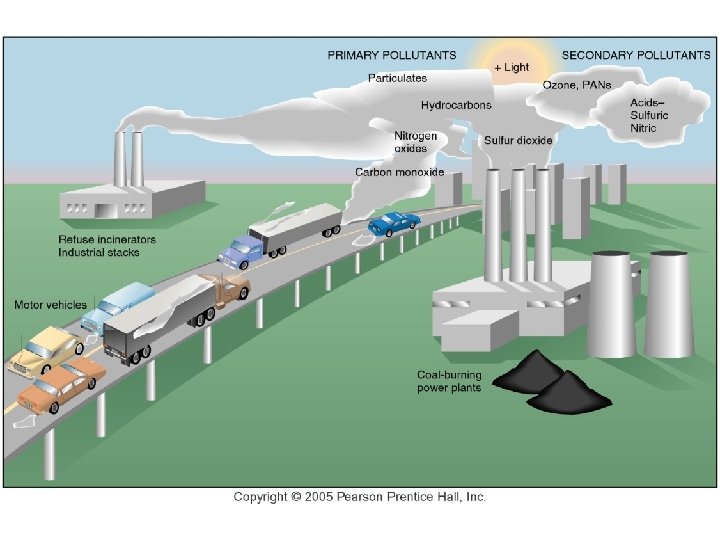
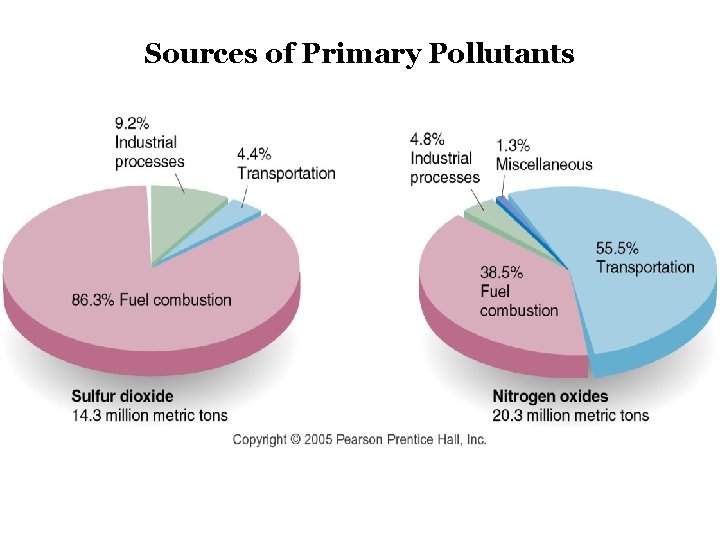
Sources of Primary Pollutants
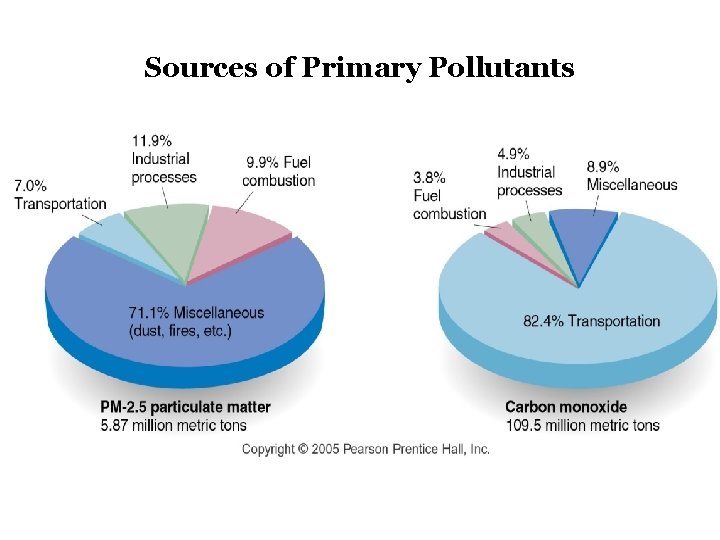
Sources of Primary Pollutants
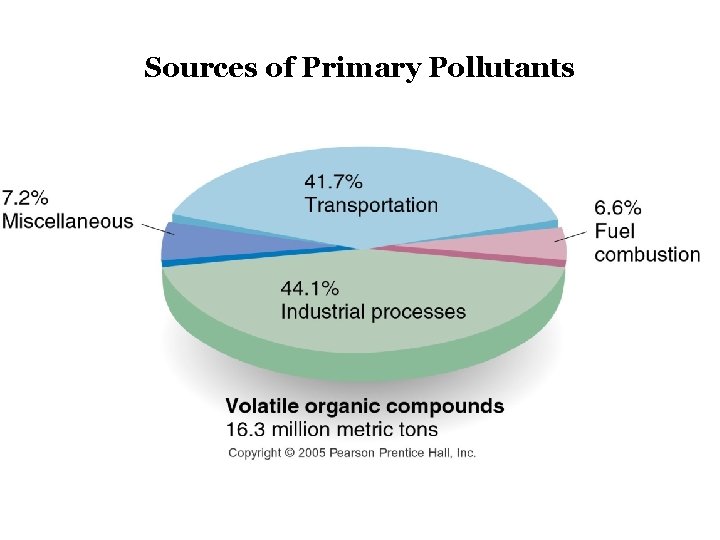
Sources of Primary Pollutants
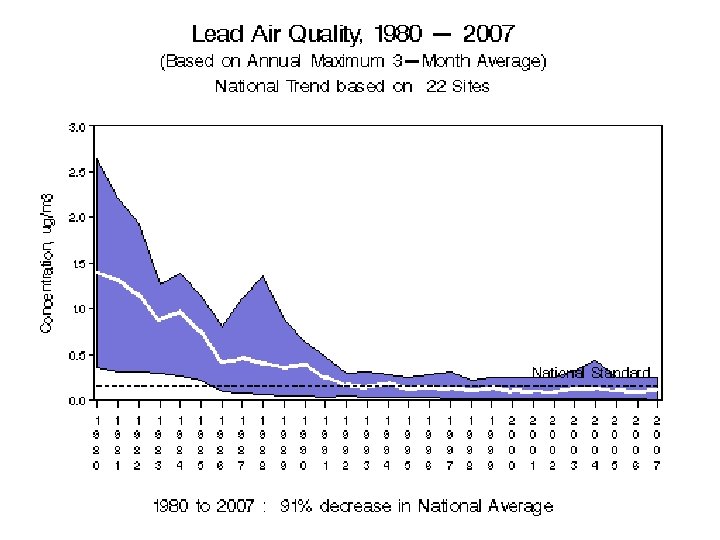
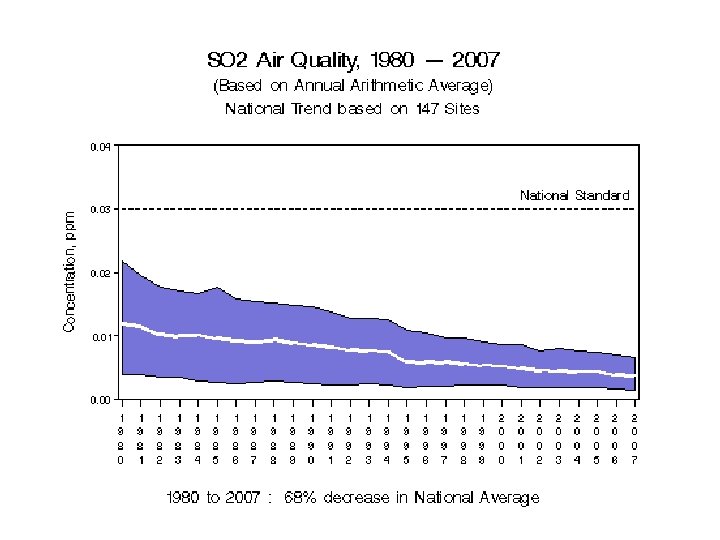
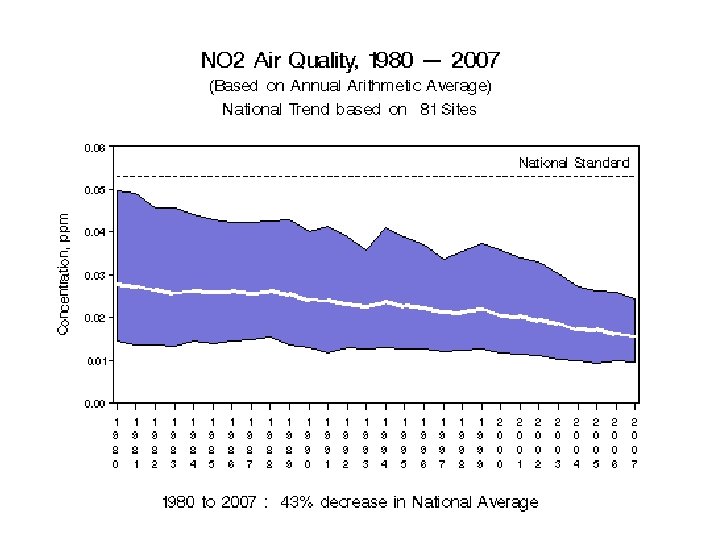
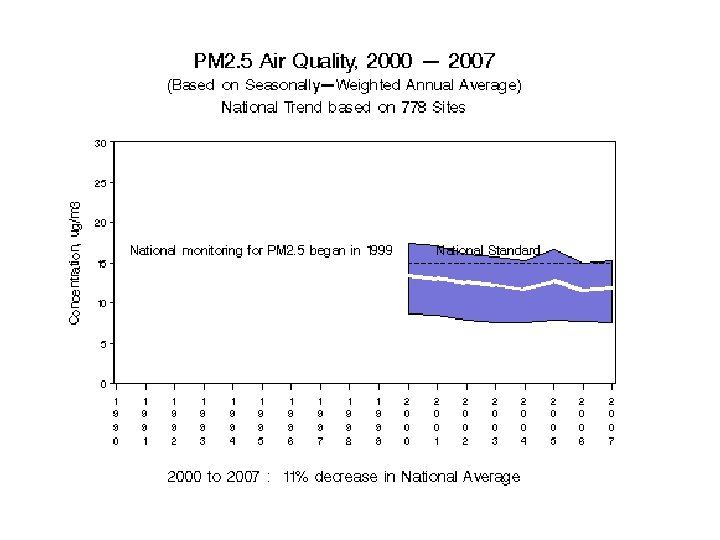
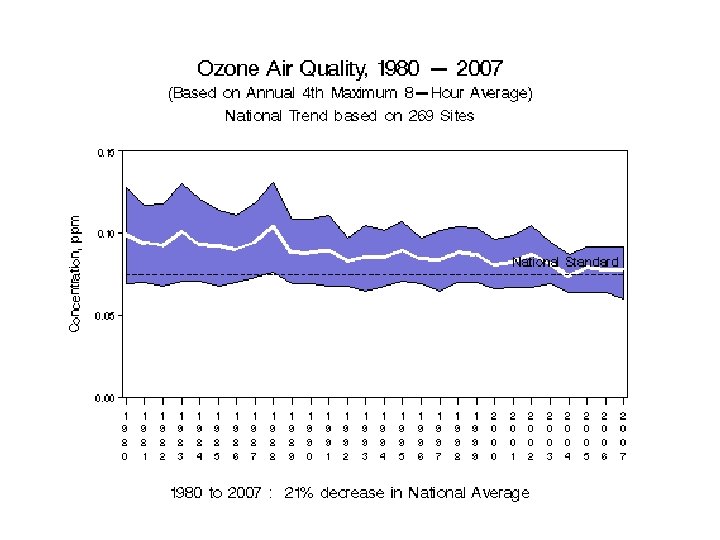
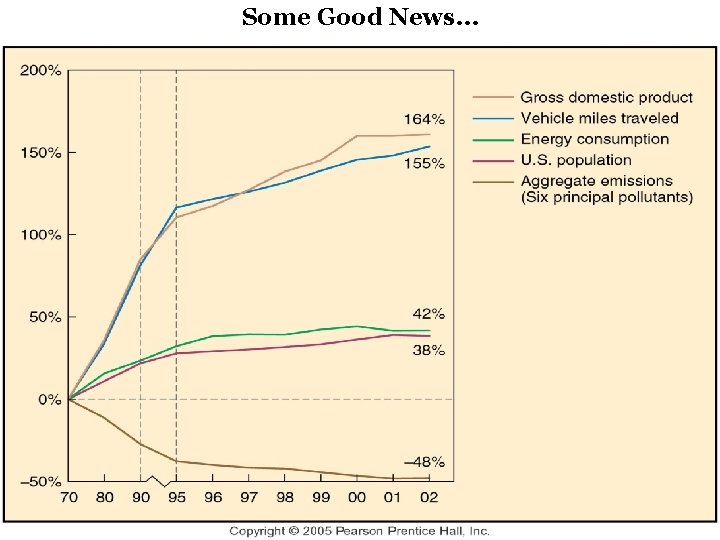
Some Good News…
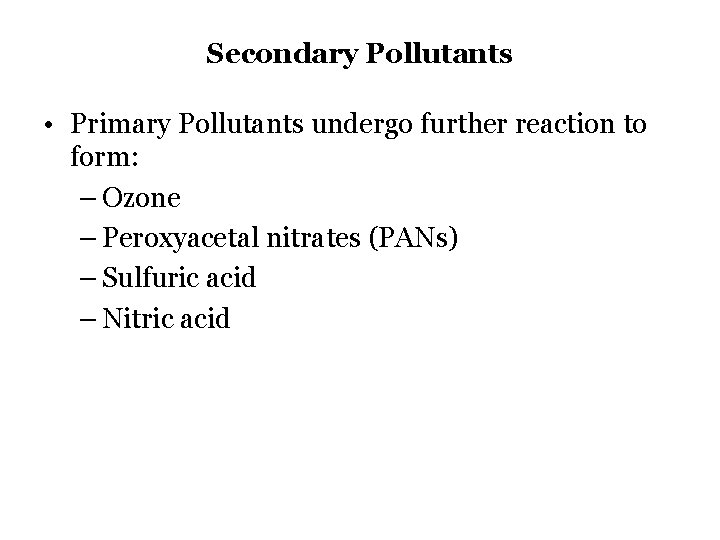
Secondary Pollutants • Primary Pollutants undergo further reaction to form: – Ozone – Peroxyacetal nitrates (PANs) – Sulfuric acid – Nitric acid
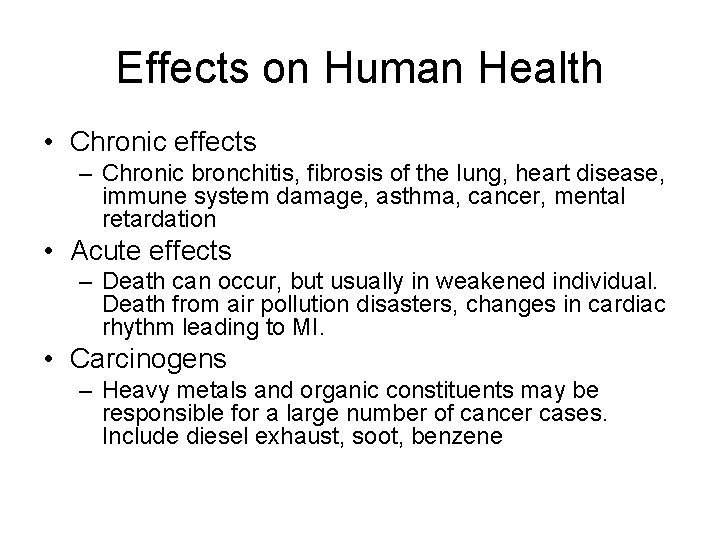
Effects on Human Health • Chronic effects – Chronic bronchitis, fibrosis of the lung, heart disease, immune system damage, asthma, cancer, mental retardation • Acute effects – Death can occur, but usually in weakened individual. Death from air pollution disasters, changes in cardiac rhythm leading to MI. • Carcinogens – Heavy metals and organic constituents may be responsible for a large number of cancer cases. Include diesel exhaust, soot, benzene
Effects on the Environment • • • Crop damage Forest damage Aesthetic damage Visibility Aquatic ecosystem damage
Controlling Air Pollution • Clean Air Act, 1970, 1977, 1990 – setting standards and establishing control methods and timetables to reach standards • NAAQS – National Ambient Air Quality Standards – involved in setting standards of the highest level that can be tolerated by humans without effect with a margin of safety. Long and short term standards • NESHAP – National Emission Standards for Hazardous Air Pollutants – track and regulate toxic substances • Read 21. 4