
Air parcels n n n A parcel is
- Slides: 26
Air parcels n n n A parcel is a “blob” of air Small enough to have only one value of T, p, ρ, etc. Large enough to contain a significant number of molecules. (Are there enough particles to talk about temperature as average kinetic energy, for example? )
Lapse Rates n Parcel lapse rate – the rate at which temperature changes as the parcel is lifted to a higher altitude n Environmental lapse rate – the rate at which the air surrounding the parcel changes as altitude increases
The Adiabatic Lapse Rate n n n An adiabatic process is one during which no heat is exchanged between the substance in question and its surroundings Many atmospheric motions occur rapidly enough that parcels do not exchange a significant amount of heat with the environment Examples: • • rising air in a thunderstorm Air rising over a topographic barrier (like a mountain)
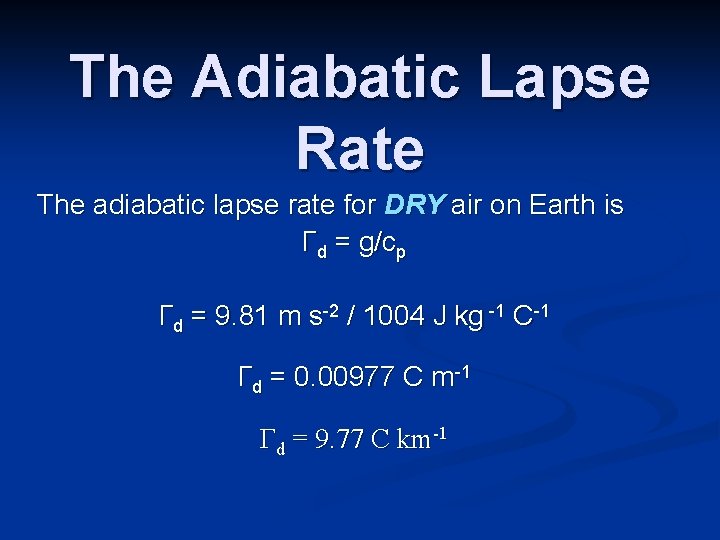
The Adiabatic Lapse Rate The adiabatic lapse rate for DRY air on Earth is Γd = g/cp Γd = 9. 81 m s-2 / 1004 J kg -1 C-1 Γd = 0. 00977 C m-1 Γd = 9. 77 C km-1
The Adiabatic Lapse Rate This means that a rising(sinking) air parcel will cool(warm) at a rate of about 10 o. C per km of ascent(descent) unless: • • • It exhanges significant mass or heat with the environment It becomes saturated with respect to water vapor It rises(sinks) so slowly that radiation heat transfer is possible
Humidity, Condensation and Clouds n n n Circulation of water in the atmosphere Evaporation, condensation and saturation Humidity Dew and frost Fog Clouds
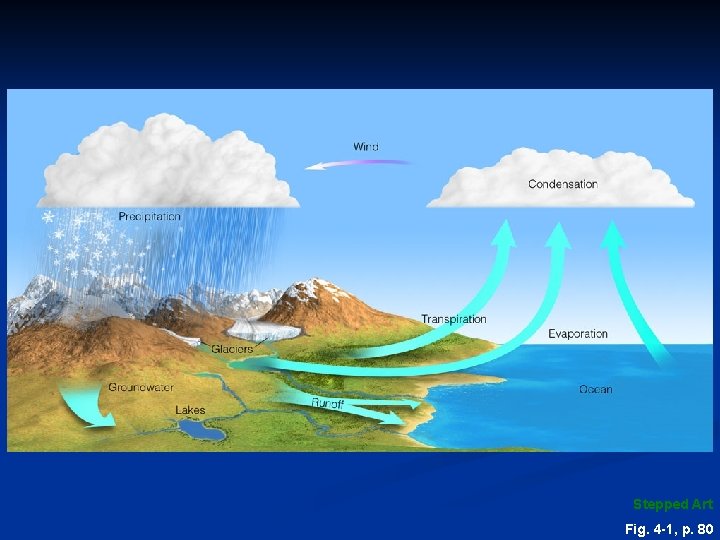
Circulation of Water in the Atmosphere evaporation n condensation n precipitation n hydrologic cycle n • The total amount of water vapor stored in the atmosphere amounts to only one week’s supply of precipitation for the planet.
Stepped Art Fig. 4 -1, p. 80
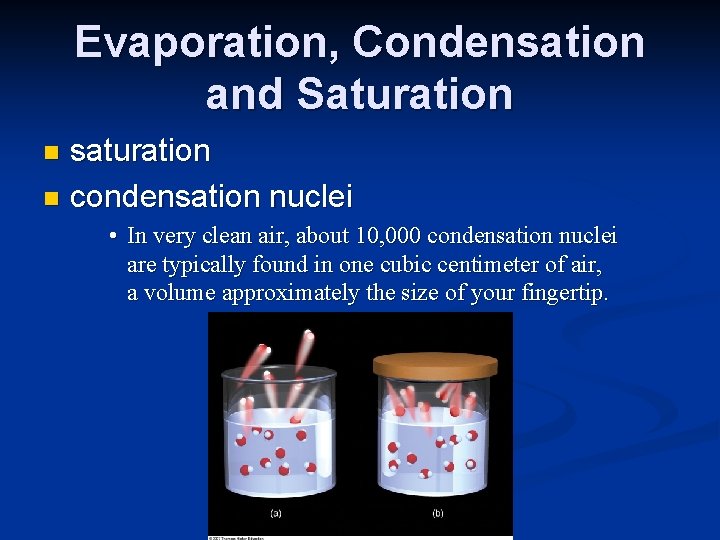
Evaporation, Condensation and Saturation saturation n condensation nuclei n • In very clean air, about 10, 000 condensation nuclei are typically found in one cubic centimeter of air, a volume approximately the size of your fingertip.
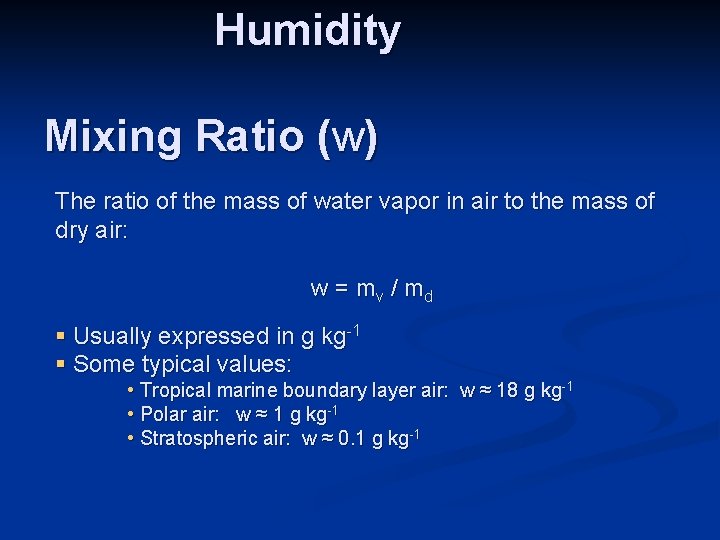
Humidity Mixing Ratio (w) The ratio of the mass of water vapor in air to the mass of dry air: w = mv / md § Usually expressed in g kg-1 § Some typical values: • Tropical marine boundary layer air: w ≈ 18 g kg-1 • Polar air: w ≈ 1 g kg-1 • Stratospheric air: w ≈ 0. 1 g kg-1
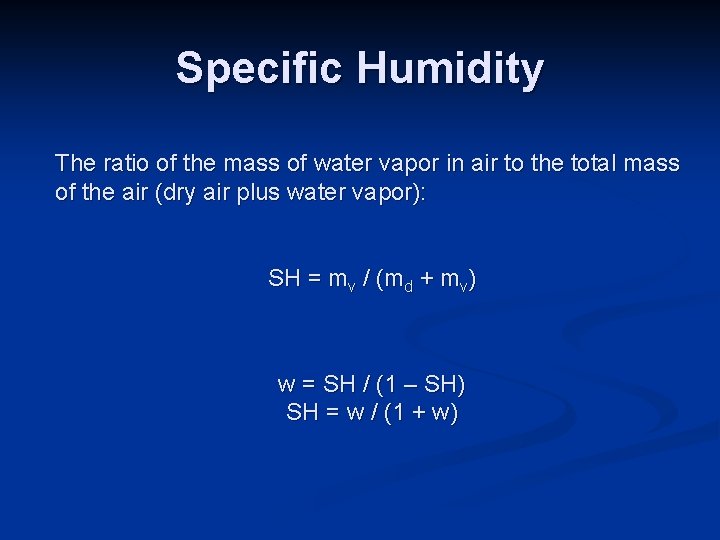
Specific Humidity The ratio of the mass of water vapor in air to the total mass of the air (dry air plus water vapor): SH = mv / (md + mv) w = SH / (1 – SH) SH = w / (1 + w)
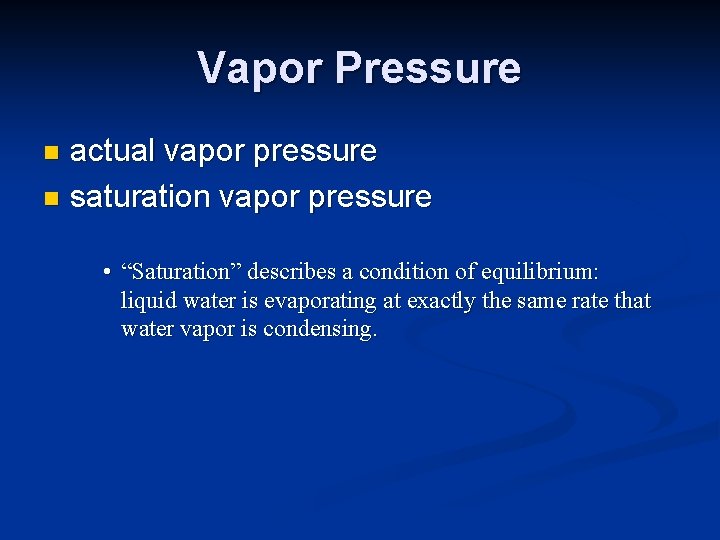
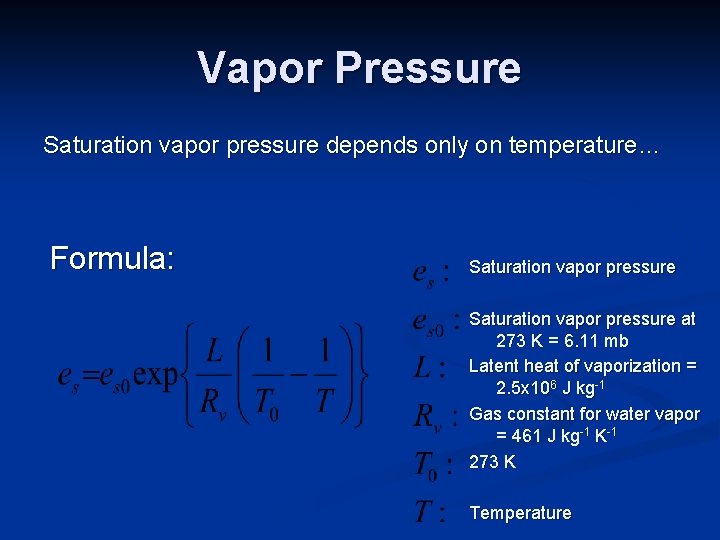
Vapor Pressure actual vapor pressure n saturation vapor pressure n • “Saturation” describes a condition of equilibrium: liquid water is evaporating at exactly the same rate that water vapor is condensing.
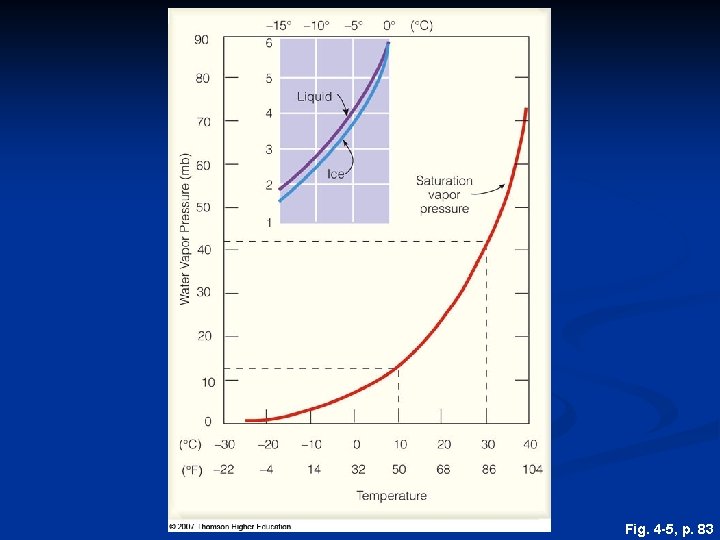
Vapor Pressure Saturation vapor pressure depends only on temperature… Formula: Saturation vapor pressure at 273 K = 6. 11 mb Latent heat of vaporization = 2. 5 x 10⁶ J kg-1 Gas constant for water vapor = 461 J kg-1 K-1 273 K Temperature
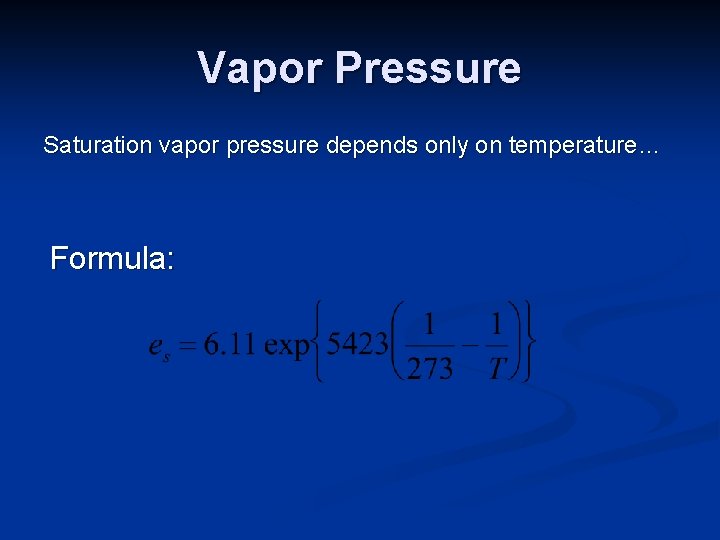
Vapor Pressure Saturation vapor pressure depends only on temperature… Formula:
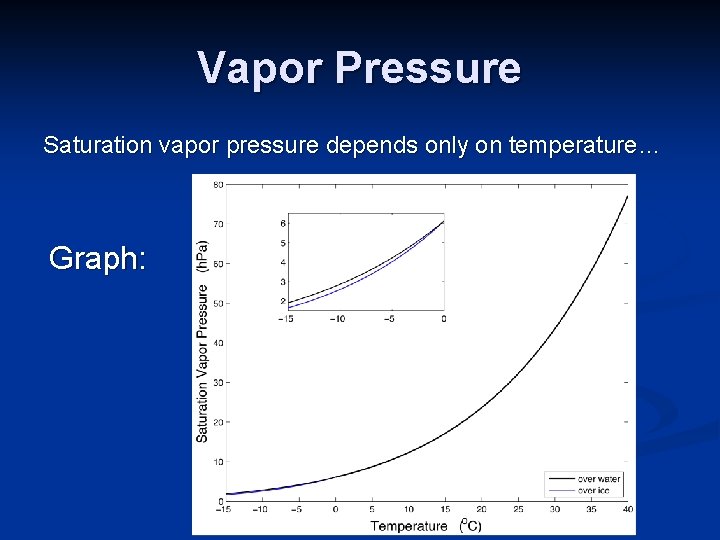
Vapor Pressure Saturation vapor pressure depends only on temperature… Graph:
Relative Humidity definition of relative humidity n saturation and supersaturation n condensation n relative humidity and temperature n • When the general public uses the term “humidity”, they mean “relative humidity. ”
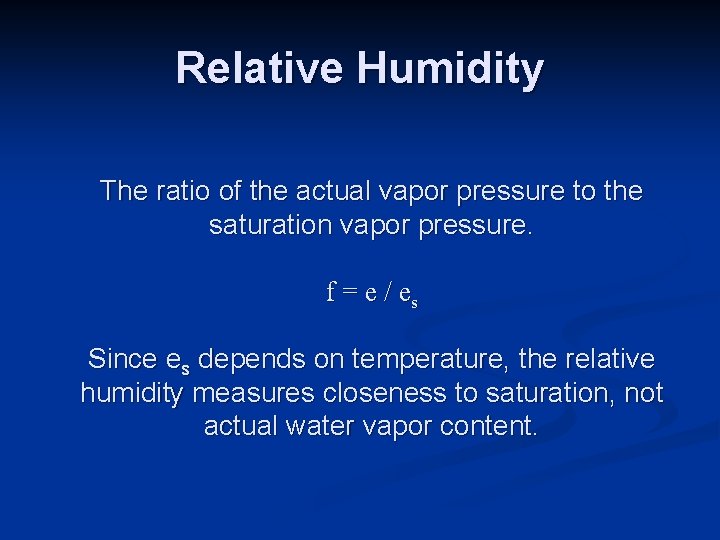
Relative Humidity The ratio of the actual vapor pressure to the saturation vapor pressure. f = e / es Since es depends on temperature, the relative humidity measures closeness to saturation, not actual water vapor content.
Fig. 4 -5, p. 83
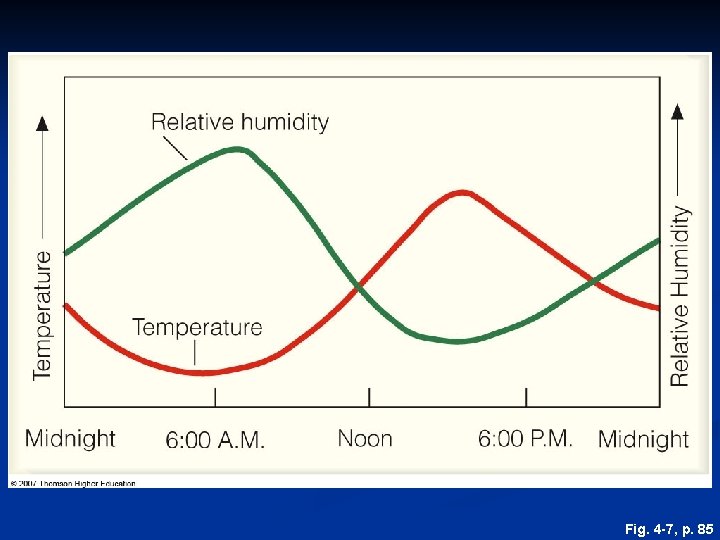
Fig. 4 -7, p. 85
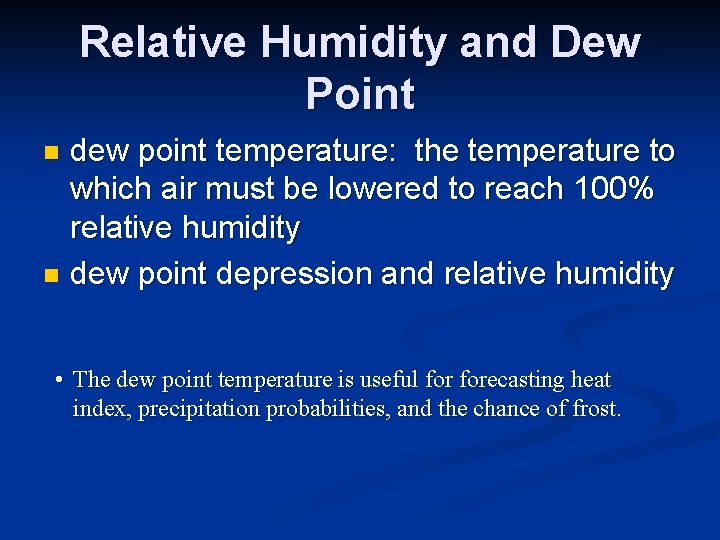
Relative Humidity and Dew Point dew point temperature: the temperature to which air must be lowered to reach 100% relative humidity n dew point depression and relative humidity n • The dew point temperature is useful forecasting heat index, precipitation probabilities, and the chance of frost.
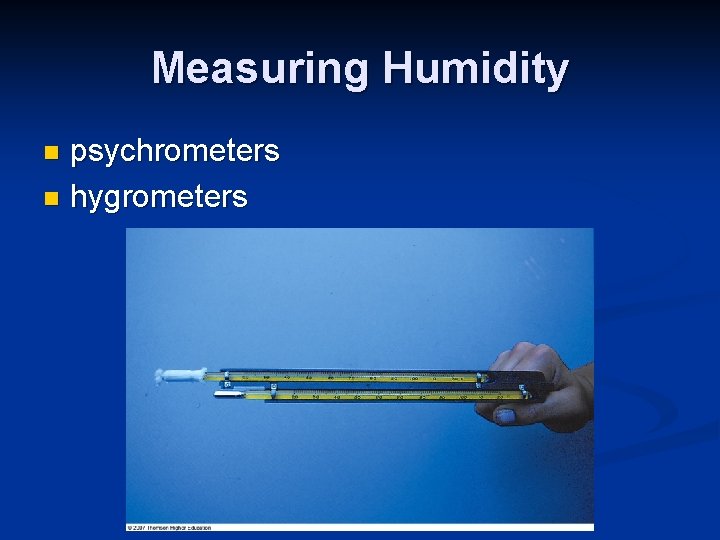
Measuring Humidity psychrometers n hygrometers n
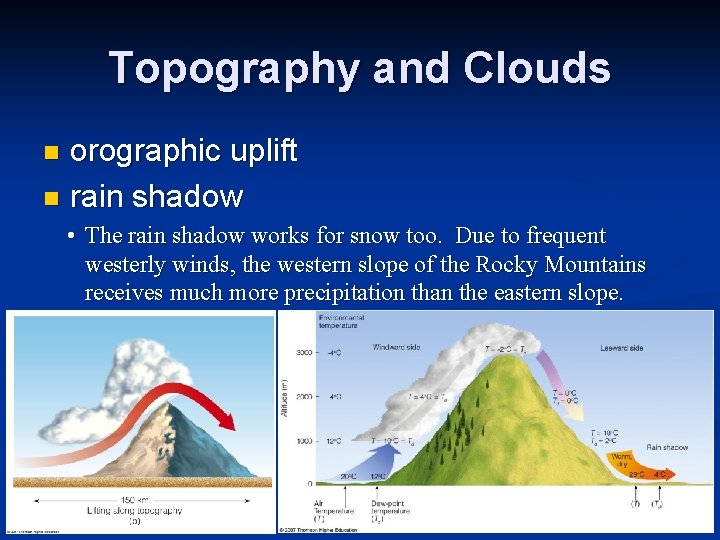
Topography and Clouds orographic uplift n rain shadow n • The rain shadow works for snow too. Due to frequent westerly winds, the western slope of the Rocky Mountains receives much more precipitation than the eastern slope.
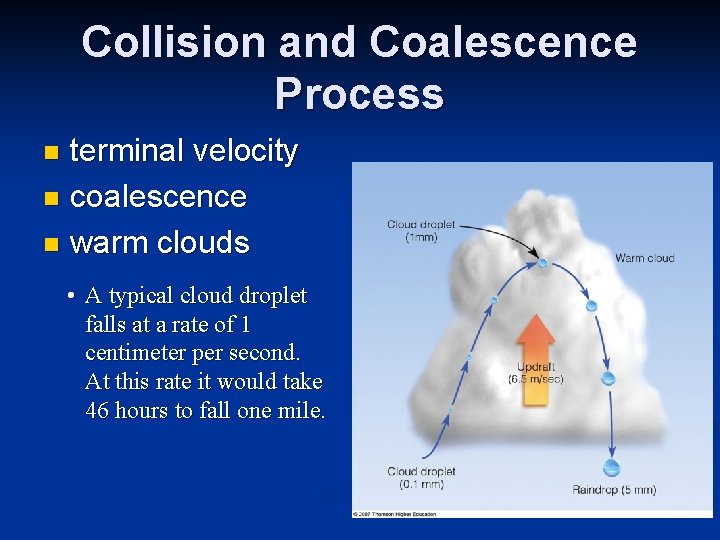
Collision and Coalescence Process terminal velocity n coalescence n warm clouds n • A typical cloud droplet falls at a rate of 1 centimeter per second. At this rate it would take 46 hours to fall one mile.
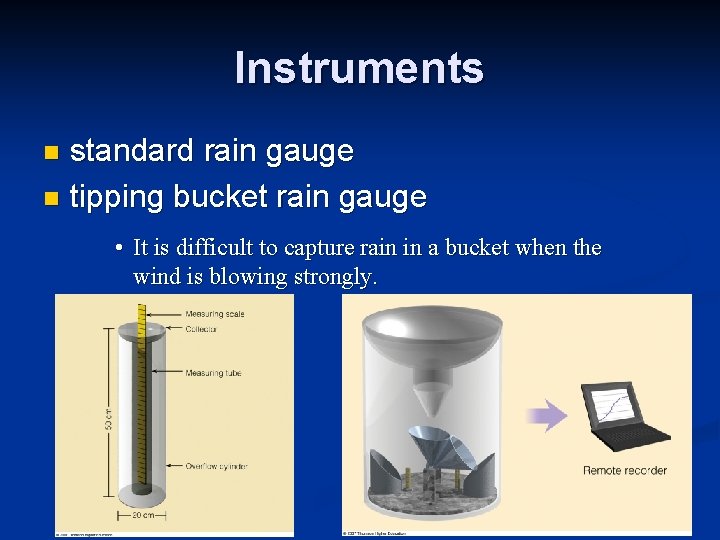
Instruments standard rain gauge n tipping bucket rain gauge n • It is difficult to capture rain in a bucket when the wind is blowing strongly.
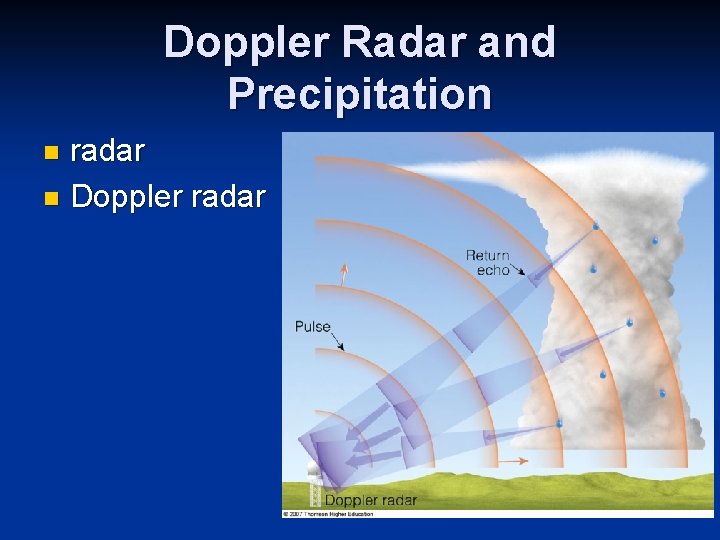
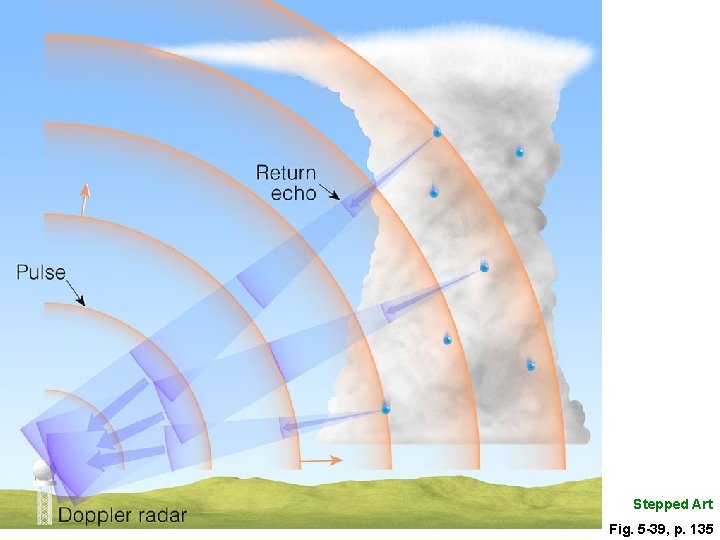
Doppler Radar and Precipitation radar n Doppler radar n
Stepped Art Fig. 5 -39, p. 135