
AIR MOVEMENT Architectural Environment 4 th year 2017
- Slides: 9
AIR MOVEMENT Architectural Environment 4 th year 2017 -2018 LEC-13
Air Movement • Definition: • Air moves due to differences in temperature and pressure between two masses of air in two or more locations and in different directions which will have or initiate some characteristics like the velocity, magnitude and direction.
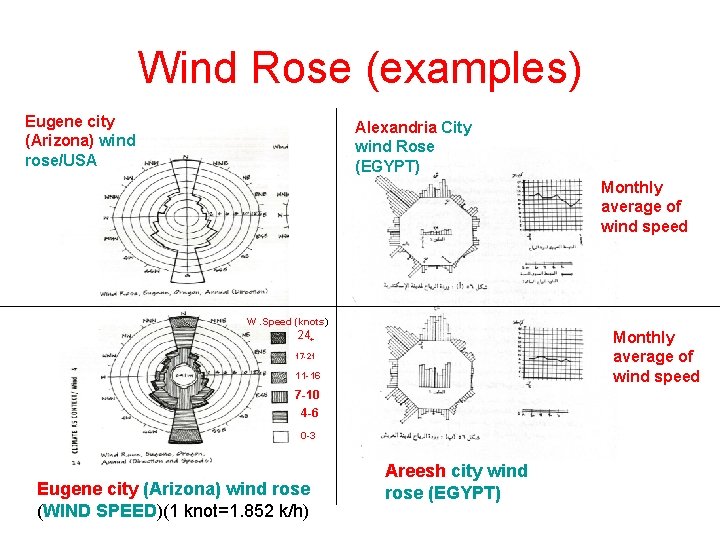
Wind characteristics • Due to direction (North 45 west) • Due to velocity (ms) (kmh) • Due to origin of blowing (severeness) (on continent level, regional level, city level…. . ) • PREVAILING WIND: • Is the most famous type of wind which differ from city to another city or locations ; it blows through most days in the year which is represented by a( wind rose) chart of the city.
Wind Rose (examples) Eugene city (Arizona) wind rose/USA Alexandria City wind Rose (EGYPT) Monthly average of wind speed W. Speed (knots) 24+ Monthly average of wind speed 17 -21 11 -16 7 -10 4 -6 0 -3 Eugene city (Arizona) wind rose (WIND SPEED)(1 knot=1. 852 k/h) Areesh city wind rose (EGYPT)
WIND CLASSIFICATION CHART • BEAUFORT SCALE for wind measurement( Nineteenth Century) (1806) which was classified by a British Admiral Beaufort. The scale contains severe ness of wind from (0 to 12) with complete description and effects on human and physical aspects as buildings or landscape • The scale was measured from a height of 10 m above sea level.
Wind Impacts on buildings • • Wind benefit and impact versus building design decision depends on; Prevailing wind direction( design decision) Site topography( natural characteristics) Area of openings (design decision) Location of openings( design decision) due to (P. W. ) Height of spaces (design properties) Direction of wind flow on building surface (like windows) due to climatic treatments like all kinds of sun breakers (design decision) • Interrelated flow of spaces in the building ; spatial sequential or non sequential arrangement (design decision)
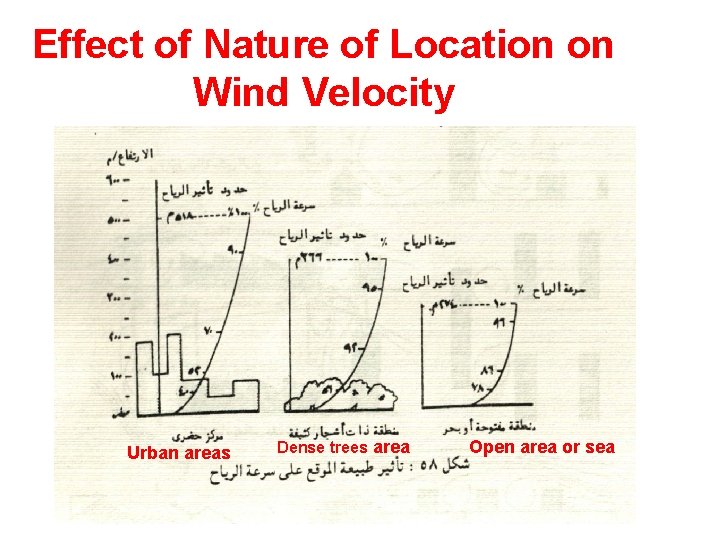
Effect of Nature of Location on Wind Velocity Urban areas Dense trees area Open area or sea
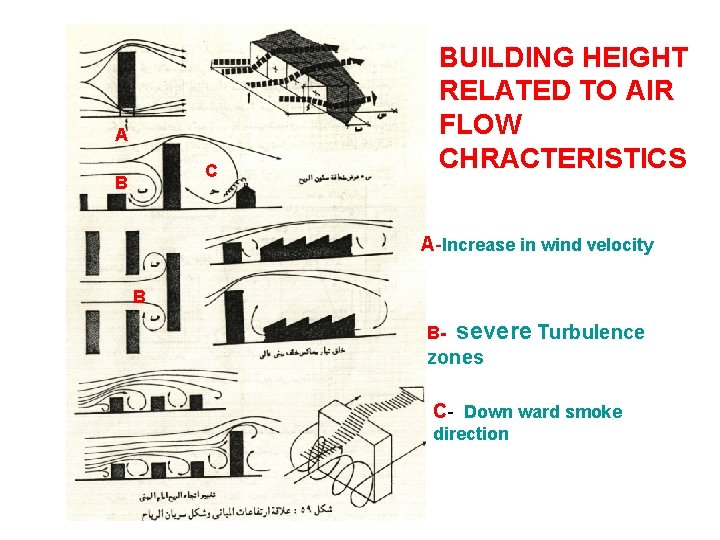
A C B BUILDING HEIGHT RELATED TO AIR FLOW CHRACTERISTICS A-Increase in wind velocity B B- severe Turbulence zones C- Down ward smoke direction
POSITIVE ASPECTS AND BENEFITS OF AIR MOVEMENT • 1 -Human comfort: • • Cooling human body (convection) Oxygen supply through ventilation Draught of excess heat in space. (how? ) Draught of polluted air (odors) Draught of bacteria( hygienic) Draught of excess moisture in air Drying of wetness of body. Feel of freshness