
Air Masses Chapter 21 Section 1 Global Wind
Air Masses Chapter 21 Section 1
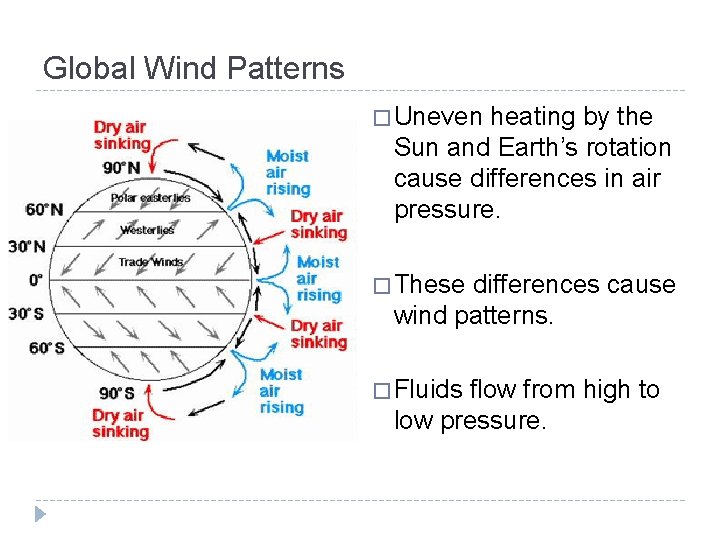
Global Wind Patterns � Uneven heating by the Sun and Earth’s rotation cause differences in air pressure. � These differences cause wind patterns. � Fluids flow from high to low pressure.

Air Mass �A large body of air with similar temperature and humidity. � Forms when that mass of air moves slowly or remains stationary.
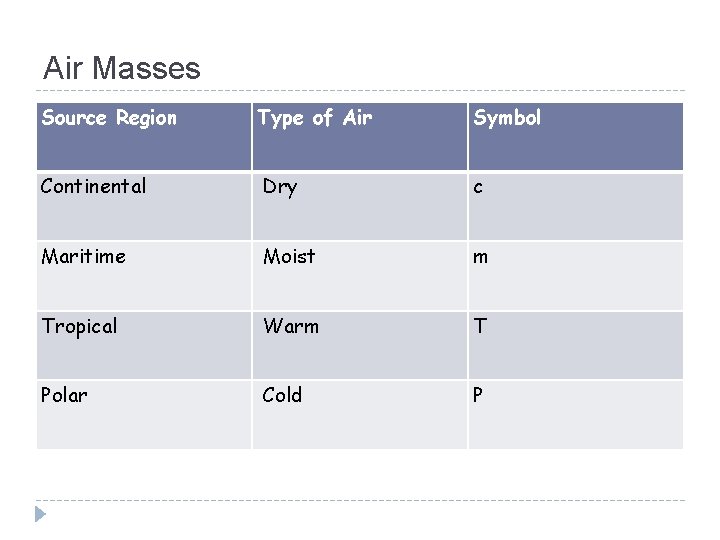
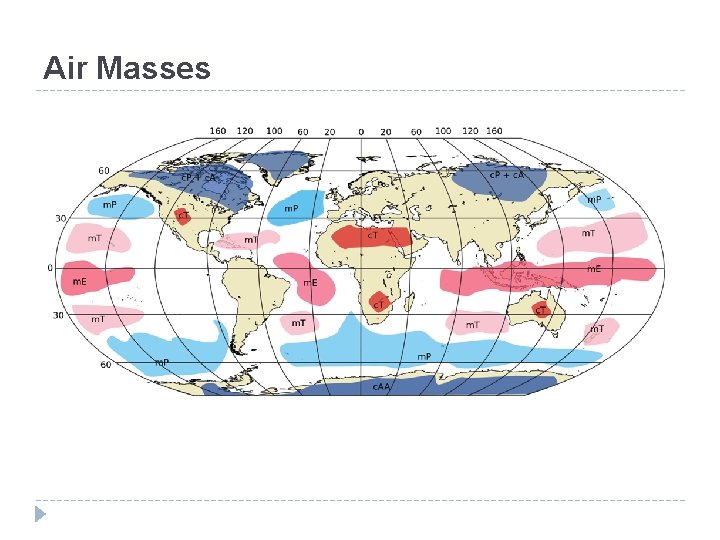
Air Masses Source Region Type of Air Symbol Continental Dry c Maritime Moist m Tropical Warm T Polar Cold P
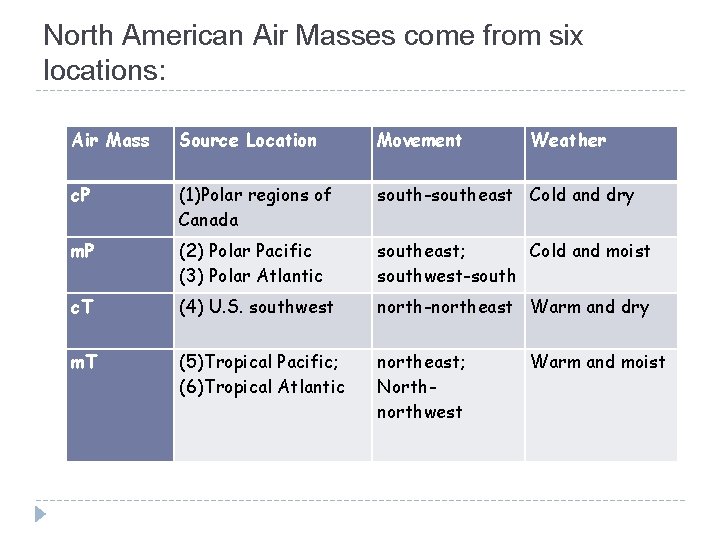
North American Air Masses come from six locations: Air Mass Source Location Movement Weather c. P (1)Polar regions of Canada south-southeast Cold and dry m. P (2) Polar Pacific (3) Polar Atlantic southeast; Cold and moist southwest-south c. T (4) U. S. southwest north-northeast Warm and dry m. T (5)Tropical Pacific; (6)Tropical Atlantic northeast; Northnorthwest Warm and moist
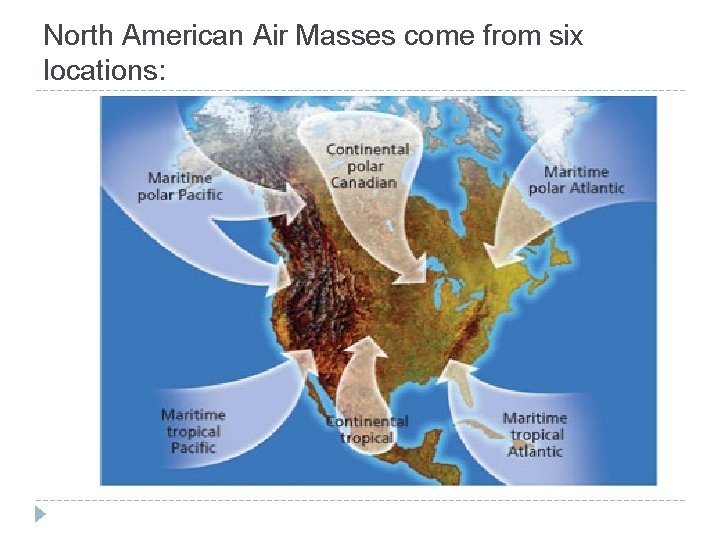
North American Air Masses come from six locations:
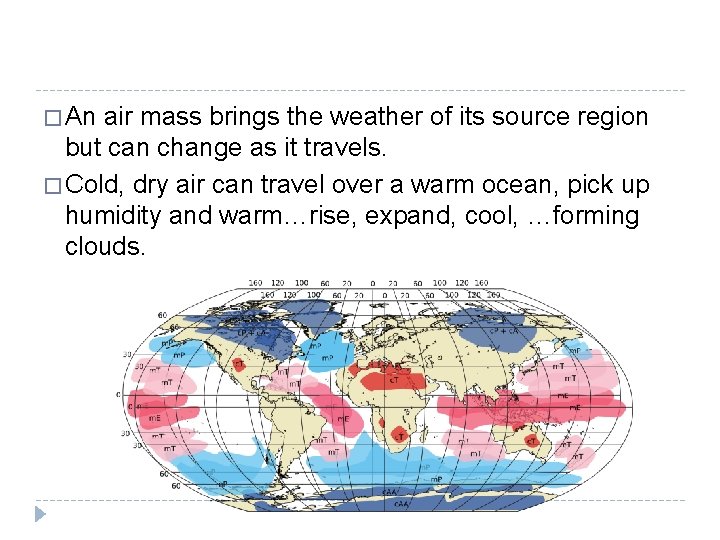
� An air mass brings the weather of its source region but can change as it travels. � Cold, dry air can travel over a warm ocean, pick up humidity and warm…rise, expand, cool, …forming clouds.
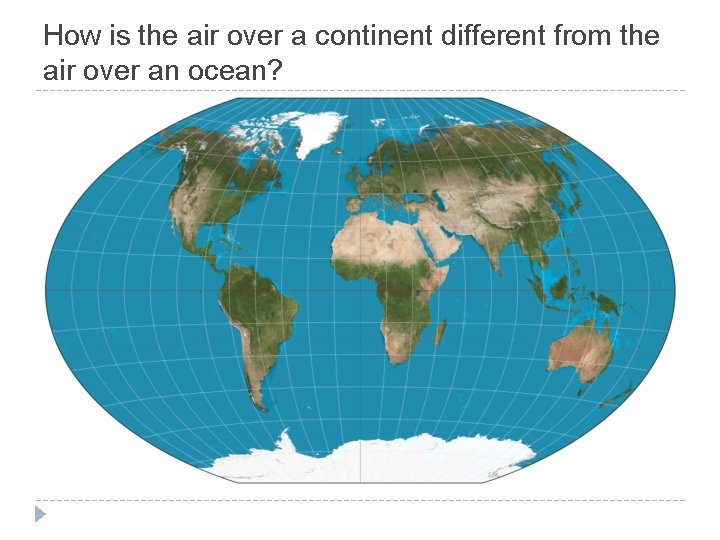
How is the air over a continent different from the air over an ocean?
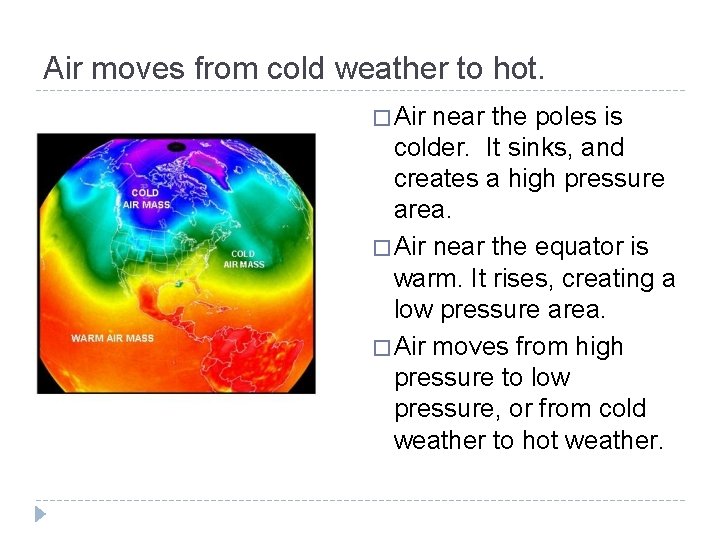
Air moves from cold weather to hot. � Air near the poles is colder. It sinks, and creates a high pressure area. � Air near the equator is warm. It rises, creating a low pressure area. � Air moves from high pressure to low pressure, or from cold weather to hot weather.
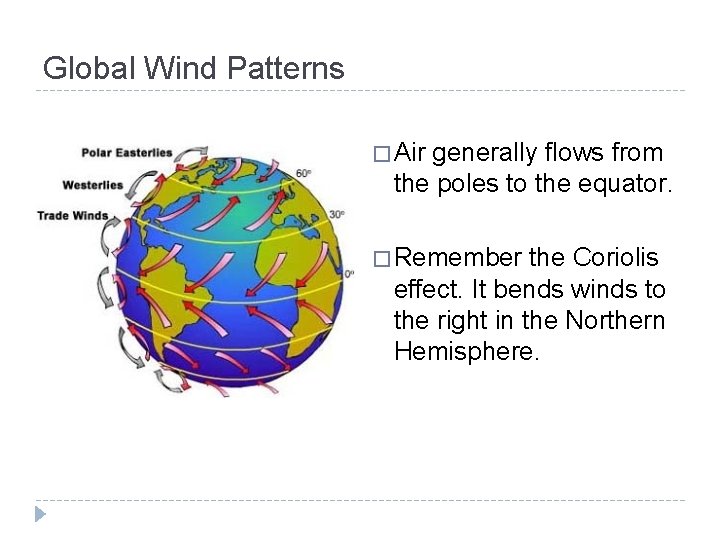
Global Wind Patterns � Air generally flows from the poles to the equator. � Remember the Coriolis effect. It bends winds to the right in the Northern Hemisphere.
Air Masses
- Slides: 11