
AIR MASSES Chapter 11 pp 292 305 Air


- Slides: 25
AIR MASSES (Chapter 11, pp. 292– 305)
Air Mass Definition • Large body of air with fairly consistent temperature and humidity over large horizontal distances • Air needs to remain in place long enough to acquire the characteristics of the underlying surface
Air Mass Source Regions • Extensive and relatively homogeneous surfaces Good Source Regions Poor Source Regions • deserts • snow/ice-covered land • oceans • • coastlines mountains lakes (too small) mid-latitudes (especially continents)
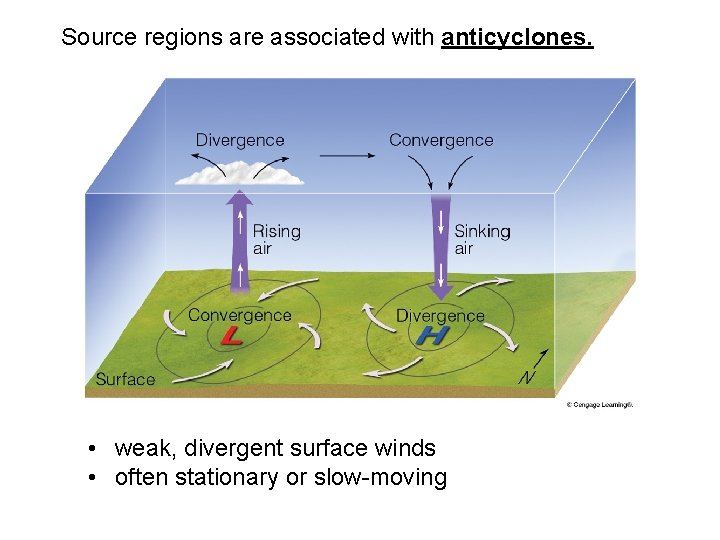
Source regions are associated with anticyclones. • weak, divergent surface winds • often stationary or slow-moving
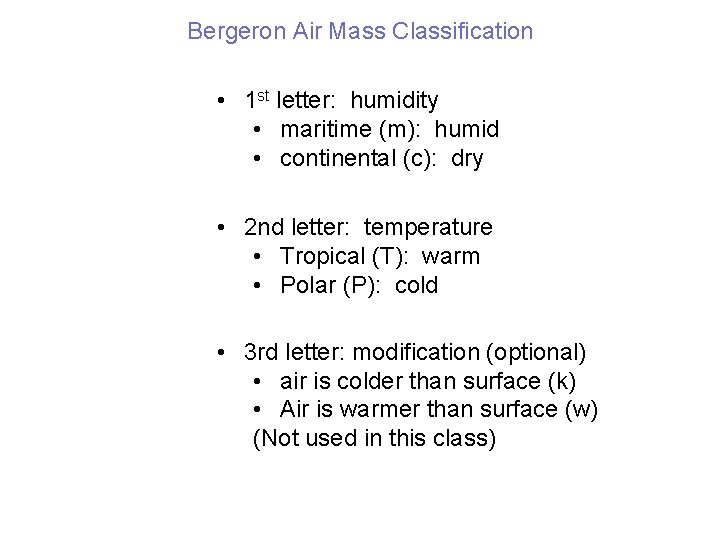
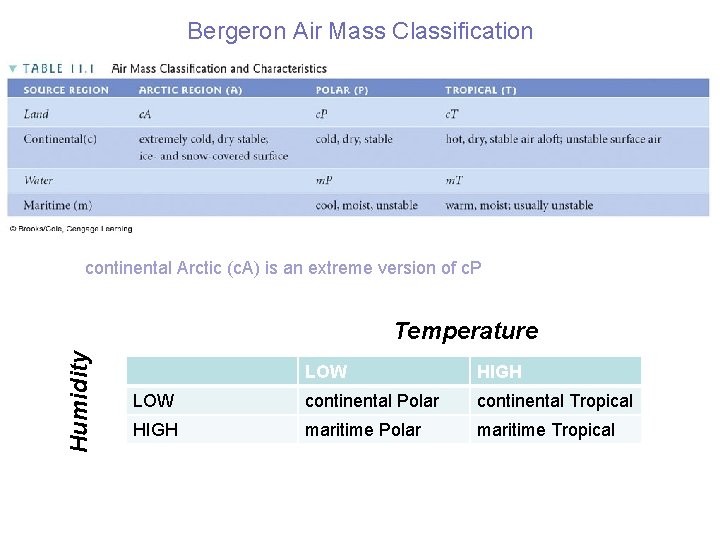
Bergeron Air Mass Classification • 1 st letter: humidity • maritime (m): humid • continental (c): dry • 2 nd letter: temperature • Tropical (T): warm • Polar (P): cold • 3 rd letter: modification (optional) • air is colder than surface (k) • Air is warmer than surface (w) (Not used in this class)
Bergeron Air Mass Classification continental Arctic (c. A) is an extreme version of c. P Humidity Temperature LOW HIGH LOW continental Polar continental Tropical HIGH maritime Polar maritime Tropical
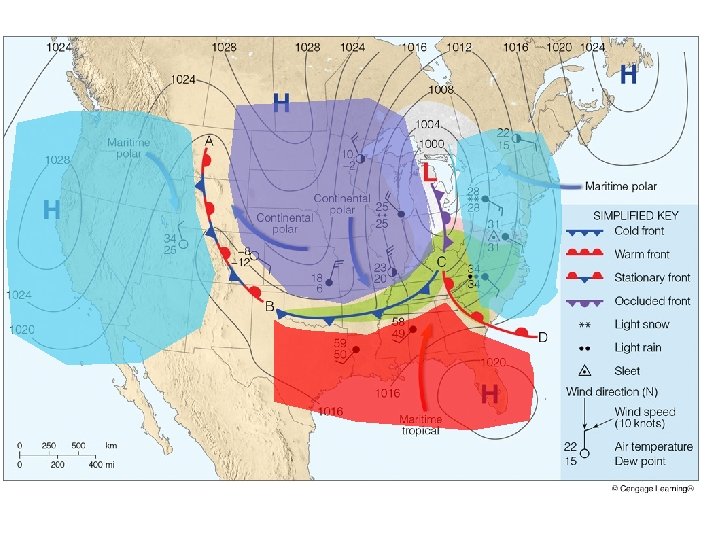
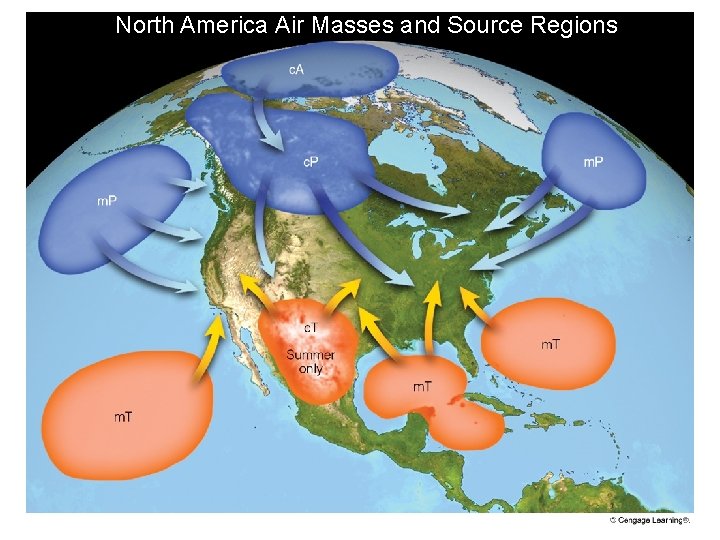
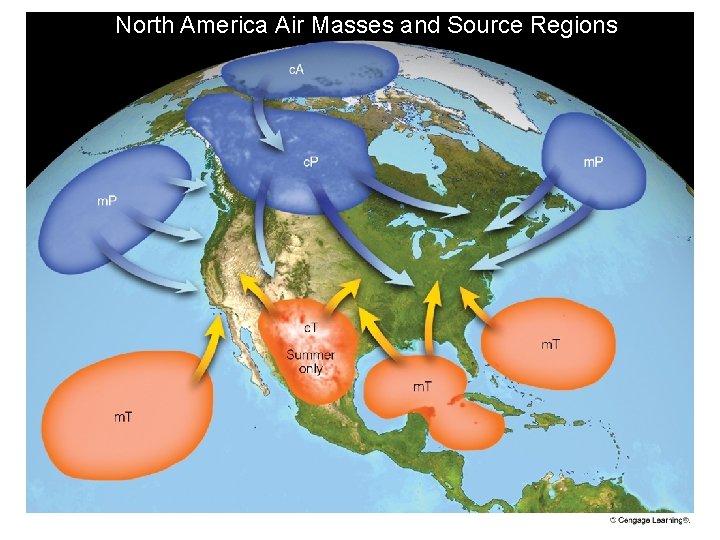
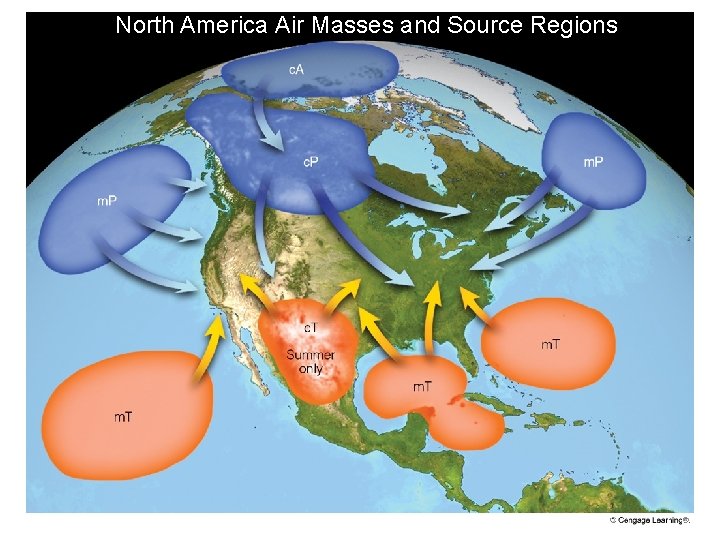
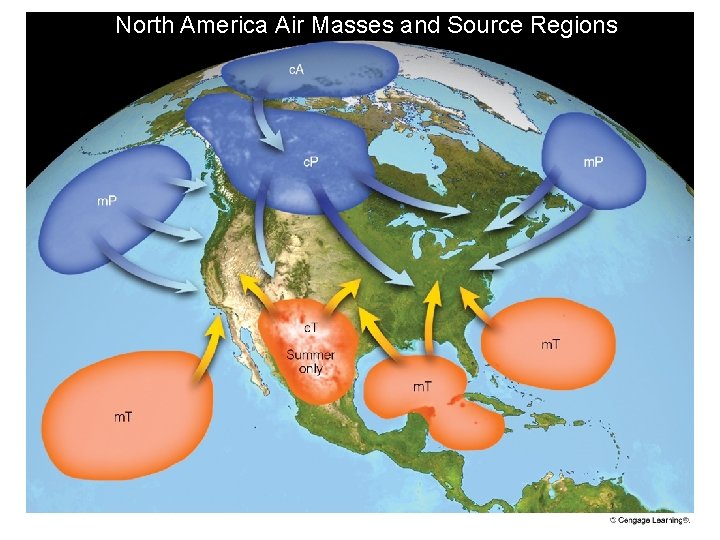
North America Air Masses and Source Regions
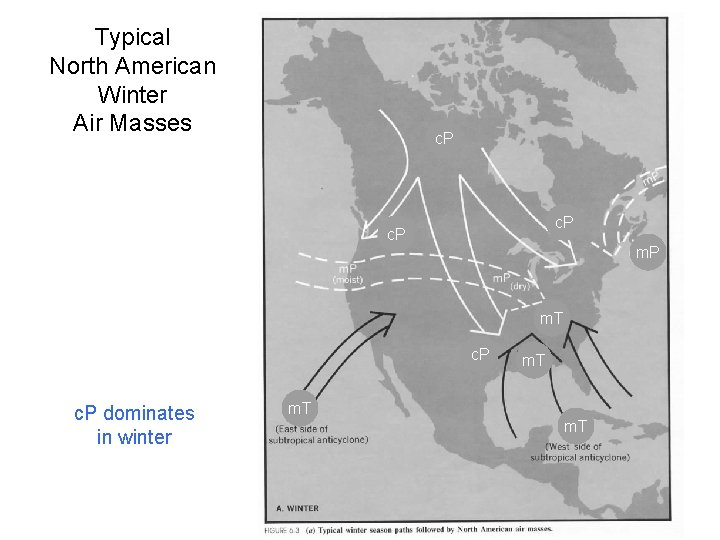
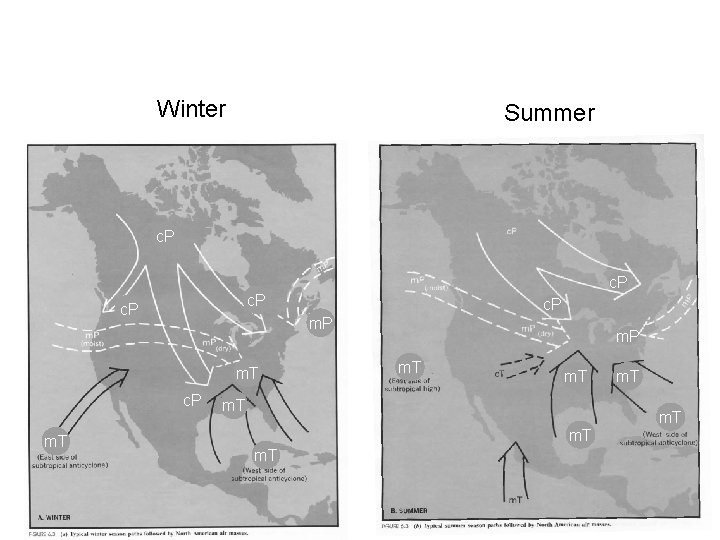
Typical North American Winter Air Masses c. P m. T c. P dominates in winter m. T
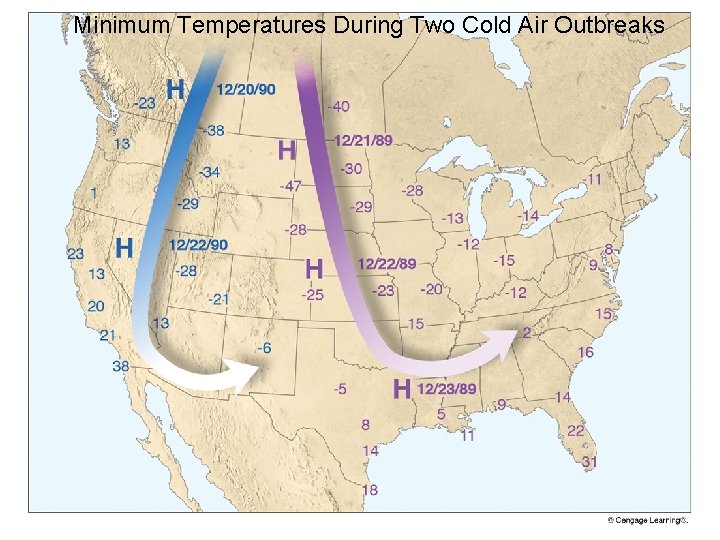
Minimum Temperatures During Two Cold Air Outbreaks
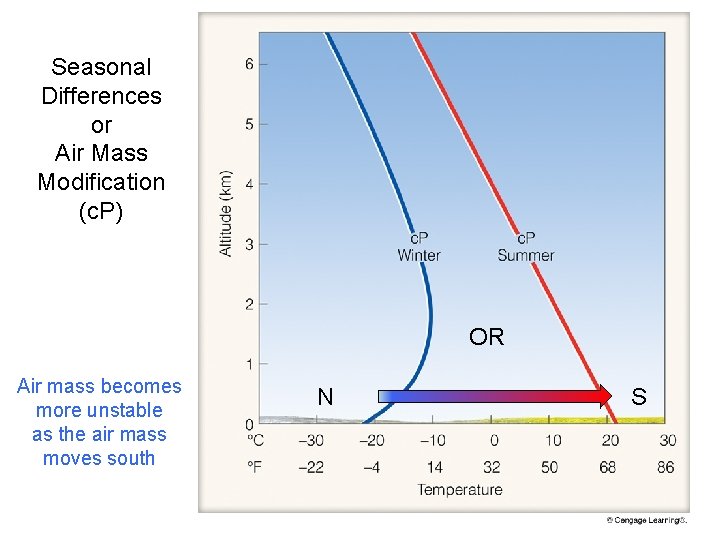
Seasonal Differences or Air Mass Modification (c. P) OR Air mass becomes more unstable as the air mass moves south N S
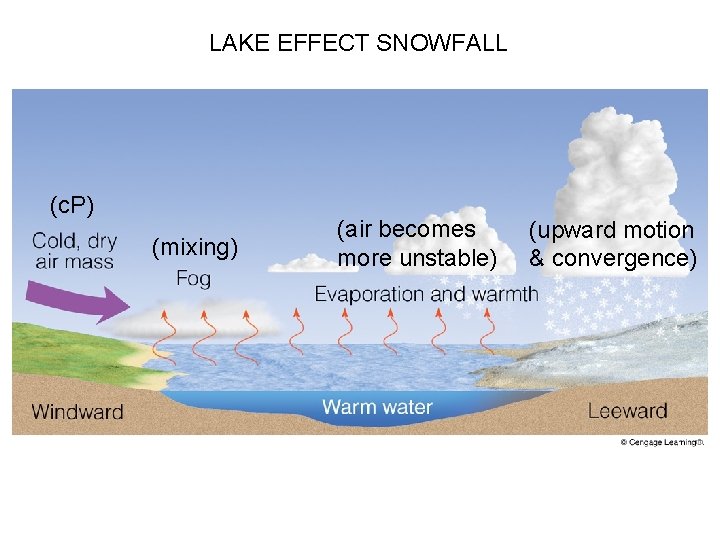
LAKE EFFECT SNOWFALL (c. P) (mixing) (air becomes more unstable) (upward motion & convergence)
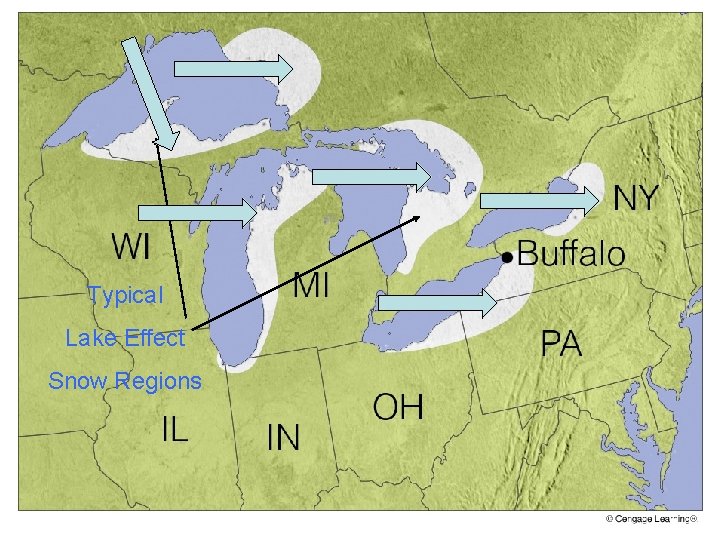
Typical Lake Effect Snow Regions
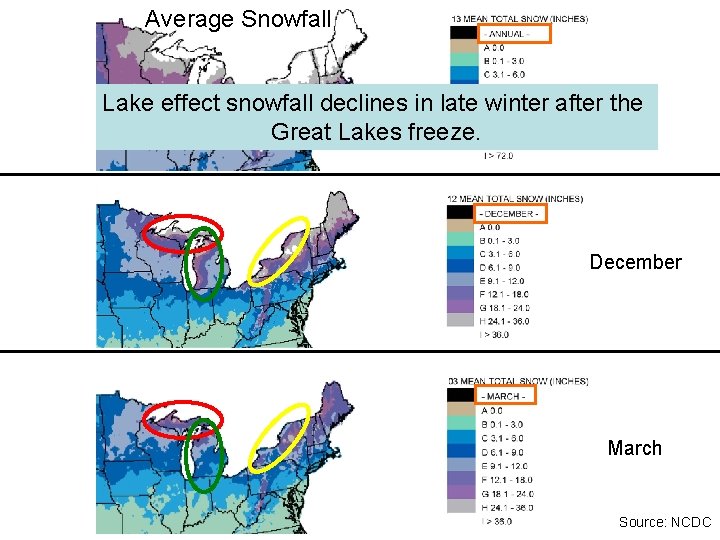
Average Snowfall Annual Lake effect snowfall declines in late winter after the Great Lakes freeze. December March Source: NCDC
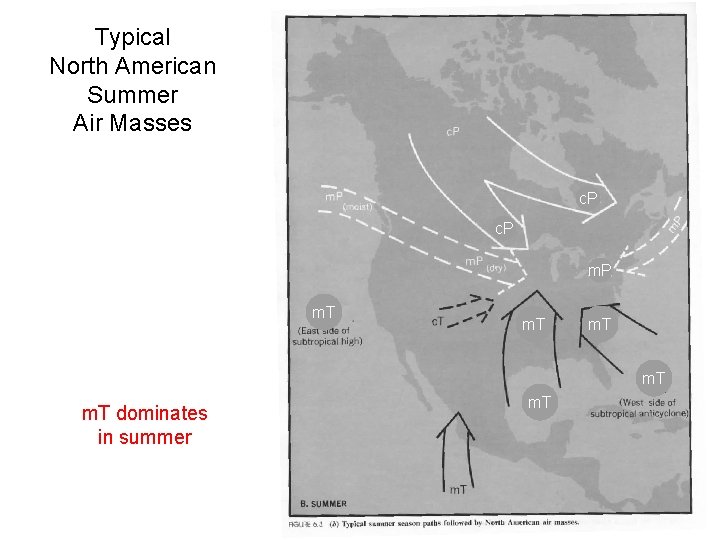
Typical North American Summer Air Masses c. P m. T m. T dominates in summer m. T
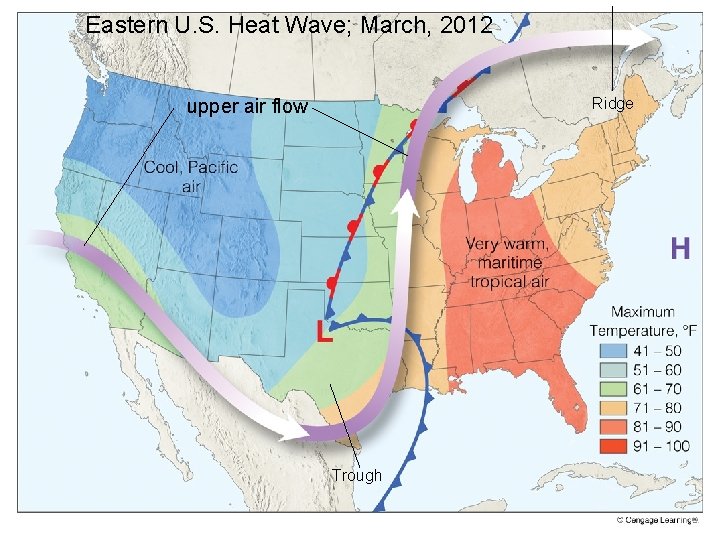
Eastern U. S. Heat Wave; March, 2012 Ridge upper air flow Trough
Winter Summer c. P m. T c. P m. T m. T
North America Air Masses and Source Regions
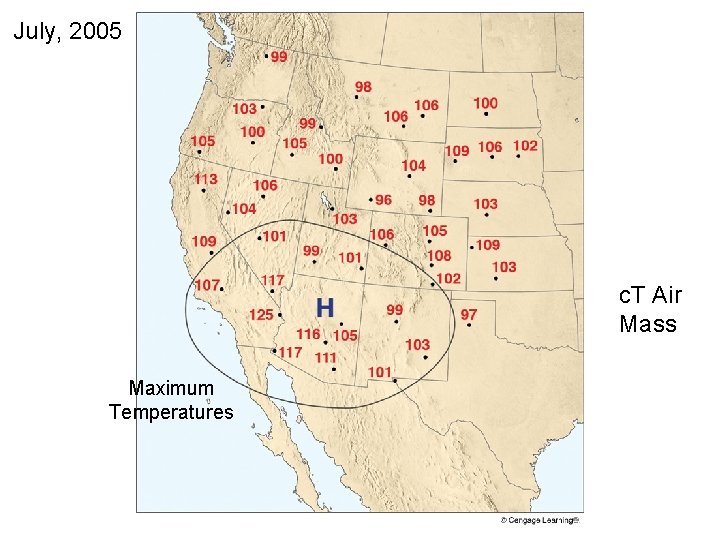
July, 2005 c. T Air Mass Maximum Temperatures
North America Air Masses and Source Regions
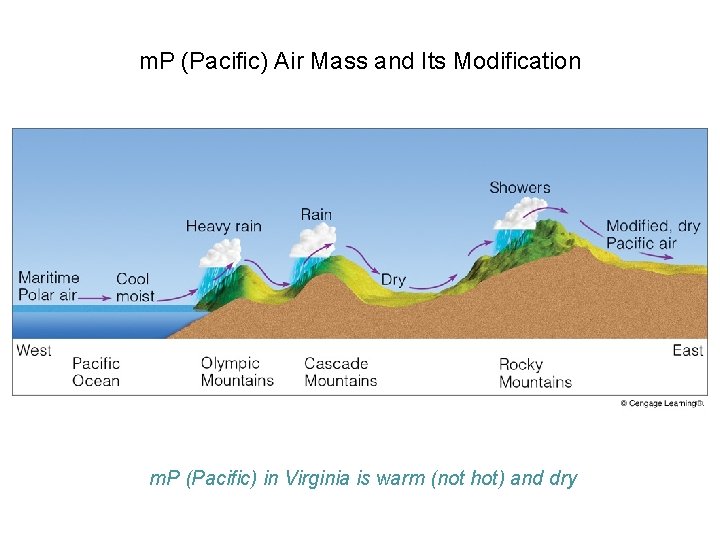
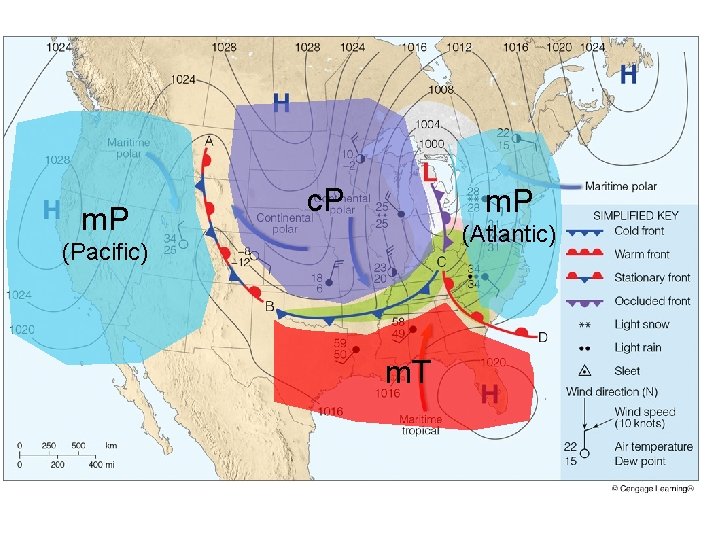
m. P (Pacific) Air Mass and Its Modification m. P (Pacific) in Virginia is warm (not hot) and dry
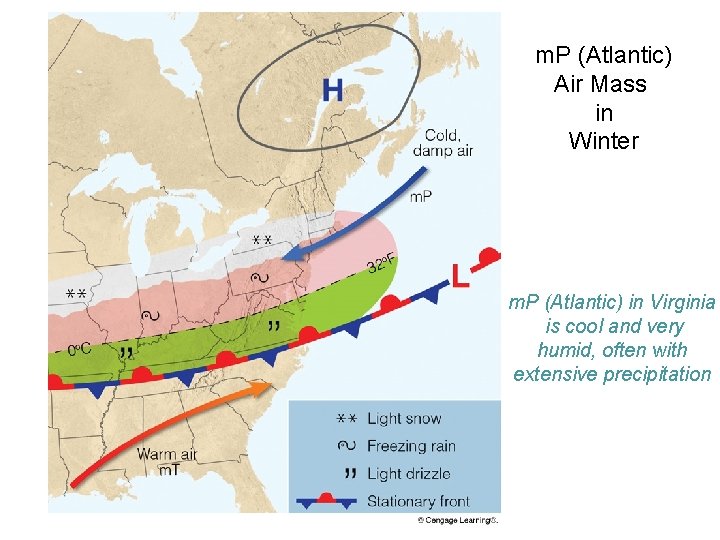
m. P (Atlantic) Air Mass in Winter m. P (Atlantic) in Virginia is cool and very humid, often with extensive precipitation
m. P c. P m. P (Atlantic) (Pacific) m. T
North America Air Masses and Source Regions
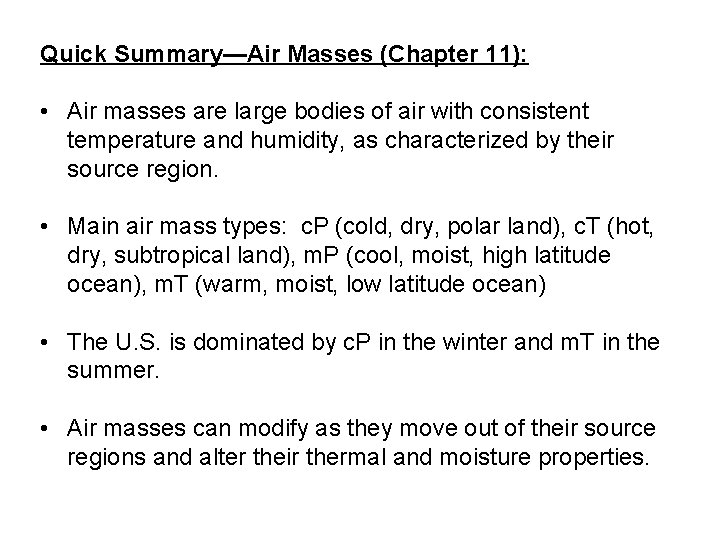
Quick Summary—Air Masses (Chapter 11): • Air masses are large bodies of air with consistent temperature and humidity, as characterized by their source region. • Main air mass types: c. P (cold, dry, polar land), c. T (hot, dry, subtropical land), m. P (cool, moist, high latitude ocean), m. T (warm, moist, low latitude ocean) • The U. S. is dominated by c. P in the winter and m. T in the summer. • Air masses can modify as they move out of their source regions and alter their thermal and moisture properties.