
Air Contamination and SSI Risk in Implant Procedures

- Slides: 57
Air Contamination and SSI Risk in Implant Procedures August 16, 2018 Maureen Spencer, RN, M. Ed. , CIC, FAPIC Infection Preventionist Consultant www. maureenspencer. com 1
Disclosures Speaker provides clinical consulting services to Aerobiotix. 2
Learning Objectives 1. Explain why there is an increased risk of SSI from air contamination with implants. 2. List surgical procedure types that involve implants, and potential associated SSI. 3. List standard measures for ensuring safe OR air quality. 4. Describe adjunctive measures for improving OR air quality for implant procedures. 3
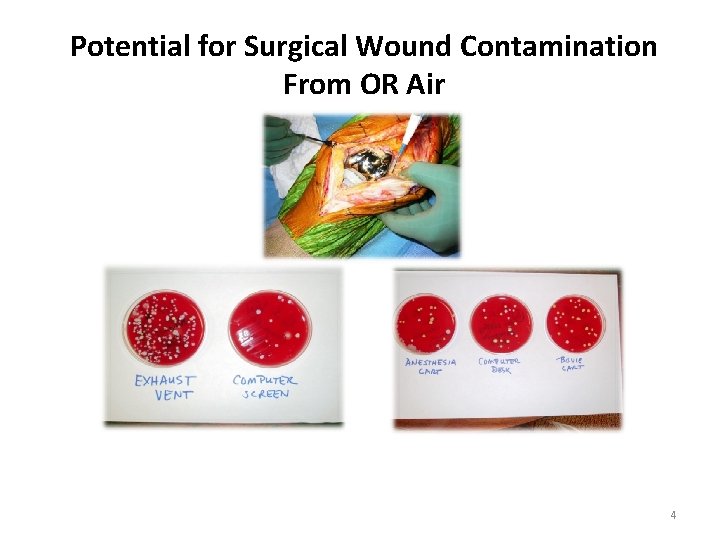
Potential for Surgical Wound Contamination From OR Air 4
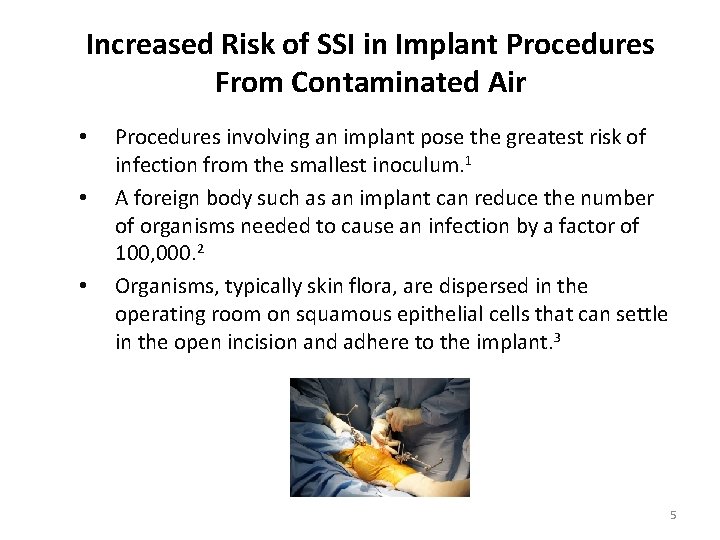
Increased Risk of SSI in Implant Procedures From Contaminated Air • • • Procedures involving an implant pose the greatest risk of infection from the smallest inoculum. 1 A foreign body such as an implant can reduce the number of organisms needed to cause an infection by a factor of 100, 000. 2 Organisms, typically skin flora, are dispersed in the operating room on squamous epithelial cells that can settle in the open incision and adhere to the implant. 3 5
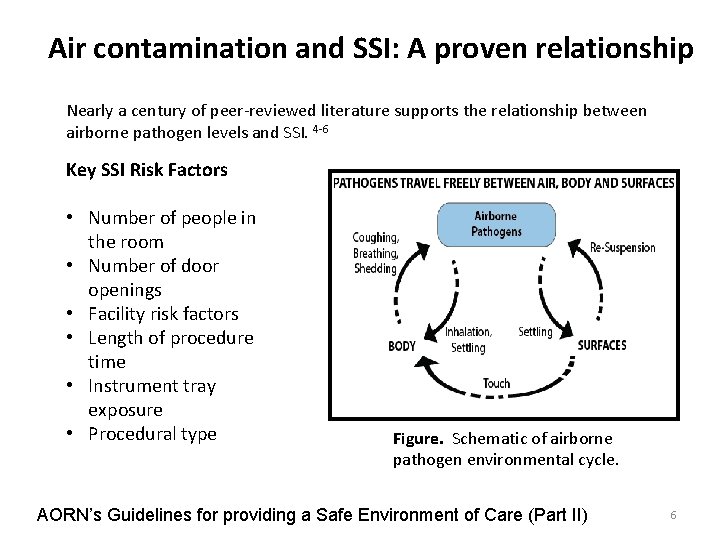
Air contamination and SSI: A proven relationship Nearly a century of peer-reviewed literature supports the relationship between airborne pathogen levels and SSI. 4 -6 Key SSI Risk Factors • Number of people in the room • Number of door openings • Facility risk factors • Length of procedure time • Instrument tray exposure • Procedural type Figure. Schematic of airborne pathogen environmental cycle. AORN’s Guidelines for providing a Safe Environment of Care (Part II) 6
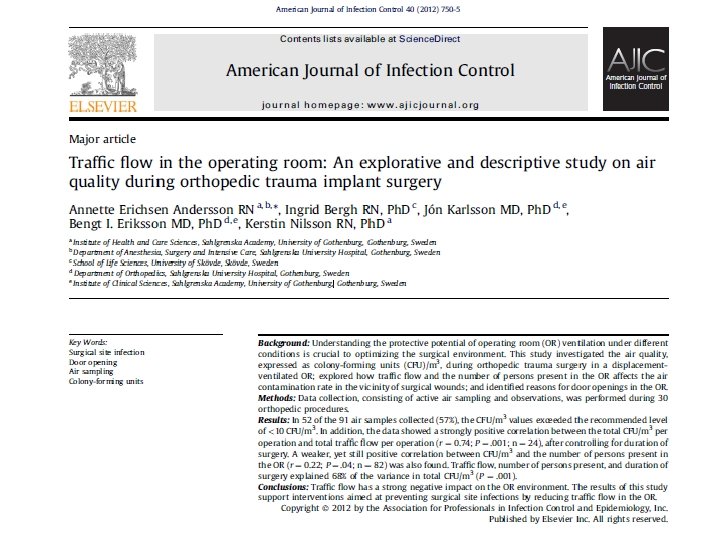
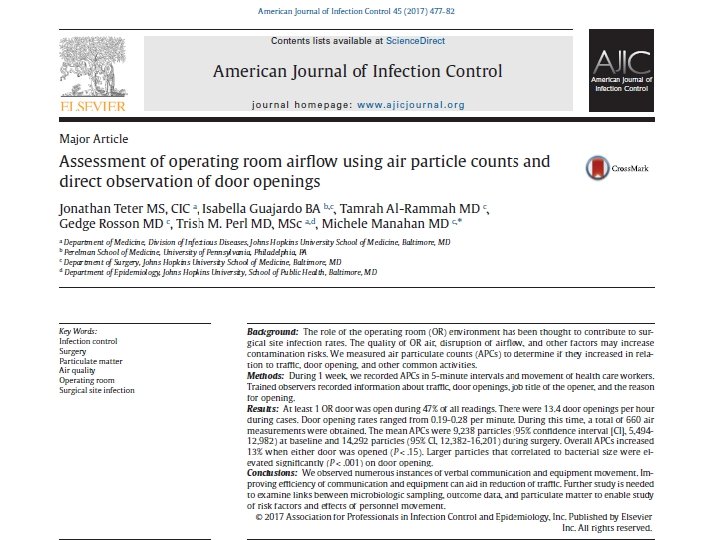
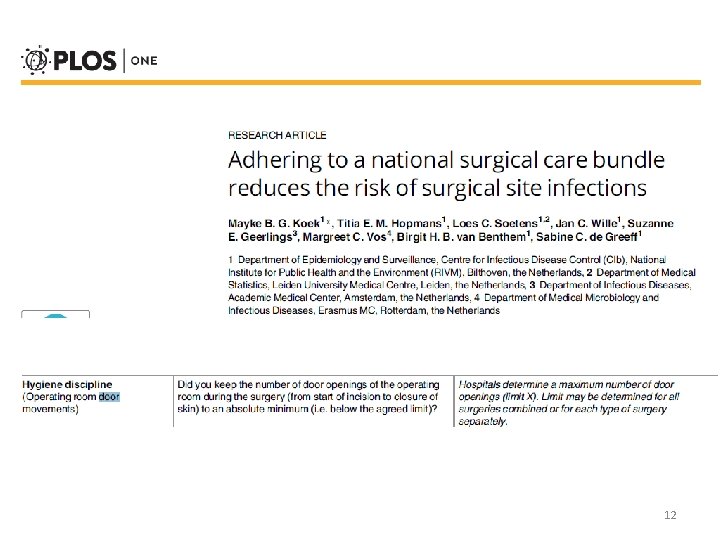
Traffic Control and Opening Doors in Operating Rooms - Research • Mathijssen N et al. The Effect of Door Openings on Numbers of Colony Forming Units in the Operating Room during Hip Revision Surgery. Surgical Infections Nov 2016 • Hamilton W et al. Operating room traffic in total joint arthroplasty: Identifying patterns and training the team to keep the door shut. American Journal of Infection Control 46 (2018) 633 - • Teter J et al. Assessment of operating room airflow using air particle counts and direct observation of door openings. American Journal of Infection Control 45 (2017) 477 -82 • Andersson AE et al. Traffic flow in the operating room: An explorative and descriptive study on air quality during orthopedic trauma implant surgery. American Journal of Infection Control 40 (2012) 750 -5 • Edmiston CE, Sinski S, Seabrook GR, et al. Airborne particulates in the OR environment. AORN J. 1999; 69(6): 1169 -83. • Napoli C, Marcotrigiano V, Montagna MT. Air sampling procedures to evaluate microbial contamination: a comparison between active and passive methods in operating theatres. BMC Public Health. 2012; 12(1): 1. • Pedram P, et al. Operating Room Traffic is a Major Concern During Total Joint Arthroplasty. Clin Orthop Relat Res. 2012 Oct; 470(10): 2690– 2694. 7
8
9
10
11
12
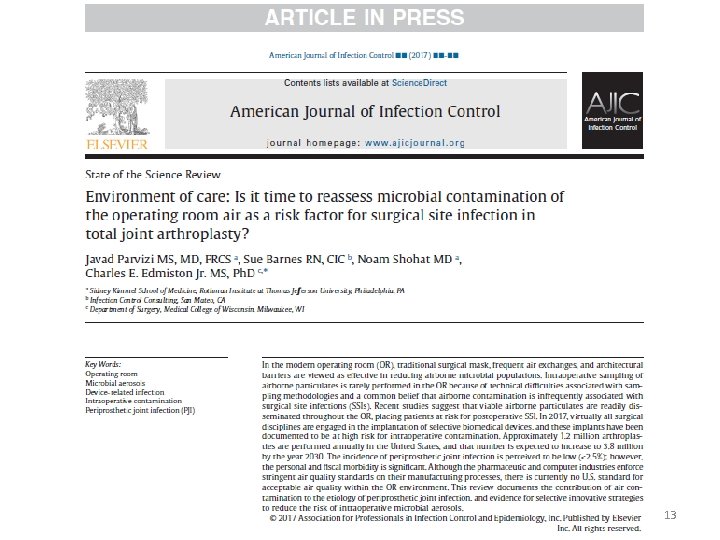
13
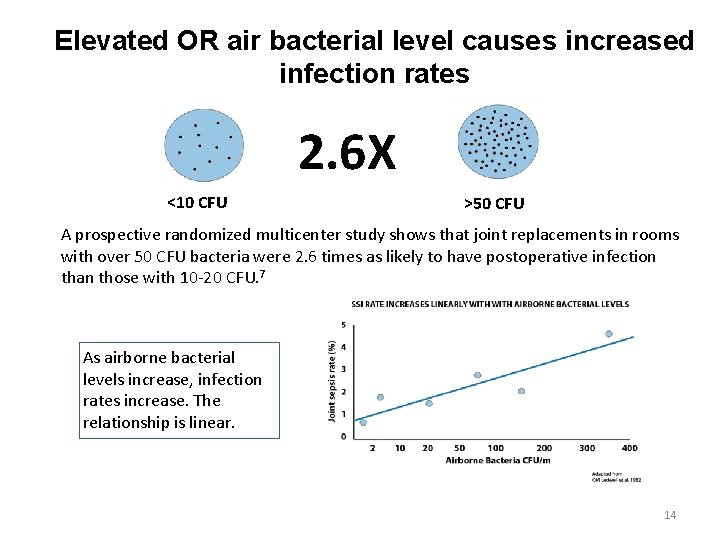
Elevated OR air bacterial level causes increased infection rates 2. 6 X <10 CFU >50 CFU A prospective randomized multicenter study shows that joint replacements in rooms with over 50 CFU bacteria were 2. 6 times as likely to have postoperative infection than those with 10 -20 CFU. 7 As airborne bacterial levels increase, infection rates increase. The relationship is linear. 14
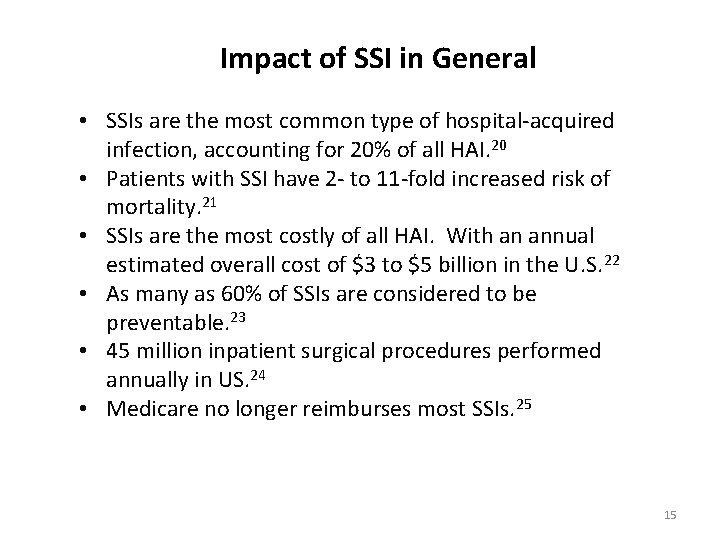
Impact of SSI in General • SSIs are the most common type of hospital-acquired infection, accounting for 20% of all HAI. 20 • Patients with SSI have 2 - to 11 -fold increased risk of mortality. 21 • SSIs are the most costly of all HAI. With an annual estimated overall cost of $3 to $5 billion in the U. S. 22 • As many as 60% of SSIs are considered to be preventable. 23 • 45 million inpatient surgical procedures performed annually in US. 24 • Medicare no longer reimburses most SSIs. 25 15
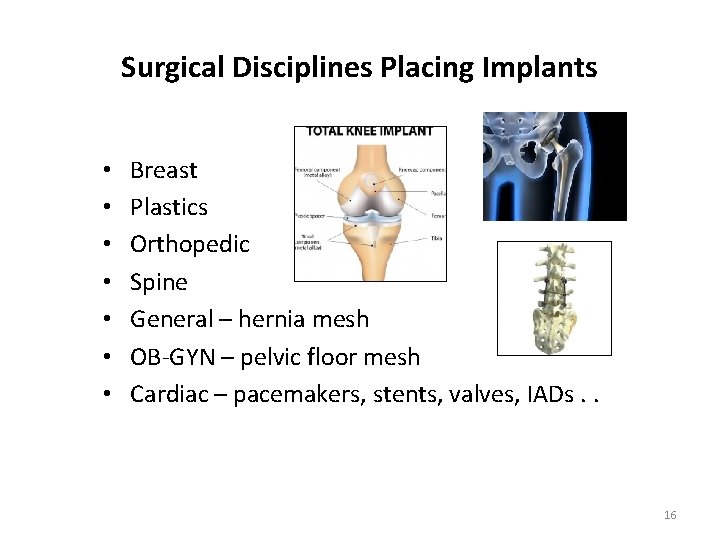
Surgical Disciplines Placing Implants • • Breast Plastics Orthopedic Spine General – hernia mesh OB-GYN – pelvic floor mesh Cardiac – pacemakers, stents, valves, IADs. . 16
Just how small of an inoculum is required to cause an implant infection: A. 100 CFU B. 150 CFU C. 50 CFU 17
Just how small of an inoculum is required to cause an implant infection: A. 100 CFU 18
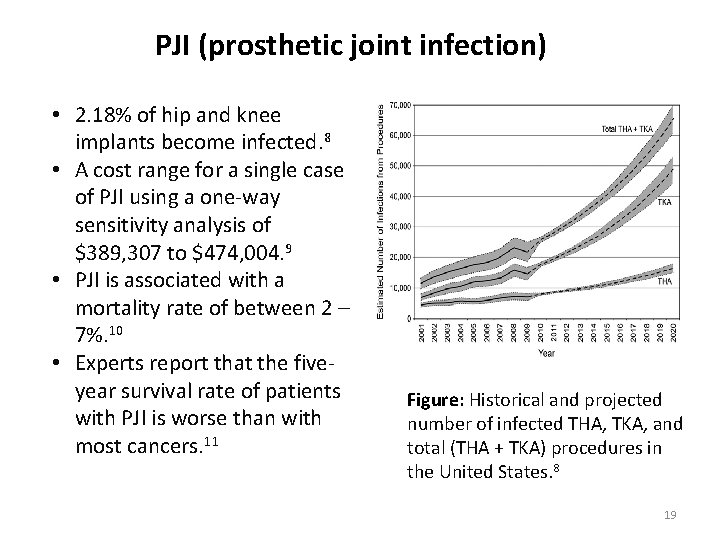
PJI (prosthetic joint infection) • 2. 18% of hip and knee implants become infected. 8 • A cost range for a single case of PJI using a one-way sensitivity analysis of $389, 307 to $474, 004. 9 • PJI is associated with a mortality rate of between 2 – 7%. 10 • Experts report that the fiveyear survival rate of patients with PJI is worse than with most cancers. 11 Figure: Historical and projected number of infected THA, TKA, and total (THA + TKA) procedures in the United States. 8 19
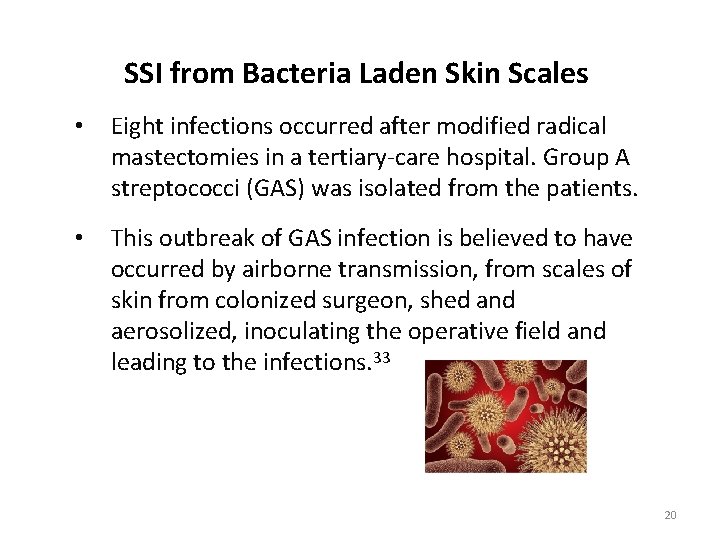
SSI from Bacteria Laden Skin Scales • Eight infections occurred after modified radical mastectomies in a tertiary-care hospital. Group A streptococci (GAS) was isolated from the patients. • This outbreak of GAS infection is believed to have occurred by airborne transmission, from scales of skin from colonized surgeon, shed and aerosolized, inoculating the operative field and leading to the infections. 33 20
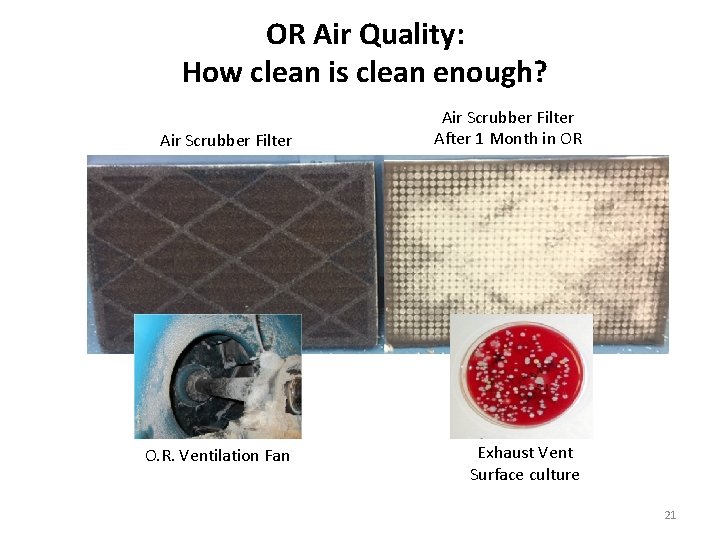
OR Air Quality: How clean is clean enough? Air Scrubber Filter O. R. Ventilation Fan Air Scrubber Filter After 1 Month in OR Exhaust Vent Surface culture 21
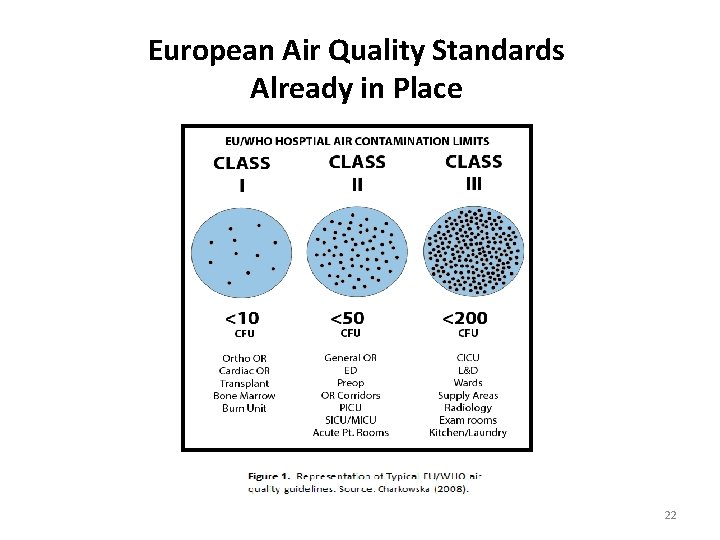
European Air Quality Standards Already in Place 22
OR Air Quality: How clean is clean enough? Is typical O. R. air quality adequate for today’s O. R. environment? • More procedures per day and faster turnovers increase biological load in the O. R. • More personnel, activity and technology in the O. R. • Increased use of implants, particularly in orthopedics which have a higher risk for SSI • Older and more acute patient populations • Antibiotic resistant organisms • More revision procedures 23
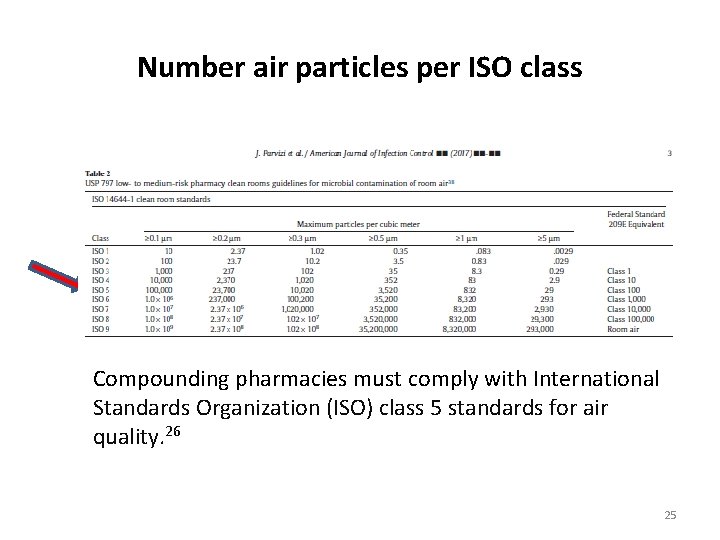
Compounding Pharmacies • Unlike operating rooms, the pharmaceutical and computer industries enforce stringent air quality standard on their manufacturing processes. • Currently no air quality standard (bacteria and particle limits) nor standard methodology for testing OR air quality, as there are in compounding pharmacies. • Compounding pharmacies prepare sterile solutions to be introduced into the sterile vascular system. In OR, the majority of procedures involve entering a sterile organ space through an incision, which remains open to the OR air. 24
Number air particles per ISO class Compounding pharmacies must comply with International Standards Organization (ISO) class 5 standards for air quality. 26 25
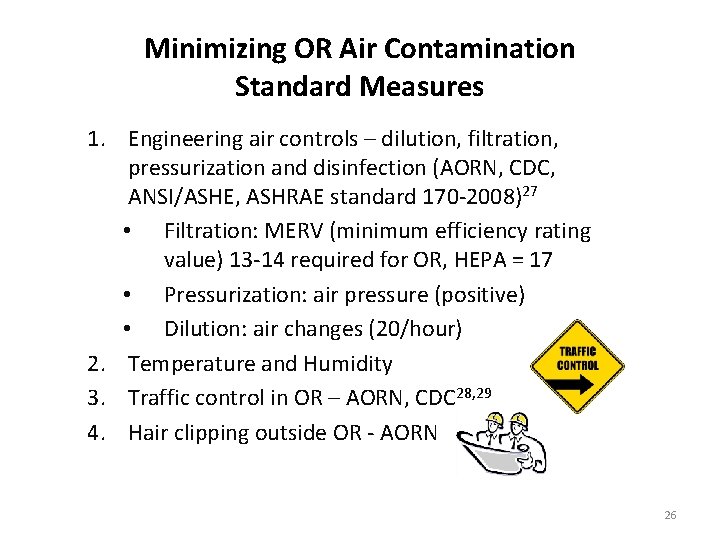
Minimizing OR Air Contamination Standard Measures 1. Engineering air controls – dilution, filtration, pressurization and disinfection (AORN, CDC, ANSI/ASHE, ASHRAE standard 170 -2008)27 • Filtration: MERV (minimum efficiency rating value) 13 -14 required for OR, HEPA = 17 • Pressurization: air pressure (positive) • Dilution: air changes (20/hour) 2. Temperature and Humidity 3. Traffic control in OR – AORN, CDC 28, 29 4. Hair clipping outside OR - AORN 26
Minimizing OR Air Contamination Temperature and Humidity: 20% to 60% – Aids in controlling microbial growth, – Supports the shelf life and product integrity of sterile supplies, – Controlling relative humidity (RH) can reduce transmission of certain airborne infectious organisms, including some strains of influenza Temperature: 68 to 75°F – Location of lights can increase room temperature and also be an obstacle to the desired airflow pattern, – Patient hypothermia can contribute to increased risk of SSI. 27
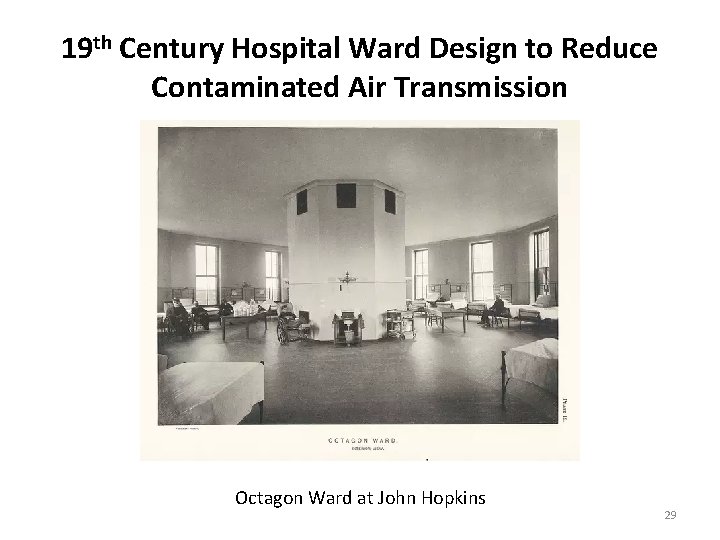
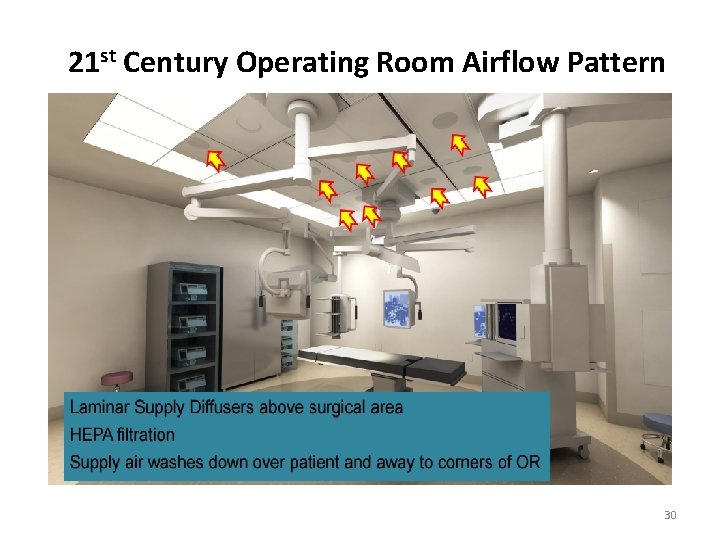
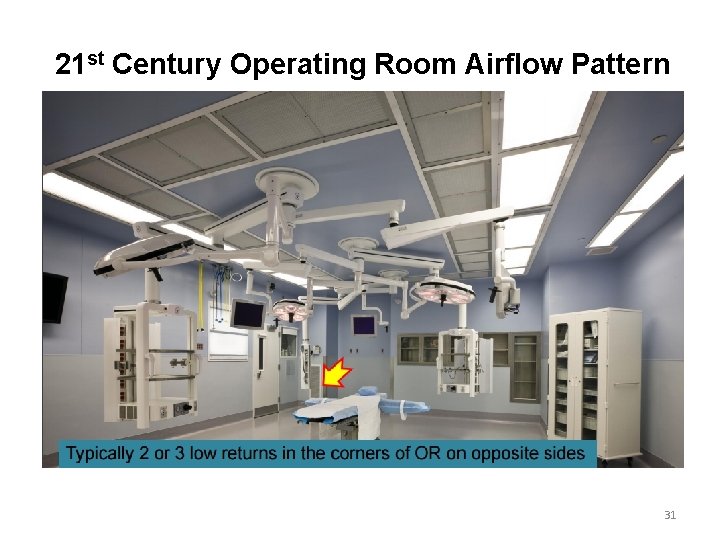
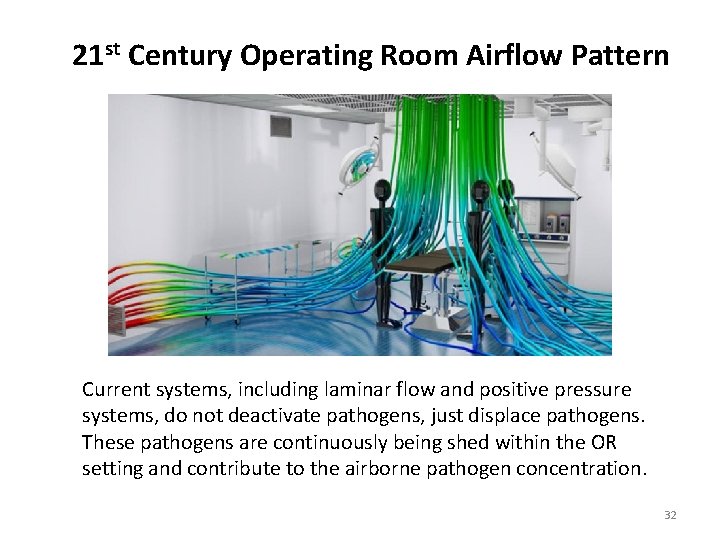
Minimizing OR Air Contamination Airflow Systems for ORs 1. Turbulent flow: Airborne contaminants are controlled with dilution. This increases the effectiveness of air exchange and distribution, but can speed up microbial dispersion. 2. Unidirectional-flow (“laminar airflow or LAF”): Air travels in parallel lines and contaminants are carried away at the same velocity as the airflow towards the exhaust outlets. This system is designed to ensure airborne particles pass the operating area. 3. Laminar air-flow systems with HEPA filters (Ultra Clean air) is often used for orthopaedic and other implant surgery. 4. Mixed-flow: Unidirectional airflow regimes are only used to protect critical zones (e. g. the area surrounding the operating field). There is no consensus on the best airflow system for ORs 30 28
19 th Century Hospital Ward Design to Reduce Contaminated Air Transmission Octagon Ward at John Hopkins 29
21 st Century Operating Room Airflow Pattern 30
21 st Century Operating Room Airflow Pattern 31
21 st Century Operating Room Airflow Pattern Current systems, including laminar flow and positive pressure systems, do not deactivate pathogens, just displace pathogens. These pathogens are continuously being shed within the OR setting and contribute to the airborne pathogen concentration. 32
In one year, the average person will shed more than how many pounds of dead skin: A. 0. 5 pounds B. 3 pounds C. 8 pounds 33
In one year, the average person will shed more than how many pounds of dead skin: C. 8 pounds 34
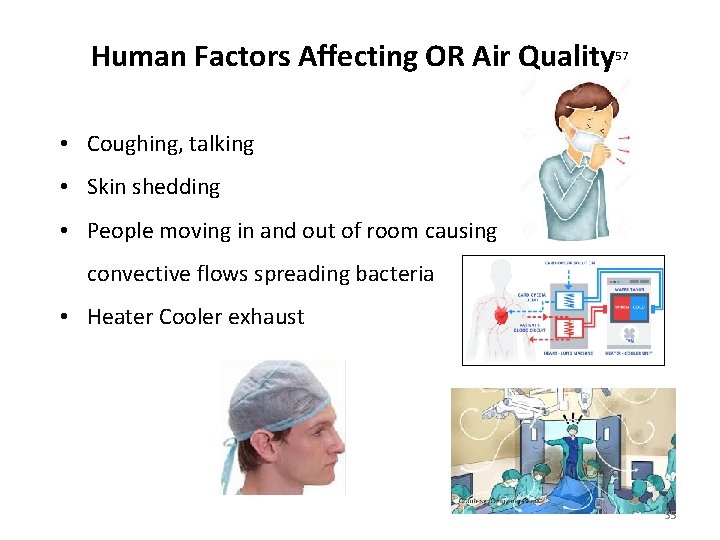
Human Factors Affecting OR Air Quality 57 • Coughing, talking • Skin shedding • People moving in and out of room causing convective flows spreading bacteria • Heater Cooler exhaust 35
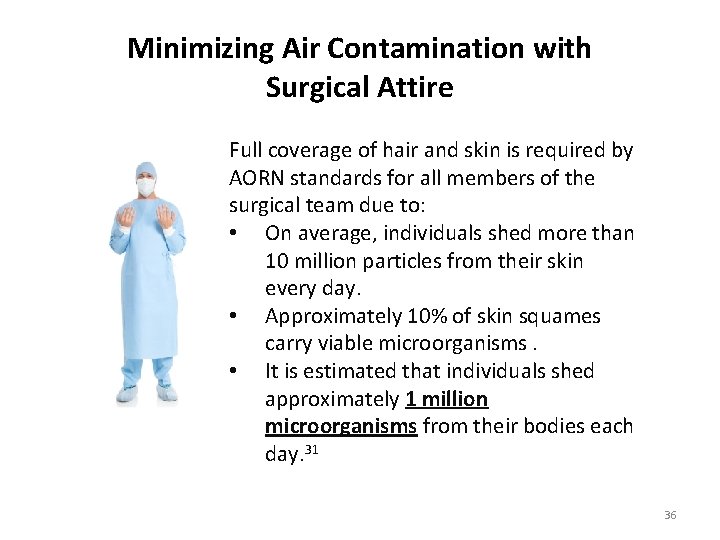
Minimizing Air Contamination with Surgical Attire Full coverage of hair and skin is required by AORN standards for all members of the surgical team due to: • On average, individuals shed more than 10 million particles from their skin every day. • Approximately 10% of skin squames carry viable microorganisms. • It is estimated that individuals shed approximately 1 million microorganisms from their bodies each day. 31 36
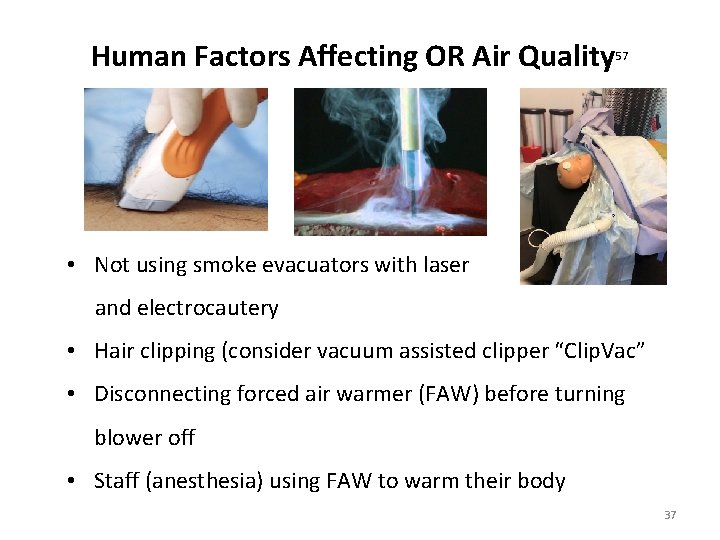
Human Factors Affecting OR Air Quality 57 • Not using smoke evacuators with laser and electrocautery • Hair clipping (consider vacuum assisted clipper “Clip. Vac” • Disconnecting forced air warmer (FAW) before turning blower off • Staff (anesthesia) using FAW to warm their body 37
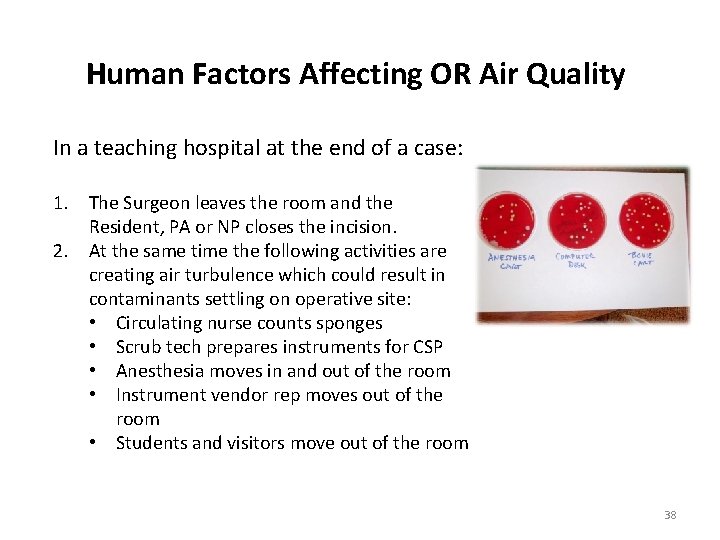
Human Factors Affecting OR Air Quality In a teaching hospital at the end of a case: 1. The Surgeon leaves the room and the Resident, PA or NP closes the incision. 2. At the same time the following activities are creating air turbulence which could result in contaminants settling on operative site: • Circulating nurse counts sponges • Scrub tech prepares instruments for CSP • Anesthesia moves in and out of the room • Instrument vendor rep moves out of the room • Students and visitors move out of the room 38
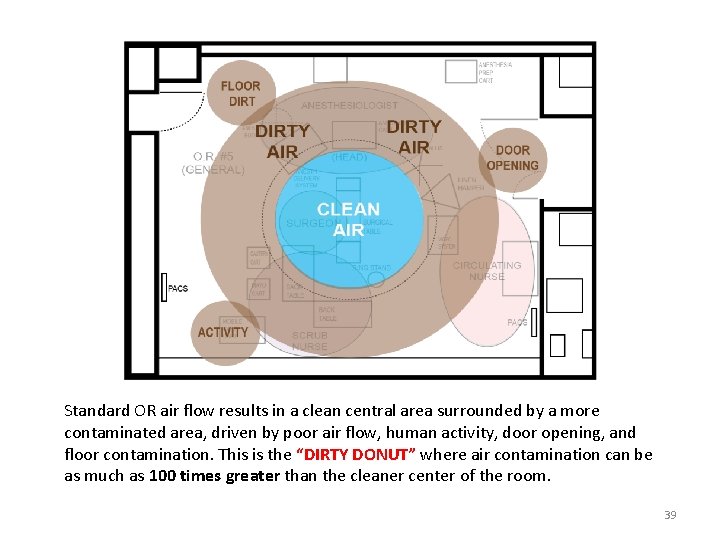
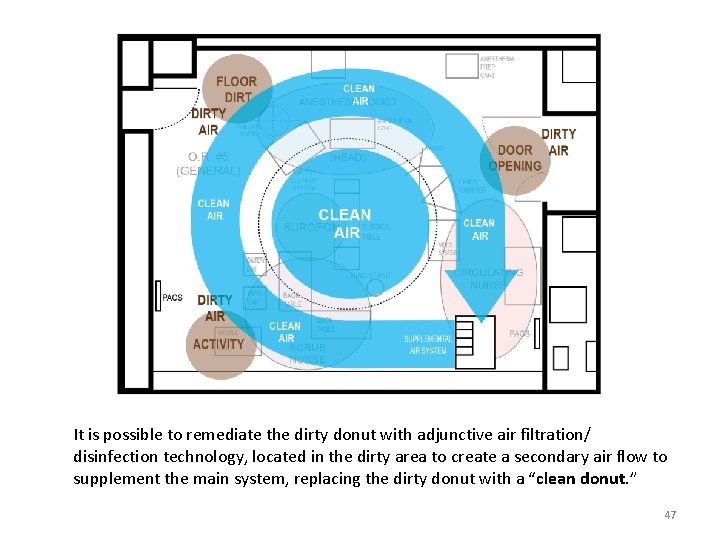
Standard OR air flow results in a clean central area surrounded by a more contaminated area, driven by poor air flow, human activity, door opening, and floor contamination. This is the “DIRTY DONUT” where air contamination can be as much as 100 times greater than the cleaner center of the room. 39
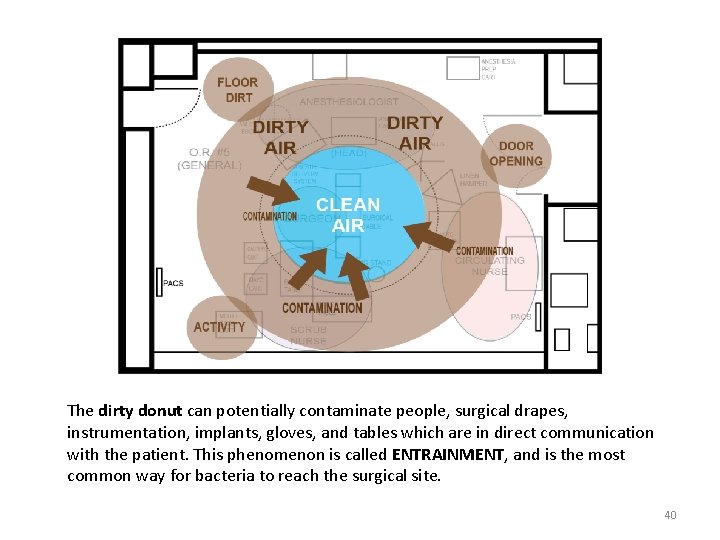
The dirty donut can potentially contaminate people, surgical drapes, instrumentation, implants, gloves, and tables which are in direct communication with the patient. This phenomenon is called ENTRAINMENT, and is the most common way for bacteria to reach the surgical site. 40
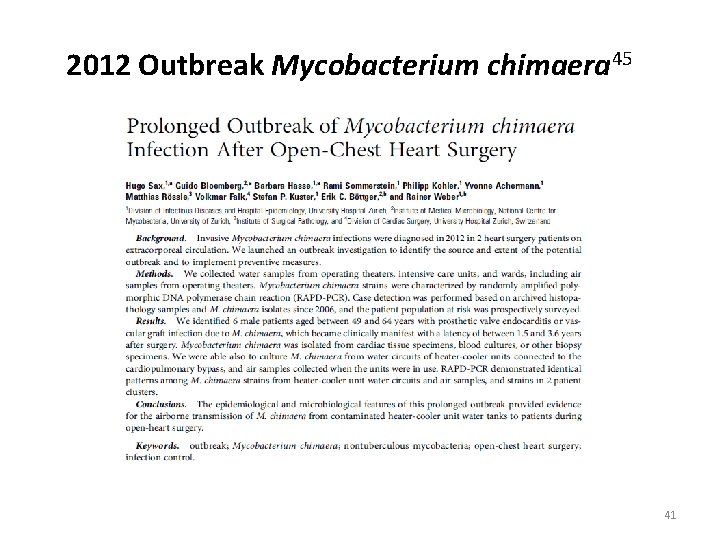
2012 Outbreak Mycobacterium chimaera 45 41
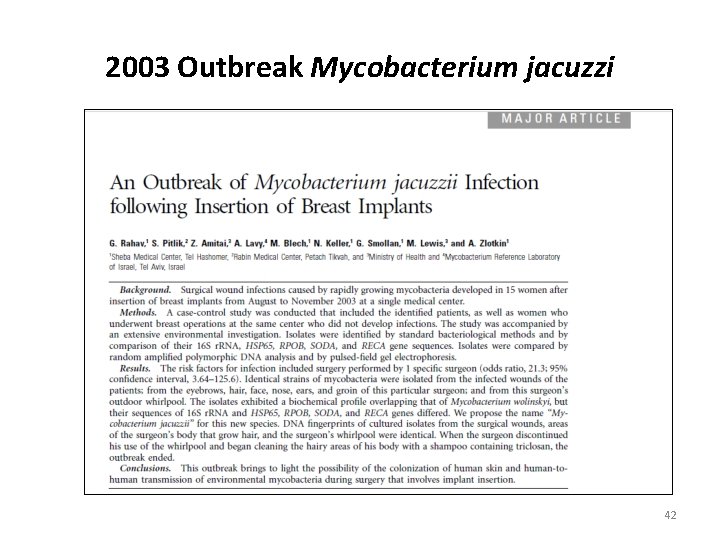
2003 Outbreak Mycobacterium jacuzzi 42
Consequently. . Are adjunctive measures indicated to improve the quality of OR air? 43
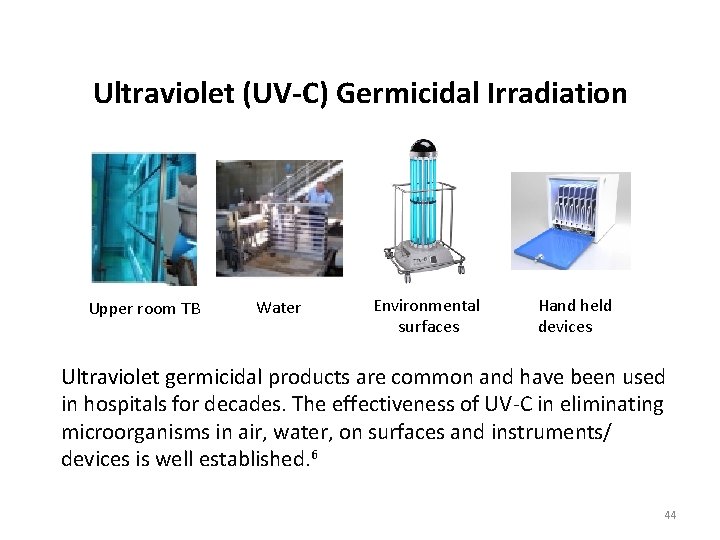
Ultraviolet (UV-C) Germicidal Irradiation Upper room TB Water Environmental surfaces Hand held devices Ultraviolet germicidal products are common and have been used in hospitals for decades. The effectiveness of UV-C in eliminating microorganisms in air, water, on surfaces and instruments/ devices is well established. 6 44
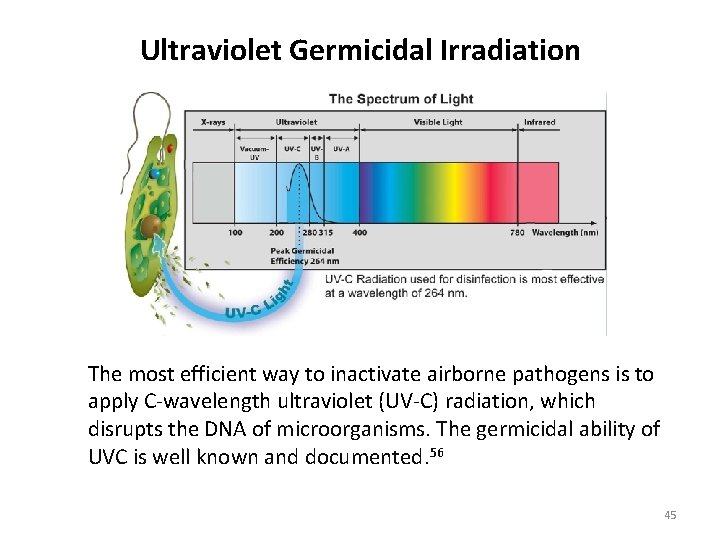
Ultraviolet Germicidal Irradiation The most efficient way to inactivate airborne pathogens is to apply C-wavelength ultraviolet (UV-C) radiation, which disrupts the DNA of microorganisms. The germicidal ability of UVC is well known and documented. 56 45
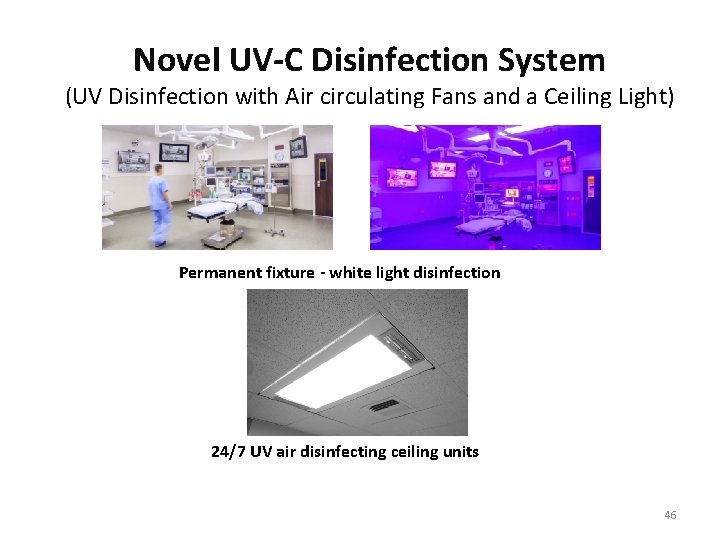
Novel UV-C Disinfection System (UV Disinfection with Air circulating Fans and a Ceiling Light) Permanent fixture - white light disinfection 24/7 UV air disinfecting ceiling units 46
It is possible to remediate the dirty donut with adjunctive air filtration/ disinfection technology, located in the dirty area to create a secondary air flow to supplement the main system, replacing the dirty donut with a “clean donut. ” 47
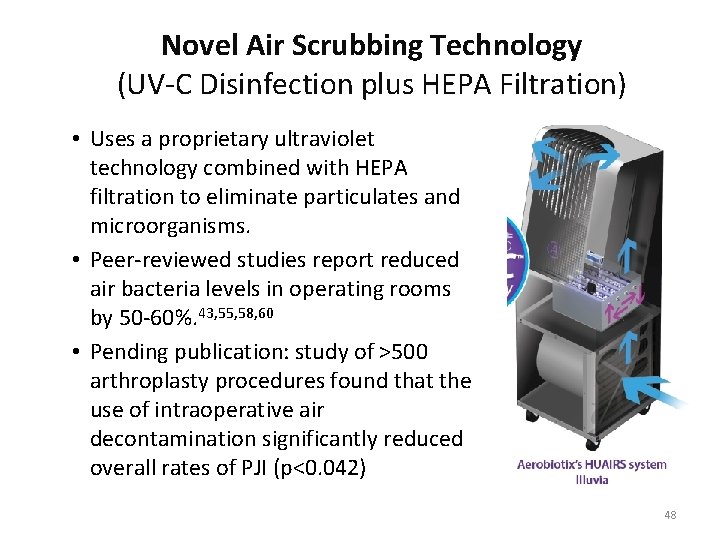
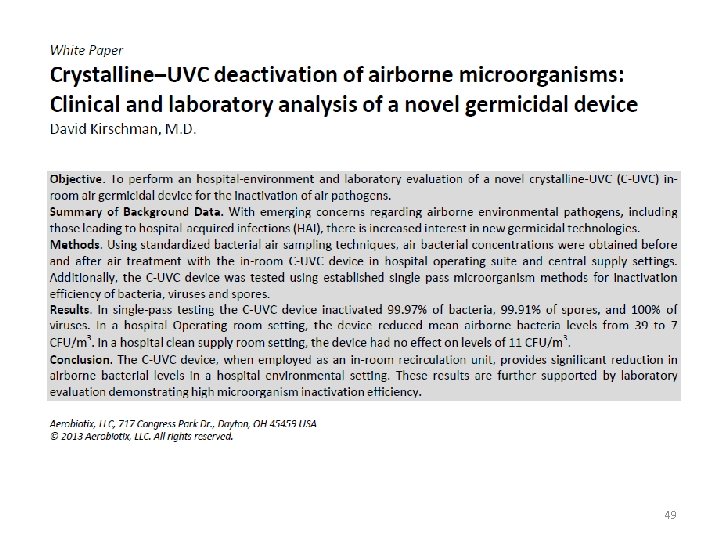
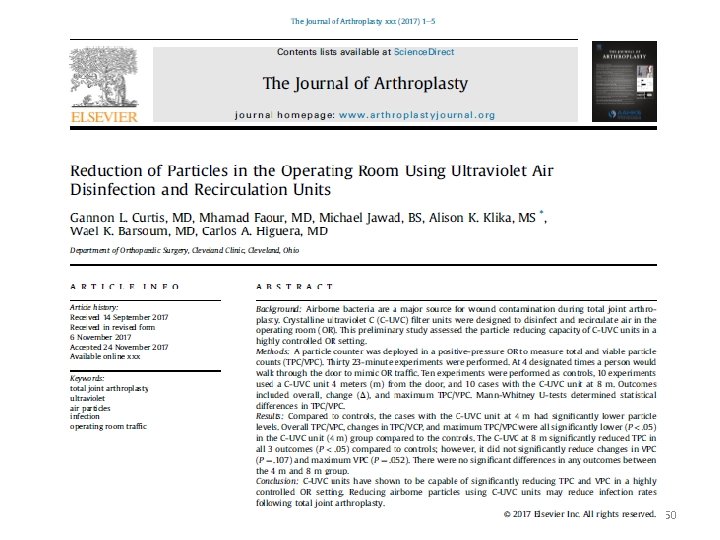
Novel Air Scrubbing Technology (UV-C Disinfection plus HEPA Filtration) • Uses a proprietary ultraviolet technology combined with HEPA filtration to eliminate particulates and microorganisms. • Peer-reviewed studies report reduced air bacteria levels in operating rooms by 50 -60%. 43, 55, 58, 60 • Pending publication: study of >500 arthroplasty procedures found that the use of intraoperative air decontamination significantly reduced overall rates of PJI (p<0. 042) 48
49
50
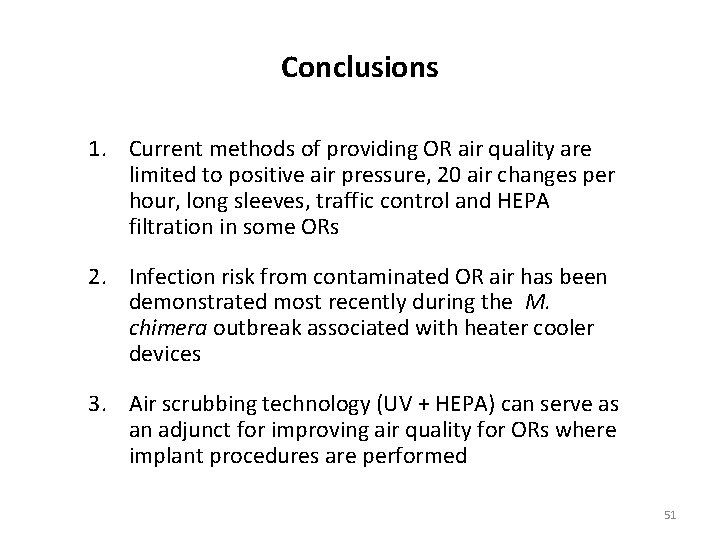
Conclusions 1. Current methods of providing OR air quality are limited to positive air pressure, 20 air changes per hour, long sleeves, traffic control and HEPA filtration in some ORs 2. Infection risk from contaminated OR air has been demonstrated most recently during the M. chimera outbreak associated with heater cooler devices 3. Air scrubbing technology (UV + HEPA) can serve as an adjunct for improving air quality for ORs where implant procedures are performed 51
THANK YOU!! maureenspencer@gmail. com Cell: (781) 864 -2130 52
References 1. 2. 3. 4. 5. 6. 7. 8. 9. 10. 11. 12. Petrova, O. E. and K. Sauer, Sticky situations: key components that control bacterial surface attachment. J Bacteriol, 2012. 194(10): p. 2413 -25. Zimmerli W, Trampuz A, Ochsner P. “Prosthetic-Joint Infections”. N Engl J Med October 14, 2004; 351: 1645 -1654. Owers KL, James E, Bannister GC. Source of bacterial shedding in laminar flow theatres. J Hosp Infect. 2004 Nov; 58(3): 230 -2. Eickhoff, T. C. (1994). "Airborne nosocomial infection: a contemporary perspective. " Infection Control and Hospital Epidemiology 15(10): 663 -672. Durmaz G et al. The relationship between airborne colonization and nosocomial infections in intensive care units. J Chemotherapy 39: 465 -471 Kowalski W. Ultraviolet Germicidal Irradiation Handbook. Springer Verlag, Berlin 2009. pp 399 -418. Whyte W. Lidwell OM et al Suggested bacteriological standards for air in ultra clean operating rooms J Hosp Infect 1983; 4: 133 -9. Kurtz SM, 2012. Economic burden of periprosthetic joint infection in the United States. J. Arthroplasty 27: 61– 65. e 61. Parisi TJ, What is the Long-term Economic Societal Effect of Periprosthetic Infections After THA. Clin Orthop Relat Res. 2017 Apr 7. Tande AJ, Patel R. Prosthetic Joint Infection. Clinical Microbiology Reviews. 2014; 27(2): 302 -345. doi: 10. 1128/CMR. 00111 -13. Jeppe Lange, Chronic Periprosthetic Hip Joint Infection. A Retrospective, Observational Study on the Treatment Strategy and Prognosis in 130 Non-Selected Patients PLo. S One. 2016; 11(9): e 0163457. Chung L, Tse GH, O'Dwyer PJ Outcome of patients with chronic mesh infection following abdominal wall hernia repair. Hernia. 2014 Oct; 18(5): 701 -4. 53
References 13. Baddour L et al. “Update on Cardiovascular Implantable Electronic Device Infections and Their Management”. Circulation. January 26, 2010, Volume 121, Issue 3. 14. Calderone RR, Garland DE, Capen DA, Oster H Cost of medical care for postoperative spinal infections. Orthop Clin North Am. 1996 Jan; 27(1): 171 -82. 15. Pawar AY, Biswas SK. Postoperative Spine Infections. Asian Spine Journal. 2016; 10(1): 176 -183. 16. Hsu P, Bullocks J, Matthews M. Infection Prophylaxis Update. Seminars in Plastic Surgery. 2006; 20(4): 241 -248. 17. Olsen MA, Chu-Ongsakul S, Brandt KE, Dietz JR, Mayfield J, Fraser VJ. Hospital-Associated Costs Due to Surgical Site Infection After Breast Surgery. Arch Surg. 2008; 143(1): 53– 60. 18. Stein R. “Super-spreaders in infectious diseases”. International Journal of Infectious Diseases 15 (2011) e 510–e 513 19. Mora M, Mahnert A, Koskinen K, Pausan MR, Oberauner-Wappis L, Krause R, et al. Microorganisms in Confined Habitats: Microbial Monitoring and Control of Intensive Care Units, Operating Rooms, Cleanrooms and the International Space Station. Front Microbiol 2016; 7: 1573. 20. Anderson DJ et al. Strategies to Prevent Surgical Site Infections in Acute Care Hospitals: 2014 Update. Infection Control & Hospital Epidemiology 2014; 35(06): 605 -627. 21. Bratzler DW et al. Clinical practice guidelines for antimicrobial prophylaxis in surgery. American Journal of Health-System Pharmacy 2013; 70(3)195 -283. 22. Mangram AJ et al. Guideline for Prevention of Surgical Site Infection, 1999. Infection Control and Hospital Epidemiology 1999; 20(4): 247 -278. 23. Magill SS et al. Multistate point-prevalence survey of health-care associated infections. NEJM 2014; 370(13): 1198 -1208. 24. https: //www. cms. gov/medicare-fee-for-service-payment/hospitalacqcond/hospitalacquired_conditions. html 54
References 25. Fast. Stats: inpatient surgery. CDC website. http: //www. cdc. gov/nchs/fastats/insurg. htm. Published 2011. Accessed June 5, 2011. 26. ISO documents (n. d. ) https: //www. terrauniversal. com/cleanrooms/iso-classification-cleanroomstandards. php. 27. ASHRAE 170: www. ashrae. org/File%20 Library/doc. Lib/Stds. Addenda/170_2008_l_Published. pdf 28. AORN Recommended Practices for Traffic Patterns in the Perioperative Practice Setting AORN Journal March 2006. Volume 83, Issue 3, Pages 681– 684, 686. 29. HICPAC Guidelines for Environmental Infection Control in Health-Care Facilities. MMWR June 6, 2003 / 52(RR 10); 1 -42. 30. M. Sartini, A. M. Spagnolo, D. Panatto, F. Perdelli, M. L. Cristina Improving environmental quality in an operating room: clinical outcomes and economic implications J prev med hyg 2013; 54: 75 -79 31. Guideline for surgical attire. In: Guidelines for Perioperative Practice. Denver, CO: AORN, Inc; 2015: 97120. 32. Clark R, Calcina-Goff M. “Some aspects of the airborne transmission of infection”. Journal of the Royal Society Interface. 8 October 2009. 33. Qing-Zeng C, Yun-Bo S, Shi-Hai L, et al. Outbreak of Infections Caused by Group A Streptococcus after Modified Radical Mastectomy. Surgical Infections. 2013; 14(4): 385 -388. 34. Graham D 1, Parkinson B, Evans M, Keijzers G, Derrington P Nothing to sneeze at! A study into intraoperative contamination. ANZ J Surg. 2009 Dec; 79(12): 909 -12. 35. Braswell, Melanie L. et al. Implementing AORN Recommended Practices for Surgical Attire. AORN Journal , Volume 95 , Issue 1 , 128 Jan 2012 36. Schultz, Leonard Can Efficient Smoke Evacuation Limit Aerosolization of Bacteria? AORN Journal, July 2015; Volume 102, Issue 1, 7 – 14. 37. Fletcher JN, Mew D, Descôteaux J-G. Dissemination of melanoma cells within electrocautery plume. Am J Surg. 1999; 178(1): 57 -59. 55
References 38. 39. 40. 41. 42. 43. 44. 45. 46. 47. 48. 49. Tomita Y, Mihashi S, Nagata K, et al. Mutagenicity of smoke condensates induced by CO 2 -laser irradiation and electrocauterization. Mutat Res. 1981; 89(2): 145 -149. Dikes CN: Is it safe to allow smoke in our operating room? Today’s Surg Nurse 21(2): 15– 21, 1999. AORN “Management of Surgical Smoke” Online Toolkit (n. d. ) https: //www. aorn. org/guidelines/clinicalresources/tool-kits/management-of-surgical-smoke-tool-kit NIOSH DHHS “Control of Smoke from Laser/Electric Surgical Procedures”. 1996. Publication Number 96128. https: //www. cdc. gov/niosh/docs/hazardcontrol/hc 11. html Alp E, Bijl D, Bleichrodt RP, Hansson B, Voss A. Surgical smoke and infection control. J Hosp Infect. 2006; 62(1): 1 -5. Davies GS, Bradford N, Oliver R, Walsh WR The effects of a novel decontamination-recirculating system in reducing airborne particulate: A laboratory based study. Oral presentation: The European Bone & Joint Infection Society Conference Nantes France Sept 7 -9, 2017. Diep, F. “Popular Science's Strange Reporting Of The 1918 Spanish Flu Pandemic”. Popular Science October 10, 2014 Sax H et al. “Prolonged outbreak of Mycobacterium chimaera infection after open chest heart surgery”. Clin Infect Dis. 2015 Jul 1; 61(1): 67 -75. Van Ingen J et al. “Global outbreak of severe Mycobacterium chimaera disease after cardiac surgery: a molecular epidemiological study”. Lancet Infect Dis. 2017 Oct; 17(10): 1033 -1041. Balsam LB et al. “Mycobacterium chimaera left ventricular assist device infections”. J Card Surg. 2017 Jun; 32(6): 402 -404. FDA: https: //www. fda. gov/Medical. Devices/Productsand. Medical. Procedures/Cardiovascular. Devices/Heat er-Cooler. Devices/ucm 492583. htm Young SW, Tayton ER, Frampton C, Hooper GJ. The impact of patient and surgical factors on the rate of infection after primary total knee arthroplasty: an analysis of 64, 566 joints from the New Zealand Joint Registry. Bone Joint J. 2016 Mar; 98 -B(3): 334 -40. 56
References 50. 51. 52. 53. 54. 55. 56. 57. 58. 59. 60. Lipsett PA Do we really need laminar flow ventilation in the operating room to prevent surgical site infections? Ann Surg. 2008 Nov; 248(5): 701 -3. Pasquarella et al. Lack of influence of body exhaust gowns on aerobic bacterial surface counts in a mixed-ventilation oprating theatre. (2003) A study of 62 hip arthroplasties. J Hosp Infect 2003: 2– 9. Young SW, Zhu M, Shirley OC, Wu Q, Spangehl MJ. Do 'surgical helmet systems' or 'body exhaust suits' affect contamination and deep infection rates in arthroplasty? A systematic review. J Arthroplasty. 2016; 31(1): 225 -233. Gastmeier P, Breier A-C, Brandt C. Influence of laminar airflow on prosthetic joint infections: a systematic review. J Hosp Infect. 2012; 81(2): 73– 8. Spagnolo A et al. Operating theatre quality and prevention of surgical site infections. Journal of Preventive Medicine and Hygiene. 2013; 54(3): 131 -137. Kirschman D, Eachempati S. “Airborne bacteria in the operating room can be reduced by HEPA/Ultraviolet air recirculation system (HUAIRS)”. Presented at the Surgical Infection Society (SIS) - 37 th Annual Meeting May 2 – 5 2017 in St. Louis, MO. Vatansever F, Ferraresi C, de Sousa MVP, et al. Can bio warfare agents be defeated with light? Virulence. 2013; 4(8): 796 -825. Parvizi J et al. Environment of care: Is it time to reassess microbial contamination of the operating room air as a risk factor for surgical site infection in total joint arthroplasty? Am J Infect Control. 2017 Nov 1; 45(11): 1267 -1272. Curtis G et al. “Reduction of particles in operating room using UV air disinfection and recirculation units”. The Journal of Arthroplasty XXX(2017) 1 -5. Crawford CB, Clay JA, Seydel AS, Wernberg JA. Surgical Site Infections in Breast Surgery: The Use of Preoperative Antibiotics for Elective, Nonreconstructive Procedures. International Journal of Breast Cancer. 2016; 2016: 1645192. Bischoff W et al. “Impact of a novel mobile air purification system on the bacterial air burden during routine care”. SHEA Conference Spring 2018. 57