
Air and Air Pollution These slides are adapted
- Slides: 26
Air and Air Pollution These slides are adapted from the Glencoe Earth Systems Textbook for CCSD use only and the EPA’s Air pollution website
What Causes Air Pollution? § Reflection: List 5 things you think cause air pollution.
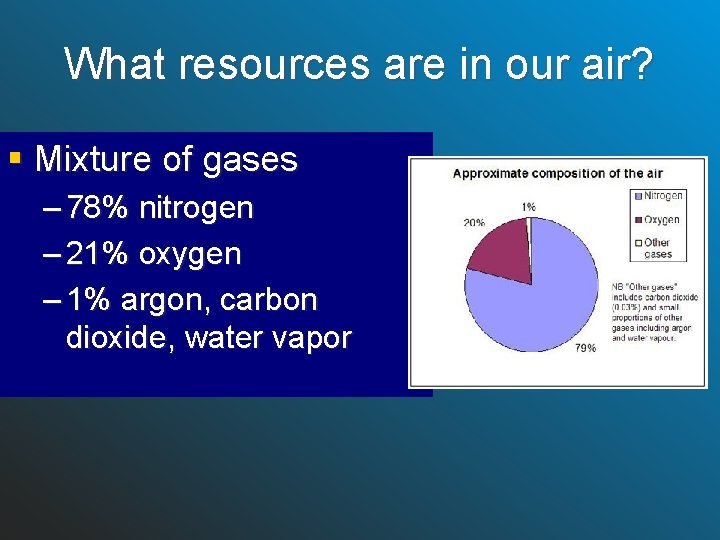
What resources are in our air? § Mixture of gases – 78% nitrogen – 21% oxygen – 1% argon, carbon dioxide, water vapor
Key Problems With Air § Air pollution can harm human health and the environment § It can be harmful even when it is not visible § Many countries have no laws in place to protect their air § Laws do not guarantee compliance § Difficult if not impossible to clean once polluted
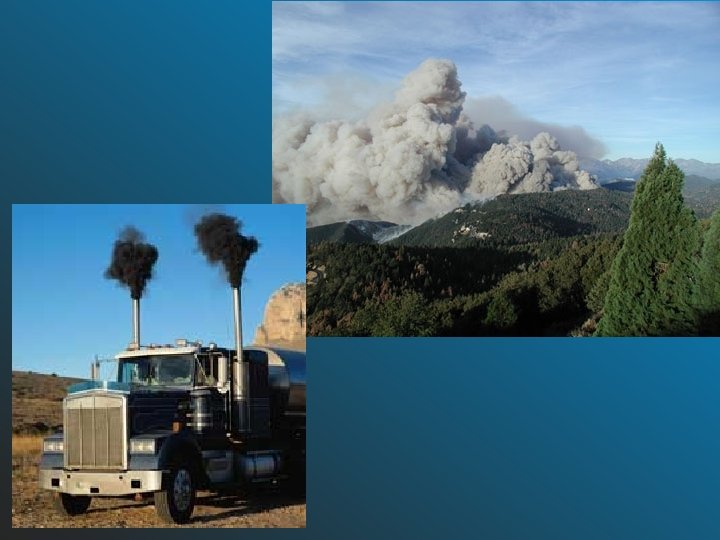
Sources of Air Pollution Natural sources § Sand § Dust storms § volcanic eruptions § forest fires § Solar activity Human sources § burning fossil fuels § factory and car emissions, § refrigerators and air conditioners
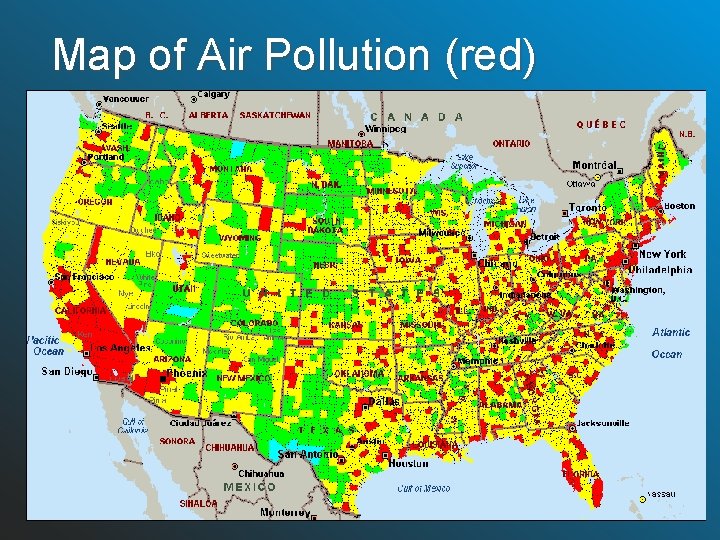
Map of Air Pollution (red)
History Of Human Air Pollution § pre-1700 s – burning of wood, coal, animal dung, or other biofuels for cooking and heat § Industrial revolution (1700’s) – widespread burning of wood and coal for fuel § Modern times – trash incineration and modern chemicals introduced into the air supply
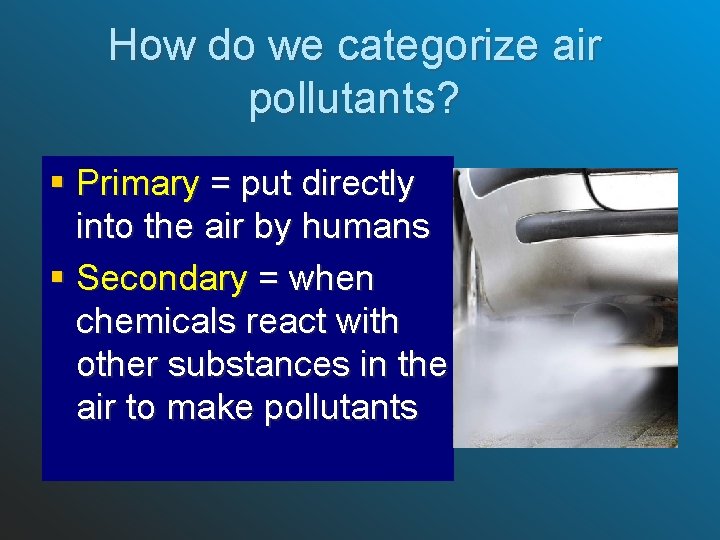
How do we categorize air pollutants? § Primary = put directly into the air by humans § Secondary = when chemicals react with other substances in the air to make pollutants
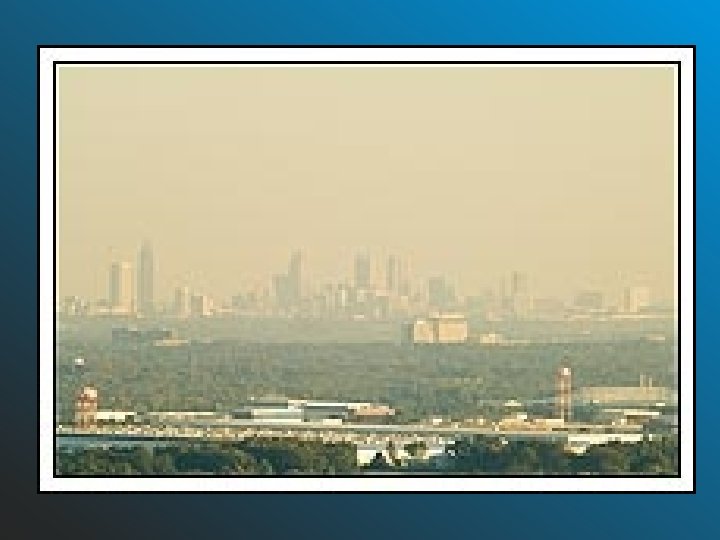
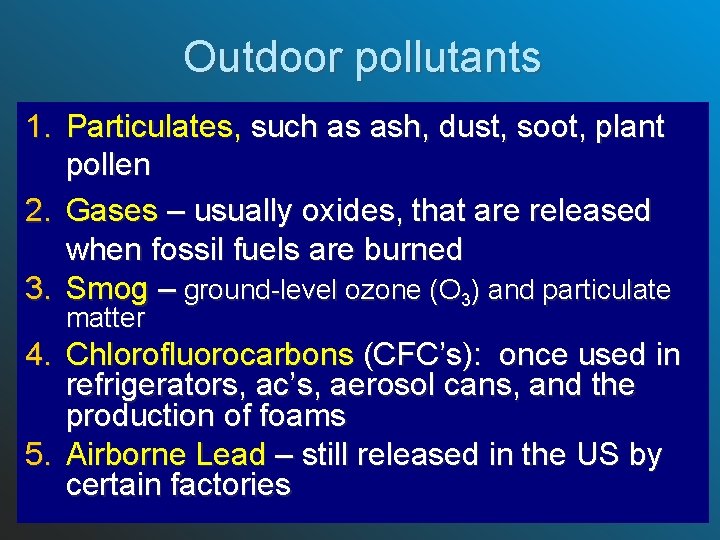
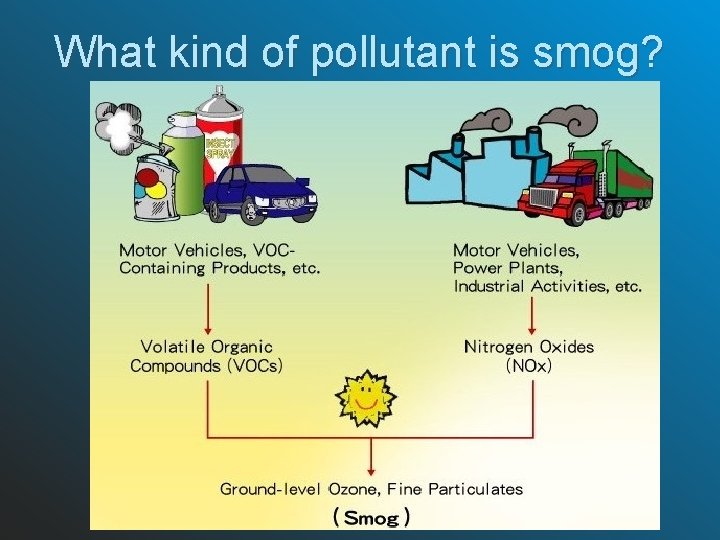
Outdoor pollutants 1. Particulates, such as ash, dust, soot, plant pollen 2. Gases – usually oxides, that are released when fossil fuels are burned 3. Smog – ground-level ozone (O 3) and particulate matter 4. Chlorofluorocarbons (CFC’s): once used in refrigerators, ac’s, aerosol cans, and the production of foams 5. Airborne Lead – still released in the US by certain factories
What kind of pollutant is smog?
Indoor Pollutants Dangerous because of poor air circulation and the long amounts of time people spend inside 1. Cigarette smoke – deadliest of all 2. Microorganisms – bacteria and fungi from air ducts and vents 3. Radon – radioactive gas – comes from soil when radium breaks down 4. Asbestos – minerals that form in long thin fibers – banned in US
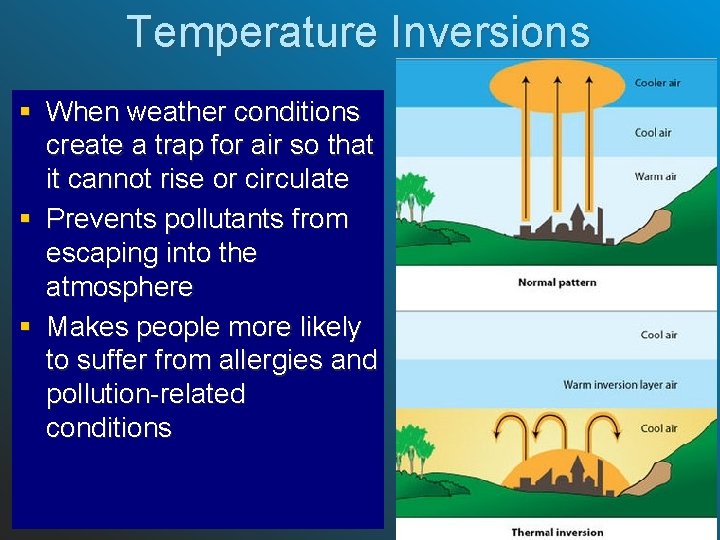
Temperature Inversions § When weather conditions create a trap for air so that it cannot rise or circulate § Prevents pollutants from escaping into the atmosphere § Makes people more likely to suffer from allergies and pollution-related conditions
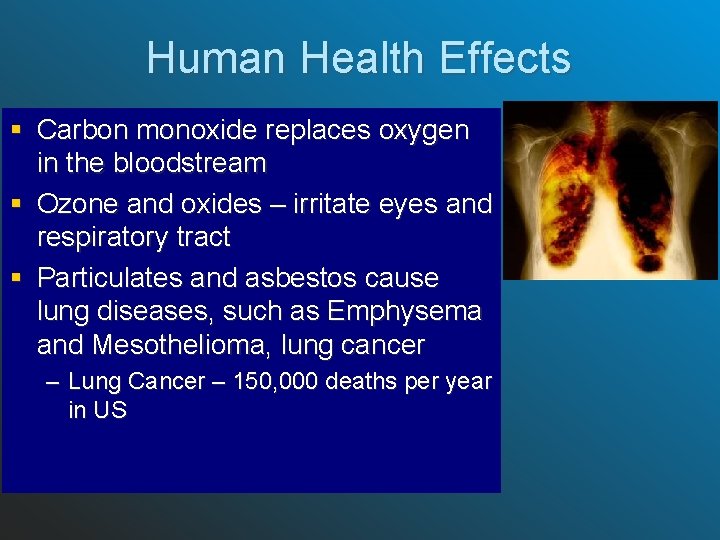
Human Health Effects § Carbon monoxide replaces oxygen in the bloodstream § Ozone and oxides – irritate eyes and respiratory tract § Particulates and asbestos cause lung diseases, such as Emphysema and Mesothelioma, lung cancer – Lung Cancer – 150, 000 deaths per year in US
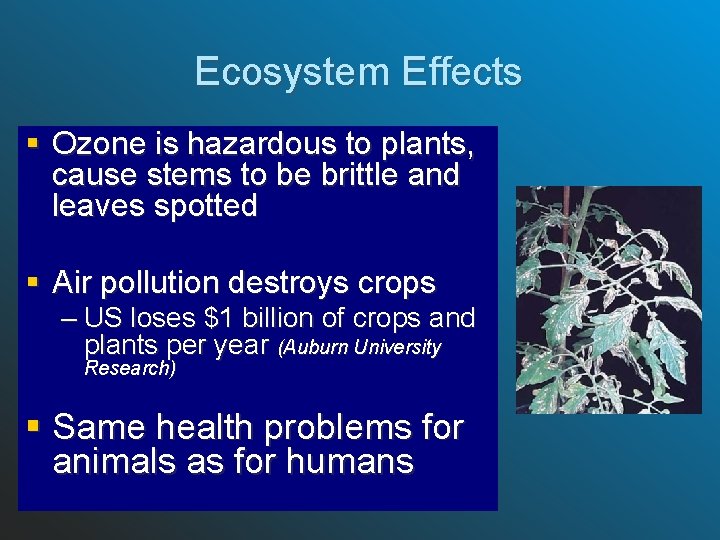
Ecosystem Effects § Ozone is hazardous to plants, cause stems to be brittle and leaves spotted § Air pollution destroys crops – US loses $1 billion of crops and plants per year (Auburn University Research) § Same health problems for animals as for humans
Natural Cleaning and Regulation of Air § Precipitation sticks to pollutant particles and fall to the ground § Plants and plankton remove excess CO 2 and help keep the planet cool
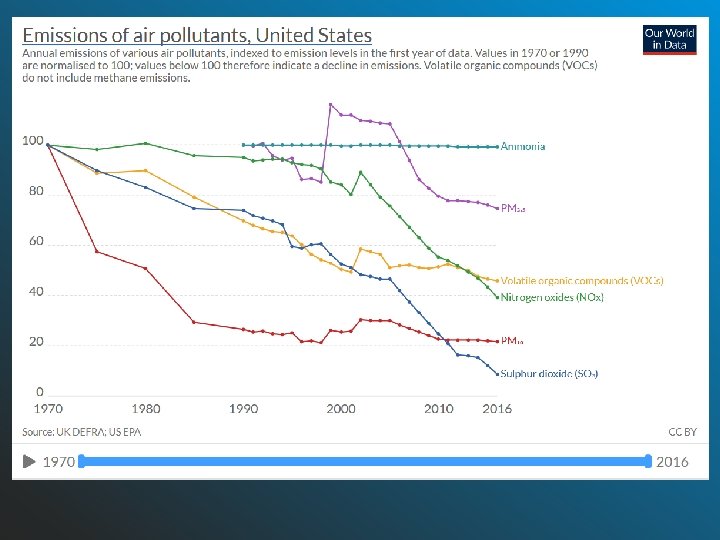
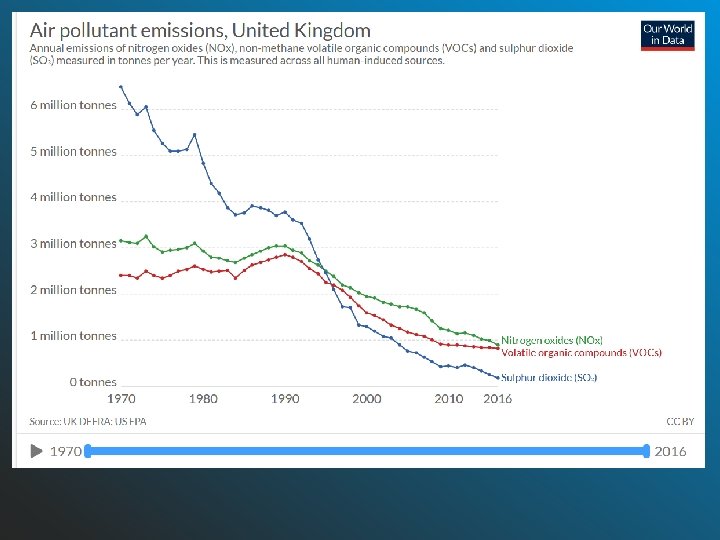
Human Solutions to Air Pollution § Electric cars, hybrid cars – Zero Emissions Vehicles – no tailpipe emissions § Legislation (EPA)– Clean Air Act 1970 § Set federal limits on 6 primary air pollutants: particulates, ozone, sulfur dioxide, nitrogen dioxide, carbon monoxide, and lead Requires: § Pollution control devices in factories, such as scrubbers, which remove pollutants from exhaust § States to create a plan to reduce air pollution and meet these standards § Motor vehicle regulation to reduce exhaust pollution
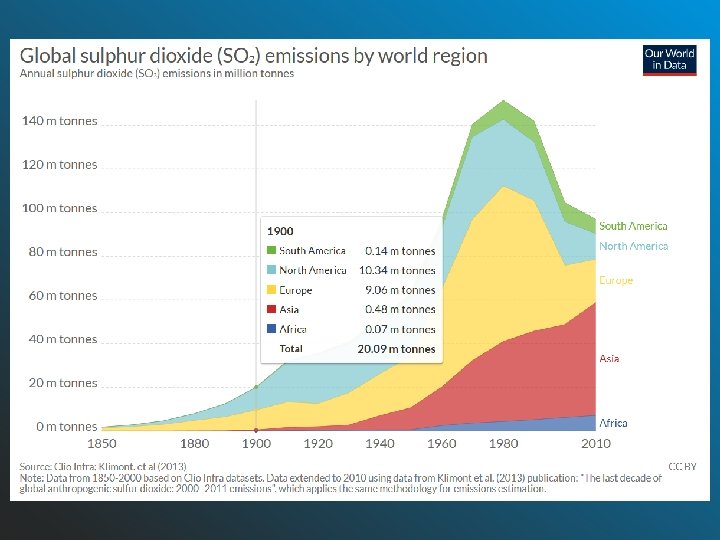
Acid Rain § Precipitation that is more acidic than normal (anything < p. H 5. 6) – Water in the atmosphere reacts with gases released from factories – Falls and builds up in lakes § Canada-US Air Quality Agreement in 1991 – Agreed to: § Reduce SO 2 and NOx emissions § Collaborate on acid-rain scientific research § Share new technologies that reduce human-caused acid rain
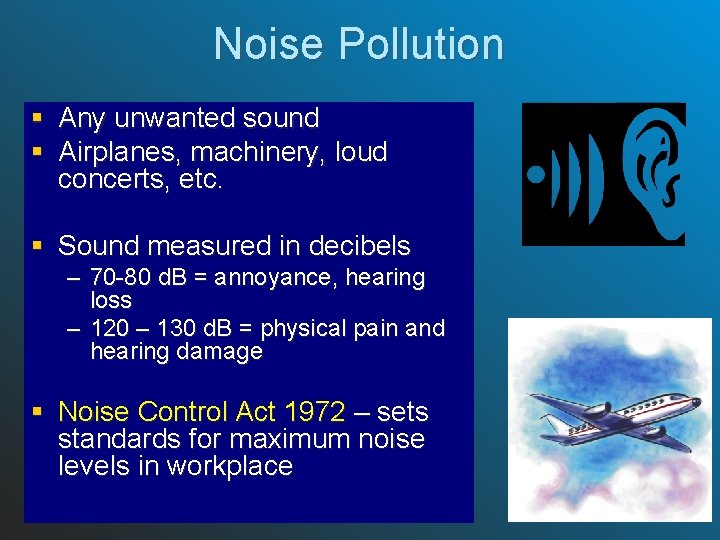
Noise Pollution § Any unwanted sound § Airplanes, machinery, loud concerts, etc. § Sound measured in decibels – 70 -80 d. B = annoyance, hearing loss – 120 – 130 d. B = physical pain and hearing damage § Noise Control Act 1972 – sets standards for maximum noise levels in workplace
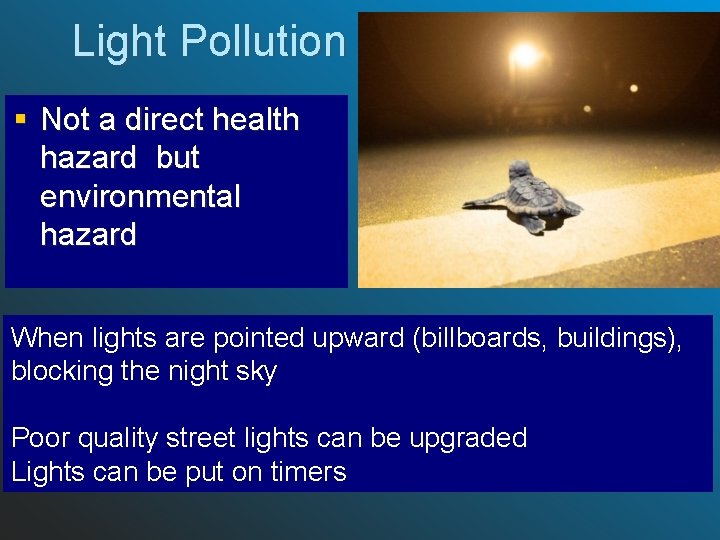
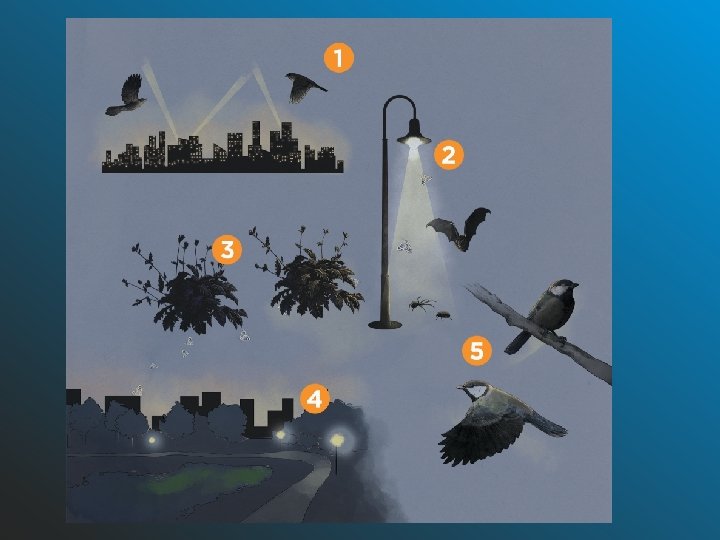
Light Pollution § Not a direct health hazard but environmental hazard When lights are pointed upward (billboards, buildings), blocking the night sky Poor quality street lights can be upgraded Lights can be put on timers