
AIMS FOR THE SESSION Help you understand the

- Slides: 27
AIMS FOR THE SESSION Help you understand the basics of autism, why these might be a driver towards homelessness and give you some practical tools to work with. Liza Dresner. liza@resourcesforautism. org. uk 0208 458 3259
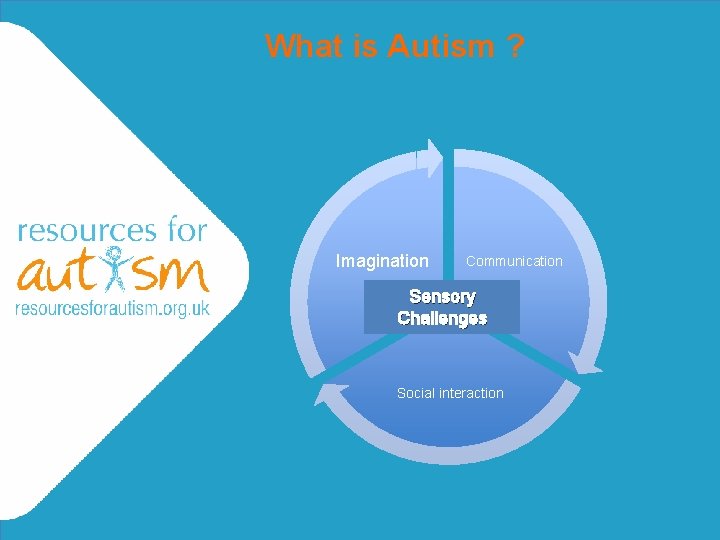
What is Autism ? Imagination Communication Sensory Challenges Social interaction
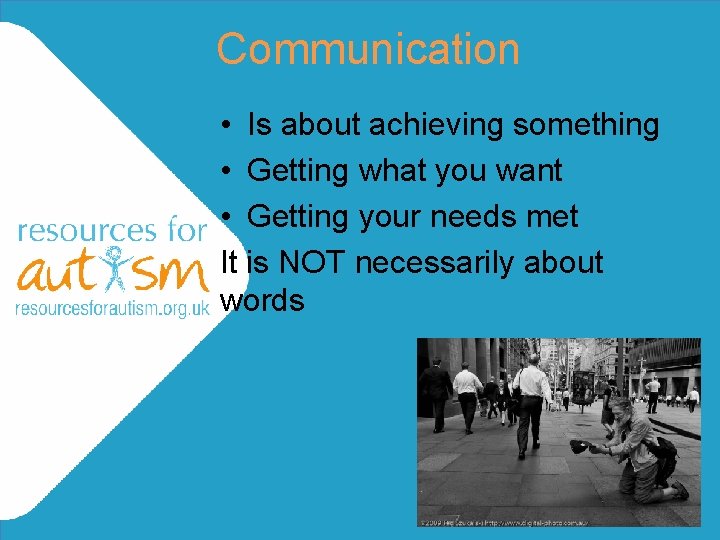
Communication • Is about achieving something • Getting what you want • Getting your needs met It is NOT necessarily about words
IMAGINATION CHALLENGES • Imagining ‘the other’ • Dealing with unexpected and unavoidable changes to routine • Making transitions from one activity to another • Handling any sort of uncertainty • Dealing with anxiety
Imagination challenges 2 • Unable to imagine what others are thinking or feeling.
Isolation • Just because someone struggles with social interaction does not mean they do not get lonely. • Loneliness is a driver to inappropriate, unhealthy, even exploitative relationships.
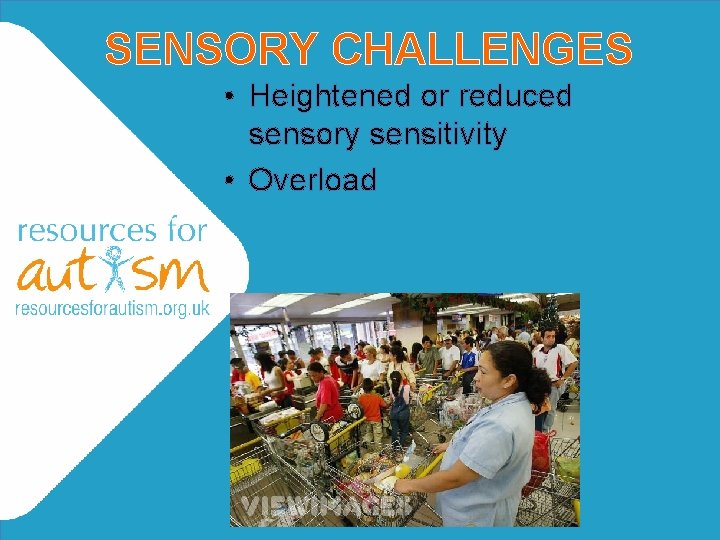
SENSORY CHALLENGES • Heightened or reduced sensory sensitivity • Overload
Why Does Autism Matter? • • Family breakdown Exclusion and poverty Bullying and exploitation Ill treatment and abuse Medication abuse Physical ill health Failure to realise academic and intellectual potential • Fewer friendships-loneliness and depression • Dependence on parents as an adult • HOMELESSNESS
Homelessness? • Nothing inevitable about people with autism becoming homeless. • A specific personalised project: 5 of 7 clients diagnosed with an ASC had moved indoors (4 into flats; 1 staying in B&B’s intermittently) (Pritchard – Devon) • Indicates that these people might not have become entrenched rough sleepers if service providers gave the right support earlier on.
Reduce Choice • Be honest • This is my job • This is what is going to happen. • This is where you are going to sleep.
The Link Relationship difficulties, mental health problems and unemployment are common factors in autism and common causes of homelessness.
Fear and Anxiety • • Genuine Not ‘manipulative’ Anxiety is all pervasive Fear of being lonely – street offers non-demanding relationships
Hoarding • May be absolutely necessary • May provide ‘comfort’ • May create a protective barrier • May be a way of dealing with loss • Will result in difficulty maintaining a home • Cannot be forbidden.
The tool box Proper planning
Communication Tools • • Be Clear Use less words Allow process time Use visuals Few or no choices One thing at a time (no lists) Statements rather than questions. (especially if you know the answer)
The interview environment Where it is not possible to adjust or adapt the environment, consider varying the duration or nature of any assessment or intervention (including taking regular breaks) to limit the negative impact of the environment.
The Environment • Allow personal space (at least an arm's length) • Use visual supports (use labels with words or symbols to provide visual cues about expected behaviour) • Colour of walls and furnishings (avoid patterns, use low-arousal colours)
The environment 2 • Lighting (reduce fluorescent lighting, use blackout curtains or dark glasses or increase natural light) • Noise levels (reduce external sounds, headphones, earplugs or ear defenders). • Busy road and open window • What rules really matter?
Hoarding • Set rules in advance. Make those rules theirs not yours. • ‘I will keep no more than 500 books’ • ‘I will not have anything beyond this line’ • ‘I will fill my trolley and no more’
Physical Activity Tools Quick release of emotional energy • Exercise - Walk. • Sport (non-competitive) • Creative destruction (recycling – squash those cans/break those boxes up)
Relaxation Tools Slow release of emotional energy • Relaxation training • Solitude • Massage • Sleep
Social Tools Use yours…. . • Be reliable • Be consistent • Be empathetic
Our responsibility • Avoid confrontation if at all possible • Ground rules need to be reduced as far as possible but then STUCK TO! • It is our job to get into their world not their responsibility to get into ours
Be Positive • Achievable objectives • Persistent and sensitive engagement • Focus on the desired behaviour • Give more support with difficult tasks • Use rewards • Development of confidence / self esteem
Make being inside the norm! • • This is what it is! (No choice) Environment Neighbours Routines Sound proofing Own rules Trust (It is going to work – you will do what you promise)
Final Thoughts • Take any opportunity to encourage • Stop talking! • Use ‘delaying tactics’. (give yourself time to think before you speak or act). • Pick your battles
THANK YOU Resources for Autism 858 Finchley Road London NW 11 6 AB Telephone: 020 8458 3259 www. resourcesforautism. org. uk Charity Number: 1061253 10 January 2022