
Aims Aim To mix colours To describe trees
Aims Aim • To mix colours. • To describe trees. Success Criteria • IStatement can name 1 the Lorem primary ipsumand dolor secondary sit amet, colours. consectetur adipiscing elit. • IStatement can use primary 2 colours to make secondary colours. • Sub • I can usestatement my colours to paint a Kandinsky-inspired picture. • I can tell you an interesting fact about Wassily Kandinsky. • I can write down adjectives to describe trees.

Primary Colours Primary means first. Primary Colours can’t be made by mixing any other colour. Talk to a partner. 1. How many primary colours are there? 2. What are the primary colours?
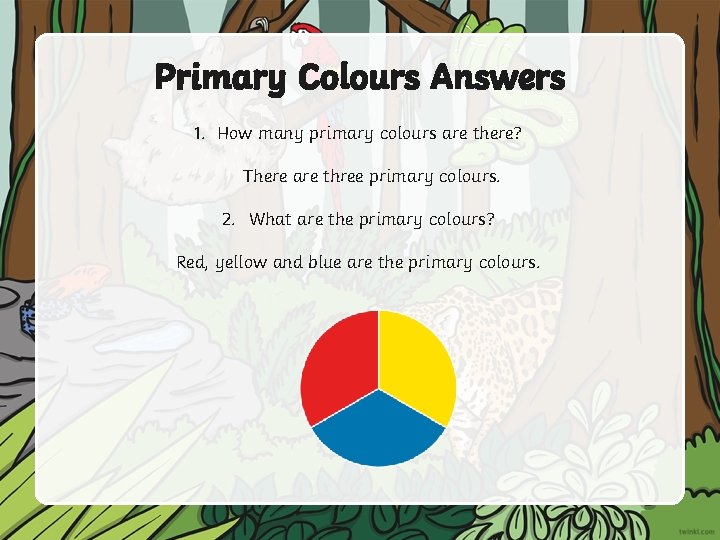
Primary Colours Answers 1. How many primary colours are there? There are three primary colours. 2. What are the primary colours? Red, yellow and blue are the primary colours.
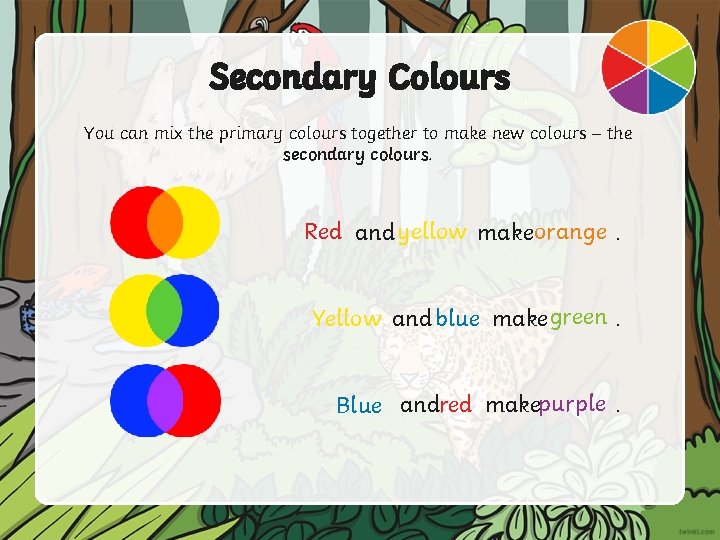
Secondary Colours You can mix the primary colours together to make new colours – the secondary colours. Red and yellow makeorange. Yellow and blue make green. Blue andred makepurple.

Try Mixing Secondary Colours + + + = = = ? ? ?
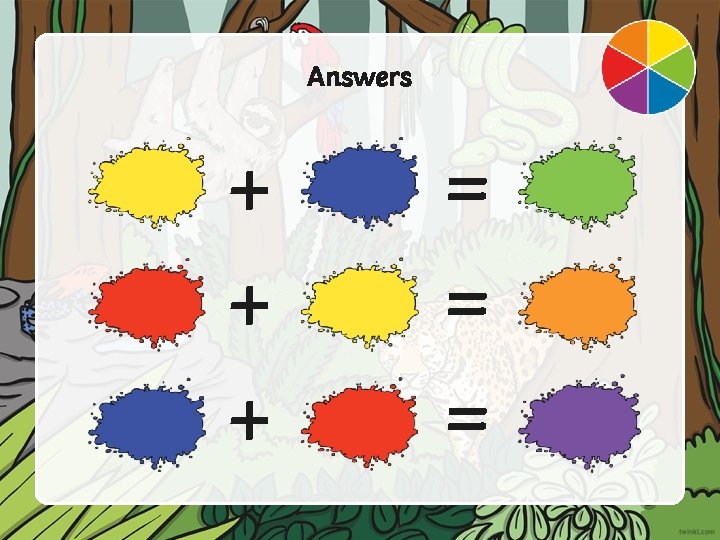
Answers + + + = = =
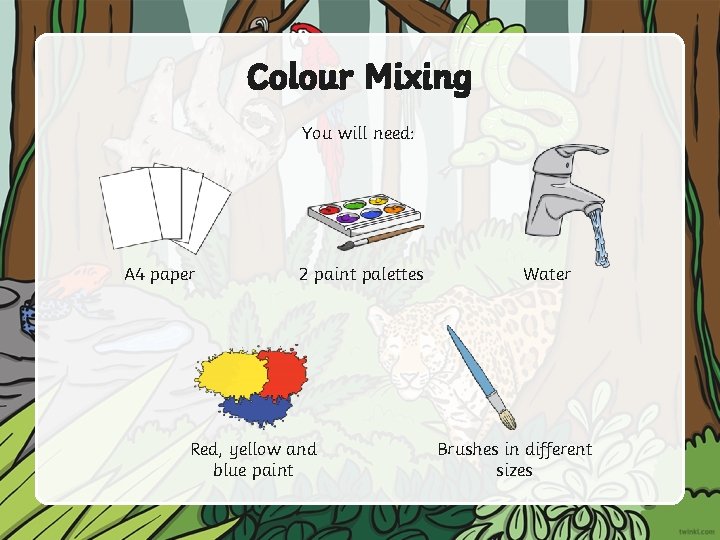
Colour Mixing You will need: A 4 paper 2 paint palettes Red, yellow and blue paint Water Brushes in different sizes
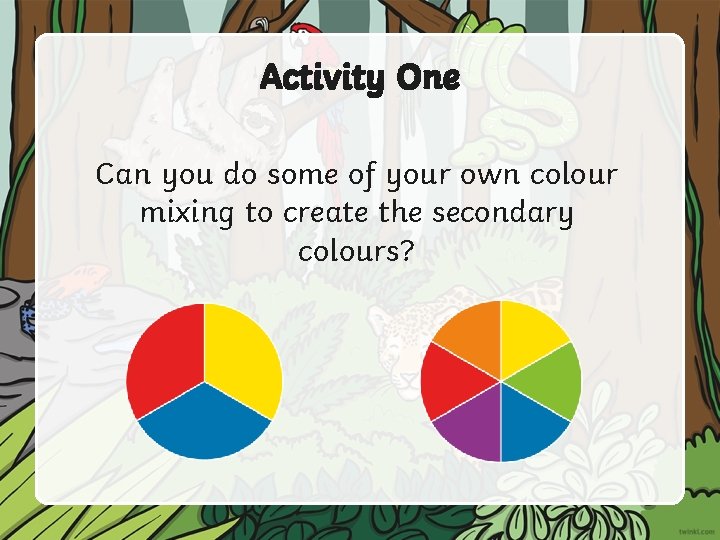
Activity One Can you do some of your own colour mixing to create the secondary colours?
Primary Colours To colour mix… 1. Use your brush to pick up one colour at a time and place it in a palette. 2. Swish, wipe and blot your brush before you pick up the next colour. 3. Add the next colour, mixing the two together in the palette to make a secondary colour. 4. Now make the other secondary colours. 5. You should have six colours! See what other colours you can make by mixing these together. 6. Use your paper to experiment with the colours have you mixed. Use different sized brushes to create thick, thin, soft and hard lines.
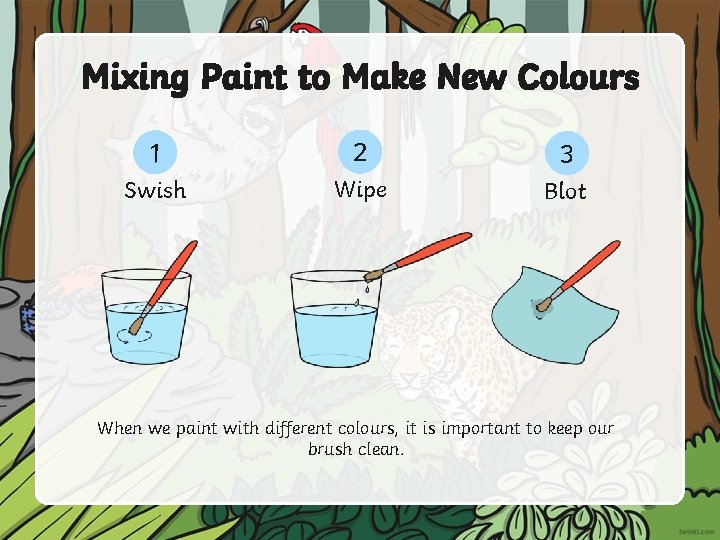
Mixing Paint to Make New Colours 1 2 3 Swish Wipe Blot When we paint with different colours, it is important to keep our brush clean.
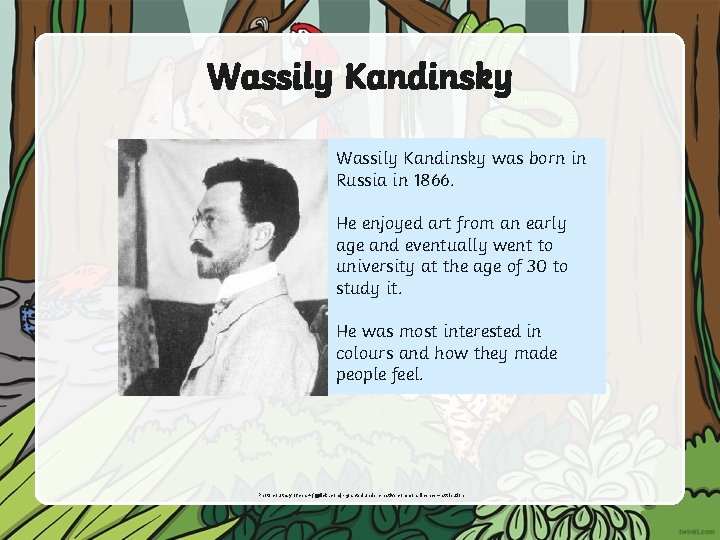
Wassily Kandinsky was born in Russia in 1866. He enjoyed art from an early age and eventually went to university at the age of 30 to study it. He was most interested in colours and how they made people feel. Photo courtesy of cea + (@flickr. com) - granted under creative commons licence – attribution
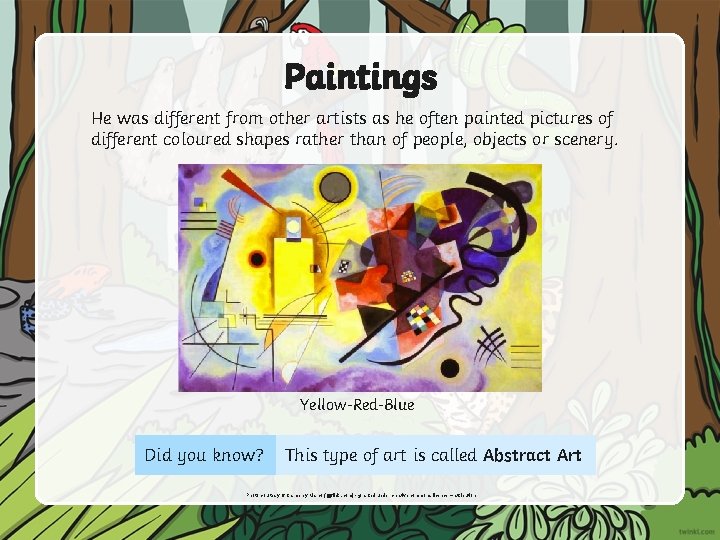
Paintings He was different from other artists as he often painted pictures of different coloured shapes rather than of people, objects or scenery. Yellow-Red-Blue Did you know? This type of art is called Abstract Art Photo courtesy of Carmen y Marco (@flickr. com) - granted under creative commons licence – attribution
Trees for the Earth This year, theme for Earth Day is ‘Trees for the Earth’. Trees are very important for lots of reasons. In particular, they provide habitats for animals. Lots of trees are currently being cut down (deforestation) to make way for new homes and farming. The mission is to plant 7. 8 billion trees to help replace those cut down. Watch this video to see how important an oak tree is:
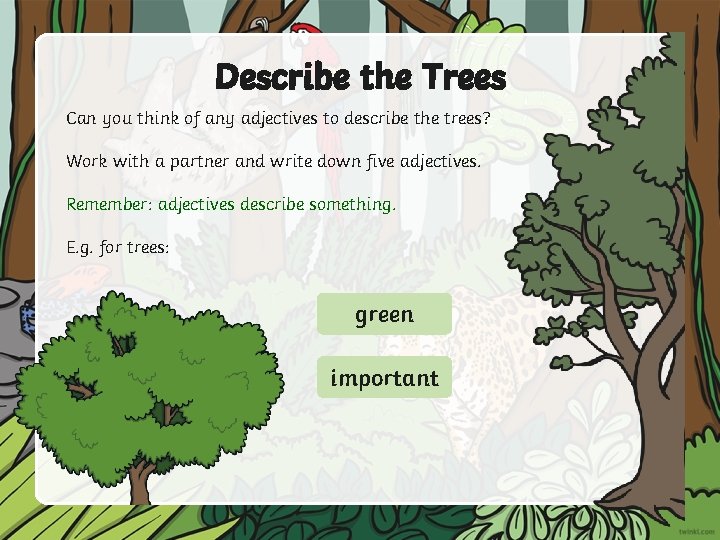
Describe the Trees Can you think of any adjectives to describe the trees? Work with a partner and write down five adjectives. Remember: adjectives describe something. E. g. for trees: green important
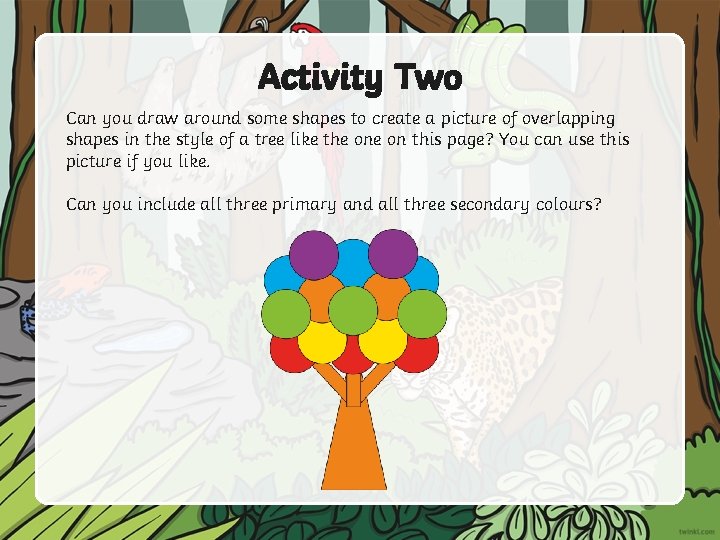
Activity Two Can you draw around some shapes to create a picture of overlapping shapes in the style of a tree like the on this page? You can use this picture if you like. Can you include all three primary and all three secondary colours?
- Slides: 17