
Aims 1 Outline the structural diversity of lipids
- Slides: 10
Aims 1. Outline the structural diversity of lipids. 2. Examine the biophysical characteristics of lipids. 3 Outline the biochemical synthesis of fatty acids, triglycerides and phospholipids. 4. Examine lipid transport through the body. 5. Outline the process of fatty acid beta-oxidation. 6. Compare the amount of energy from fatty acid and glucose oxidation.
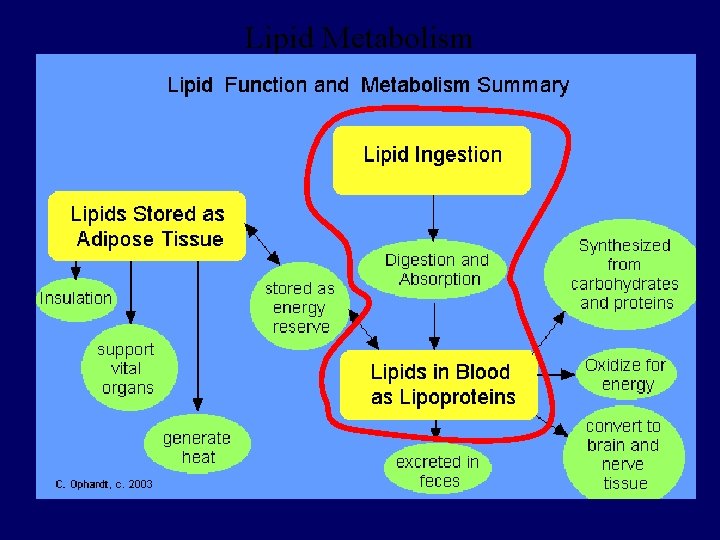
Lipid Metabolism
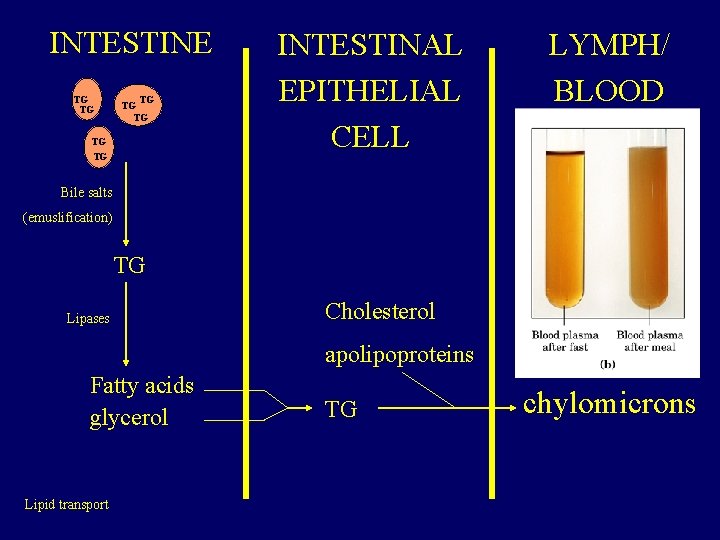
INTESTINE TG TG INTESTINAL EPITHELIAL CELL LYMPH/ BLOOD Bile salts (emuslification) TG Lipases Cholesterol apolipoproteins Fatty acids glycerol Lipid transport TG chylomicrons
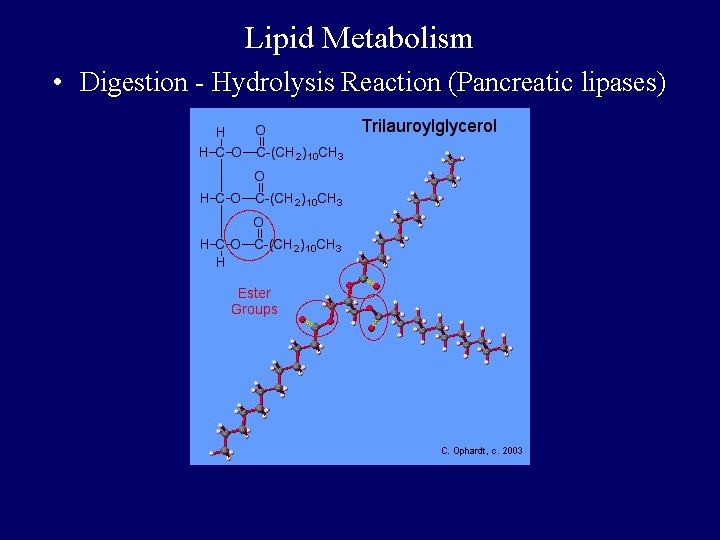
Lipid Metabolism • Digestion - Hydrolysis Reaction (Pancreatic lipases)
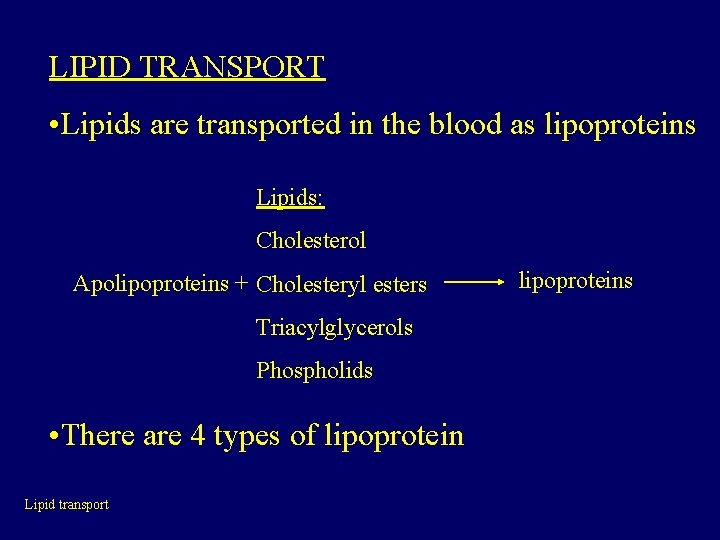
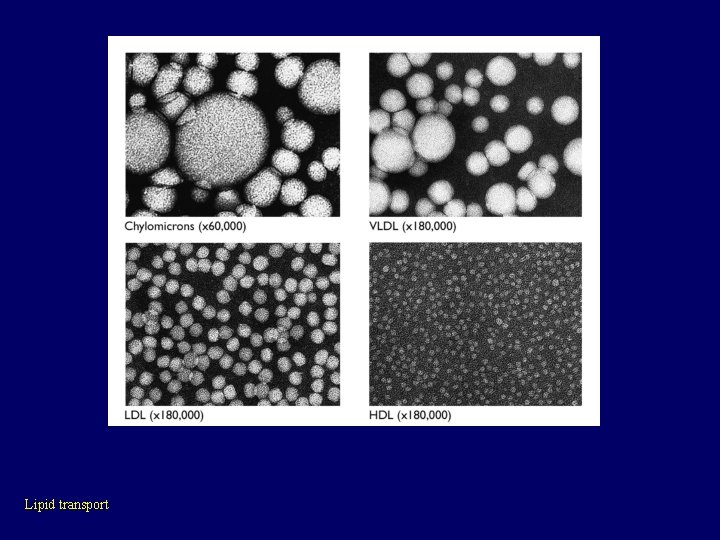
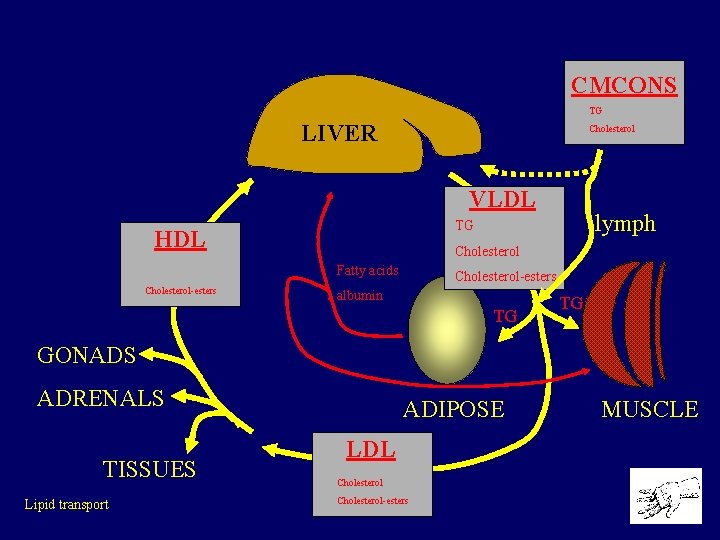
LIPID TRANSPORT • Lipids are transported in the blood as lipoproteins Lipids: Cholesterol Apolipoproteins + Cholesteryl esters Triacylglycerols Phospholids • There are 4 types of lipoprotein Lipid transport lipoproteins
Lipid transport
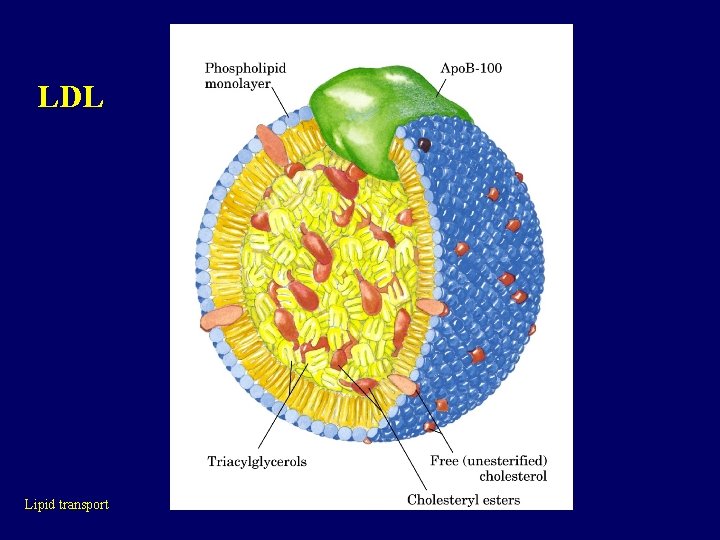
LDL Lipid transport
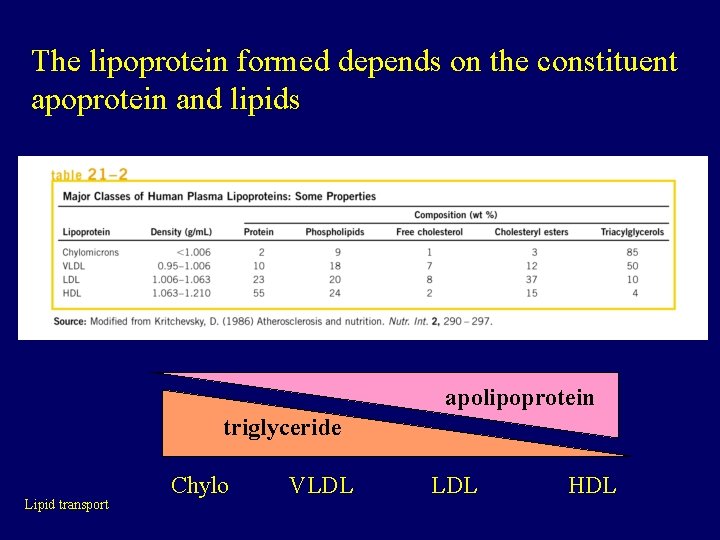
The lipoprotein formed depends on the constituent apoprotein and lipids apolipoprotein triglyceride Lipid transport Chylo VLDL HDL
CMCONS TG LIVER Cholesterol VLDL HDL Cholesterol Fatty acids Cholesterol-esters lymph TG Cholesterol-esters albumin TG TG GONADS ADRENALS TISSUES Lipid transport ADIPOSE LDL Cholesterol-esters MUSCLE
Atherosclerosis – fatty plaques in blood vessels • High blood cholesterol – LDL receptor / hypercholesterolaemia see Lehninger p 811 for more info. vessel occlusion – heart attack! • High levels of LDL – probably bad • High levels of HDL – probably good Lipid transport