
Aiming for Transformation The Role of ICT in
- Slides: 26
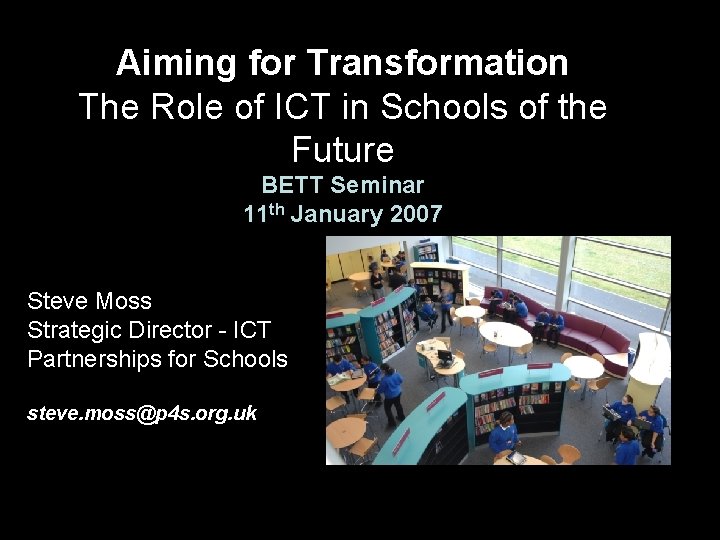
Aiming for Transformation The Role of ICT in Schools of the Future BETT Seminar 11 th January 2007 Steve Moss Strategic Director - ICT Partnerships for Schools steve. moss@p 4 s. org. uk
One of the clinical definitions of insanity is doing the same thing over and over again and expecting to get a different result. John Abbott
Building Schools for the Future
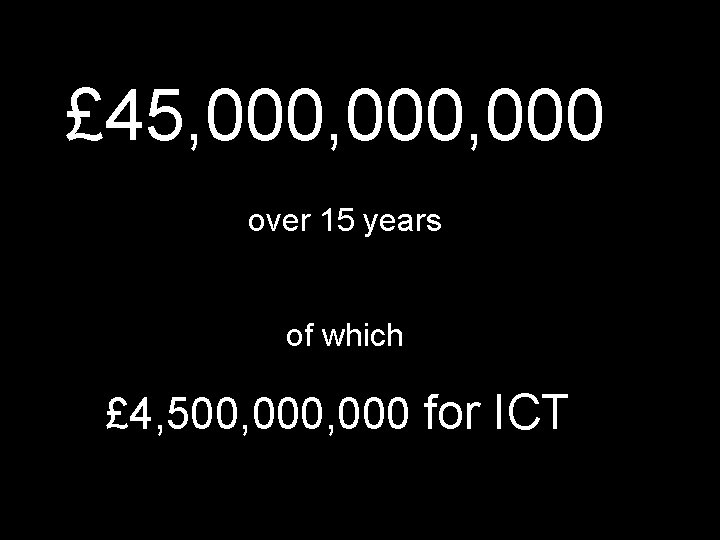
£ 45, 000, 000 over 15 years of which £ 4, 500, 000 for ICT
Rebuild 50% Substantially remodel 35% Refurbish 15% of secondary schools in England provide them all with new ICT equipment and shared learning platforms
A 21 st century environment for learning • The BSF programme gives us a unique chance to design and create new physical and virtual spaces at the same time. • Together, these constitute a 21 st century environment for learning or, possibly, an environment for 21 st century learning
Questions, questions - what sort of education do we want to see in future? - what sorts of learning relationships do we want to foster? - what competencies do we want learners to develop? - What tools and resources are available to us to support learning? - what buildings do we want? - how many computers do we need? Adapted from “Re-Imagining Learning Spaces” - Futurelab, 2006
21 st Century Learning • If the aim is really to transform education then we must: – – Use 21 st century tools to develop learning skills Teach and learn in a 21 st century context Teach and learn 21 st century content Use 21 st century assessments that measure 21 st century skills Learning for the 21 st Century (2004)
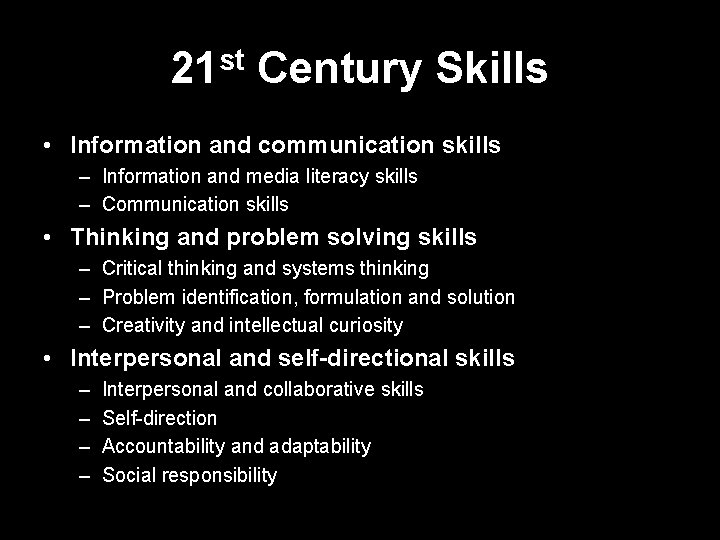
21 st Century Skills • Information and communication skills – Information and media literacy skills – Communication skills • Thinking and problem solving skills – Critical thinking and systems thinking – Problem identification, formulation and solution – Creativity and intellectual curiosity • Interpersonal and self-directional skills – – Interpersonal and collaborative skills Self-direction Accountability and adaptability Social responsibility
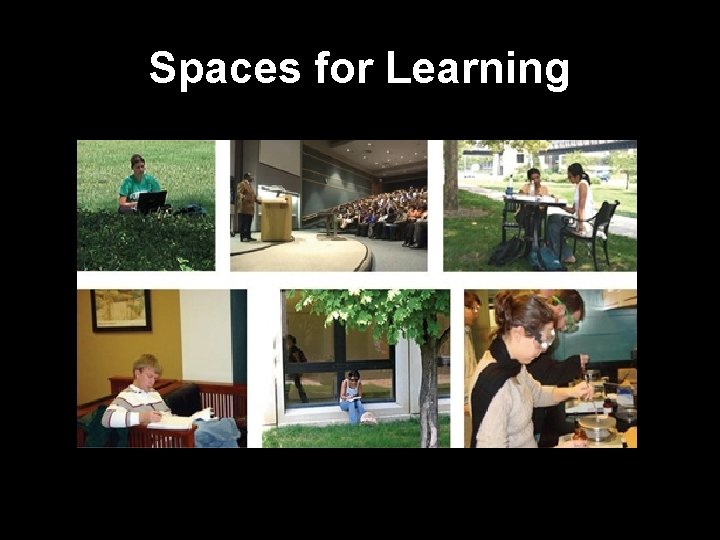
Spaces for Learning
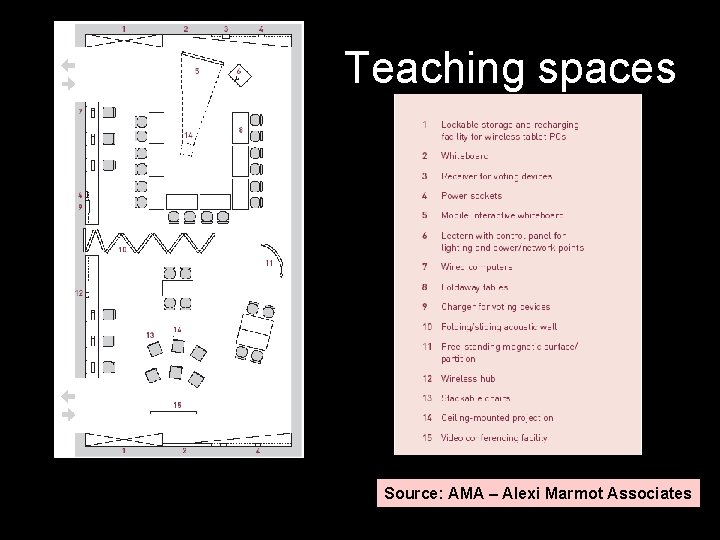
Teaching spaces Source: AMA – Alexi Marmot Associates
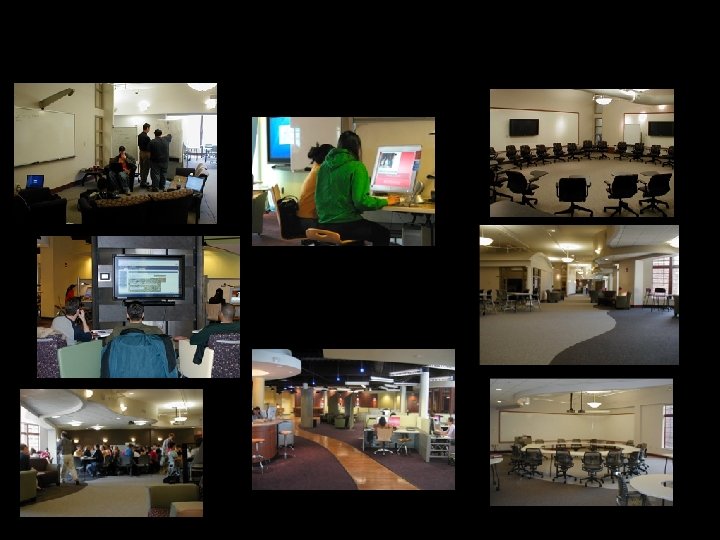
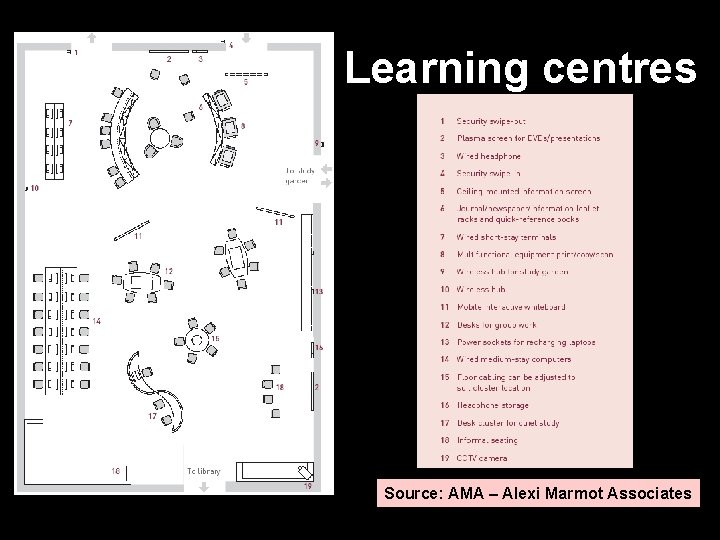
Learning centres Source: AMA – Alexi Marmot Associates
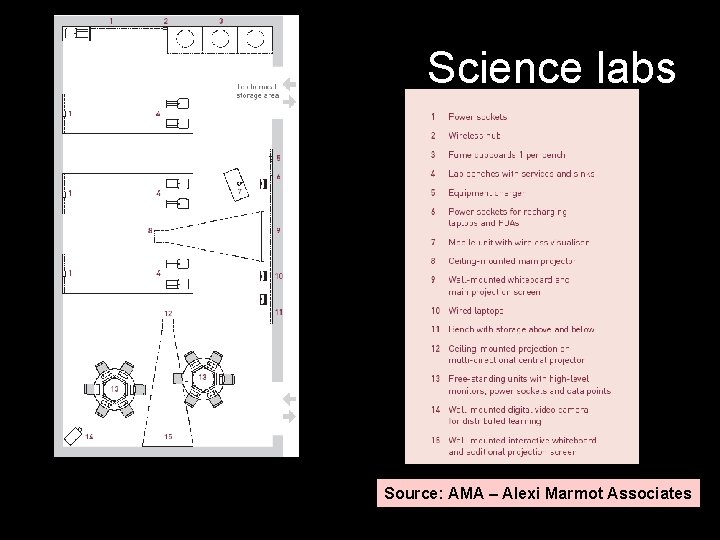
Science labs Source: AMA – Alexi Marmot Associates
Enhancing the Environment for Learning • The physical space should be flexible and enhanced by the use of ICT • The virtual space should be learner-centric and flexible and match the highest quality Management Information Systems with innovative content management and creation facilities.
Defining flexibility Torin Monahan (2002) defines flexibility in terms of five properties: Fluidity - the design of space for flows of individuals, sight, sound, and air Versatility - the property of space that allows for multiple uses Convertibility - ease of adapting educational space for new uses Scalability - a property of space for expansion or contraction Modifiability - the spatial property which invites active manipulation and appropriation
“Informal learning spaces are those outside the classrooms” – Malcolm Brown, Educating the Net Generation “Informal learning spaces are those in which students live and learn at their discretion. They choose the time and the place to address the work that flows from formal learning spaces and into their lives as homework, projects, ideas to mull over, and conversations to have. ” – Alan Cattier, 2006 “If you get wireless reception under a tree, there really isn’t any need to be in a classroom. ” – W. M. Mitchell, 2003
Given the chance, learners choose the locations where they feel most empowered—and most comfortable—to complete the work at hand. In places where they see the best support for their way of working, they feel safe and so return frequently, knowing they can move through material and concepts on their terms. In places where they feel discomfort, a lack of connection to space and infrastructure, they leave or disengage.
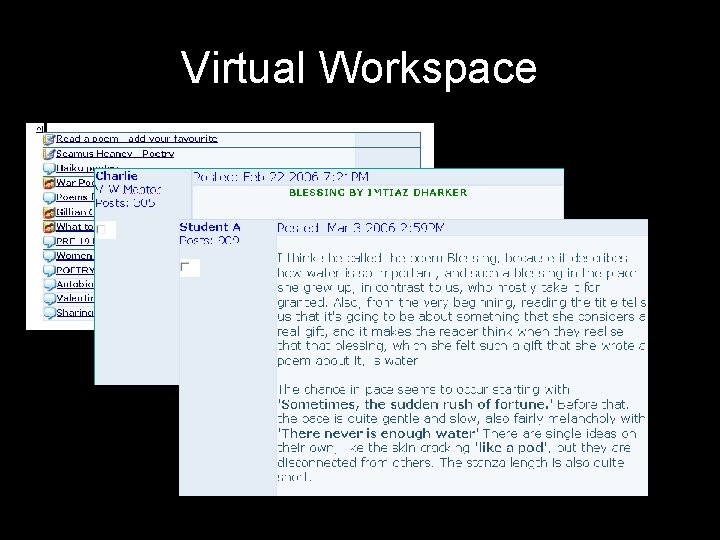
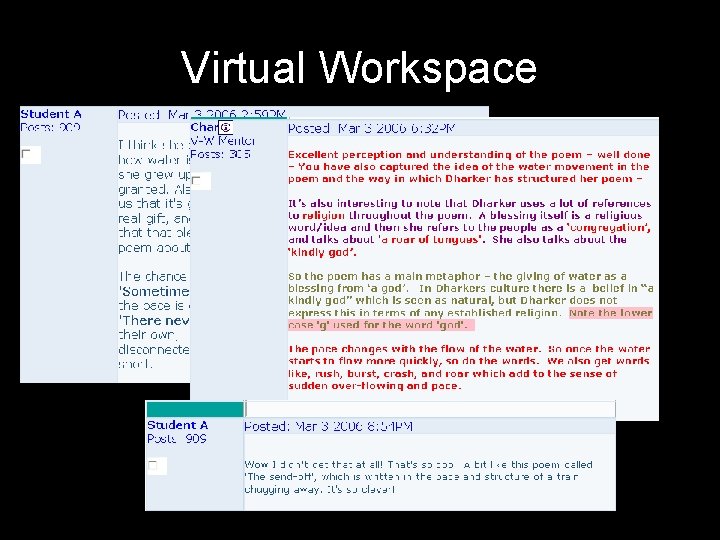
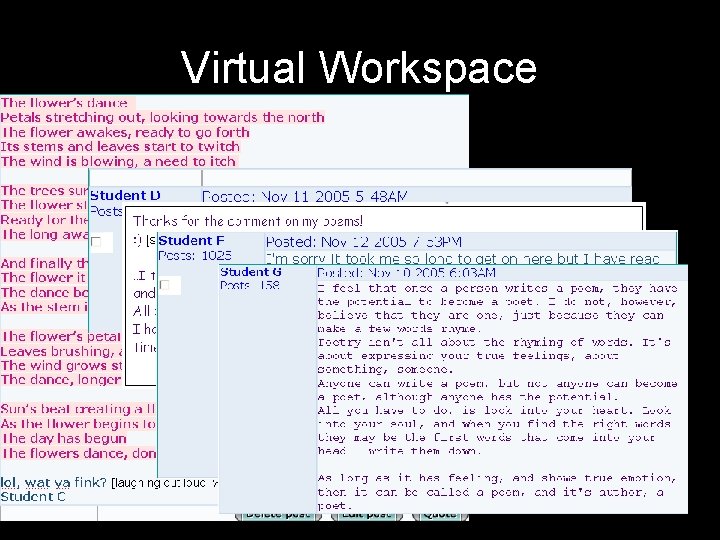
The Virtual Learning Space • Should enable learners and teachers to find, organise and create content and learning resources in ways which are flexible and not necessarily based on taxonomies or atomised classifications. It has to be more than a content delivery system. • Learners must feel that the experience is a personal one. • The space should also recognise and facilitate the social dimensions of learning – encouraging collaborative work.
Virtual Workspace
Virtual Workspace
Virtual Workspace
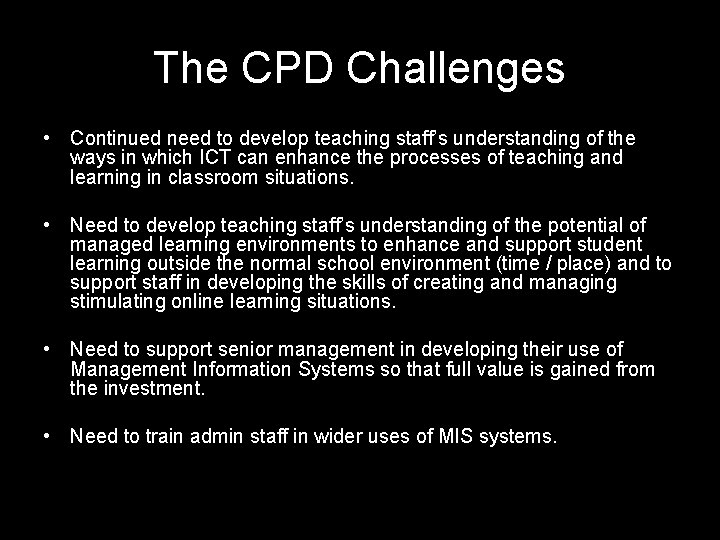
The CPD Challenges • Continued need to develop teaching staff’s understanding of the ways in which ICT can enhance the processes of teaching and learning in classroom situations. • Need to develop teaching staff’s understanding of the potential of managed learning environments to enhance and support student learning outside the normal school environment (time / place) and to support staff in developing the skills of creating and managing stimulating online learning situations. • Need to support senior management in developing their use of Management Information Systems so that full value is gained from the investment. • Need to train admin staff in wider uses of MIS systems.
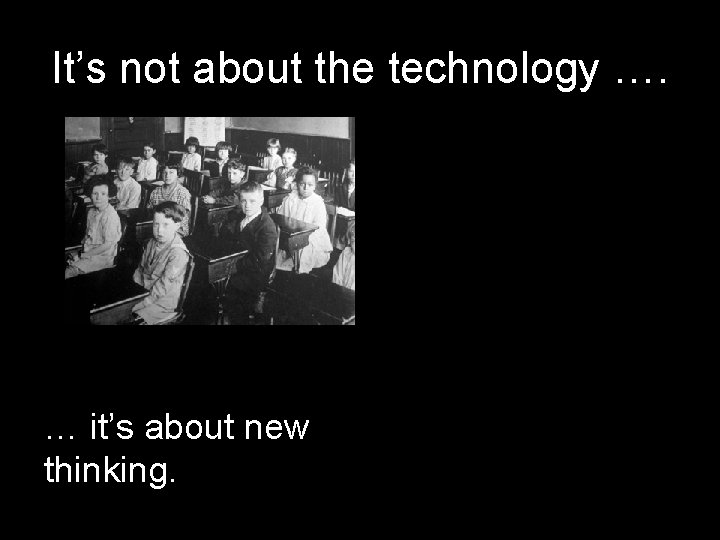
It’s not about the technology …. … it’s about new thinking.
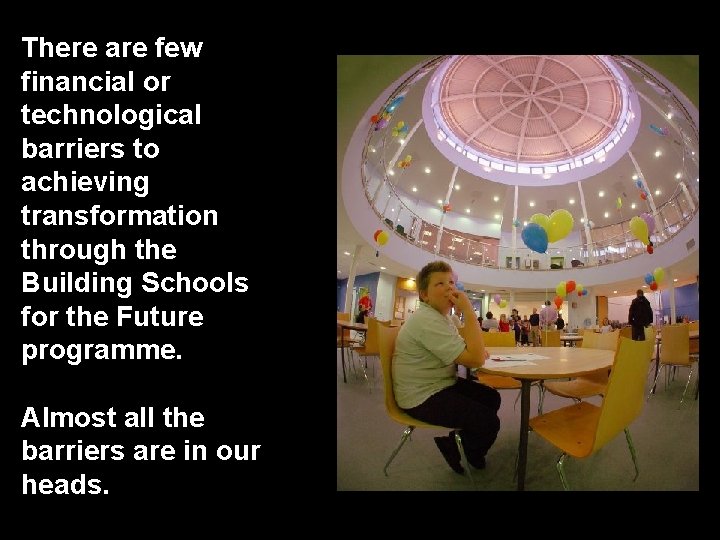
There are few financial or technological barriers to achieving transformation through the Building Schools for the Future programme. Almost all the barriers are in our heads.
Thank you for listening steve. moss@p 4 s. org. uk Thanks to Marcus Orlovsky @ Bryanston Square for some great photographs of schools – old and new