
Aim What is the Scientific Method The Scientific
- Slides: 10
Aim: What is the Scientific Method?
The Scientific Method is a series of organized steps that guide an investigation 1. 2. 3. 4. 5. Observations / Questions Hypothesis Experiment Interpret Data Draw Conclusions Brain. Po. P!
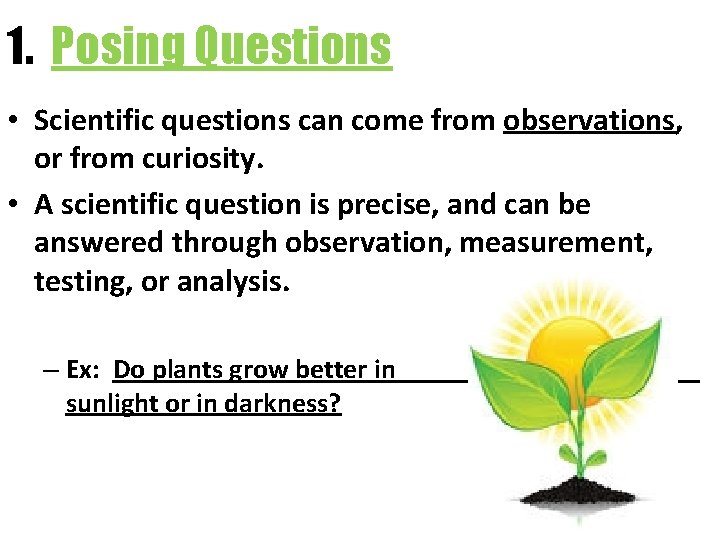
1. Posing Questions • Scientific questions can come from observations, or from curiosity. • A scientific question is precise, and can be answered through observation, measurement, testing, or analysis. – Ex: Do plants grow better in sunlight or in darkness?
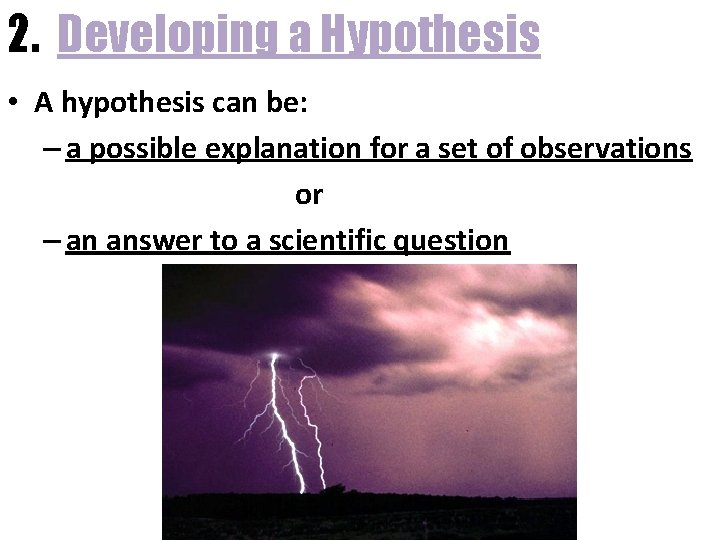
2. Developing a Hypothesis • A hypothesis can be: – a possible explanation for a set of observations or – an answer to a scientific question
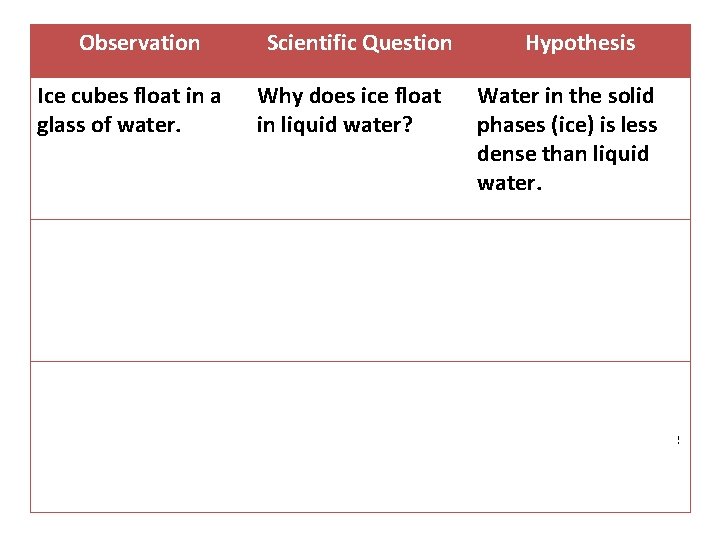
Observation Ice cubes float in a glass of water. Scientific Question Why does ice float in liquid water? Hypothesis Water in the solid phases (ice) is less dense than liquid water. Moss grows only in Does moss grow the shaded area of a better in shade or patio. direct sunlight? Direct sunlight prevents moss growth. Tomato plants Do tomato plants grown near pine grow taller in acidic trees are taller than soils? those grown near broad-leaf trees. Tomato plants grown in acidic soils are taller than those grown in basic soils.
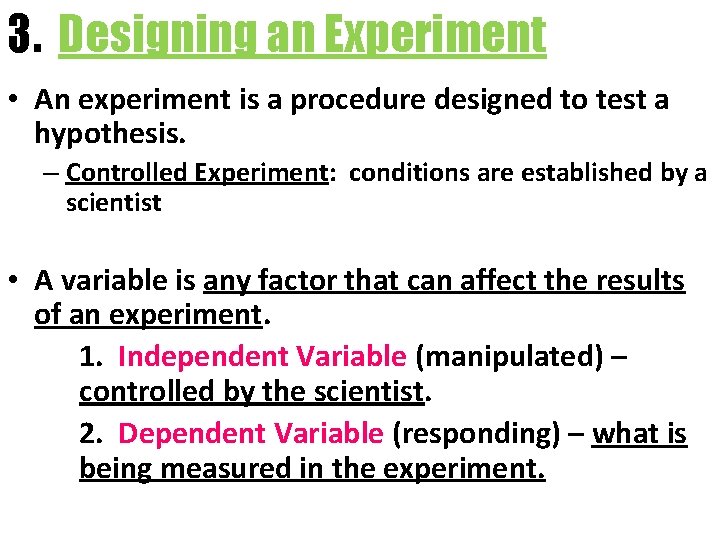
3. Designing an Experiment • An experiment is a procedure designed to test a hypothesis. – Controlled Experiment: conditions are established by a scientist • A variable is any factor that can affect the results of an experiment. 1. Independent Variable (manipulated) – controlled by the scientist. 2. Dependent Variable (responding) – what is being measured in the experiment.
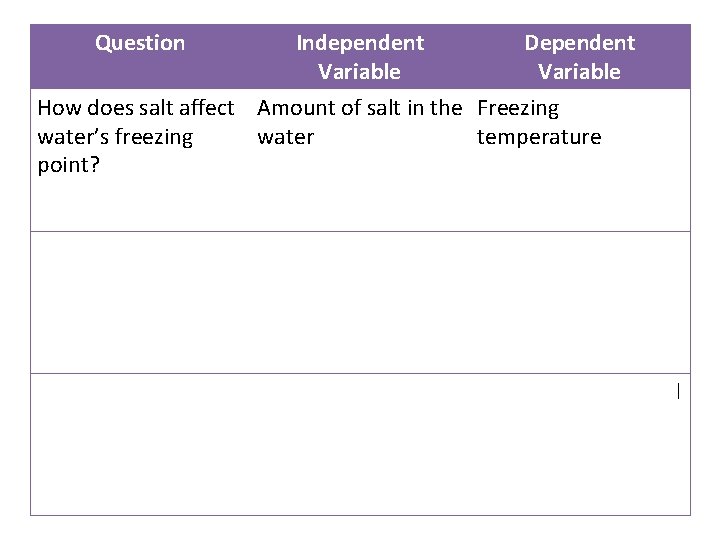
Question Independent Dependent Variable How does salt affect Amount of salt in the Freezing water’s freezing water temperature point? Which fertilizer grows the largest apples? Type of fertilizer What size parachute Size of parachute slows a free fall fastest? Size of the apples Speed of the free fall
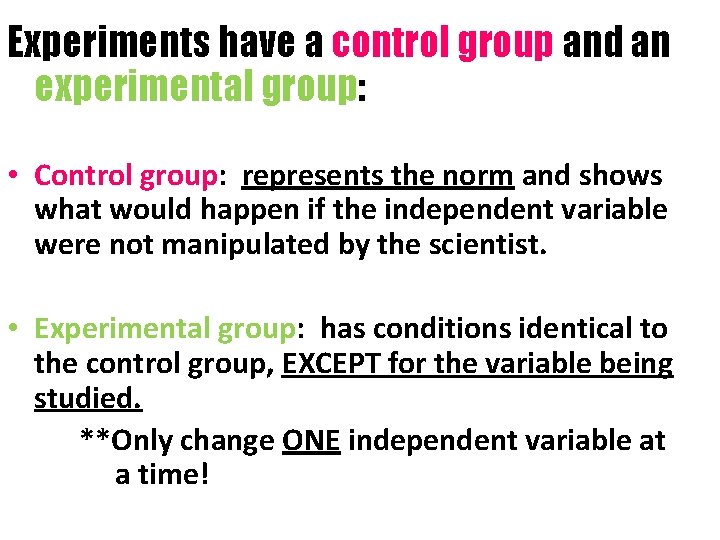
Experiments have a control group and an experimental group: • Control group: represents the norm and shows what would happen if the independent variable were not manipulated by the scientist. • Experimental group: has conditions identical to the control group, EXCEPT for the variable being studied. **Only change ONE independent variable at a time!
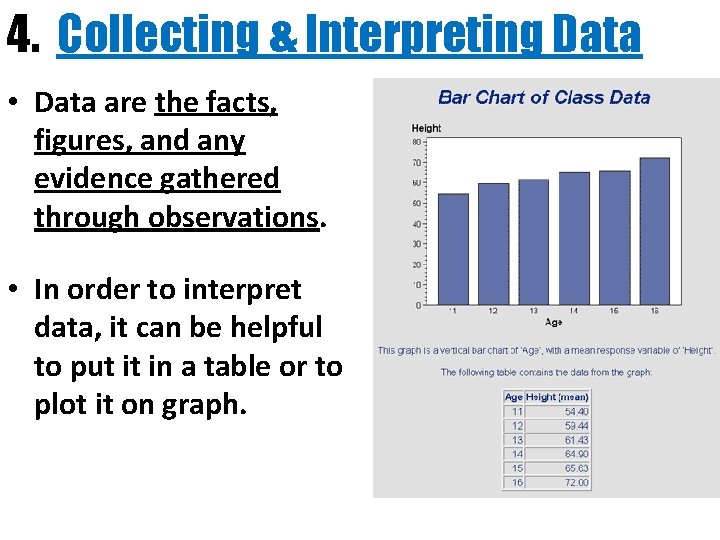
4. Collecting & Interpreting Data • Data are the facts, figures, and any evidence gathered through observations. • In order to interpret data, it can be helpful to put it in a table or to plot it on graph.
5. Drawing Conclusions • After you have collected and interpreted your data, and you can draw a conclusion about your experiment. – Did your data show that your hypothesis was correct? • Scientists may want to repeat your experiment to determine if its results are correct. • Results can suggest new questions can lead to new experiments.