
Aim To learn about the hierarchy of Roman

Aim • To learn about the hierarchy of Roman society. Success Criteria • IStatement can order different people from Roman society adipiscing into their correct 1 Lorem groups ipsum of dolor sit amet, consectetur elit. hierarchy and explain my reasoning. • Statement 2 • Sub statement
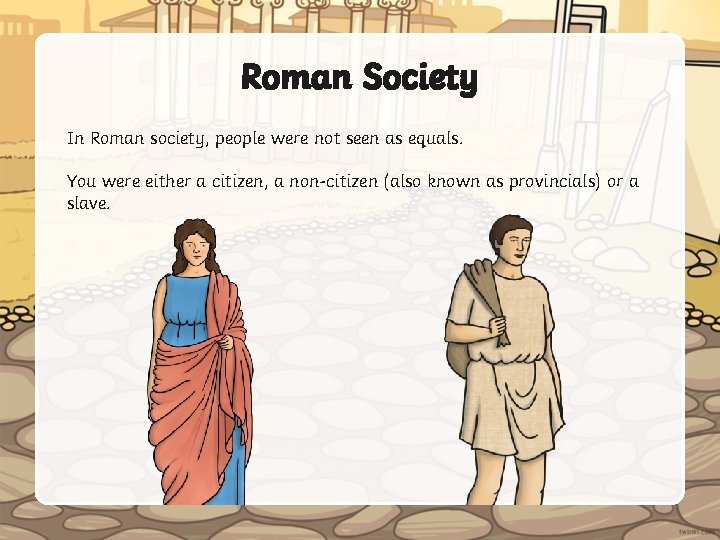
Roman Society In Roman society, people were not seen as equals. You were either a citizen, a non-citizen (also known as provincials) or a slave.
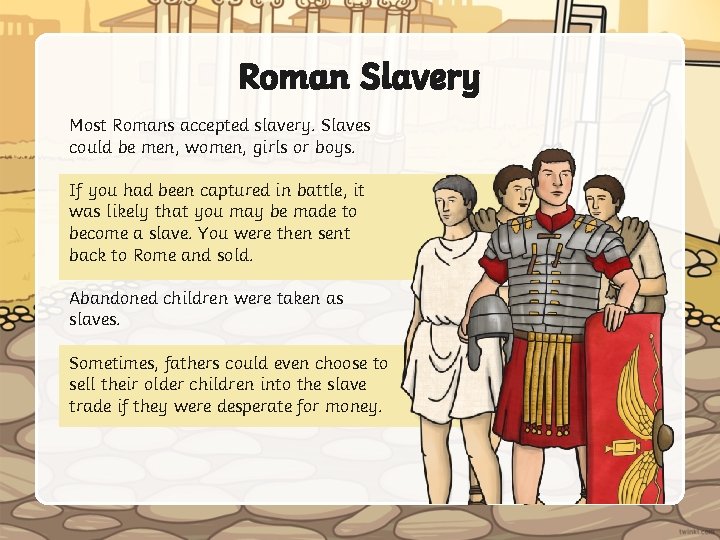
Roman Slavery Most Romans accepted slavery. Slaves could be men, women, girls or boys. If you had been captured in battle, it was likely that you may be made to become a slave. You were then sent back to Rome and sold. Abandoned children were taken as slaves. Sometimes, fathers could even choose to sell their older children into the slave trade if they were desperate for money.

Roman Slavery Slaves were bought and sold at a slave market. Their individual prices depended on their skills and talents. For example, a slave that could cook would be more expensive than one that couldn’t. As a slave, having important skills could be your ticket to better treatment from your ‘master’. Age also played a massive part in slave prices. Younger slaves were usually more expensive as they were often stronger and fitter.
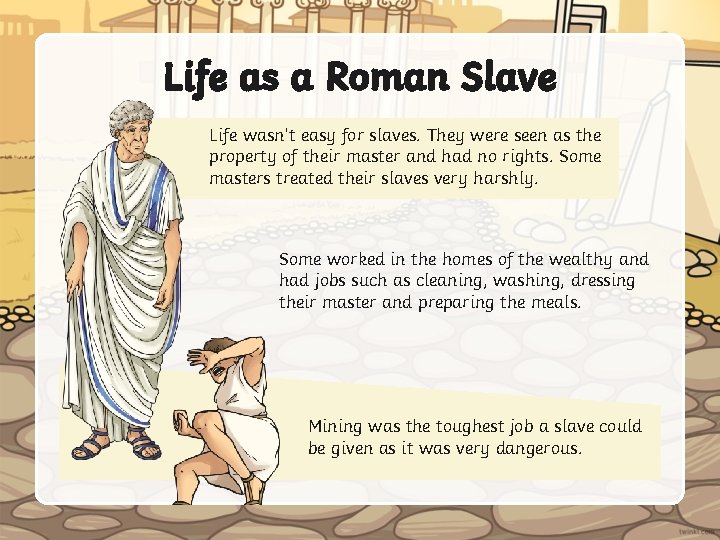
Life as a Roman Slave Life wasn’t easy for slaves. They were seen as the property of their master and had no rights. Some masters treated their slaves very harshly. Some worked in the homes of the wealthy and had jobs such as cleaning, washing, dressing their master and preparing the meals. Mining was the toughest job a slave could be given as it was very dangerous.
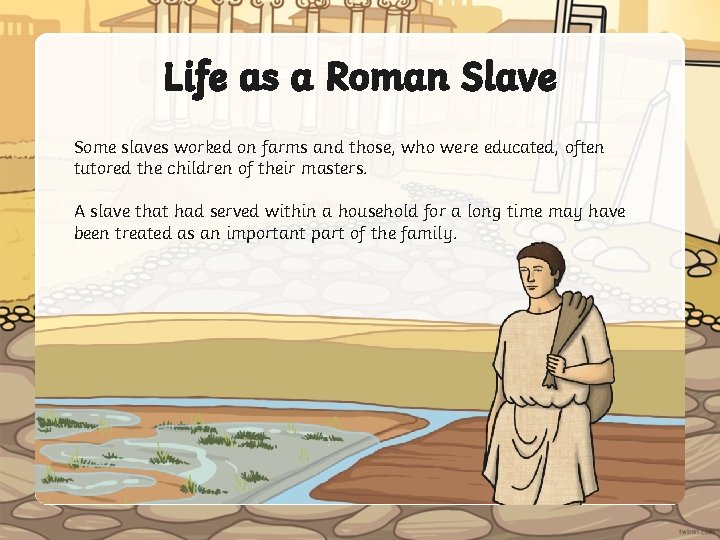
Life as a Roman Slave Some slaves worked on farms and those, who were educated, often tutored the children of their masters. A slave that had served within a household for a long time may have been treated as an important part of the family.
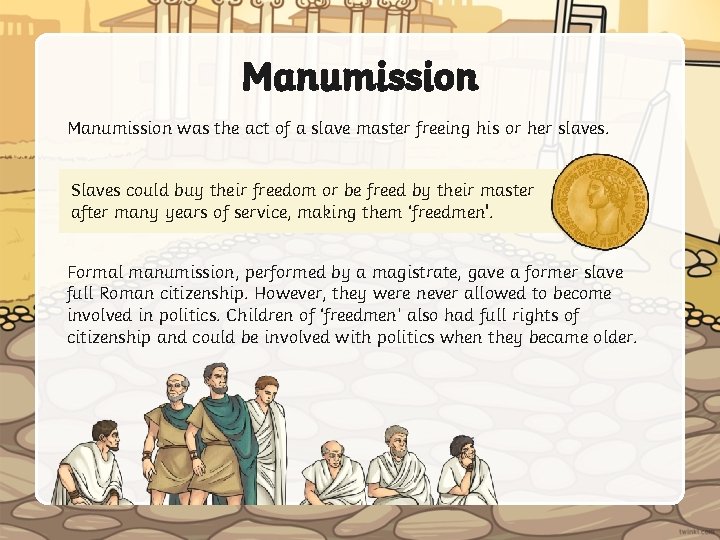
Manumission was the act of a slave master freeing his or her slaves. Slaves could buy their freedom or be freed by their master after many years of service, making them ‘freedmen'. Formal manumission, performed by a magistrate, gave a former slave full Roman citizenship. However, they were never allowed to become involved in politics. Children of ‘freedmen’ also had full rights of citizenship and could be involved with politics when they became older.

Manumission Informal manumission gave fewer rights. If the master freed the slave themselves, the individual didn’t become a proper Roman citizen. Any money or property they came to own through their lives went back to their master when they died.
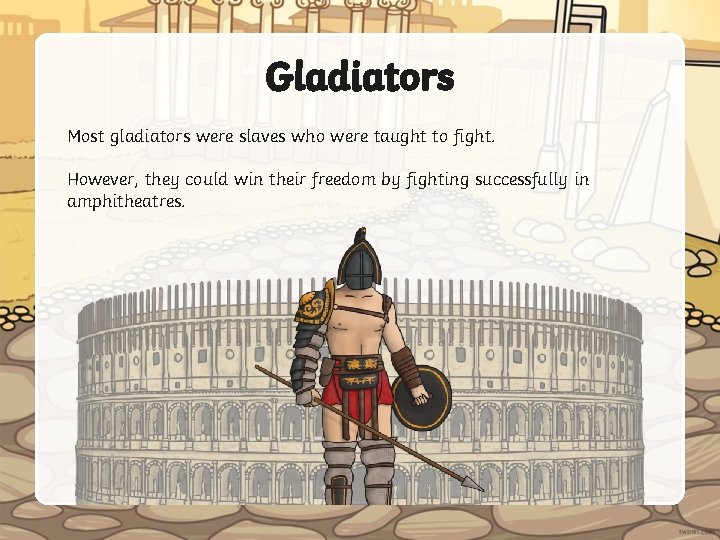
Gladiators Most gladiators were slaves who were taught to fight. However, they could win their freedom by fighting successfully in amphitheatres.
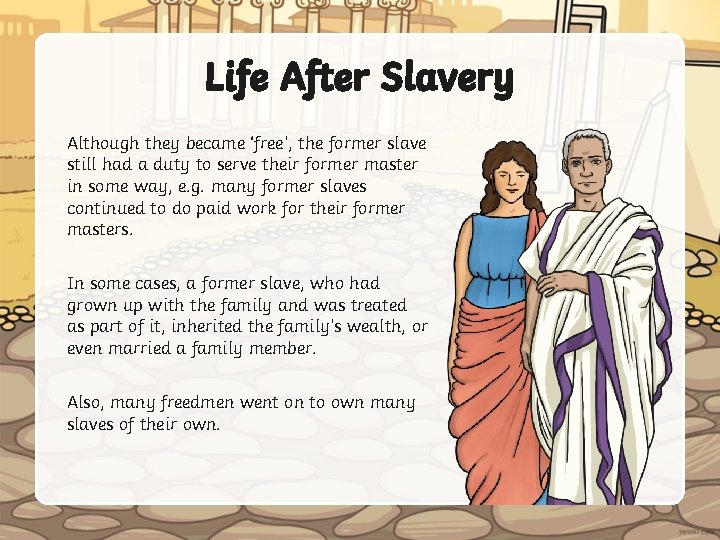
Life After Slavery Although they became ‘free’, the former slave still had a duty to serve their former master in some way, e. g. many former slaves continued to do paid work for their former masters. In some cases, a former slave, who had grown up with the family and was treated as part of it, inherited the family’s wealth, or even married a family member. Also, many freedmen went on to own many slaves of their own.
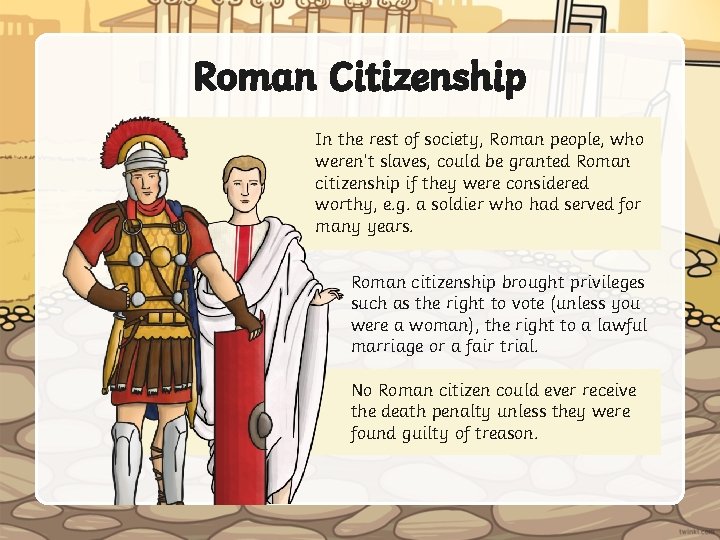
Roman Citizenship In the rest of society, Roman people, who weren’t slaves, could be granted Roman citizenship if they were considered worthy, e. g. a soldier who had served for many years. Roman citizenship brought privileges such as the right to vote (unless you were a woman), the right to a lawful marriage or a fair trial. No Roman citizen could ever receive the death penalty unless they were found guilty of treason.
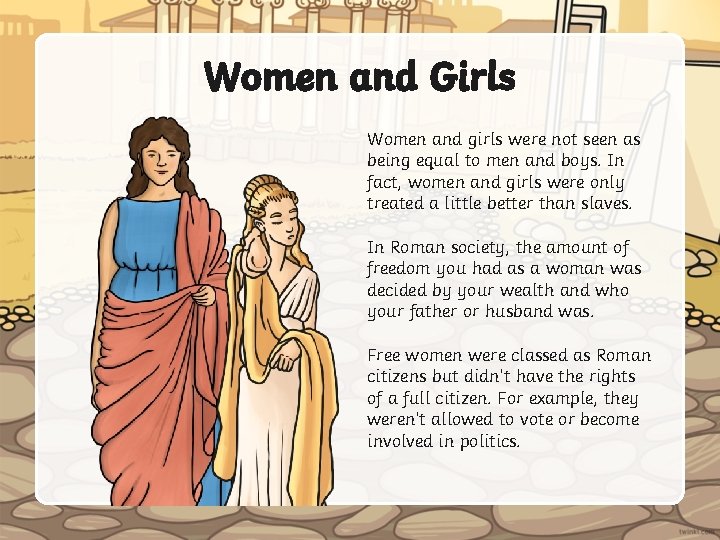
Women and Girls Women and girls were not seen as being equal to men and boys. In fact, women and girls were only treated a little better than slaves. In Roman society, the amount of freedom you had as a woman was decided by your wealth and who your father or husband was. Free women were classed as Roman citizens but didn’t have the rights of a full citizen. For example, they weren’t allowed to vote or become involved in politics.
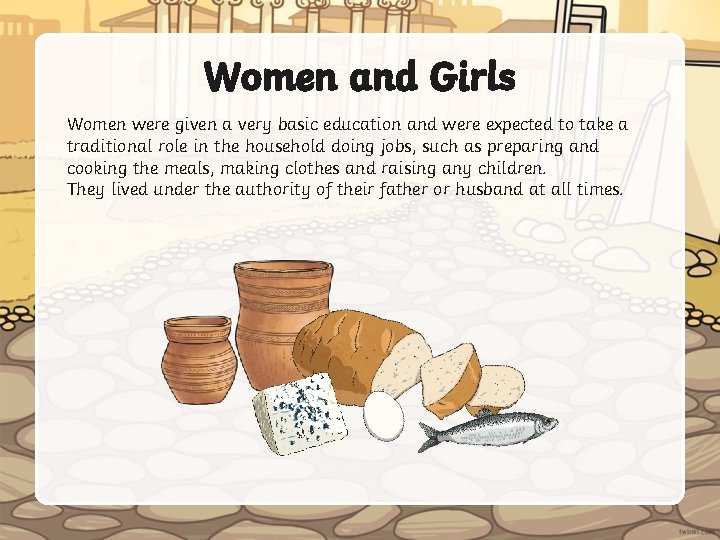
Women and Girls Women were given a very basic education and were expected to take a traditional role in the household doing jobs, such as preparing and cooking the meals, making clothes and raising any children. They lived under the authority of their father or husband at all times.
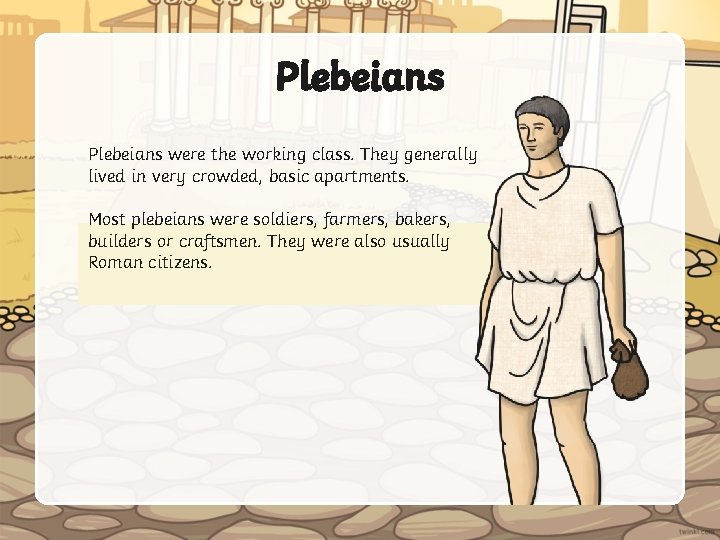
Plebeians were the working class. They generally lived in very crowded, basic apartments. Most plebeians were soldiers, farmers, bakers, builders or craftsmen. They were also usually Roman citizens.
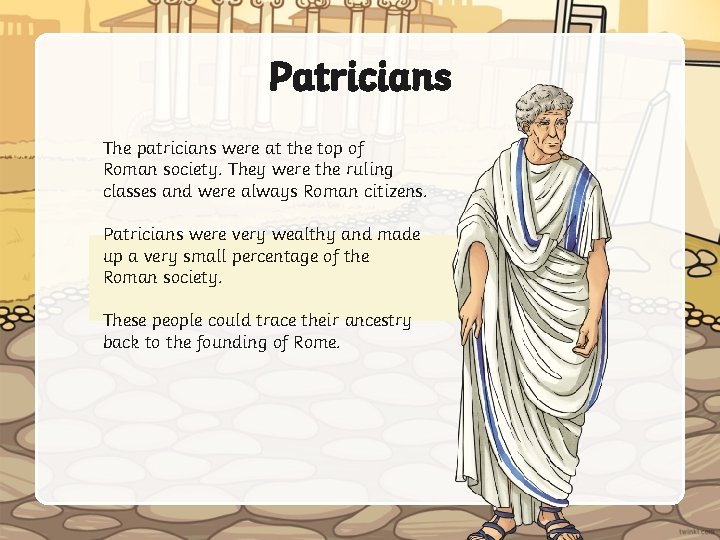
Patricians The patricians were at the top of Roman society. They were the ruling classes and were always Roman citizens. Patricians were very wealthy and made up a very small percentage of the Roman society. These people could trace their ancestry back to the founding of Rome.
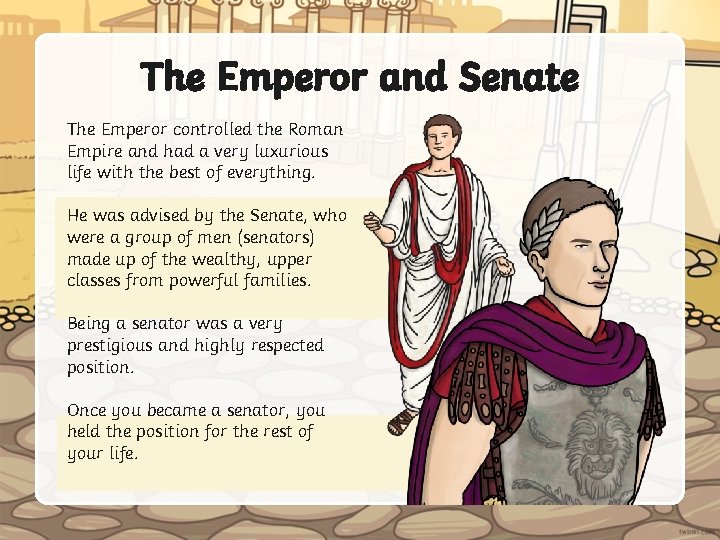
The Emperor and Senate The Emperor controlled the Roman Empire and had a very luxurious life with the best of everything. He was advised by the Senate, who were a group of men (senators) made up of the wealthy, upper classes from powerful families. Being a senator was a very prestigious and highly respected position. Once you became a senator, you held the position for the rest of your life.

- Slides: 18