
Aim question and method Aim To construct an

- Slides: 8
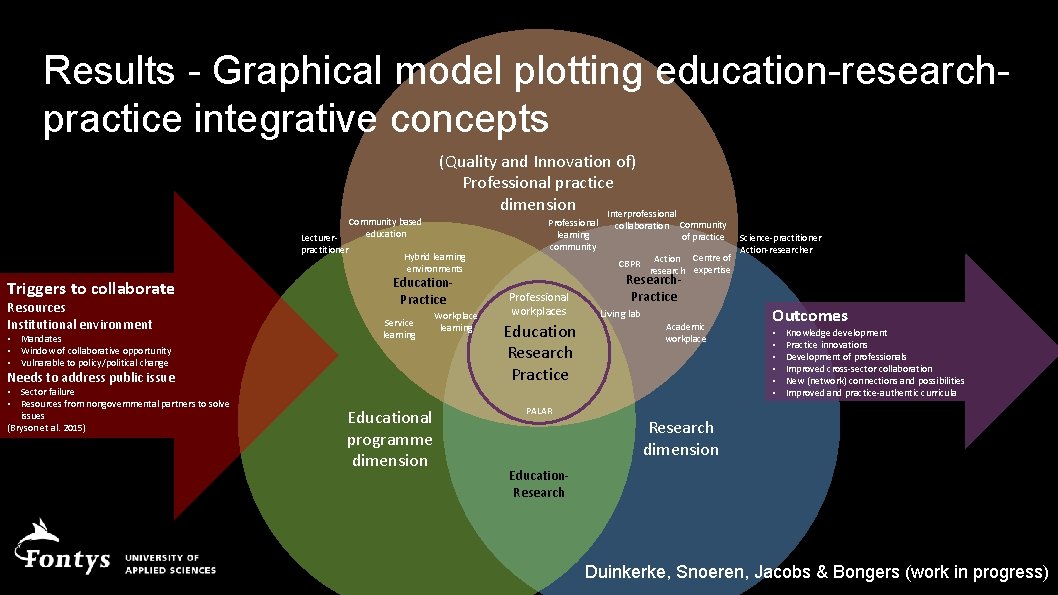
Aim, question and method Aim: To construct an overview or “landscape” of concepts which integrate the dimensions of educational programme, research and professional practice Research question: Which available concepts shape the integration between the three dimensions in which way and what are their relationships? Method: • A dataset of a systematic review into cross-sectoral collaboration between higher education and public service organizations was used. • In total 1835 titles of peer-reviewed articles were coded and categorized into concepts which integrate two or three of the dimensions. • These results were suplemented by experts from the WIN research group, with backgrounds in higher education, research and professional practice.
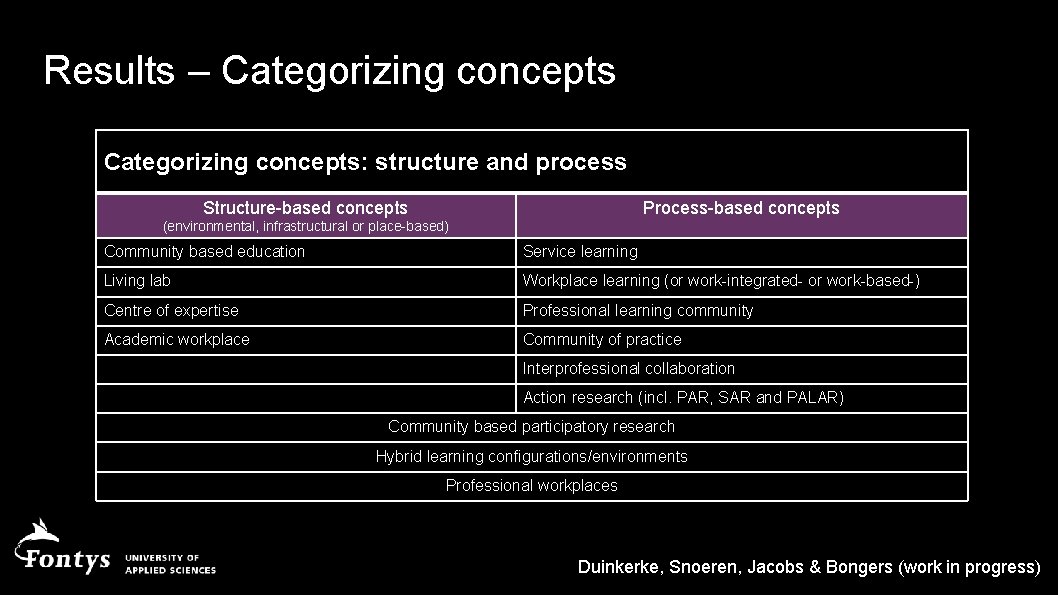
Results – Categorizing concepts: structure and process Structure-based concepts Process-based concepts (environmental, infrastructural or place-based) Community based education Service learning Living lab Workplace learning (or work-integrated- or work-based-) Centre of expertise Professional learning community Academic workplace Community of practice Interprofessional collaboration Action research (incl. PAR, SAR and PALAR) Community based participatory research Hybrid learning configurations/environments Professional workplaces Duinkerke, Snoeren, Jacobs & Bongers (work in progress)
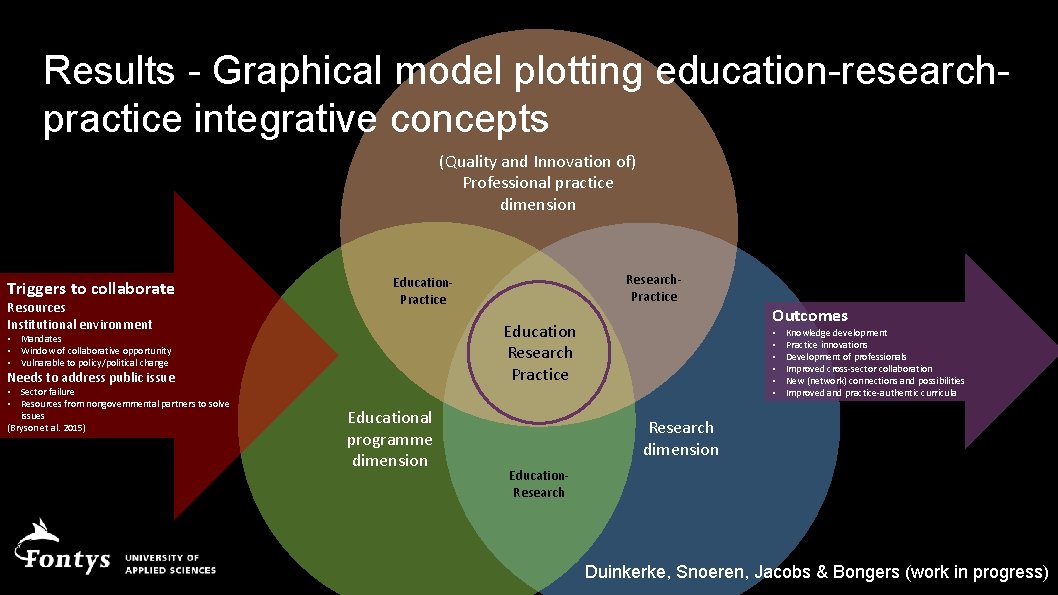
Results - Graphical model plotting education-researchpractice integrative concepts (Quality and Innovation of) Professional practice dimension Triggers to collaborate Resources Institutional environment Education Research Practice • Mandates • Window of collaborative opportunity • Vulnarable to policy/political change Needs to address public issue • Sector failure • Resources from nongovernmental partners to solve issues (Bryson et al. 2015) Research. Practice Educational programme dimension Outcomes • • • Knowledge development Practice innovations Development of professionals Improved cross-sector collaboration New (network) connections and possibilities Improved and practice-authentic curricula Research dimension Education. Research Duinkerke, Snoeren, Jacobs & Bongers (work in progress)
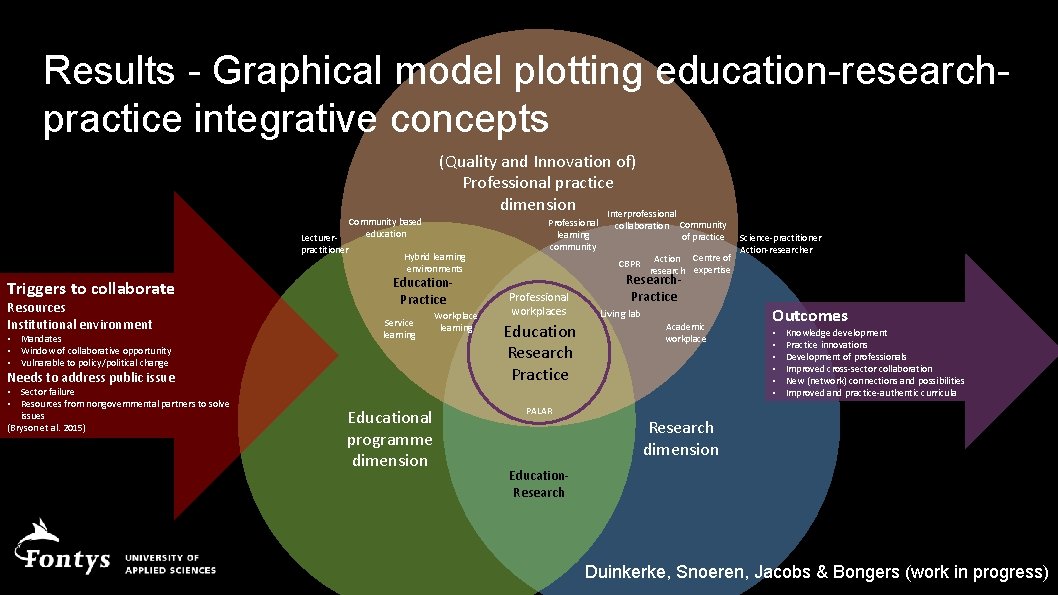
Results - Graphical model plotting education-researchpractice integrative concepts Lecturerpractitioner Triggers to collaborate Resources Institutional environment • Mandates • Window of collaborative opportunity • Vulnarable to policy/political change Community based education Hybrid learning environments Education. Practice Service learning Needs to address public issue • Sector failure • Resources from nongovernmental partners to solve issues (Bryson et al. 2015) (Quality and Innovation of) Professional practice dimension Interprofessional Educational programme dimension Workplace learning Professional learning community collaboration CBPR Professional workplaces Education Research Practice PALAR Community of practice Action Centre of research expertise Research. Practice Living lab Academic workplace Science-practitioner Action-researcher Outcomes • • • Knowledge development Practice innovations Development of professionals Improved cross-sector collaboration New (network) connections and possibilities Improved and practice-authentic curricula Research dimension Education. Research Duinkerke, Snoeren, Jacobs & Bongers (work in progress)
Results - Graphical model plotting education-researchpractice integrative concepts Duinkerke, Snoeren, Jacobs & Bongers (work in progress)
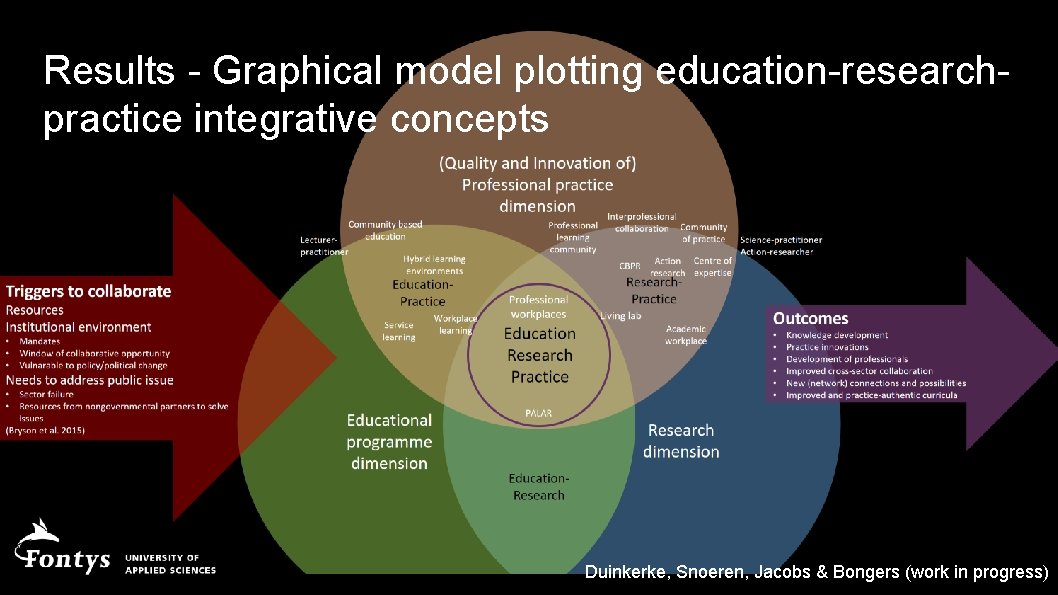
Results - Graphical model plotting education-researchpractice integrative concepts Lecturerpractitioner Triggers to collaborate Resources Institutional environment • Mandates • Window of collaborative opportunity • Vulnarable to policy/political change Community based education Hybrid learning environments Education. Practice Service learning Needs to address public issue • Sector failure • Resources from nongovernmental partners to solve issues (Bryson et al. 2015) (Quality and Innovation of) Professional practice dimension Interprofessional Educational programme dimension Workplace learning Professional learning community collaboration CBPR Professional workplaces Education Research Practice PALAR Community of practice Action Centre of research expertise Research. Practice Living lab Academic workplace Science-practitioner Action-researcher Outcomes • • • Knowledge development Practice innovations Development of professionals Improved cross-sector collaboration New (network) connections and possibilities Improved and practice-authentic curricula Research dimension Education. Research Duinkerke, Snoeren, Jacobs & Bongers (work in progress)
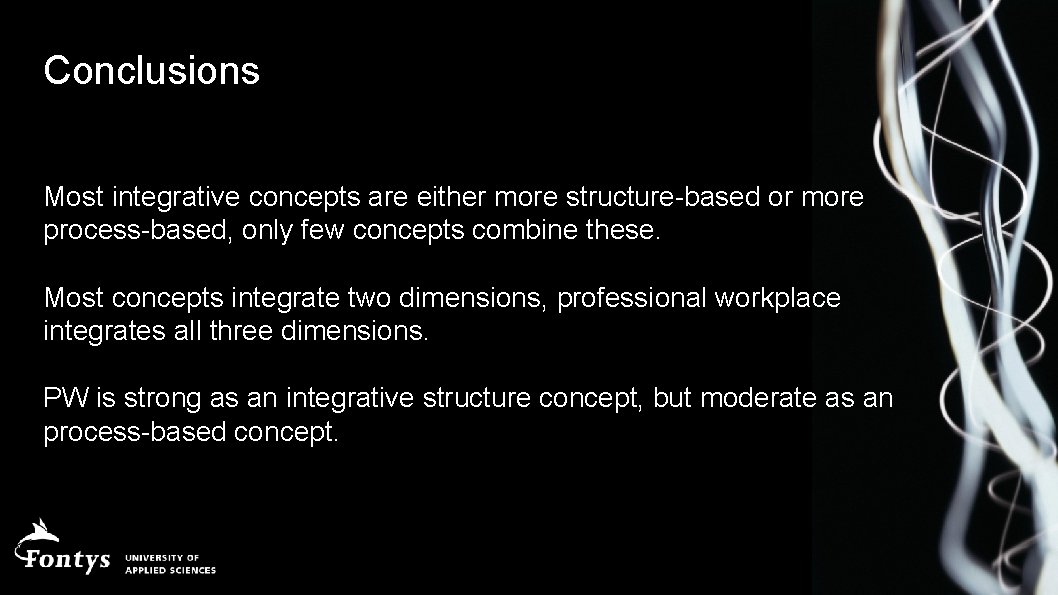
Conclusions Most integrative concepts are either more structure-based or more process-based, only few concepts combine these. Most concepts integrate two dimensions, professional workplace integrates all three dimensions. PW is strong as an integrative structure concept, but moderate as an process-based concept.
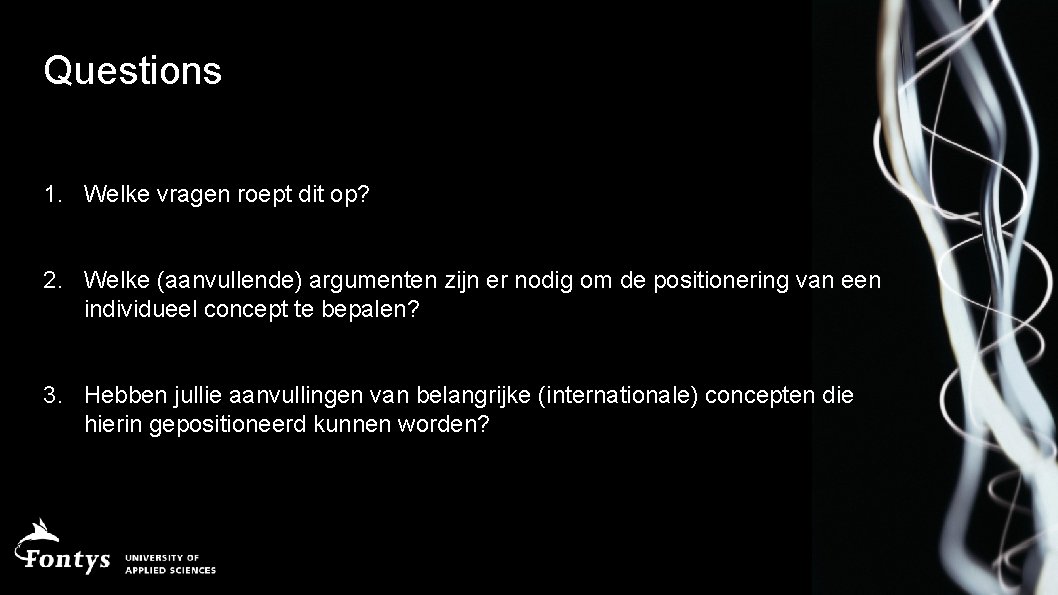
Questions 1. Welke vragen roept dit op? 2. Welke (aanvullende) argumenten zijn er nodig om de positionering van een individueel concept te bepalen? 3. Hebben jullie aanvullingen van belangrijke (internationale) concepten die hierin gepositioneerd kunnen worden?