
AIM OF CLASSIFICATION The classification of organisms provides


- Slides: 22
AIM OF CLASSIFICATION The classification of organisms provides an advantage in the investigation and observation of living things.
• Carl Von Linnaeus was the first person to classify living things in a scientific way in 1735. • He was use binomial nomenclature. Latin language is used in binomial nomenclature.
• In binomial nomenclature, each organism has two names. • First of them is genus name, other is species name. • Pinus nigra (Black pine). • Pinus is name of genus and nigra is name of species.
SPECIES: It is group of organisms which members have many similarities.
Properties of species • 1 -They must produce fertile offspring. • 2 -They must have the same chromosome number. 3 -The members of species must be able to mate.
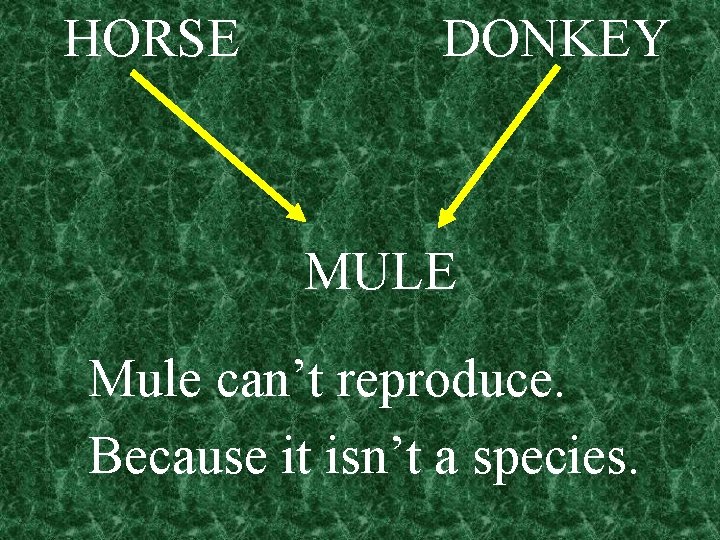
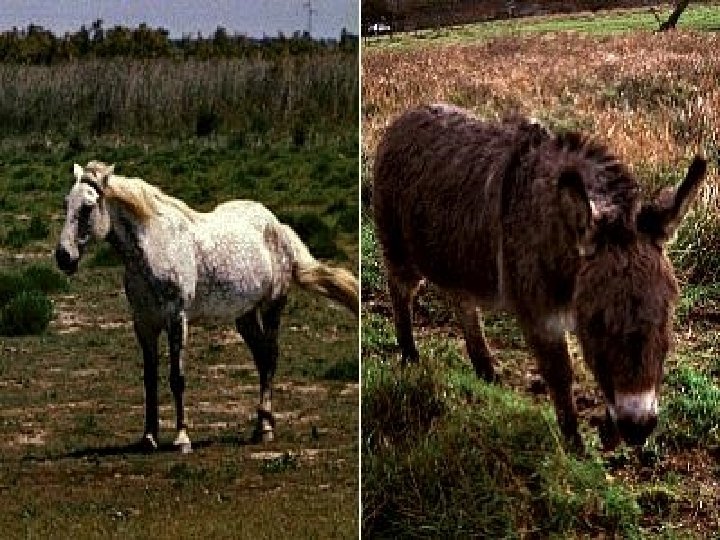
HORSE DONKEY MULE Mule can’t reproduce. Because it isn’t a species.
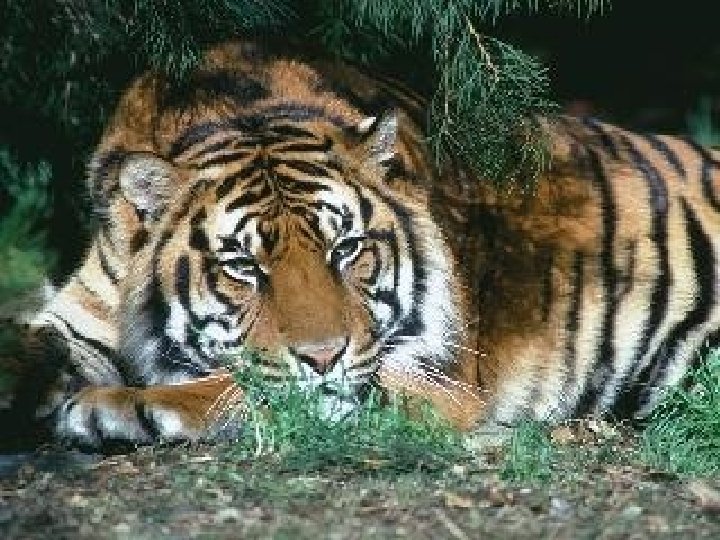
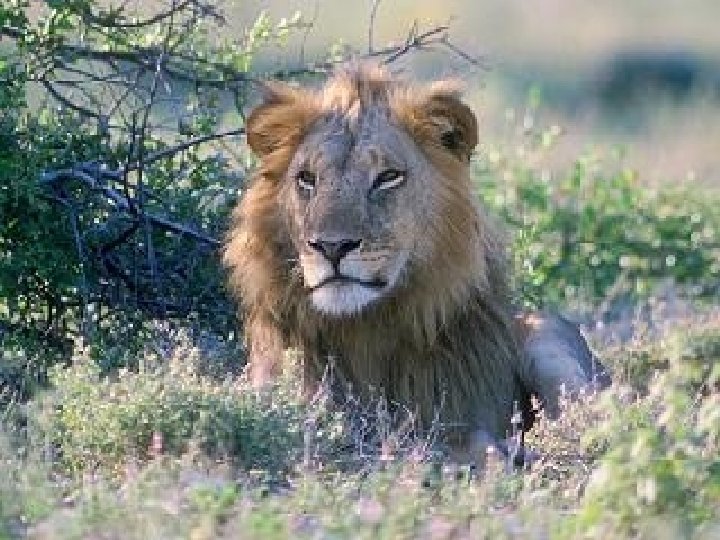
• A group of similar species is called genus. • Organisms which belong to same genus, have same genus name. Felis domesticus (House cat) • Felis tigris (Tiger) • Felis leo (lion)
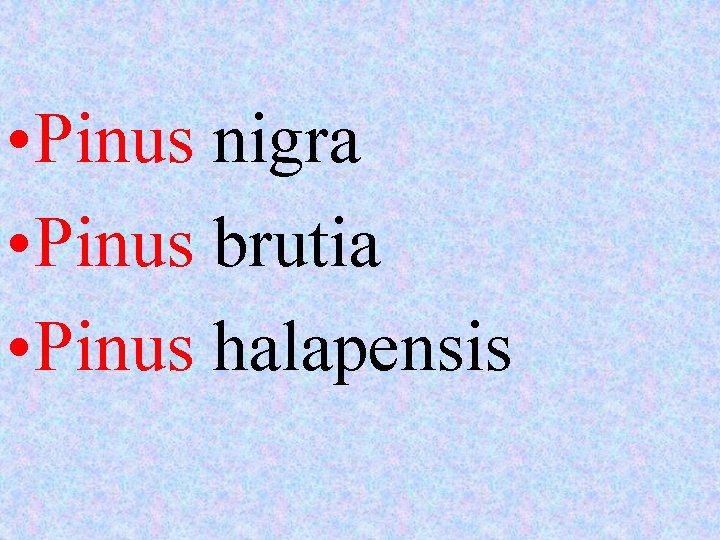
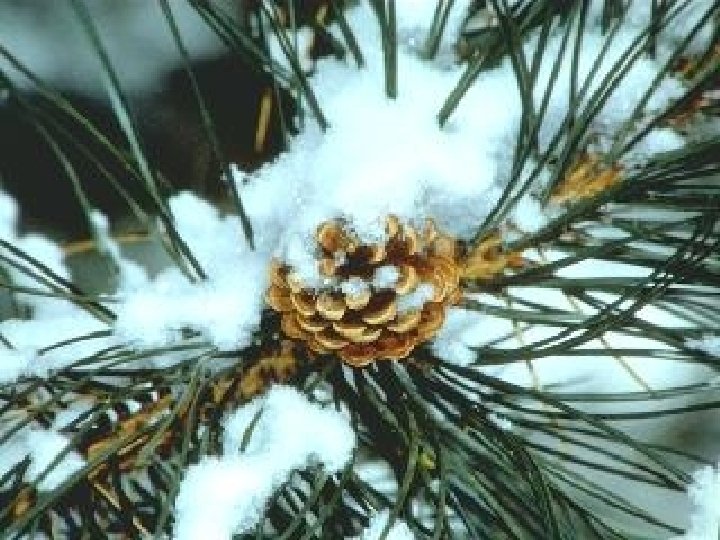
• Pinus nigra • Pinus brutia • Pinus halapensis
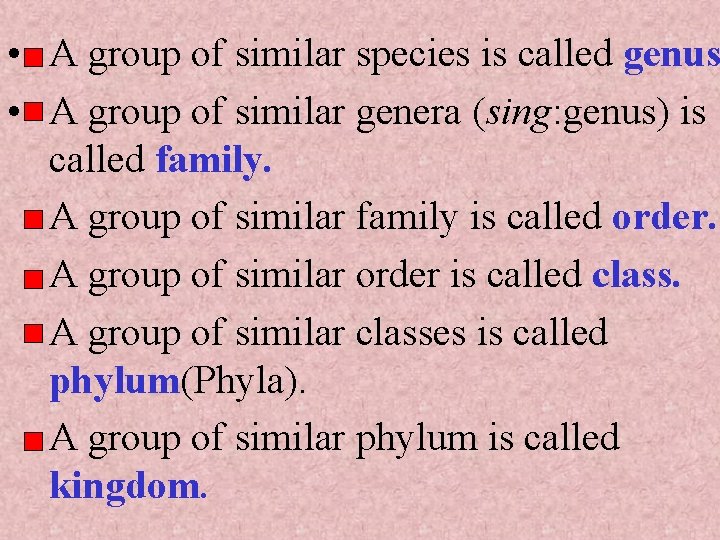
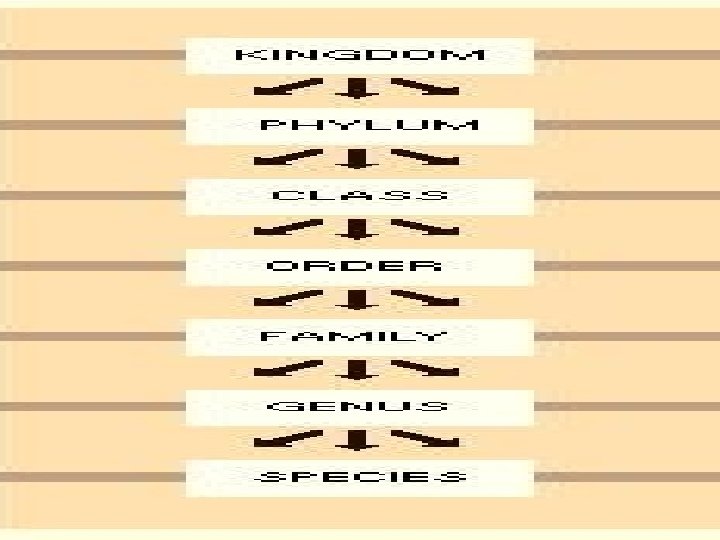
• A group of similar species is called genus • A group of similar genera (sing: genus) is called family. A group of similar family is called order. A group of similar order is called class. A group of similar classes is called phylum(Phyla). A group of similar phylum is called kingdom.
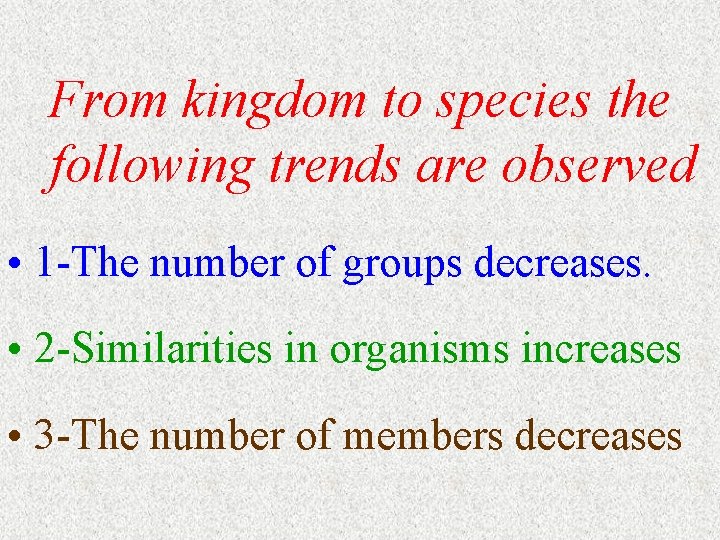
From kingdom to species the following trends are observed • 1 -The number of groups decreases. • 2 -Similarities in organisms increases • 3 -The number of members decreases
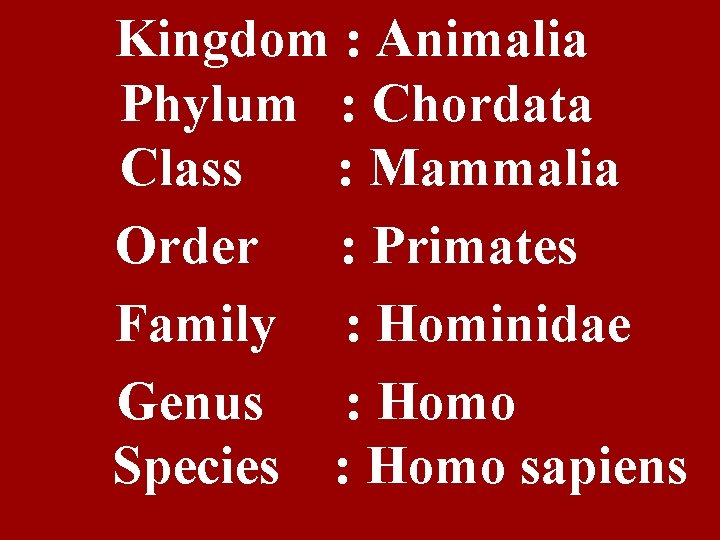
Kingdom : Animalia Phylum : Chordata Class : Mammalia Order : Primates Family : Hominidae Genus : Homo. Species : Homo sapiens
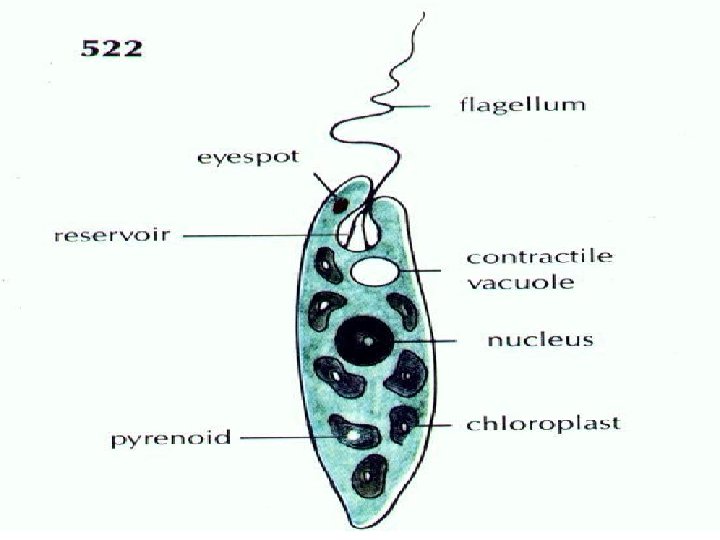
Some organisms like both animals and plants. Ex: Euglena likes animals because it can move. It also likes plants because it has chloroplast in its structure.
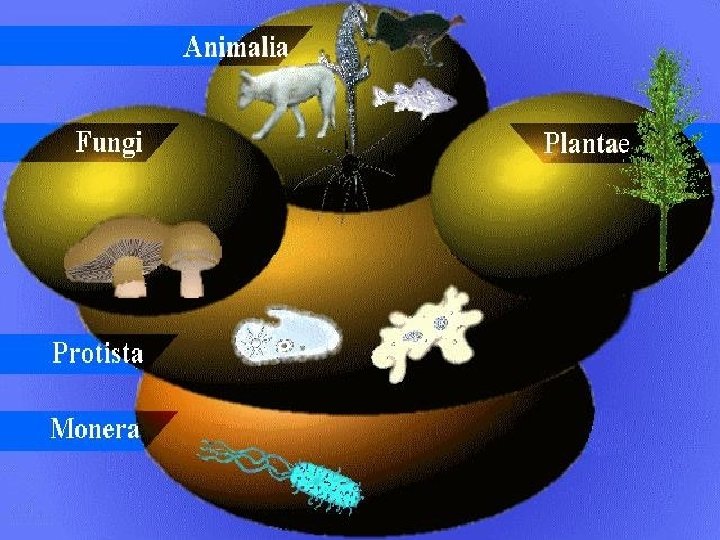
Kingdoms 1 -Monera 2 -Protista 3 -Fungi 4 -Plantae 5 -Animalia