
Aim Nervous System AP Biology 2003 2004 Why
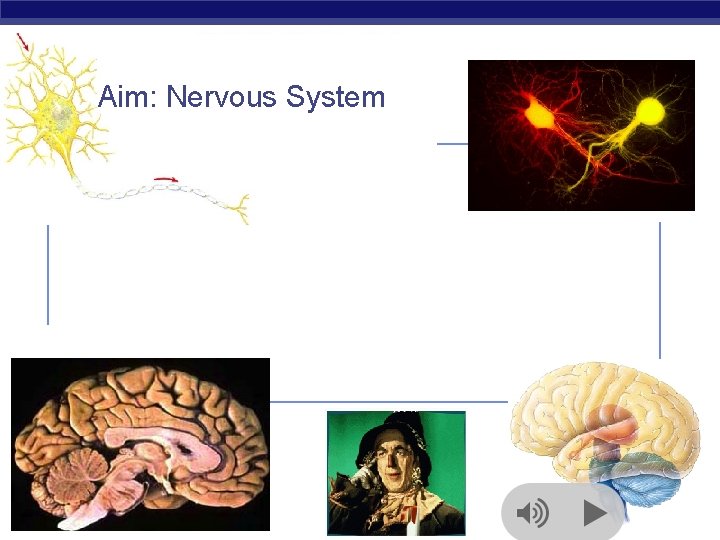
Aim: Nervous System AP Biology 2003 -2004
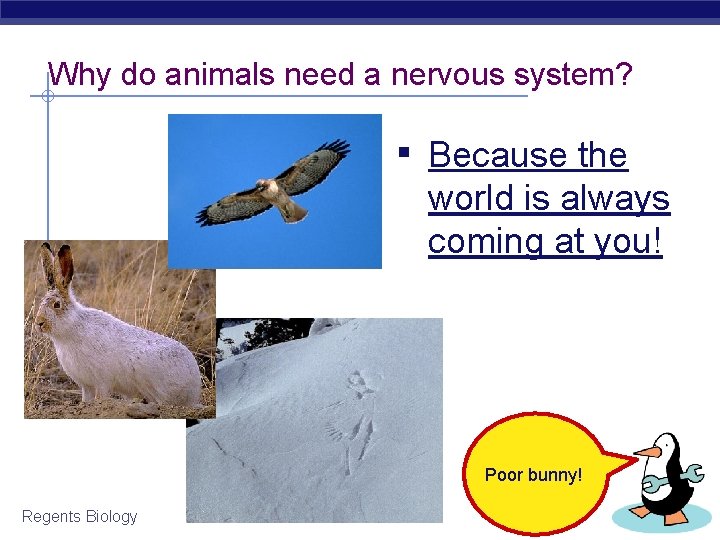
Why do animals need a nervous system? ▪ Because the world is always coming at you! Remember… think bunny! Poor about the bunny… Regents Biology
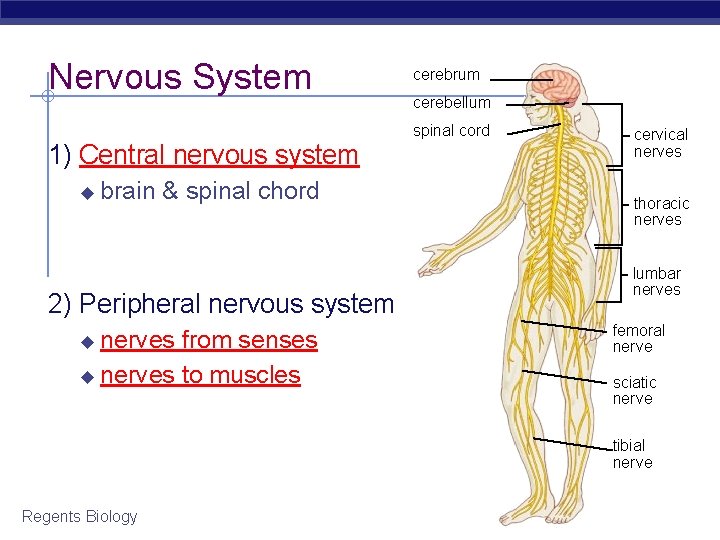
Nervous System cerebrum cerebellum spinal cord 1) Central nervous system ◆ brain & spinal chord 2) Peripheral nervous system nerves from senses ◆ nerves to muscles ◆ cervical nerves thoracic nerves lumbar nerves femoral nerve sciatic nerve tibial nerve Regents Biology
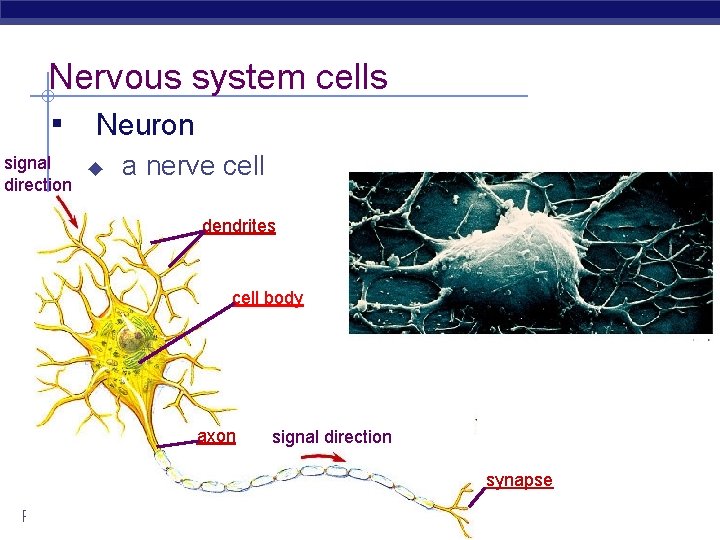
Nervous system cells ▪ Neuron signal ◆ direction a nerve cell dendrites cell body axon signal direction synapse Regents Biology
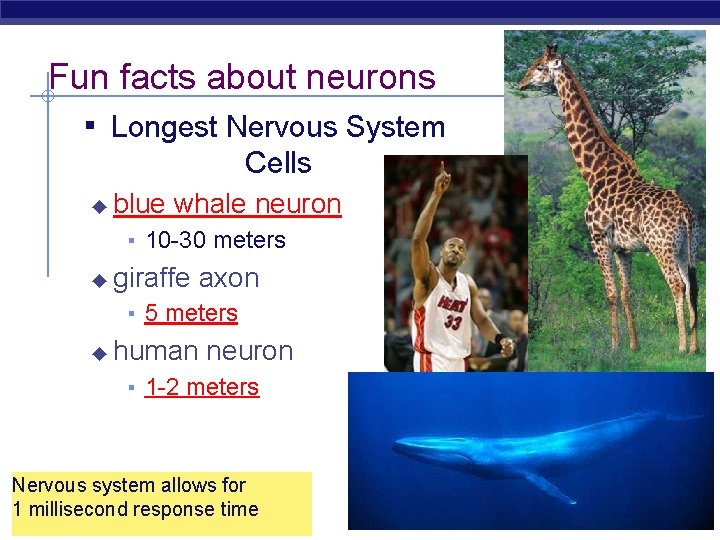
Fun facts about neurons ▪ Longest Nervous System Cells ◆ blue whale neuron ▪ 10 -30 meters ◆ giraffe axon ▪ 5 meters ◆ human neuron ▪ 1 -2 meters Nervous system allows for 1 Regents millisecond Biologyresponse time 2003 -2004
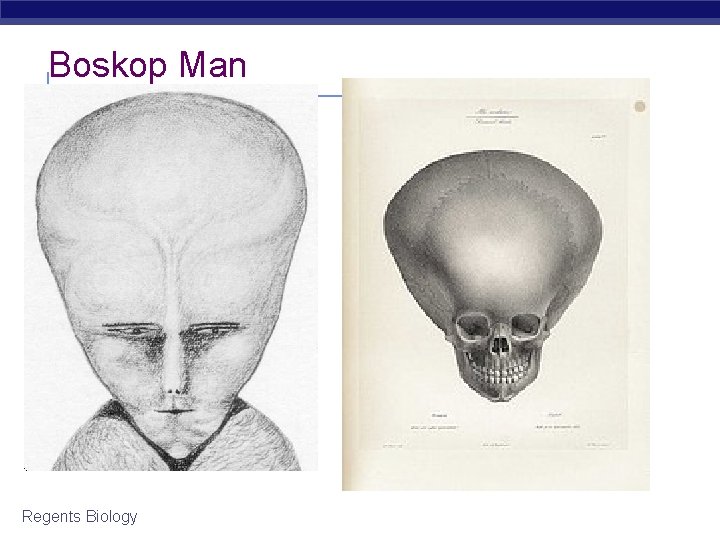
Boskop Man Regents Biology
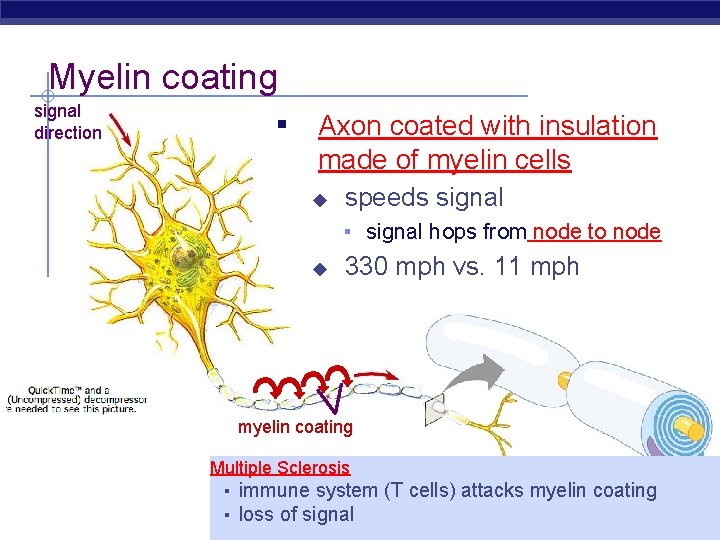
Myelin coating signal direction ▪ Axon coated with insulation made of myelin cells ◆ speeds signal ▪ signal hops from node to node ◆ 330 mph vs. 11 mph myelin coating Multiple Sclerosis Regents Biology ▪ immune system (T cells) attacks myelin coating ▪ loss of signal 2003 -2004
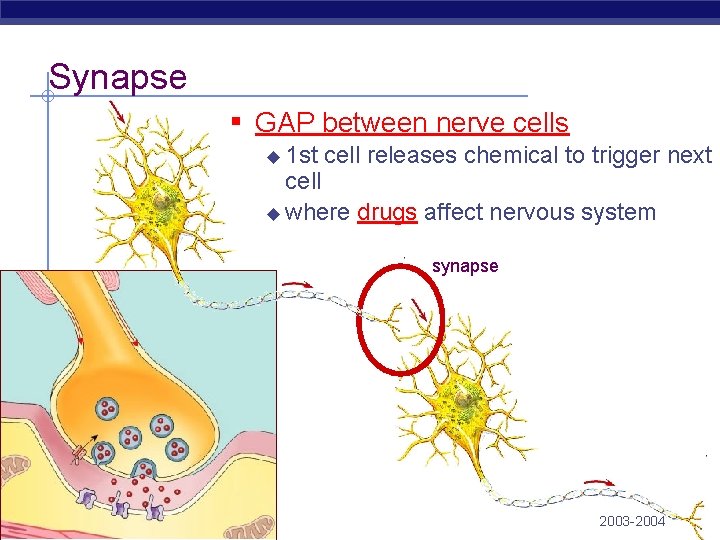
Synapse ▪ GAP between nerve cells 1 st cell releases chemical to trigger next cell ◆ where drugs affect nervous system ◆ synapse Regents Biology 2003 -2004
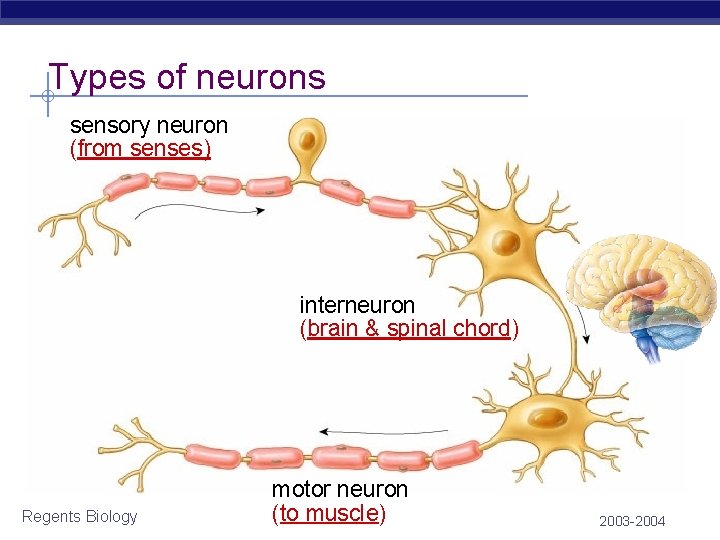
Types of neurons sensory neuron (from senses) interneuron (brain & spinal chord) Regents Biology motor neuron (to muscle) 2003 -2004
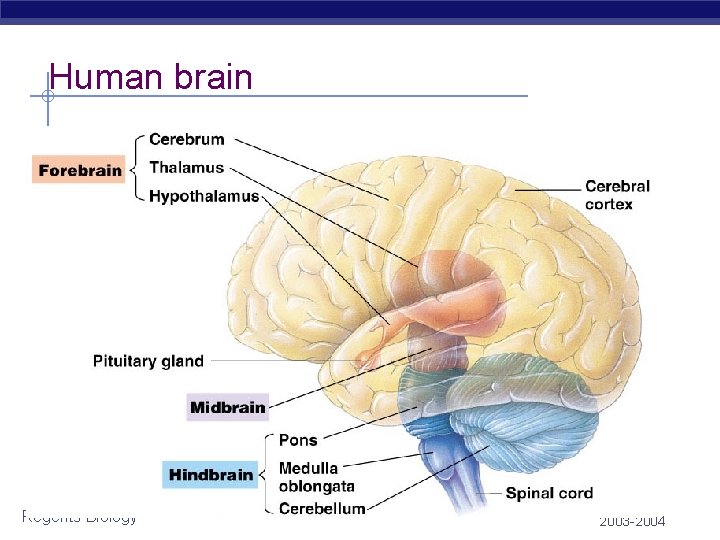
Human brain Regents Biology 2003 -2004
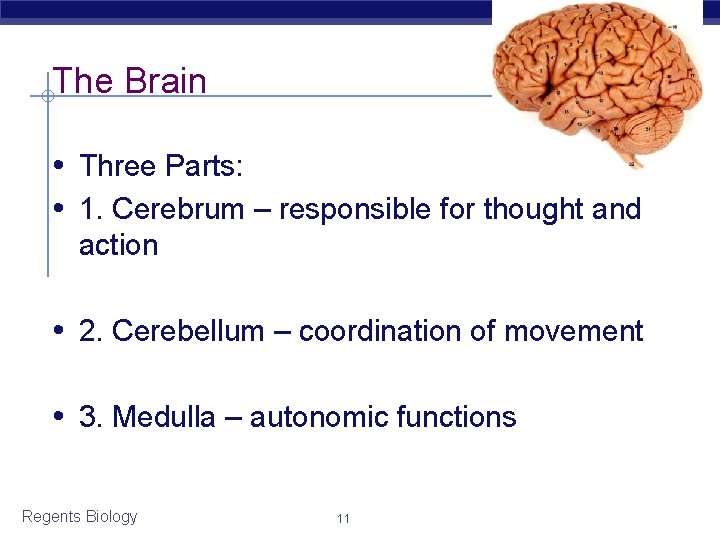
The Brain • Three Parts: • 1. Cerebrum – responsible for thought and action • 2. Cerebellum – coordination of movement • 3. Medulla – autonomic functions Regents Biology 11
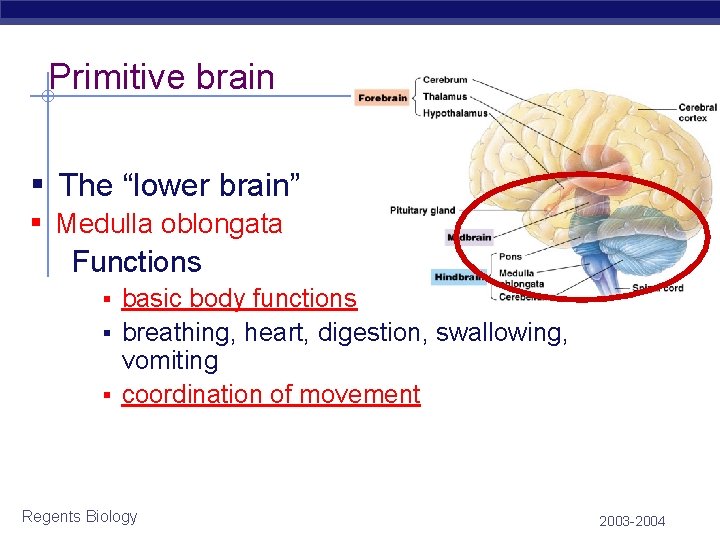
Primitive brain ▪ The “lower brain” ▪ Medulla oblongata Functions ▪ basic body functions ▪ breathing, heart, digestion, swallowing, vomiting ▪ coordination of movement Regents Biology 2003 -2004
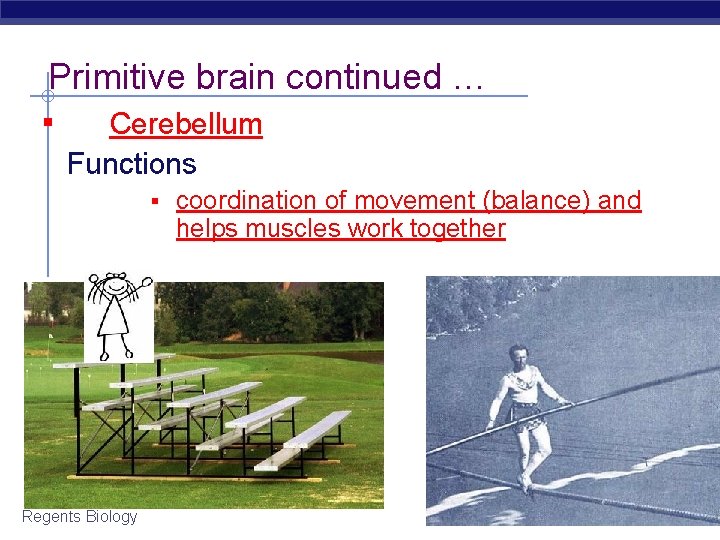
Primitive brain continued … ▪ Cerebellum Functions ▪ coordination of movement (balance) and helps muscles work together Regents Biology
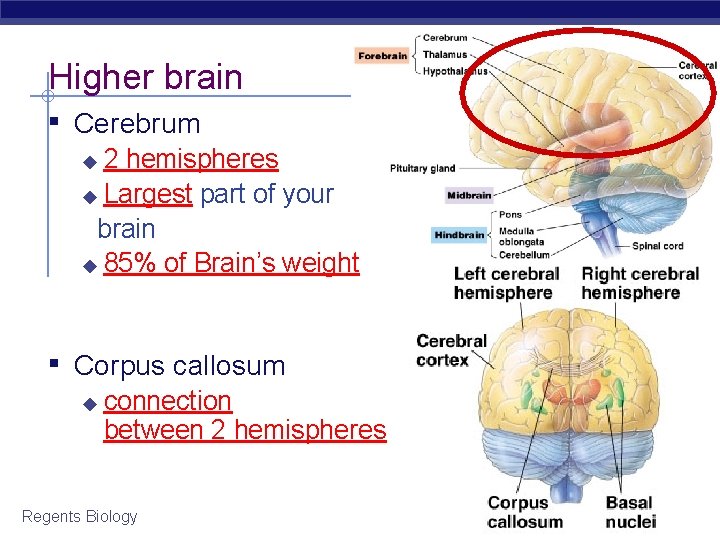
Higher brain ▪ Cerebrum 2 hemispheres ◆ Largest part of your brain ◆ 85% of Brain’s weight ◆ ▪ Corpus callosum ◆ connection between 2 hemispheres Regents Biology 2003 -2004
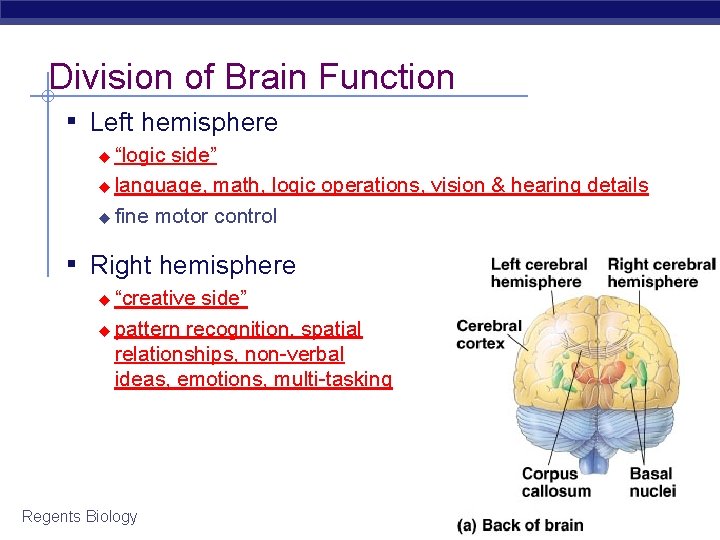
Division of Brain Function ▪ Left hemisphere “logic side” ◆ language, math, logic operations, vision & hearing details ◆ fine motor control ◆ ▪ Right hemisphere “creative side” ◆ pattern recognition, spatial relationships, non-verbal ideas, emotions, multi-tasking ◆ Regents Biology 2003 -2004
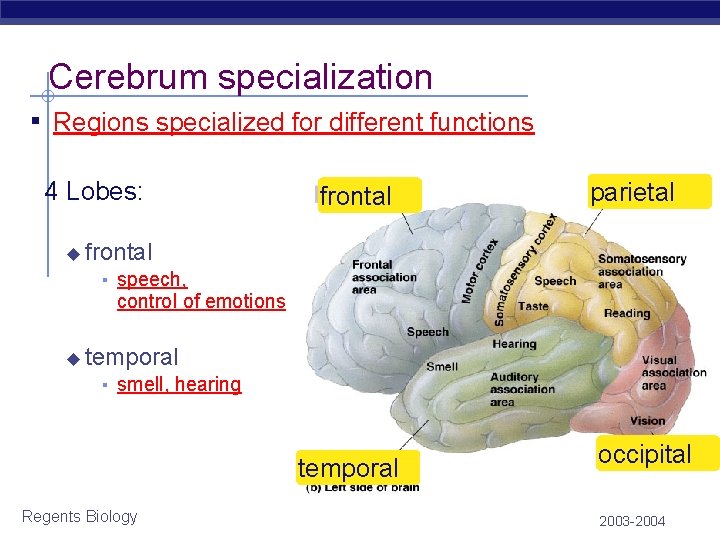
Cerebrum specialization ▪ Regions specialized for different functions 4 Lobes: ◆ frontal parietal frontal ▪ speech, control of emotions ◆ temporal ▪ smell, hearing temporal Regents Biology occipital 2003 -2004
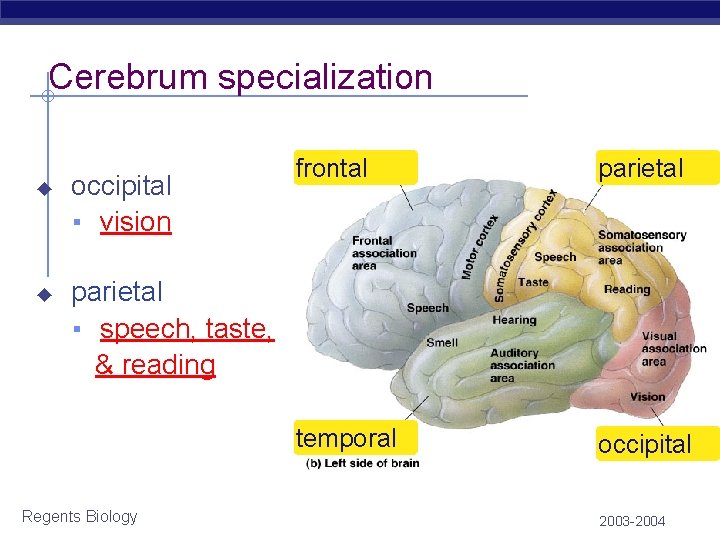
Cerebrum specialization ◆ ◆ occipital ▪ vision frontal parietal temporal occipital parietal ▪ speech, taste, & reading Regents Biology 2003 -2004
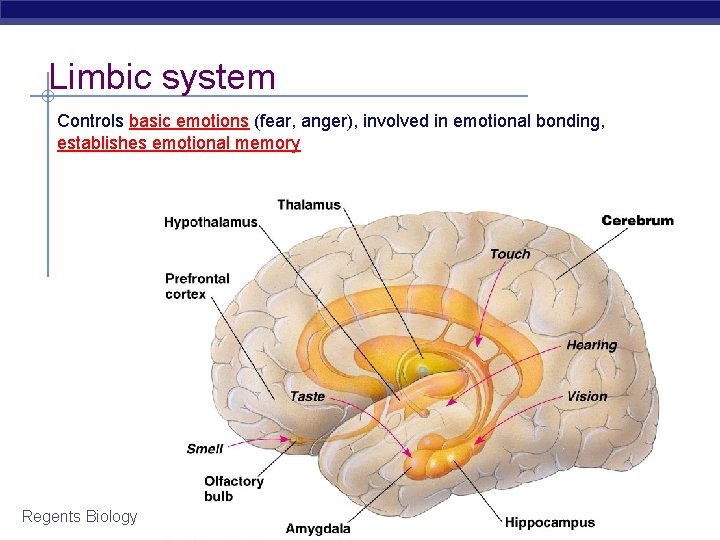
Limbic system Controls basic emotions (fear, anger), involved in emotional bonding, establishes emotional memory Regents Biology 2003 -2004
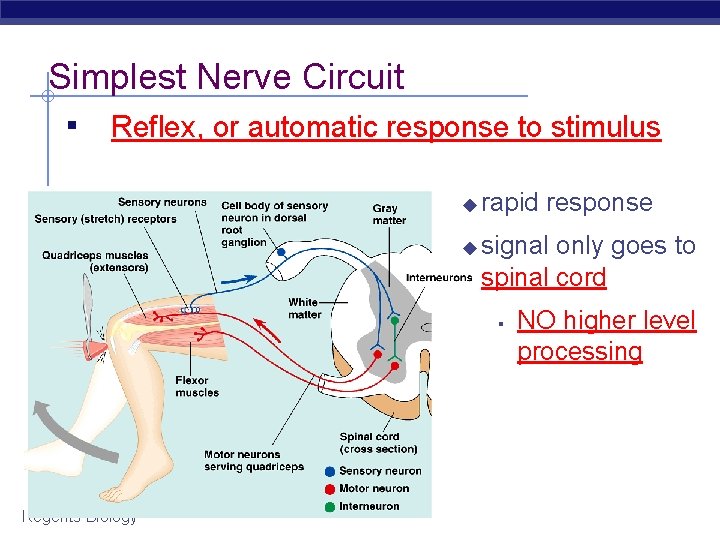
Simplest Nerve Circuit ▪ Reflex, or automatic response to stimulus ◆ ◆ rapid response signal only goes to spinal cord ▪ Regents Biology NO higher level processing
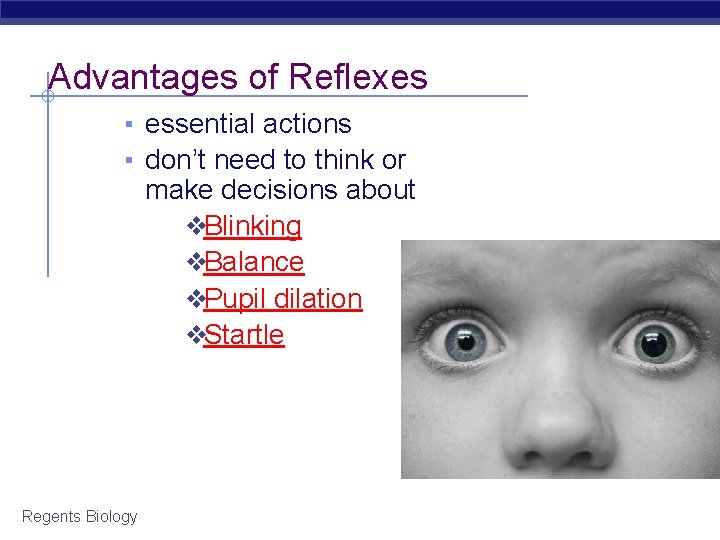
Advantages of Reflexes ▪ essential actions ▪ don’t need to think or make decisions about ❖Blinking ❖Balance ❖Pupil dilation ❖Startle Regents Biology
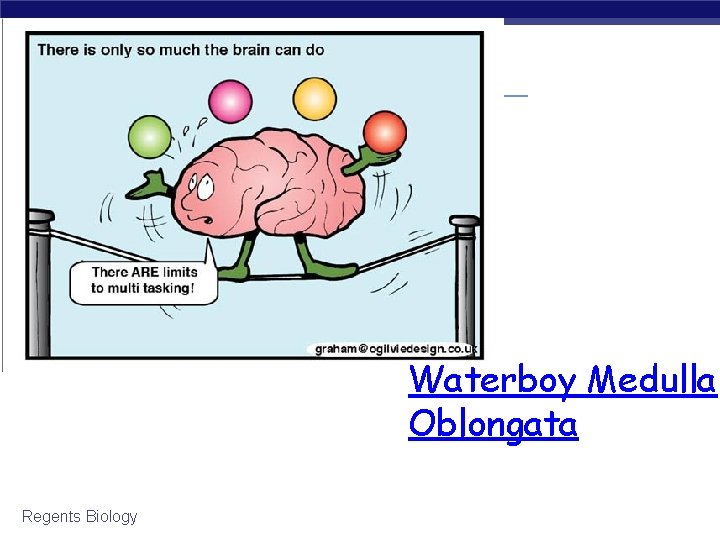
Waterboy Medulla Oblongata Regents Biology
- Slides: 21