
Aim I understand the link between thoughts feelings
Aim • I understand the link between thoughts, feelings and behaviours. Success Criteria • • • 1 Lorem ipsum dolor sit amet, consectetur adipiscing elit. IStatement can discuss and describe a range of thoughts, feelings and behaviours. Statement 2 • Sub statement I can discuss the impact negative thoughts can have on ourselves and others. • I can turn negative thoughts into positive thoughts. This resource is fully in line with the Learning Outcomes and Core Themes outlined in the PSHE Association’s. Programme of Study.
The Big Questions
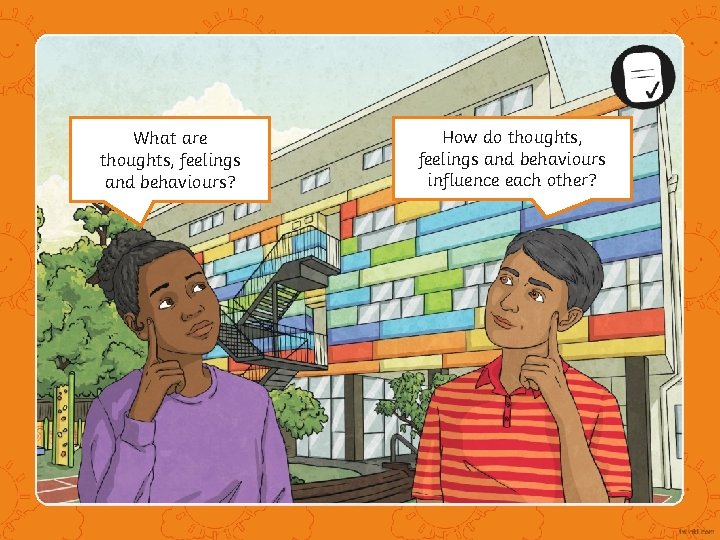
What are thoughts, feelings and behaviours? How do thoughts, feelings and behaviours influence each other?
Positive and Negative Thoughts To start today’s lesson, we need to think about two things. 1 The first task is coming up with as many positive thoughts as they can that someone might have in the morning, before school. 2 The second task is coming up with as many negative thoughts as they can that a person might have in the morning, before school. For now, just focus on the thought, rather than how the person might be feeling or what they might do.
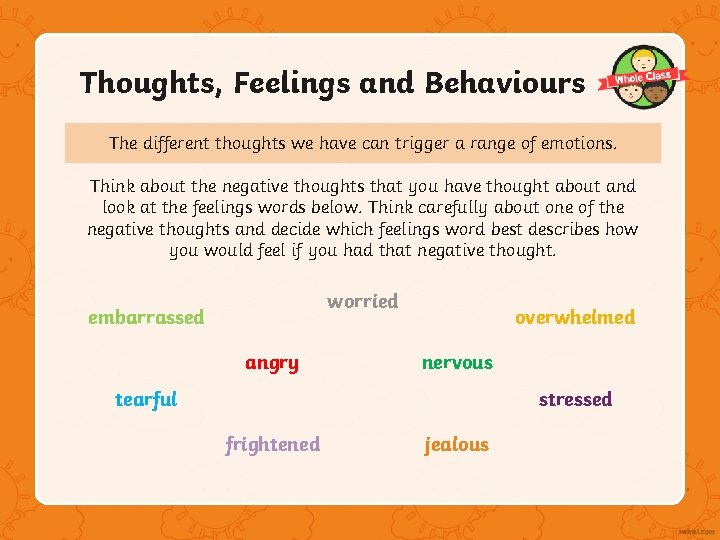
Thoughts, Feelings and Behaviours The different thoughts we have can trigger a range of emotions. Think about the negative thoughts that you have thought about and look at the feelings words below. Think carefully about one of the negative thoughts and decide which feelings word best describes how you would feel if you had that negative thought. worried embarrassed angry overwhelmed nervous tearful stressed frightened jealous
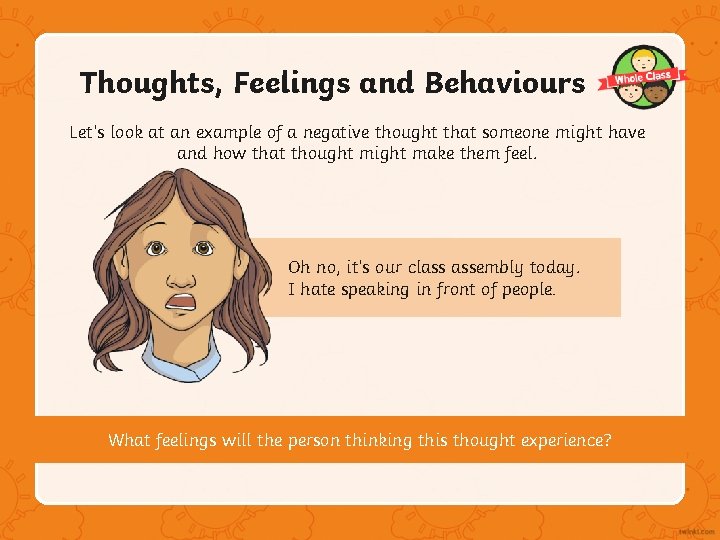
Thoughts, Feelings and Behaviours Let’s look at an example of a negative thought that someone might have and how that thought might make them feel. Oh no, it’s our class assembly today. I hate speaking in front of people. What feelings will the person thinking this thought experience?
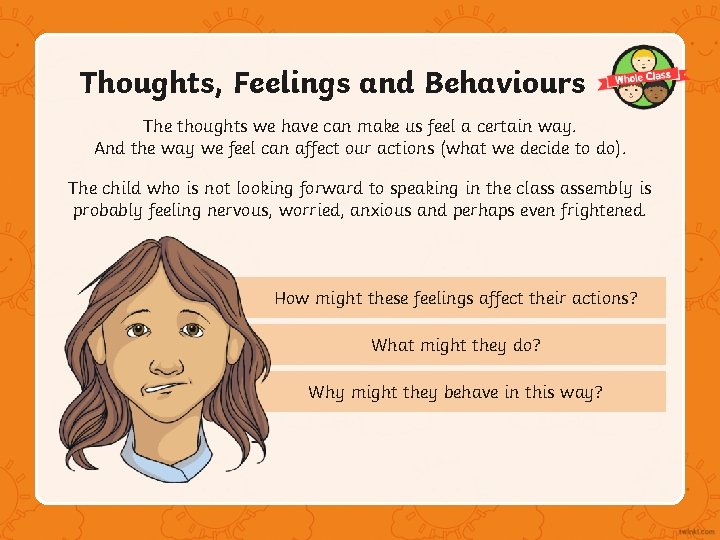
Thoughts, Feelings and Behaviours The thoughts we have can make us feel a certain way. And the way we feel can affect our actions (what we decide to do). The child who is not looking forward to speaking in the class assembly is probably feeling nervous, worried, anxious and perhaps even frightened. How might these feelings affect their actions? What might they do? Why might they behave in this way?
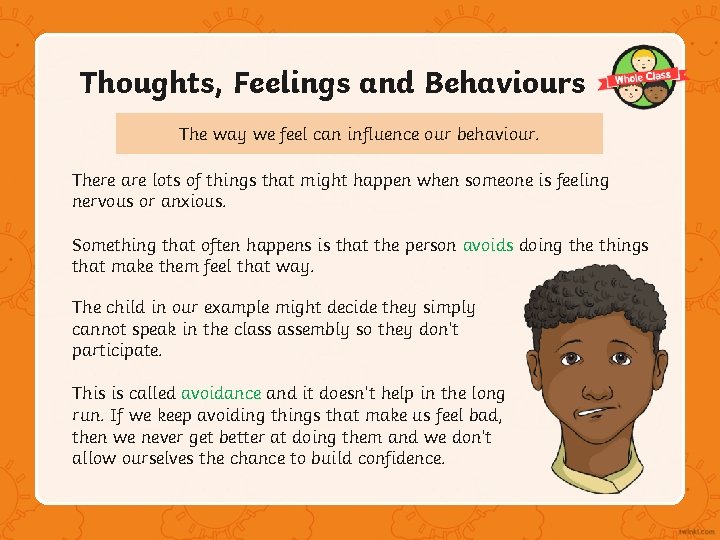
Thoughts, Feelings and Behaviours The way we feel can influence our behaviour. There are lots of things that might happen when someone is feeling nervous or anxious. Something that often happens is that the person avoids doing the things that make them feel that way. The child in our example might decide they simply cannot speak in the class assembly so they don’t participate. This is called avoidance and it doesn’t help in the long run. If we keep avoiding things that make us feel bad, then we never get better at doing them and we don’t allow ourselves the chance to build confidence.
The Cognitive Triangle What does cognitive mean? The word cognitive relates to the process of thinking and other mental processes (things we do with our minds). Our cognitive functioning includes memory, judgement, reasoning and emotional responses.
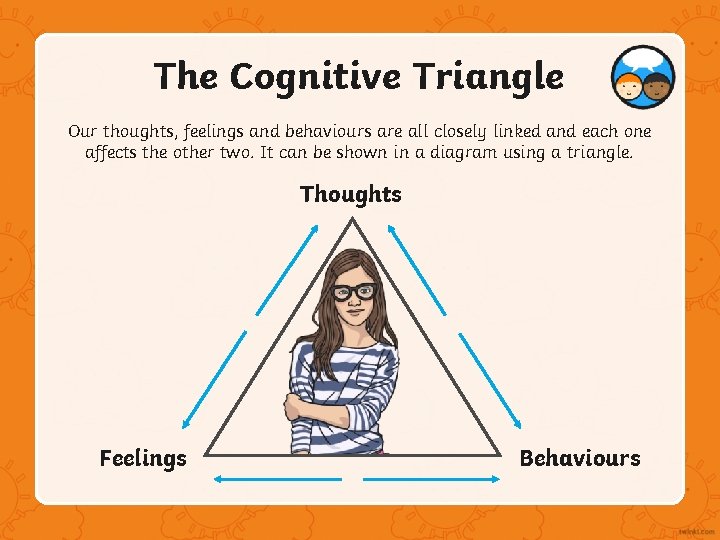
The Cognitive Triangle Our thoughts, feelings and behaviours are all closely linked and each one affects the other two. It can be shown in a diagram using a triangle. Thoughts Feelings Behaviours
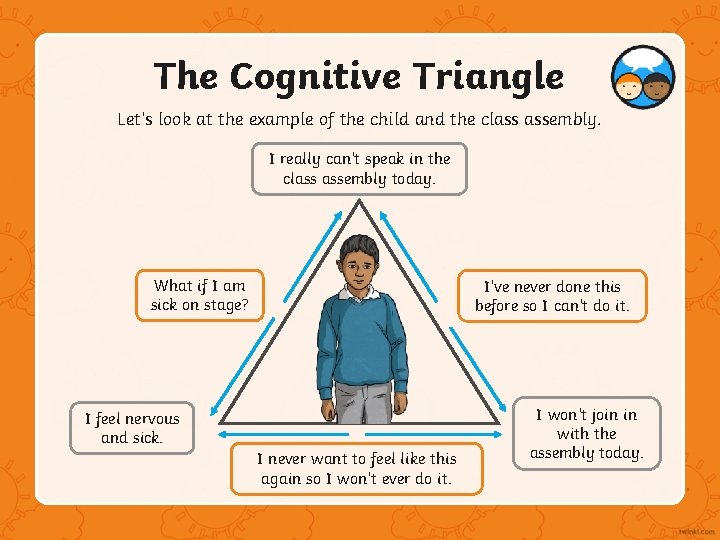
The Cognitive Triangle Let’s look at the example of the child and the class assembly. I really can’t speak in the class assembly today. What if I am sick on stage? I’ve never done this before so I can’t do it. I feel nervous and sick. I never want to feel like this again so I won’t ever do it. I won’t join in with the assembly today.
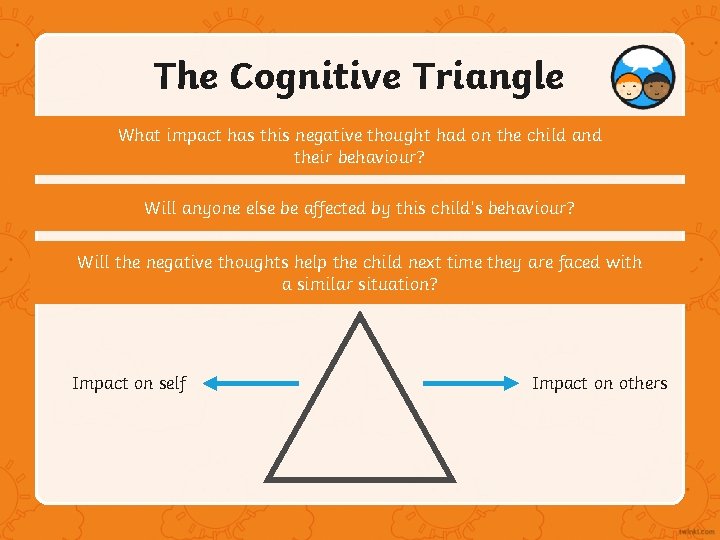
The Cognitive Triangle What impact has this negative thought had on the child and their behaviour? Will anyone else be affected by this child’s behaviour? Will the negative thoughts help the child next time they are faced with a similar situation? Impact on self Impact on others
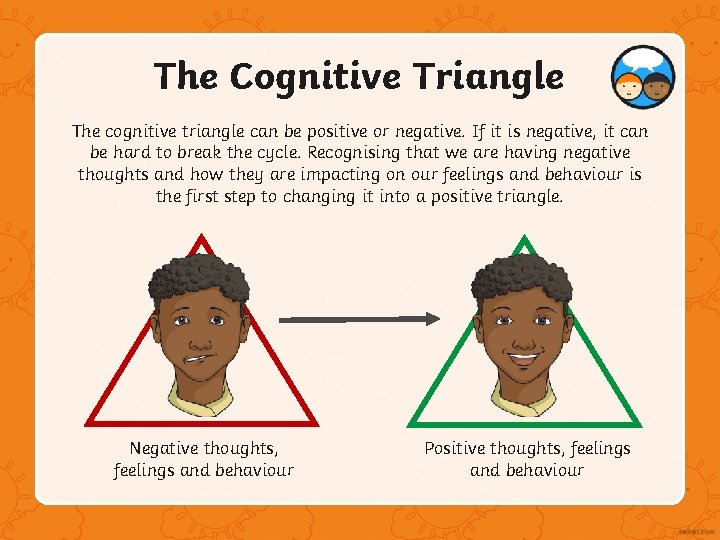
The Cognitive Triangle The cognitive triangle can be positive or negative. If it is negative, it can be hard to break the cycle. Recognising that we are having negative thoughts and how they are impacting on our feelings and behaviour is the first step to changing it into a positive triangle. Negative thoughts, feelings and behaviour Positive thoughts, feelings and behaviour
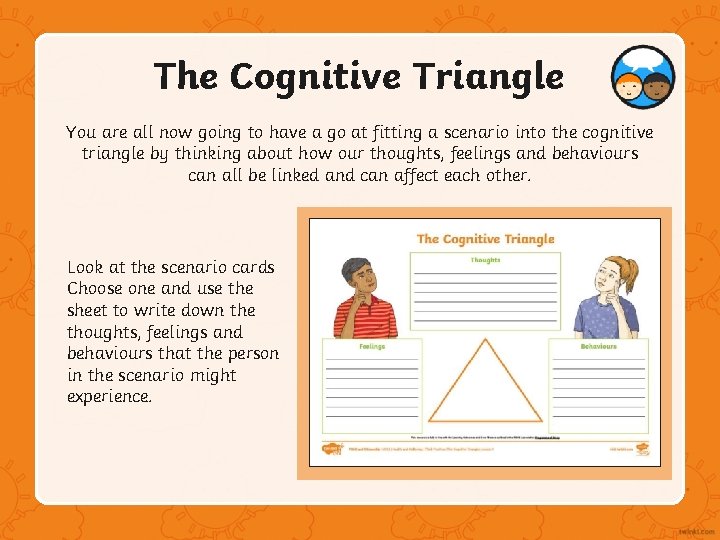
The Cognitive Triangle You are all now going to have a go at fitting a scenario into the cognitive triangle by thinking about how our thoughts, feelings and behaviours can all be linked and can affect each other. Look at the scenario cards Choose one and use the sheet to write down the thoughts, feelings and behaviours that the person in the scenario might experience.
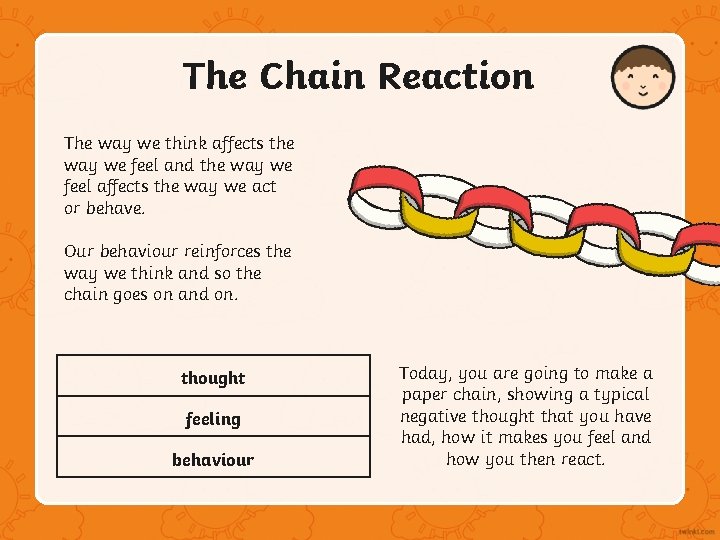
The Chain Reaction The way we think affects the way we feel and the way we feel affects the way we act or behave. Our behaviour reinforces the way we think and so the chain goes on and on. thought feeling behaviour Today, you are going to make a paper chain, showing a typical negative thought that you have had, how it makes you feel and how you then react.
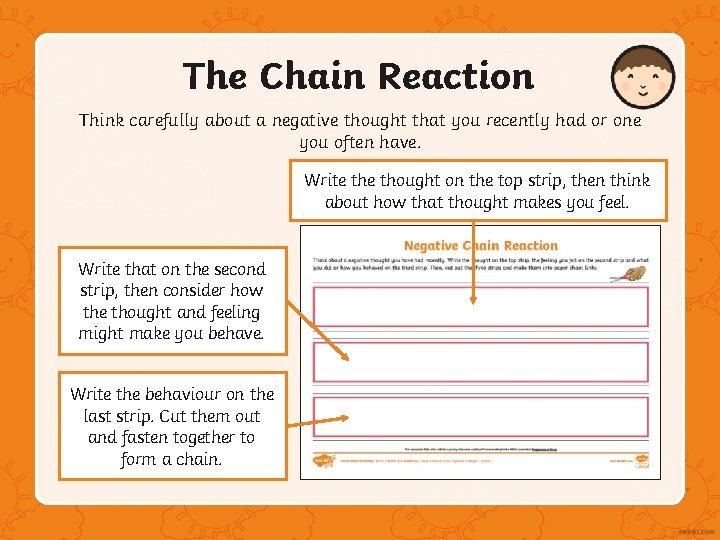
The Chain Reaction Think carefully about a negative thought that you recently had or one you often have. Write thought on the top strip, then think about how that thought makes you feel. Write that on the second strip, then consider how the thought and feeling might make you behave. Write the behaviour on the last strip. Cut them out and fasten together to form a chain.
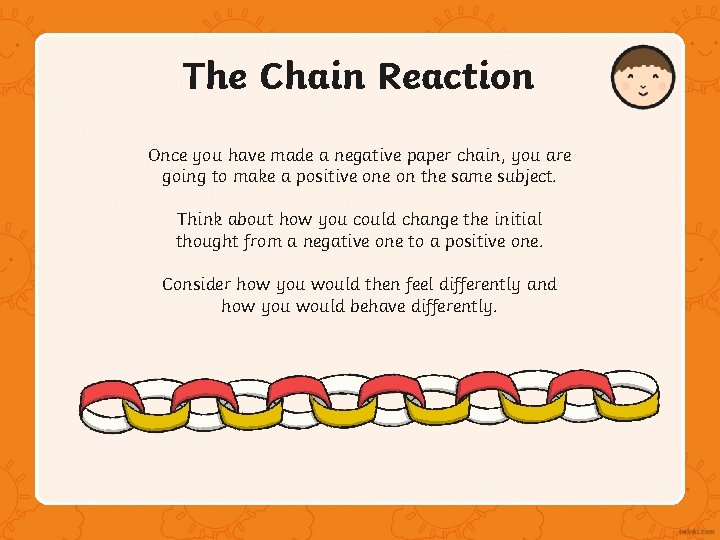
The Chain Reaction Once you have made a negative paper chain, you are going to make a positive on the same subject. Think about how you could change the initial thought from a negative one to a positive one. Consider how you would then feel differently and how you would behave differently.
- Slides: 18